There is a grim regularity to the history of libraries. They accumulate for generations, they hold material that exists nowhere else, and then something happens to them — and what is lost is lost completely, because a text held in one place and written on something flammable has no redundancy at all.
The most famous library of antiquity is remembered principally for having disappeared, and its contents are known mainly as a list of things nobody can read.
One collection escaped that pattern, and it escaped for a reason that had nothing to do with anybody’s foresight. It was written on the wrong material to burn.
Here is the library, why it survived, and what happened when somebody finally worked out what the tablets said.
What It Was
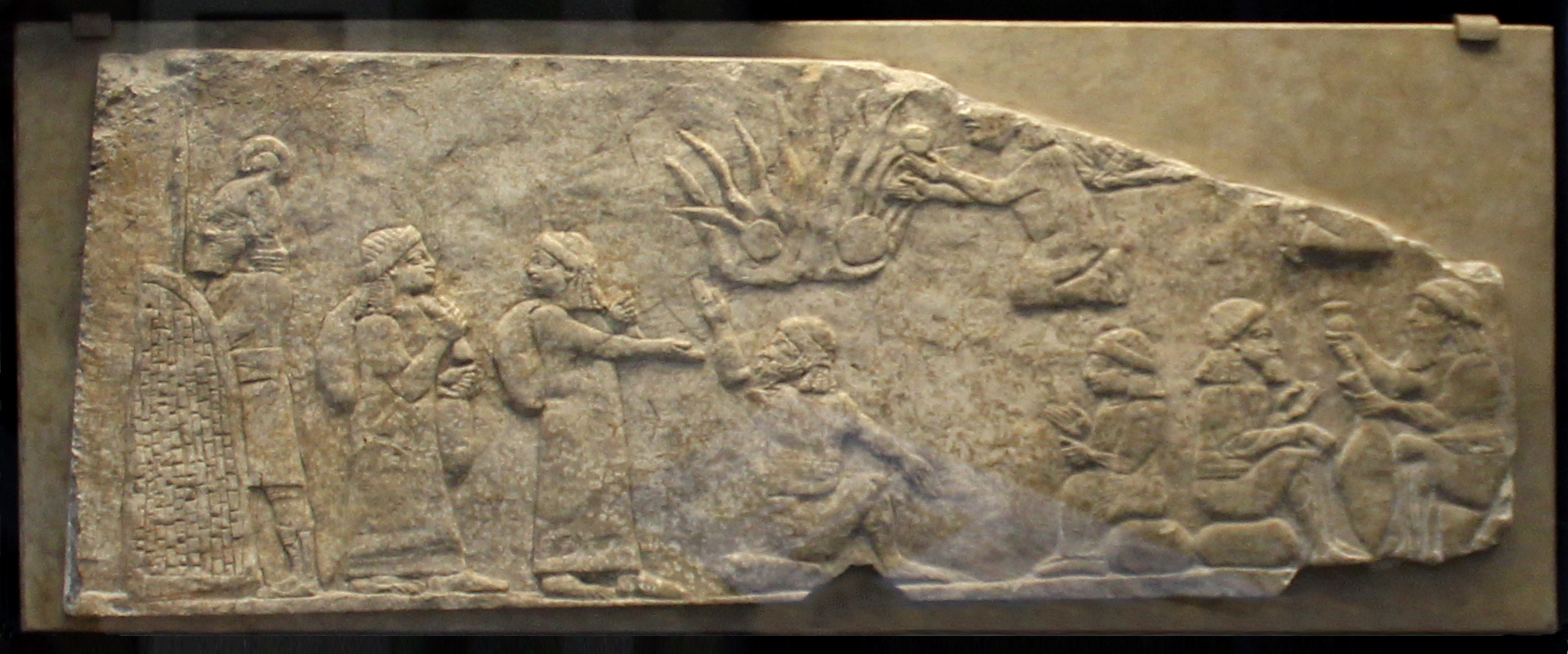
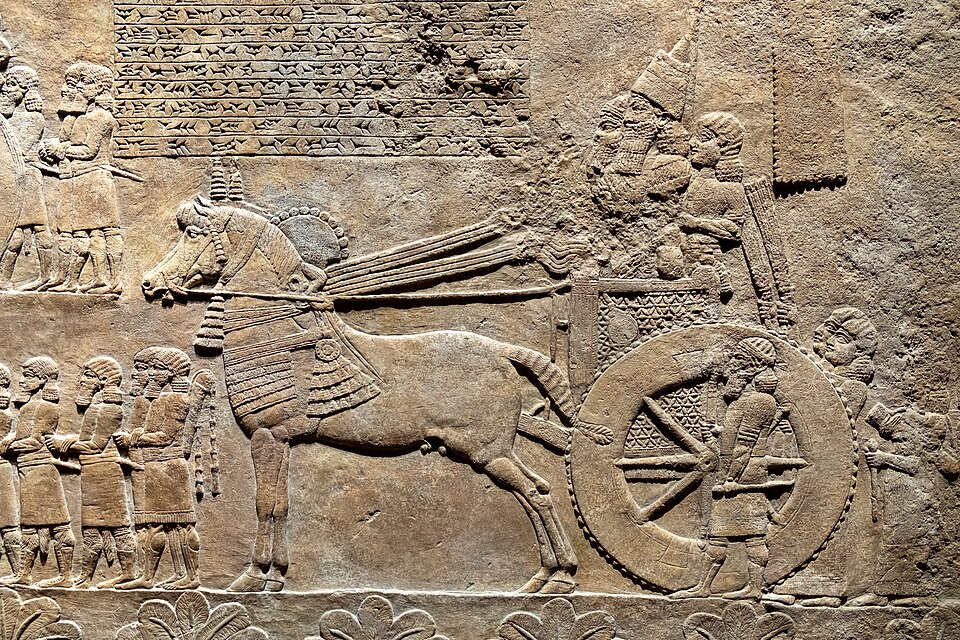
The collection was assembled in the seventh century BC at Nineveh, in what is now northern Iraq, under an Assyrian king named Ashurbanipal.
It was a deliberate project rather than an accumulation. Texts were collected systematically from across the empire — copied, requisitioned, and in some cases seized — with the explicit intention of gathering everything of consequence in one place.
The material covers a very wide range. There are omen texts and divination manuals in large numbers, medical and scientific texts, mathematical and astronomical material, legal and administrative records, letters, lexical lists, religious texts and literature.
Estimates of what survives are generally in the region of thirty thousand tablets and fragments, though counting is complicated by the fact that a single original tablet may now exist as many pieces, and by continuing work to join fragments back together.
It is generally described as the oldest surviving library in the world in the sense that matters — an organised, catalogued collection assembled deliberately, of which a substantial portion still physically exists.
Like our content? Follow us for more.
Why It Survived
The preservation mechanism is the striking part and it is entirely accidental.
The texts were written on clay tablets, inscribed with a wedge-shaped stylus while the clay was soft, and then dried. Dried clay is durable but fragile, and vulnerable to moisture.
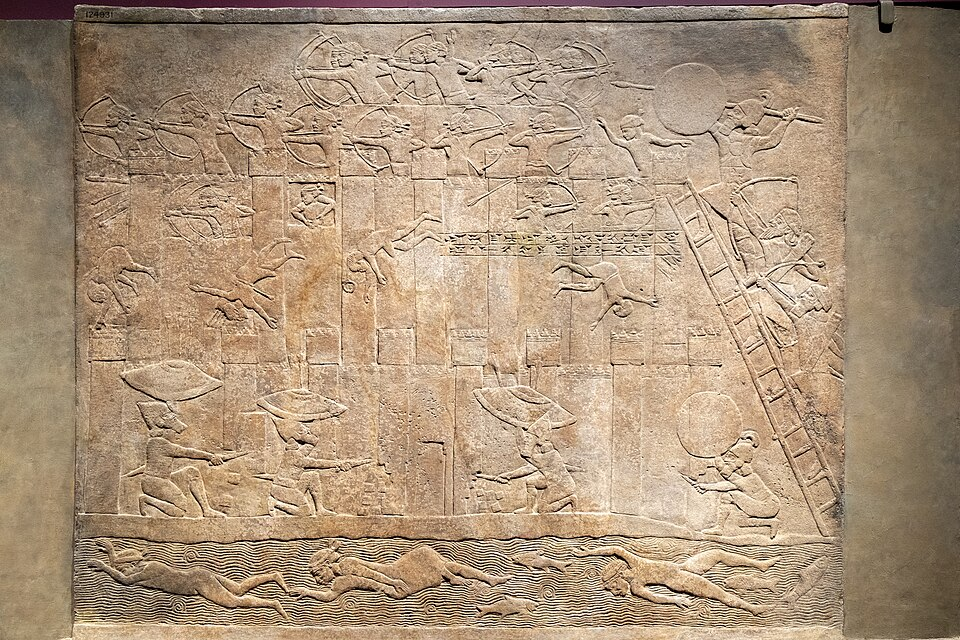
Nineveh was destroyed by fire toward the end of the seventh century BC. The building collapsed and burned, and the tablets were buried in the rubble.
Fire that would have destroyed papyrus, parchment or paper did the opposite to clay. It fired the tablets, converting them from dried clay into something closer to ceramic — harder, more stable and far more resistant to moisture than they had been.
So the destruction of the library is the reason its contents survived. Had the building simply been abandoned, the tablets would have deteriorated gradually over the following centuries. Instead they were baked and sealed under debris, and they sat there for roughly two and a half thousand years.
The building’s collapse also helped, by covering the material rather than leaving it exposed.
What Was Found In It
The most consequential single item is a version of the Epic of Gilgamesh, which is generally described as the oldest substantially surviving work of literature.
The significance of finding it there is not only literary. The text includes a flood narrative — a warning to build a vessel, a great flood, the survival of a small number aboard, birds released to test for dry land — and its resemblance to a later and far more familiar account was immediately obvious to the nineteenth-century scholars who first read it.
That produced a substantial public reaction at the time, because it demonstrated that a story assumed to be unique had an older precedent in another culture entirely.
Beyond that, the collection is valuable for less dramatic reasons. Administrative records, letters and legal documents supply an enormous amount of detail about how the state functioned. Medical texts record what was thought and done about illness. Astronomical records preserve observations. Lexical lists — essentially dictionaries and sign lists — turned out to be indispensable to the decipherment of cuneiform itself.
There is also evidence of organisation. Tablets carry identifying information, texts were catalogued, and the collection appears to have been arranged by subject rather than piled up.
The Problem of Putting It Back Together
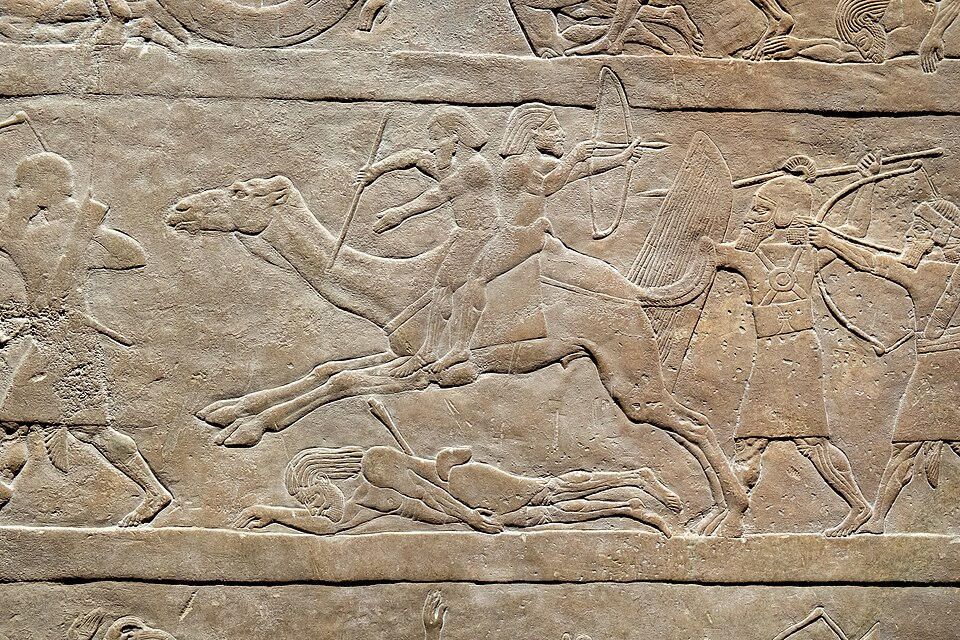
The practical situation is more difficult than the survival story suggests.
The tablets are fragments. A complete text may exist as a dozen pieces, and those pieces may have been excavated at different times, catalogued separately and stored apart from one another.
Joining fragments is painstaking work requiring somebody to recognise that two pieces in different drawers belong together, which depends on the shape of the break, the handwriting, the content and the physical characteristics of the clay.
That work has been going on since the nineteenth century and is not finished. New joins are still being made, and each one can extend a known text or complete a line that was previously a gap.
Computational methods have been applied to the problem in recent years, matching fragments by their properties at a scale no individual scholar could manage, which has accelerated the process substantially.
So the library is not a collection that was found and read. It is a collection that has been being reassembled continuously for over a century and a half.
The Catalogue and the Colophon
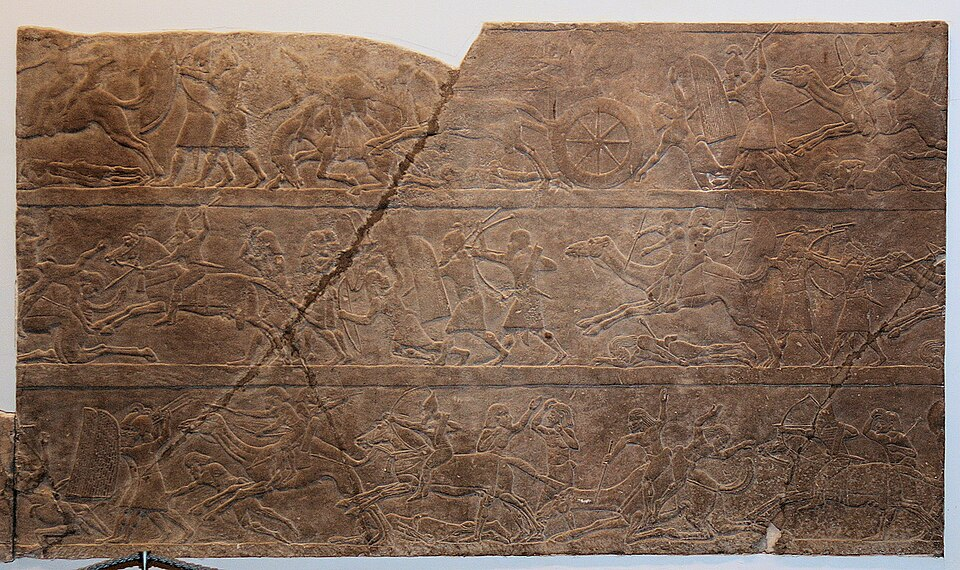
Two features of the collection deserve attention because they are what make it a library rather than a heap.
Tablets carry a colophon – a short block at the end recording information about the text and the copy. That is a bibliographic convention, performing the function of a title page, and it appears here millennia before printing made such things routine.
Colophons can identify the work, note that it was copied for the collection, and in some cases record the scribe and the source. That means individual tablets carry their own provenance, which is exactly what a collection needs if it is to be organised rather than merely stored.
There is also evidence of cataloguing – lists of texts held, and organisation by subject rather than by acquisition. Somebody was maintaining an inventory.
That combination is what justifies calling it a library in the modern sense. A large number of texts in one place is a store. Texts that identify themselves, are listed, and are arranged so that a specific one can be located is something else.
It also tells you something about the intention. Systematic collection, identification and cataloguing is not the behaviour of somebody accumulating objects; it is the behaviour of somebody building a resource meant to be used.
What It Changes About Ancient History
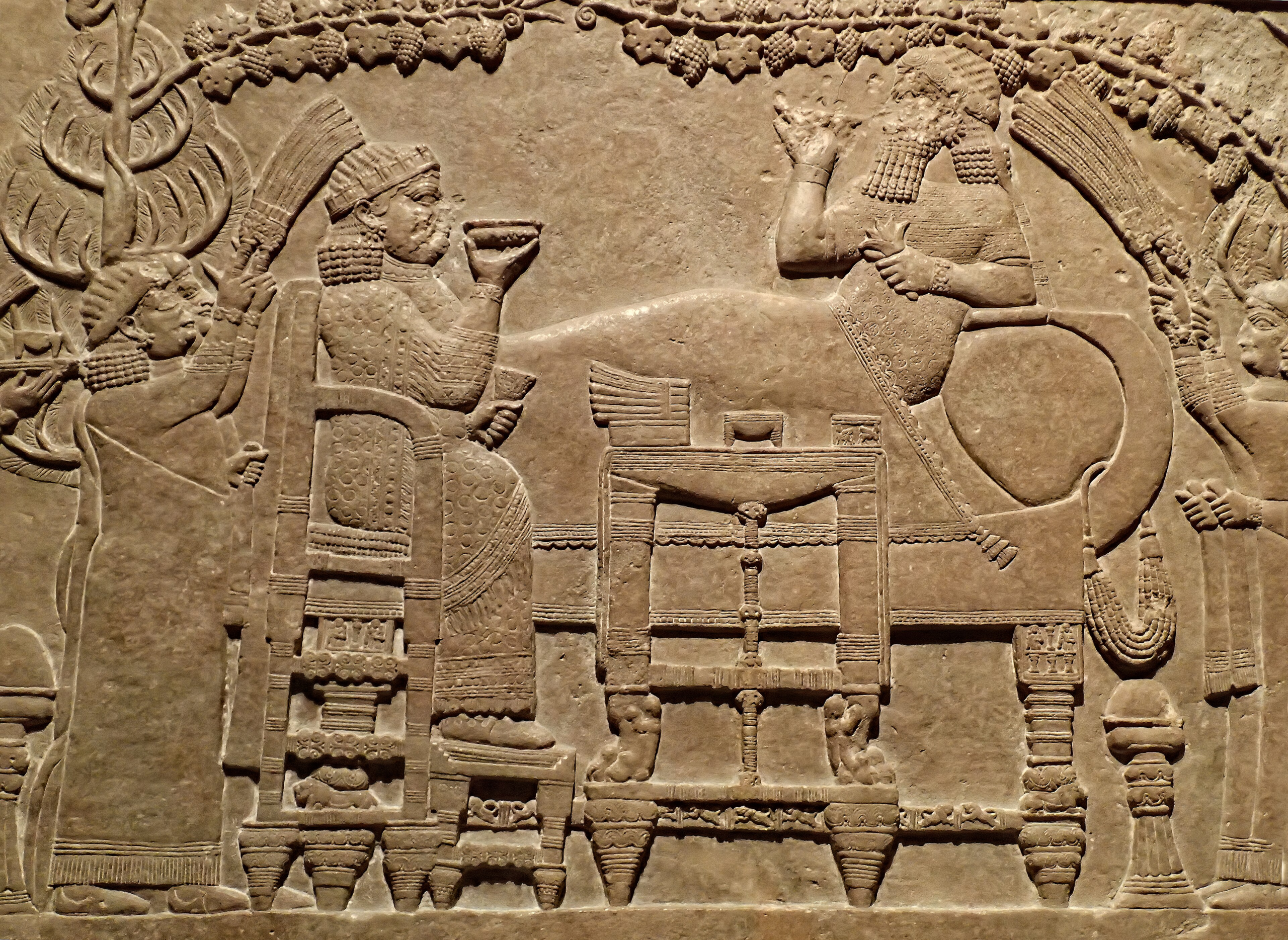
The value of the collection is that it converts a period from archaeology into documentation.
Most of what is known about early societies comes from physical remains — buildings, burials, pottery, tools — from which behaviour must be inferred. Inference is unavoidable and imprecise.
A library removes that step for the period it covers. Instead of deducing what people believed from what they buried, you can read what they wrote about it. Instead of estimating administrative practice from building layouts, you can read the correspondence.
It also supplies the ordinary material that rarely survives anywhere. Letters about supplies, complaints, instructions and records of transactions are exactly the documents nobody archives deliberately, and they are the ones that show how a society actually operated rather than how it presented itself.
And the lexical lists made the rest of the field possible, because they provided the internal keys that decipherment required.
There is a further point about redundancy worth drawing out. A text held in a single copy in a single building has no protection at all, and that is how most ancient literature was held.
This collection was itself a redundancy exercise – copies made from originals held elsewhere and brought together. That concentration is what made the loss of the building so nearly catastrophic and what makes the survival so consequential, since for several texts the copies made for this library are now the only versions that exist.
The Accident at the Centre of It
There is something worth sitting with in how this happened.
A king assembled a collection with the deliberate intention of preserving knowledge. That intention failed completely — the empire fell, the city was destroyed and the library was buried.
What preserved the collection was the material it happened to be written on, chosen for reasons of local availability and convenience rather than durability, and a fire that was intended to destroy it.
Clay was used in that region because it was abundant and cheap. Nobody selected it as an archival medium. And it turns out to be very close to the best archival medium anybody has ever used, because it survives fire, survives burial, survives moisture once fired, and requires no maintenance whatsoever.
Every subsequent library, holding material on papyrus, parchment, paper or magnetic media, has used something less durable — and a great many of them have been lost entirely, with nothing recoverable.
The oldest surviving library survives because it was written on mud, and because somebody burned it down.
Like our content? Follow us for more.