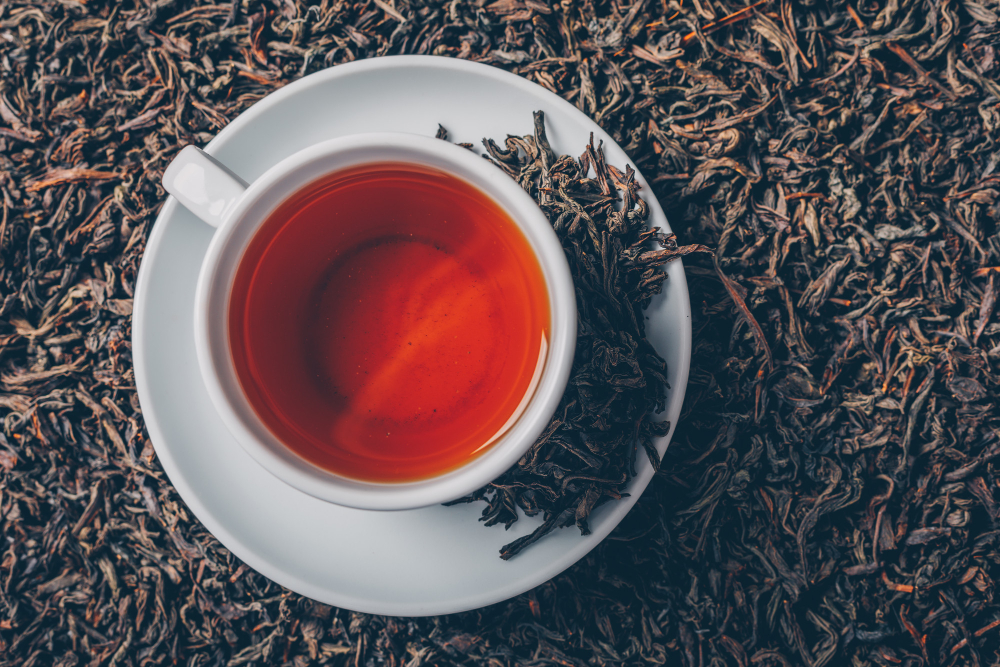
There is a common assumption that different teas come from different plants, in the way that apples and pears come from different trees.
They do not. The overwhelming majority of tea comes from one species, and the categories people buy are processing distinctions applied to the same raw material.
That is a more interesting fact than it first appears, because it means the entire range of flavour — from the grassy and delicate to the dark and malty — is produced by decisions made in a few hours after picking, using no ingredients at all.
The central decision concerns a reaction the leaf performs on itself, and everything else is about controlling when it starts and when it stops.
The Reaction That Does the Work
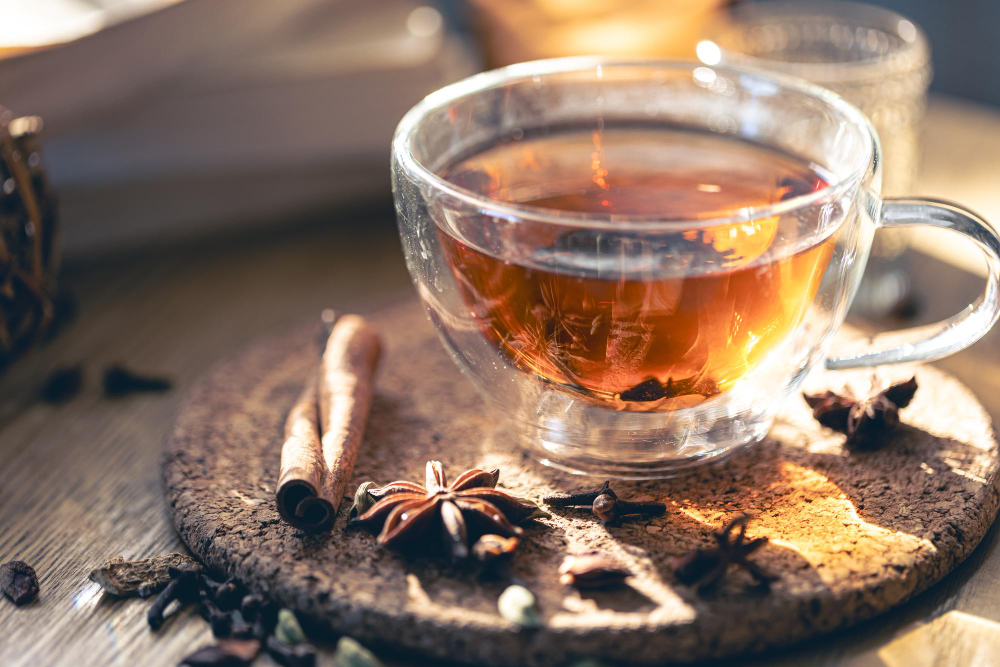
The process at the centre of tea production is the same one that browns a cut apple.
The leaf contains compounds and an enzyme that acts on them, held apart while the cell structure is intact. Damaging the leaf brings them together, and the compounds are converted into larger molecules that are darker in colour and completely different in flavour.
That reaction is frequently called fermentation in the tea trade, which is a misnomer — no microorganisms are involved and nothing is fermenting. It is enzymatic browning, driven by the leaf’s own chemistry and by oxygen.
It starts as soon as the leaf is damaged, proceeds at a rate depending on temperature and moisture, and continues until it is stopped.
Stopping it requires heat sufficient to destroy the enzyme, after which no further change of that kind occurs regardless of how long the leaf sits.
So the producer has a reaction running and a switch to turn it off, and the moment the switch is thrown determines what the tea is.
There is a naming caution worth adding. Category names are used differently in different producing and consuming markets, and the same word can describe substantially different products depending on who is using it.
The processing description is therefore more reliable than the label, which is part of why the trade describes teas by how they were made rather than only by type.
Like our content? Follow us for more.
The Categories Are Points on a Scale
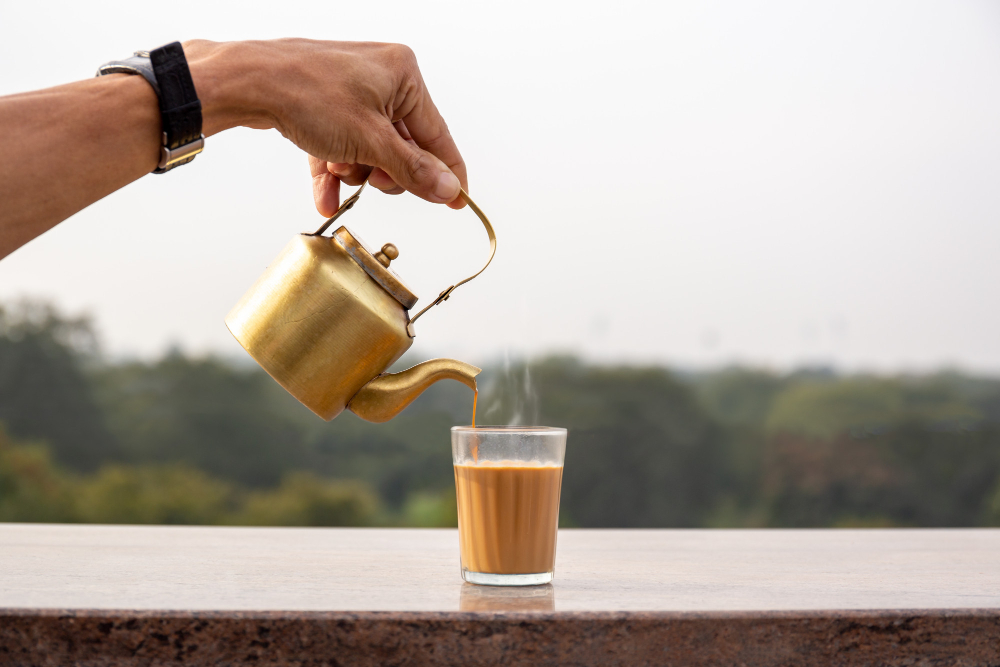
Once the mechanism is understood, the types organise themselves.
Green tea is heat-treated almost immediately after picking, before the reaction has had any meaningful opportunity to proceed. The compounds remain largely as they were in the fresh leaf, which is why it retains a vegetal character.
Black tea is allowed to run to completion. The leaf is deliberately damaged to expose the maximum surface, the reaction proceeds fully, and the resulting compounds are the dark, brisk, malty ones associated with it.
Oolong sits between the two, stopped partway, and the range within that category is enormous because partway covers a great deal of ground.
White tea is the least handled — picked, withered and dried with minimal damage, which means the reaction occurs to a limited degree simply because the leaf is drying rather than because anything was done to promote it.
Those are not four processes but one process stopped at four points, which is why the boundaries between categories are blurry and why producers argue about where they fall.
There is a scale point worth making. All of this happens within a day or two of picking, and frequently within hours, because the leaf begins changing as soon as it is removed from the plant.
That is why processing is carried out close to where the leaf is grown rather than at the destination, which shaped the whole geography of the industry.
The Steps in Between
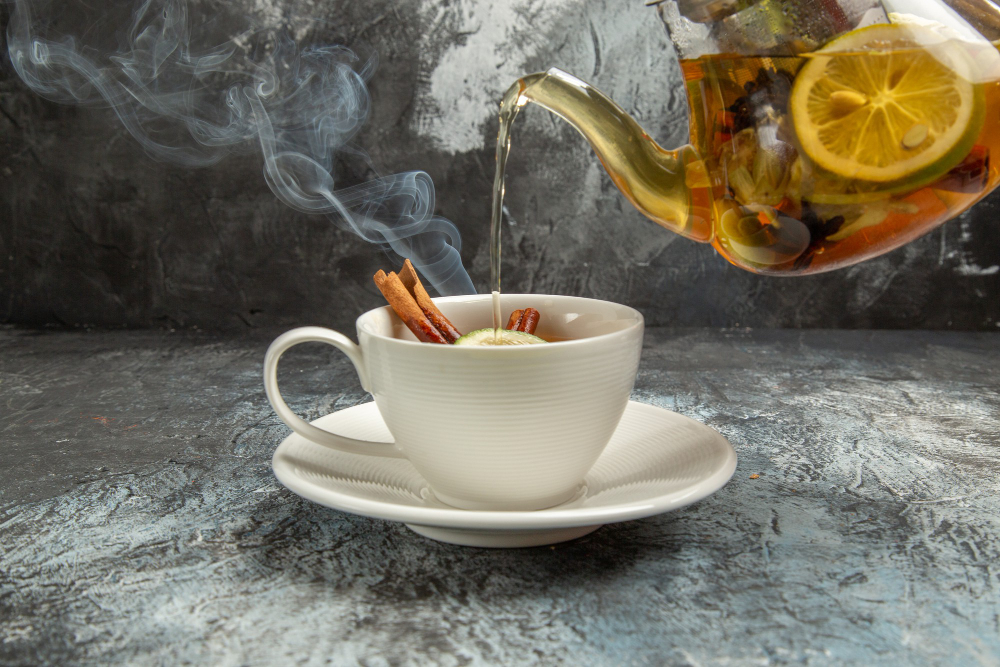
The full sequence involves several stages and each does something specific.
Withering removes moisture, which makes the leaf pliable enough to handle without shattering and concentrates what is in it. It also allows some chemical change to begin.
Rolling or otherwise damaging the leaf is what starts the reaction properly, by rupturing cells and bringing the enzyme into contact with its substrate. How thoroughly this is done determines how fast and how completely the reaction proceeds.
The oxidation period is simply time under controlled temperature and humidity, monitored by appearance and smell rather than by any instrument, and ended by judgement.
Heating stops it, by steaming, pan-firing or baking depending on tradition — and the method affects flavour substantially beyond merely arresting the reaction.
Drying reduces moisture to a level that permits storage, and further heating at this stage develops additional flavour.
Sorting and grading separate the result by leaf size and condition, which affects how it brews and is frequently mistaken for a quality scale.
The One That Actually Ferments
There is a category that truly involves microorganisms, which is worth distinguishing because the terminology is so confused.
Certain teas are subjected to a microbial process after the enzymatic stage, in which moulds and bacteria act on the leaf over an extended period under controlled conditions.
That is fermentation in the proper sense, it produces compounds entirely different from anything the enzymatic route generates, and it can continue for years.
The result is a category that improves with age in a way no other tea does, and that is traded and stored accordingly.
Confusing the two processes is extremely common, and the distinction matters because one is the leaf acting on itself over hours and the other is organisms acting on the leaf over years.
What the Plant Contributes
Processing dominates and the raw material is not irrelevant, which is worth stating.
Growing conditions affect the leaf substantially — altitude, temperature, rainfall, soil and shade all change the concentration of the compounds the process will work on.
Which leaves are picked matters enormously. The bud and the first leaves have a different composition from older leaves further down the shoot, and standards specifying what is plucked are a major determinant of the result.
Season matters, since the plant’s chemistry changes through the year, and certain flushes are prized for reasons that come down to what was in the leaf when it was taken.
And two main varieties exist within the species, differing in leaf size and chemistry, suited to different processing and different growing conditions.
So the raw material sets the range available and the processing determines where within that range the result falls.
The Judgement Involved
The human element is worth a section because it is the part that resists automation.
The oxidation stage has no fixed duration. It depends on the leaf, the weather, the humidity, how thoroughly the leaf was damaged and what the producer is aiming for — which means the decision to stop is made by somebody watching rather than by a timer.
The indicators are colour, which changes progressively from green through coppery to brown, and smell, which shifts through a sequence of stages that an experienced person can identify and describe.
That judgement is made repeatedly during a processing run, since different batches behave differently, and a delay of a short period in either direction produces a noticeably different product.
The same applies to withering, where the decision concerns how much moisture to remove, and to firing, where the question is how much heat for how long.
Those decisions compound. A batch withered slightly longer, damaged slightly more thoroughly and oxidised slightly further is a different tea from one processed a little differently at each stage, and the divergence is not linear.
Which explains something about the trade that otherwise looks like mystique. The reason two producers working with comparable leaf produce different results is that the process is a sequence of judgements made by people with different intentions, and the equipment is the least significant part of it.
Why It Is Worth Knowing
The practical consequence is that tea categories are less mysterious than they appear.
A tea that tastes grassy and delicate was stopped early. One that tastes dark and brisk was allowed to run. One that tastes of neither is somewhere in the middle, and the enormous variety within that middle is why oolong is such a broad category.
It also explains why brewing instructions differ so much between types. A minimally processed leaf contains compounds that extract quickly and become harsh, while a fully oxidised one contains compounds that need more heat and time — so the brewing requirement follows from the processing.
And it explains the trade in a way that origin labels do not. Two teas from the same garden, picked on the same day, can be entirely different products, because the divergence happened in the processing shed rather than in the field.
Which is an unusual situation for an agricultural product. For most crops the plant determines the result and the handling preserves it; for tea the plant supplies the possibilities and somebody decides, within a few hours, which one it is going to be.
And the range of that decision is the striking part. One leaf, one afternoon, and a set of choices that produce products with nothing obvious in common – which is why tea is sold as though it came from different plants and is not.
Like our content? Follow us for more.