There is a useful question to ask about any standardised object: what is actually setting the dimension?
For a great many things the answer is a material property or a manufacturing constraint. For bricks it is a person.
A brick is sized to be handled repeatedly, at speed, with one hand, for an entire working day, by somebody who is also managing mortar with the other. Make it larger and the work becomes unsustainable; make it much smaller and the number of operations required to build anything rises unacceptably.
That constraint has produced remarkably similar dimensions in places and periods with no connection to each other, which is the clearest possible evidence that the limiting factor is the hand rather than anything about clay.
What Firing Actually Does
The material transformation is worth understanding because it explains everything about durability.
Clay is a mineral that holds water within its structure, which is what makes it plastic and workable.
Drying removes the water between the particles, which makes the object rigid and entirely reversible — a dried unfired brick returns to mud if it gets wet.
Firing is different in kind. Above a certain temperature the mineral structure itself changes irreversibly, water chemically bound within it is driven off, and the particles begin to fuse at their contact points.
That fusion is the point. The object becomes a single ceramic mass rather than an assembly of particles, and it cannot revert — which is why a fired brick survives rain and a dried one does not.
Fire it further and more fusion occurs, producing something denser, harder, less absorbent and more brittle, and there is an optimum rather than a maximum.
Like our content? Follow us for more.
Why Colour Tells You About the Firing
The appearance is informative and is frequently misread.
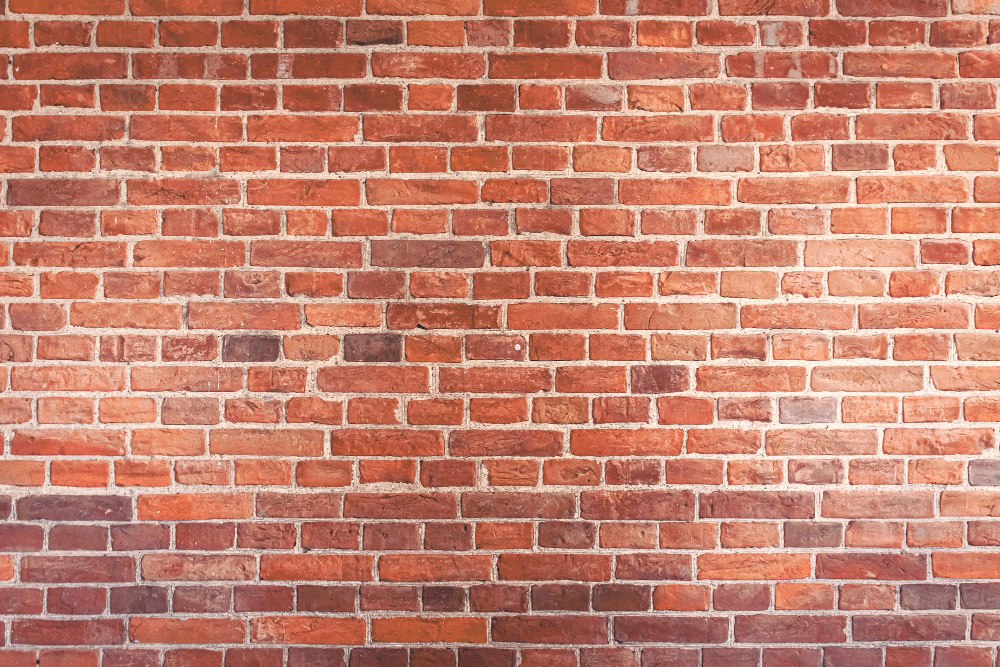
Colour comes mainly from iron compounds in the clay and from the conditions in the kiln.
With plenty of air available, iron oxidises and produces the familiar red range, with the depth depending on how much is present and how hot it was.
With air restricted, the iron takes a different form and the result shifts toward blue, grey and near-black — which is why bricks from the same clay can be entirely different colours.
Some clays contain little iron and fire pale regardless, producing the yellow and cream ranges associated with particular regions.
And position in the kiln matters enormously in traditional firing, since temperature and atmosphere vary across a load — which is why old brickwork contains a spread of colours from what was a single batch, and why that variation reads as character rather than as inconsistency.
The Bond
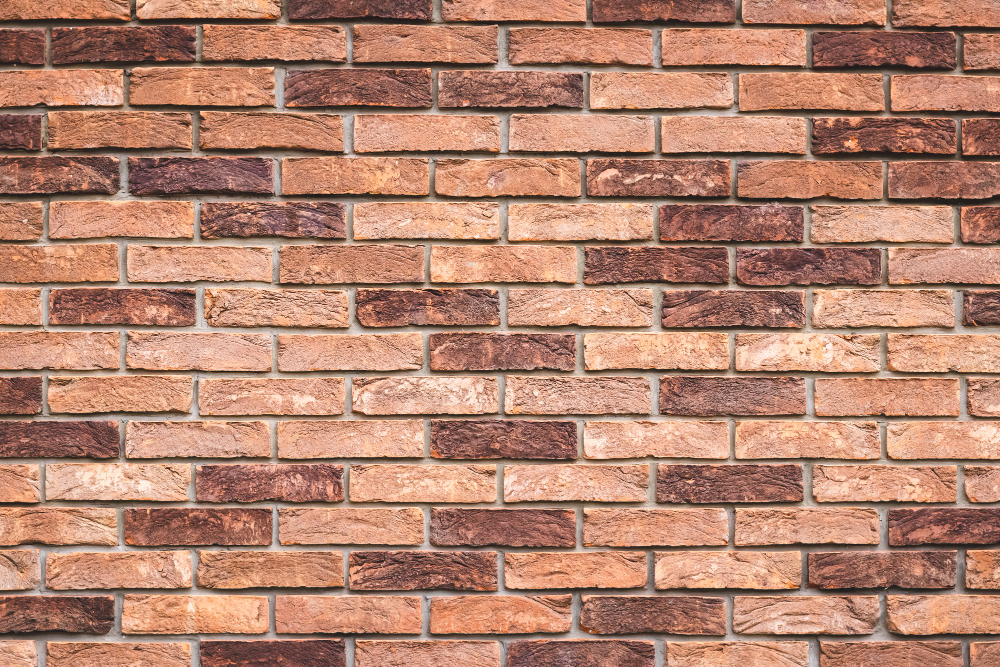
The arrangement of the bricks is structural rather than decorative, and it is readable.
A wall of bricks laid end to end in stacked columns has continuous vertical joints, which is a line of weakness running the full height — so any load or movement opens it.
Overlapping each course so that joints do not align distributes stress sideways and turns a stack of units into something that behaves as a mass.
Different overlapping patterns exist, and they differ in how they tie the thickness of the wall together as well as its length — because a wall more than one brick thick needs bricks laid across it periodically to connect the two faces, or it becomes two thin walls standing beside each other.
That is why patterns alternate long faces and short ends in various rhythms, and why the pattern visible on the surface tells you how the wall is constructed behind it.
A wall showing only long faces is a single layer, or is a facing attached to something else — which is an immediate and reliable reading of a building’s construction from the outside.
There is a size point worth noting. Because the limit is the hand rather than the material, a brick cannot usefully be made much larger – and where larger units were wanted, the answer was blocks handled differently, with two hands or with equipment.
That is a different trade rather than a bigger brick, and it changes how the work is done entirely.
The Mortar Question
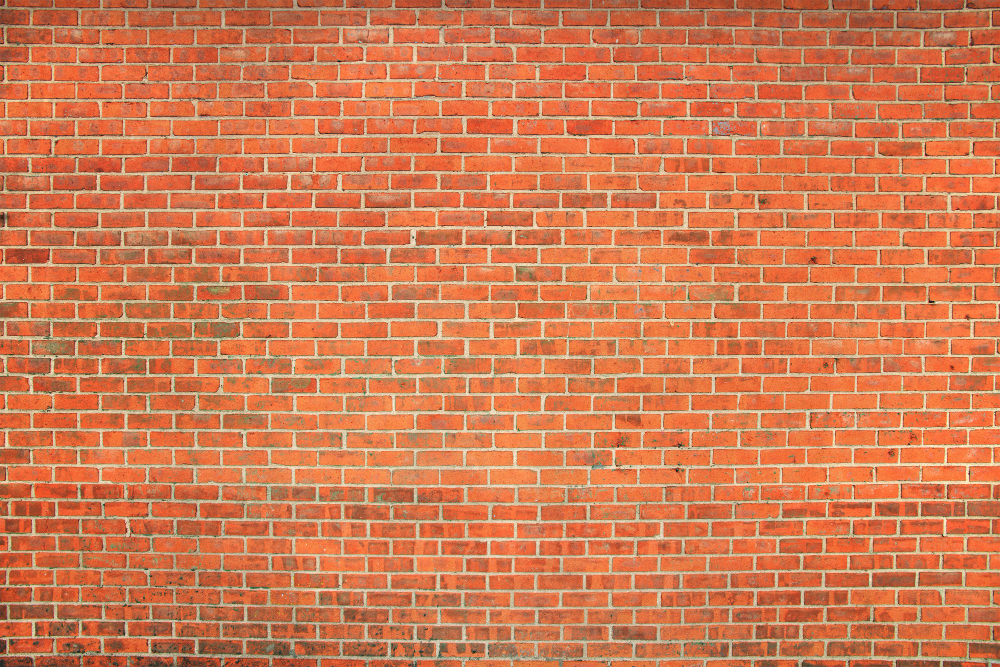
The joint material is where old and new buildings diverge, and it matters more than the bricks.
Mortar is not glue. Its function is to distribute load evenly across surfaces that are not perfectly flat, to fill gaps and to seal against weather.
The governing principle is that mortar should be weaker than the bricks. If it is, movement and moisture damage concentrate in the joint, which can be raked out and replaced.
If mortar is stronger than the brick, those stresses concentrate in the brick instead, which cracks, spalls at the face and cannot be replaced without dismantling the wall.
That is why repointing an old building with a hard modern mix causes damage, and why the damage appears in the bricks rather than in the repair.
The same logic applies to moisture. Traditional mortar allows water to evaporate through the joints, which protects the bricks; an impermeable joint forces evaporation through the brick face instead, and salt crystallising during that process breaks the surface.
Why Handmade and Machine-Made Differ
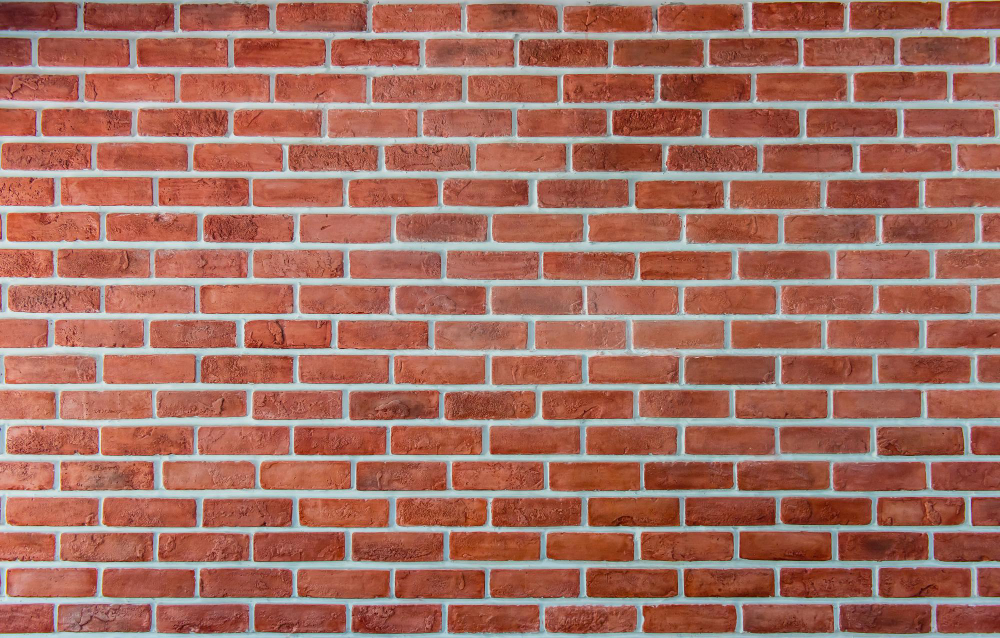
The manufacturing method leaves visible evidence.
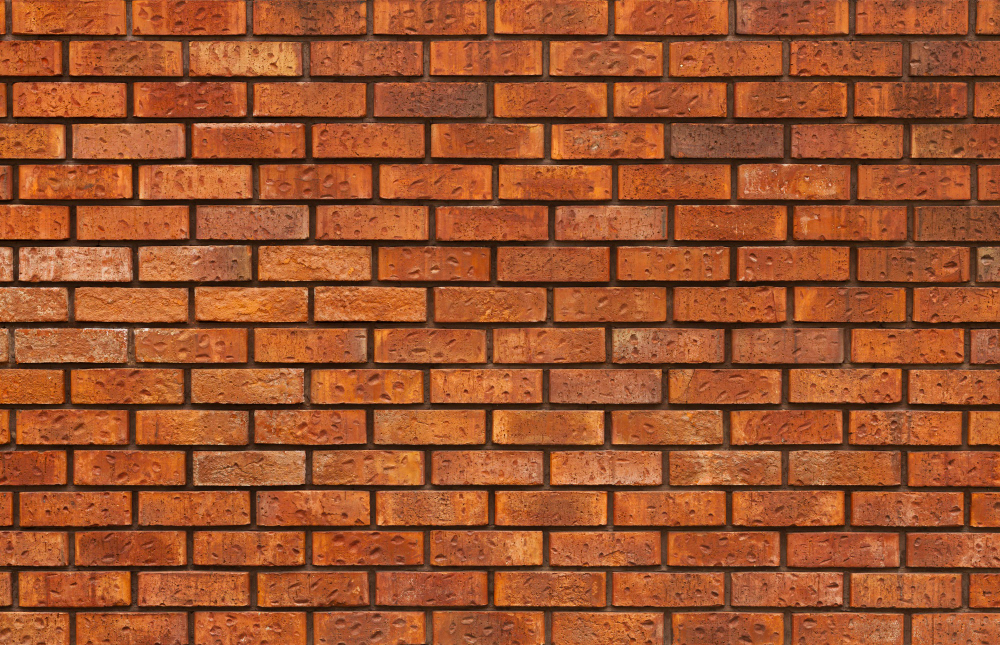
Hand-moulded bricks are pressed into a sanded mould and turned out, which produces slight irregularity, a soft texture, a sandy surface and a shallow depression from the moulding process.
Machine-made bricks are extruded as a continuous column and cut with wires, or pressed under high pressure, both of which produce sharp arrises, flat faces and dimensional consistency.
Those differences affect more than appearance. Irregular bricks require a thicker joint to accommodate variation, which changes the proportions of the wall; consistent bricks permit thin joints and a very different visual rhythm.
The surface matters too, since a slightly rough absorbent face grips mortar better than a smooth dense one, which is why the two are laid differently.
And the perforations in modern bricks are functional, reducing weight, saving material and allowing more even firing through the thickness — which is why a modern brick with holes is not a lesser object but a differently solved one.
Why Some Bricks Fail and Others Do Not
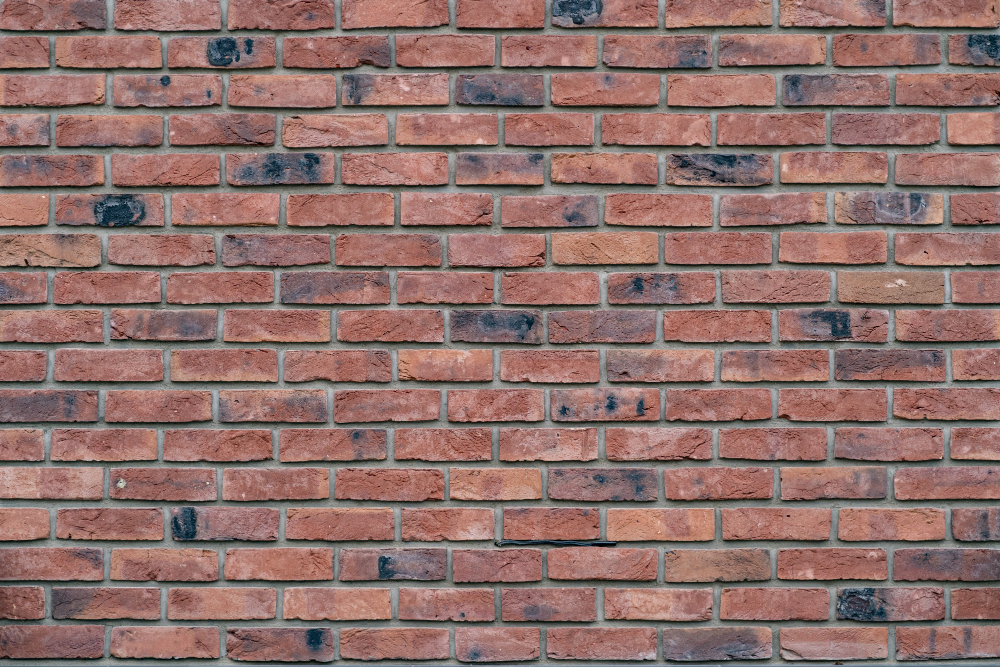
The pattern of decay is the most informative thing on any old elevation, and it has specific causes.
Bricks vary enormously in hardness depending on where they sat in the kiln, and a wall built from a single traditional firing contains the whole range — so the softest ones decay while their neighbours are untouched.
That produces the characteristic appearance of an old wall in poor condition: a scattering of eroded faces among sound ones, rather than uniform deterioration.
Position matters enormously. Bricks near the ground take up moisture, bricks beneath a failed gutter are wetted repeatedly, bricks at a parapet are exposed on several faces at once, and bricks on the weather side of a building receive far more than those on the sheltered side.
The damage mechanism is generally the same. Water enters the surface, dissolves salts present in the brick or arriving from elsewhere, and those salts crystallise as it evaporates — and crystallisation within the pores exerts enough pressure to break the face away.
Freezing does the same thing by a different route, since water expanding within the pores produces the same outward pressure.
That is why the damage appears as spalling — the face lifting off in flakes — rather than as general wear, and why it accelerates once it starts, because a broken face absorbs more water than an intact one.
And it explains why the hardest, densest, least absorbent bricks were used where exposure was worst, which is a decision visible in almost any well-built older wall if you look at where the different bricks went.
Reading a Wall
The practical upshot turns a building elevation into something legible.
Look at the pattern of long faces and short ends, which tells you the thickness and construction.
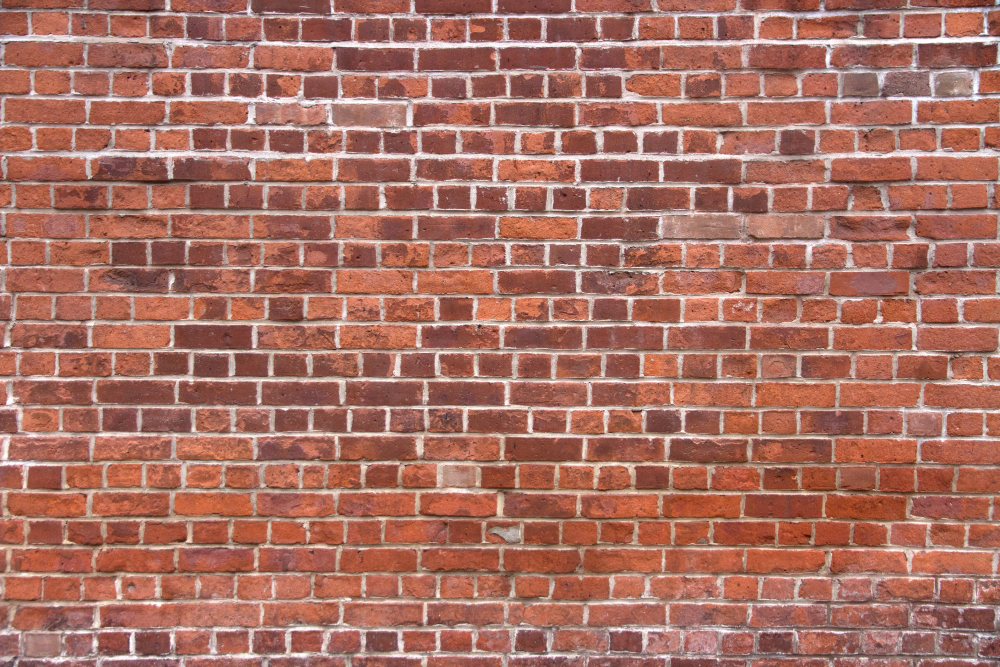
Look at the joints — their width, their profile, whether they are recessed or flush, and whether they are original or a later repair, since repointing is usually obvious and frequently the wrong material.
Look at the colour spread within a wall, which indicates whether the bricks came from a traditional variable firing or a controlled modern one.
Look at where bricks have decayed, since the pattern of damage identifies where water has been sitting and what was done to the wall.
And look at changes in any of those across an elevation, because a change in brick, bond or joint marks an alteration — a blocked opening, an extension, a rebuild — which is frequently the most interesting thing a wall has to say.
Which makes brickwork unusually communicative for a building material. Every unit was placed by somebody in a pattern that had to be decided, and the whole history of alterations to a building is recorded in the joints between them.
Like our content? Follow us for more.