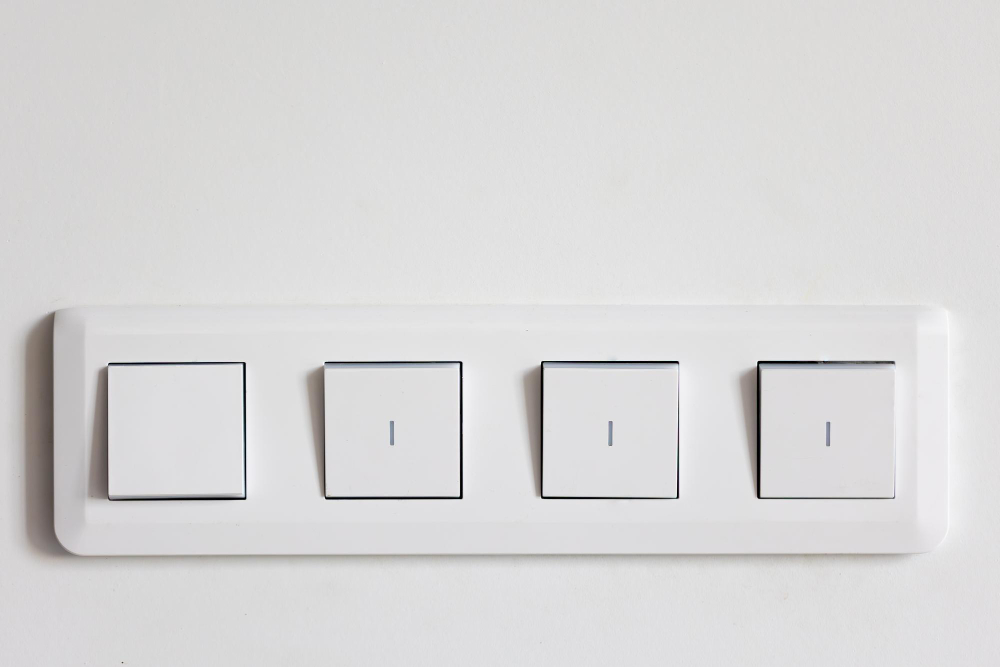
This is one of those differences that nobody notices until they travel, and then cannot stop noticing.
In the United States, up is on. The toggle points to the ceiling when the light is lit, and an American walking into a dark room runs a hand up the wall and pushes upward. In Britain and across a great many countries that followed British electrical practice, it is the reverse: down is on, and the switch is pressed downward to light the room.
Both are overwhelmingly consistent within their own territory. Both are learned so early that they stop being conscious. And when people encounter the other one, the usual assumption is that somebody simply installed it backwards, or that it is an arbitrary historical accident with no reason behind it.
It is not arbitrary. The two conventions come from genuinely different design priorities, and once you know what each one was worrying about, both of them make sense.
The American Logic: Up Means On Everywhere Else
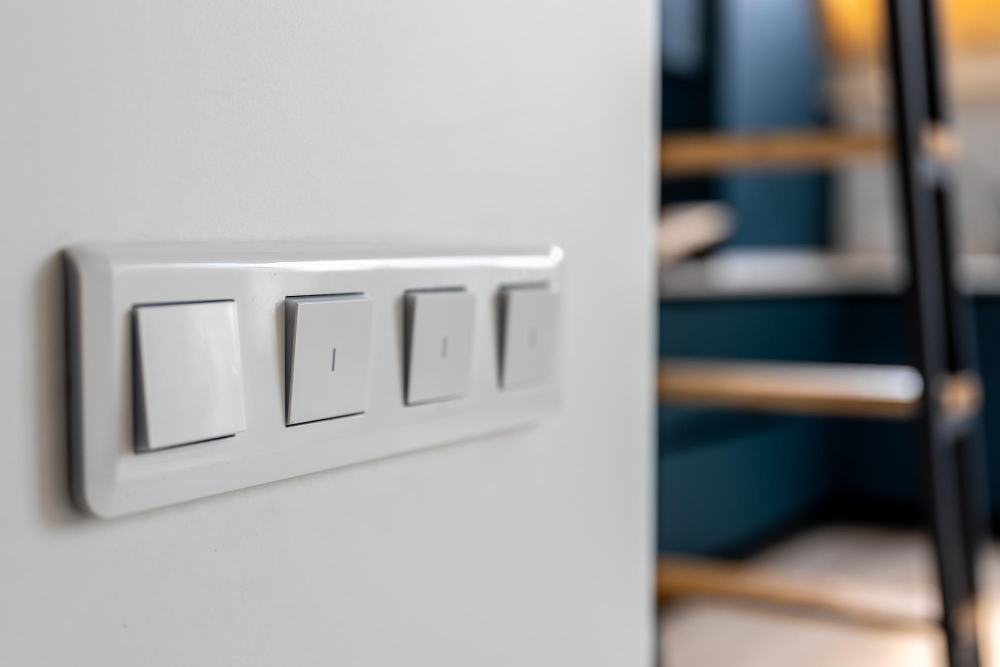
The American convention rests on consistency with everything else that moves.
Across an enormous range of American controls, up or forward means more, active, engaged. A circuit breaker is switched up to close the circuit. A lever is pushed up to engage. On industrial and domestic equipment generally, the active position is the raised one. There is an intuition underneath this that is genuinely widespread – up as positive, more, alive – and American electrical practice simply aligned the light switch with it.
The practical benefit is real. A wall of switches in an American building reads at a glance: everything pointing up is on, everything pointing down is off. Somebody leaving a building can scan a panel and see the state of the whole thing without testing anything. The same logic applies to a breaker panel, and the fact that the breaker and the light switch work the same way is not a coincidence – consistency across the system was the point.
So the American question was: what should the position of the switch tell you? And the answer was: the same thing every other control in the building tells you.
Like our content? Follow us for more.
The British Logic: Gravity Should Not Be Able to Turn It On
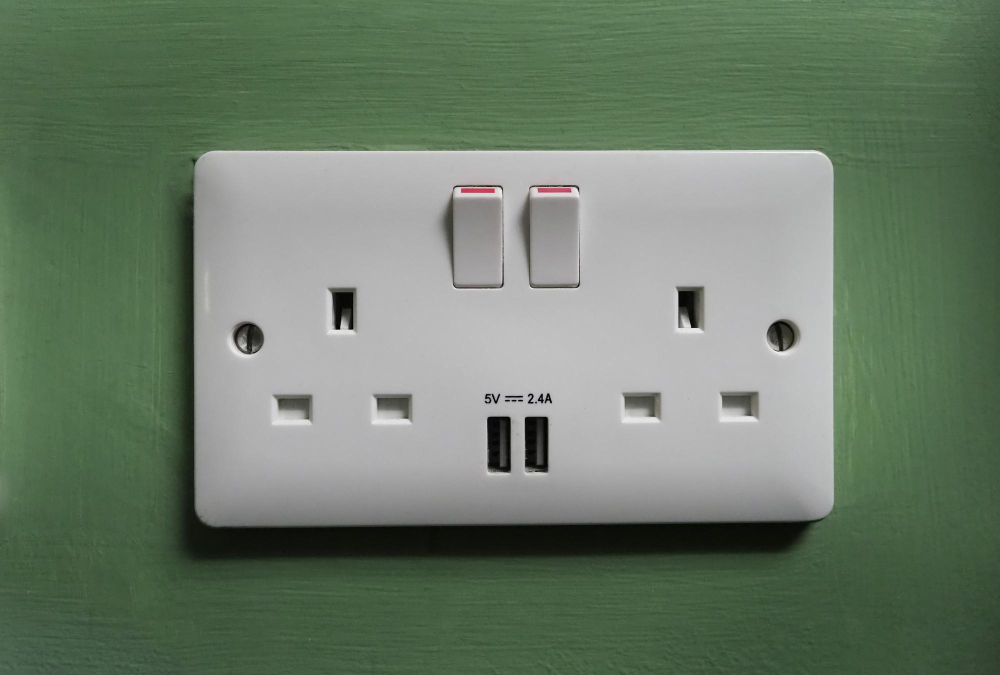
British practice answered a different question, and the question was about failure.
Consider a switch mechanism that is worn, or badly made, or jarred by a slam of a door or a knock against the wall. Consider a toggle that is not quite seated. In those circumstances, gravity has a vote – and a switch that is heavy enough, or loose enough, will tend to fall towards the down position.
If down is off, gravity is on the side of safety. A switch that drifts or is knocked will tend to turn the circuit off. If up is off, the opposite is true: the failure mode of the mechanism is to energise the circuit.
This mattered a great deal more in early domestic wiring than it does now. Mechanisms were cruder, insulation was worse, and the consequences of a circuit being live when everybody believed it dead were correspondingly more serious. British practice also developed a broader habit of designing for the dangerous case rather than the convenient one, which shows up elsewhere in the same tradition – fused plugs, switched socket outlets, and a general preference for making the unsafe state require deliberate action.
So the British question was: what happens when this thing goes wrong? And the answer was: it should go off.
Neither Country Decided This Centrally
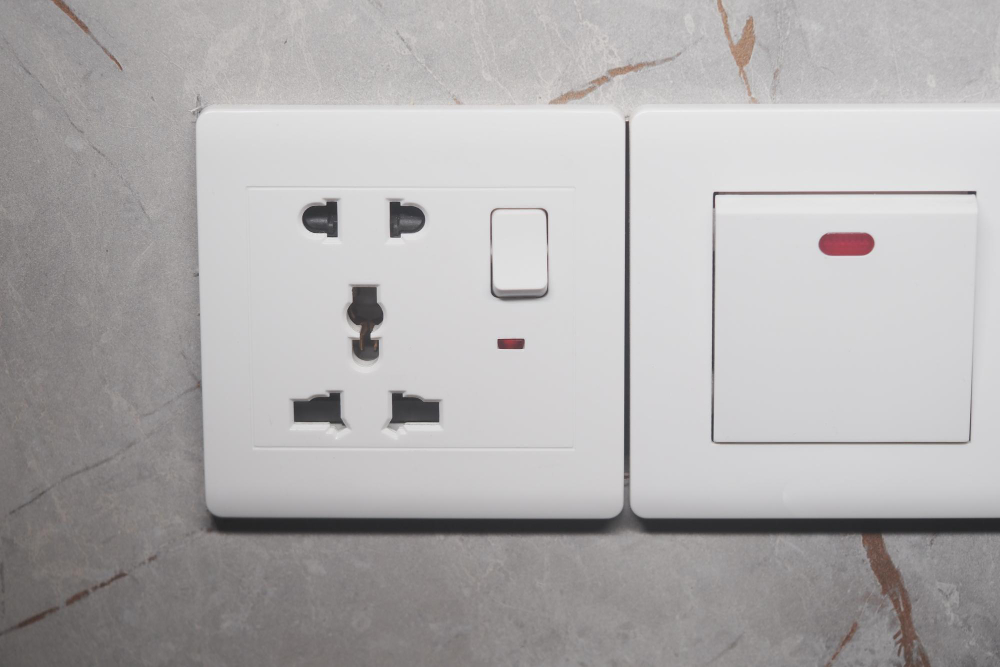
It is worth being clear that neither convention was handed down as a single ruling, which is why the explanations above are about priorities rather than about a decision in a room.
Electrical installation in both countries developed through a mixture of manufacturers’ practice, insurers’ requirements, wiring rules written by professional bodies, and local building regulation, assembled over decades. A convention like this emerges from thousands of installers doing what the equipment in front of them encouraged and what the people who trained them did.
Once a convention is widespread, it becomes self-enforcing for a reason that has nothing to do with its merits: an installer who wires a switch the other way round creates a hazard, because the occupants will read it wrongly. At that point the question of which convention is better stops mattering and the only thing that matters is doing what everybody else in the country does. Both conventions locked in that way.
The Mechanism Differences Reinforced It
The hardware in the two countries diverged as well, and the hardware made each convention feel natural.
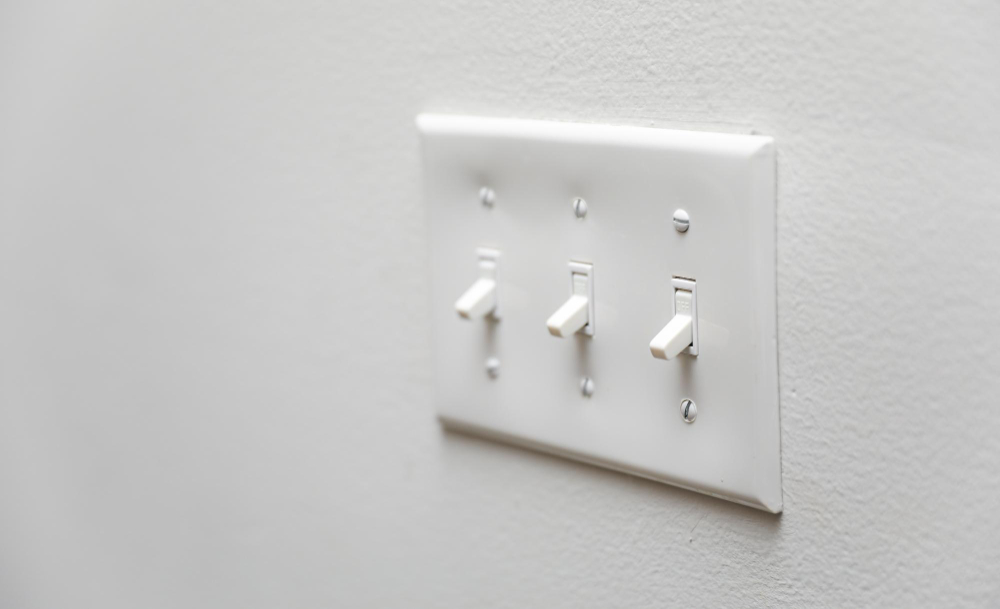
The classic American switch is a toggle – a small lever that physically points, which is what makes the up-is-on reading legible from across a room. The pointing is the whole user interface, and a convention about which direction means on is essential to it.
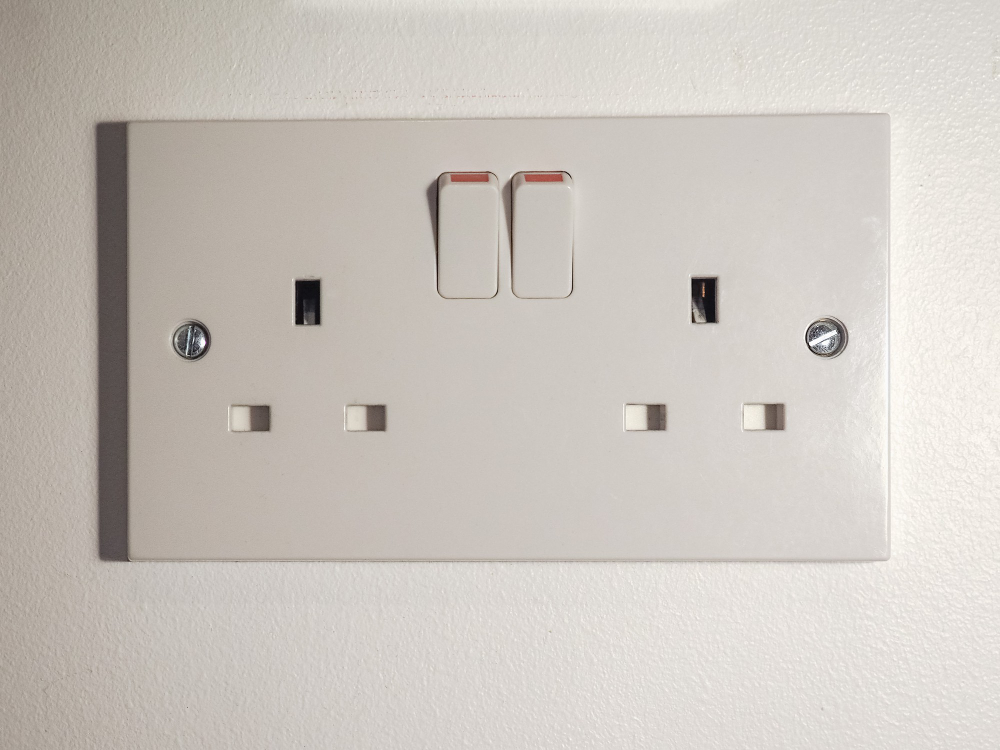
Much British and European switching moved to a rocker or plate design, a flat paddle that sits nearly flush and does not point in the same obvious way. On a rocker the visual signal is weaker, so the directional convention does less work, and a great many modern installations in those countries are large flat plates where the position is barely readable at a glance at all.
That difference explains something people often notice: Americans tend to be very confident about reading a switch’s state from across the room, and people from rocker-switch countries tend not to try, because their switches have never told them much.
Where It Gets Complicated, Including in America
Neither convention is as tidy as the generalisation suggests, and the exceptions are instructive.
Three-way switching – two switches controlling one light, as at the top and bottom of a staircase – breaks the American convention outright. With that arrangement there is no fixed up-is-on position, because the state of each switch depends on what the other one is doing. An American staircase light can perfectly well be on with both switches down, and everybody simply accepts that those switches do not follow the rule.
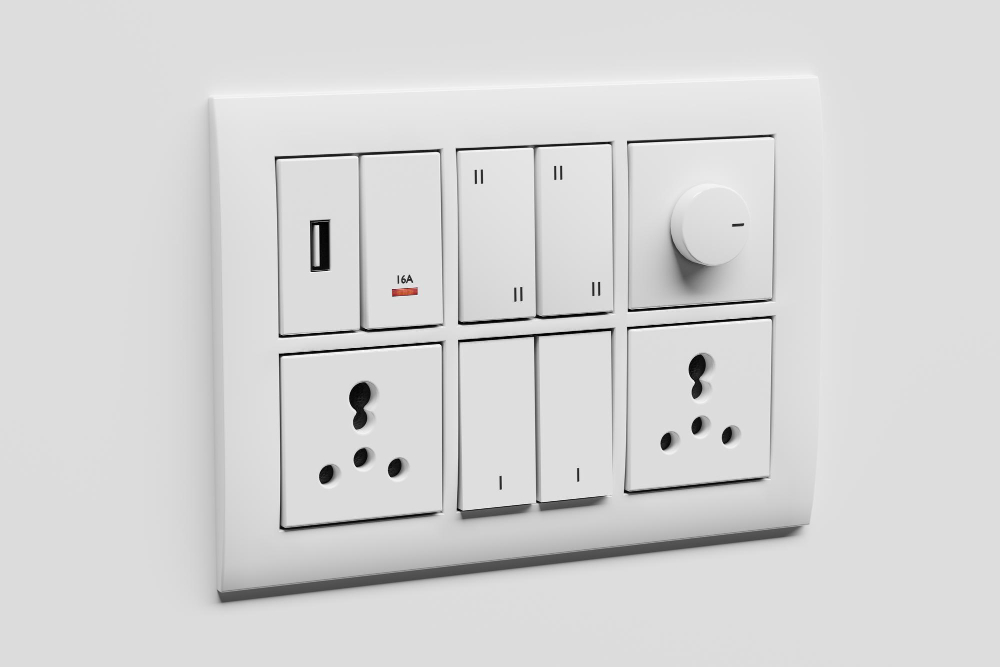
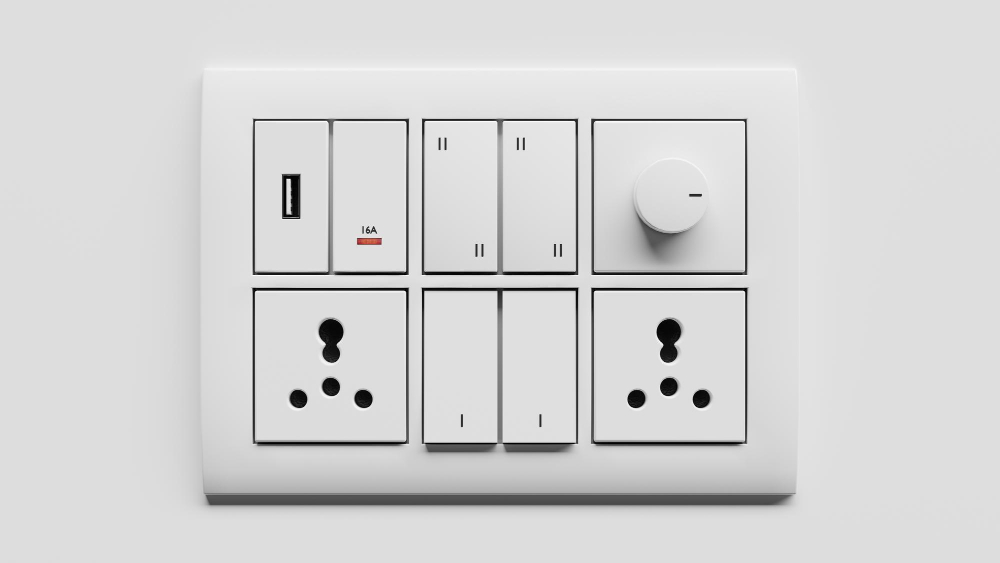
Multi-gang panels, dimmers, smart switches and the various paddle and rocker styles now common in American building all weaken the signal further. A modern American paddle switch points much less than an old toggle did.
And a good deal of equipment in both countries ignores the local convention entirely, because it was designed for an international market and the manufacturer chose one arrangement for everywhere.
What This Actually Tells You
The reason this difference is worth more than a paragraph is that it is a very clean example of something that happens throughout engineering: two reasonable groups of people, facing the same problem, optimise for different things and arrive at incompatible answers that are each internally correct.
The American convention optimises for legibility. It assumes the switch will work properly and asks how to make its state readable at a glance across a whole building, consistently with every other control.
The British convention optimises for failure. It assumes the switch may not work properly and asks what the mechanism should do when it misbehaves.
Neither priority is wrong. They simply cannot both be satisfied by one convention, because the safe failure direction and the intuitive active direction happen to be opposite. Once each country picked, the choice propagated into training, manufacturing, building codes and the habits of entire populations, and became effectively permanent – not because anybody defends it, but because changing it would mean a period during which nobody could trust a switch.
The One Place the Two Traditions Agree
There is a revealing exception, and it is worth noticing because it shows that the British argument was never dismissed in America.
Look at a switch that controls something genuinely dangerous rather than a ceiling light – an isolator for a machine, a disconnect on industrial equipment, an emergency stop. In both traditions, and in international practice generally, the safe position on those is unambiguous, clearly marked, and frequently designed so that it can be locked there and so that getting to the live position takes deliberate effort. The design priority on a machine isolator is the British priority: assume it will be relied on when somebody’s hands are inside the equipment, and make the failure direction safe.
So American practice has not actually rejected failure-mode reasoning. It applies that reasoning where the consequence of a surprise is severe, and applies legibility reasoning to a light switch, where the consequence of a surprise is a dark room.
Seen that way the two conventions are less opposed than they look. Both traditions agree that the stakes decide the priority. They disagree only about how high the stakes are on an ordinary domestic lighting circuit – and in the era when these conventions were forming, with the wiring and insulation of the time, the British assessment of those stakes was arguably the better-calibrated one.
The Honest Summary
Up is on in America because American electrical practice aligned the light switch with the direction that means active across almost every other control, including the circuit breaker, so that the position of a switch would be readable at a glance and consistent throughout a building.
Down is on in Britain because British practice weighted the failure case more heavily: a worn, loose or jarred switch tends to fall downward, and if down is off then gravity pushes a failing switch towards the safe state rather than the live one.
Neither was decided centrally. Both emerged from manufacturers, insurers, wiring rules and installer training, and both locked in hard, because once a country reads switches one way, installing them the other way is itself the hazard.
So the next time an American reaches for a switch abroad and turns the light off, it is not that one of the two countries got it wrong. It is that one of them was thinking about reading the switch and the other was thinking about the switch breaking.
Like our content? Follow us for more.