

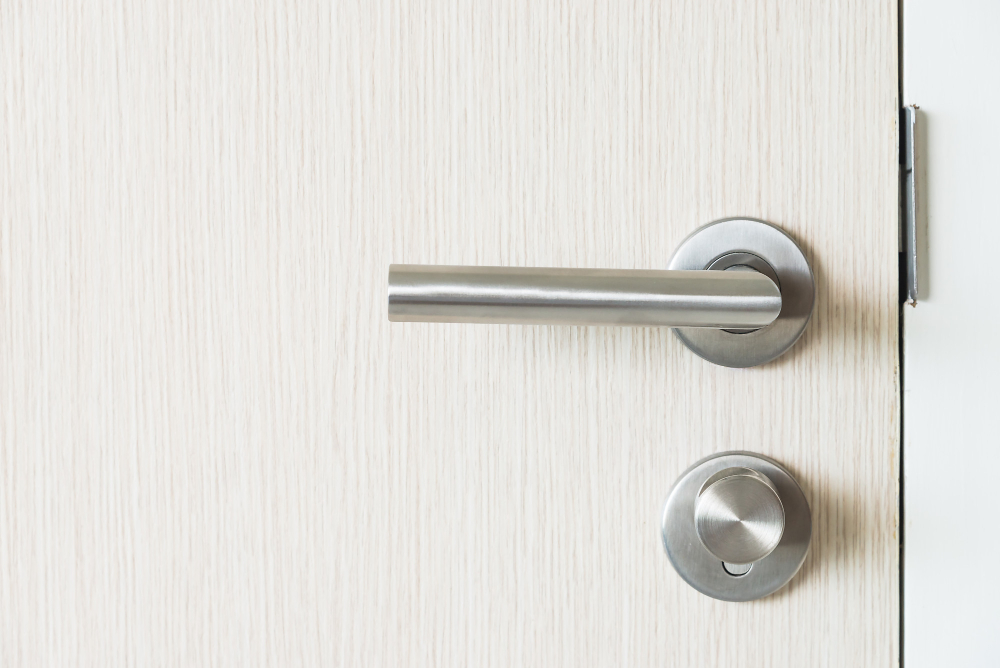
There is a pattern in American buildings that is so consistent it looks designed, and in a sense it was.
Commercial, public and institutional buildings use lever handles. Houses use round knobs. The boundary is sharp enough that you can usually tell what kind of building you are in by the hardware before you look at anything else, and an American who has never thought about it will still reach correctly for either one.
The reason is not fashion, and it is not that levers are newer – lever handles are older than round knobs in much of Europe and have been available in the United States the whole time. The reason is that one kind of building was required to change and the other kind was not.
What Is Actually Wrong With a Round Knob

Start with the mechanical problem, because the law did not invent it.
Turning a round knob requires gripping it and rotating the wrist. That combination – a closed grip plus rotation plus enough friction to avoid slipping – is specifically difficult for a very large number of people. It is difficult with arthritis. It is difficult with limited hand strength, with a tremor, with reduced sensation, with a prosthesis, with a cast or a bandage, with wet or cold hands, and with a hand that is holding anything at all.
A lever requires none of that. It can be operated with a closed fist, a forearm, an elbow, a hip, a knee, a walking stick or a wheelchair armrest. It needs no grip and no rotation, only downward force in roughly the right place.
This is not a marginal improvement. For a person with significant hand impairment, a round knob on a door is the difference between a room being accessible and not, and the alternative when nobody has fixed it is to wait for somebody else to open it.
Like our content? Follow us for more.
The Law

In 1990 the United States passed comprehensive civil rights legislation prohibiting discrimination on the basis of disability, and it covered the built environment: places of public accommodation, commercial facilities, and state and local government buildings.
The accessibility requirements written under that legislation set out detailed physical standards, and among a great many other provisions they addressed operable parts – the things a person has to use to work a building. The governing principle for door hardware is that it should be operable without tight grasping, without pinching and without twisting of the wrist.
A round doorknob fails that test by definition. It is the twisting of the wrist. There is no version of a knob that satisfies the requirement, which is why the transition in covered buildings was not gradual or stylistic but effectively total.
Levers satisfy it straightforwardly, and so do push plates, panic bars, automatic operators and various loop and pull designs. Levers won in most interior applications because they are cheap, familiar, available in every finish and fit the same door preparation as a knob, which means replacing one with the other is a small job.
Why Houses Were Left Alone
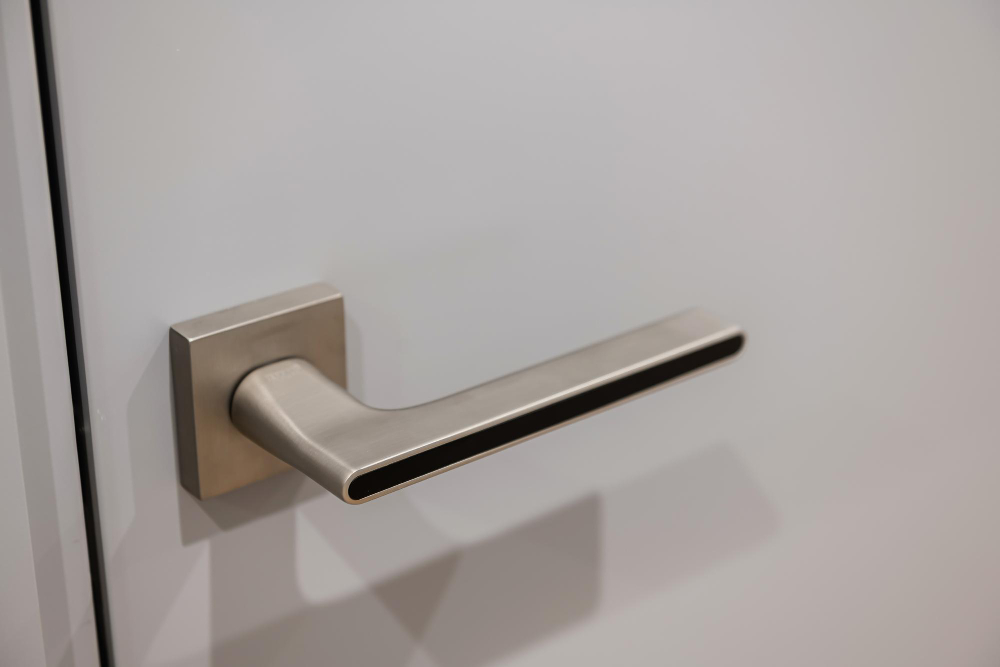
Here is the part that explains the split.
The legislation governs public accommodations, commercial facilities and government buildings. A private single-family home is none of those. A homeowner is not providing a public accommodation by living in their house, and the law does not reach into it.
Separate American law does address accessibility in housing, with requirements that apply to certain multi-unit residential buildings and to housing receiving public funds, and those requirements have had a real effect in apartment construction. But the great bulk of American housing stock – detached single-family houses, owner-occupied, built before 1990 or since – sits outside any requirement to use accessible hardware.
So the knob stayed. Builders kept fitting them because buyers expected them, buyers expected them because that is what houses had, and the replacement cycle for door hardware in a house is measured in decades. Nothing pushed against it.
The Secondary Reasons the Knob Held On at Home
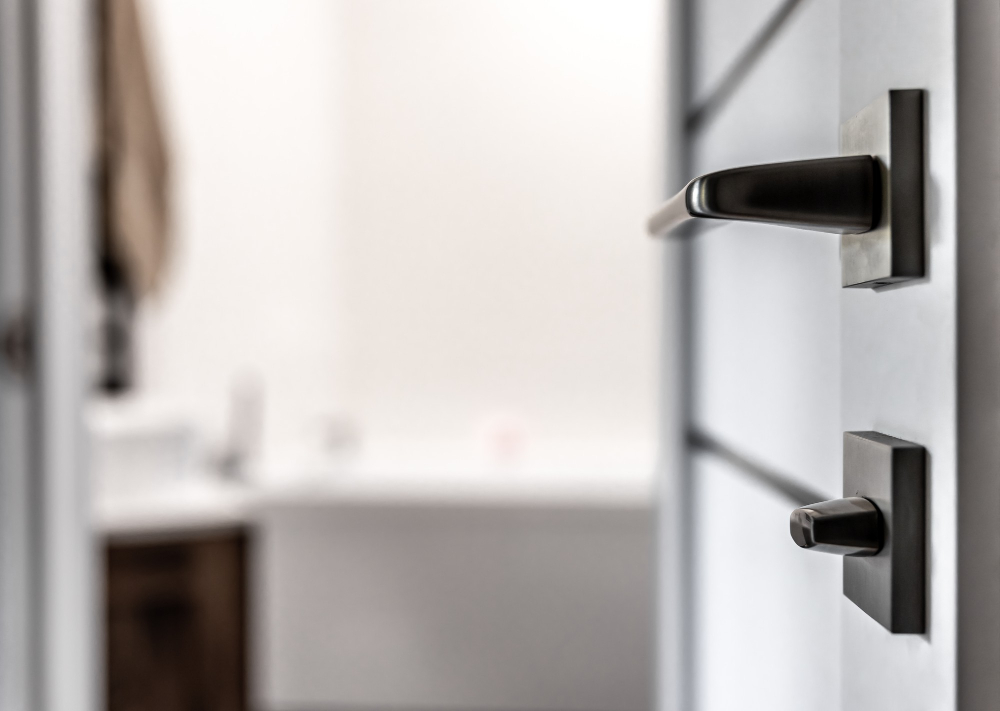
Beyond the absence of a requirement, several ordinary things kept round knobs in American houses, and they are worth naming because they explain why the split has persisted for three and a half decades.
Levers catch things. A lever projects, and it reliably hooks a pocket, a belt loop, a bag strap or a sleeve in a narrow domestic hallway in a way a knob does not. Anybody who has been stopped short by a lever handle knows the sensation, and in a tight house it happens often.
Levers are easier for children and animals to open, which cuts both ways. A toddler who cannot work a knob can frequently work a lever, and a number of dogs and cats can too. For a household wanting a door to stay shut, the knob is the better fastener – which is precisely the same property that makes it a barrier.
And there is simple aesthetic conservatism. The round knob reads as domestic and traditional in American visual culture, and the lever reads as institutional, partly because of this very history. A great many American buyers associate levers with offices and hospitals, which is not what they want their hallway to look like.
What the Rest of the World Did

The American pattern is distinctive, and the comparison is instructive.
Across much of Europe the lever handle was already the domestic norm long before accessibility legislation existed anywhere, for reasons of hardware tradition rather than policy – different lock cases, different door constructions and different manufacturing history. A European house with levers throughout is not making an accessibility statement; it is doing what European houses have done for a century.
Which means that when accessibility requirements arrived in those countries, door hardware was largely a non-issue in housing. The change that was dramatic and visible in the United States was invisible elsewhere, because the starting position was already compliant by accident.
That is worth sitting with. The reason an American can tell an office from a house by the handles, and a German cannot, is not that one country cares more about access. It is that one of them happened to start from hardware that needed replacing.
The Thing Most People Get Backwards
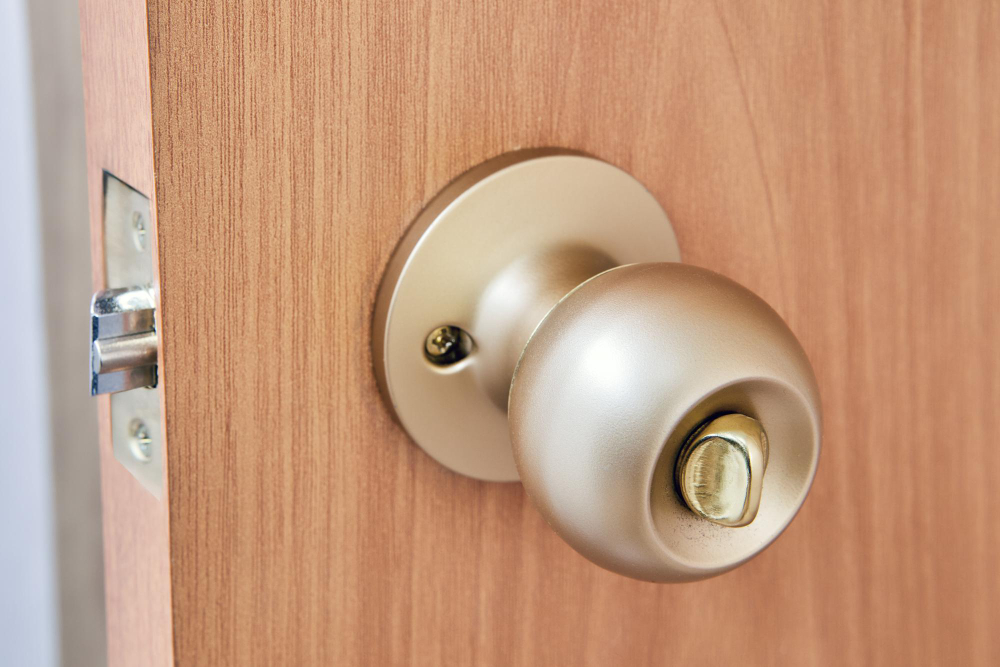
A common assumption is that lever handles in American buildings are a modern design trend that filtered down from architecture, and that houses simply have not caught up yet.
The causation runs the other way. The levers are in commercial buildings because a civil rights statute made the round knob non-compliant, and they are absent from houses because that statute deliberately does not regulate private homes. Design preference followed the requirement rather than producing it – and the reason levers look institutional to Americans is that institutions are where the law put them.
There is also a widespread belief that this was a building-code change. It was not, in origin. Accessibility requirements written under civil rights law and subsequently incorporated into model building codes and state adoptions are two different mechanisms arriving at the same place, and the first one came first. The distinction matters because it explains the scope: a building code regulates construction generally, while this legislation regulates discrimination, which is why its reach is defined by what a building is used for rather than by how it is built.
The Round Knob Was Itself a Replacement
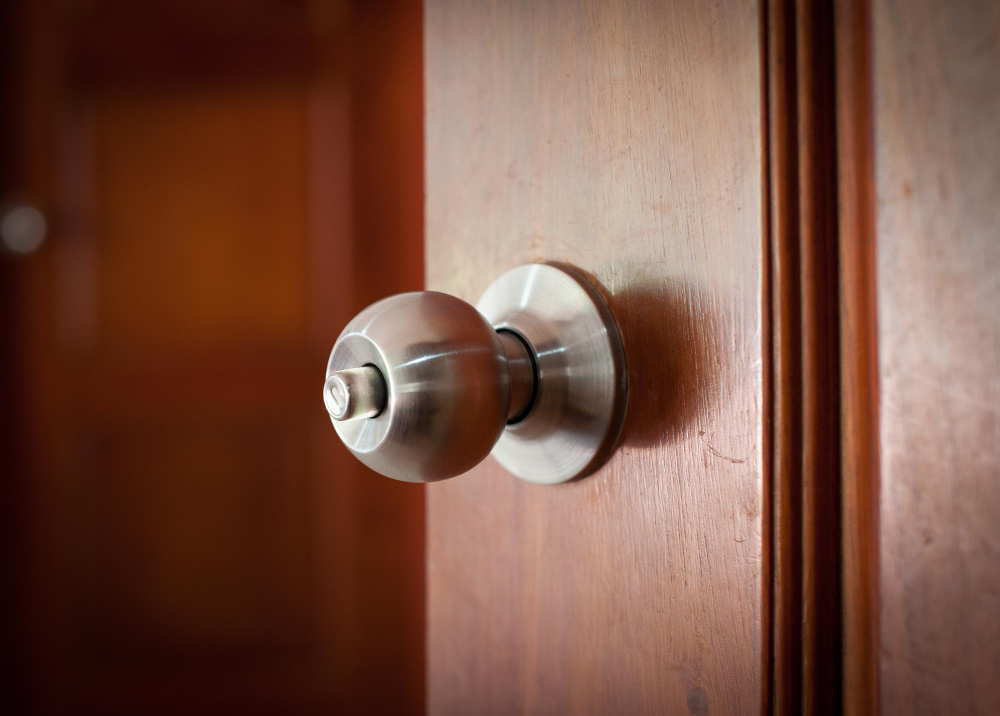
One more piece of the history undercuts the idea that the knob is the natural or original form, and it is worth knowing because it shows the hardware has turned over before.
Doors were fastened for most of history by latches operated with a thumb, by rings, by bars and by simple catches, none of which required a grip-and-twist action. The round knob with an internal spindle and a sprung latch is a product of nineteenth-century manufacturing – it became cheap and ubiquitous in the United States because it could be mass-produced in cast metal, pressed glass and later pressed steel in enormous quantities, in every price grade from plain to decorative, and because it suited the standardised door preparation that American millwork settled on.
In other words the knob won in America for manufacturing reasons rather than ergonomic ones. It was cheap, it was available in a thousand finishes, it fitted the hole the door already had, and the question of who could operate it was not one anybody was asking.
That makes the modern split less surprising. A fitting adopted for production reasons, before accessibility was a consideration at all, turned out to be a barrier once somebody did consider it. In covered buildings it was replaced. In houses, where the same production logic still applies and no requirement intervened, it was not.
The Honest Summary
American commercial and public buildings have lever handles because a round doorknob cannot satisfy the requirement that operable parts work without tight grasping or twisting of the wrist – a requirement written under the 1990 disability civil rights legislation, which covers public accommodations, commercial facilities and government buildings.
American houses still have round knobs because that legislation does not reach a private single-family home. Separate housing law addresses certain multi-unit and publicly funded residential buildings, but the bulk of American detached housing is under no obligation at all.
The knob then held on at home for ordinary reasons: levers snag clothing in tight hallways, levers are easier for small children and animals to open, and American buyers read levers as institutional precisely because that is where the law put them.
Much of Europe never had the split, because levers were already the domestic norm there for unrelated manufacturing reasons and were compliant before anybody required compliance.
So the split in American door hardware is a map of a legal boundary. On one side of it the law required a change, and on the other side it did not.
Like our content? Follow us for more.
