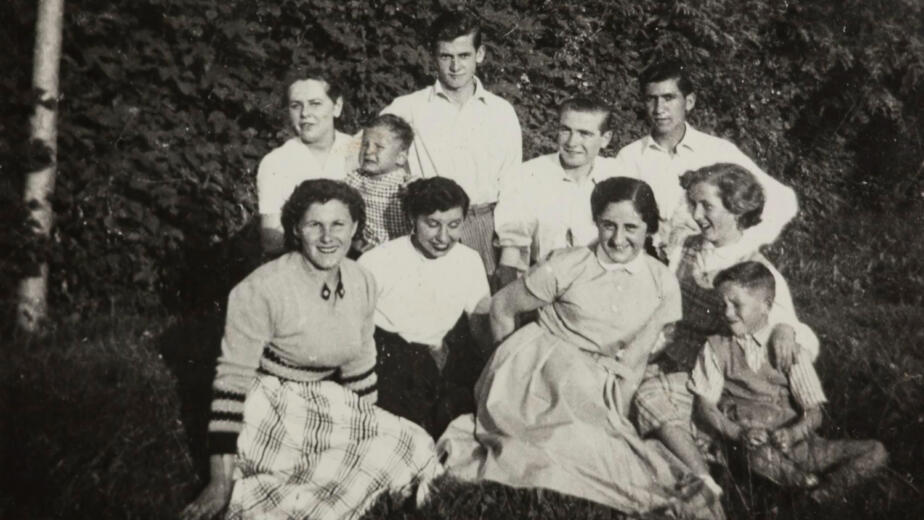
In 1973 Vacation Bible School took a full week of the summer – five weekday mornings, three or four hours at a time, free.
The hall was built into a jungle or a western town out of cardboard and crepe paper by volunteers over two evenings. The songs had hand motions and were repeated until they stuck permanently. A bus went round the neighbourhood collecting children whose families could not bring them. And most of the children there did not belong to the church at all.
Here are sixteen things every child did at Vacation Bible School in 1973, and what became of each one.
1. It Ran All Week, All Morning, for Free
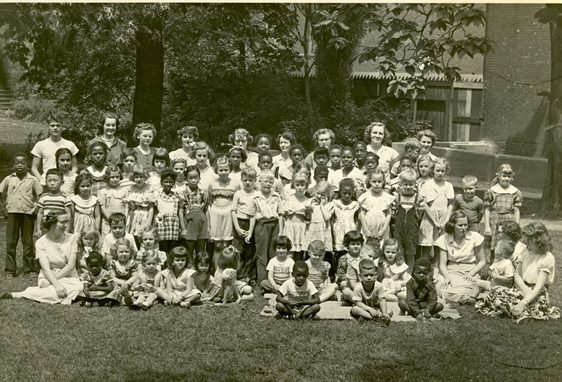
Vacation Bible School occupied a full week of the summer – typically five consecutive weekday mornings, three or four hours each, sometimes with lunch – and it cost nothing or close to nothing to attend.
Still widely run, generally shorter, frequently charged for, and often restructured as an evening or part-week programme. The length is what made it significant: a free, supervised, five-morning programme in the middle of the school holidays solved a real problem for a great many households.
That problem is the honest explanation for a large share of the attendance. Summer was long, both parents in a growing number of households were working or busy, organised childcare was expensive and scarce, and here was a week of it staffed by volunteers at no charge. Faith was the stated purpose and childcare was the operating function, and the people running it understood that perfectly well.
Like our content? Follow us for more.
2. The Whole Building Was Decorated to a Theme
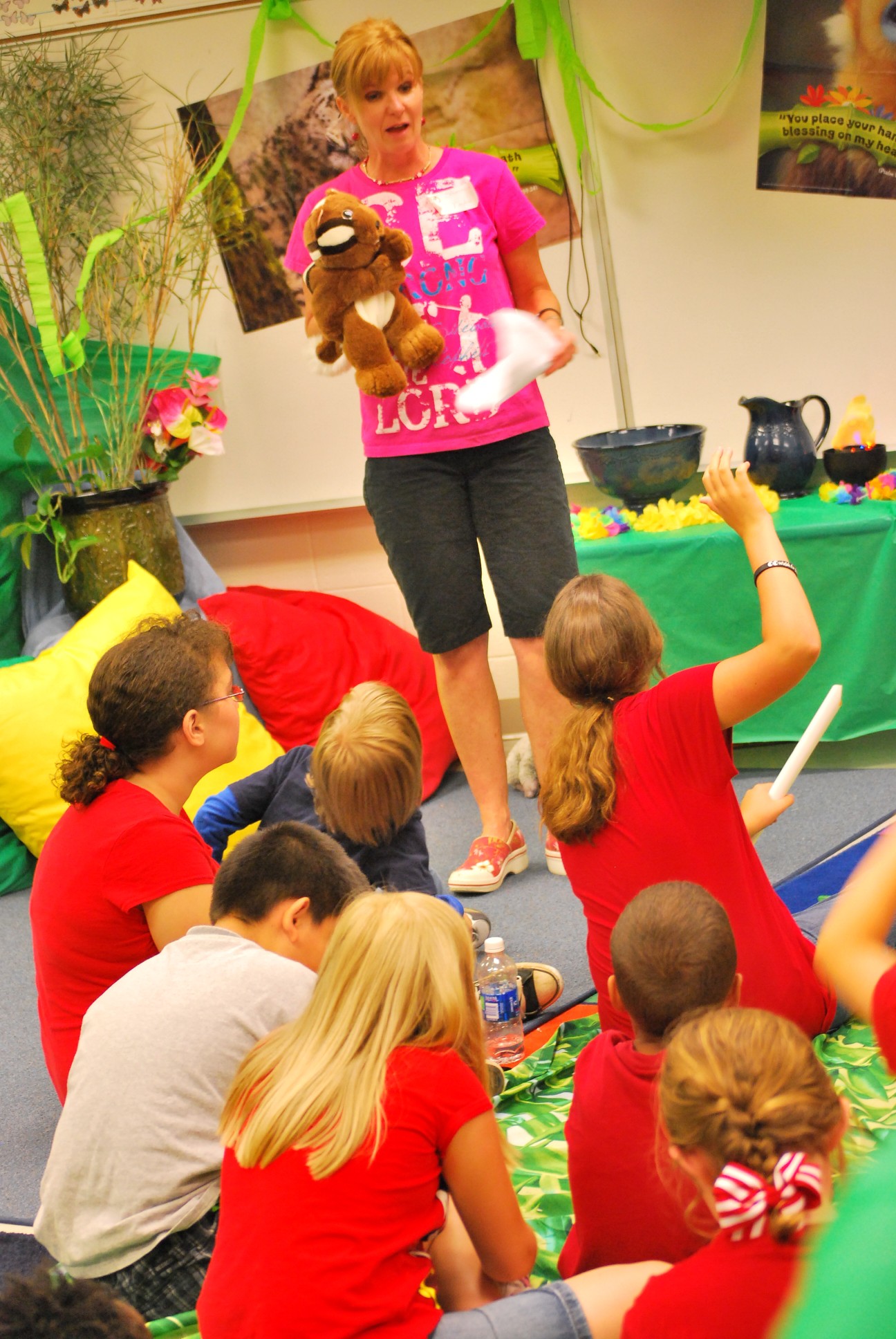
Each year had a theme – a jungle, a western town, a voyage, an ark, outer space – and the hall, corridors and classrooms were transformed with painted cardboard, crepe paper, borrowed props and hand-lettered signs, built by volunteers in the days beforehand.
Themes are now bought as complete packaged programmes with printed decor, branded materials, music and video supplied as a kit. The old version was made rather than purchased, which meant it looked homemade and was substantially more work.
The build is remembered as fondly as the week itself by the people who did it. A church hall turned into a jungle with chicken wire, papier-mache and green crepe paper by six adults over two evenings is a considerable undertaking, and the children arriving on the Monday had no idea it had not always looked like that.
3. The Songs Had Hand Motions and You Still Know Them
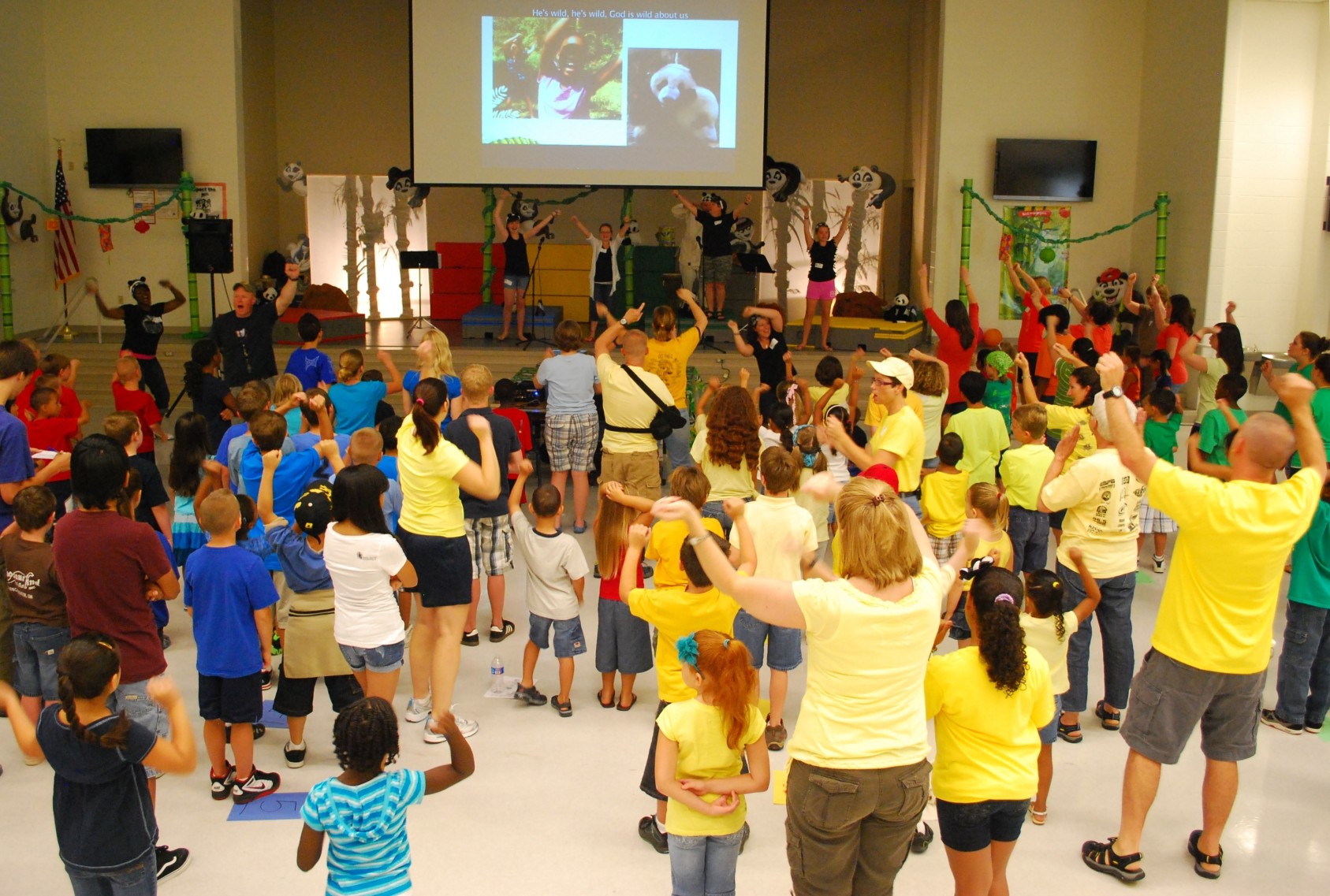
Music was central and it was participatory: short, repetitive, loud songs with accompanying hand and body motions, led from the front with everybody standing, repeated daily for the whole week.
Packaged programmes supply recorded music and choreography on video. The motions were the mechanism rather than decoration – a song with actions is learned faster, holds attention longer and can be led by somebody who is not a trained musician.
The retention is extraordinary and widely reported. People who have not been inside a church for forty years can produce the words and the actions to songs learned in one week of one summer, because repetition plus movement plus group performance is close to the most effective memorisation method there is. It was being used on five-year-olds to teach them songs, and it worked permanently.
4. The Craft Was Made From Whatever Was Cheap
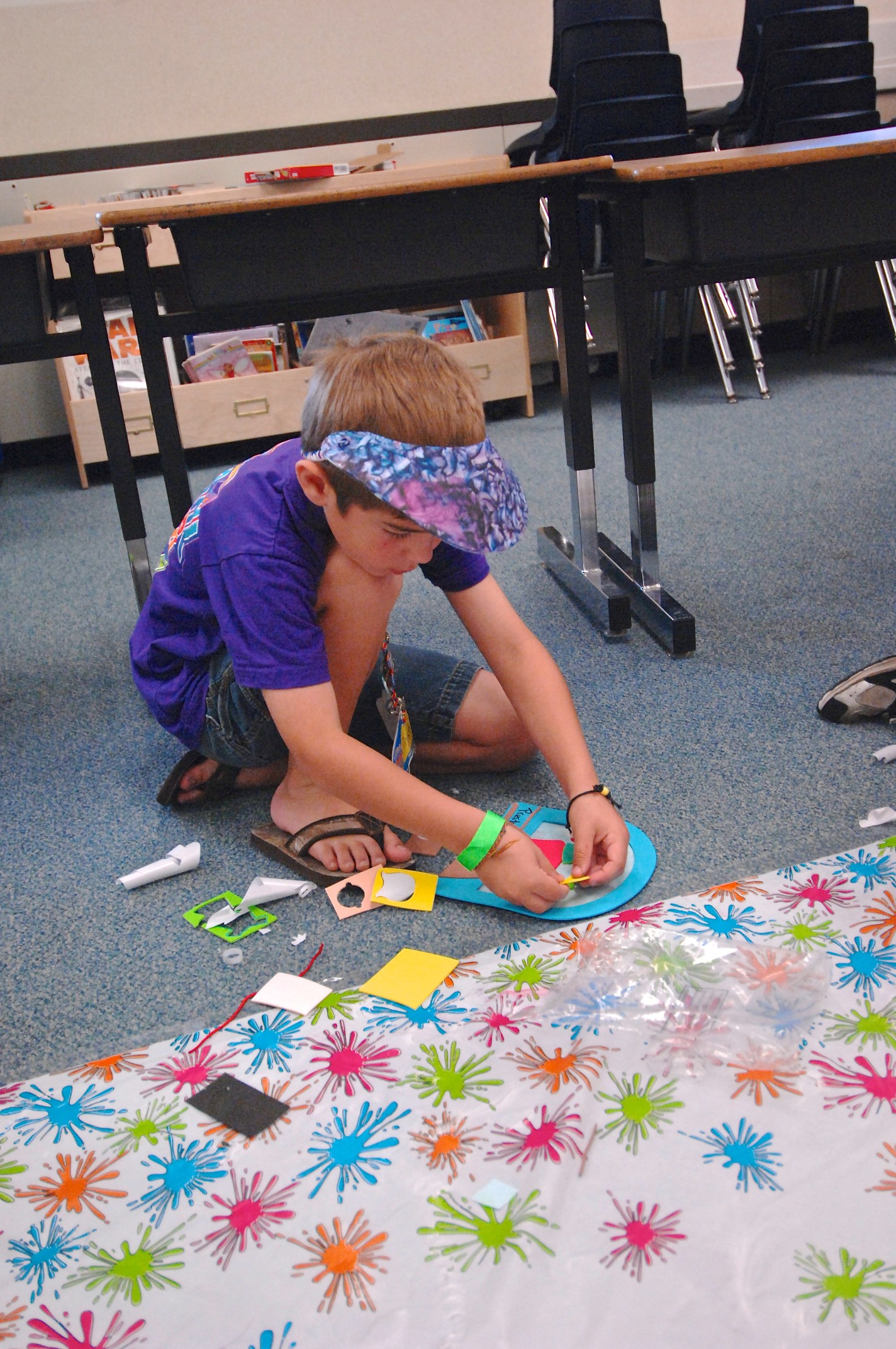
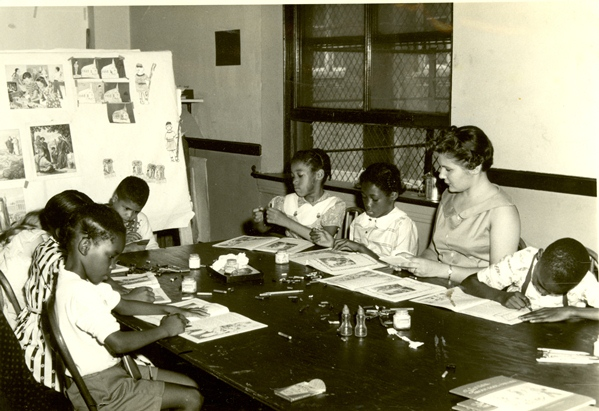
Each morning had a craft session, and the materials were paper plates, lolly sticks, pipe cleaners, dried macaroni, egg boxes, yarn, poster paint, glitter and a pot of paste – assembled into something to take home.
Craft kits are supplied pre-cut as part of the purchased programme. The old materials were chosen because they cost almost nothing in quantity for a hundred children, and because they came out of the kitchen cupboard rather than a catalogue.
The output was the point and the parents knew it. A child arriving home each day with a physical object was the programme reporting on itself, and the accumulating pile of macaroni-covered plates on a kitchen windowsill was how a household could see the week was happening. Almost none of it survived more than a year, which is why so few examples exist now.
5. The Verse Competition Was Run Like a Sport
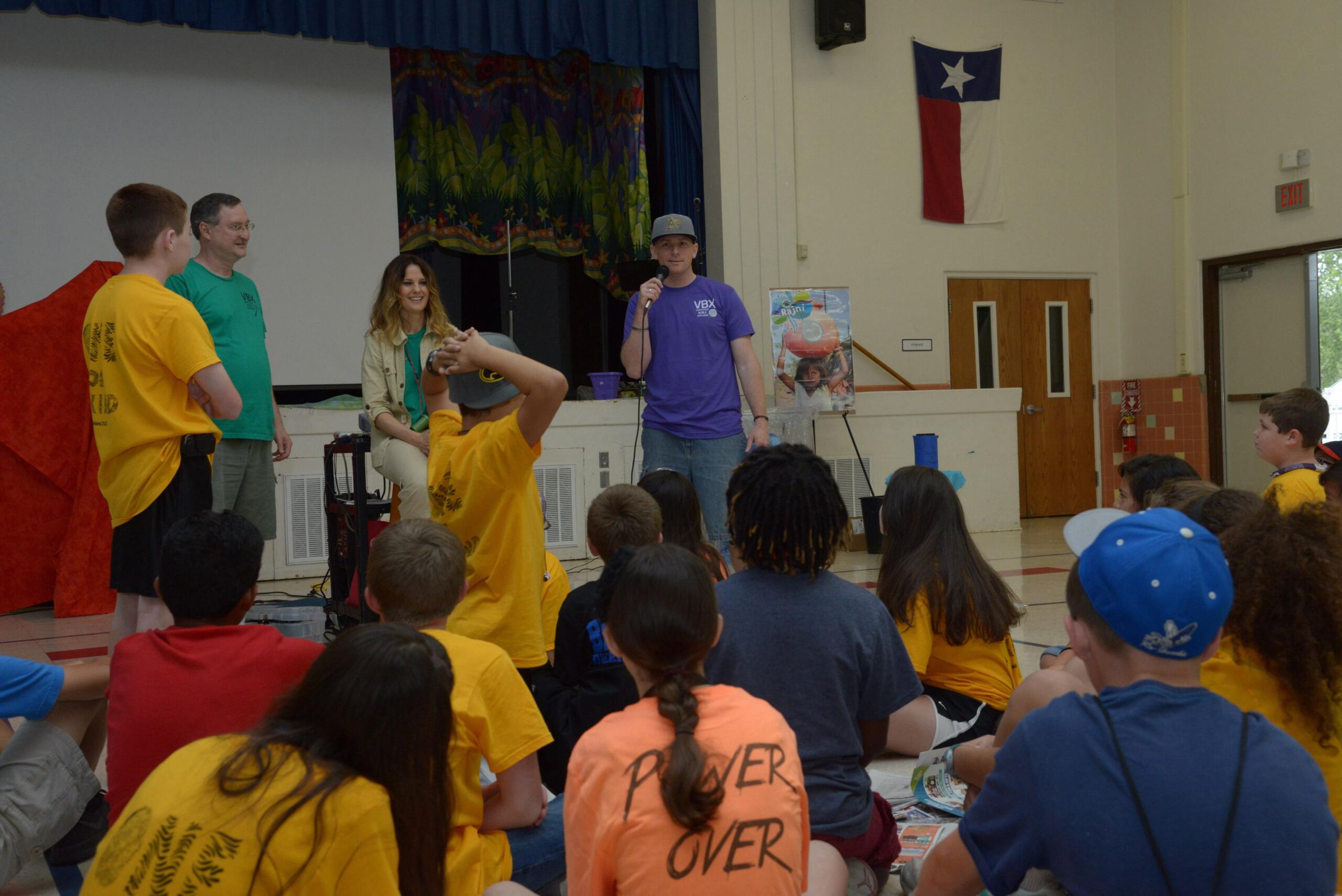
Children were given a verse to learn each day and recited it back for points, with scores kept by team, class or side of the room, and a running total displayed on a chart.
Still a common element, generally with less emphasis on competition. The scoring is what drove it: a child who would not learn a verse on request will learn it to stop the other team winning.
Competitive memorisation is a genuinely effective teaching technique and also a slightly uncomfortable one, which is why it has been softened. It produced rapid results, it rewarded the children who were already good at memorising, and it was publicly visible – which meant the children who struggled were also publicly visible, every morning, on a chart on the wall.
6. The Snack Was the Same Every Day and Nobody Minded
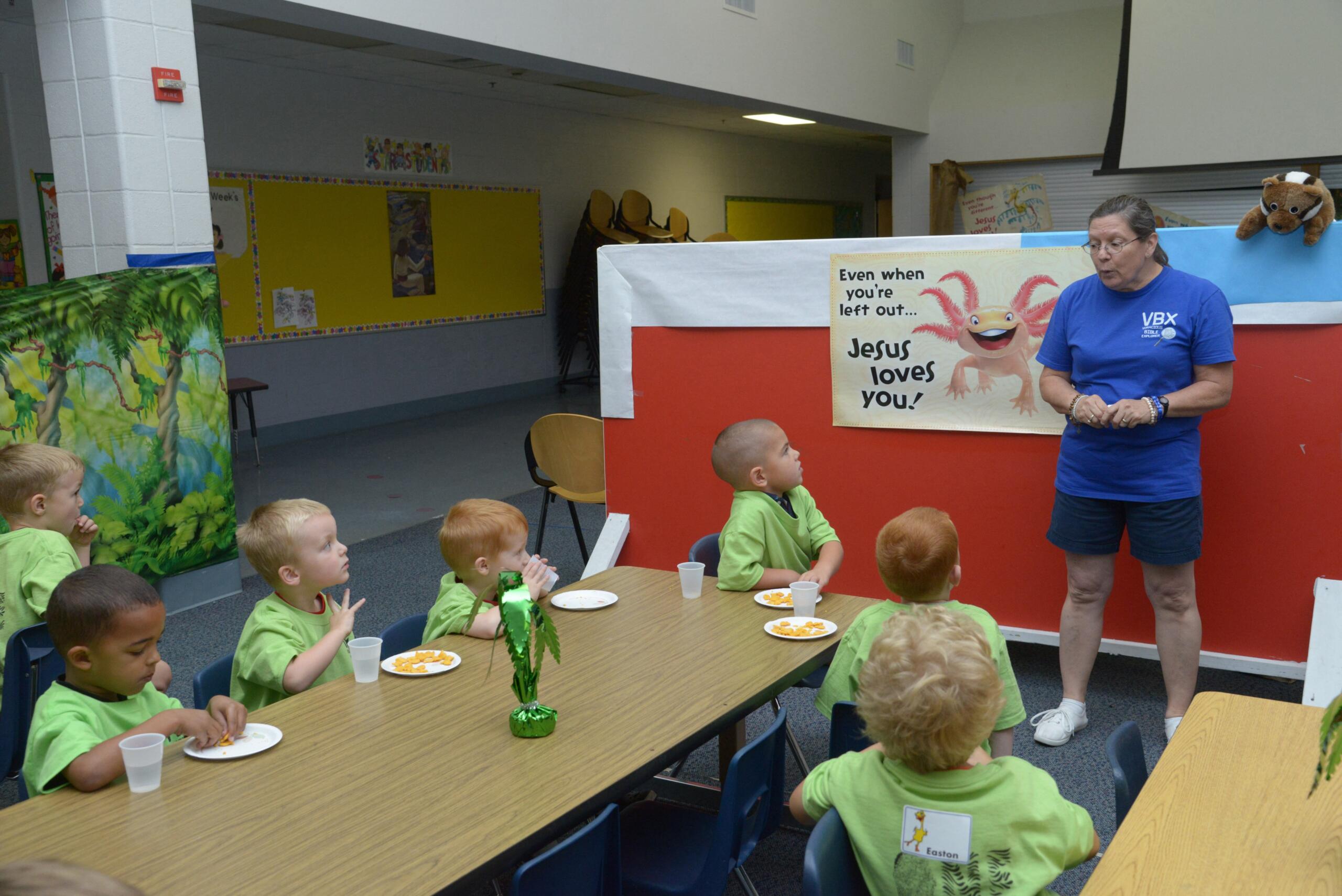
Mid-morning there was a snack, served by volunteers at long tables – commonly a cup of juice or diluted cordial and a biscuit or cracker, handed out from trays, with nothing much by way of choice.
Allergen declarations, ingredient lists, hand hygiene procedures and in many cases parental consent forms covering what a child may be given. A volunteer handing out an unlabelled biscuit to a hundred children is not a thing that can happen now.
The change here is unambiguous and nobody argues with it. A child with a severe nut or dairy allergy in 1973 was relying on their parent having mentioned it and a volunteer having remembered, with no label, no list and no procedure – and the modern requirements exist because that arrangement failed often enough to be a known risk rather than a theoretical one.
7. A Bus Went Round and Collected Children Who Had No Lift
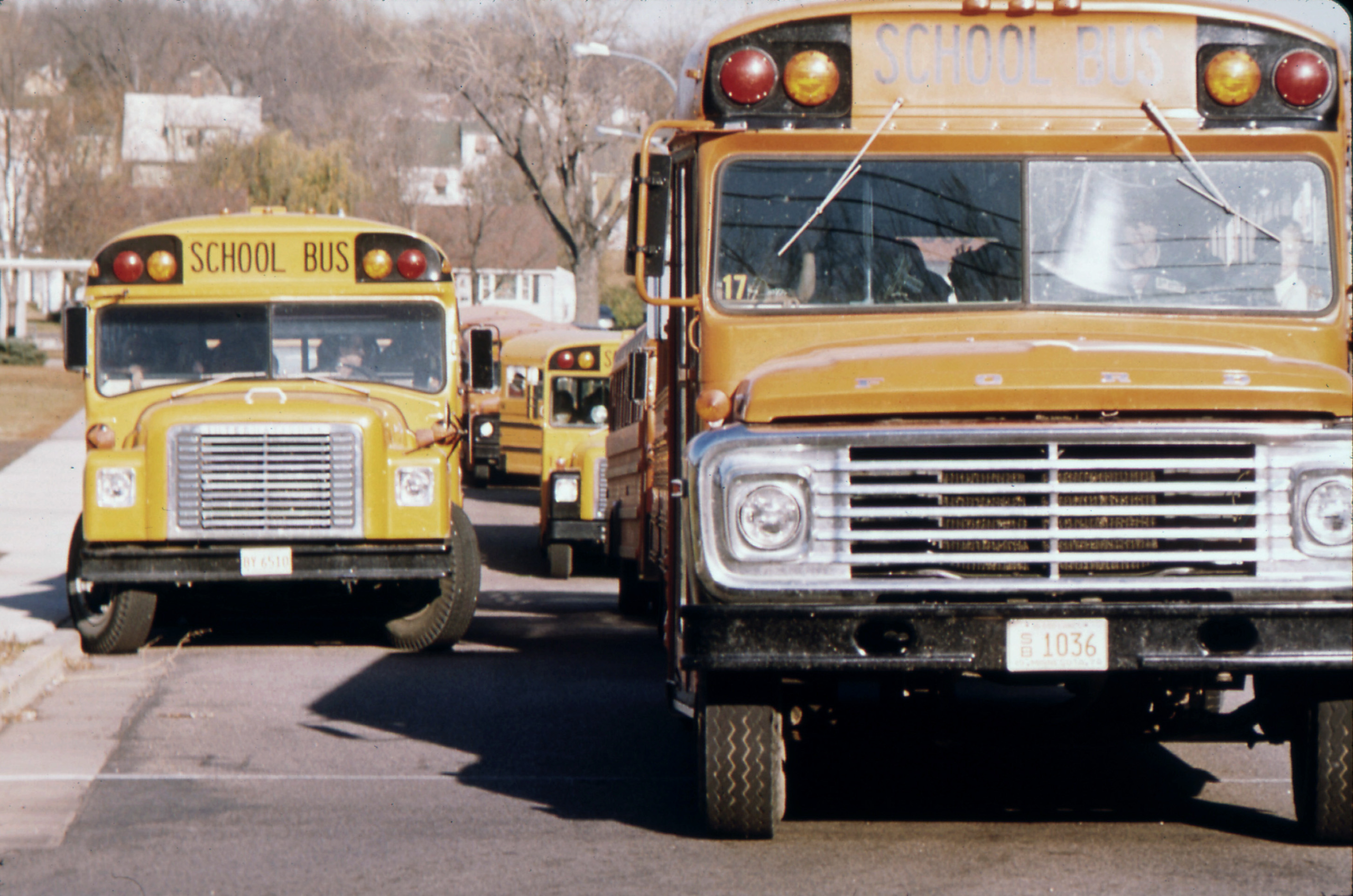
Churches ran a bus or a rota of cars around the neighbourhood each morning, picking up children whose families could not bring them, and returning them at the end of the session.
Where transport is still provided it operates under driver checks, vehicle standards, named-child manifests, seatbelt requirements and parental consent. The 1973 version was a volunteer in a vehicle collecting children from doorsteps on an informal list.
This was the mechanism that produced the attendance figures, and it is also the single element most comprehensively changed. Every component of it – who drives, in what vehicle, with what checks, carrying which children, with whose written permission, with what record – is now specified. That is straightforwardly a good thing and it also makes the operation far harder to run, which is why many churches simply stopped offering transport.
8. Most of the Children Were Not From the Congregation
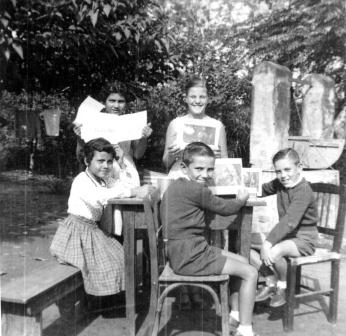
Recruitment was deliberate and outward-facing: children were invited by neighbours and school friends, flyers went through doors, and a substantial share of attendance came from families with no connection to the church at all.
Programmes are still used for outreach, with far more attention to consent, data handling and clarity about what the week involves. In 1973 a child could be brought along by a friend and enrolled on the spot with a name written in a book.
The informality is the thing that could not survive. A church now needs to know who a child belongs to, who is permitted to collect them, what their medical needs are, and that a parent has agreed to the content – none of which is satisfied by a friend bringing them round. Several of the changes to this institution follow entirely from that one requirement.
9. There Was a Closing Program and the Parents Came
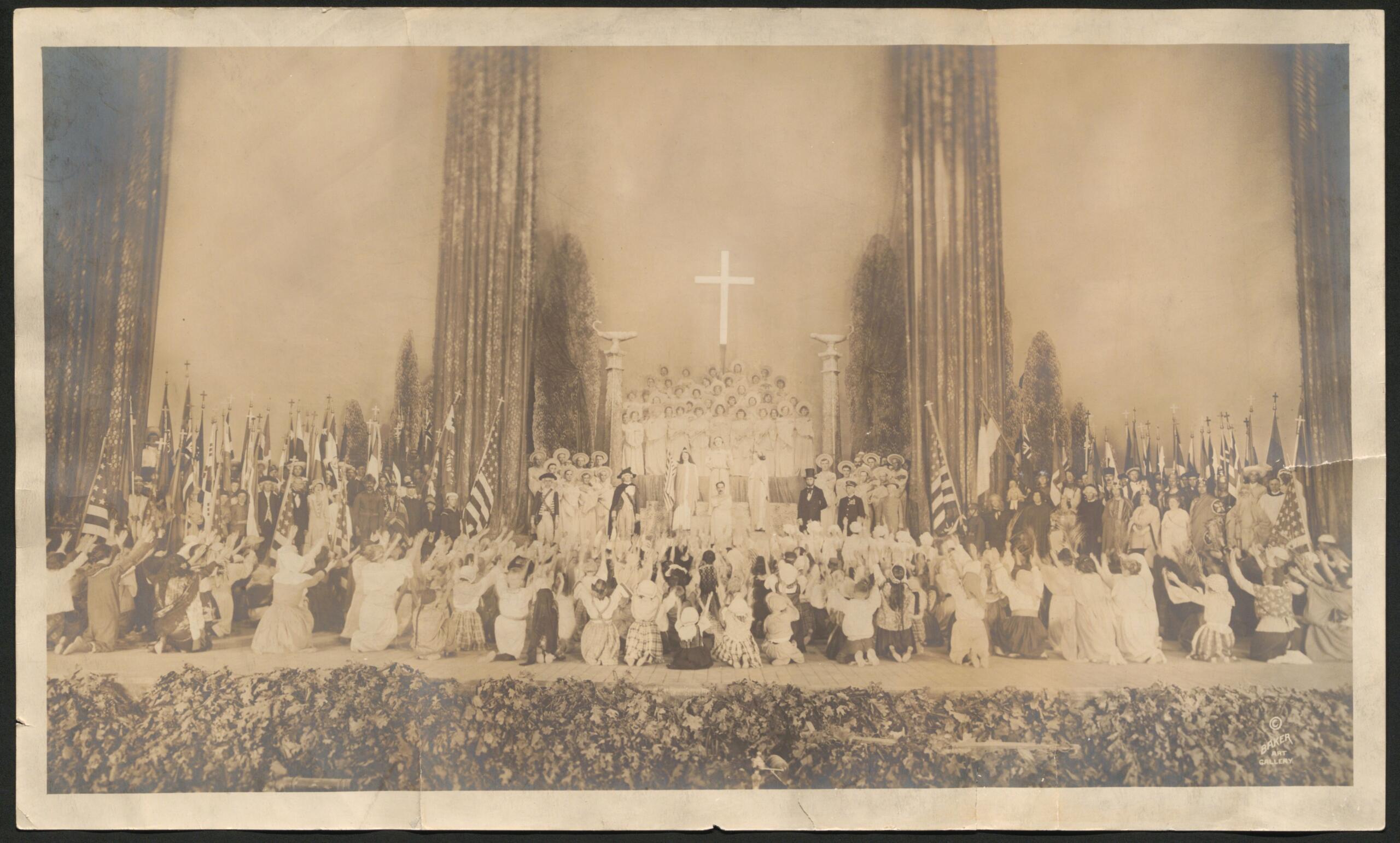
The week ended with a presentation for families – the songs performed with their motions, verses recited, crafts displayed, certificates handed out, and in many cases refreshments afterwards.
Still the standard conclusion, and still the best-attended event. The closing programme was doing two jobs: giving the children a performance to work towards, and putting the church in front of a room full of parents who had not otherwise been inside it.
The second job was explicit rather than hidden. A programme that brings a hundred unconnected families into a building on a Friday evening is the most effective outreach event a small congregation can run, and the closing programme was designed with that squarely in view – which is not a criticism, simply what it was for.
10. The Teaching Was Done by Teenagers
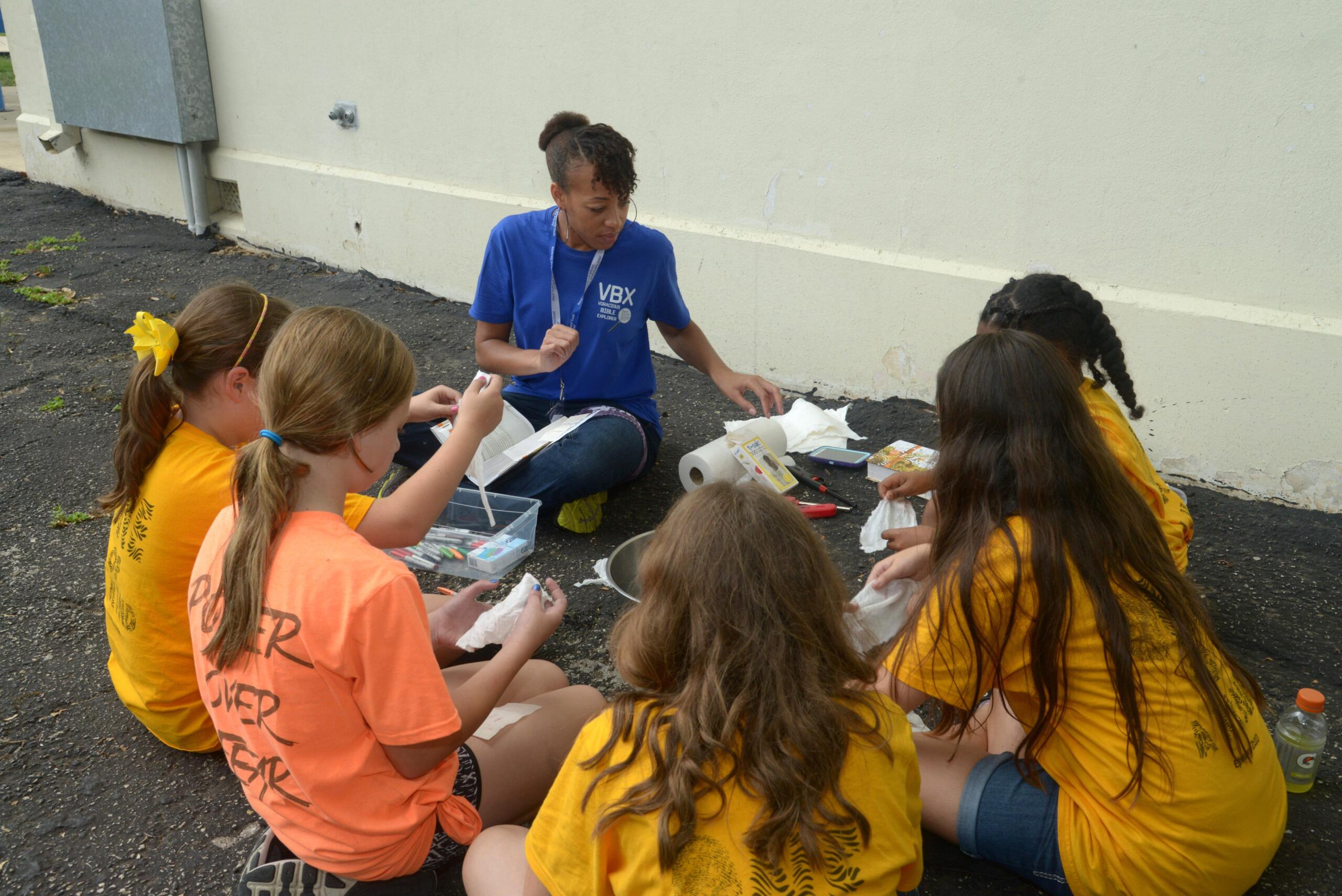
A large share of the staffing was young – secondary-school pupils and students home for the summer, acting as class helpers, team leaders, craft assistants and music leaders, supervised loosely by a smaller number of adults.
Volunteers working with children now require background checks, training and defined ratios, and the age at which somebody may hold responsibility is specified rather than assumed. The teenage helper was the labour force that made a free week possible.
It was also, for the teenagers, frequently the first time they had been given charge of anything, and a great many people describe it as where they learned to stand in front of a group. That part has been retained deliberately in most programmes – the roles still exist, with proper checks and an adult actually responsible, which is the version that should always have been in place.
11. The Teams Competed to Bring In Loose Change
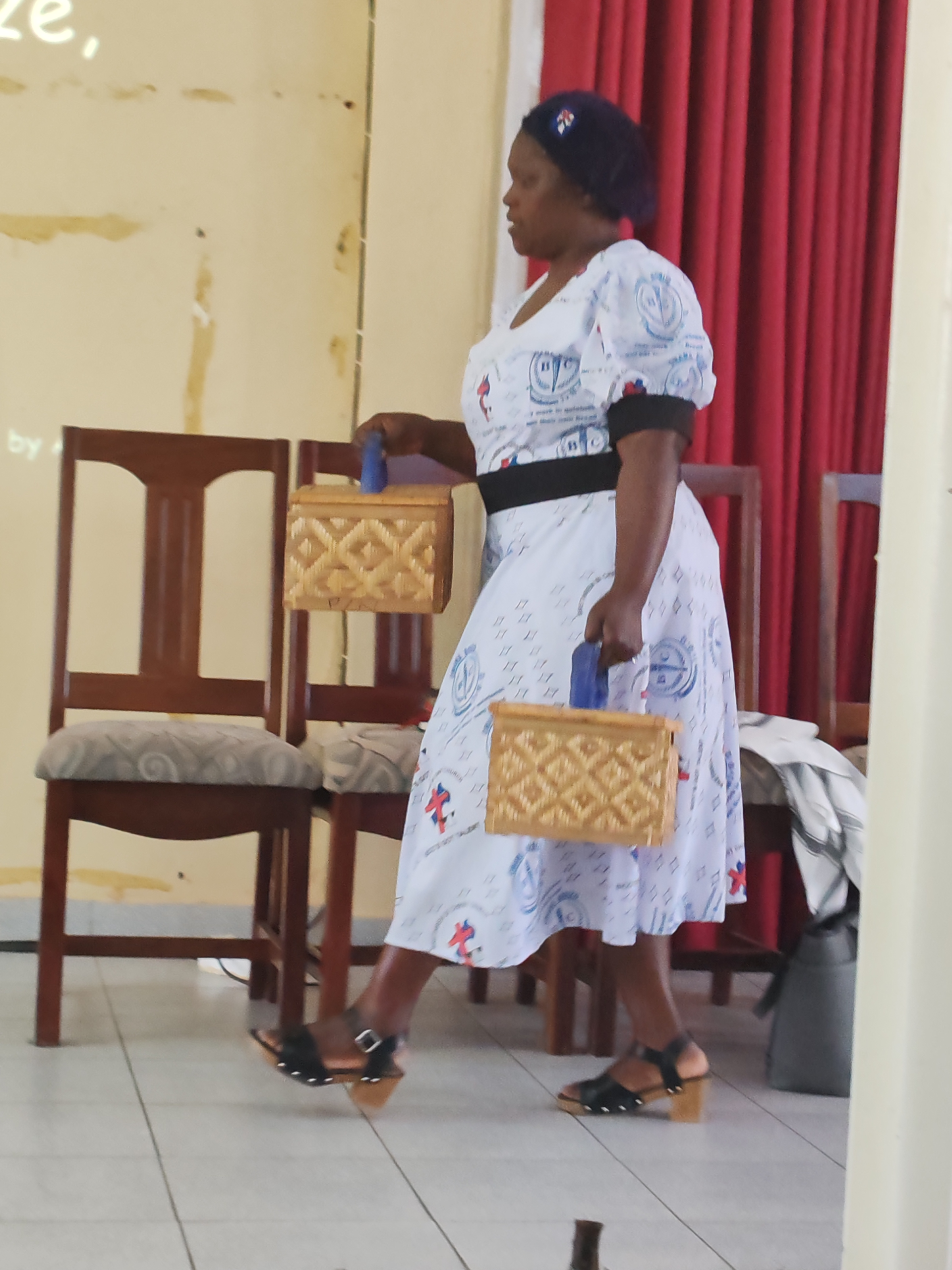
Offering was collected daily and made into a competition – boys against girls, class against class, with a visible tally, rising totals and a prize or a forfeit for the losing side.
Fundraising continues, generally without pitting children against each other and with clearer accounting. The competitive element reliably multiplied the amount collected, which is why it was used.
It had a side effect that was visible to everybody in the room. Children brought what their household could spare, so a competition over money collected is partly a competition over family income, conducted publicly among seven-year-olds. Nobody designed it that way, and anybody watching a tally chart could see it happening.
12. A Puppet Show or a Skit Carried the Story
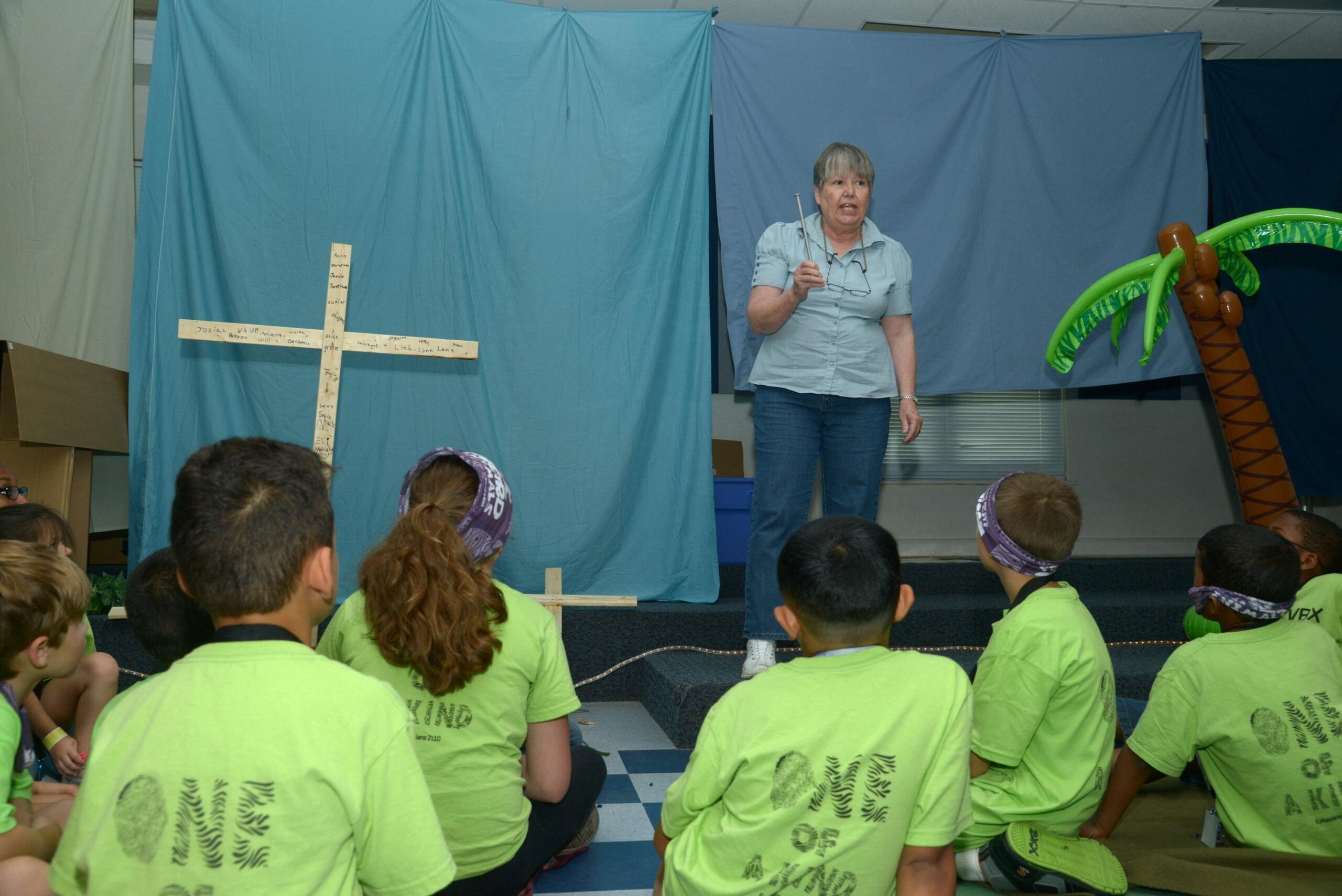
The day’s narrative was delivered dramatically – glove puppets behind a curtained frame, a flannelgraph board with cut-out figures, a sketch performed by volunteers in costume, or a flip-chart story told with pictures.
Packaged programmes supply video, and the puppet stage is far less common. The appeal of the methods was that they required no technology and no budget: a flannelgraph is a board covered in felt and a set of paper figures that stick to it.
Flannelgraph in particular is almost entirely forgotten and was once universal, and the reason it worked is worth noting. A figure placed on the board stays there, so a story accumulates in front of the children as a visible scene rather than passing by – which is a genuinely good piece of teaching design achieved with felt and card.
13. The Games Were Outside and Nobody Was Watching Closely
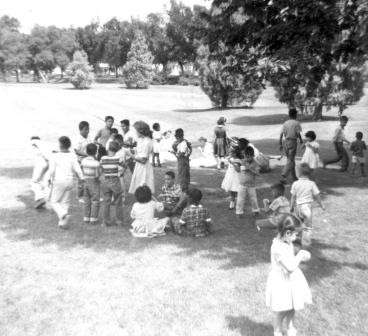
Each morning included organised games on whatever ground the church had – relays, sack races, tag, dodgeball, water games on the last day – run by whichever helper had been given the job.
Supervision ratios, risk assessment and far more caution about contact and competition. The games were conducted on grass, gravel or a parking lot, with minimal protective anything, by teenage leaders with a whistle.
Dodgeball is the clearest marker of the change. A game whose mechanism is throwing a ball hard at other children, eliminating the slowest and least coordinated first and in public, was completely standard and is now excluded from a great many programmes – and the arguments on both sides of that are familiar enough not to need rehearsing here.
14. Everybody Got a Certificate and Most of Them Were Kept
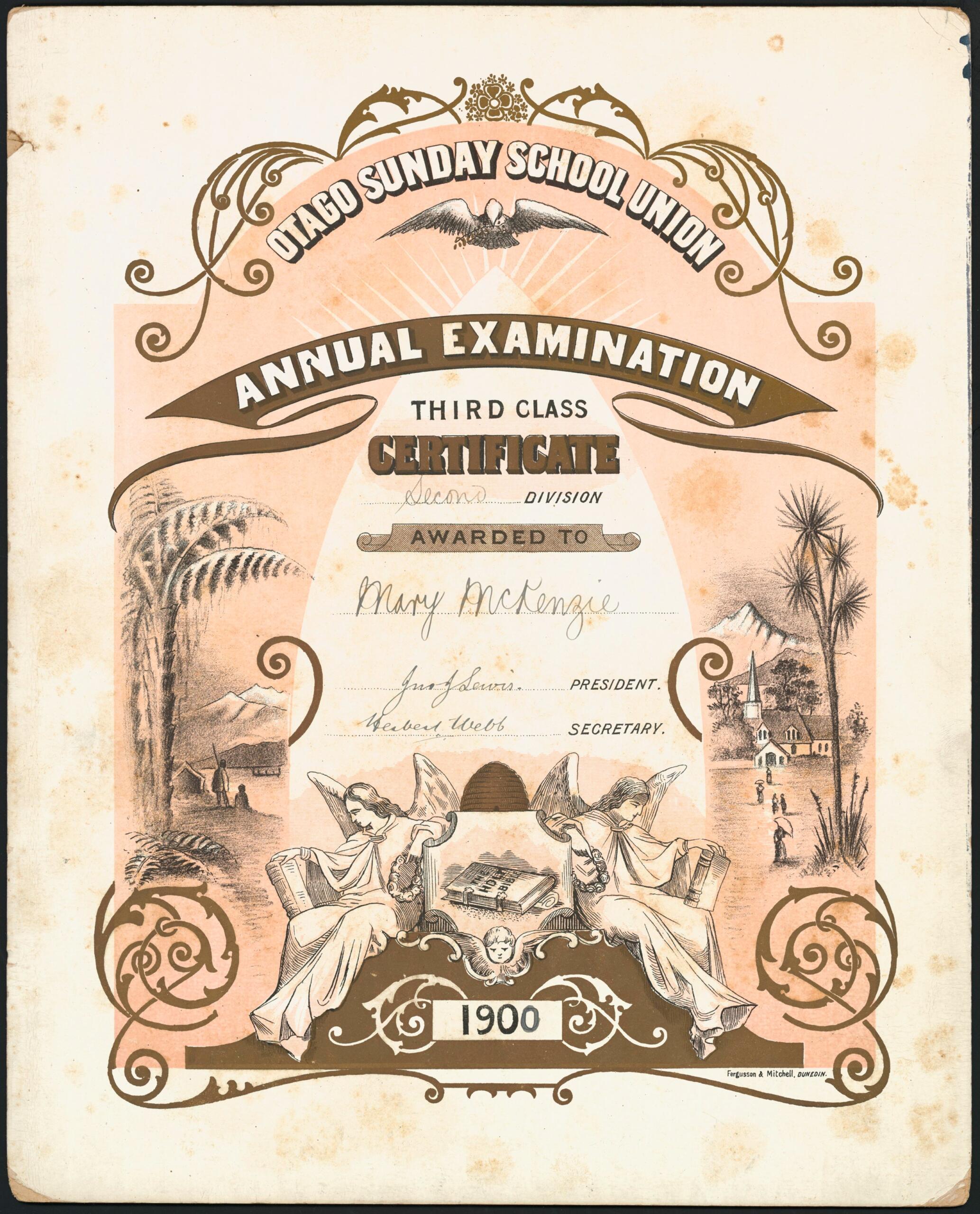
The week closed with a printed certificate – name written in by hand, the year, the theme, signed by the director – plus in many cases a pin, a badge, a bookmark or a small prize.
Still issued, now generally printed from a template with the name typed in. The hand-written name was the part that mattered: it made the document specifically yours rather than a form you were handed.
These survive in surprising numbers, turning up in drawers, bibles and house clearances, and they are frequently the only dated record that a particular child attended a particular church in a particular summer. For somebody researching a family they are unexpectedly useful, which is not something anybody intended when they wrote the name in.
15. The T-Shirt Arrived and Became the Whole Identity of the Week
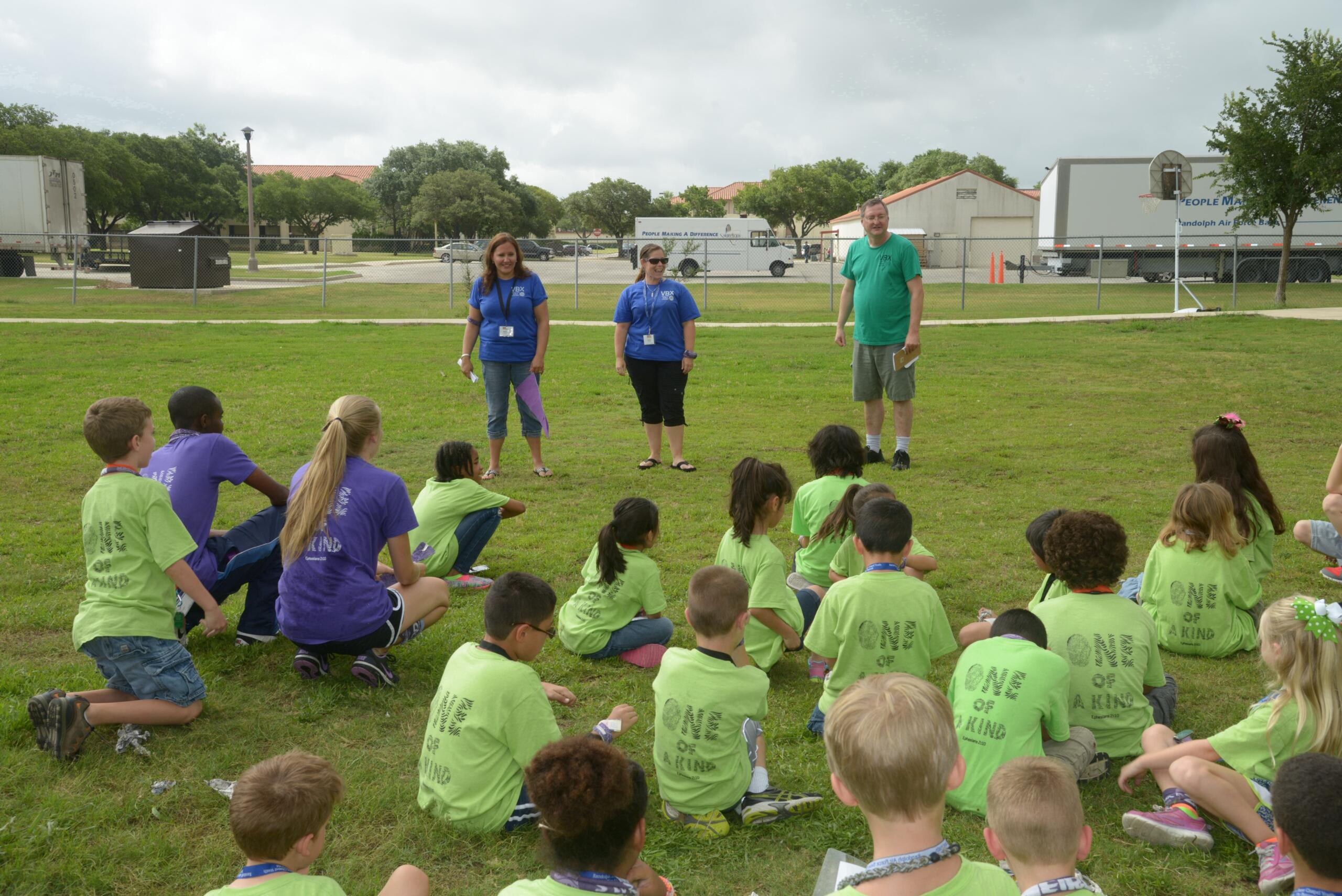
By the later part of the period the printed shirt had become standard – one design per year carrying the theme and the date, worn by children and helpers through the week and for years afterwards.
Universal, and now part of the purchased programme kit. The shirt turned the week into something visible outside the building: a child wearing one to the shops was advertising it, which is exactly why they proliferated.
They are also the reason the themes are so well documented. A shirt carries a theme name and a year printed on it, survives in wardrobes and photographs long after the certificates have gone, and is the artefact by which people identify which summer they are remembering.
16. Then the Week Itself Became Hard to Find
The programme depended on a long empty summer, a supply of volunteer and teenage labour, informal enrolment, and a neighbourhood in which children could be sent somewhere for a morning without much arrangement.
All four have changed. Summers are filled with organised camps, sport and childcare that competes directly. Volunteer numbers have fallen with congregation size and with the time required to be checked and trained. Enrolment now requires consent, data handling and medical information. And the informal neighbourhood recruitment that filled the halls is no longer how families make decisions about where their children go.
What survives is smaller, better run and attended differently – more the children of the congregation and fewer of the neighbourhood, properly staffed and safeguarded, frequently compressed into fewer days. The institution has not died; it has become a programme rather than a feature of the summer, and the thing that has actually gone is the assumption that a week of it was simply what happened in July.
It Was Childcare, and Saying So Is Not an Insult
The stated purpose of Vacation Bible School was religious instruction. The reason it filled was something else, and being honest about that explains almost everything on this list.
The summer holiday was long and largely unstructured. Organised childcare was expensive where it existed at all and in a lot of places it did not exist. Mothers were increasingly in paid work and the number of households with an adult at home all summer was falling. And into that gap arrived a free, supervised, five-morning programme, run by volunteers, that collected your child from the doorstep if you could not bring them.
That is a childcare service, and the people organising it knew it. It is why the transport existed. It is why recruitment reached outside the congregation. It is why most of the children attending were not members’ children. And it is why so many parents who had no religious conviction whatever sent their children for the week without hesitation.
None of which makes the programme cynical. A congregation providing a week of free supervised activity for the neighbourhood’s children, staffed by its own members giving up their holidays, is doing something straightforwardly generous, whatever else it also hoped to achieve. The two motives coexisted without difficulty.
What is interesting is which half of the arrangement the modern changes have affected. The religious content is essentially unchanged – the songs, the verses, the stories are the same. It is the childcare function that has been dismantled, and not by anybody’s choice.
Checks, training and ratios made volunteer staffing far harder to assemble. Consent, data and medical requirements made informal enrolment impossible. Transport became a compliance exercise. Allergen rules ended the unlabelled snack. Every one of those changes is correct and none of them was aimed at the programme.
The cumulative effect, though, is that the institution can still deliver the instruction and can no longer easily deliver the week. And the week was what the neighbourhood actually wanted.
If you went, you can still do the hand motions, and you have not thought about them in forty years.
And there is a certificate somewhere with your name written on it in somebody’s handwriting.
Like our content? Follow us for more.