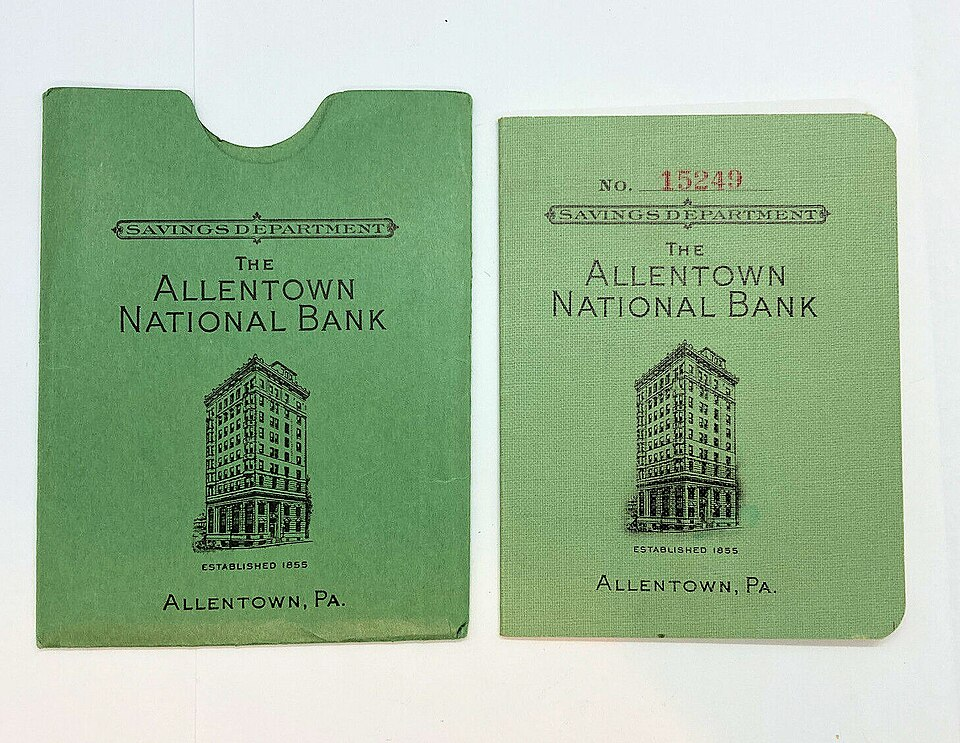
Every autumn through the middle of the twentieth century, American banks and savings institutions mailed out millions of cheques.
They were Christmas club cheques, and each one represented a year of small deposits – fifty cents a week, a dollar a week, two dollars a week – made faithfully by somebody who had signed up the previous December and then put money in every single week for fifty weeks.
Here is the part that sounds like a mistake. A great many of those accounts paid no interest whatsoever. The bank held your money for a year, free, and handed it back in November with nothing added.
And people queued up to open them. Tens of millions of Americans used these accounts, enthusiastically, for decades, in full knowledge of the terms.
Which only looks irrational until you work out what they were actually buying.
What the Account Was
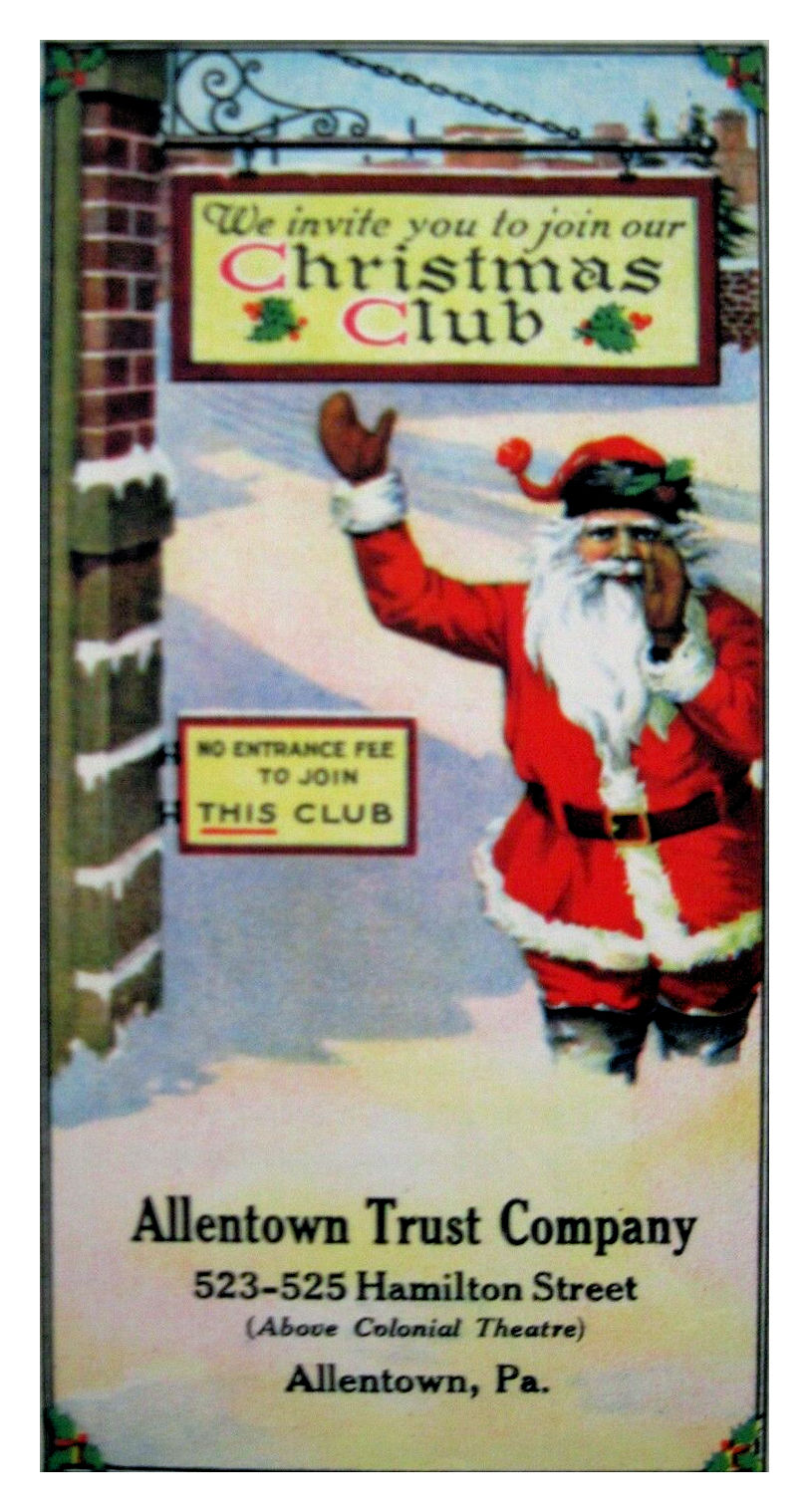
The mechanics were deliberately simple, because the whole point was that anybody could use it.
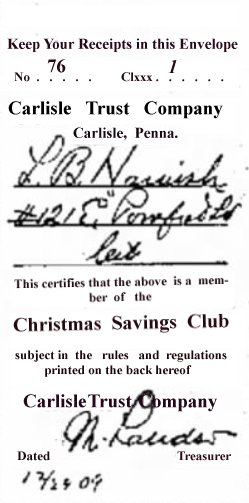
You opened the account late in the year and committed to a weekly amount. The bank gave you a small coupon book or a passbook with a row of stamps or spaces, one for each week. Every week you went in, handed over your fifty cents or your dollar, and the teller punched, stamped or initialled the week.
You could not withdraw. That was the defining term. The money was locked until the bank released it, which happened in the first half of November – timed precisely so the funds arrived before the Christmas shopping season and not a week earlier.
Some institutions paid a small rate of interest, particularly in later decades and particularly where competition forced it. Many paid nothing. Some charged a fee if you broke the account early, which functioned as a penalty for failing to complete.
And the sums involved were small but not trivial. Fifty weeks at a dollar is a meaningful amount of money for a working household in that period – enough to cover a family Christmas completely, which is exactly what it was for.
Like our content? Follow us for more.
The Restriction Was the Feature
The reason people wanted an account they could not touch is that they could not touch it.
Consider the alternative. A household trying to save for Christmas out of its own discipline keeps the money at home or in a general savings account. In January a tyre goes. In March somebody needs a coat. In June the roof leaks. In September there are school clothes. Every one of those is a legitimate claim on the money, and by November there is nothing left – not because anybody was careless but because a fund that can be raided will be raided, by genuine need.
The Christmas club removed that option. Once the money was in, it was not available for the tyre or the coat or the roof, which meant those things had to be solved some other way – and the Christmas money survived to December.
That is the product. Not a return on capital. A commitment device, sold by a bank, to people who understood perfectly well that they would spend the money if they could reach it.
And the weekly ritual reinforced it. Walking into the bank every week with a dollar, having it stamped, seeing the book fill up – that is a habit with visible progress, which is considerably more effective at sustaining a year of saving than an abstract intention.
Why the Banks Wanted Them
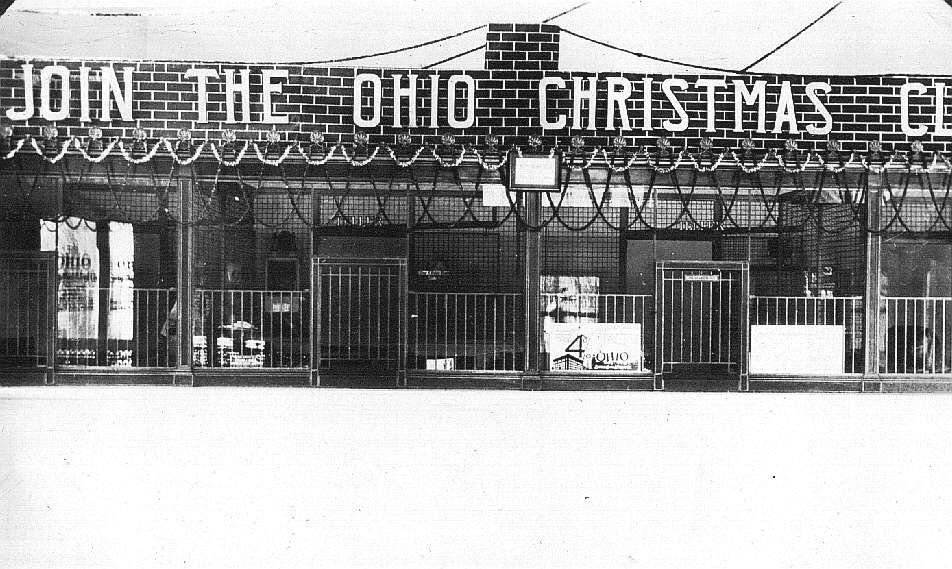
The institutions were not running a public service, and the arithmetic on their side is straightforward.
An interest-free Christmas club is a source of money the bank can lend out at interest for a year at zero cost of funds. Multiply a modest average balance across tens of thousands of accounts and that is a substantial and extremely predictable pool.
Predictability was the real prize. The bank knew exactly how much would be deposited each week and exactly when every account would be paid out, because the terms specified it. A deposit base that behaves to a published schedule is worth more to a lender than the same money sitting in accounts that could be withdrawn at any moment.
There was also the customer relationship. A person who walks into the branch fifty times a year is somebody the staff know by name, and who is likely to open a regular savings account, take a loan, or bring in a mortgage. The Christmas club was a customer acquisition programme that paid for itself.
And in November, when the cheques went out, a great many people simply cashed them at the same bank and spent the money at local merchants – some of whom advertised specifically to Christmas club recipients, because the date the cheques arrived was public knowledge.
It Was Aimed at Households Banks Had Previously Ignored

The social history here is the part that gets missed.
For a long stretch of American banking history, ordinary wage-earning households were not meaningfully served by banks. The accounts available had minimum balances, the branches had limited hours, the atmosphere was not welcoming to somebody depositing coins, and a great many families simply did not use a bank at all.
The Christmas club was one of the products that changed that, along with the school savings programme and the small passbook account. It accepted tiny weekly deposits without complaint. It required no minimum. It was explained in plain terms. And it gave a working family a specific, achievable, respectable reason to walk into a bank lobby every week.
An enormous number of Americans had their first relationship with a financial institution through one of these accounts, which is a significant thing for a product that paid nothing.
It also sat alongside a whole family of similar arrangements that have mostly disappeared: the vacation club, the tax club, the fuel club for winter heating oil, and the layaway plan at the department store, which is the retail version of the same idea – pay in instalments, receive the goods at the end, with the discipline enforced by somebody else.
The Children Had Their Own Version
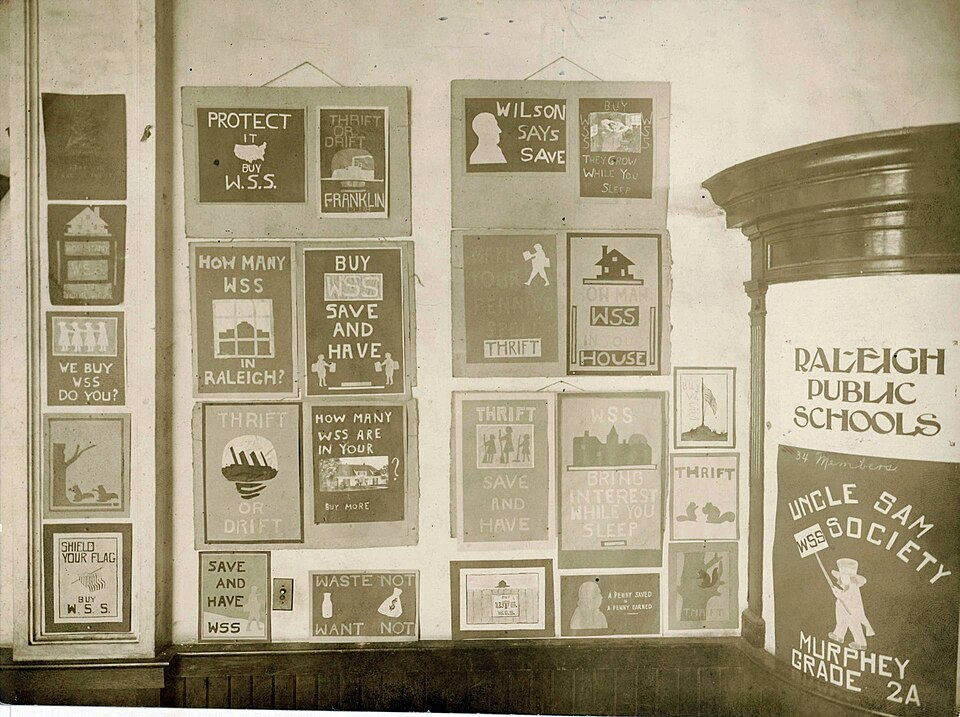
Running parallel to the adult account was a school programme that worked on exactly the same principle, and a great many Americans remember it better than the Christmas club itself.
A bank would arrange with a local school to collect small deposits from pupils on a fixed day each week. The children brought in a nickel, a dime or a quarter in an envelope. A teacher or a visiting bank clerk recorded it, and each child had a passbook of their own with a running balance written in by hand.
The amounts were tiny and the point was not the money. The point was that a child learned, by doing it fifty times, that money put away accumulates and that a balance written in a book is a real thing. The bank’s interest in it was identical to its interest in the adult product: a generation of future customers who already knew the inside of the branch and already had an account number.
Those programmes ran in American schools for decades and have largely disappeared, for much the same mix of reasons – the handling cost of collecting coins, the administrative burden on teachers, and the shift of everything financial onto systems a child cannot walk into with an envelope.
What Ended It
The Christmas club did not fail. It was made redundant from several directions at once.
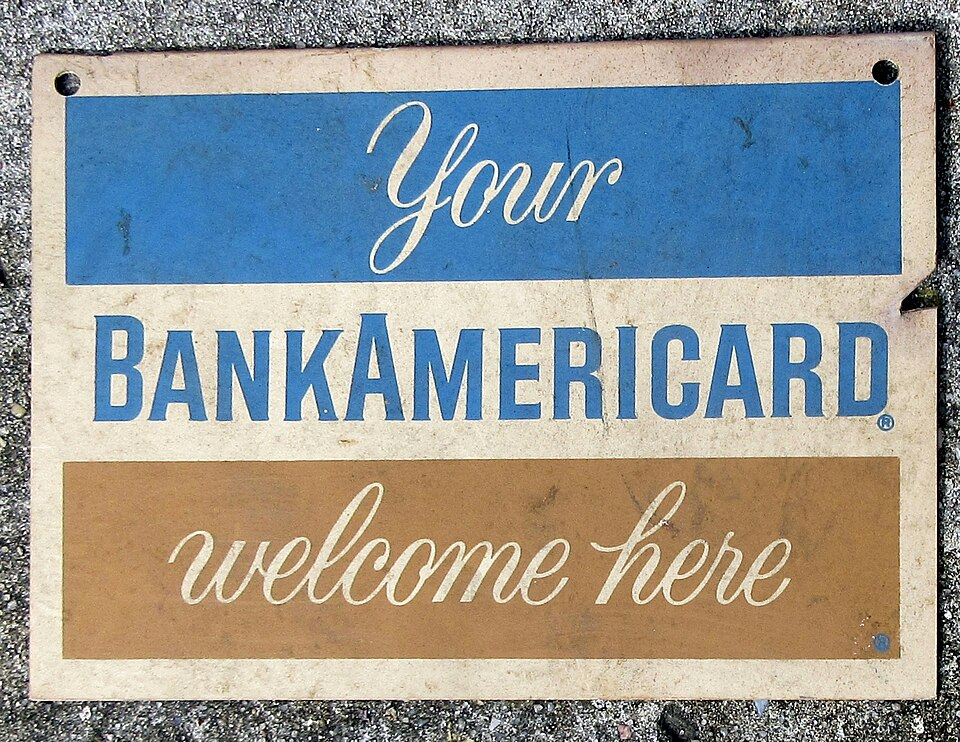
Credit cards did most of the damage. A household with a card does not need to save a year in advance for Christmas, because the card lets the spending happen first and the paying happen afterwards. That is the exact inversion of the Christmas club, and from a consumer’s point of view it is considerably more convenient. Whether it is better is a different question and not one this piece will settle.
Interest rates did the rest. In the period when ordinary savings accounts paid meaningful rates, holding money in a zero-interest club account carried a real and visible cost, and the comparison became hard to justify even for people who valued the discipline.
Automation removed the ritual. Once a bank could move a fixed amount from a checking account to a savings account every month without anybody visiting, the weekly trip and the stamped book had no function – and the stamped book was carrying a lot of the motivational weight.
And branch economics made a product requiring fifty in-person teller visits a year for a dollar a time steadily less attractive to the institution.
Some banks and a good many credit unions still offer Christmas club accounts, and they pay interest now. But the thing that is gone is the weekly walk to the counter and the coupon book filling up.
The Idea Came Back Without the Name
Here is the turn, and it is a genuine one.
Everything the Christmas club was built on has been rediscovered, repackaged and sold back to people as new.
The commitment device – a savings arrangement you deliberately make hard to raid – is now a standard feature in financial applications, marketed as goal accounts, locked savings, round-up vaults and sinking funds. The explicit insight is identical: people save more when the money is out of easy reach, and they know it about themselves.
The visible progress bar – the coupon book filling up – is now a graphic on a screen, and the people who design these interfaces will tell you plainly that watching the bar fill is what sustains the behaviour.
The scheduled weekly amount, small enough not to hurt, is the basis of every automatic transfer anybody has ever set up.
And the Christmas-specific version has returned too, as seasonal savings features and dedicated holiday funds, sometimes with a release date in November.
So the oldest surviving element of the account turns out not to be the money or the interest or the bank. It is the observation underneath it – that a household which cannot reach its savings will still have them in December – which a generation of American bank managers understood perfectly, sold without apology, and never once needed to call behavioural anything.
Like our content? Follow us for more.