Anybody who was taken into a large American store before about 1960 remembers at least one version of it.
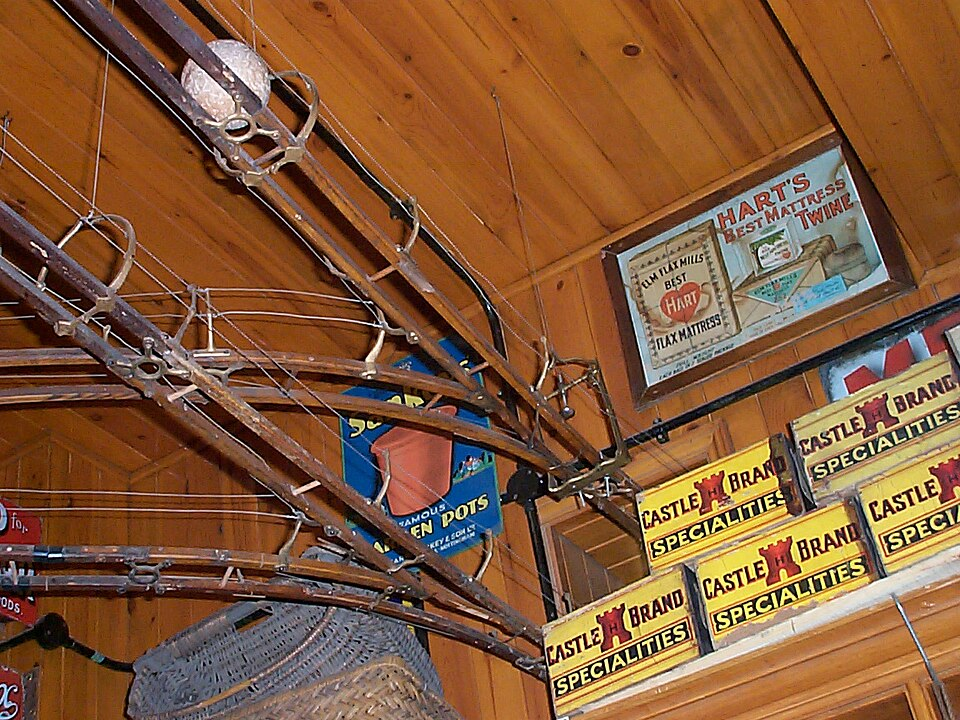
A clerk takes your money, writes out a slip, puts both into a small wooden ball or a brass canister or a wire basket, and sends it away – whizzing up a wire across the ceiling to a window on a mezzanine, or sucked into a brass tube with a thump and a hiss. A minute later it comes back with the change and a receipt.
Children were transfixed by this and so were a good many adults, and it gets remembered as a charming piece of mechanical theatre.
It was not theatre. It was an internal control system, and it existed for a reason nobody advertised: the store did not want its clerks handling cash.
The Problem Was Real and Universal
Consider the position a large retail business was in before any of this existed.
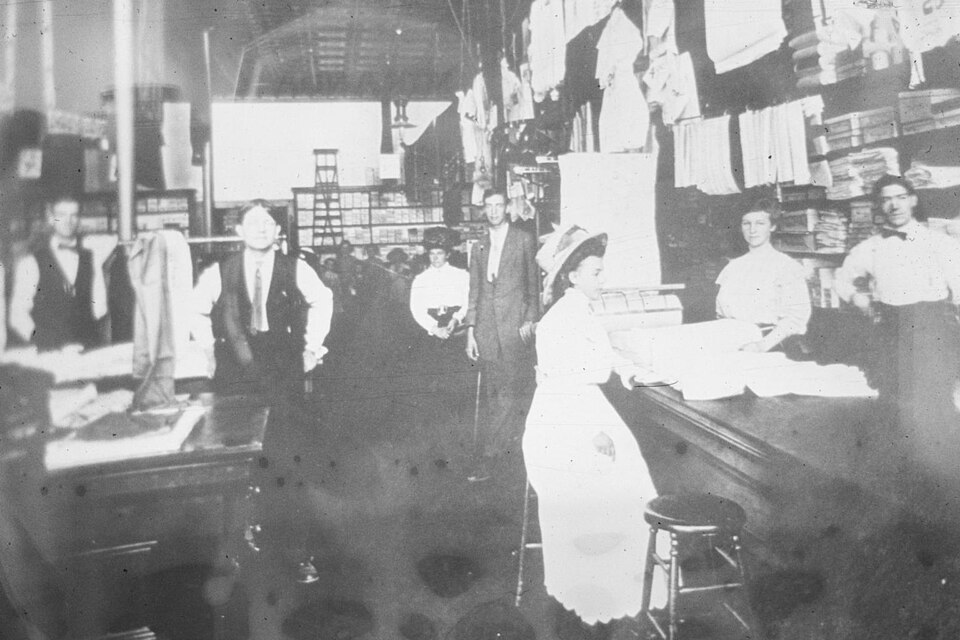
You have a sales floor with dozens of counters and dozens of clerks, each taking money from customers all day. Every one of those clerks has a cash drawer or a pocket. There is no till roll, no register tape, no electronic record and no camera. The only record of a sale is whatever the clerk writes down.
Which means every single transaction depends on one person accurately recording an amount and then not keeping any of it. Some will make errors. Some will be careless. And across a large enough workforce over a long enough period, some will steal – which is not a slur on shop clerks but a statement about any system that puts untracked cash in a large number of individual hands with no verification.
The losses from that were serious and they were extremely difficult to detect, because an unrecorded sale leaves no trace at all. If a clerk takes a dollar and writes nothing down, there is nothing for an auditor to find.
Every device in this article is an answer to that problem.
Like our content? Follow us for more.
Centralising the Cash Was the Whole Idea
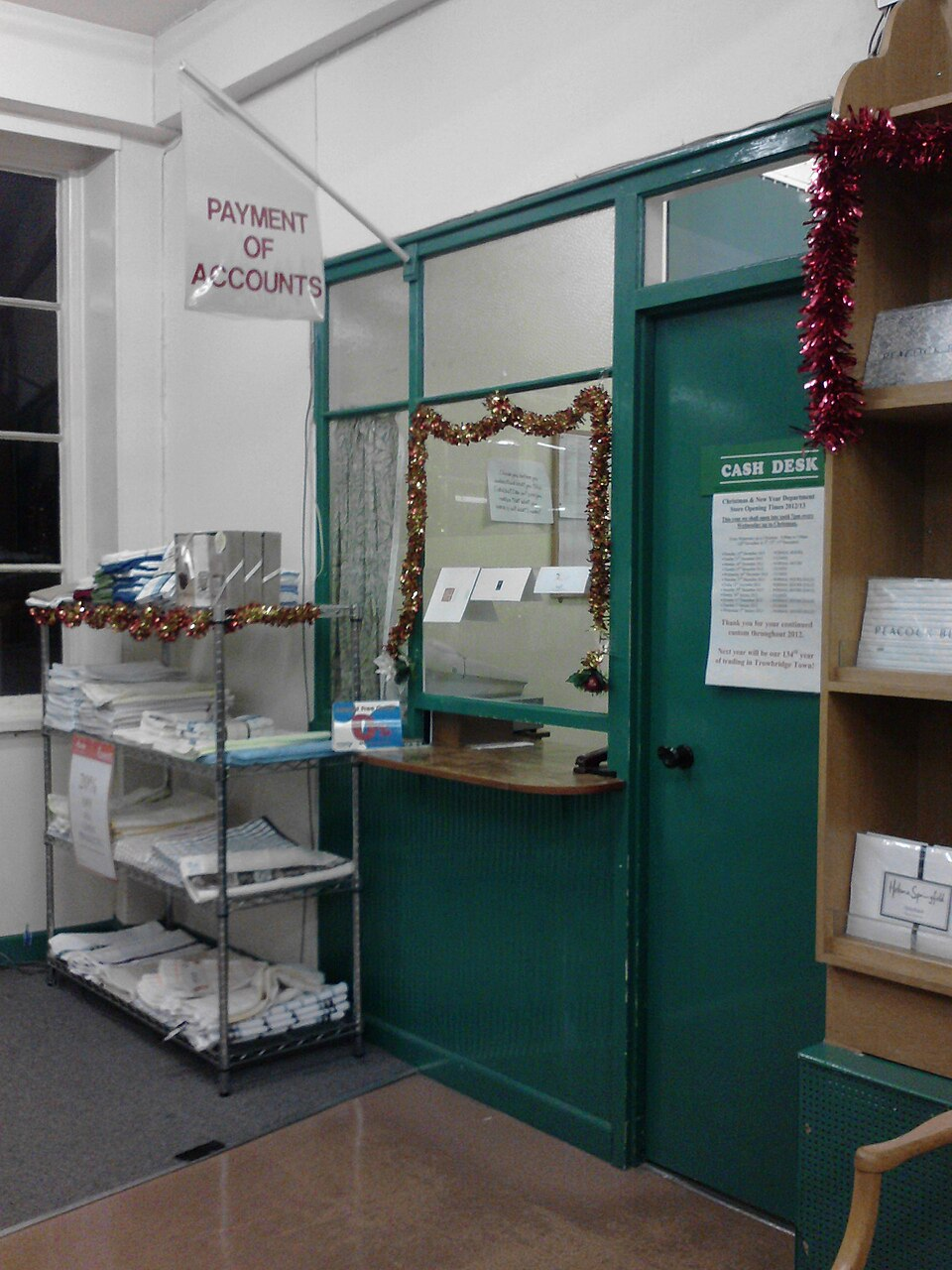
The solution large stores arrived at was to remove cash handling from the sales floor entirely and concentrate it in one place with one or two trusted people in it.
So the store built a cashier’s office – frequently raised on a mezzanine, with a window and a clear view of the floor – and every payment in the building went there. The clerk never opened a drawer, never made change, and never had money in a pocket. The clerk’s job was reduced to selling goods and writing a slip.
That arrangement delivers several things at once. All the cash in one place, counted by one person, reconciled against the written slips. A second person independently checking the arithmetic of every single sale, which catches errors as well as dishonesty. A clean division of duties, so that the person who records a sale is not the person who holds the money for it – which is the oldest principle in accounting control and the reason the system was built this way.
And it is auditable. When the store closed, the cash in the office had to equal the total of the slips, and any difference is a question somebody has to answer.
Then You Need a Way to Move Money Across a Building
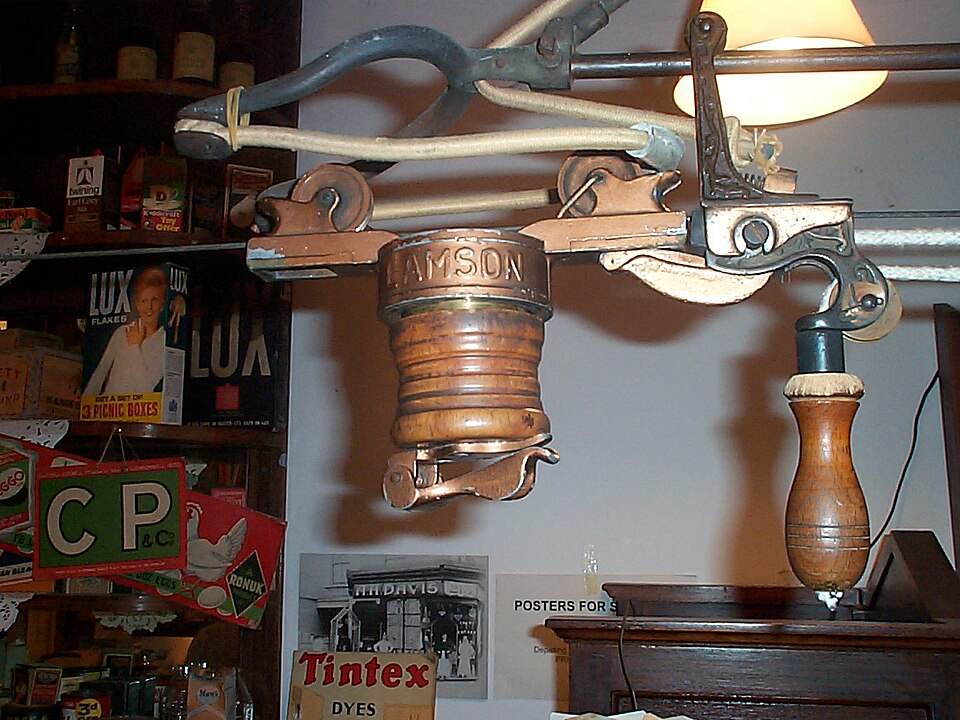
Having centralised the cash, the store had created a logistics problem: every transaction now requires a round trip between a counter and an office that may be fifty yards and a floor away.
A clerk walking it would make the system unusable. A runner – and stores did employ cash boys and cash girls doing exactly this – works but is slow, costly and limited by how many legs you can afford.
Hence the machinery, and there were two main families of it.
The wire system ran a taut overhead cable from each counter up to the cashier’s window, with a wooden ball or a small basket on a pulley carriage. The clerk put money and slip inside, pulled a handle, and a spring or a weight sent the carriage running along the wire by gravity and momentum. The return trip ran back down the same or a second wire.
The pneumatic system used brass or copper tubes with a central vacuum or pressure plant. A canister went into a port, the clerk closed the door, and air pressure carried it through the tube to the office. These could run anywhere a tube could be routed, including between floors and over long distances, which is why they outlasted the wire systems.
The Spectacle Was Not Accidental
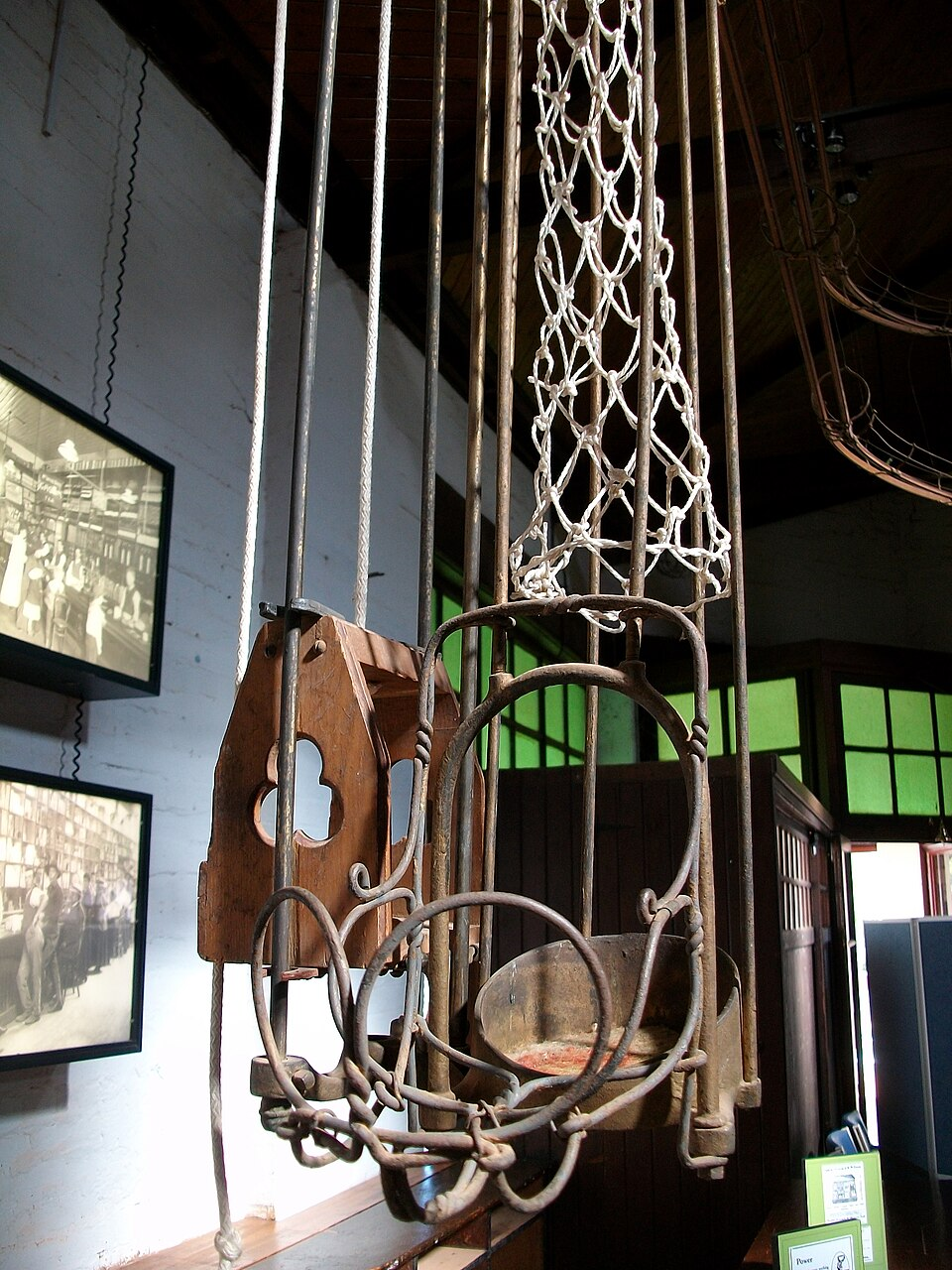
That said, the stores were perfectly aware that customers enjoyed watching it, and they leaned into it.
Wire systems were run across open sales floors at ceiling height where everybody could see them, rather than being concealed. The cashier’s office was built as a visible feature with a window, frequently with decorative ironwork. The sound was distinctive and constant – the rattle of carriages, the thump of tubes arriving – which gave a large store a continuous audible signature of being busy.
And a busy store looks like a successful store, which is good for business. A customer standing at a counter watching their money fly across a ceiling is a customer having an experience, in a building that feels modern and well run.
So the system was a control mechanism that also happened to be excellent advertising, which is the most comfortable kind of expense a business can have.
The Register Made All of It Unnecessary
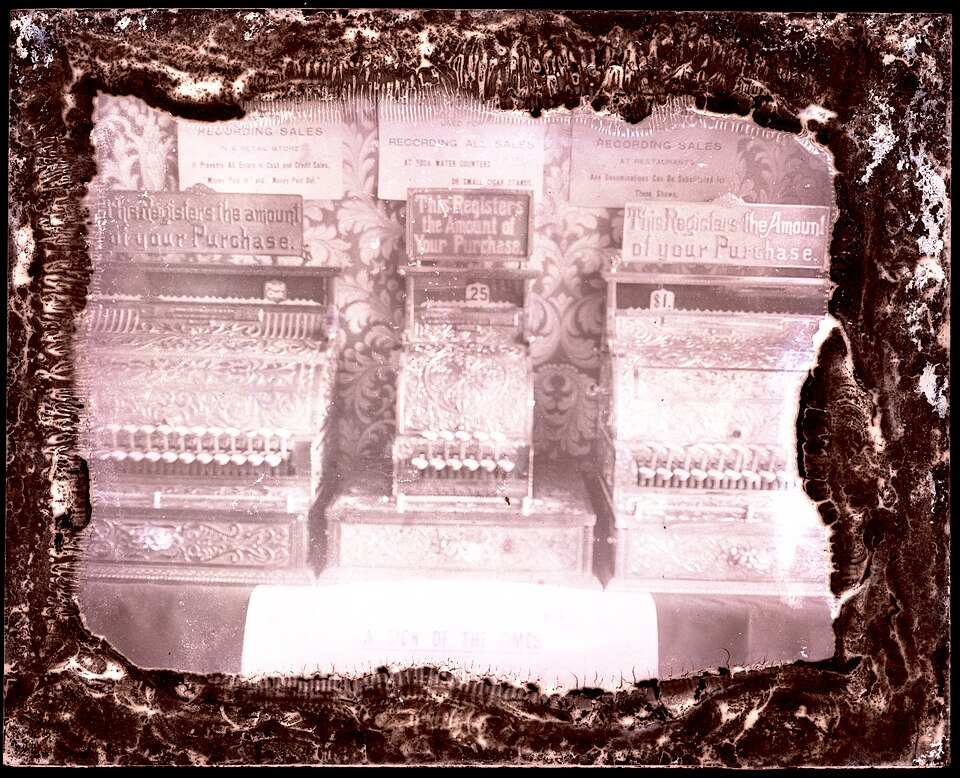
The cash register is what ended the overhead systems, and understanding why requires knowing what a register actually did.
A mechanical register is not a drawer with a bell. Its essential function is that it records the transaction in a way the clerk cannot alter – on a locked internal counter and on a continuous paper tape that only a supervisor can reach. The drawer opens only when a sale has been rung up, which means that recording the sale and taking the money become a single inseparable action.
That solves the original problem completely, and it solves it at the counter instead of in a distant office. If every sale must be rung to open the drawer, and the tape records every ring, then a clerk can safely be given cash – because the verification now travels with the transaction rather than requiring the money to be physically moved to somebody trustworthy.
So the register did not replace the cash carrier as a better way of moving money. It removed the reason for moving money at all. Once you could trust the record, you no longer needed to centralise the cash, and once you did not need to centralise the cash, there was nothing to send anywhere.
The Tubes Went Where the Cash Did Not
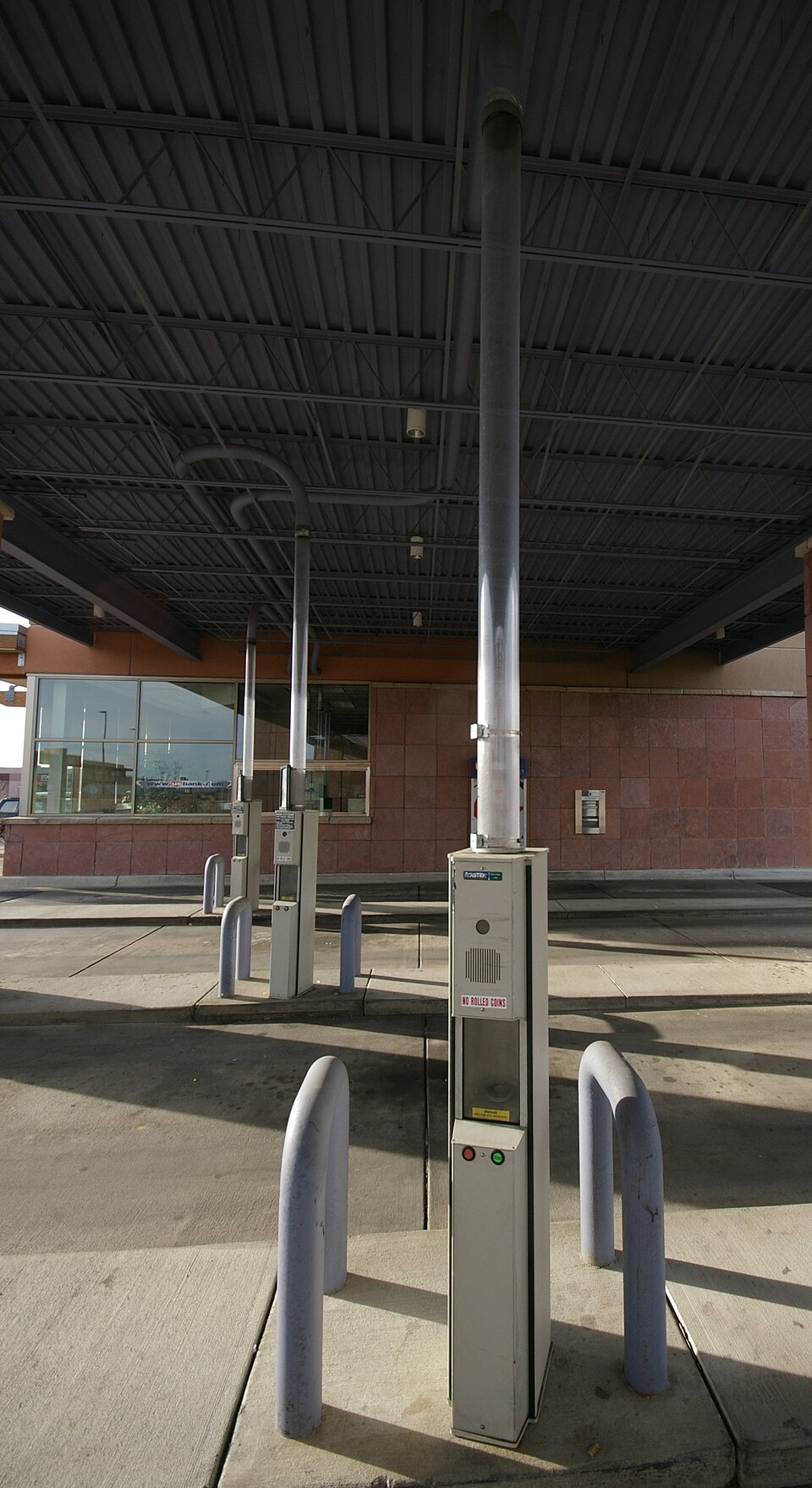
The pneumatic side of the family did not die, which is the part most people have not noticed.
Tubes are extremely good at moving small objects quickly through a building, and the moment stores stopped needing them, other users with the same requirement picked them up. Banks moved them outdoors, to drive-through windows, where the problem is identical in structure: a transaction between a customer in a car and a teller behind glass, with the money needing to cross a gap nobody can walk across. Hospitals run enormous tube networks carrying samples, blood products, documents and medication between wards and laboratories, where speed genuinely matters and a human courier is slower. Large pharmacies, laboratories, casinos, factories and some libraries run them too.
So the technology is alive and in many respects more capable than it ever was in a department store. It simply left retail, because retail stopped having the problem.
Which means a person using a bank drive-through today is operating the direct descendant of the device that carried their grandmother’s dollar up to a mezzanine, for exactly the opposite reason – not because the bank distrusts the teller, but because there is a window and a car and no other way across.
What the Ceiling Was Telling You
So the memory deserves reinterpreting.
The wooden ball running up a wire was not whimsy and it was not an inefficiency that technology eventually tidied up. It was the visible, audible, unmistakable evidence of a business that had concluded it could not verify its own sales, and had therefore built a mechanical system to take the money out of its employees’ hands as fast as possible.
Every clerk in that store understood exactly what it meant. They were not being given cash because the arrangement did not require anybody to be trusted – which, from a certain angle, is a form of respect: a system that does not depend on anybody’s honesty does not have to make judgements about it.
And the whole apparatus came down, floor by floor and store by store, not because the suspicion went away but because a machine arrived that could record a sale honestly at the counter.
The money stayed on the sales floor from then on. What changed is that it was finally being watched.
Like our content? Follow us for more.