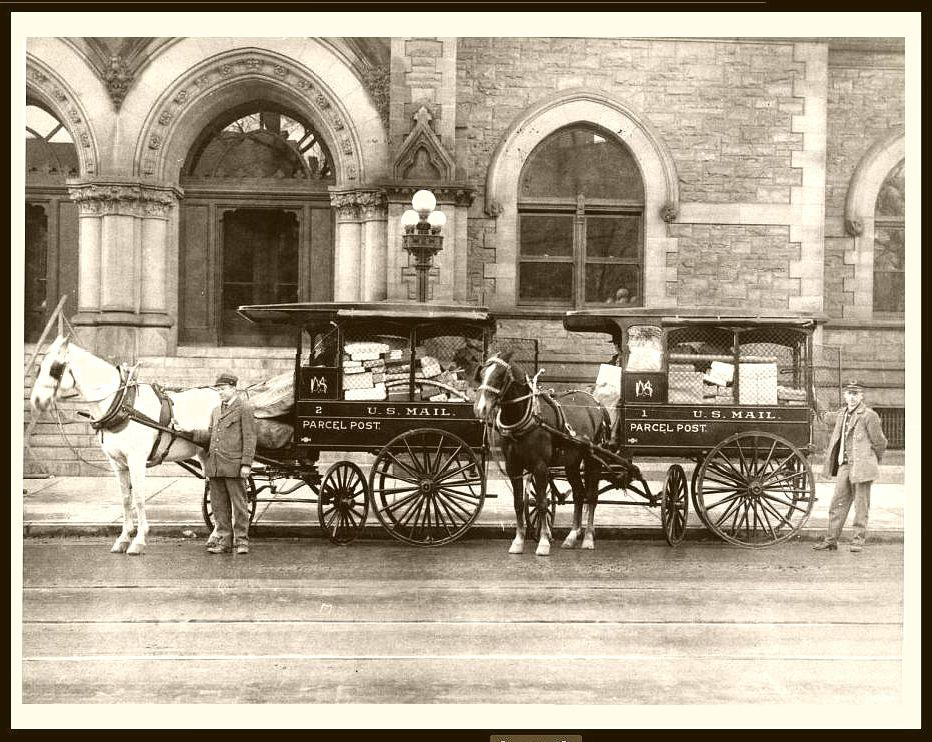
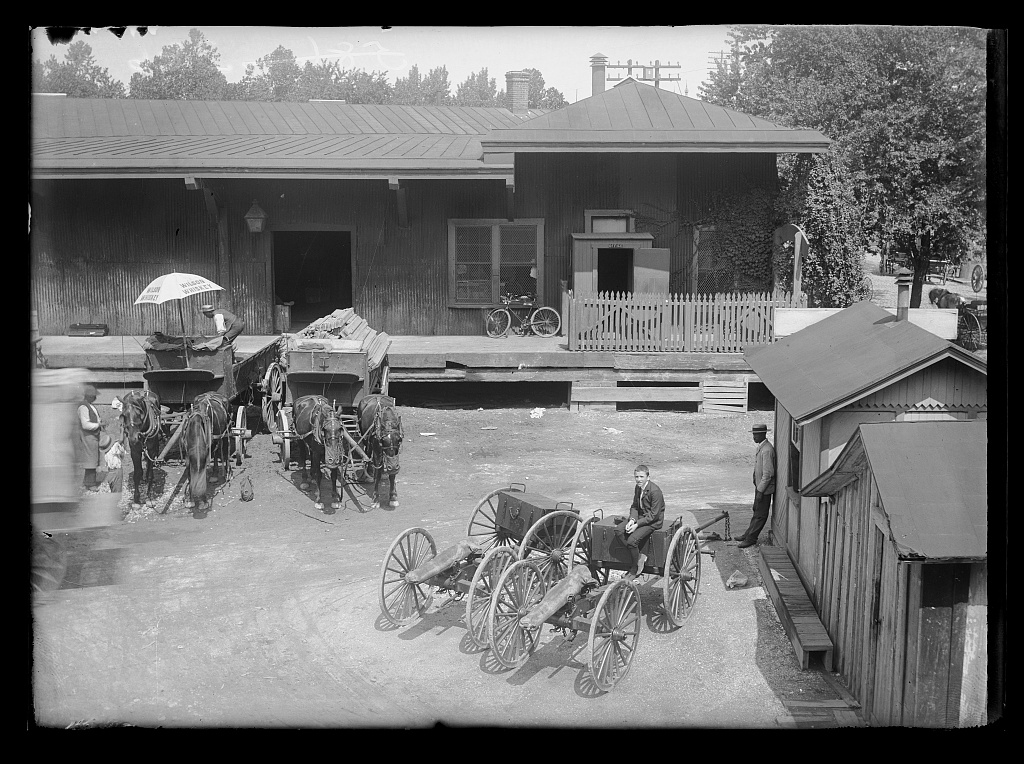
There is a vehicle in old photographs of American main streets that everybody looks past: a flat wooden platform on four wheels, no sides, no seat to speak of, no roof, sitting noticeably lower than the buggies around it, with a man standing on it among barrels and crates.
That is a dray, the man is a drayman, and between them they did a job that has no single modern equivalent because it has been split up among several.
Everything that arrived in a town arrived somewhere other than where it was going. The dray closed that gap, and the way it was built tells you exactly what the job required.
The Gap Between the Depot and the Door
Start with the problem, because it is the whole reason the trade existed.
Freight came to a town by rail or by water, which means it arrived at a depot, a freight house or a landing. None of those is where anybody wanted it. The goods were destined for a store on the main street, a warehouse, a mill, a lumber yard, a house, a hotel or a building site.
So there was a gap – a short one, frequently only a few blocks – between where freight was set down and where it had to end up. And that gap had to be crossed by something capable of moving a piano, a load of barrels, a stove, a safe, a stack of lumber or a shipment of flour.
That is local cartage, and it was a recognised trade with its own vehicles, its own operators, its own rates and its own position in a town’s commerce. Every settlement of any size had draymen, and a town’s merchants depended on them completely.
Like our content? Follow us for more.
A Dray Is Built Low and That Is the Entire Design
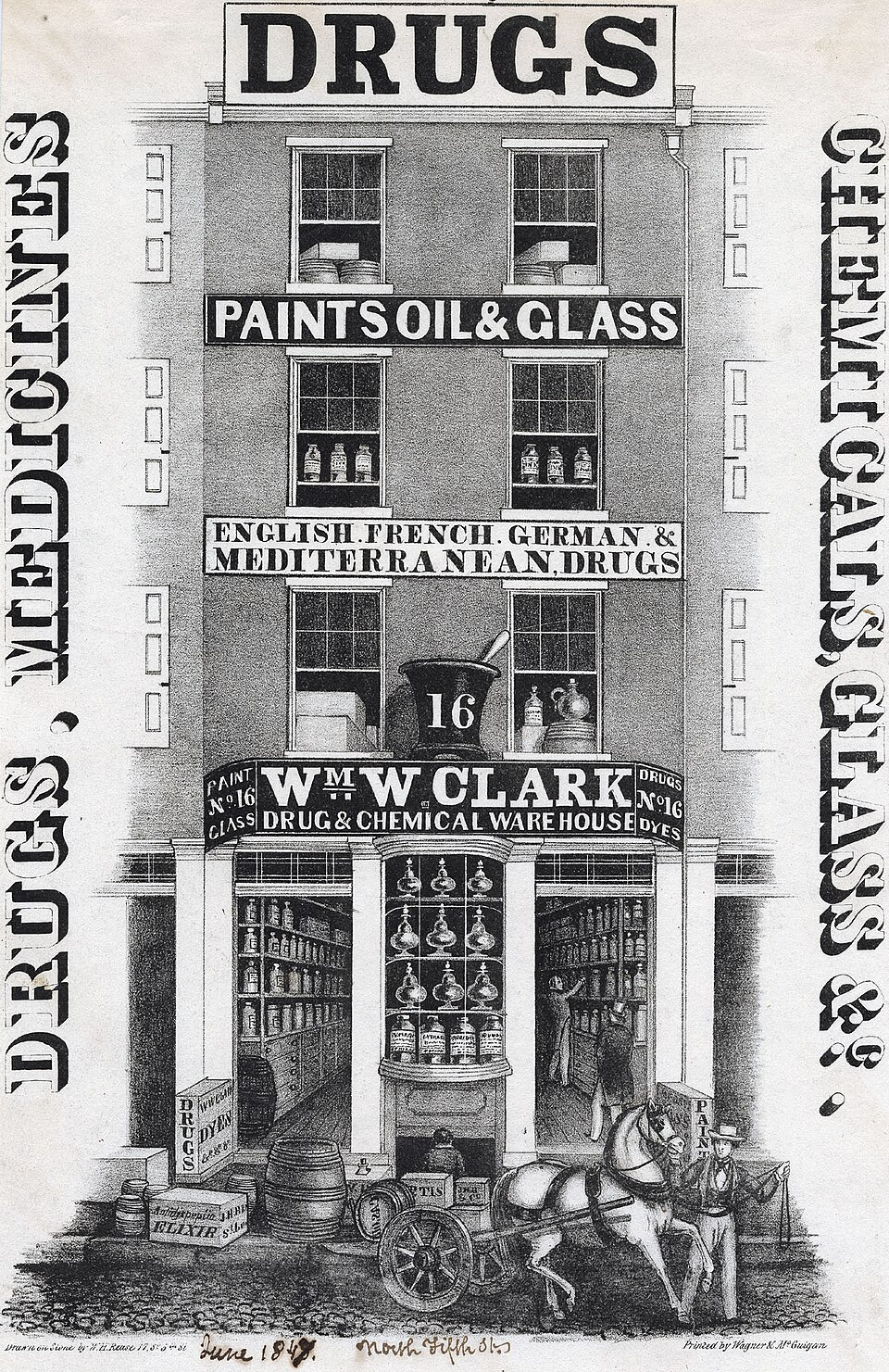
Here is the engineering, and it is the part worth understanding because every feature is deliberate.
A dray has a flat platform and no body. That means nothing has to be lifted over a side – freight is slid, rolled or walked onto the bed from the back or the side, which for a barrel or a crate is a completely different proposition from lifting it over a wagon’s side board.
It sits low. Smaller wheels and a frame set as close to the axles as the construction allows put the deck at the lowest practical height, because the work of loading is the work of raising things, and every inch of deck height is paid for by somebody’s back on every single item.
It has little or no suspension. That looks like a defect and is not. Springs raise the deck, they let a load shift and bounce, and they are an expense that buys passenger comfort – which a load of pig iron does not require. A rigid frame keeps the deck low, keeps the load still, and takes abuse.
And it is short rather than long, because the job is tight turns in a street and alleys and loading docks rather than distance.
The Horses Were Different Animals Entirely
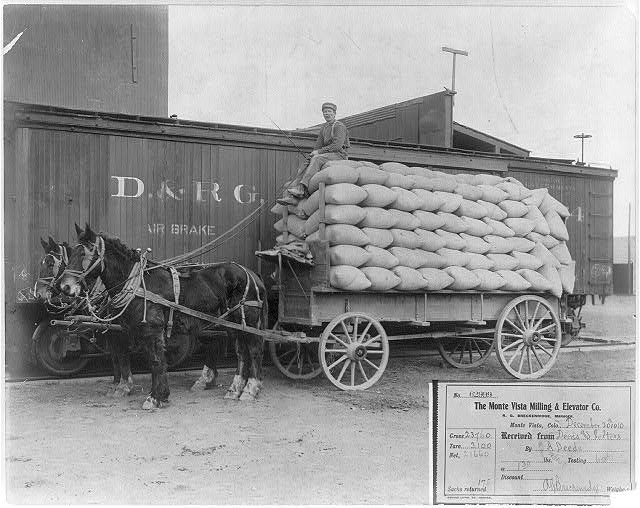
Worth saying, because this is where the word comes from in the first place.
Hauling a heavy load at walking pace on a flat street requires a completely different animal from pulling a light carriage at a trot. Draught horses were bred and selected for mass, strength and steadiness – heavy, broad, slow and extremely powerful – and a drayman’s team was the most valuable thing he owned.
The requirement is not speed and it is not endurance over distance. It is the ability to start a very heavy load from standstill, repeatedly, all day, on pavement, and to stand still while it is loaded and unloaded.
That last part is underrated. A team that will not stand quietly while barrels are rolled off a platform behind it is a serious liability, and a steady pair was worth paying for.
The Man Was Half Teamster and Half Rigger
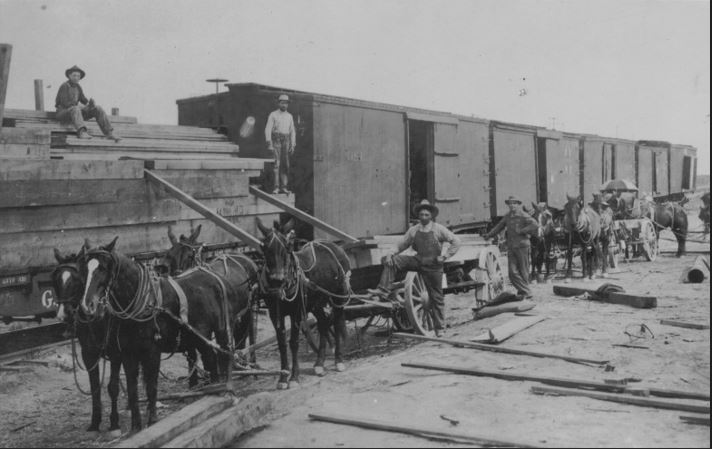
The skills involved were considerable and they were not mainly about driving.
A drayman had to know how to get something awkward from a railcar onto a deck and from a deck into a building, using planks, rollers, levers, blocks, ropes and a great deal of judgement about where to take the weight. Moving a safe or a piano into a building is a rigging problem, and the draymen were the people who solved it.
He had to load a wagon so the weight sat right over the axles, because a badly loaded dray is hard on the horses, hard to steer and liable to shift.
He had to know the town – which buildings had a rear entrance, which alleys he could get out of, which docks were at what height, who paid and who did not.
And he had to be strong in a way that is simply not required of anybody now, because almost every item he handled he handled by hand at some point in the journey.
It Was a Business With Rates and Competition
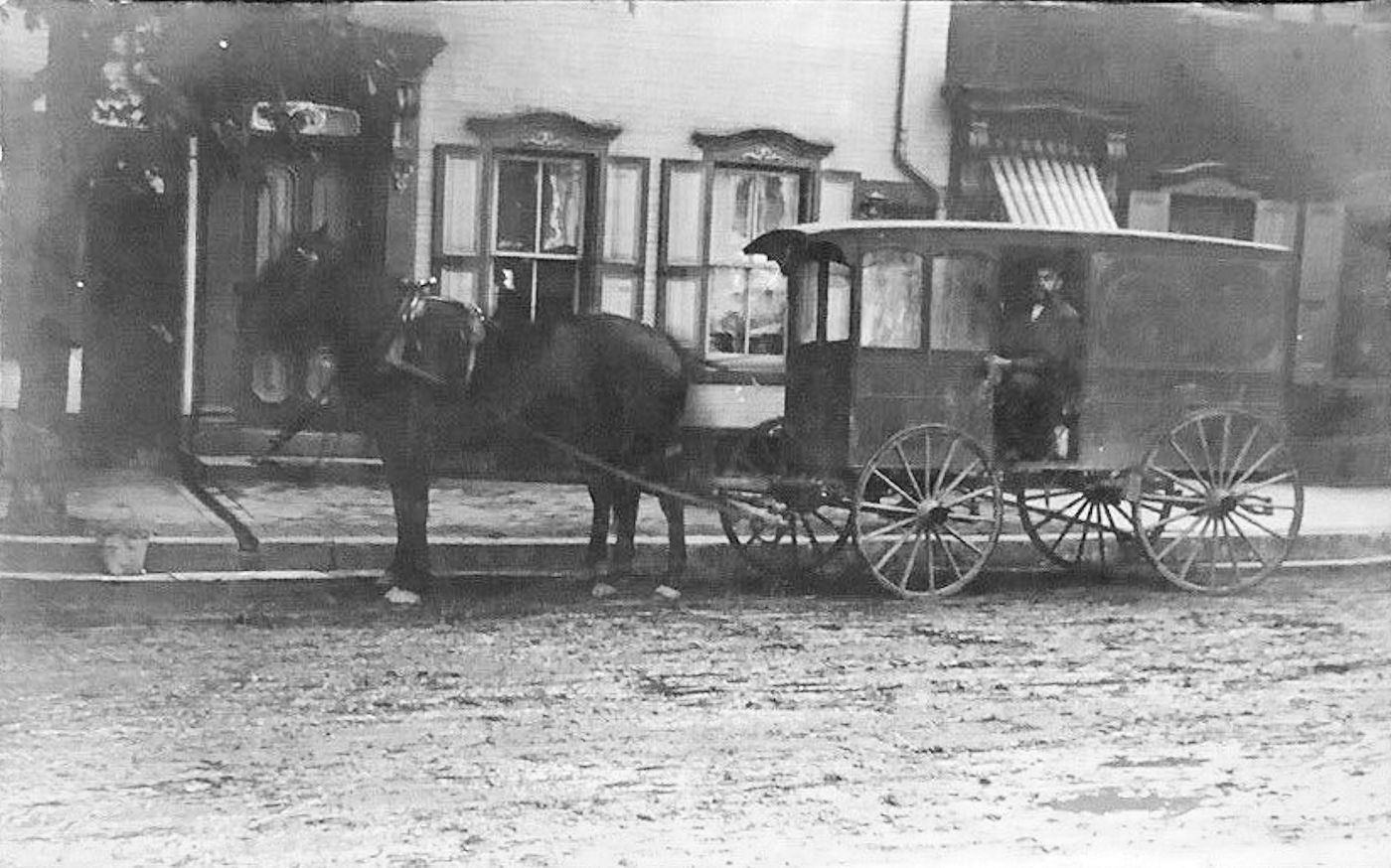
Worth setting out, because the commercial side is usually invisible in photographs.
Drayage was charged by the load, by the item, by the hour or by standing contract, and the rates were a matter of local knowledge and negotiation. A merchant receiving freight weekly dealt with the same drayman continuously and had an arrangement; a householder moving a stove paid a one-off price.
In many towns there were several operators competing, and in some there were effectively arrangements that kept the rates steady. Municipal licensing of draymen was common, partly for revenue and partly because somebody had to be answerable when a load damaged a street or a building.
The business also carried the whole town’s inbound goods, which gave the men a particular position. A drayman knew what every store was receiving and in what quantity, which is commercially sensitive information passing daily through the hands of somebody with no obligation to keep it quiet.
Then the Motor Truck Did the Same Job Better
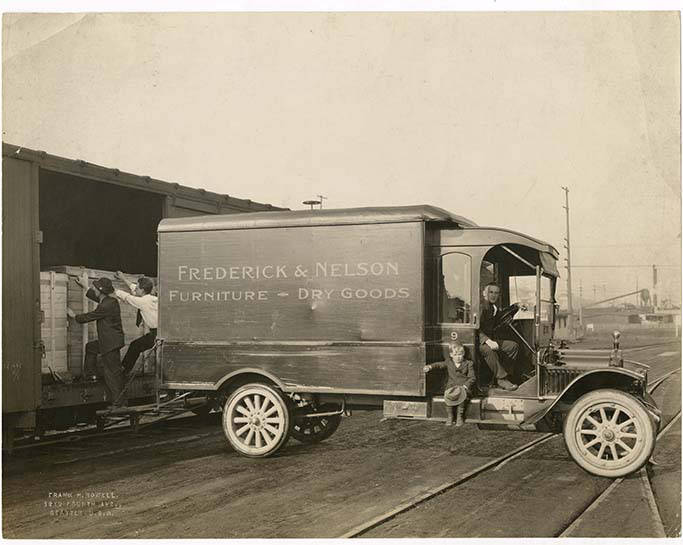
The replacement is straightforward and it was quick.
A truck does not need feeding when it is standing idle, which for a vehicle that spends a great deal of its day waiting to be loaded is a substantial saving. It does not need stabling, it does not need a team of two valuable animals, and it does not tire.
It is faster, which matters less than people assume for a few blocks but matters a great deal once a town’s freight is coming off a highway rather than out of a freight house.
And it can be built with the deck at whatever height is convenient, which is the interesting part – because the truck inherited the dray’s design logic exactly. A flatbed truck is a dray with an engine: low deck, no sides, nothing to lift over, built for loading rather than for comfort. The thinking did not change. The motive power did.
Then the Freight Stopped Arriving Centrally
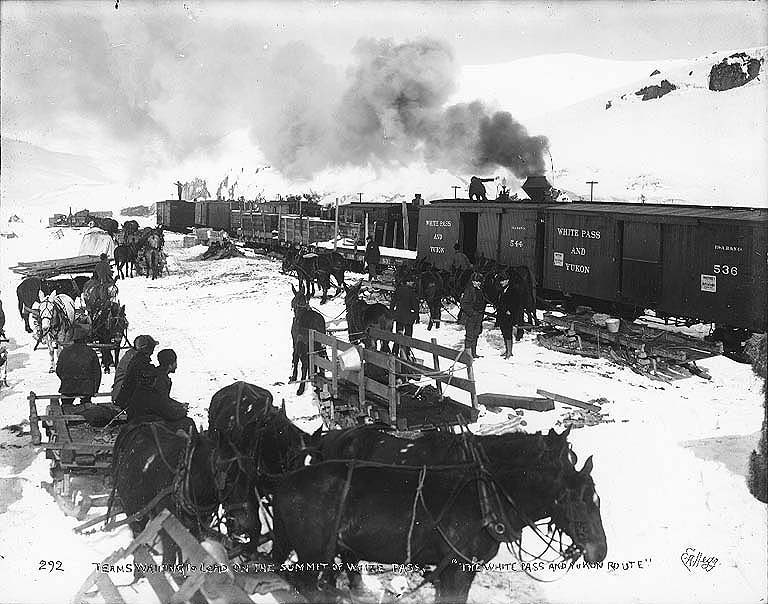
This is the change that removed the job rather than mechanising it, and it is the more fundamental one.
Drayage existed because freight landed at a central point – a depot, a freight house, a wharf – and had to be distributed from there. Once trucking took over long-distance freight, goods came off a highway and went directly to the consignee’s own door.
Which abolishes the gap. There is no transfer from one vehicle to another, no central point to collect from, and therefore nothing for a local carter to do. The truck that brought the goods a hundred miles also brings them the last three blocks.
So the trade was not outcompeted by a better local carter. The structure of freight transport changed in a way that removed the step the trade consisted of – exactly as the station agent and the team track went at the same time, and for the same reason.
Then the Last Piece Became Several Industries
What remains of the drayman’s work has been divided up, which is why he has no modern counterpart.
Household moving became its own trade with its own trucks and crews. Heavy rigging – machinery, safes, pianos – became a specialist business. Parcel delivery became a network industry. Building material delivery goes with the yard that sold it. And the general local carriage of anything else is done by whoever is selling it, on their own vehicle.
So five or six separate things now do what one man with a flat wagon and a heavy team used to do, and the only reason that looks like progress rather than fragmentation is that all of them are cheaper and faster than he was.
The word survived longest in business names. A great many American towns had a transfer company or a cartage company well into living memory, and some still do, with a name that dates from when the vehicles had horses in front of them.
Looking for the Vehicle in Photographs
If you look at street photographs of an American town before about 1920, the draymen are the easiest thing to date the picture by.
Find the low flat wagon with no sides. Look at the deck height relative to the sidewalk and at the size of the wheels. Look at the horses – heavy, thick-legged, standing still. And look at what is on the bed, because it is the town’s inbound commerce in physical form: barrels, crates, sacks, lumber, ice, coal, furniture, machinery.
That vehicle is the reason anything in any of the shops behind it is there.
And it was built with no springs, deliberately, because the only thing its designer cared about was how far off the ground the deck sat.
Like our content? Follow us for more.