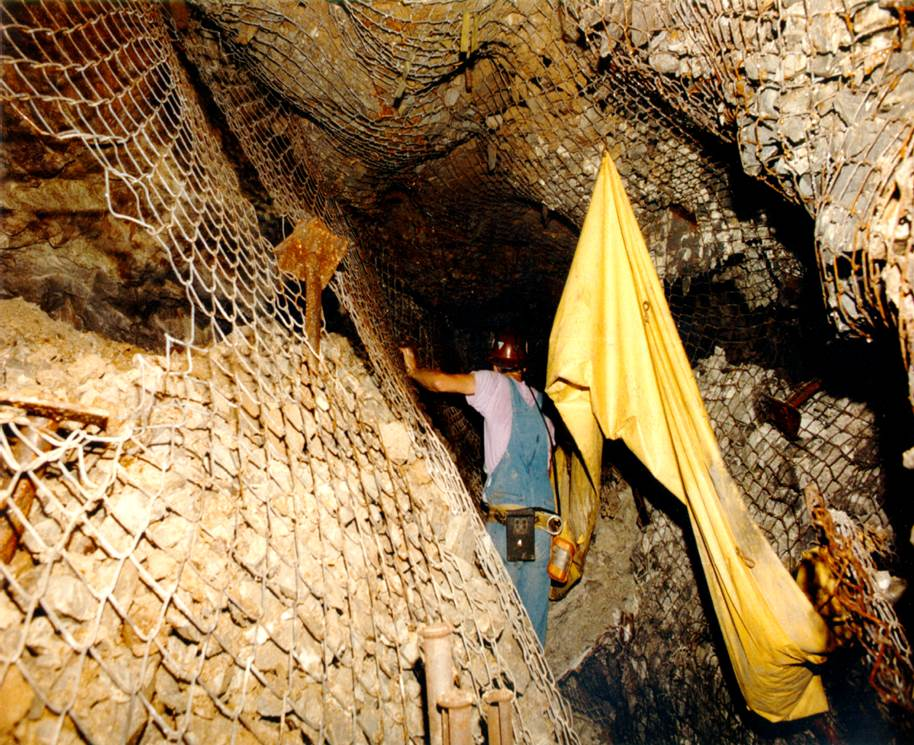
The deepest place human beings go to work is a gold mine in Gauteng province in South Africa, in the Witwatersrand basin, where the workings extend to roughly four kilometres below the surface. That is about two and a half miles, straight down, and it is the furthest into the earth that people routinely travel.
What makes it interesting is not the number. It is that at that depth the limiting factor on mining is no longer geology or engineering but physics: the rock is too hot for a human body to work against, and the rock above is heavy enough that it fails violently when a space is opened in it. Everything about the operation is an answer to one of those two problems, and the answers are extraordinary.
The heat comes from the rock, not the air
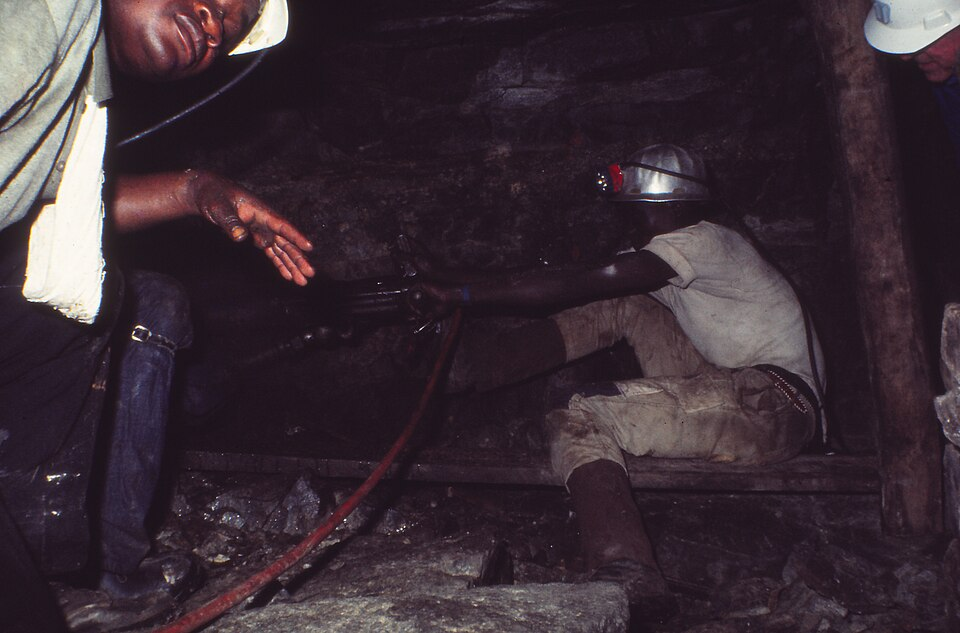
Temperature increases with depth through the crust, and in this part of South Africa the gradient brings the virgin rock temperature at the working depth to around 60 degrees Celsius. A newly exposed face radiates that heat into the tunnel continuously, and the rock is effectively an infinite reservoir of it.
Unventilated and uncooled, the air at that depth would be unsurvivable for work. Compression of the ventilating air as it descends the shaft adds to the problem rather than relieving it, because air warms as it is compressed, so simply blowing surface air down a four-kilometre shaft delivers hot air to the bottom. The problem is not a matter of comfort or endurance. Beyond a certain combination of air temperature and humidity the human body cannot shed metabolic heat at all, and no amount of acclimatisation or determination changes that, because the limit is thermodynamic.
Like our content? Follow us for more.
So they send ice down the shaft
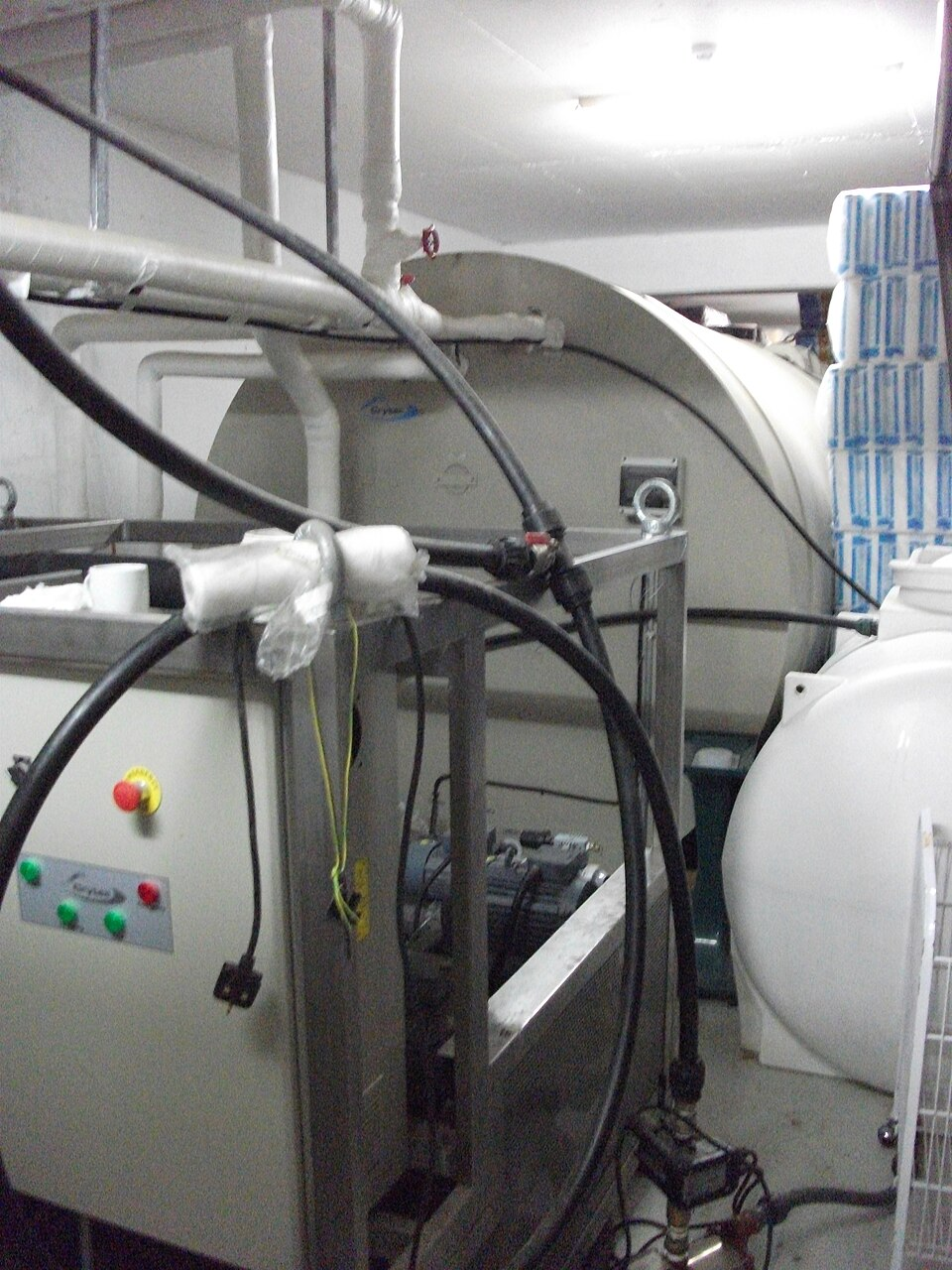
The solution is among the largest industrial refrigeration undertakings anywhere. Surface plants produce ice, which is mixed into a slurry and pumped down the shaft to underground chambers, where it is used to chill the ventilating air before it reaches the working levels. The quantities involved run to thousands of tonnes a day.
Ice is used rather than chilled water for a specific reason: melting ice absorbs a very large amount of heat without changing temperature, so a given mass of ice carries far more cooling capacity down the shaft than the same mass of cold water. The scale of the plant required is a substantial fraction of the mine’s total energy consumption, and the cooling cost is one of the real limits on how deep a mine of this kind can economically go. The depth record is not a matter of how far anybody can dig. It is a matter of how much refrigeration the gold will pay for.
The rock pushes back
The second problem is pressure. At four kilometres the weight of the overlying rock is enormous, and the rock at the face is held in a state of stored elastic strain. Opening a void in it gives that strain somewhere to go, and it releases suddenly.
The phenomenon is known in the industry as a rockburst, and the seismic events it produces are detected on regional monitoring networks: mining at this depth generates measurable earthquakes, some of them large enough to be felt at the surface. The engineering responses are support systems designed to yield rather than to resist, careful sequencing of excavation so that stress is redistributed in a controlled way, dense seismic monitoring underground, and restrictions on when people may be in a newly blasted area. South African deep-level mining has done more to develop this field than anywhere else, out of necessity, and the research literature on rock mechanics at depth is substantially South African.
Getting to work takes longer than the commute
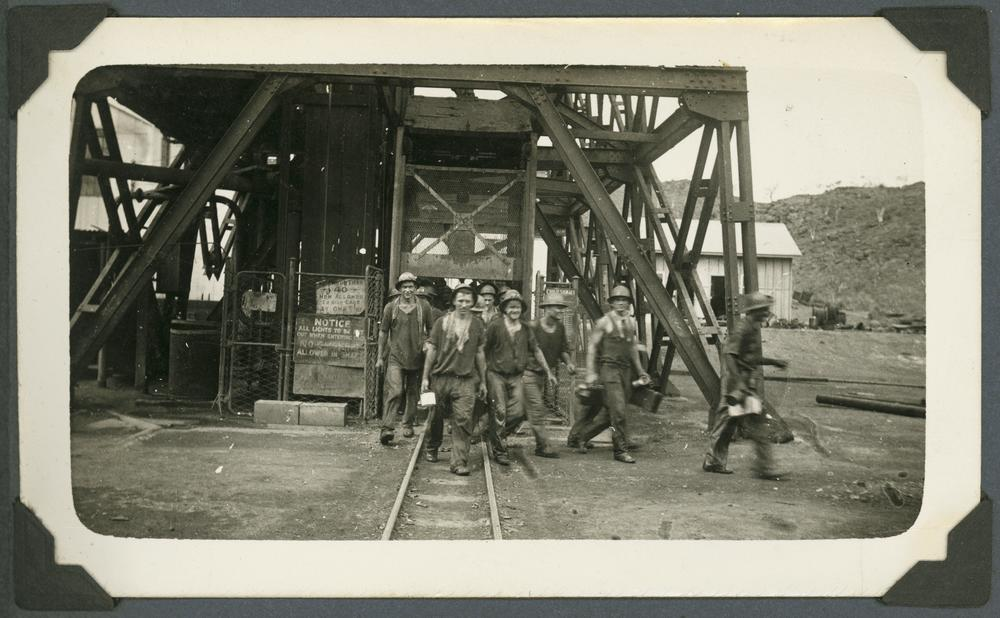
A shift begins with a descent in stages. A single cage cannot run the full depth, so workers transfer between shafts partway down, and the journey from the surface to the working face takes well over an hour each way, in a cage, in the dark, in increasing heat.
The lateral distance matters as much as the vertical. From the bottom of the last shaft, workers travel horizontally through tunnels for a considerable distance to reach the face, which means the effective working day includes several hours of travel inside the mine. Everything that goes to the face — equipment, timber, support, water, ice, people — goes down the same shafts, and everything that comes out comes up them. The logistics of a mine at this depth resemble those of a remote expedition more than those of a factory.
And then somebody found something living in the water
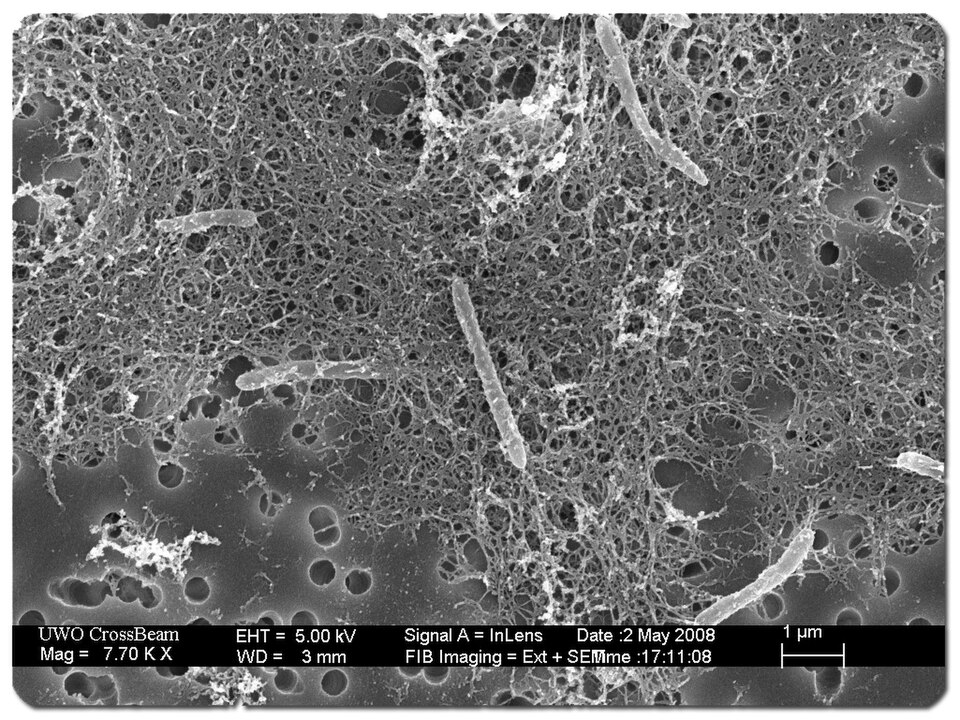
In the mid-2000s researchers sampling water from fractures in the rock deep in this mine found a microbial community, and the finding turned out to be more remarkable than simply discovering life at depth.
The principal organism in the sample was effectively alone. Where almost every microbial ecosystem known consists of multiple species trading metabolic products with one another, this one appeared to be a single-species community, deriving its energy not from sunlight or from anything produced by photosynthesis but from chemical reactions driven by the radioactive decay of elements in the surrounding rock. It fixes its own nitrogen and carbon and does not depend on any other organism. The water it was found in had been isolated from the surface for a very long period, measured by the ages of dissolved gases.
That is a genuinely important result and the reason it belongs in a piece about a mine is that there is no other way to get the sample. A deep borehole gives a narrow core and a contaminated water sample; a working mine gives researchers physical access to fracture water kilometres down, with room to work. Several of the significant findings in deep subsurface biology have come out of these shafts for exactly that reason.
What it means for the search elsewhere
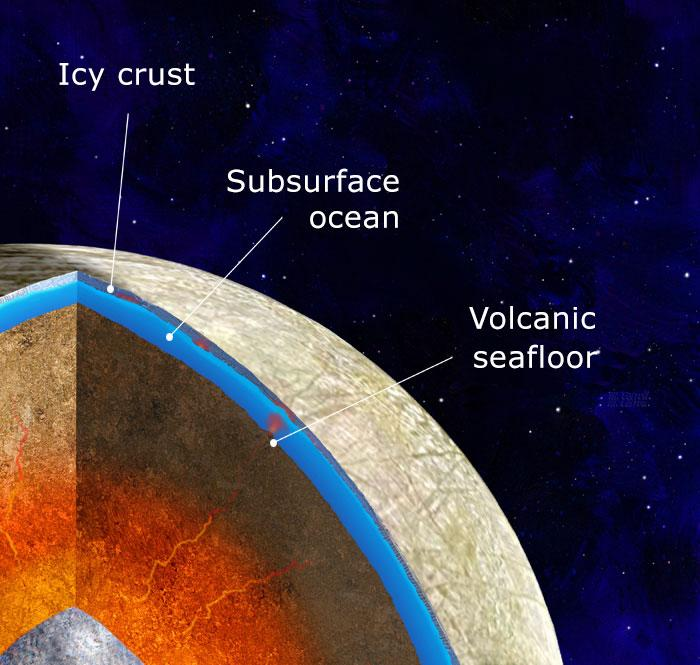
An organism living kilometres underground on energy derived from radioactive decay in the rock, independent of the sun and of every other living thing, is the clearest terrestrial demonstration that a biosphere does not require a surface. That changes the arithmetic of where life might be found.
Mars has a cold, irradiated, dry surface and a subsurface where liquid water is considered plausible. The icy moons of the outer planets have subsurface oceans under kilometres of ice. In both cases the question is whether an ecosystem can run without photosynthesis, and the deep mines of South Africa are where the answer was shown to be yes. The connection between a gold mine in Gauteng and the exploration of Europa is direct and it runs through the water in those fractures.
The human arithmetic

It would be dishonest to write about this place as purely an engineering and scientific curiosity. Deep-level gold mining in South Africa is among the most demanding industrial work in the world, it is done by a large workforce drawn historically from across southern Africa under a migrant labour system with a long and contested history, and the industry’s record on occupational health — particularly silica dust and lung disease — has been the subject of major litigation and settlement.
Those facts belong in the same account as the refrigeration plant and the bacterium. The reason anybody is four kilometres underground at 60 degrees is that there is gold in the reef, and the cost of extracting it has always included a human component that the depth records do not mention. The mine is a remarkable piece of engineering and it is also a workplace, and the second description is the one that applies to the people in the cage.
How much deeper this can go
Proposals exist for extending workings below four kilometres and the obstacles are the ones described above, compounding. Each additional increment of depth raises the rock temperature, increases the refrigeration load, worsens the stress regime and lengthens the travel time, and the gold grade does not improve to compensate.
The realistic future of very deep mining is probably not deeper shafts with people at the bottom but remote and automated extraction, which removes the thermal limit entirely because machinery tolerates what a body cannot. If that happens, the current workings will stand as the deepest place human beings ever physically went to work, and the number will stop moving. It is an unusual sort of record: not a frontier that somebody will push, but a limit set by the temperature at which a person can shed heat.
There is one more constraint that rarely gets mentioned and may bind before any of the others. Everything taken out of a mine at this depth has to be hoisted, and the hoisting rope has to carry its own weight for four kilometres before it carries any rock at all. Steel rope approaches its own limit at roughly these depths, which is why multi-stage shafts exist, and why each additional kilometre requires another transfer station cut into the rock rather than a longer rope. The depth record is held up, quite literally, by what a cable can lift including itself.
Like our content? Follow us for more.