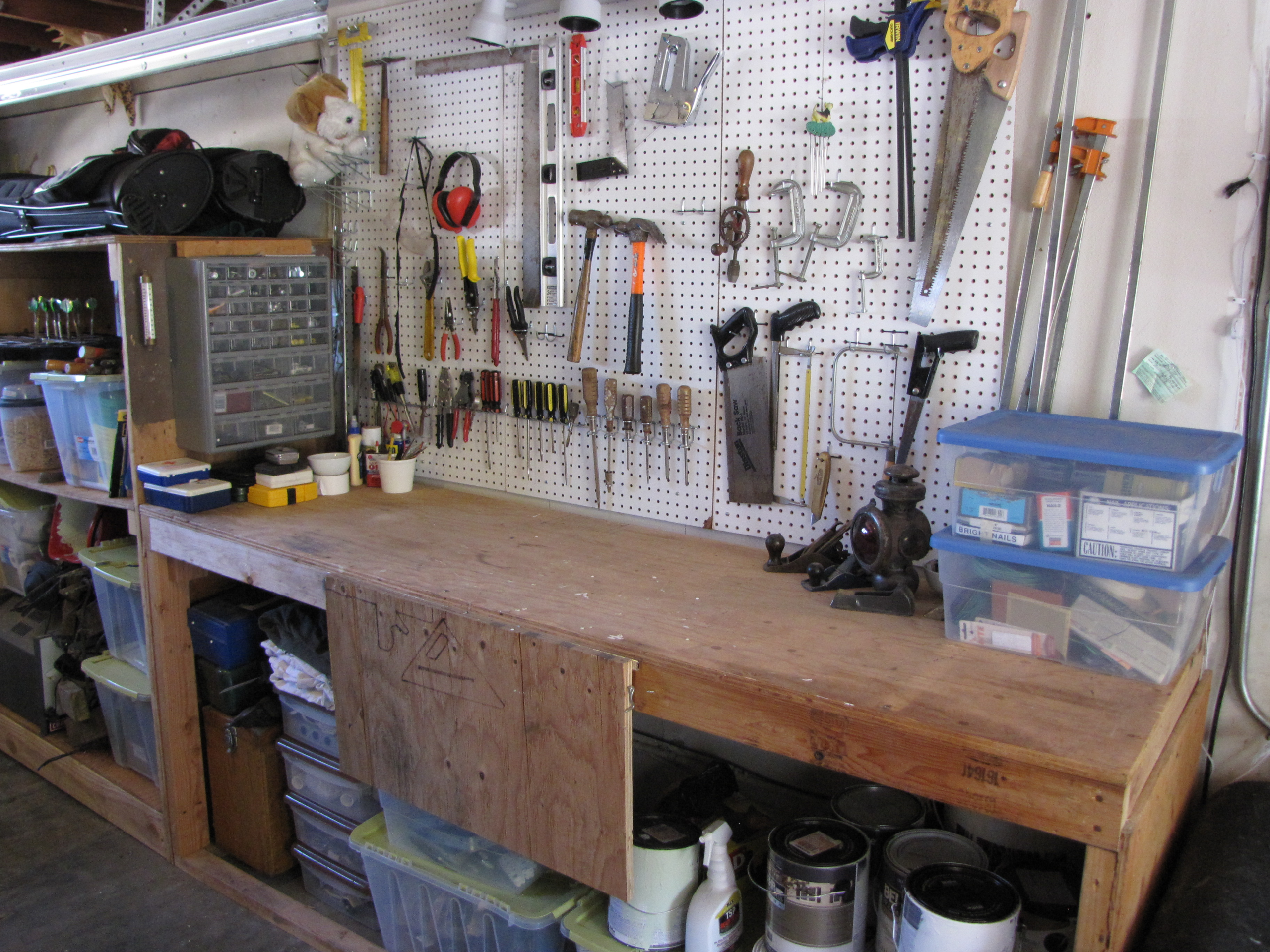
The garage workbench is where the twentieth century’s household chemistry ended up. Anything a man needed for a job came home in a tin and stayed there, and a bench accumulated decades of products that were each entirely legal when bought and several of which are now prohibited outright.
The pattern below is a particular one. Almost nothing here was banned because it did not work — most of these products worked better than what replaced them, which is precisely why they were used. They were removed because somebody eventually measured what they did to the person using them in an enclosed space with the door shut. Here are sixteen things from that bench, and what each of them ran into.
1. Parts cleaner and degreaser built on benzene

The can of cleaning fluid on the bench was a solvent blend, and benzene was a common component. Parts went into a tray of it, brushes were dipped in it, and hands and forearms came out of it at the end of a job.
Benzene is a known human carcinogen and has been progressively removed from American consumer products, with the occupational standard substantially tightened in 1987. No consumer parts cleaner is formulated with it now.
The skin exposure was the quieter half. The fire risk from a tray of volatile solvent in a garage was understood roughly, and the dermal absorption across an afternoon of degreasing had been measured for nobody on a home workbench.
Like our content? Follow us for more.
2. A chlorinated degreaser, and what it does near a welding arc
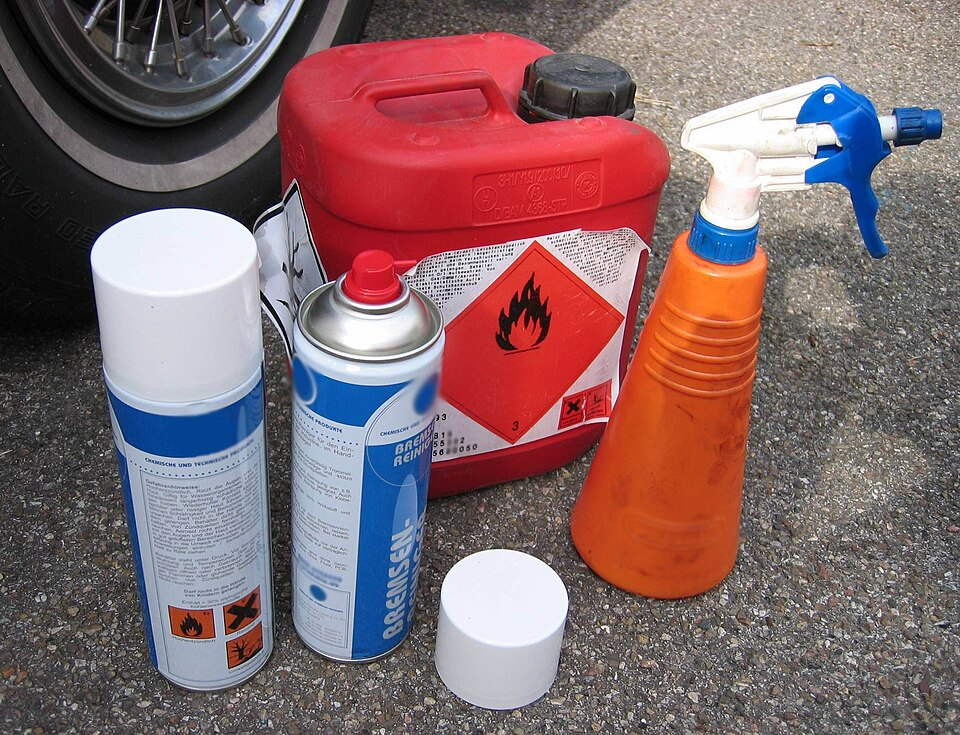
Chlorinated brake and parts cleaners were on every bench, because they cut grease better than anything else and left no residue. They were used on parts that were then welded, sometimes within minutes, in the same corner of the garage.
This specific combination is the subject of an explicit modern warning. Chlorinated solvent vapour exposed to the ultraviolet and heat of a welding arc decomposes into a highly toxic gas, and the hazard is serious, well documented and entirely avoidable. Non-chlorinated cleaners are widely sold and labelled as such for exactly this reason.
Nobody on a 1965 bench had been told. This item is included because it is the one hazard on the list that still catches people: the solvents are still available, the arc is still an arc, and the warning only works if somebody reads the can.
3. Paint stripper with methylene chloride in it
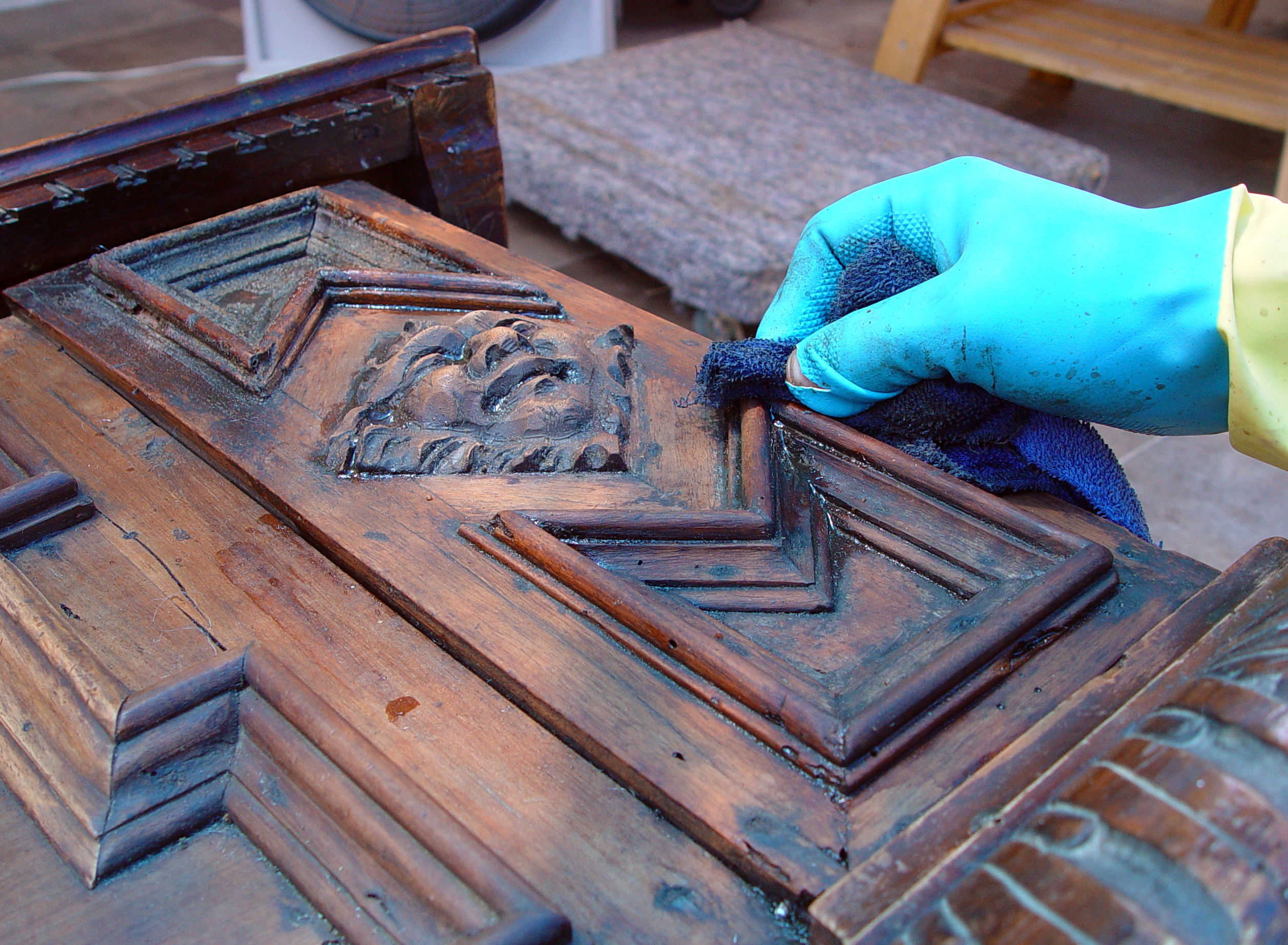
Furniture stripping was a standard garage project and the product that did it was methylene chloride, applied with a brush in a closed garage in winter because that is when people refinish furniture.
The Environmental Protection Agency prohibited methylene chloride in consumer paint and coating removers in 2019, following a long record of fatalities associated with its use in confined spaces, and has acted further on its remaining uses since.
The confined space is the whole problem. The vapour is heavy, it accumulates at floor level, and a person working on a piece of furniture is bent over directly in it. The prohibition is one of the clearest recent examples of a consumer product being removed rather than relabelled.
4. Red lead primer, and lead paint for the trim

The shelf carried lead-pigmented primer for metalwork, which was the best rust primer available, and lead house paint for exterior and interior trim. Both were brushed, sanded and scraped by householders.
The Consumer Product Safety Commission banned lead above a very low threshold in residential paint in 1978. Lead-containing industrial primers persisted longer in specialist use and are tightly controlled, and the American renovation rules for pre-1978 housing exist because of what is still on the woodwork.
Scraping and dry-sanding old paint is the specific activity those rules address, and it is exactly what a garage workbench was for. The paint was removed from sale and the paint already applied is the part that still matters.
5. Lead melted on the bench for sinkers and wheel weights
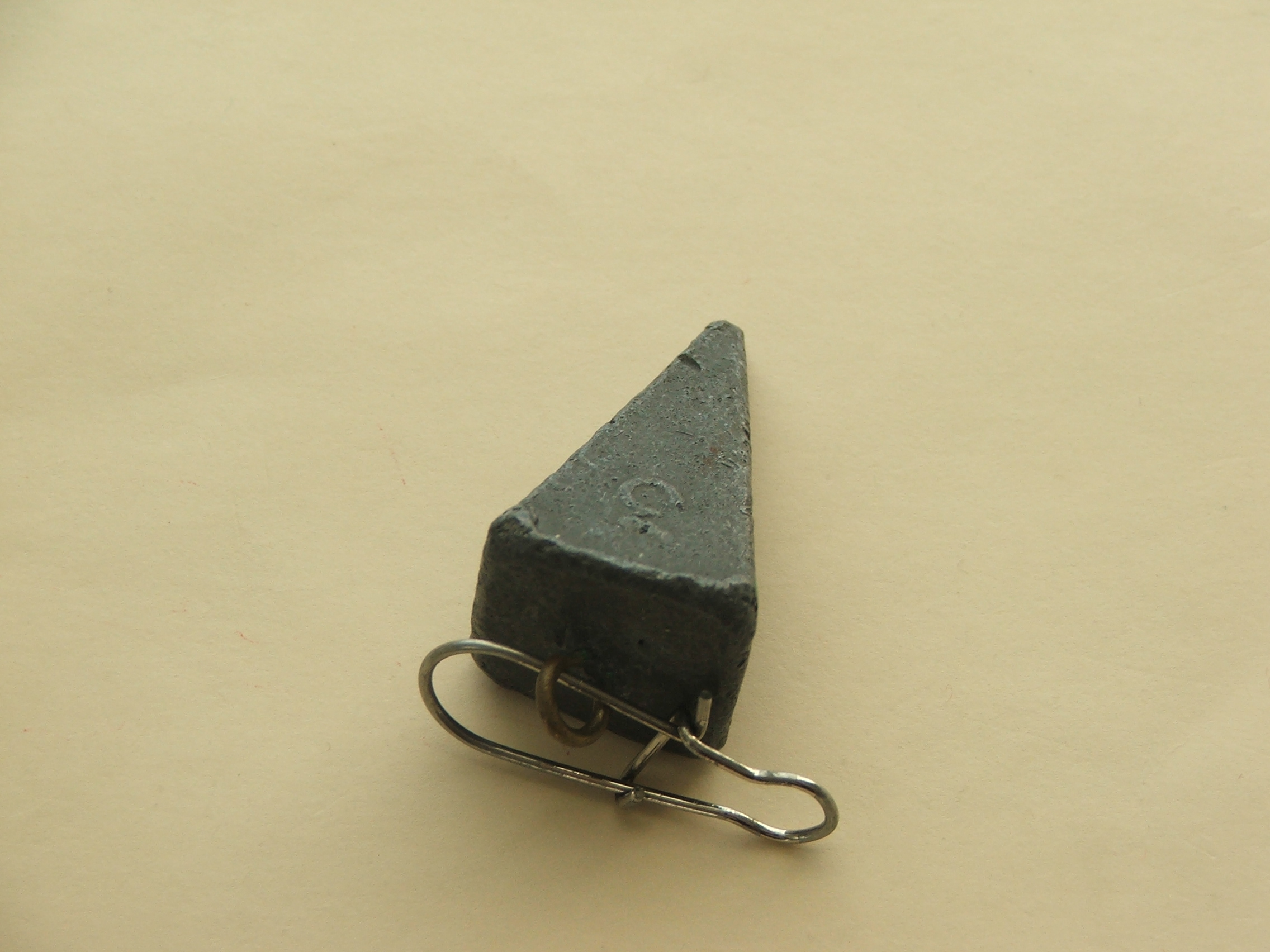
Casting lead was an ordinary hobby. Fishing sinkers, jigs, bullets and wheel weights were melted in a pot on a camp stove or a hotplate on the workbench, poured into moulds, and the scrap was kept in a coffee can underneath.
Lead casting is not prohibited and is subject to clear guidance: ventilation, no eating or drinking, no children present, dedicated clothing and washing, and never in a living space. Lead fishing tackle is separately prohibited in a number of American waters and lead wheel weights have been phased out in several states.
The reason this belongs on the list is the setting rather than the activity. A pot of molten lead on a bench in an attached garage, with the door to the kitchen open and a child watching, is the configuration the guidance exists to prevent.
6. Mercury in the switches, the thermostat and the barometer
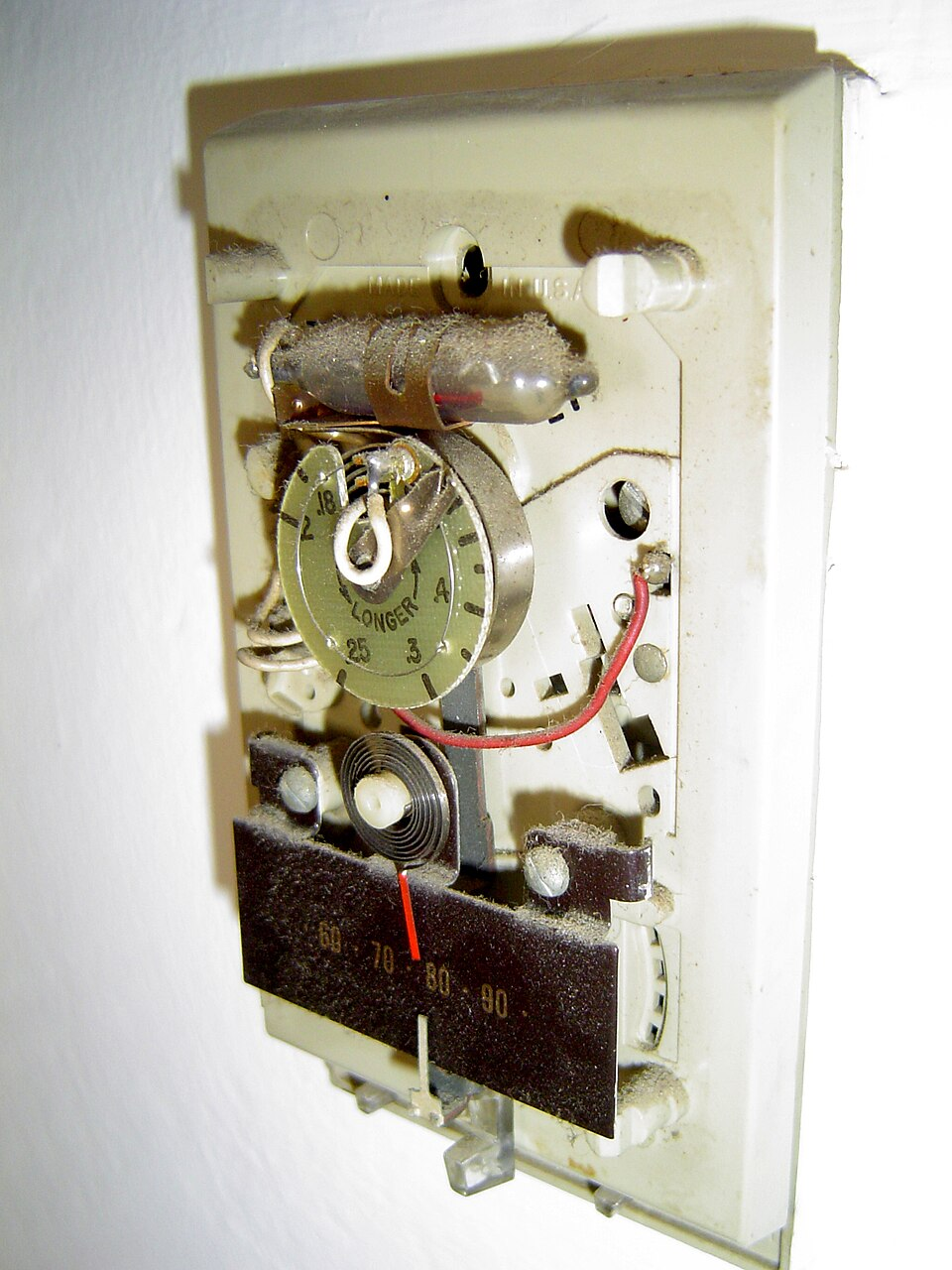
Mercury was on the bench and in the house: tilt switches salvaged from appliances, a thermostat with a mercury bulb, a barometer, a thermometer, and in many garages a small bottle of the liquid metal kept because it was interesting.
Mercury has been removed from American consumer products almost entirely, several states prohibit the sale of mercury thermometers and switches, and collection programmes exist specifically for thermostats. A spill on a concrete floor or into floorboards is a remediation problem rather than a curiosity.
The bottle kept because it was interesting is the item that turns up most often when an older garage is cleared, and the correct response is a household hazardous waste collection rather than a bin or a drain.
7. Asbestos gasket sheet, rope and the welding blanket
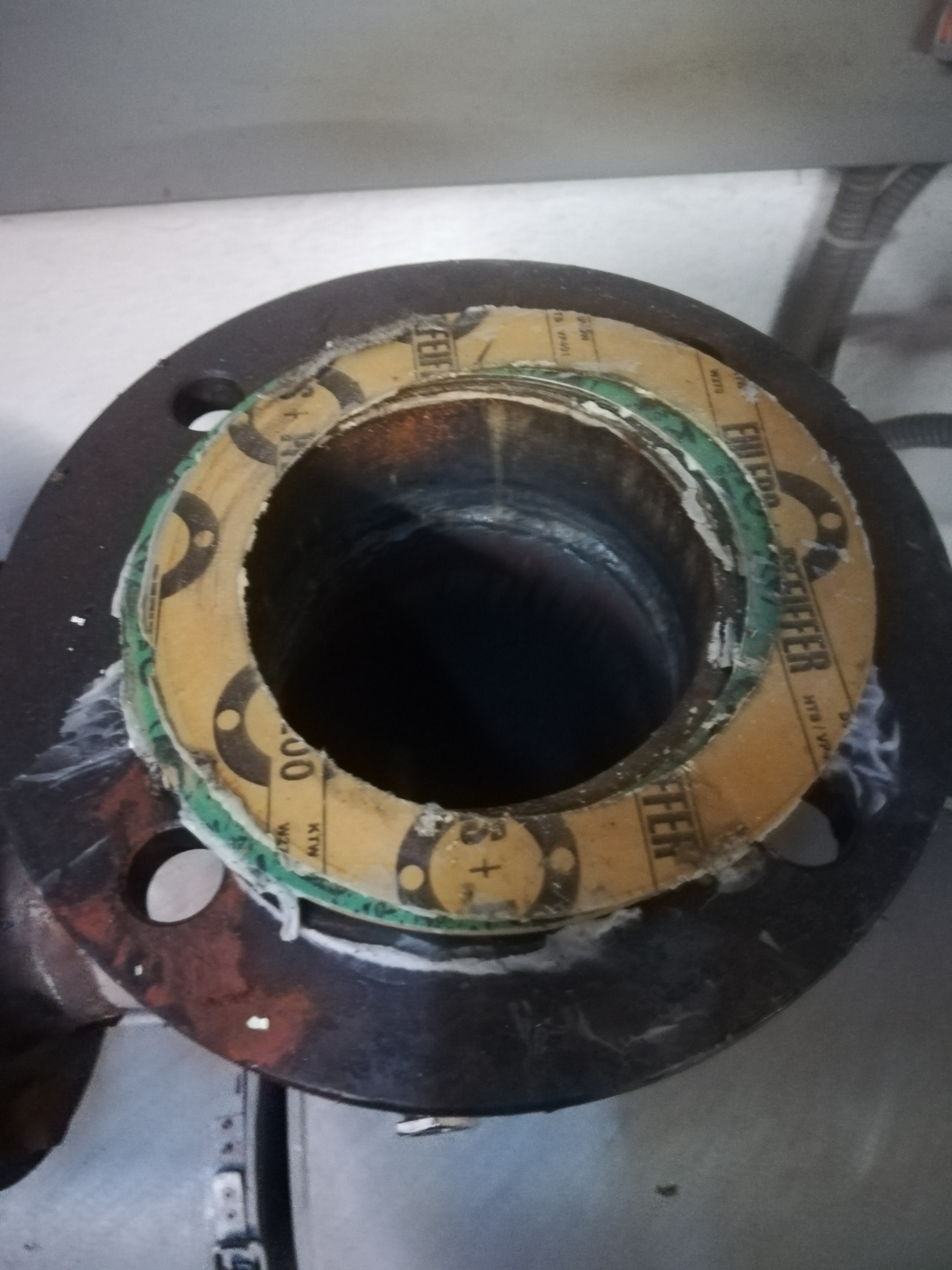
The bench held asbestos gasket material cut to shape with scissors, asbestos rope for sealing stove and flue joints, and an asbestos blanket or mat used under welding and brazing work. All three were cut, handled and frayed by hand.
Asbestos is prohibited in American consumer products of this kind and the substitutes — ceramic fibre, silicone, graphite composites and glass fibre welding blankets — are at least as good. Cutting and fraying are the activities that release fibre.
Gasket sheet is the one people forget. A householder cutting a gasket to fit, which is a careful and skilled job done with scissors on a bench, was producing fibre directly in front of their own face.
8. Creosote in a tin for the fence
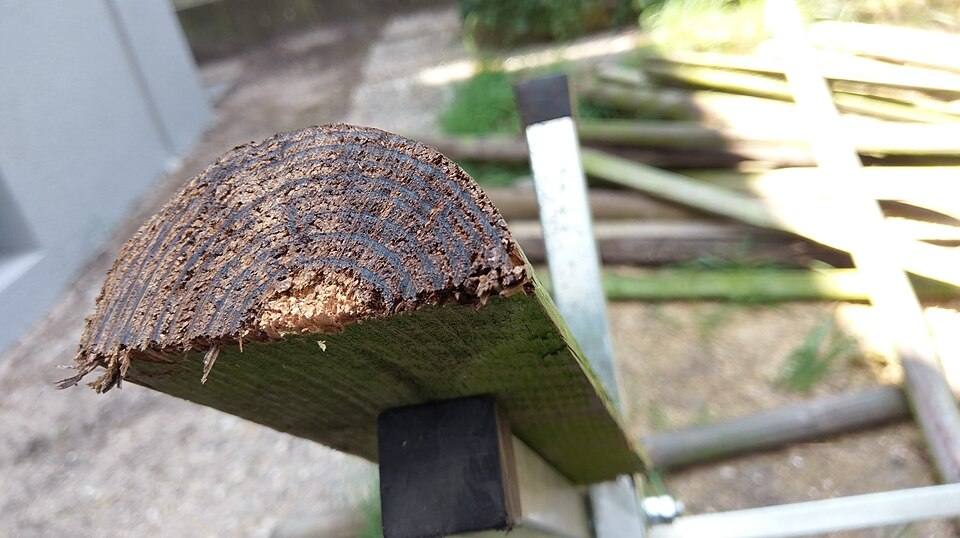
A gallon tin of creosote stood under the bench, brushed onto fence posts, sheds and the underside of anything wooden. It was cheap, it worked and it smelled like summer to a generation of American children.
Creosote is now a restricted-use pesticide in the United States. It cannot be sold to or applied by the general public, and its remaining uses are industrial and require a certified applicator.
The smell is the detail everybody remembers and it is the compound volatilising. The trade side of this — the yards that sold it by the drum — is covered separately in this series.
9. Pesticides on the same shelf as the paint

Garden and household insecticides lived on the workbench shelf in bags, tins and sprayers, including the persistent organochlorines, with the sprayer rinsed in the yard and the powder scooped with whatever was to hand.
DDT’s major American agricultural uses were cancelled by the Environmental Protection Agency in 1972 and chlordane and heptachlor termite uses followed in 1988, with the restricted-use category now limiting a defined list to certified applicators.
The storage arrangement is the item rather than the chemistry. A pesticide concentrate on an open shelf at shoulder height in an attached garage, beside the paint and above the children’s bicycles, is the configuration that child-resistant packaging and storage guidance were written for.
10. Silica sand for the blast cabinet
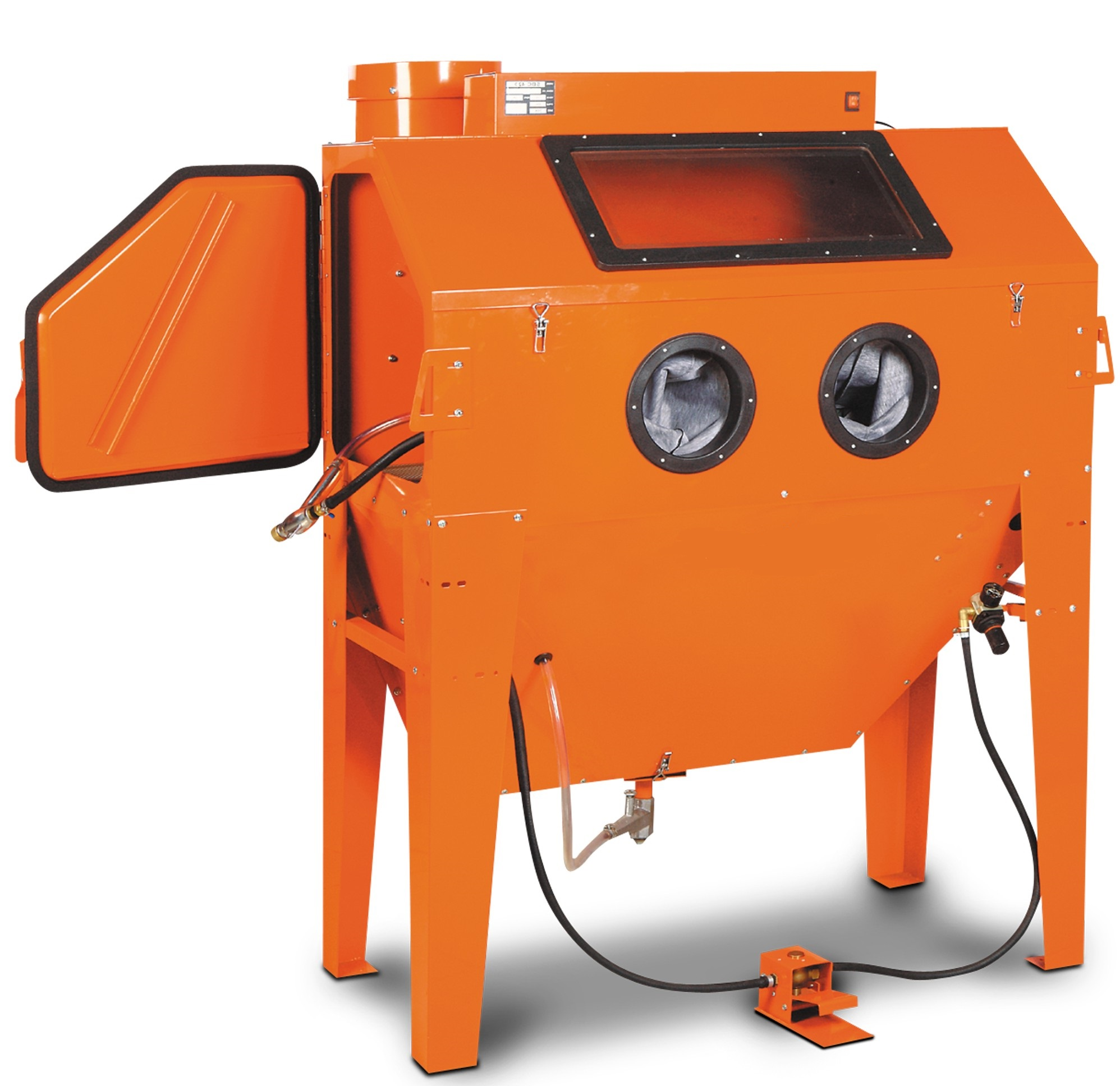
Home sandblasting used silica sand, because that is what sand is, and the cabinet was frequently a plywood box with a glass window and a vacuum cleaner attached.
Respirable crystalline silica causes silicosis, an irreversible lung disease, and American occupational rules set a strict exposure limit with required controls. Abrasive blasting with silica sand is prohibited in a number of jurisdictions and the alternatives — garnet, aluminium oxide, glass bead, slag — are standard.
The home cabinet was worse than an industrial operation rather than better. A plywood box with a household vacuum cleaner does not contain respirable dust, and the operator’s face was at the window.
11. Spray paint and lacquer with nothing over your face
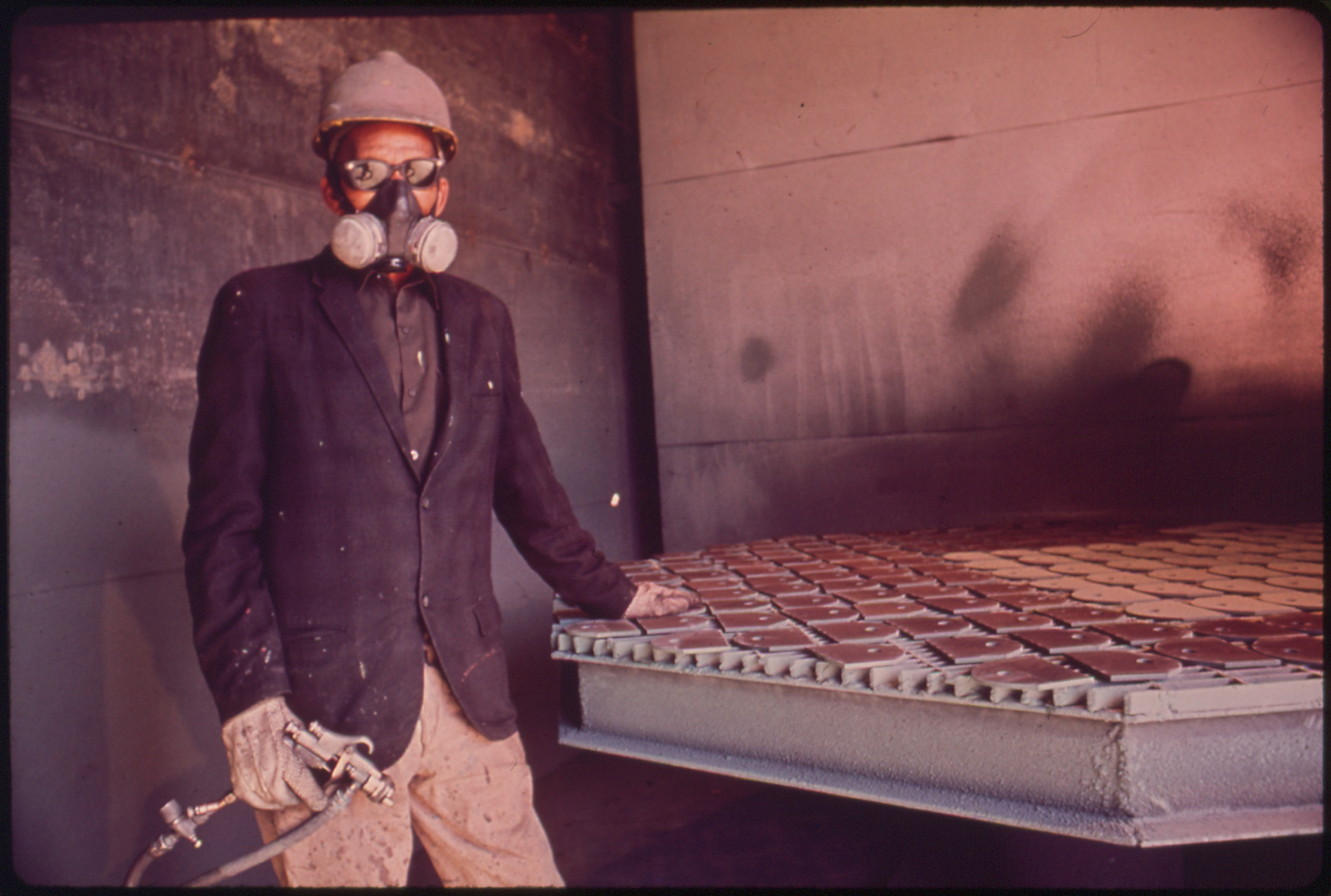
Rattle cans and spray guns were used in closed garages with the door down in cold weather, spraying lacquer, enamel and primer containing toluene, xylene and a range of other solvents, with no respirator and frequently no ventilation.
American consumer product rules now limit volatile organic compound content in many coatings, labelling carries explicit ventilation and respiratory instructions, and the respirators that would address it are cheap and widely available. The isocyanate-containing automotive finishes that followed require supplied-air protection and are not consumer products.
This is the item with the least regulatory change and the most available remedy. Nothing stops a householder spraying in a closed garage now, and a cartridge respirator costs very little, and the label has said so for forty years.
12. A bench grinder with no guard and no eye protection

The grinder was bolted to the bench with the wheels exposed, no eye shield, no spark guard, the tool rest adjusted once in a decade, and a wire wheel on the other end throwing bristles.
American machine guarding requirements cover abrasive wheel machinery specifically, with wheel guards, adjustable tongue guards, tool rest clearance limits and eye protection. The mounting and speed rating of the wheel is also specified, because a wheel run above its rated speed can disintegrate.
The wire wheel is the underrated hazard and everybody who used one has a story about a bristle. The grinder is also the clearest case on the list of a machine where the domestic version had none of the guarding the identical industrial version was required to have.
13. Two-prong power tools with metal bodies

Drills, saws and sanders had cast metal bodies, cloth-covered cords and two-prong plugs with no ground. A fault inside the tool put the casing at line voltage and the fuse did not care.
American requirements for grounded or double-insulated power tools were phased in from the 1960s, and the double-insulated plastic-bodied tool is the design that resolved it by removing the conductive path rather than adding a ground.
The old tools are still used and still sold second-hand, which is the live part of this item. A metal-bodied two-prong tool in a damp garage on an ungrounded circuit is three separate 1960s decisions stacked on each other.
14. An outlet with no ground-fault protection, on a concrete floor
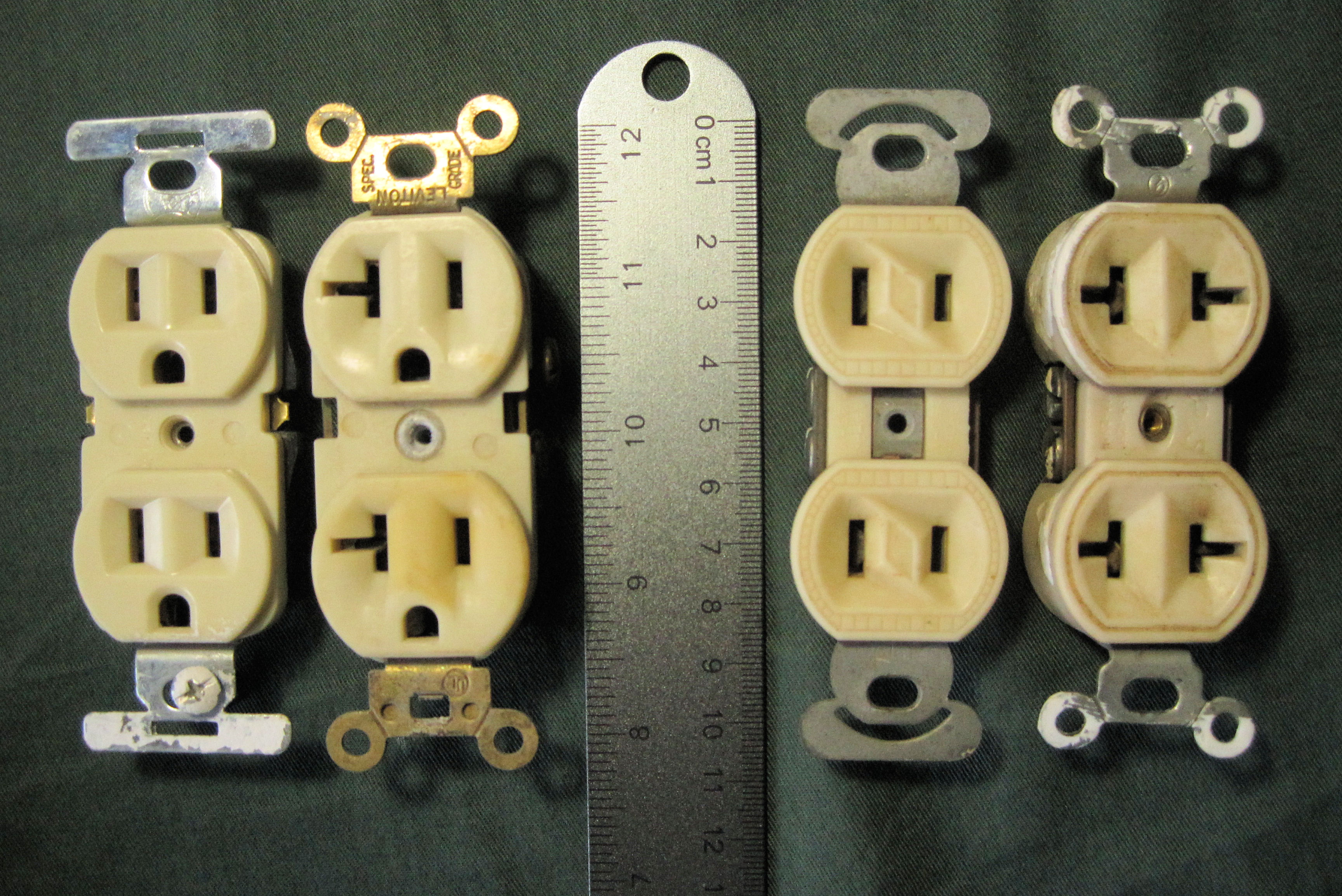
The garage receptacle was a two-slot outlet on an ungrounded circuit, used with metal tools, on a concrete floor, often damp, frequently with an extension cord running out to the drive.
American requirements for ground-fault protection reached garages, basements, outdoor receptacles and anywhere near water progressively from the 1970s onward. A garage is one of the specific locations the rule names, because of the floor and the moisture.
The electrical side of the house is covered separately in this series. The point here is the combination: the tools on the bench and the outlet they plugged into were both unprotected, and either one alone would have been manageable.
15. Charging a battery with the garage door shut
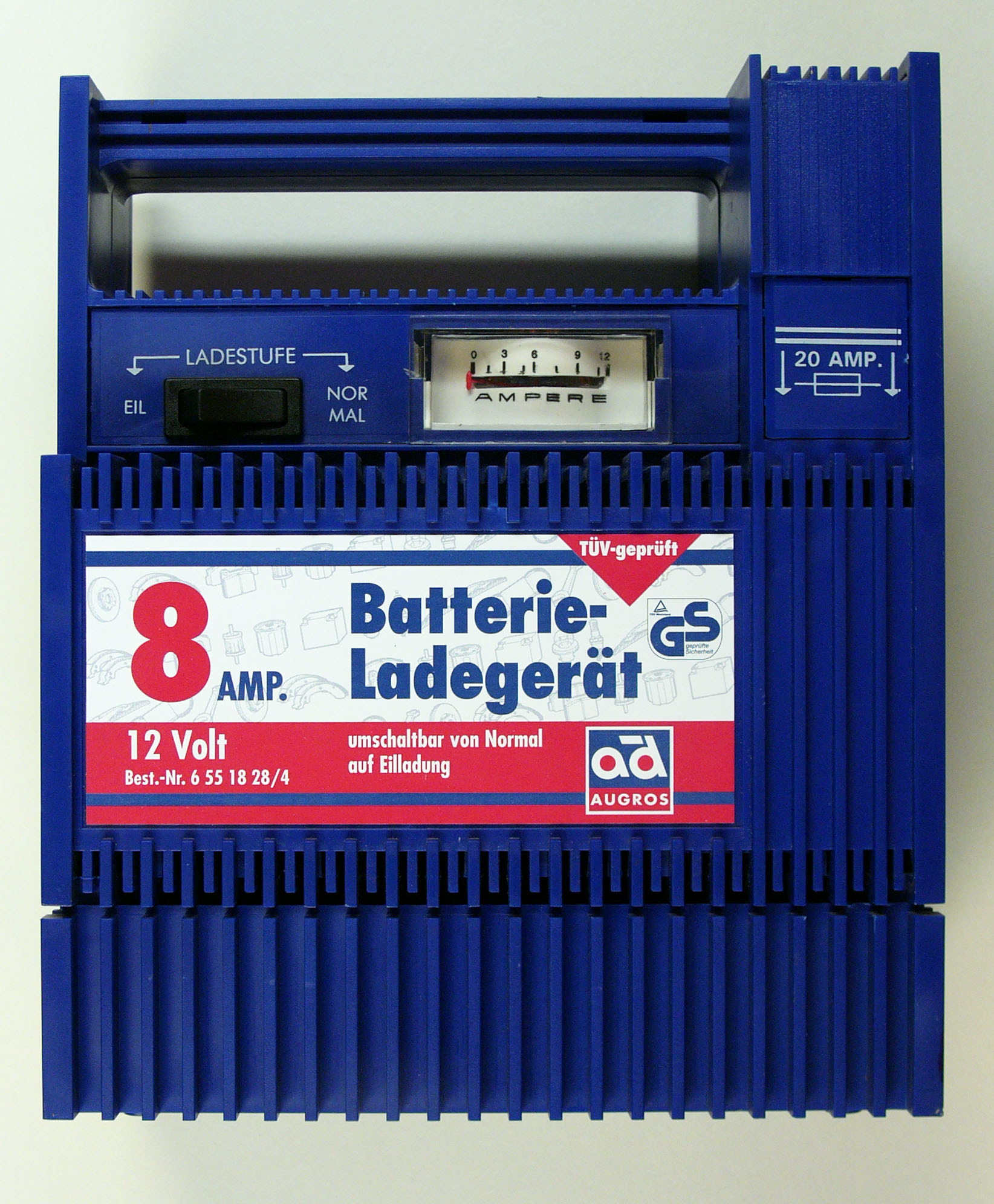
Trickle-charging a car or tractor battery on the bench overnight was routine, in a closed garage in winter, with the charger plugged into the ungrounded outlet above.
A lead-acid battery under charge releases hydrogen, which is explosive across a wide range of concentrations and accumulates at the ceiling of an unventilated space. Current guidance requires ventilation, no smoking or sparks, charger disconnection before removing leads, and eye protection.
The ignition source was usually the charger clip being pulled off a terminal while the charger was still on, which produces a spark directly above the cell vents. That sequence is the whole of why the modern instruction specifies the order.
16. Not one label that told you anything useful
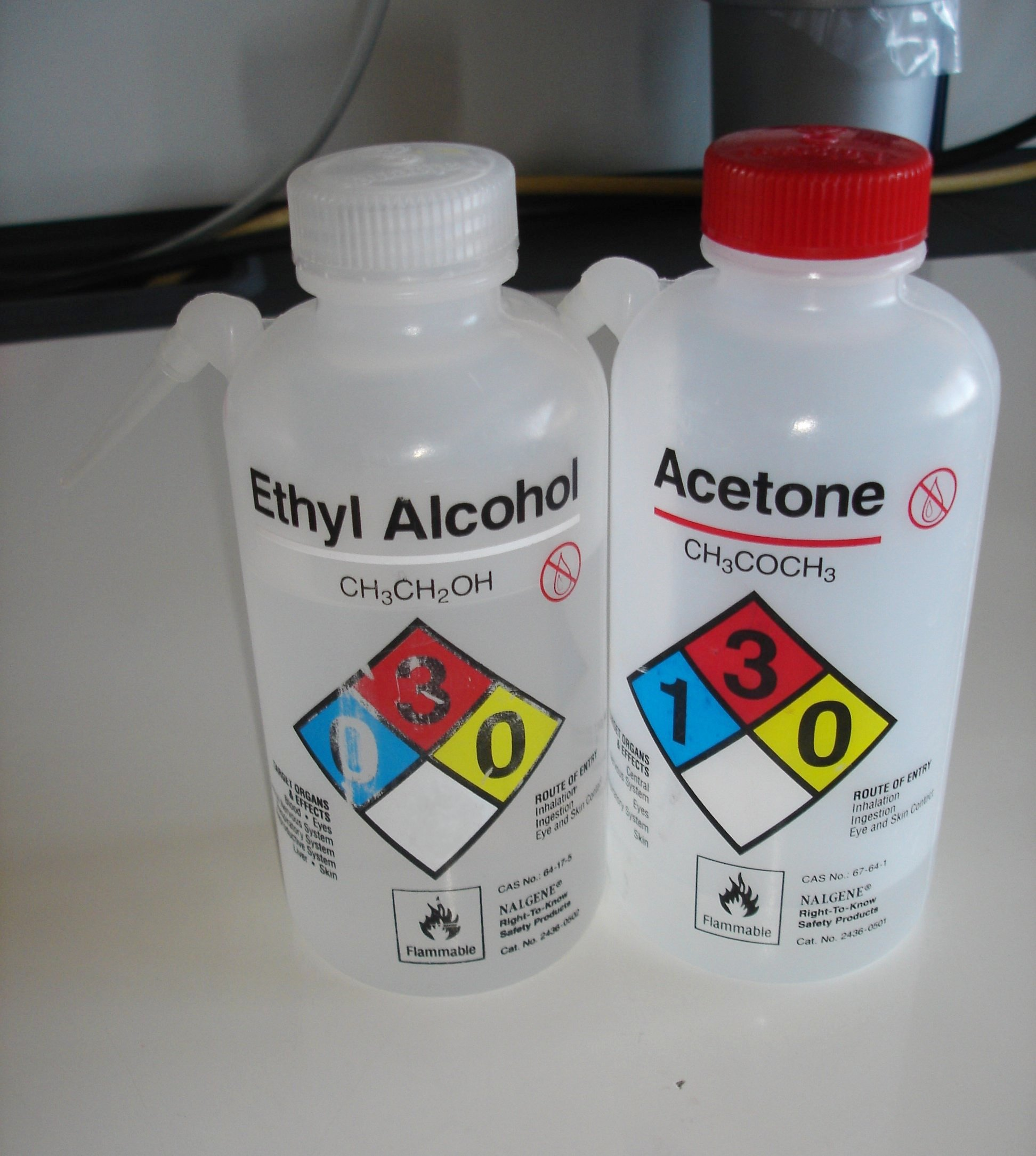
The containers on a 1965 bench carried a brand, a product name, directions for use and whatever the manufacturer chose to add. There was no standardised hazard statement, no ingredient disclosure, no first aid instruction and no telephone number.
The Federal Hazardous Substances Act of 1960 began requiring cautionary labelling on hazardous household products and was built out considerably over the following two decades, and the hazard communication framework of the 1980s extended the principle to the workplace.
That date is the point. The act is dated 1960 and the bench described here is dated 1965, so the labelling arrived during this period rather than before it, and the products already on the shelf predated the requirement by years.
The garage was the worst room for all of it
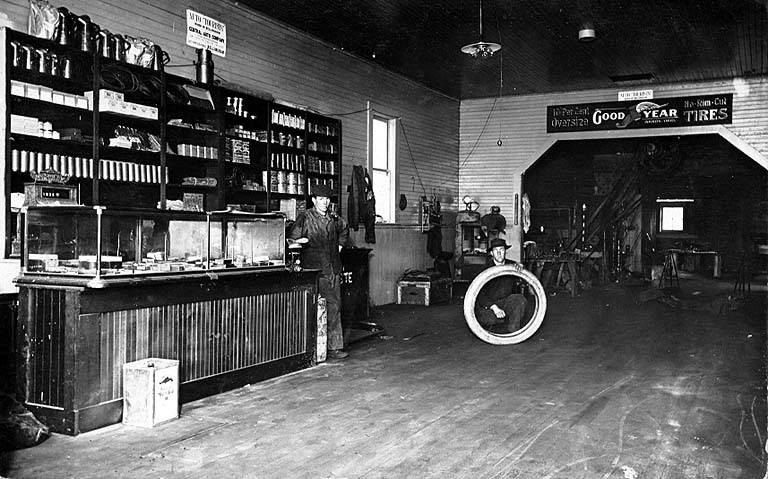
Every item on this list is worse in a garage than it would be anywhere else, and that is the thread. A garage is a small, poorly ventilated space with a concrete floor, frequently attached to the house with a door into the kitchen, used in winter with the main door closed, and it is where people chose to do the solvent work, the spraying, the stripping, the casting and the charging.
That combination is why so many of the modern remedies are about the space rather than the substance. Ventilation requirements, confined-space warnings on labels, the ground-fault rule that names garages specifically, the charging instruction about order of operations, the guidance against lead casting in an attached structure. The products changed and the room did not, which means the single most useful thing a reader can take from this is about where to do things rather than what to buy.
Three things on this list are genuinely still live. The chlorinated solvent and the welding arc, because both are still available and the warning only works if the can is read. Spraying in a closed garage, because nothing prevents it and the respirator is cheap. And the old metal-bodied tool on an ungrounded outlet, because the tools are still in circulation and so are the outlets.
Everything else on the bench has either been taken off the market or is now sold with a label that says what it is. The tin of creosote is gone. The habit of using the garage in February with the door down is not.
Like our content? Follow us for more.