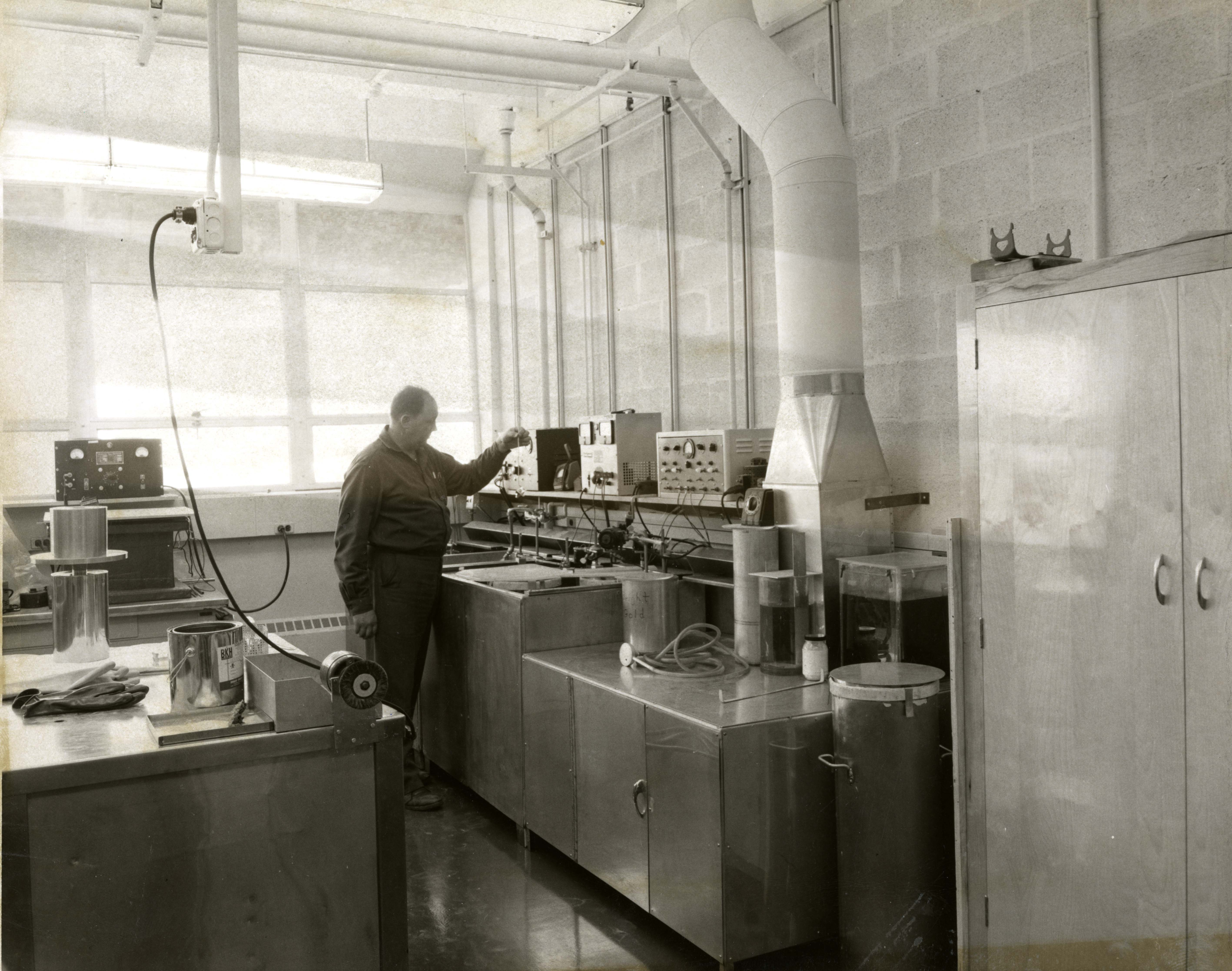
Here are sixteen things the electroplating shop did in 1960, when the tanks were open to the room and the rinse water went down the drain. This is one of the few trades in this series where the modern version is better in every respect, including the quality of the work, and the men who did it have never claimed otherwise.
1. Worked a line of open tanks with nothing over them
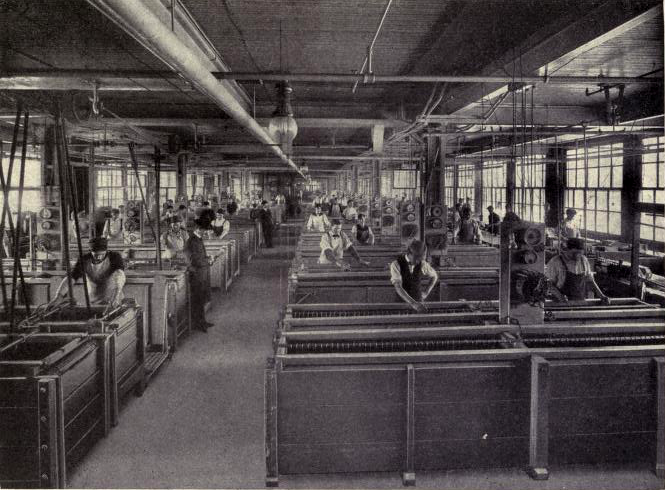
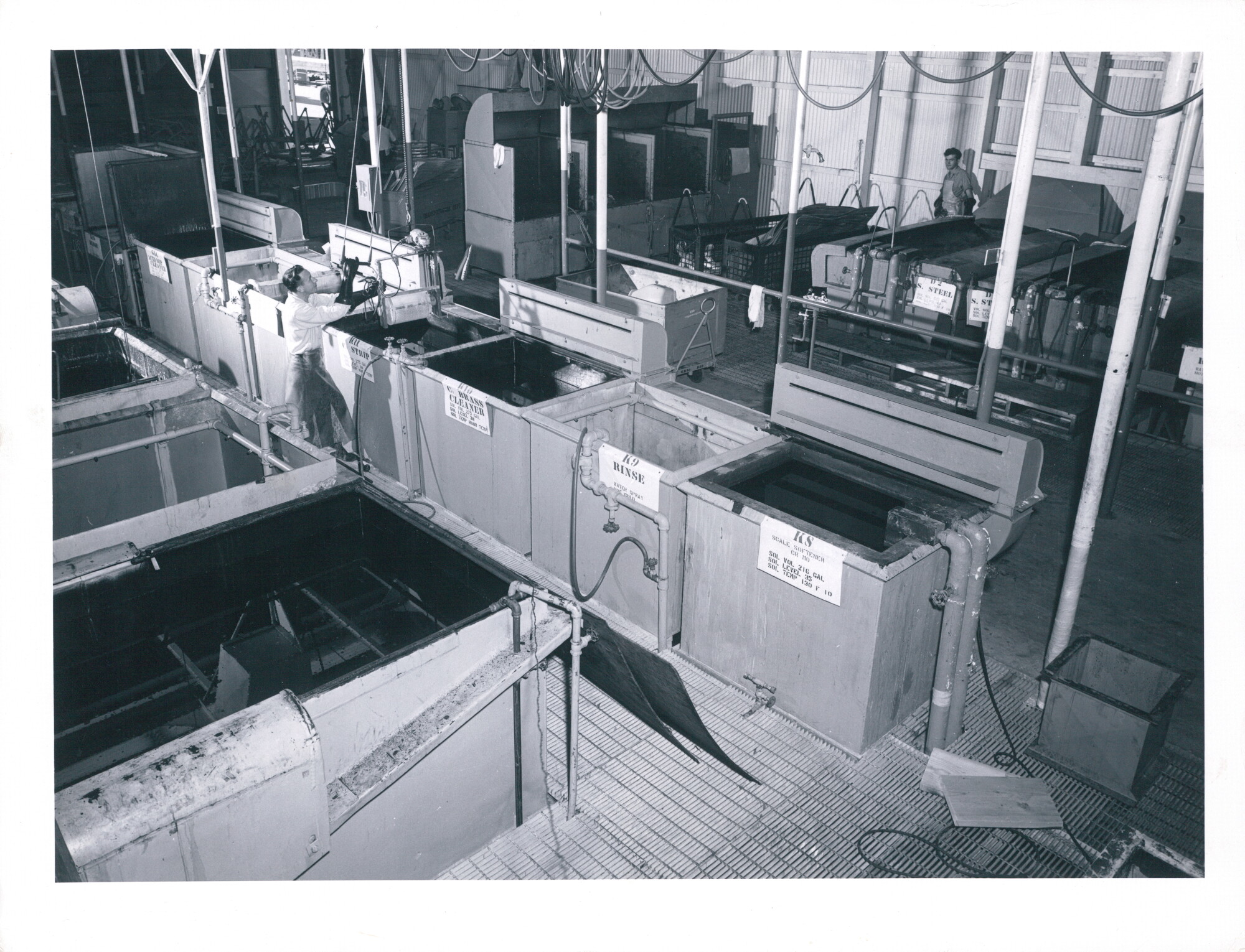
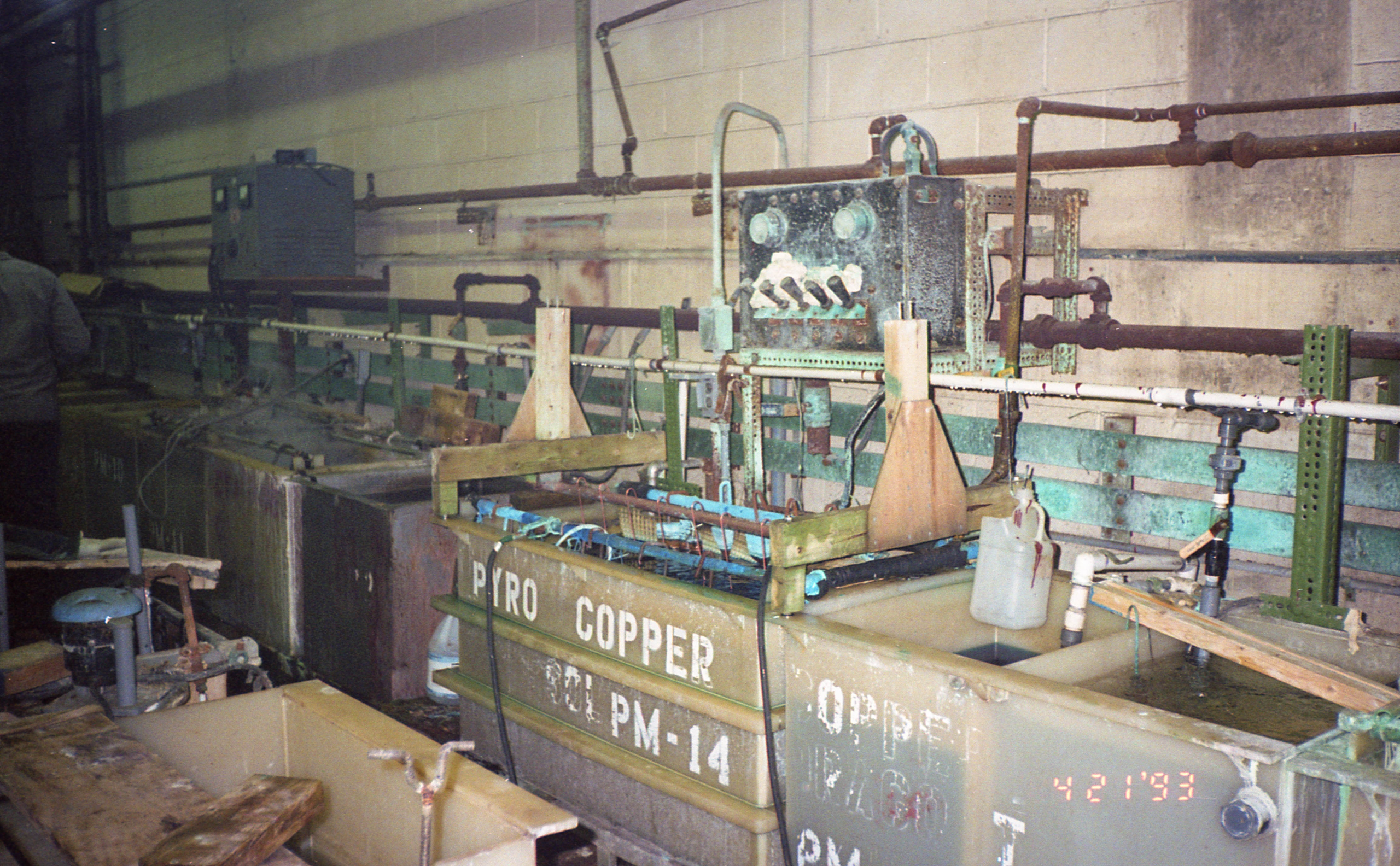
A plating shop was a row of tanks at waist height, open to the room, holding heated solutions of metal salts. Work moved along the line by hand or on an overhead rail, in and out of each tank in sequence. There was no enclosure, no lid and in most shops no extraction worth the name.
The room was therefore warm, humid and full of whatever came off the surface of the tanks. Condensation ran down the walls and the floor was permanently wet.
Modern plating lines are enclosed or hooded, with extraction at each tank, scrubbers on the discharge and automated transfer. An operator typically stands at a control panel rather than over the solution, which is the clearest single difference between then and now.
Like our content? Follow us for more.
2. Racked every component by hand, one at a time
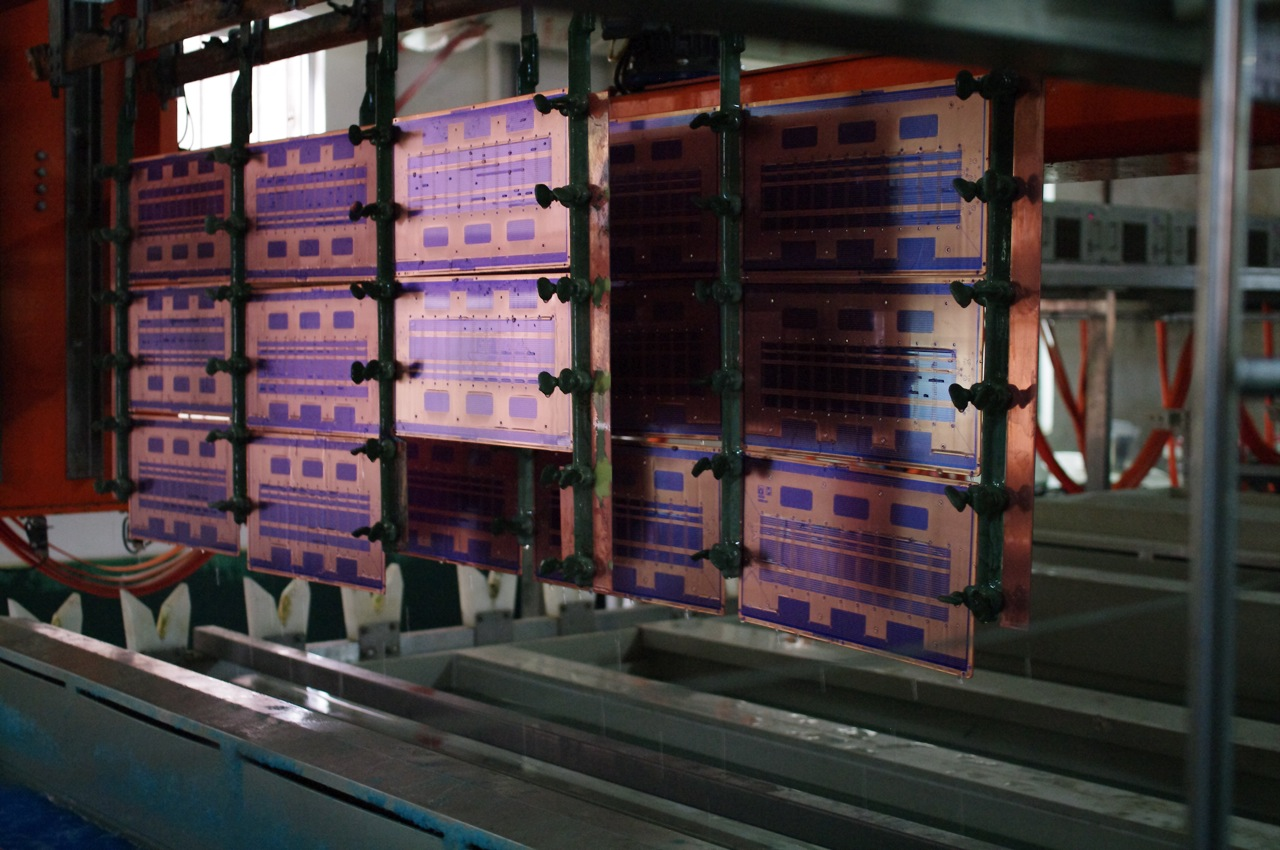
Each item to be plated had to be held in electrical contact with the rack and positioned so the current reached all of it. Racking is skilled: contact points leave marks, and a component racked badly plates unevenly or not at all.
Jigs were made in-house, by eye, for each job, and a long production run meant thousands of identical hand movements loading and unloading them.
Barrel plating for small parts and automated racking lines have absorbed most of this, though hand racking survives for complex or valuable work. The skill is the same; the volume done by hand is not, and a shop that once employed six rackers now employs one.
3. Judged the current and the time by experience
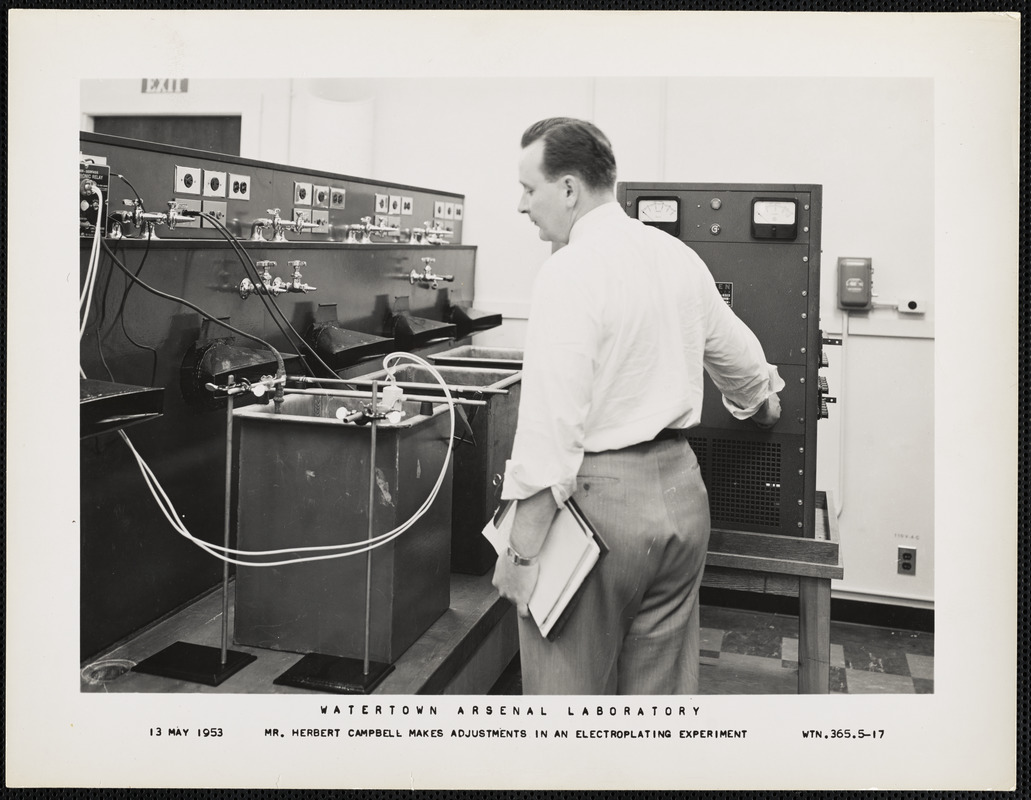
Deposit thickness depends on current density and time, and in 1960 the controls were a rheostat, an ammeter and a clock on the wall. The operator set what he knew worked for that job in that tank at that temperature.
Solutions drift as they are used, so the setting that worked in the morning was not necessarily right by the afternoon, and corrections were made by observation rather than measurement.
Rectifiers now hold current precisely, often under programmed control, with thickness verified by instrument. The deposit is specified, achieved and documented rather than produced and hoped for, which is what allows plating to be used in safety-critical applications at all.
4. Kept the solutions alive by addition and intuition
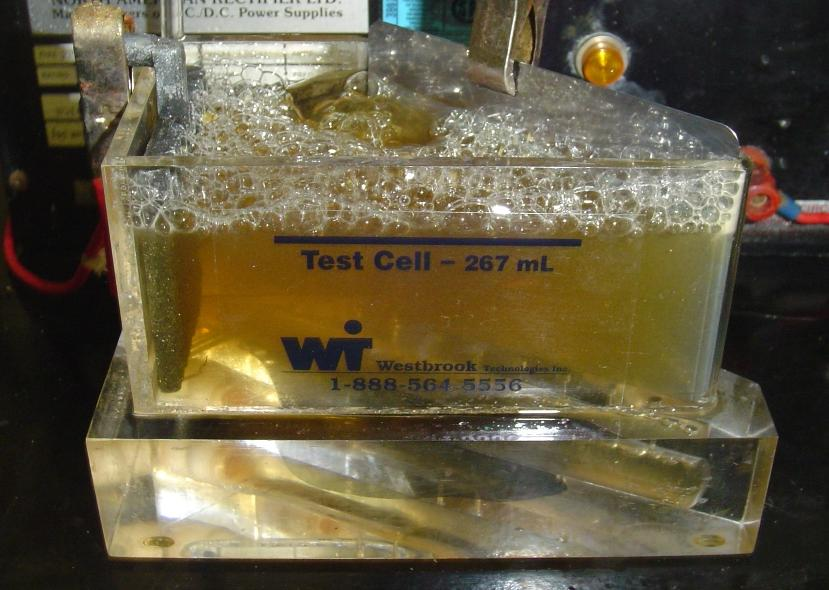
Plating solutions are consumed and contaminated as they work, and keeping them in condition was the shop’s central ongoing task. Additions were made by the gallon or the handful, and a tank’s behaviour was a topic of continuous discussion.
Analysis existed but was slow and often external, so much of the day-to-day control was based on how the deposit looked coming out.
Automatic dosing, in-line analysis and specified chemistry have replaced that. A modern line has a bath specification and a control regime, and the idea that a tank has moods is no longer part of the job, though older platers will tell you it was a real phenomenon.
5. Degreased with solvents that are now heavily restricted
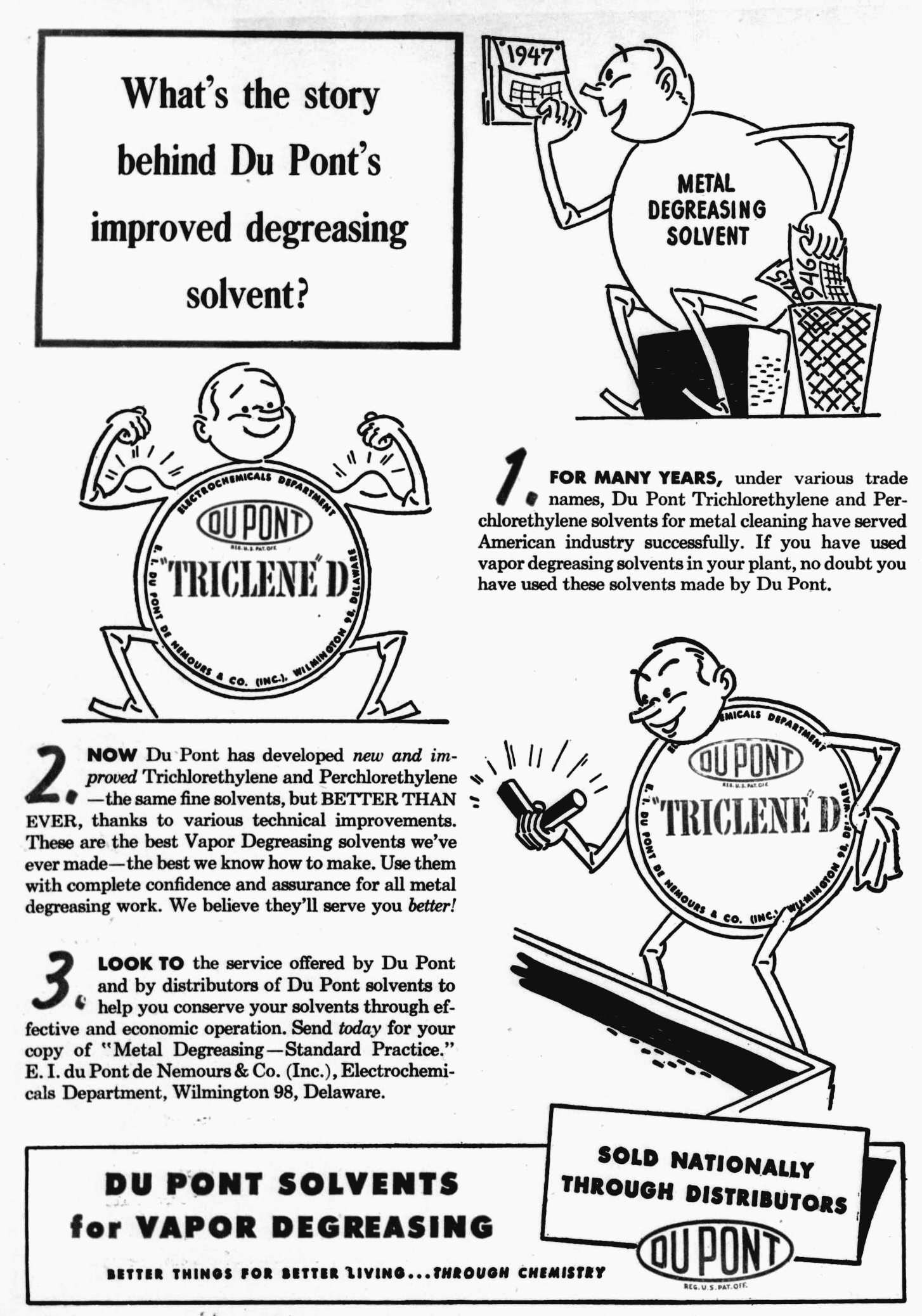
Nothing plates onto a greasy surface, so every component went through degreasing first, commonly in a vapour bath of a chlorinated solvent heated so its vapour condensed on the cold part and ran off carrying the oil.
The tanks were open, the vapour was heavier than air, and operators leaned over them to load and unload. It was effective, fast and entirely uncontrolled.
Several of the solvents used are now recognised as hazardous to health and are restricted or prohibited for this use in many jurisdictions. Modern cleaning uses aqueous systems, enclosed solvent machines with containment and recovery, or ultrasonics, and the change was forced by regulation rather than chosen for performance.
6. Pickled in strong acid, by hand, with a hook
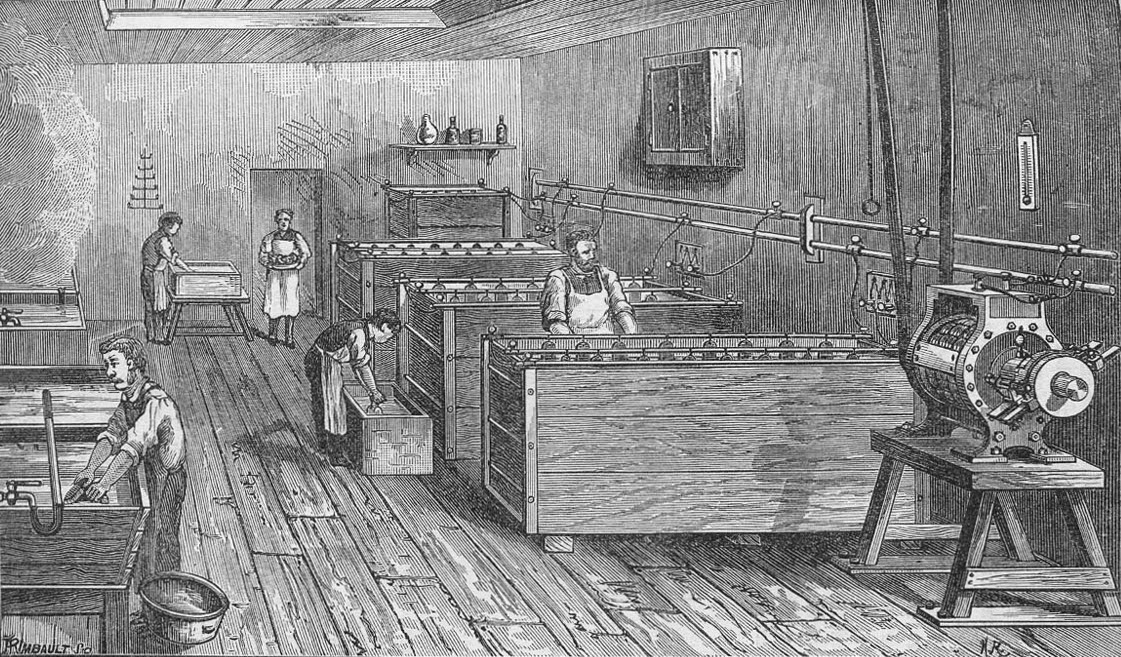
After degreasing came pickling: immersion in acid to remove oxide and scale so the metal underneath was chemically clean. Work was lowered in and lifted out on hooks, with splash and mist going into the room.
Protective equipment amounted to an apron, boots and sometimes gauntlets. Goggles were available in some shops and worn in fewer.
Acid handling is now closed, bunded, extracted and governed by procedures, with eye protection mandatory, emergency showers and eyewash at the line, and spill containment designed in. No modern shop lets acid mist into the room, and a shop that did would not keep its consent to operate.
7. Breathed chromium mist from the chrome tanks
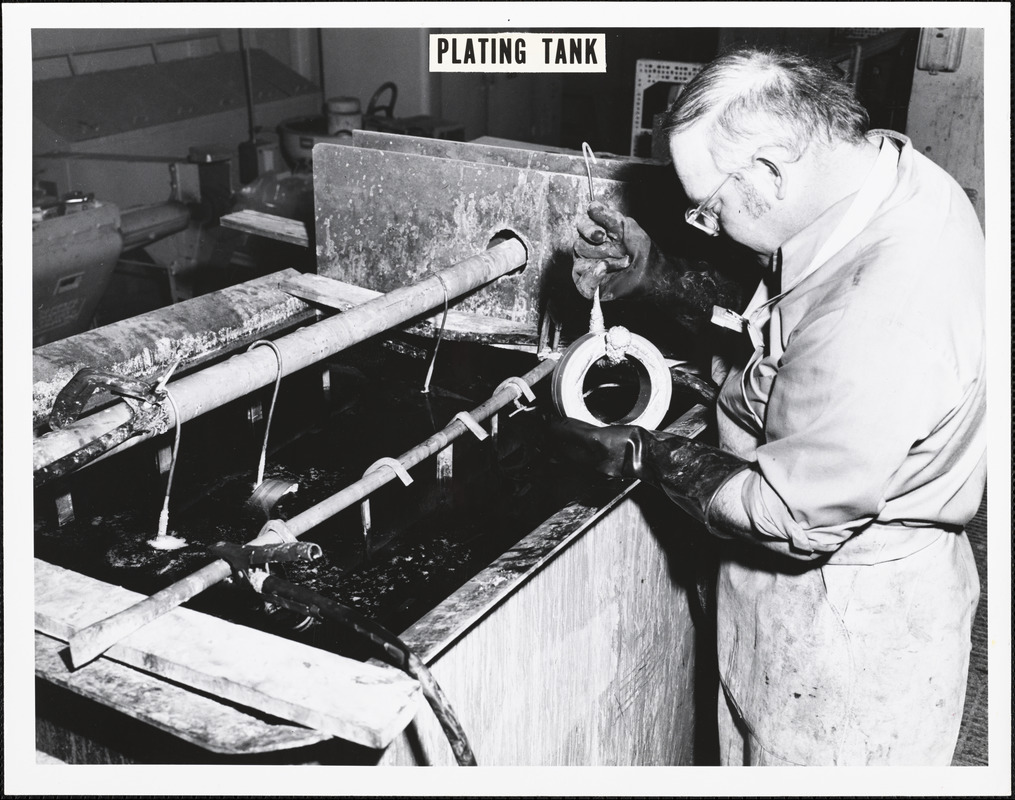
Decorative and hard chromium plating used solutions based on hexavalent chromium, and the process releases a fine mist from the tank surface as gas evolves during plating.
Hexavalent chromium is a recognised carcinogen and the mist was the route of exposure. In 1960 it went into the room and the men working the line breathed it.
This is now one of the most tightly regulated processes in metal finishing: enclosed or hooded tanks with high-rate extraction and scrubbing, mist suppressants on the bath surface, strict exposure limits, health surveillance, and in many jurisdictions authorisation requirements with substitution expected wherever an alternative exists.
8. Plated cadmium, which has largely been banned since
Cadmium plating was widely used for corrosion protection on fasteners and aerospace components because it performs extremely well, particularly in marine conditions and against galvanic corrosion with aluminium.
Cadmium is highly toxic and the plating process and its waste are both problems. In 1960 none of that affected how it was handled.
It is now prohibited or restricted for most uses in most jurisdictions, with exemptions retained for a narrow set of safety-critical applications where no qualified substitute exists. Zinc-nickel and other coatings took over nearly everything else, after a long qualification programme in the industries that depended on it.
9. Worked beside cyanide-based baths under no special regime at all
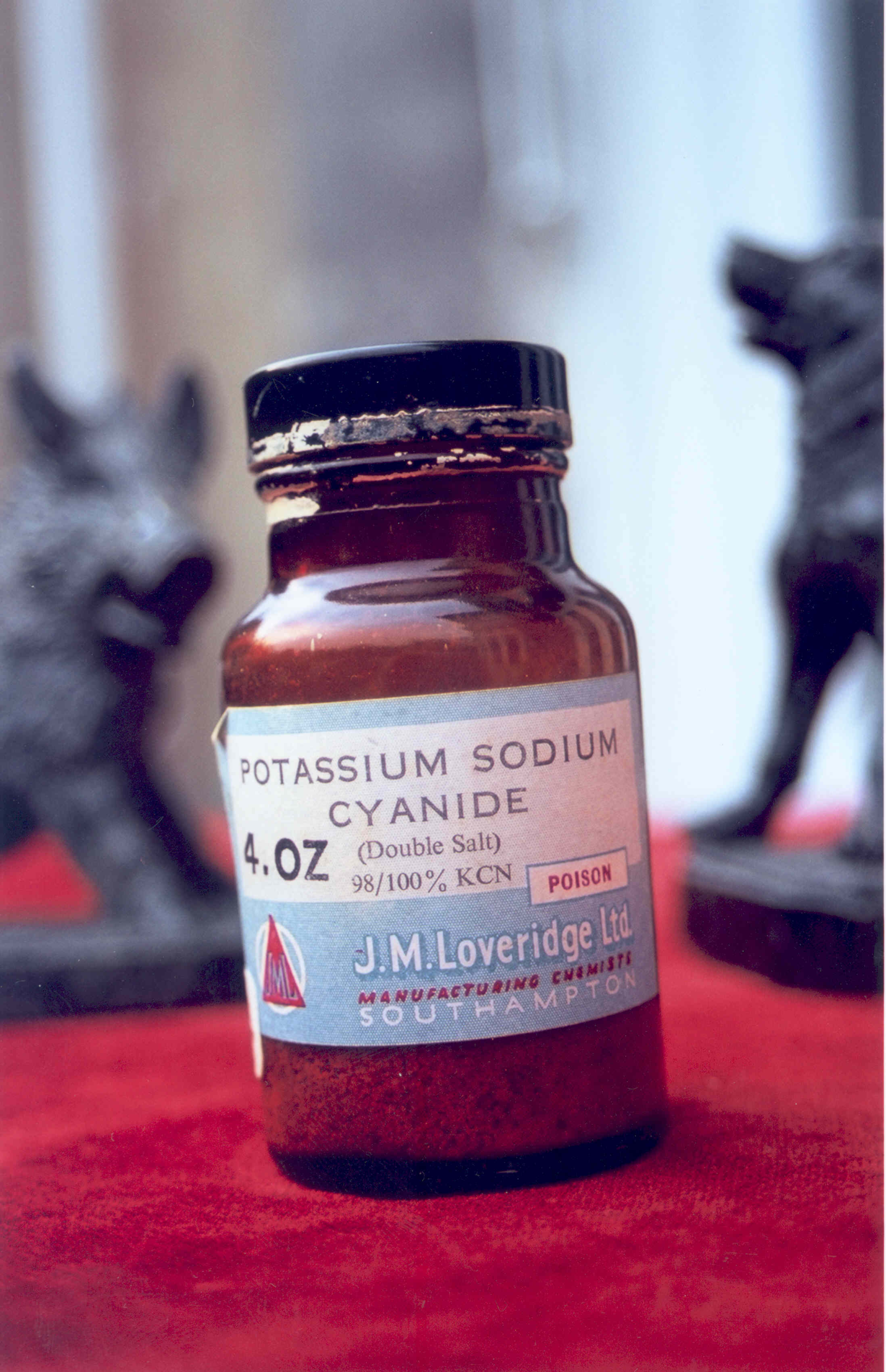
A number of standard plating processes used cyanide-based solutions, and they were in ordinary use in ordinary shops. In 1960 they sat on the same line as everything else, with the same open tanks and the same absence of controls.
Nothing about their storage, segregation, labelling or disposal was specifically regulated in most places, and the men working the line were given no particular training about them.
They are now subject to a specific and demanding regulatory regime covering storage, physical segregation from incompatible materials, access control, labelling, operator training, effluent destruction before discharge, emergency planning and in some jurisdictions notification to authorities. Where an alternative chemistry exists, substitution is expected, and many shops have moved away from these processes entirely for that reason, which has changed what a general plating shop can offer.
10. Dumped the rinse water down the drain
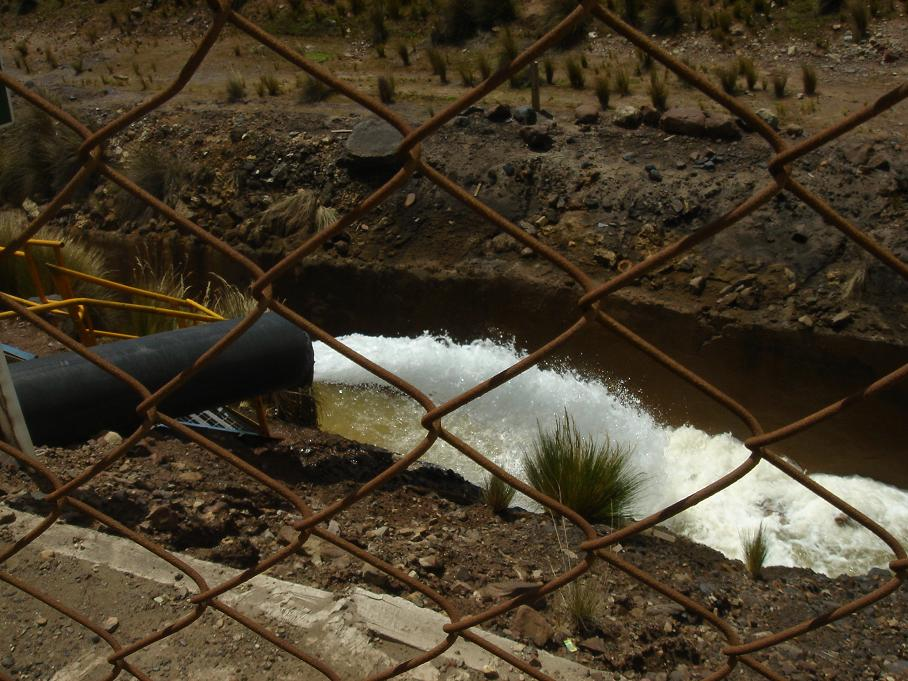
Every plating step is followed by rinsing, and the rinse water carries dissolved metal out of the tank. In 1960 that water went to the sewer, or in some places to a watercourse, with no treatment at all.
Drag-out — the solution carried out of a tank on the work — was the main loss from the bath and the main load in the effluent, and reducing it was a cost question rather than an environmental one.
Effluent is now the single most regulated aspect of the industry. Discharge consents specify metal limits, treatment plants precipitate and remove metals, sludge goes to licensed disposal as hazardous waste, and recovery of metal and rinse water is standard practice because it is both required and economic, and a modern line is designed around minimising drag-out from the start.
11. Tested the result by looking at it
Quality control was visual: brightness, coverage, the absence of pits and burns, and whether the deposit looked right to somebody who had seen a lot of it.
Thickness was checked destructively on sample parts if at all, and adhesion was tested by bending or by hitting the part and seeing whether the coating came off.
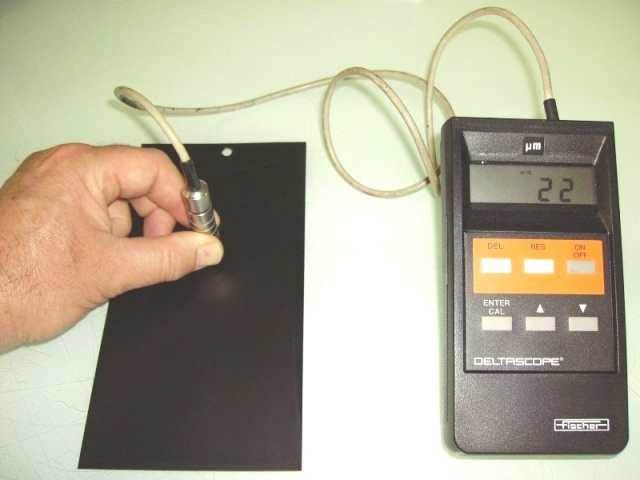
Modern testing is instrumental and non-destructive: magnetic and eddy-current thickness gauges, X-ray fluorescence, salt spray and cyclic corrosion testing to standards, and documented results tied to each batch, so a coating can be traced years later.
12. Stood all day on a wet floor between live tanks
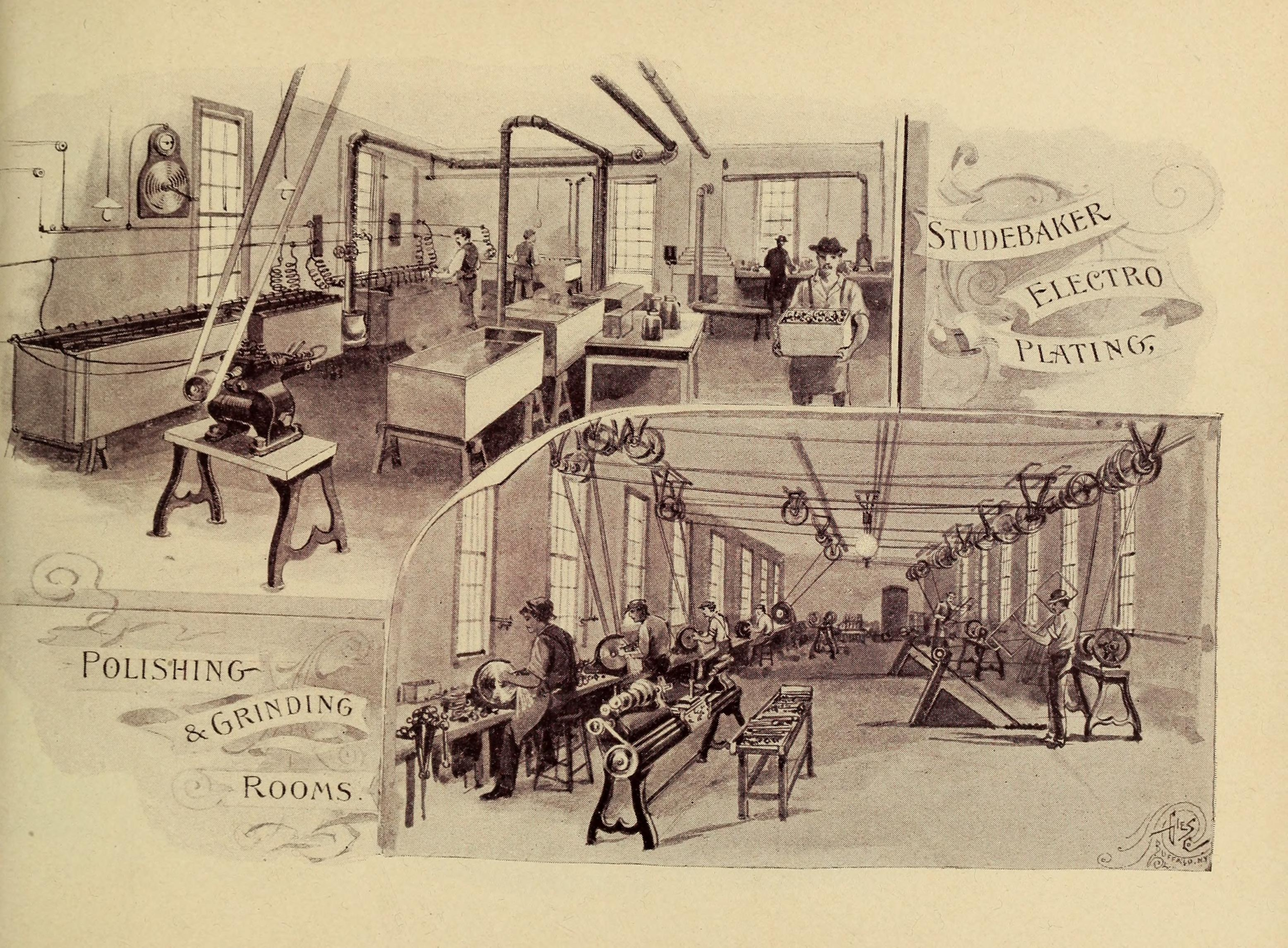
The floor was wet with solution and condensation, the tanks carried current, and the operator moved between them handling metal racks. Floors were duckboarded where anybody had bothered.
Plating currents are low voltage and high amperage, which is a different hazard profile from mains electricity, and the practical risks were slips, burns from hot solutions and contact with chemicals rather than electrocution.
Modern shops have graded and bunded floors, non-slip surfaces, defined walkways, residual current protection and equipment designed to keep operators out of contact with solutions entirely, which is the principle that replaced relying on care.
13. Had hands that showed the job
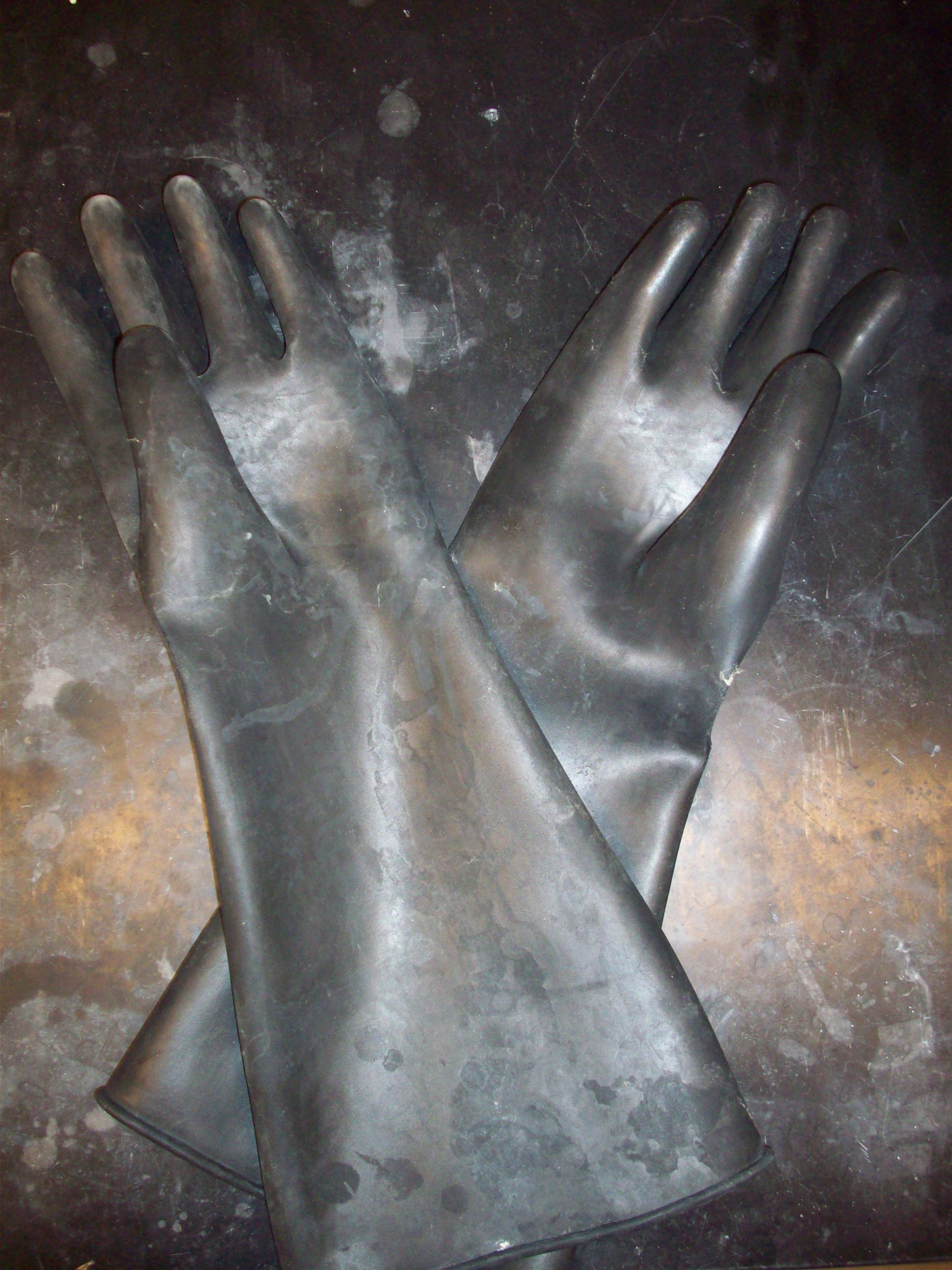
Skin contact with plating chemicals was constant, and skin problems were ordinary and accepted across the trade. Gloves, where provided, were often unsuitable for the chemical in use.
Nobody kept records and nobody connected the condition of a man’s hands to any particular tank, because the exposure was to everything in the shop at once.
Occupational skin disease in metal finishing is now a recognised and monitored category, with glove selection matched to the specific chemical, barrier and after-work creams, and skin checks as part of health surveillance, and a reported skin problem is now an investigation rather than a fact of life.
14. Learned the whole trade from one person
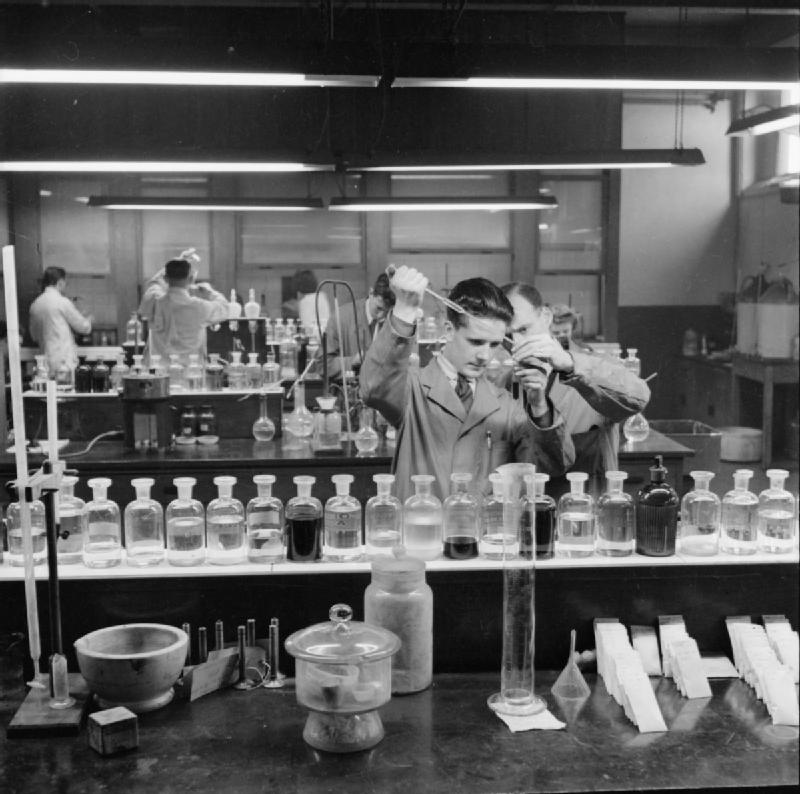
Plating in 1960 was passed on by apprenticeship within a shop, and what an operator knew was what his shop did. Chemistry was understood empirically and unevenly.
That produced genuine expertise and also meant that bad practice persisted wherever it had been learned, with no external reference point to correct it.
The trade now has formal qualifications, industry bodies, published standards, supplier technical support and specified processes. An operator today works to a process sheet rather than to a tradition, which is less satisfying and far more reliable.
15. Worked in an industry that was about to be regulated out of its habits
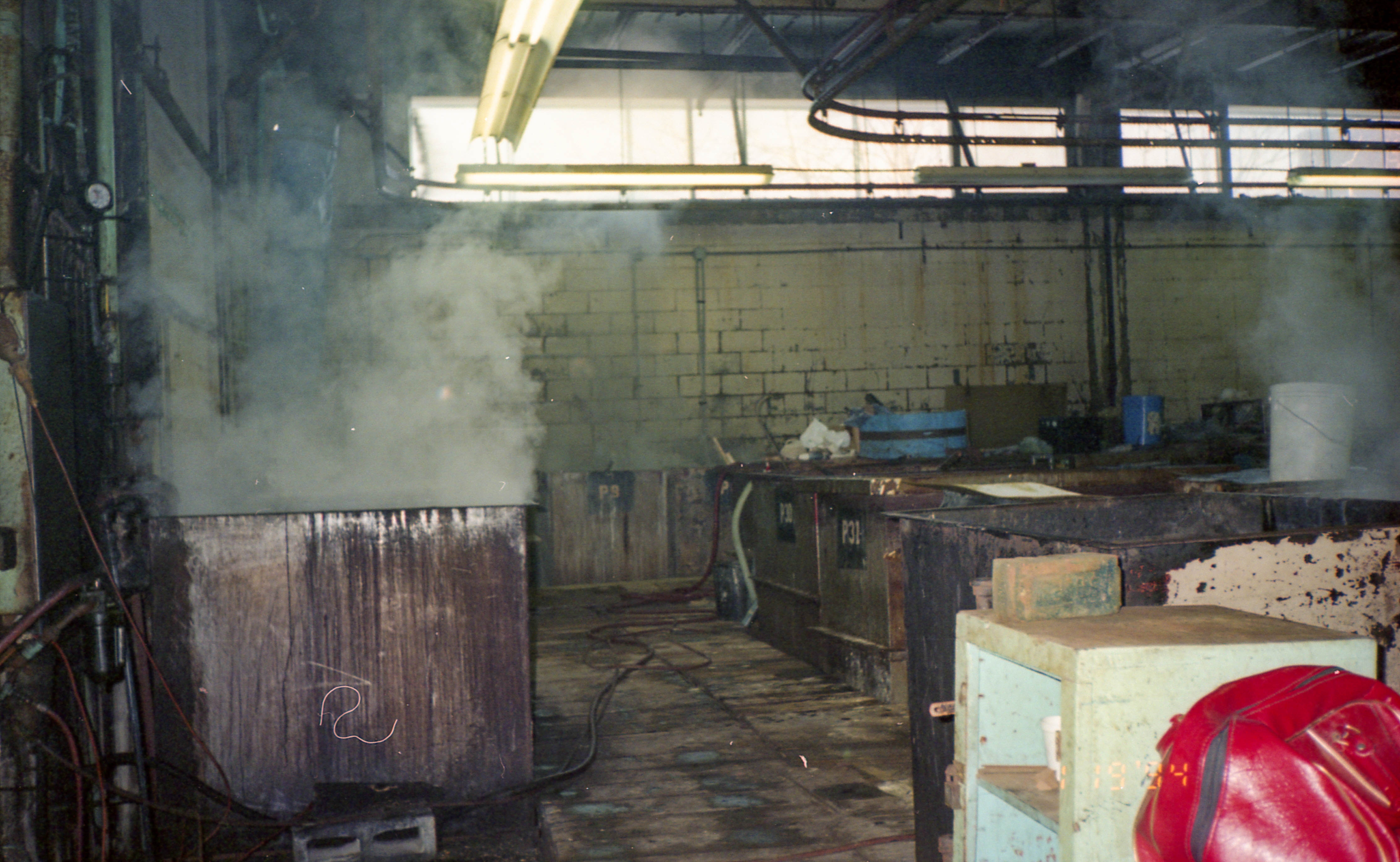
Almost nothing described above survived. Between roughly 1970 and 2000 the industry was reshaped by occupational exposure limits, effluent consents, waste regulation, substance restrictions and authorisation regimes, in that rough order.
A great many small shops closed because the capital cost of compliance exceeded what the business was worth, and the work consolidated into fewer, larger, far better controlled plants.
That consolidation is the honest outcome: the trade did not clean itself up shop by shop, it was compelled to, and the shops that could not afford to comply stopped existing, and their closure is the reason the trade’s conditions improved.
16. And the thing that is genuinely better now
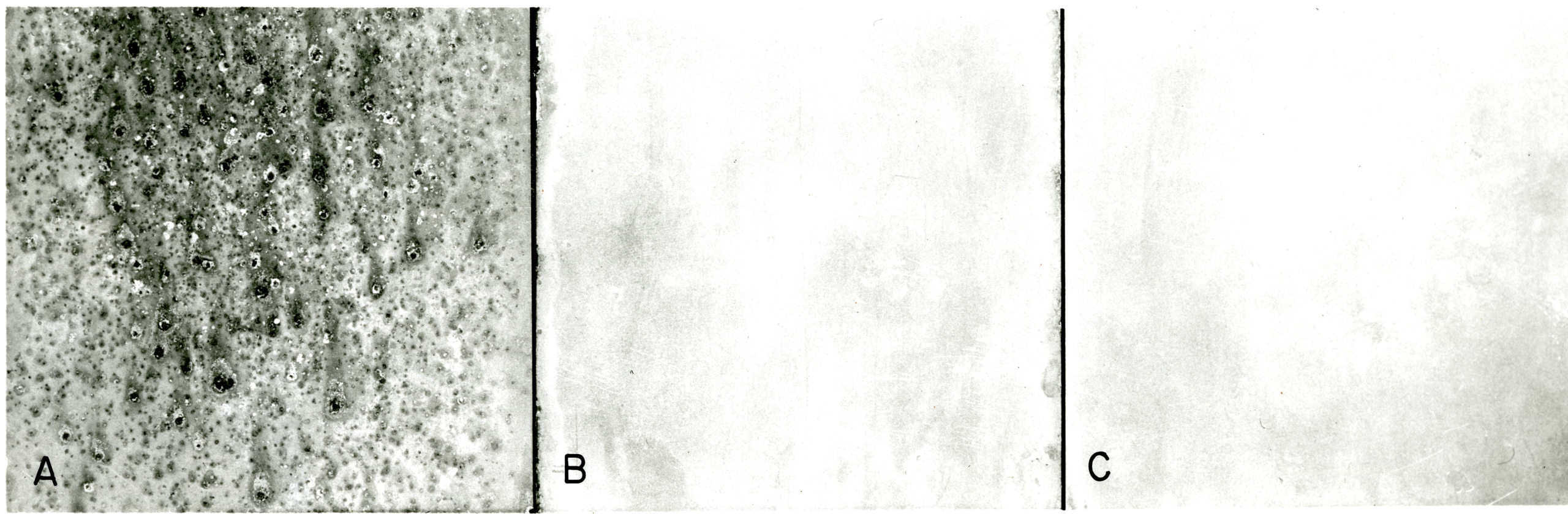
Everything, including the plating. Modern deposits are more uniform, better specified, better tested and achieved with less metal, less energy, less water and a fraction of the discharge.
The craft knowledge was real and some of it was lost, particularly around difficult decorative work on complex shapes, and a few specialists are valued precisely because they still have it, and they are mostly working on restoration and on one-off decorative commissions.
But this is one of the lanes where nostalgia is hardest to justify. The 1960 plating shop made good work in conditions that were indefensible even by the standards of the time, and nobody who worked in one has argued otherwise.
The order the regulation arrived in
Metal finishing was reshaped by four waves of control, and the sequence explains why the industry looks as it does. Occupational exposure limits came first and forced extraction, enclosure and health surveillance. Effluent consents came next and forced treatment plants, which was the largest single capital cost most shops ever faced. Waste regulation then made the sludge from those treatment plants a hazardous waste with licensed disposal and a paper trail. Finally, substance restriction and authorisation regimes attacked specific chemistries directly, requiring substitution wherever an alternative existed.
The cumulative effect was consolidation. Compliance has a fixed cost that a small shop cannot spread, so the work moved to fewer and larger plants, and a great many businesses closed rather than invest. That is the real history of the trade since 1960 and it is not a story about craft at all.
If there is one thing to take from this list it is that the deposit itself got better. Tighter control produces more uniform coatings using less metal, which is the unusual case where the environmental answer and the engineering answer turned out to be the same answer.
Like our content? Follow us for more.