A shoddy mill bought worn-out woollen clothing by weight, stripped it, tore it back to loose fibre on a toothed drum, and sold the result to spinners. Here are sixteen things about that trade, several of which the modern industry does completely differently.
1. The raw material arrived as other people’s worn-out clothes
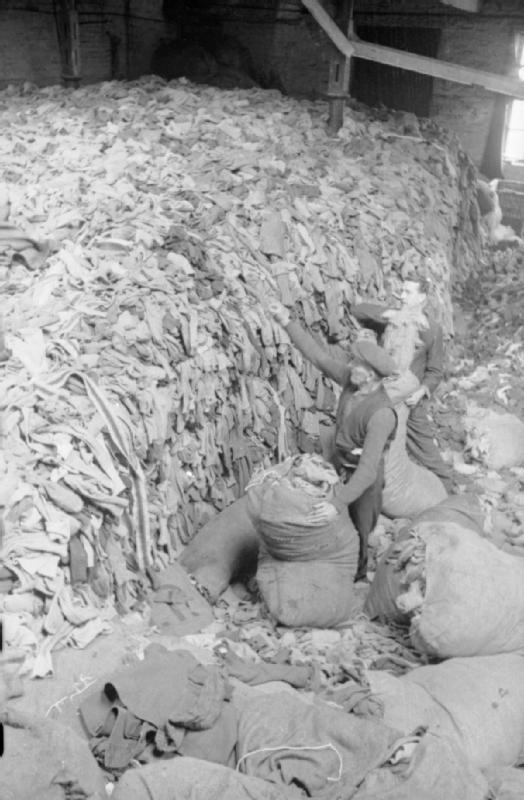
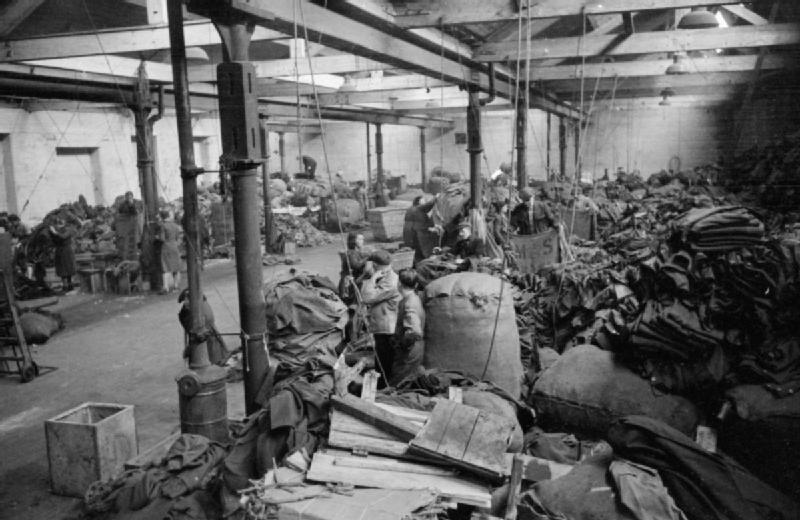
A shoddy mill’s input was rags: worn woollen clothing, blankets, mill waste and offcuts, bought by weight through a rag trade that reached across continents.
The mill’s whole business was turning that back into usable fibre, which it then sold on to spinners who blended it with new wool to make cloth.
Textile recycling today is an industry with sorting plants, specified grades, documented sourcing and a well-understood place in the economics of clothing. The 1960 rag trade did the same job without any of the documentation and with a reputation that the modern industry has had to work to shake off. The scale was also larger than most people assume. Shoddy supplied a substantial share of the wool entering British cloth production, and the trade’s buyers operated internationally long before anybody used the word globalisation.
Like our content? Follow us for more.
2. Sorting was done by hand, by women, at enormous speed
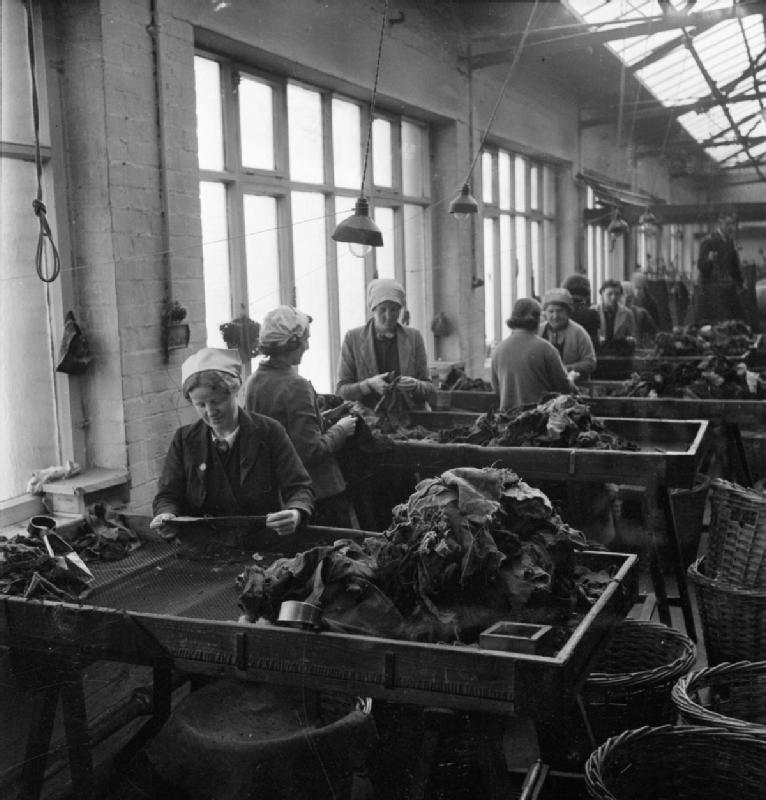
Every bale had to be sorted into fibre type, colour and condition before anything else could happen, and that meant a room of people picking up each garment, feeling it, deciding and throwing it into the right bin.
A good sorter could identify wool from cotton from a blend by touch and by the way a fibre broke, at a rate of thousands of items a shift.
Modern sorting still relies heavily on hand work for exactly this reason, although near-infrared sorting equipment can now identify fibre composition automatically. The skill has not been replaced so much as supplemented, which is rare in this list. Sorters describe the job as learning a very large number of fabrics by hand, which is knowledge that accumulates and does not transfer to anything else.
3. Buttons, hooks and anything hard had to come off first
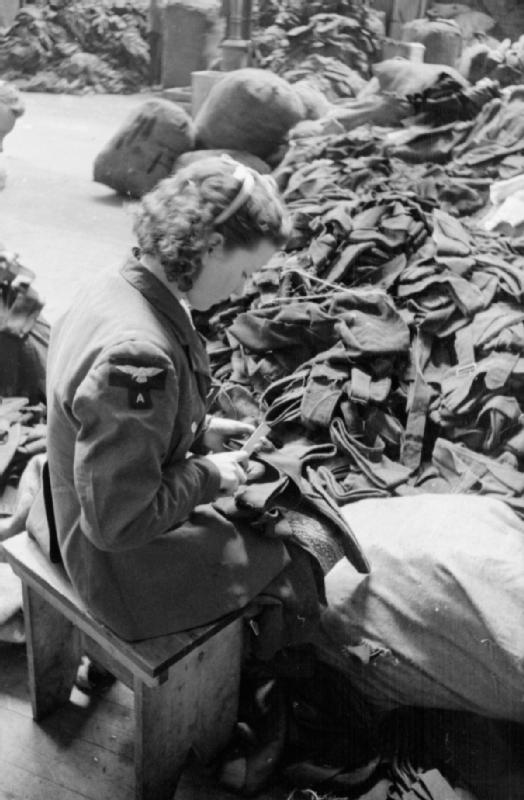
Before rags could be pulled they were stripped of buttons, buckles, hooks, zips, linings and seams, because anything hard would damage the machinery and anything of a different fibre would contaminate the grade.
That was all hand work with a knife, done fast, and it is the operation that most obviously sounds like something nobody would design today.
It remains largely hand work in the modern industry, for the same reason. Where it has changed is that the knives, the benches and the cut-resistant protection are now specified, and the pace is not set by a piece rate. The pace is the substantive change rather than the equipment, because a knife in a hurry is the problem that the equipment exists to mitigate.
4. The pulling machine was the most dangerous thing in the building
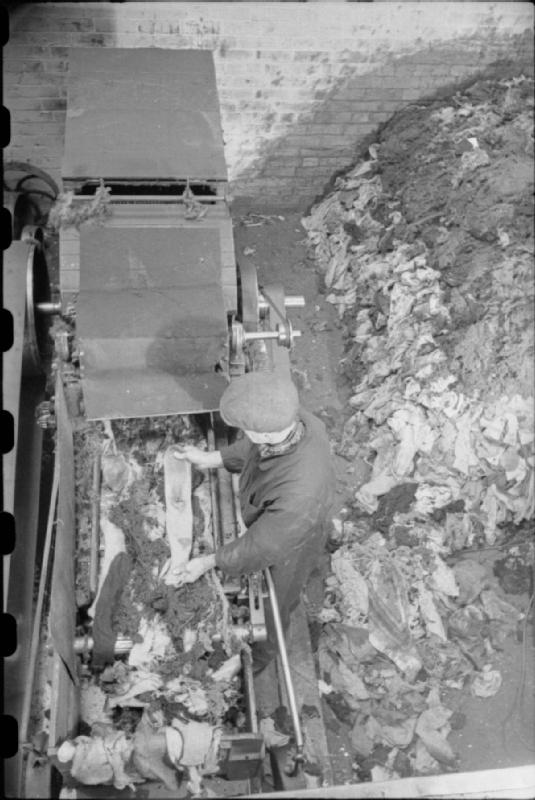
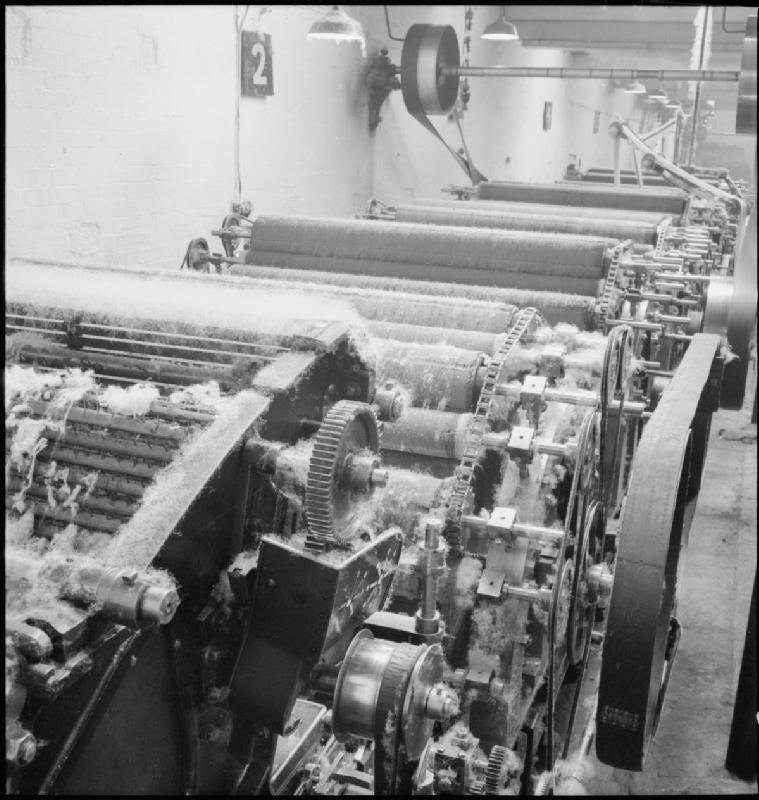
A rag puller, or devil, is a drum covered in steel teeth revolving at speed, which tears rags back into loose fibre as they are fed in.
It is a machine whose whole function is to destroy textile by force, fed by hand from a feed sheet, and the reason the trade treated it with respect needs no elaboration.
Modern equivalents are fully guarded and interlocked, with feed conveyors rather than hand feeding, and the operator cannot reach the working parts while the machine is running. Guarding of this class of machinery is now a legal requirement with no discretion in it. It is one of the few places in this whole series where the modern position is simply not open to argument.
5. The dust was the defining feature of the whole industry
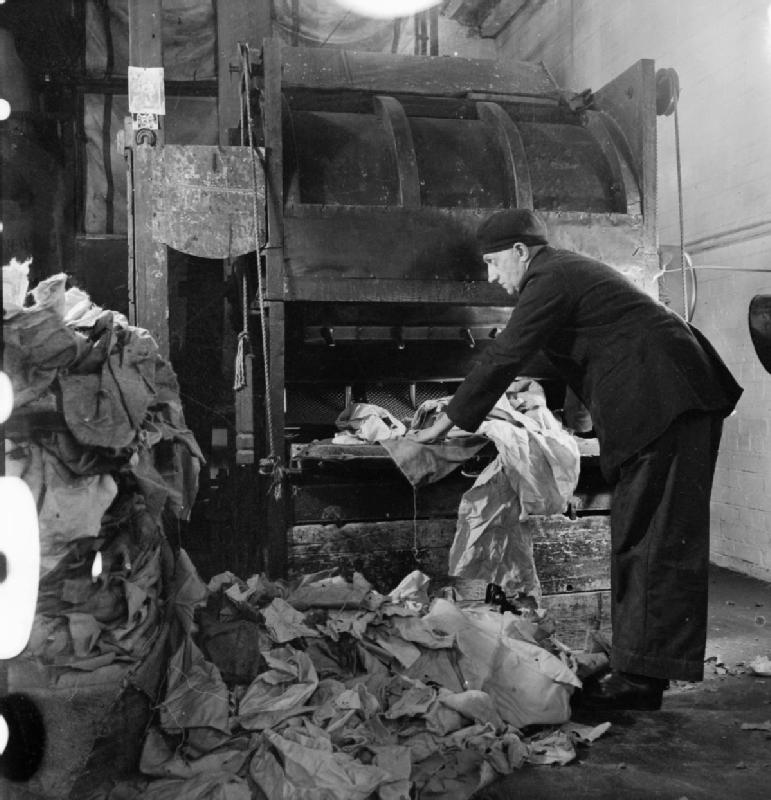
Pulling, opening, blending and carding reclaimed fibre generates a very large quantity of fine dust, and in 1960 a shoddy mill was a place where the air was visibly thick with it.
The content of that dust varied with every bale and could include anything the original garments had been treated with or used for.
Modern reclaimed-fibre plants operate with enclosed machinery, local exhaust ventilation, filtered air handling, respiratory protection and exposure monitoring, and workers in these processes receive health surveillance. The regulatory framework for dust in textile processing is one of the most developed anywhere. It developed where it did precisely because the textile districts generated the evidence, which is an uncomfortable way for knowledge to arrive.
6. Imported rags came with import controls attached
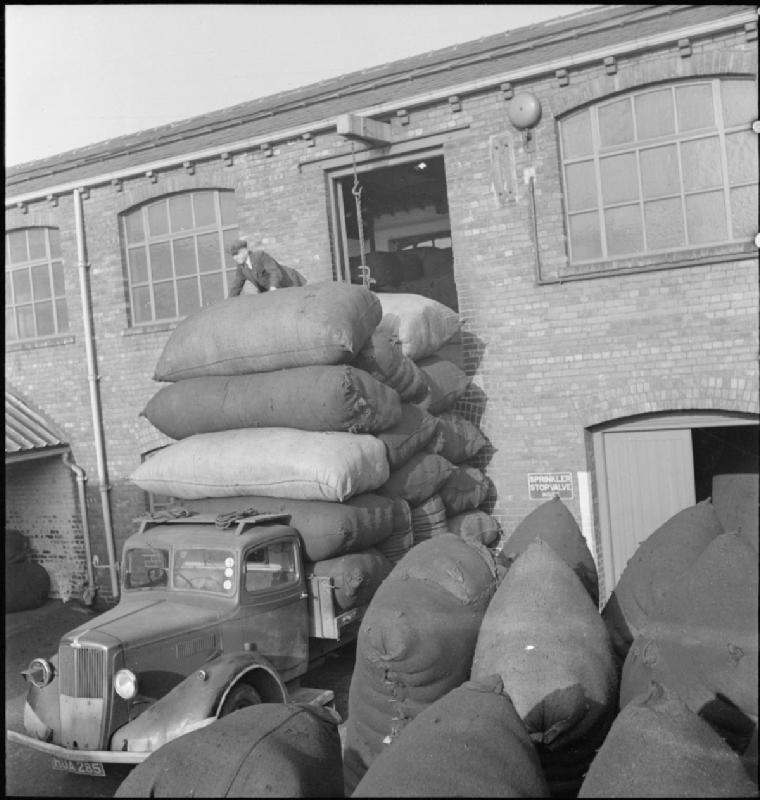
Rags arriving from abroad were subject to import restrictions and to compulsory treatment on arrival, because imported material of this kind carried a recognised risk and the regulatory response was to control it at the border.
That meant designated ports, documentation, treatment at specified facilities and restrictions on what could be moved where.
The controls are stricter now and the framework is international, covering sourcing, documentation and treatment. This file names no organism and describes no disease; the point here is simply that the control architecture existed and has been strengthened. Anybody with a professional reason to know the detail will find it in the current regulations and in official guidance rather than in an article about 1960.
7. Grading was the entire commercial skill of the trade
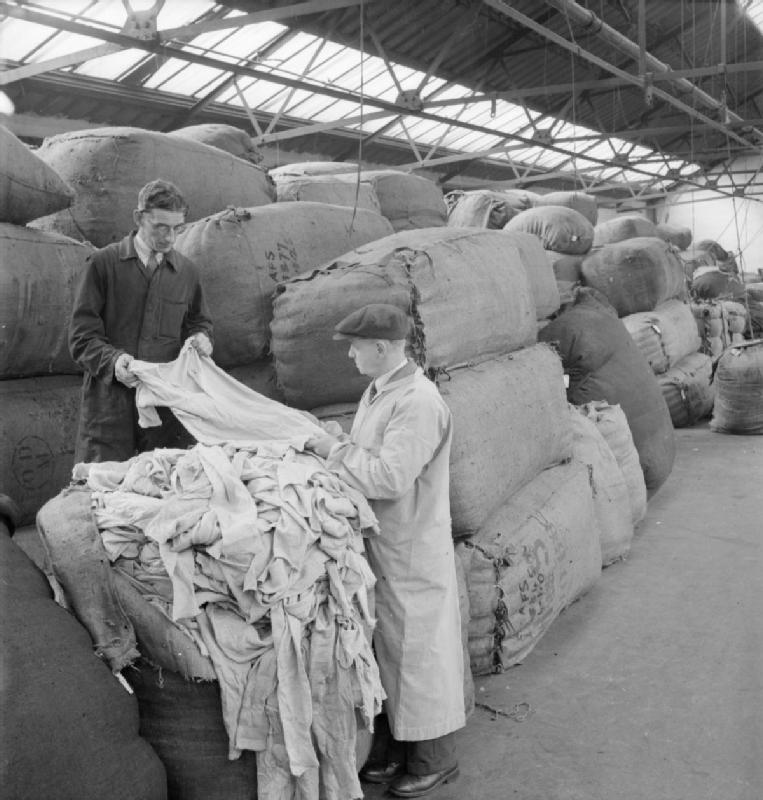
A mill’s profitability depended on buying mixed rags at a low weight price and selling fibre at a much higher one, which meant extracting the maximum value from each bale by grading it correctly.
That was a judgement made by experienced buyers and sorters, with no analysis, no instrument and no test beyond hand, eye and nose.
Grading is now supported by instrumental fibre identification and the grades themselves are specified and traded against description. The judgement still matters, but it is now checkable, which changed the whole character of the market. A market in which quality is checkable is a market that can trade at a distance, and that is most of the reason sorting moved abroad.
8. Shoddy and mungo were different products, and the difference mattered

Shoddy is fibre pulled from softer, loosely woven material and retains reasonable length; mungo comes from hard, tightly woven or felted cloth and is much shorter.
That distinction determined what the fibre could be spun into and therefore what it was worth, and a mill that confused the two lost money.
The modern industry uses a different and more granular vocabulary of grades tied to end use, from garment-quality fibre down to wiping cloth and insulation feedstock. The principle — that fibre length determines value — has not changed at all. It is the same principle that governs the new-wool trade, which is why the two industries used overlapping vocabulary and occasionally the same buyers.
9. Oil was added by hand to make the fibre workable
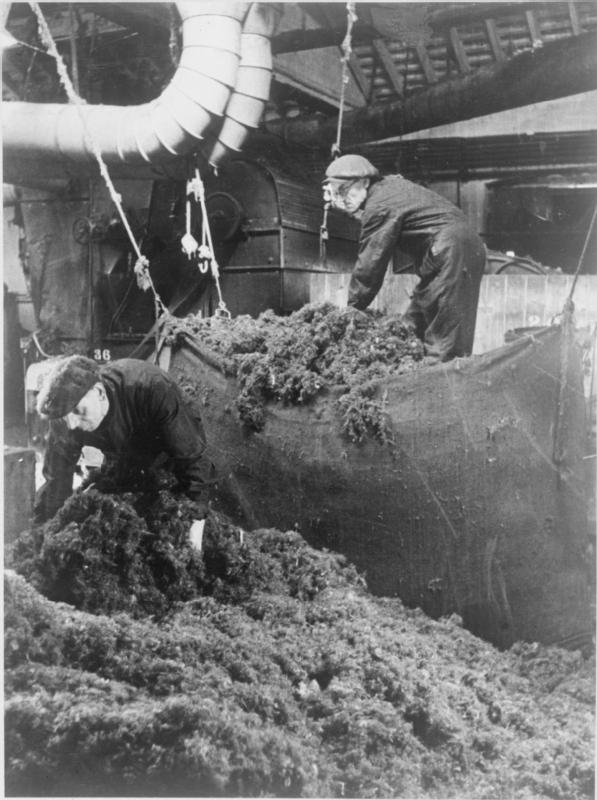
Reclaimed fibre is dry, short and full of static, and a blend had to be oiled before it could be carded and spun without breaking up.
In 1960 that was often done by hand, sprinkling or spraying oil over a blend on the floor and turning it, in a building full of fibre dust.
Blending and oiling are now done in enclosed machinery with metered application, and the fire risk inherent in oil, fine fibre and heat is managed by design rather than by care. That last point is the reason the change was made. Oiling by hand in a dusty room is the single item on this list that reads worst in retrospect, because it combined every hazard in the building at once.
10. The mill was a fire risk and everybody knew it

A building full of loose dry fibre, fine airborne dust, oil, friction and electrical machinery is an obvious fire risk, and textile mills of this kind had a long history of fires.
In 1960 the response was largely procedural — cleaning down, prohibiting smoking in certain areas, sand buckets and hose reels — and it depended on everybody doing the right thing.
Modern plants are designed around the risk, with fire detection, suppression, compartmentation, dust extraction that removes the fuel, and inspection regimes. It is engineered out rather than managed by instruction. Removing the dust removes the fuel, which is why extraction counts as fire protection as much as it counts as health protection.
11. Children had worked in these mills within living memory
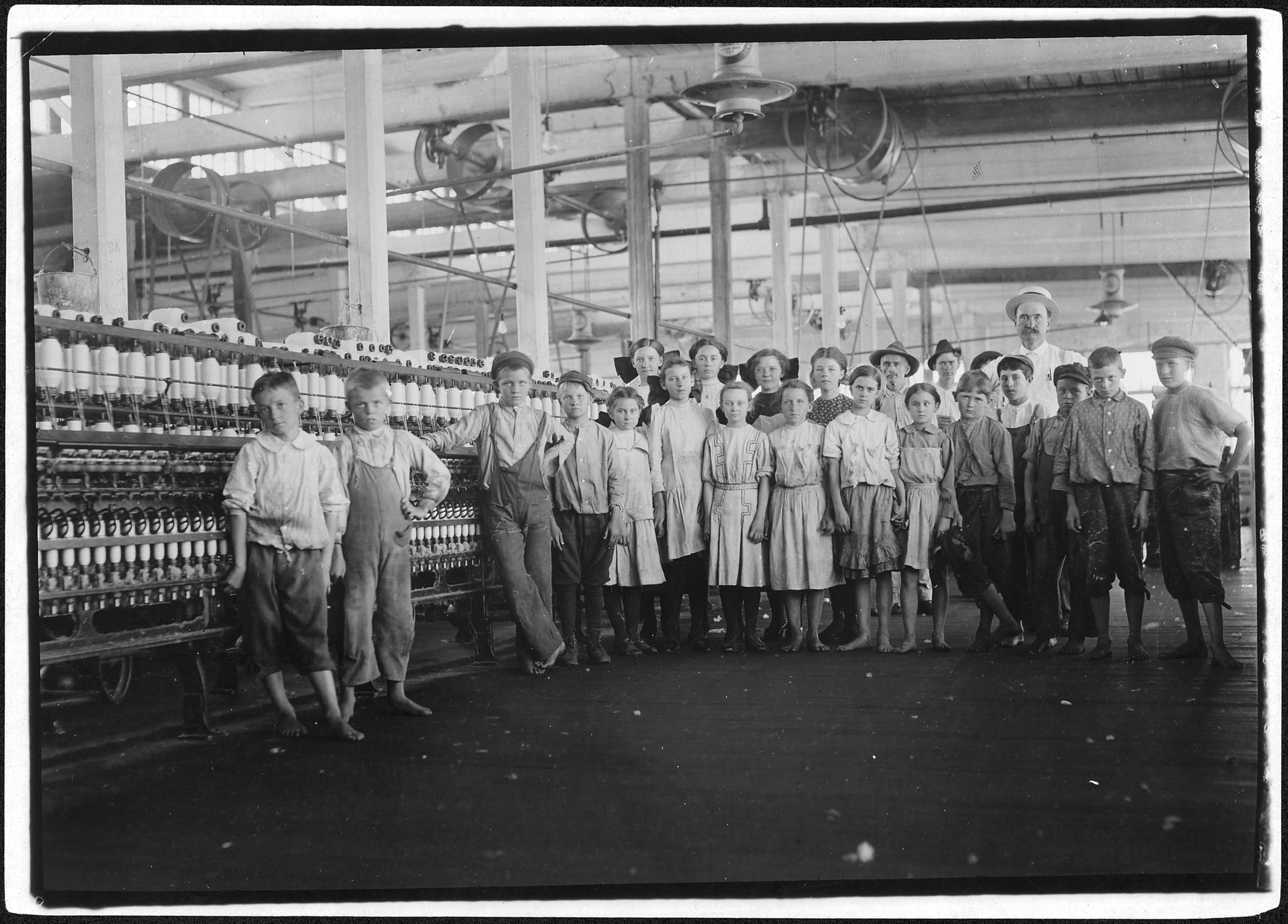
By 1960 child labour in British textile mills was long gone, but the men and women running the shoddy mills had grown up hearing about it from people who had done it, and the industry’s reputation was built in that period.
That history is one reason the trade carried a stigma well into the twentieth century, and why reclaimed fibre was a thing to be concealed in a product rather than advertised.
Recycled content is now a selling point, declared on labels and used in marketing. It is one of the more complete reversals of commercial meaning anywhere in manufacturing. Mills that spent a century hiding what was in the cloth would now be printing it on the label in large letters.
12. The trade was concentrated in a handful of towns
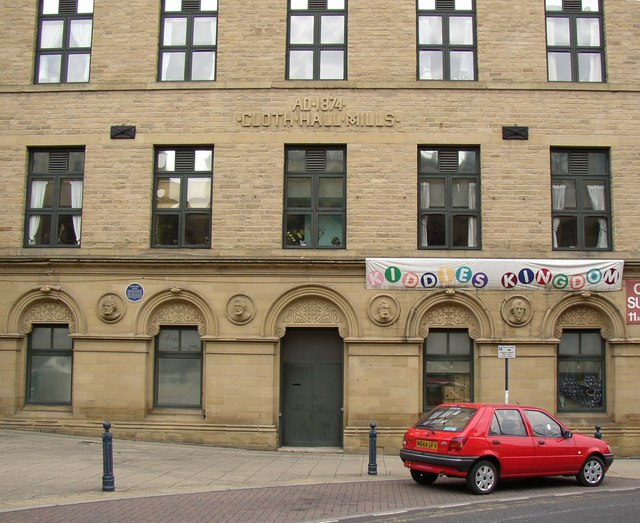
Shoddy and mungo production in Britain was overwhelmingly concentrated in a small group of West Yorkshire towns, with the rag trade, the pulling mills, the blenders and the spinners all within a few miles of each other.
That concentration meant the whole supply chain was local, the knowledge was shared and the trade had a distinct regional identity.
The industry survives there in a much reduced form, and the global trade in used clothing has moved sorting and processing to wherever labour costs make it viable. The geography reversed completely. The buildings are mostly still there, which in that part of the country is the usual ending: the trade goes and the mill becomes flats.
13. Everything was weighed, and weight was the only measure
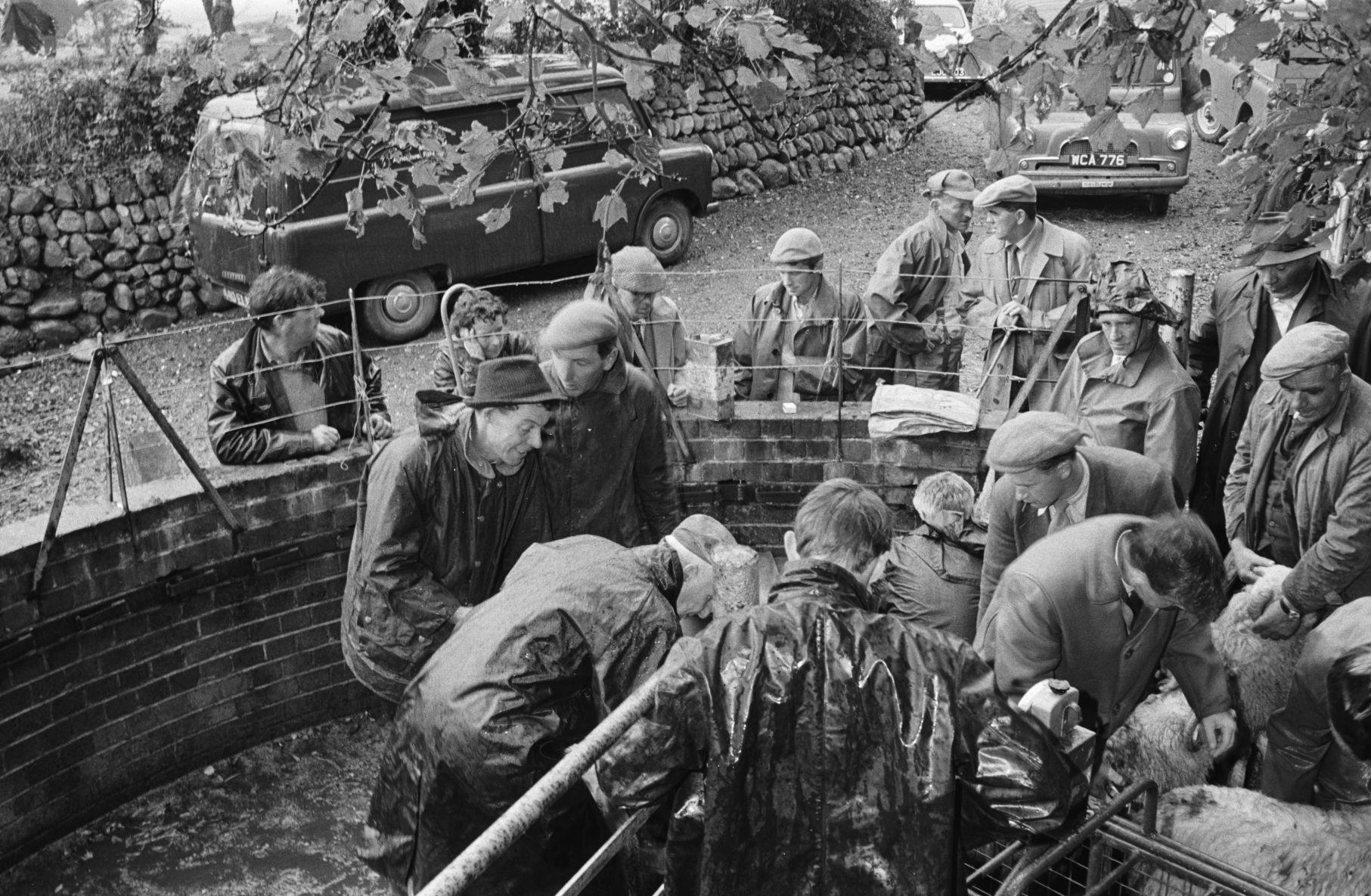
Rags were bought by weight, fibre was sold by weight, and a mill’s accounts were essentially a record of weight in against weight out with the difference being waste.
That made the scale the most important instrument in the building and shrinkage the central commercial anxiety.
Modern operations still trade by weight but measure composition, moisture, length and contamination alongside it. Weight is now one variable among several rather than the whole of the information. Shrinkage, incidentally, is unavoidable rather than a sign of carelessness, since every stage of pulling and cleaning loses fibre as waste.
14. The product ended up in uniforms, blankets and cheap cloth
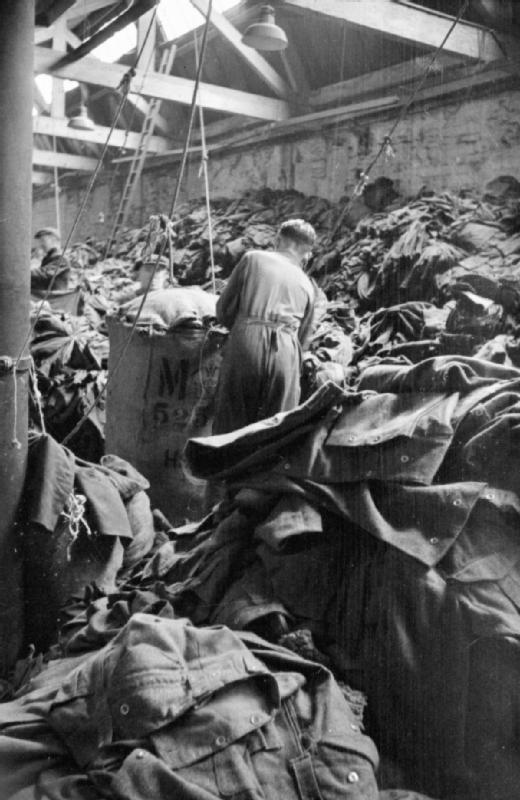
Shoddy and mungo went into heavy woollens: blankets, uniform cloth, overcoating, felts, carpet underlay and the cheaper end of the suiting trade.
That was an enormous market in 1960 because institutional and workwear textiles were made of wool and bought in volume.
Synthetic fibres took almost all of that market through the 1960s and 1970s, and reclaimed wool now goes into insulation, geotextiles, felts and a premium recycled-content garment trade. The volume went and the value came back. Insulation and geotextiles are unglamorous destinations and they are also enormous markets, which is the saving of the modern industry.
15. Nobody thought of it as recycling
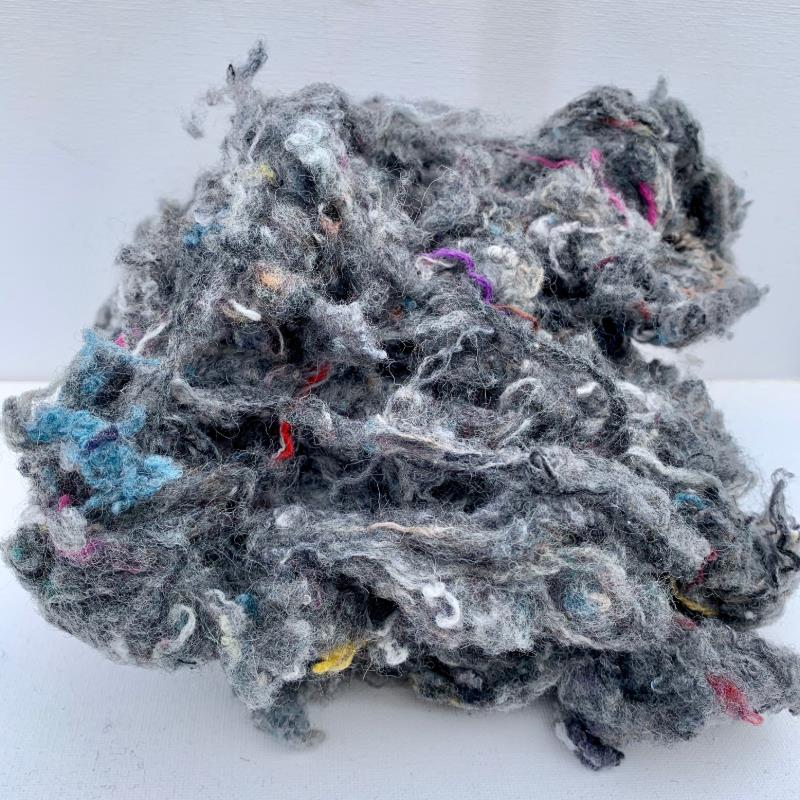
The 1960 trade did not describe itself in environmental terms at all. It existed because reclaimed fibre was cheaper than new wool, full stop.
The environmental argument for it is entirely retrospective, which does not make it wrong but does mean the industry was not built on it.
Textile recycling is now framed almost entirely in environmental terms, with policy, targets and consumer pressure behind it. The process is substantially the same and the reason for doing it has been rewritten. That is not a criticism of either era. It simply means the environmental case was available for a century before anybody thought to make it.
16. The whole industry depended on wool being worth reclaiming
Shoddy worked as a business because wool was expensive, labour was cheap and the two facts together made it worth tearing a coat apart to get the fibre back.
When synthetic fibres made new cloth cheap and labour costs rose, that arithmetic inverted and most of the industry closed.
It is inverting again, slowly, as the cost of virgin fibre, waste disposal and regulatory pressure rise together. The modern reclaimed-fibre industry exists for the same underlying reason the 1960 one did, which is that somebody can make money out of it. Anybody who wants textile recycling to last should probably find that reassuring rather than disappointing.
The one fact the whole trade rested on
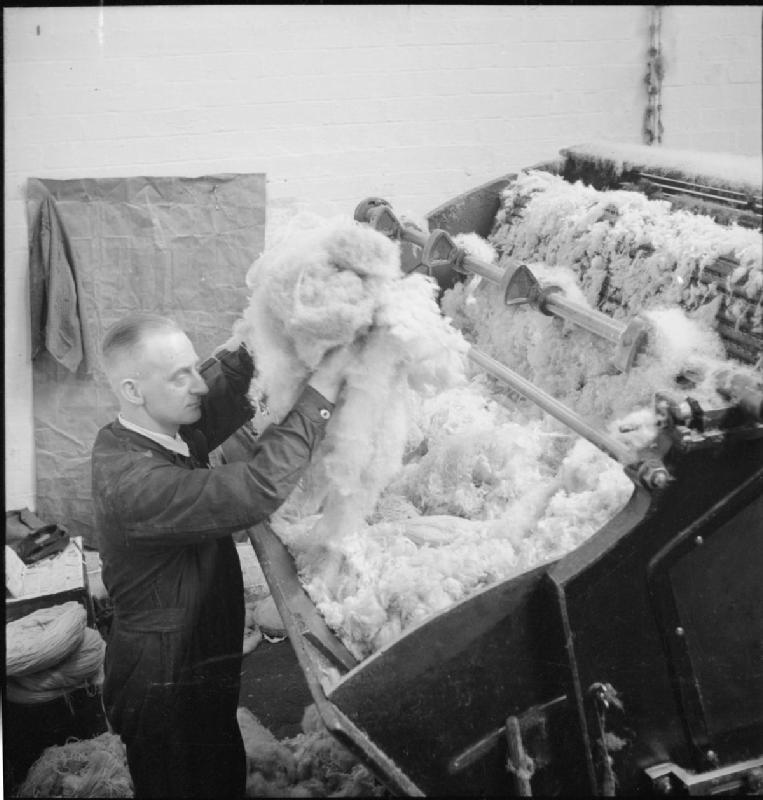
That wool was expensive and labour was cheap. Every detail here — hand sorting at speed, stripping buttons with a knife, feeding a toothed drum by hand, working in air thick with fibre dust, grading by hand and nose — made economic sense only while those two conditions held together. Synthetic fibre broke the first and rising wages broke the second, and the industry that survived is the one that found a different reason to exist.
The 1960 shoddy mills were doing, for money, exactly what the clothing industry is now under pressure to do for the environment. They were simply not given any credit for it.
Like our content? Follow us for more.