

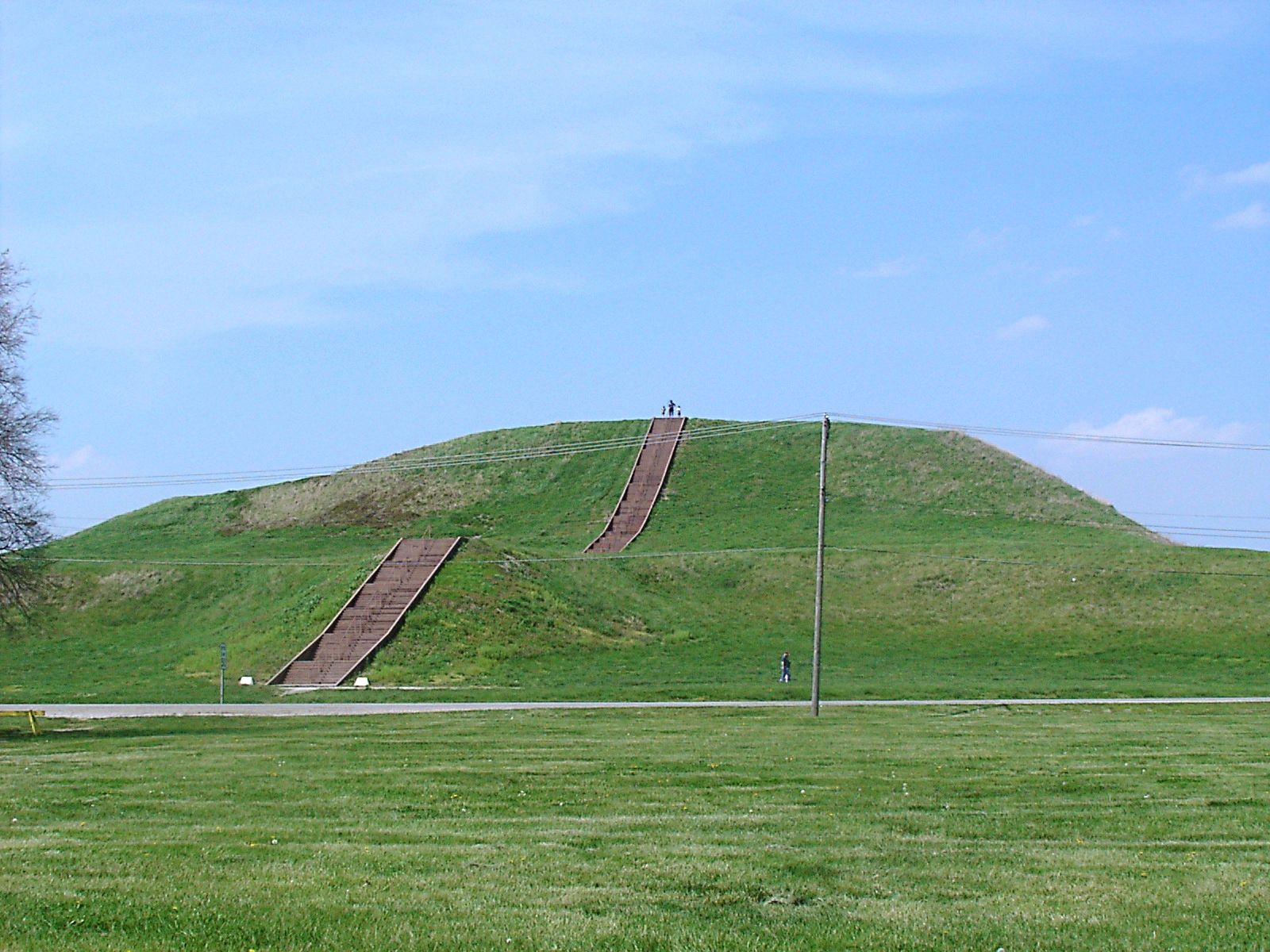
Just across the Mississippi River from modern St. Louis, in what is now southern Illinois, lie the remains of one of the most remarkable and least appreciated places in American history. A thousand years ago, this was the site of Cahokia, a vast and sophisticated city that was, at its height, the largest urban center in what would become the United States, and one of the largest cities anywhere in the world at the time. It was a metropolis of earthen pyramids, sprawling neighborhoods, grand plazas, and tens of thousands of people, built by a Native American civilization whose achievements have been strangely overlooked in the popular understanding of the continent’s past.
Cahokia’s story is one of astonishing scale and enduring mystery. It rose to greatness, flourished for a couple of centuries, and then declined and was abandoned, all before Europeans ever arrived in the region. Its people built the largest earthen structure in the Americas by hand, laid out a planned city on a grand scale, and then, for reasons that remain debated to this day, dispersed and moved on, leaving their great mounds behind. That such a place existed at all comes as a surprise to many, and it challenges the common misconception that no great cities existed in North America before European contact. Here is the story of Cahokia, the forgotten metropolis of ancient America.
The Great City on the Mississippi
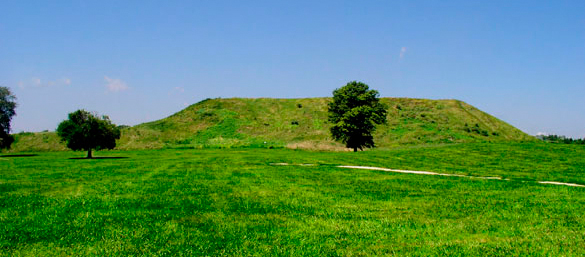
Cahokia flourished during a period roughly a thousand years ago, reaching its peak around the years 1050 to 1200, in the fertile floodplain of the Mississippi River known as the American Bottom. It was the largest and most important center of what archaeologists call the Mississippian culture, a Native American civilization that spread across much of the American Midwest, East, and Southeast, characterized by settled agriculture, the growing of corn, and the construction of massive earthen mounds.
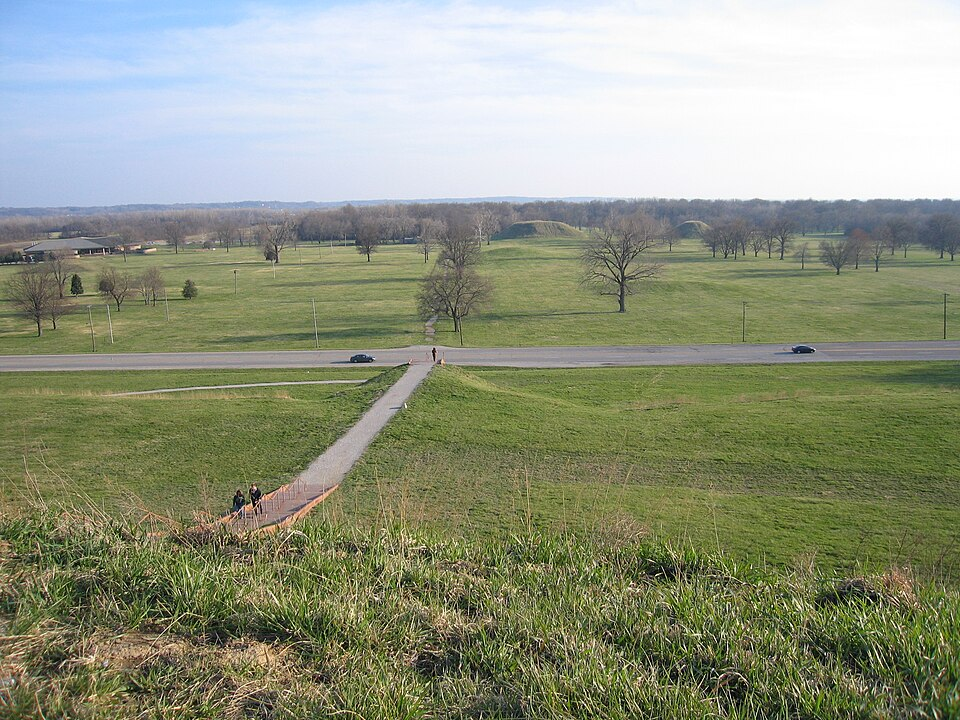
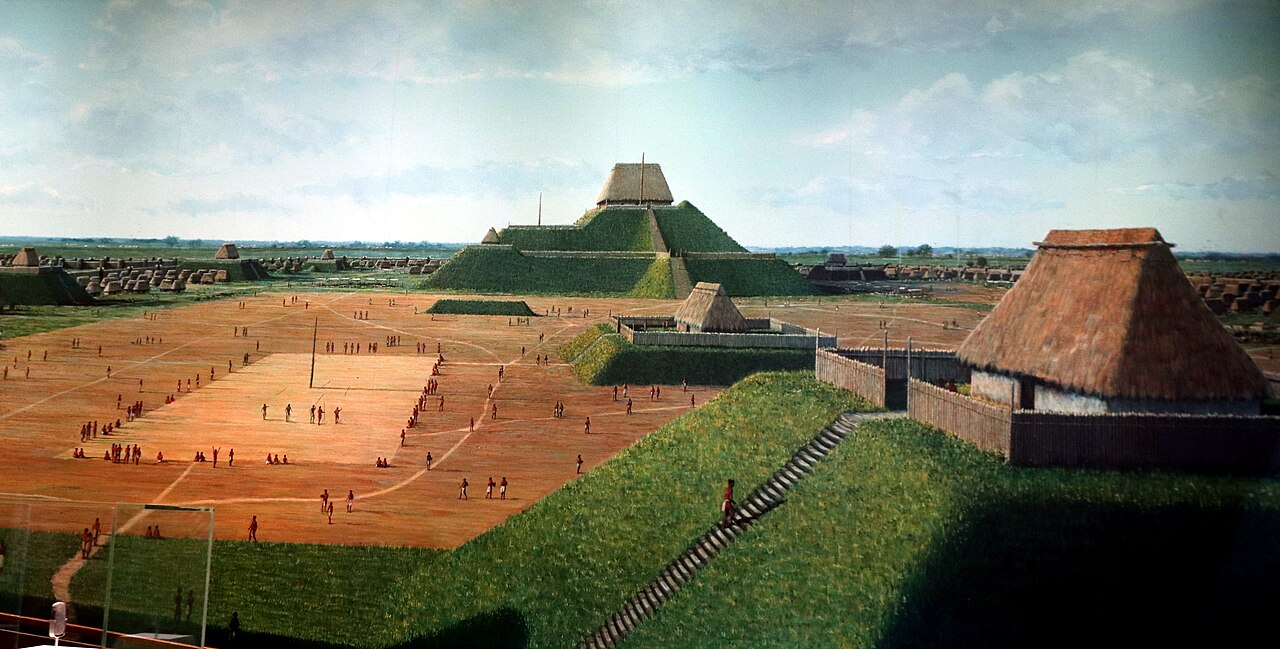
At its height, Cahokia was truly a city, home to an estimated 10,000 to 20,000 people, with some estimates ranging higher still. To put that in perspective, this made Cahokia comparable in size to, or larger than, contemporary European cities like London at the same period. The city sprawled across several square miles and included more than a hundred earthen mounds, spacious public plazas, residential neighborhoods, and areas dedicated to ceremony, administration, and trade. Cahokia sat at the center of a vast network of commerce and cultural influence, connected to distant regions through trade in goods and materials. This was no simple village but a complex, populous, organized urban society, the beating heart of a civilization, thriving in the American heartland centuries before any European set foot there.
Like our content? Follow us for more.
Monks Mound and the Earthen Pyramids
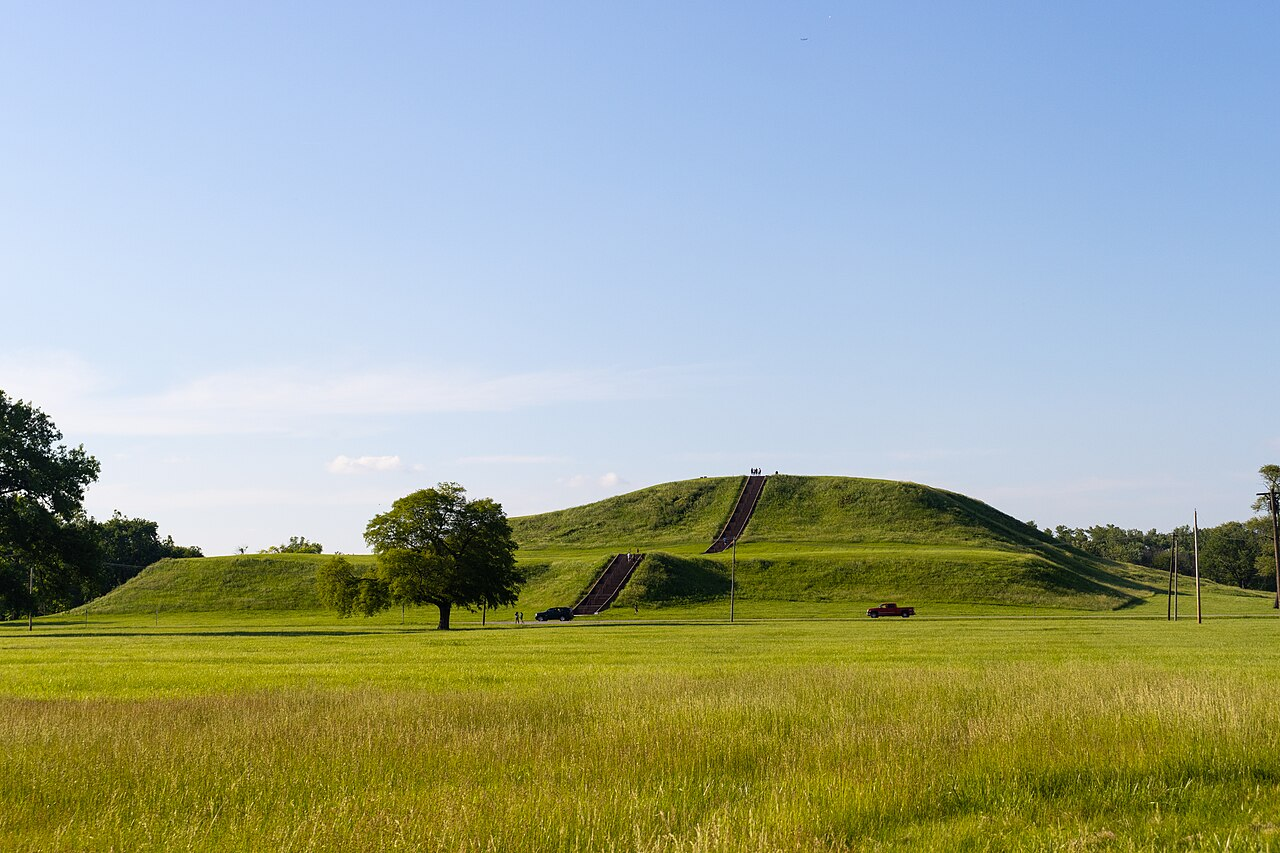
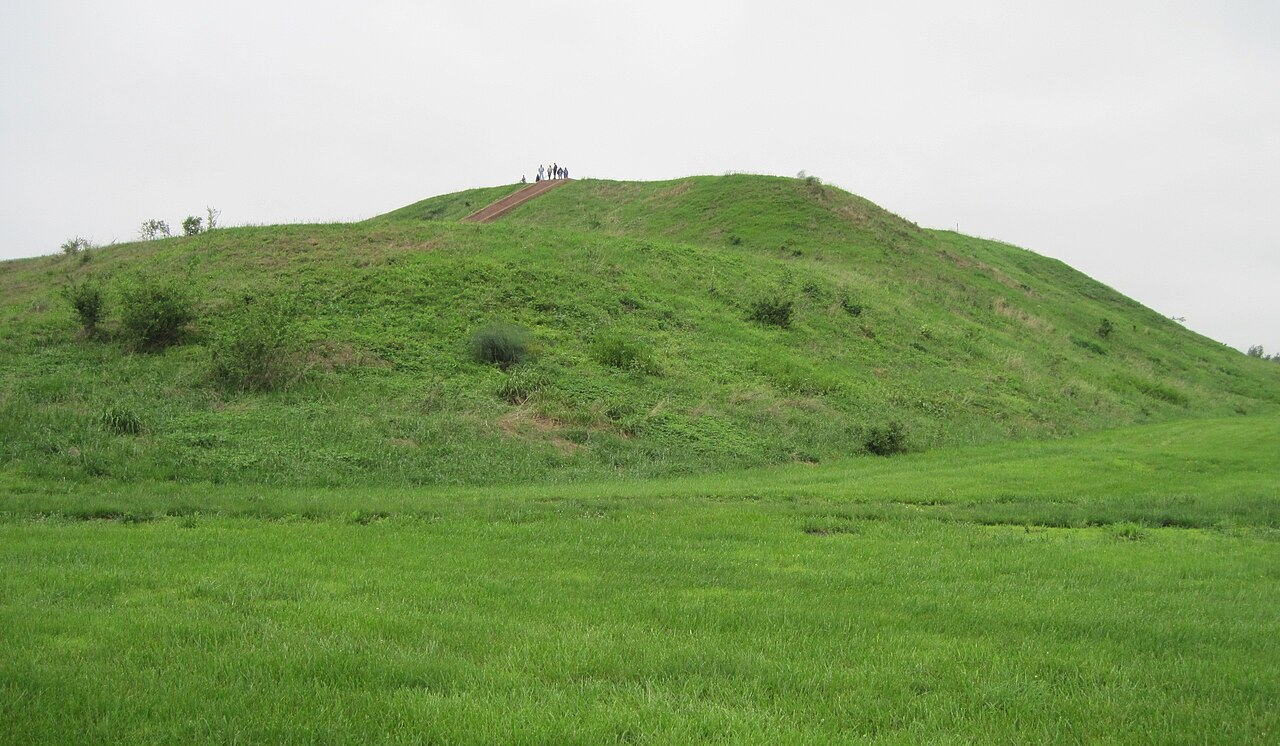
The most spectacular surviving feature of Cahokia is its mounds, and above all the colossal structure known today as Monks Mound. This enormous earthwork is the largest prehistoric earthen structure in all of the Americas, a flat-topped pyramid of earth rising in terraces to a height of roughly one hundred feet and covering an area of many acres at its base — a footprint comparable to that of the great pyramids of Egypt, though built of soil rather than stone.
What makes Monks Mound and the other mounds so astonishing is how they were built. The Mississippians had no draft animals, no wheels, and no metal tools for construction. Every bit of the millions of cubic feet of earth that make up Monks Mound was dug by hand using stone and wooden tools, loaded into woven baskets, and carried on the backs of laborers to the growing mound, basket by basket, over many years and in numerous construction stages. Atop the great mound once stood a large building, likely the residence of the city’s ruler or a temple, dominating the city from on high. Around Monks Mound stood scores of other mounds of various shapes and sizes, some used as platforms for important buildings, others for burials, each representing an immense investment of organized human labor. The scale of the earthworks speaks to a society capable of planning and coordinating enormous collective projects, with the leadership, organization, and shared purpose to move mountains of earth by hand and raise a city of pyramids on the banks of the Mississippi.
A Planned City With a Sun Calendar
One of the most impressive things about Cahokia is that it was not a settlement that grew haphazardly over time, but appears to have been deliberately planned and laid out. Archaeological evidence suggests that the city was organized according to a coherent design, with its structures and spaces aligned and arranged intentionally, oriented to the cardinal directions, and divided into zones for different purposes. This was urban planning on a grand scale, executed a thousand years ago in the American Midwest.
Among the most intriguing features archaeologists have identified is a great circle of tall wooden posts, sometimes nicknamed “Woodhenge” for its resemblance in function to England’s Stonehenge. This structure appears to have served as a kind of solar calendar, its posts aligned so that, from a central observation point, the sun would rise in line with particular posts at significant times of year, such as the solstices and equinoxes. It reveals a sophisticated understanding of astronomy and the seasons, essential knowledge for an agricultural society that needed to track the year for planting and ceremony. Between the planned layout, the monumental mounds, and the astronomical calendar, Cahokia emerges as the product of a truly advanced society, one with the knowledge, organization, and ambition to build and run a great city, refuting any notion that the pre-European peoples of North America lacked complex urban civilization.
The Mystery of Its Decline
Perhaps the greatest puzzle of Cahokia is not how it rose, but why it fell. After a couple of centuries of flourishing, the great city began to decline. Beginning sometime after around 1200, its population started to dwindle, people gradually moved away, and by roughly the fourteenth or fifteenth century, Cahokia had been largely abandoned. All of this happened well before Europeans arrived in the region; when Spanish explorers passed through the area centuries later, the great city was already long empty, its mounds standing silent.
The reasons for Cahokia’s decline remain a subject of active research and debate among archaeologists, and no single explanation has been definitively established. A range of factors has been proposed, including environmental pressures such as the strain of feeding a large population, possible resource depletion, climate shifts affecting agriculture, flooding, and social, political, or economic difficulties. Some once-popular theories, such as widespread deforestation causing environmental collapse, have been challenged by more recent research, and the honest answer is that scholars still do not know exactly why the city was abandoned. It’s important to understand, though, that the people of Cahokia did not simply vanish into thin air. They dispersed, moving to other places and communities, and their descendants live on today among various Native American nations of the region. The city was left behind, but its people carried on, which is why framing Cahokia’s end as a spooky disappearance misses the mark — it was a migration and transformation, not an extinction.
The Forgotten Metropolis
One of the most striking aspects of Cahokia’s story is how thoroughly it faded from the popular consciousness. Despite being the site of the largest pre-European city north of Mexico, and despite its enormous mounds still standing today, Cahokia is unknown to a great many Americans, including some who live nearby. This obscurity has several causes, rooted partly in the ways that the achievements of Native American civilizations were historically overlooked, dismissed, or misattributed by later settlers who found it difficult to believe that the Indigenous peoples of the continent had built such things.
Even the name “Cahokia” is not what its builders called it; their own name for the city is lost to history. The name we use today comes from a later group of Native people who lived in the area long after the city’s abandonment. In the surrounding region, other mounds that once existed, including a great many across the river in what is now St. Louis, were destroyed during the growth of the modern cities, further erasing the physical evidence of this ancient civilization. That such a significant place could be so widely forgotten is a striking commentary on whose histories get remembered and whose get overlooked. Fortunately, Cahokia today is recognized and protected, honored as a site of profound historical importance, and increasingly appreciated as the extraordinary achievement it was.
Visiting the Ancient City
Today, the heart of Cahokia is preserved as a state historic site and has been recognized internationally for its outstanding value to human history. Visitors can walk among the surviving mounds, climb the steps to the top of the great Monks Mound for a commanding view over the ancient city’s grounds and the modern St. Louis skyline beyond, explore reconstructions and an interpretive center, and stand in the plazas where thousands of people once gathered a thousand years ago.
To visit Cahokia is to encounter a piece of American history that overturns easy assumptions about the continent’s past. It is a place to appreciate the sophistication, ambition, and achievement of the Mississippian people who built a great city here, to ponder the mysteries of its rise and fall, and to reflect on the deep and often overlooked human history of North America, stretching back long before the familiar narratives of European arrival. Standing atop Monks Mound, gazing over the earthworks these people raised by hand, it’s impossible not to feel a sense of wonder at the forgotten metropolis that once thrived here, and gratitude that its remarkable story is finally being remembered. Cahokia is not just an archaeological site; it’s a monument to a great American civilization that deserves to be far better known than it is.
Like our content? Follow us for more.
