There is a reasonable chance you have eaten sushi hundreds of times and never once tasted wasabi.
The green paste served alongside it is usually a blend: European horseradish, mustard powder, green food colouring, and often cornstarch or another binder to give it the thickened texture of the real thing. Some products include a small amount of actual wasabi — typically one to three percent — which is enough for the label and contributes essentially nothing to the flavour.
The substitution is close to universal. Reported figures suggest as much as 99 percent of wasabi sold in the United States is imitation, and estimates for Japan run at around 90 to 95 percent. Even in the plant’s homeland, authenticity is the exception.
This is not really a scandal. It is an agricultural problem dressed up as a culinary one, and the reasons are worth knowing. Here is why almost nobody has tasted the real thing.
What Real Wasabi Actually Is
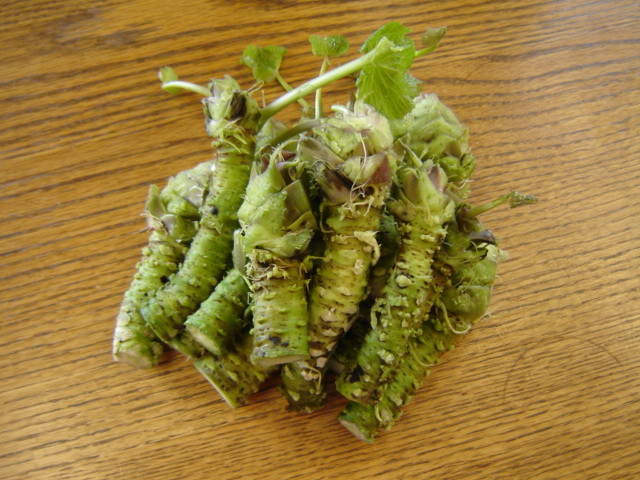
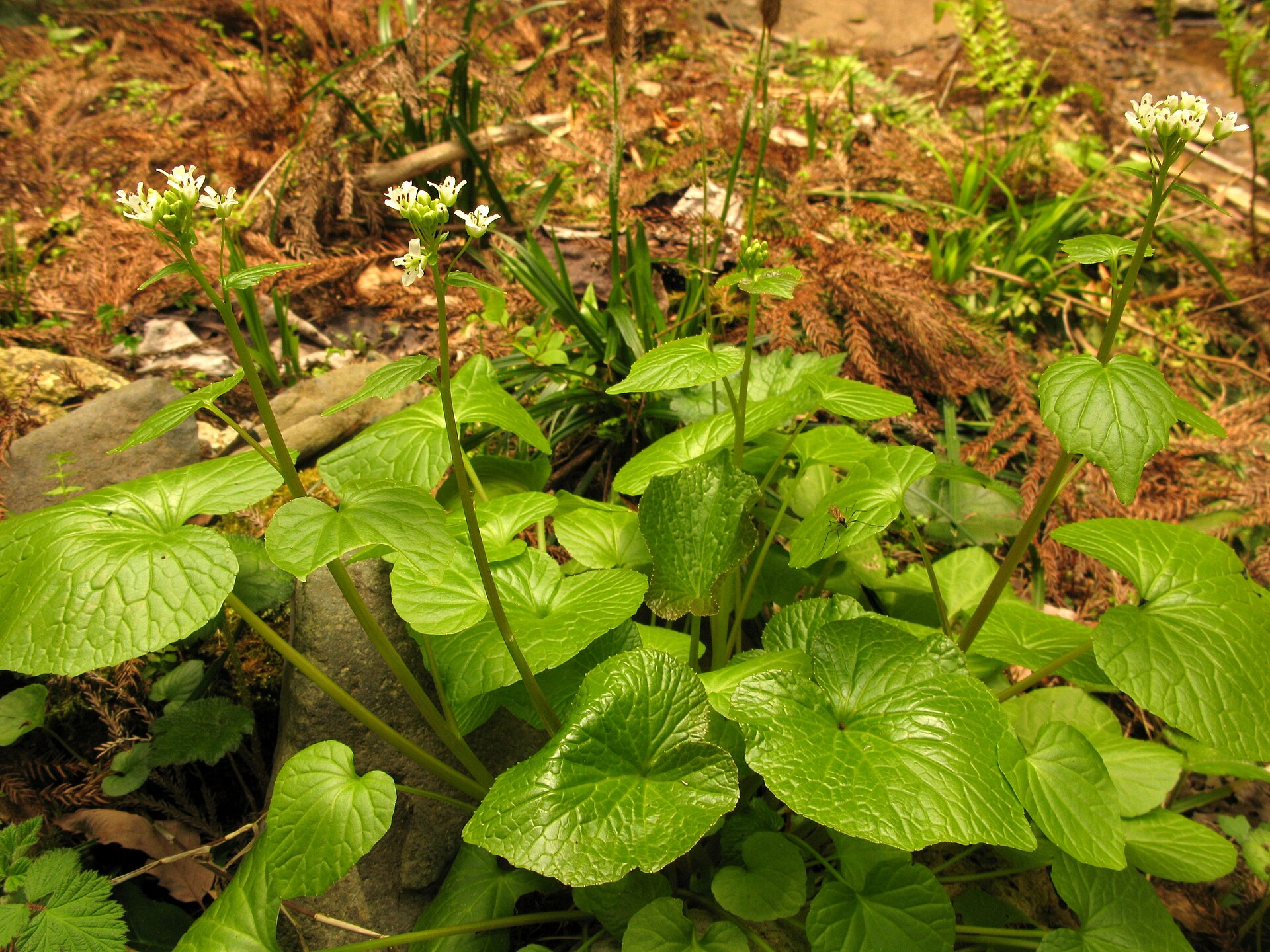
Real wasabi comes from Wasabia japonica, also classified as Eutrema japonicum, a semi-aquatic perennial native to the mountain stream beds of Japan.
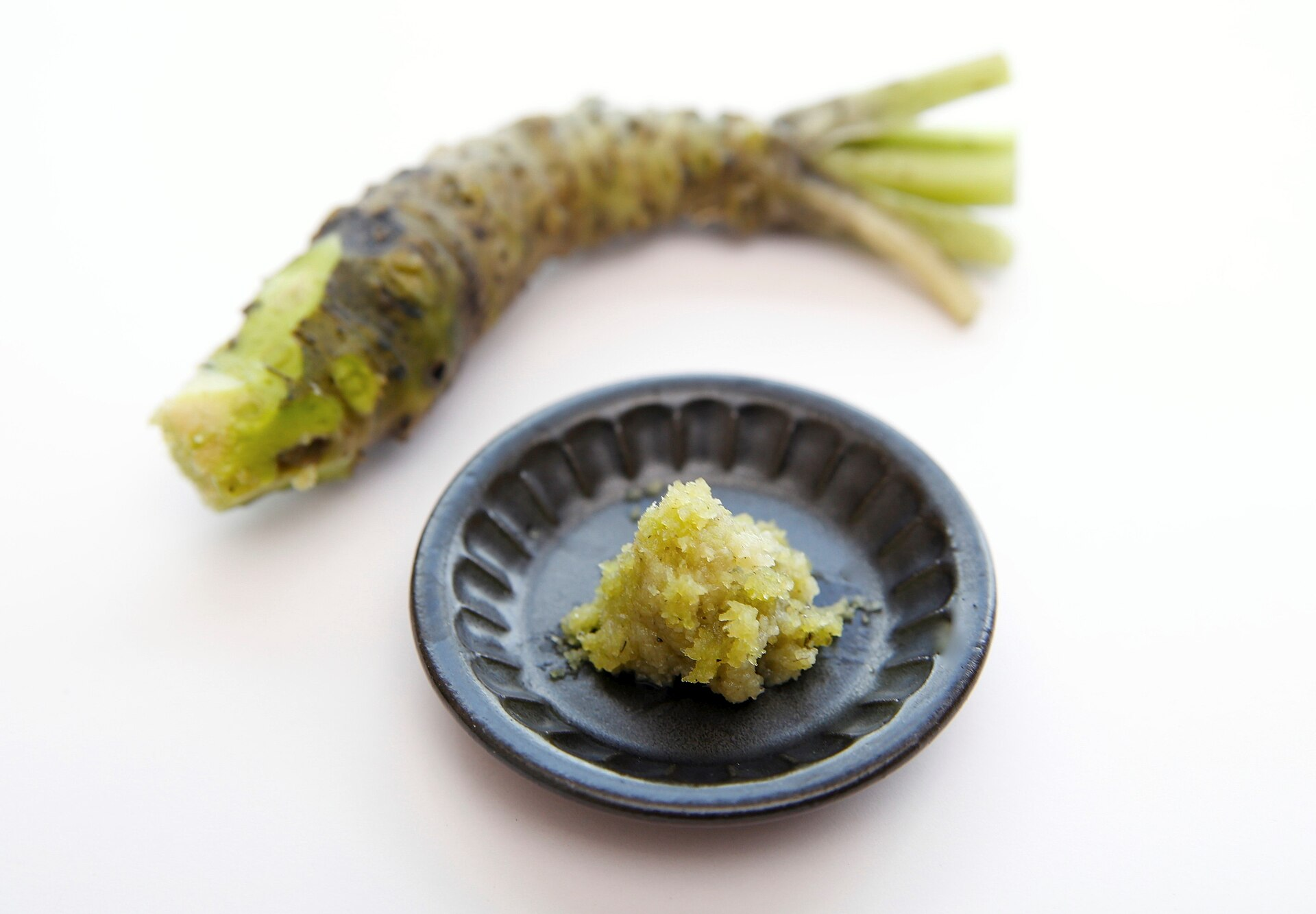
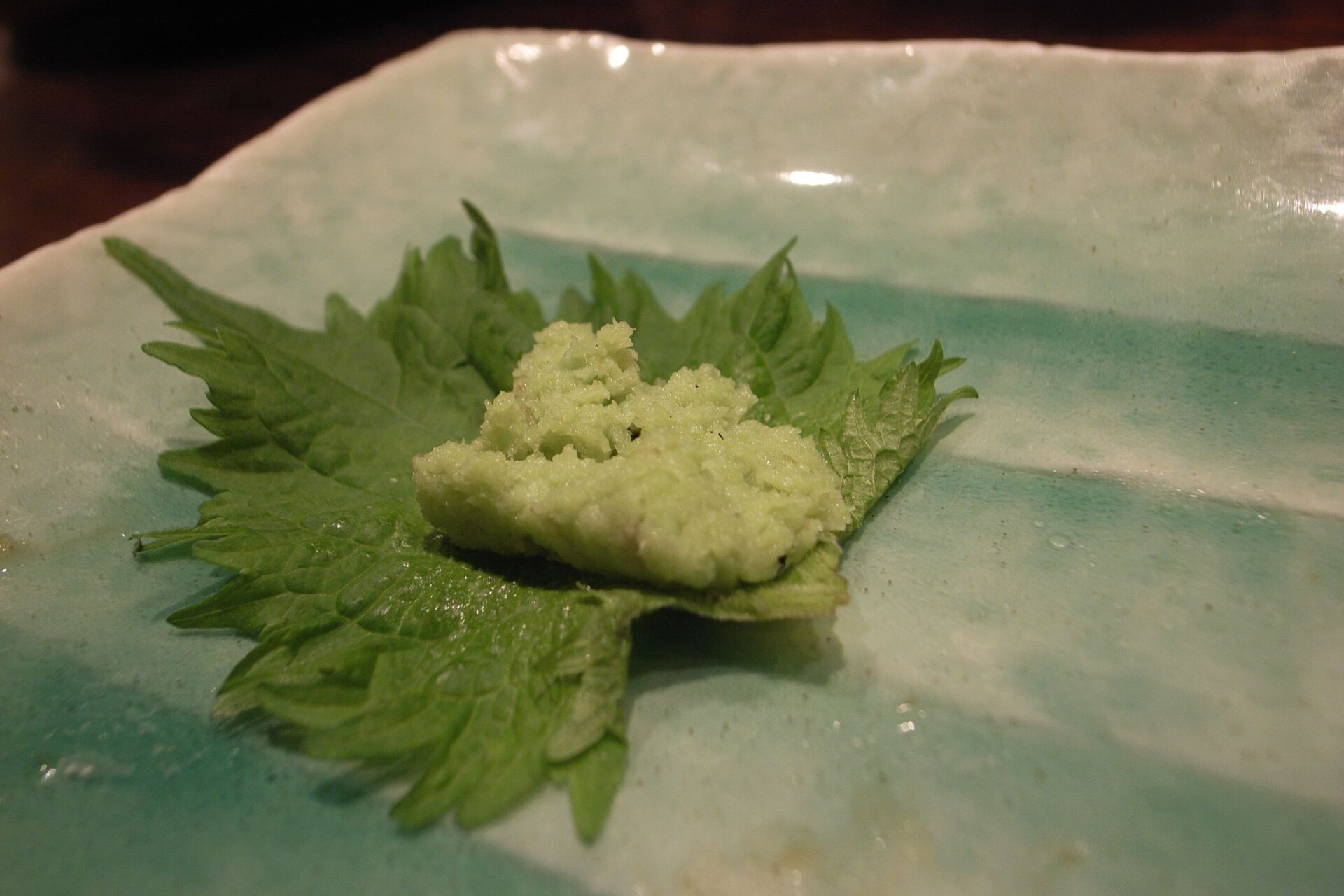
The edible part is not a root but a rhizome — a thickened underground stem. It is grated fresh, traditionally on an oroshigane, a flat grater surfaced with sharkskin, which produces a texture closer to a fine paste than to shavings. That is the entire preparation. There is no mixing, no cooking, no additional ingredient. You grate it and serve it.
Confusingly, wasabi is often called Japanese horseradish, which is a misnomer — it is a different plant from European horseradish, though the two are relatives. Both belong to the Brassicaceae family, alongside mustard, cabbage, broccoli and cauliflower.
That family relationship is precisely why the substitution works. All of them produce isothiocyanates, the compounds responsible for the sharp, sinus-clearing sensation. Horseradish delivers a superficially similar burn, which is enough to convince anyone who has no reference point.
Japan has grown wasabi for around a thousand years, though its pairing with nigiri sushi is comparatively recent, apparently beginning in the early 1800s.
Like our content? Follow us for more.
Why It Is So Hard to Grow
The cultivation problem is the whole story, and it is severe enough to have earned wasabi a reputation as one of the most difficult crops in the world.
The plant requires clean, constantly flowing water, deep shade, high humidity, cool temperatures within a fairly narrow band, and rich, well-draining soil. The traditional method is called sawa cultivation, grown in terraced stream beds — literally in running mountain water.
It is slow. The rhizome takes at least 18 months to mature, and sometimes up to three years. Throughout that period it is highly sensitive to environmental stress, and a single disease outbreak or temperature swing can destroy an entire crop.
Only a handful of places worldwide have the right microclimate: parts of Japan, some of the Pacific Northwest, and areas of New Zealand among them.
The economics follow directly. Fresh wasabi rhizomes command prices reported between roughly 70 and 250 dollars per pound depending on quality and availability, which makes it one of the most lucrative legal crops on Earth. Horseradish costs a few dollars a pound — around a twentieth as much.
For a restaurant giving away a condiment for free, that difference is decisive. The person who set up the first commercial North American wasabi operation, after some thirty years of effort, compared it to gold: we expect to pay a lot for gold, and we should expect to pay a lot for wasabi.
The Fifteen-Minute Problem
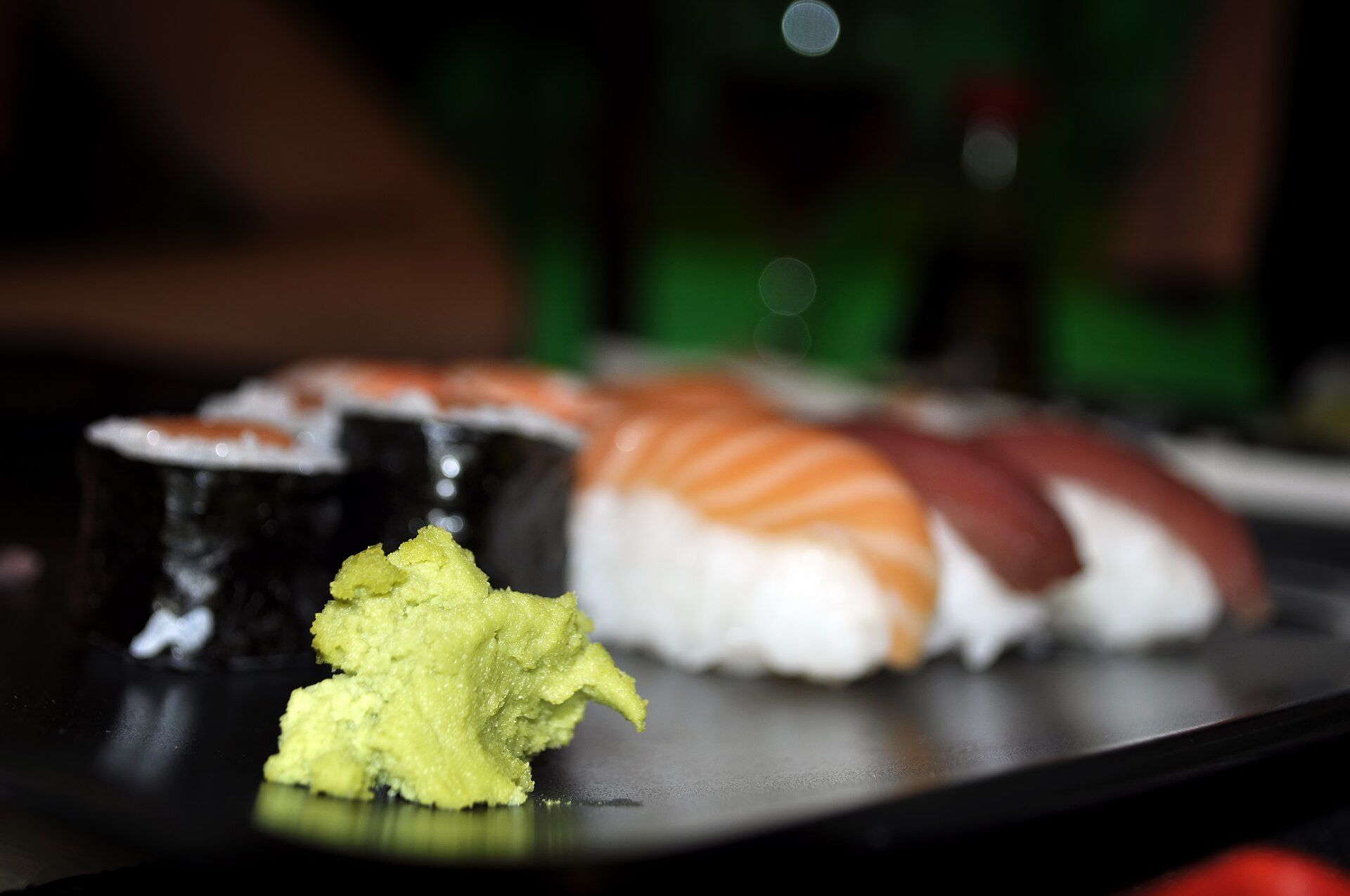
Even if a restaurant buys real wasabi, a second obstacle appears immediately, and it may be the more fundamental one.
Grated wasabi loses its flavour in about fifteen minutes. The volatile compounds responsible for its character dissipate on contact with air and moisture, and what remains is comparatively flat.
This makes it operationally awkward in a way few ingredients are. It cannot be prepared in advance, cannot be held in a container through service, and cannot be portioned in the morning for the evening. It has to be grated to order, per plate, and eaten promptly.
That constraint produced a piece of sushi tradition most people never think about. Wasabi is traditionally placed under the fish rather than beside it, which shelters it from the air and preserves the flavour a little longer. The custom exists because of chemistry.
Between an eighteen-month growing cycle, a punishing price, and a fifteen-minute window after grating, the case for dyed horseradish becomes fairly compelling from a restaurant’s point of view.
The Chemistry of the Burn
Wasabi and chilli heat feel superficially similar and are produced by completely different mechanisms, which explains the difference in how they behave.
Chilli heat comes from capsaicin, an oil-soluble compound that binds to heat receptors in the mouth. Because it is oily, it lingers on the tissue, which is why chilli heat builds and persists and why water does little to shift it.
Wasabi, horseradish and mustard produce heat through isothiocyanates, which are volatile. They evaporate readily, travel up into the nasal passages, and act there rather than on the tongue — which is why wasabi heat is felt behind the nose and eyes rather than in the mouth.
That volatility explains both the character and the timing. The sensation arrives fast, hits the sinuses, and clears within seconds because the compounds have literally left. It also explains why grated wasabi fades so quickly in a dish: the same evaporation that produces the effect is steadily depleting it.
So the two heats are not stronger and weaker versions of one thing. They are different compounds acting on different tissue with different persistence.
What You Are Missing
The distinction is not merely authenticity for its own sake, because the two things taste noticeably different.
Real wasabi is described as delicate, vegetal and faintly sweet, with a heat that rises quickly, clears the sinuses briefly and then fades. It does not linger.
Horseradish-based imitation delivers a harsher, more aggressive burn that persists substantially longer. If you have eaten something labelled wasabi and felt the heat hanging around, that is a reliable indication of what you were eating.
There is a useful rule of thumb here: if the sensation lingers, it is horseradish. Real wasabi hits and departs.
Real wasabi is also more complex, with a flavour rather than merely a sensation — which is what people mean when they describe imitation as delivering the kick without the taste.
What Grows Where, and Why That Is Changing
Wasabi cultivation has expanded modestly beyond Japan, and the pattern of where it succeeds says a great deal about the plant.
Traditional Japanese production concentrates in a small number of regions with the right combination of cool, clean, constantly moving mountain water — Shizuoka, Nagano and Iwate among them. Farms are built as terraced beds in stream courses, with water flowing continuously through gravel over which the rhizomes grow.
A second method, known as field cultivation, grows wasabi in soil rather than running water. It is less demanding and produces a larger crop, but the result is generally considered inferior for eating fresh and much of it goes into processed products.
Outside Japan, small commercial operations have established themselves where the climate cooperates, notably in parts of the Pacific Northwest, British Columbia and New Zealand, along with a handful of indoor operations using controlled environments.
None of this has changed the fundamental economics. The plant still takes 18 months or more, still demands specific conditions, and still loses its flavour a quarter of an hour after grating. Increased supply lowers scarcity at the margins; it does not make wasabi behave like horseradish.
Finding the Real Thing
If you want to try it, a few practical notes.
Read the label. On tubes and packets, if the first ingredient is horseradish or horseradish powder, you have the imitation blend. Some products disclose this openly, listing wasabi as a minor ingredient after horseradish, mustard and colouring, though the packaging rarely makes it obvious. Japanese products labelled hon-wasabi indicate real wasabi.
Expect to pay. Adding real wasabi to a sushi order can reportedly add several dollars to the bill, which tells you it is real.
Look for it being grated. A restaurant serving the real thing will grate the rhizome fresh, often in view, because it has no alternative.
And be realistic about availability. A small number of specialist growers operate outside Japan, and demand has driven increasing interest in farming it, but the plant’s requirements are not negotiable. This is not a supply problem that scales away.
There is something clarifying about the whole business. We are not being deceived by a conspiracy; we are encountering the ordinary consequence of an ingredient that grows in mountain streams for eighteen months, costs as much as some metals, and expires a quarter of an hour after preparation. The green paste is a sensible substitute for something that is, for most of the world most of the time, effectively unobtainable.
Like our content? Follow us for more.