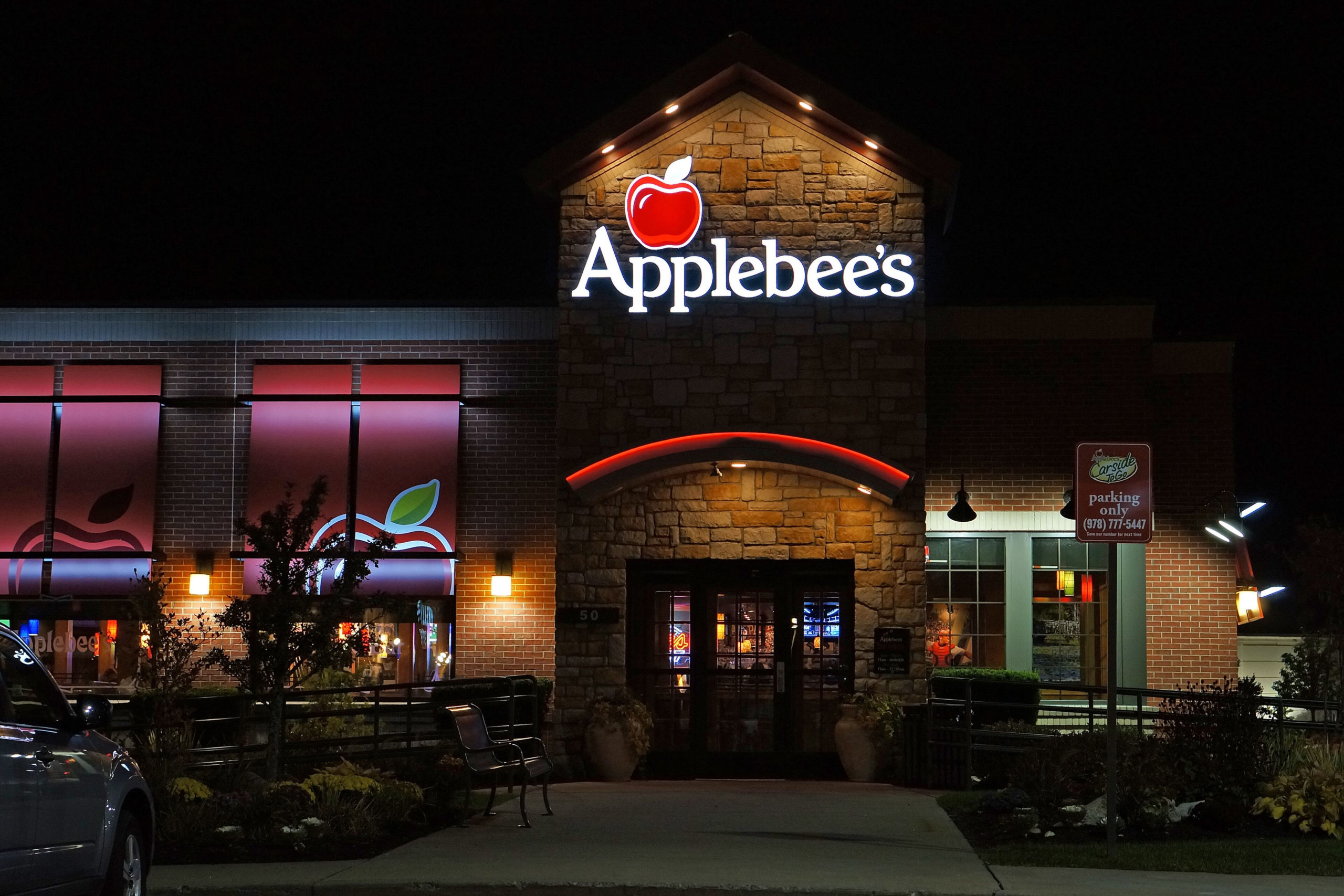
In 2017, Applebee’s announced it would close approximately 120 American locations following a 7 percent decline in sales. Industry analysts treated the news as a temporary correction. The closures continued. By the fourth quarter of 2025, according to Dine Brands’ published reports, Applebee’s operated approximately 1,500 to 1,600 U.S. locations — down from over 2,000 in 2017. TGI Fridays filed for bankruptcy in November 2024 and closed half its U.S. footprint within twelve months. Ruby Tuesday filed Chapter 11 in October 2020 and emerged with approximately 200 locations, down from a 2013 peak of over 900. The casual sit-down dining chain that defined American middle-class restaurant outings between 1980 and 2010 is now a smaller, narrower category — and the structural reasons for the collapse are clearer in 2026 than they were when each closure was first announced.
The casual sit-down dining chain — the category occupied by Applebee’s, TGI Fridays, Ruby Tuesday, Chili’s, Outback Steakhouse, Olive Garden, Red Lobster, Cracker Barrel, Texas Roadhouse, and a half-dozen others — was an explicitly American invention of the late 1970s and 1980s. The category emerged from the rapid expansion of suburban America, the rising disposable income of two-earner families, and the federal interstate highway system that made standardized roadside dining commercially viable. The first Applebee’s opened in 1980. TGI Fridays began franchising aggressively in 1971. Outback Steakhouse opened in 1988. Olive Garden launched in 1982. Each chain operated under similar fundamentals: a mid-tier price point ($12 to $25 per entrée), table service, alcohol on the menu, a kid-friendly atmosphere, and locations within a 15-minute drive of nearly every American suburb. By 2010, the casual dining category had peaked in U.S. unit count. Every year since 2010, the category has shrunk in net store count.
The Casual Dining Promise That Stopped Working
The original 1990s and 2000s appeal of the casual dining chain rested on a specific value proposition: a family of four could have a sit-down dinner with table service for approximately $50 to $70, less than a quarter the cost of a fine-dining meal but with more variety and atmosphere than fast food. The proposition collapsed in the early 2010s as fast-casual chains — Chipotle, Panera Bread, Five Guys, Shake Shack, Cava — began offering meals at roughly half the price with comparable quality. The casual dining chains tried to compete by adding higher-quality items and improving service, but the price gap remained. According to industry analysis from Restaurant Business Online, the average per-person casual dining check in 2024 was approximately $23, compared with approximately $12 for fast-casual — a price gap that American consumers increasingly judged to be unjustified by the additional table service and atmosphere.
The casual dining category was hit particularly hard by the 2020-2021 pandemic period. Dine-in restrictions and capacity limits eliminated the table-service business model entirely for months. Fast-food and fast-casual chains adapted with drive-thru, delivery, and pickup-friendly formats. Casual dining chains, designed around shared sit-down meals with multi-course service, struggled to compete in the takeout-only environment. Many casual chains accumulated significant pandemic-era debt that became unsustainable as labor and food costs rose in 2022-2024. Ruby Tuesday emerged from its 2020 bankruptcy with a much smaller footprint. TGI Fridays could not avoid a second bankruptcy in 2024. Red Lobster filed Chapter 11 in May 2024 and closed nearly 100 U.S. locations.
The TGI Fridays Collapse
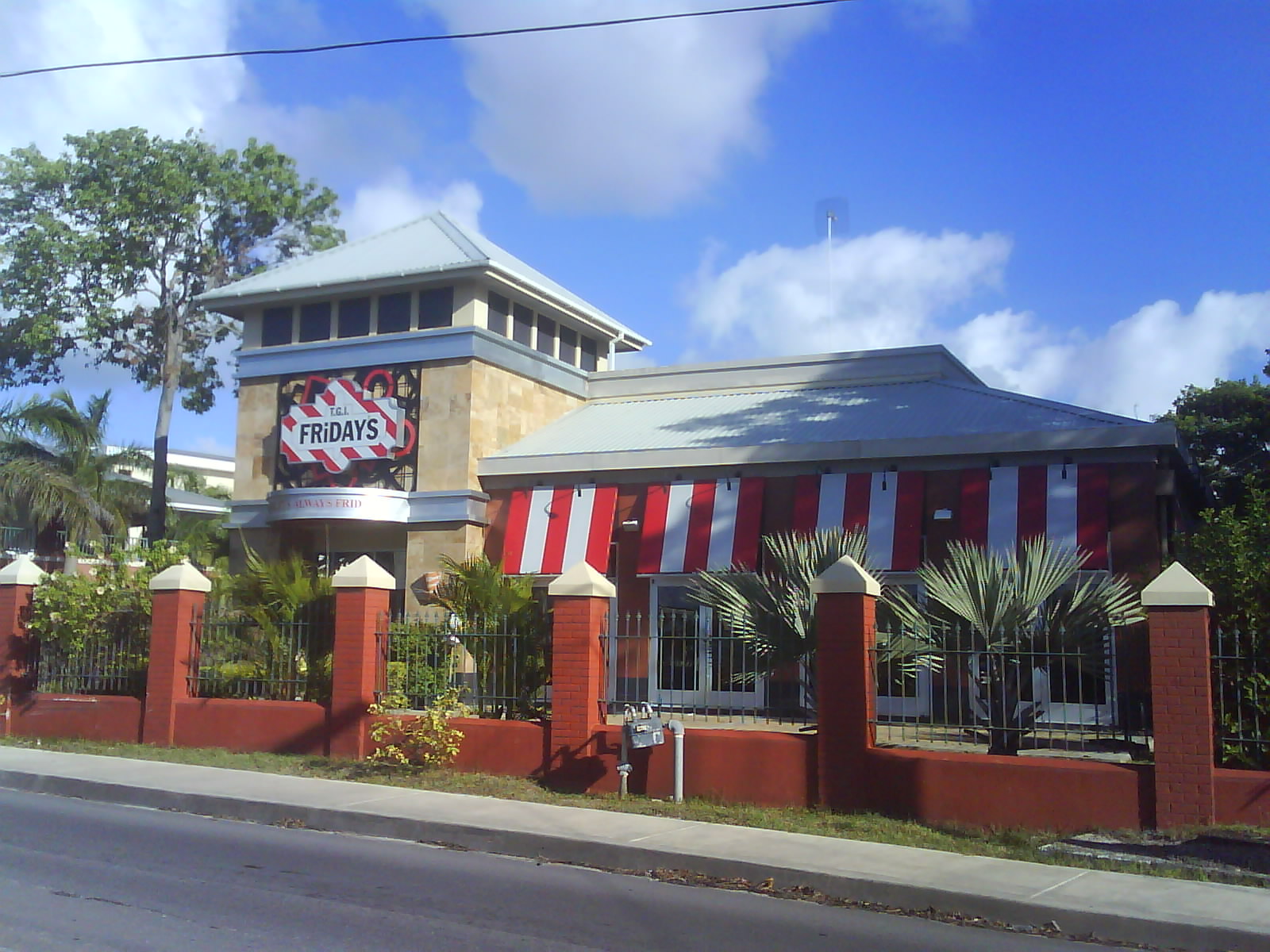
TGI Fridays’ November 2024 bankruptcy filing was the largest single casual dining closure event of the decade. The chain operated approximately 269 U.S. locations at the time of the filing and announced plans to close roughly half of them. The closures continued through 2025, with TGI Fridays USA Inc. selling individual restaurant assets and franchise agreements to recapitalized operators. By early 2026, the chain operated approximately 130 U.S. locations, down from over 500 at its 2010 peak. The international TGI Fridays footprint, owned by separate licensees in Asia, Europe, and the Middle East, remained largely unaffected. The brand’s pandemic-era debt, combined with rising food costs and the inability to compete with fast-casual at the family-dining price point, was widely cited as the immediate cause.
Applebee’s Slow Retreat
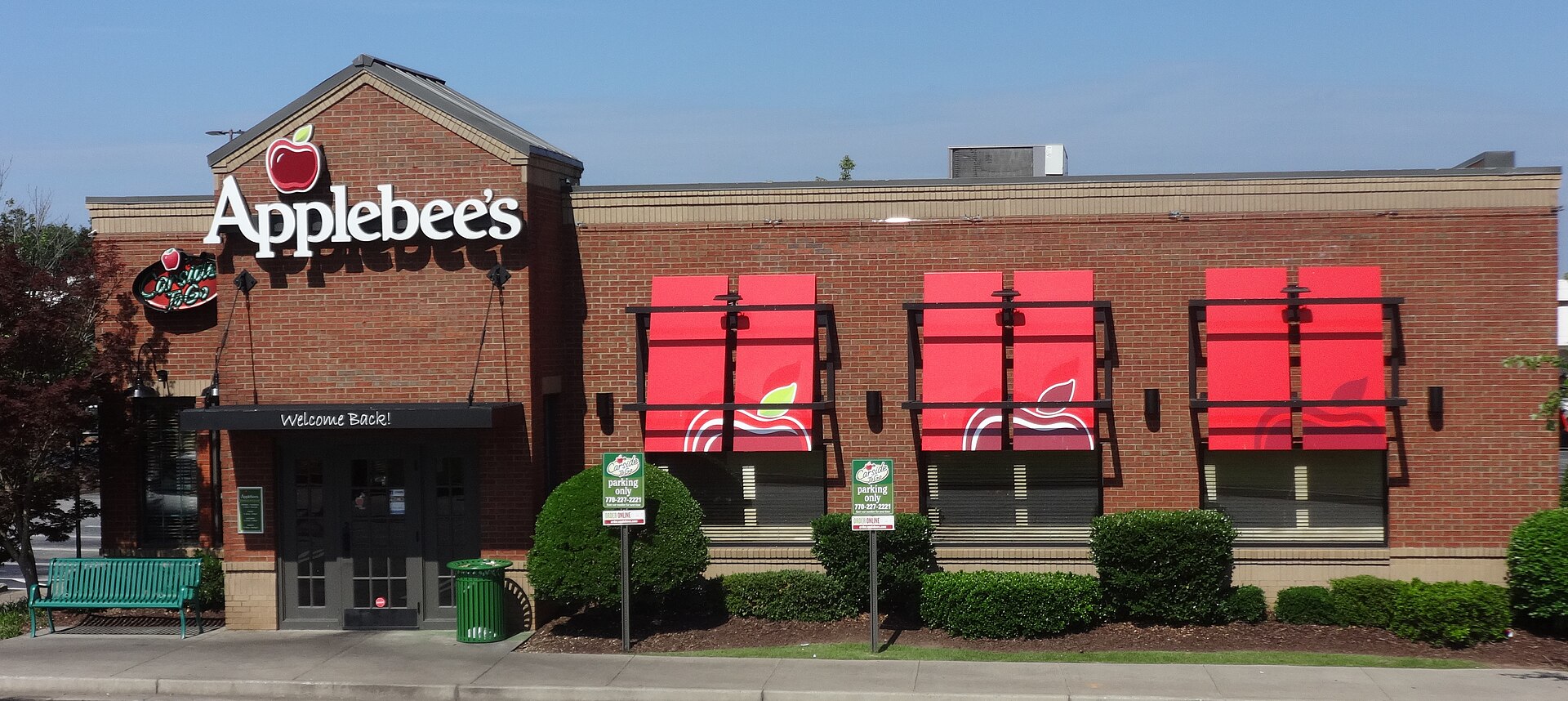
Applebee’s, owned by Dine Brands Global Inc. (which also owns IHOP), has approached its decline more methodically than TGI Fridays. The chain has not filed for bankruptcy. Instead, it has closed underperforming locations on a rolling basis since 2017, with the closure rate accelerating between 2020 and 2024. Dine Brands’ fourth-quarter 2025 report disclosed approximately 1,500 to 1,600 U.S. Applebee’s locations — a steady decline from the 2010 peak of approximately 2,000. The chain has tried multiple turnaround strategies: a “2 for $20” value-meal promotion that ran continuously from 2017 to 2024, a partnership with Wendy’s for shared cobranded locations, a heavy emphasis on alcohol promotions including the seasonally branded Mucho margaritas, and a brand refresh in 2022. None of these initiatives has reversed the underlying decline. The chain’s per-restaurant revenue has stabilized somewhat in 2024-2025, but the total store count continues to shrink.
Ruby Tuesday’s Mall-Based Problem
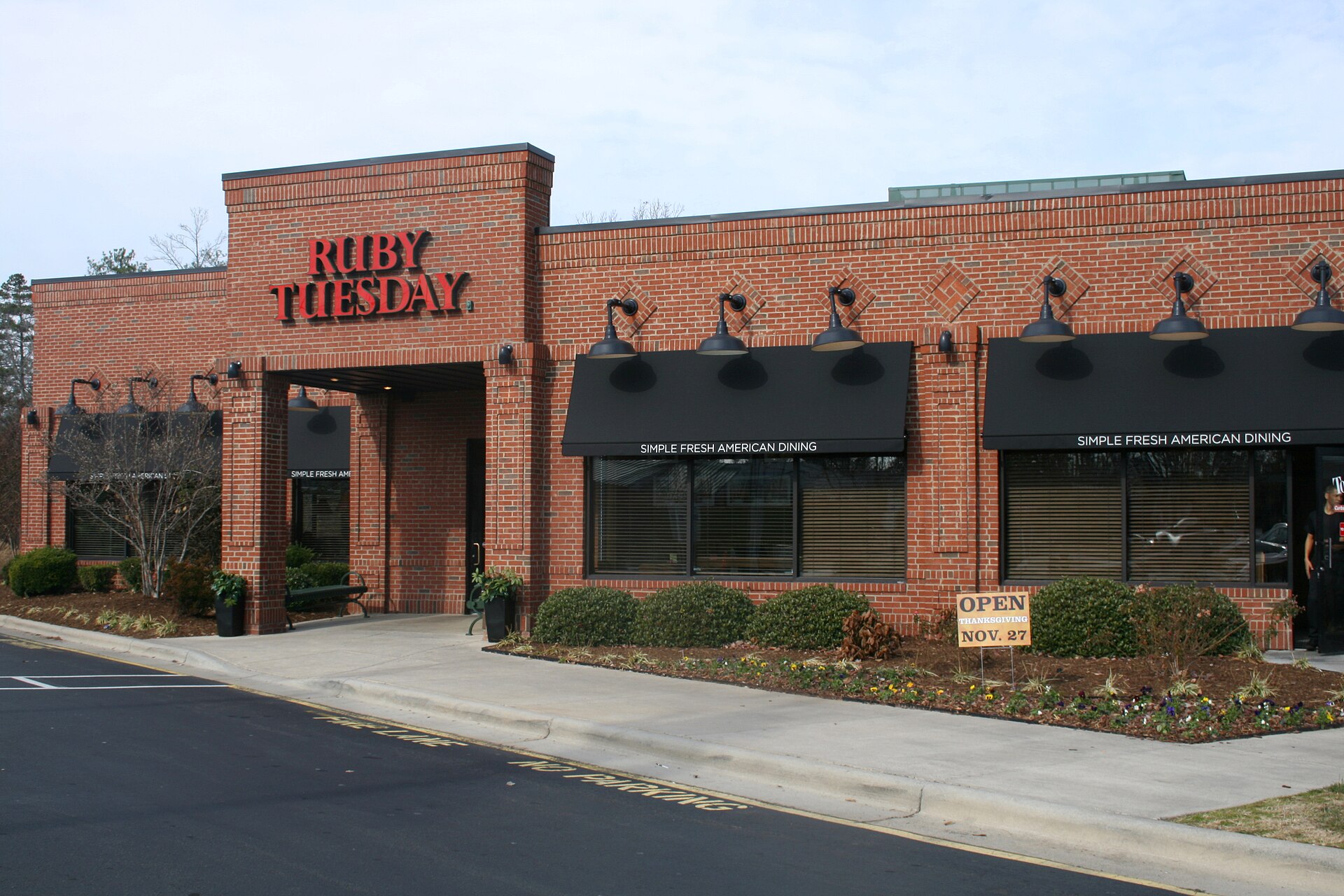
Ruby Tuesday is the casual dining chain most directly exposed to the simultaneous collapse of the American shopping mall. The chain operated approximately 900 U.S. locations at its 2013 peak, with the majority anchored to mall food courts or mall-adjacent pad sites. As American mall traffic declined throughout the 2010s — the result of online shopping growth, the closure of major anchor stores including Sears and JCPenney, and the rise of outdoor lifestyle centers — Ruby Tuesday’s mall locations became unsustainable. The chain filed Chapter 11 in October 2020 and emerged with approximately 209 locations. Further closures have continued in 2024 and 2025. By early 2026, Ruby Tuesday operates approximately 200 U.S. restaurants, primarily in the South and Mid-Atlantic where the chain had its original strength.
The Survivors — and Why They Survived
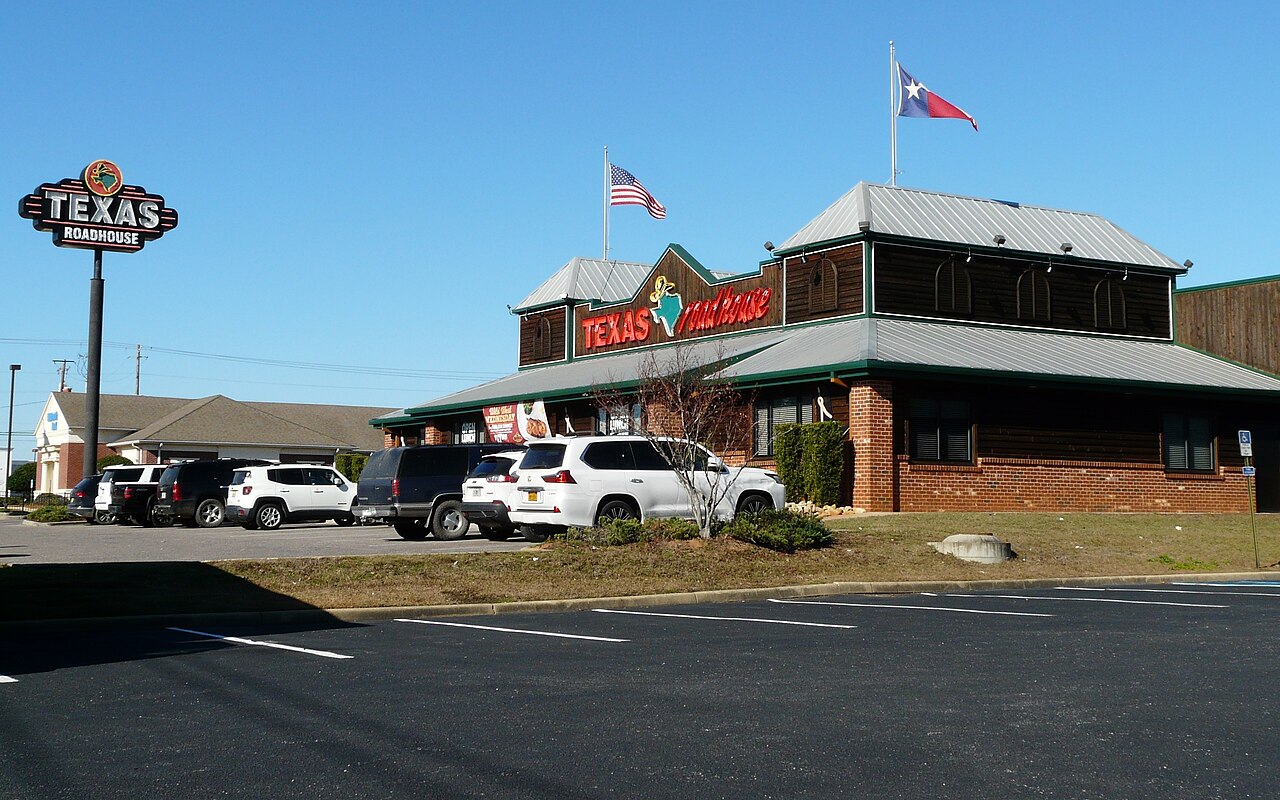
A handful of casual dining chains have grown or held steady during the 2017-2026 period. Texas Roadhouse, headquartered in Louisville, Kentucky, has expanded from approximately 480 U.S. locations in 2017 to over 670 in 2026, driven by lower price points, an emphasis on hand-cut steaks, and the deliberate maintenance of full table service. Chili’s, owned by Brinker International, has stabilized at approximately 1,180 U.S. locations after a slow decline from 2010 to 2020. Cracker Barrel has maintained approximately 660 locations across 45 states and has benefited from its strong roadside/interstate positioning and breakfast-all-day menu. The survivors share specific features: lower average check sizes, strong consistent table service, distinctive menu items that fast-casual competitors cannot replicate, and locations away from the declining mall environment. The casual dining chains that have closed or shrunk most rapidly are the ones most heavily exposed to mall traffic, with menus easily substituted by fast-casual alternatives.
What This Means for 2026 Diners
The 2026 American casual dining landscape is fundamentally narrower than the 2010 landscape. Roughly 30 to 40 percent of the casual dining chain locations operating in 2010 are gone, either through bankruptcy closures, refusal to renew leases, or franchise terminations. The category remains commercially significant — Texas Roadhouse, Chili’s, Cracker Barrel, Outback Steakhouse, Olive Garden, Red Lobster, and the smaller surviving Applebee’s footprint still serve hundreds of millions of meals per year combined — but the assumption that every American suburb has a recognizable casual sit-down chain within a 15-minute drive no longer holds in many regions. Travelers and locals who relied on the casual dining standard for predictable family meals are increasingly choosing fast-casual instead. The shift is unlikely to reverse, and industry analysts including Restaurant Business and QSR Magazine project continued casual dining contraction through at least 2028. The next decade will likely see additional bankruptcies and consolidations, with the surviving chains operating in a meaningfully smaller market than the one that defined American casual dining for two generations.