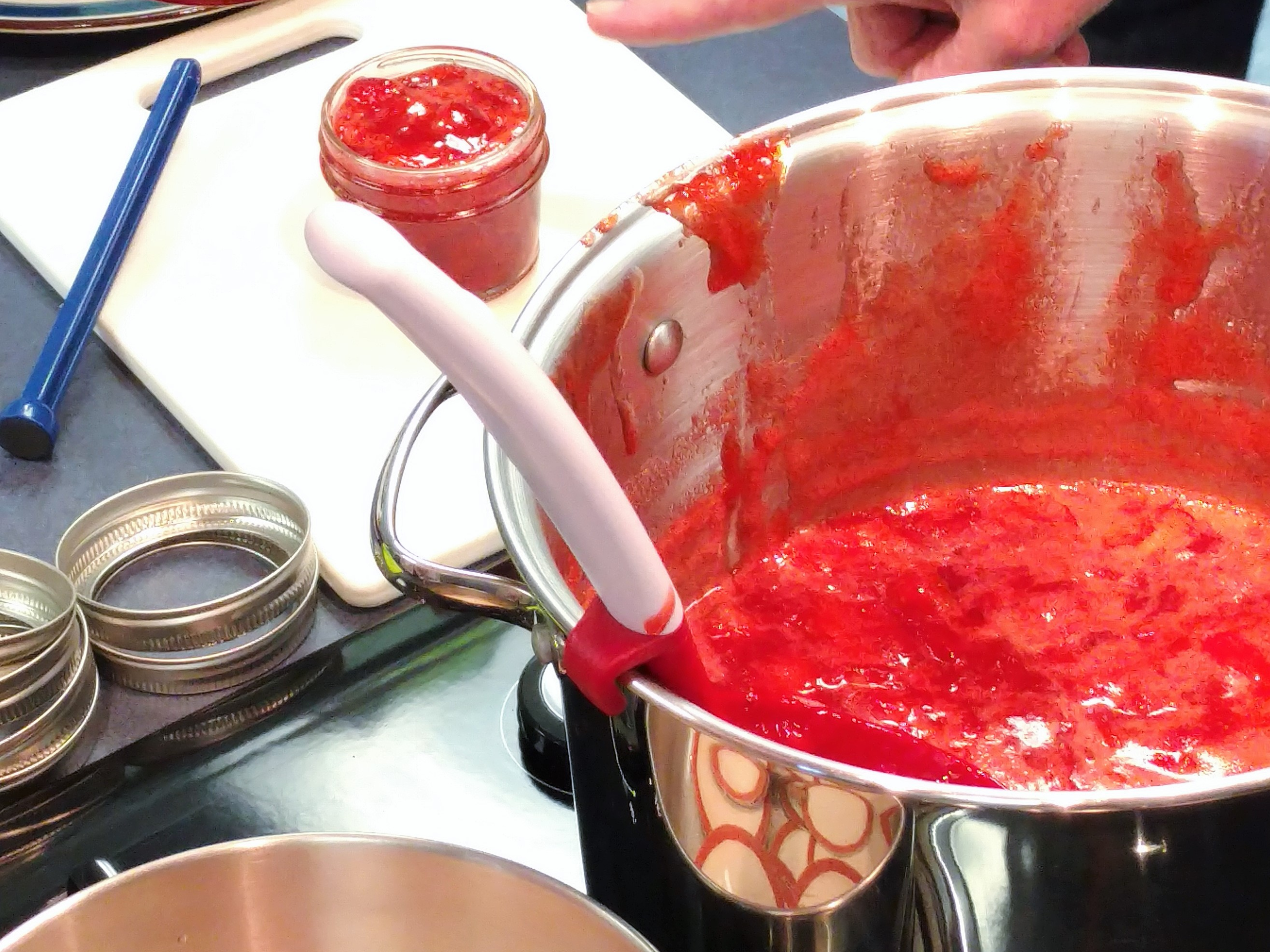
August and September in an American kitchen in 1962 meant preserving. Fruit came in faster than a family could eat it, the alternative to putting it up was throwing it away, and a run of jam or jelly was ordinary household production rather than a hobby. The equipment was a large pan, a stack of jars, a kettle of water and a block of paraffin wax, and the method had been handed down more or less unchanged for two generations.
Most of it worked. Jam is a hostile environment for spoilage organisms because it combines high sugar with the natural acidity of fruit, which is why so many 1962 preserves were perfectly good. But the method carried four specific practices that American preserving guidance has since withdrawn outright, and one of them is still being passed down in family recipe cards that nobody has reviewed in sixty years.
The wax disc, and what was going on underneath it
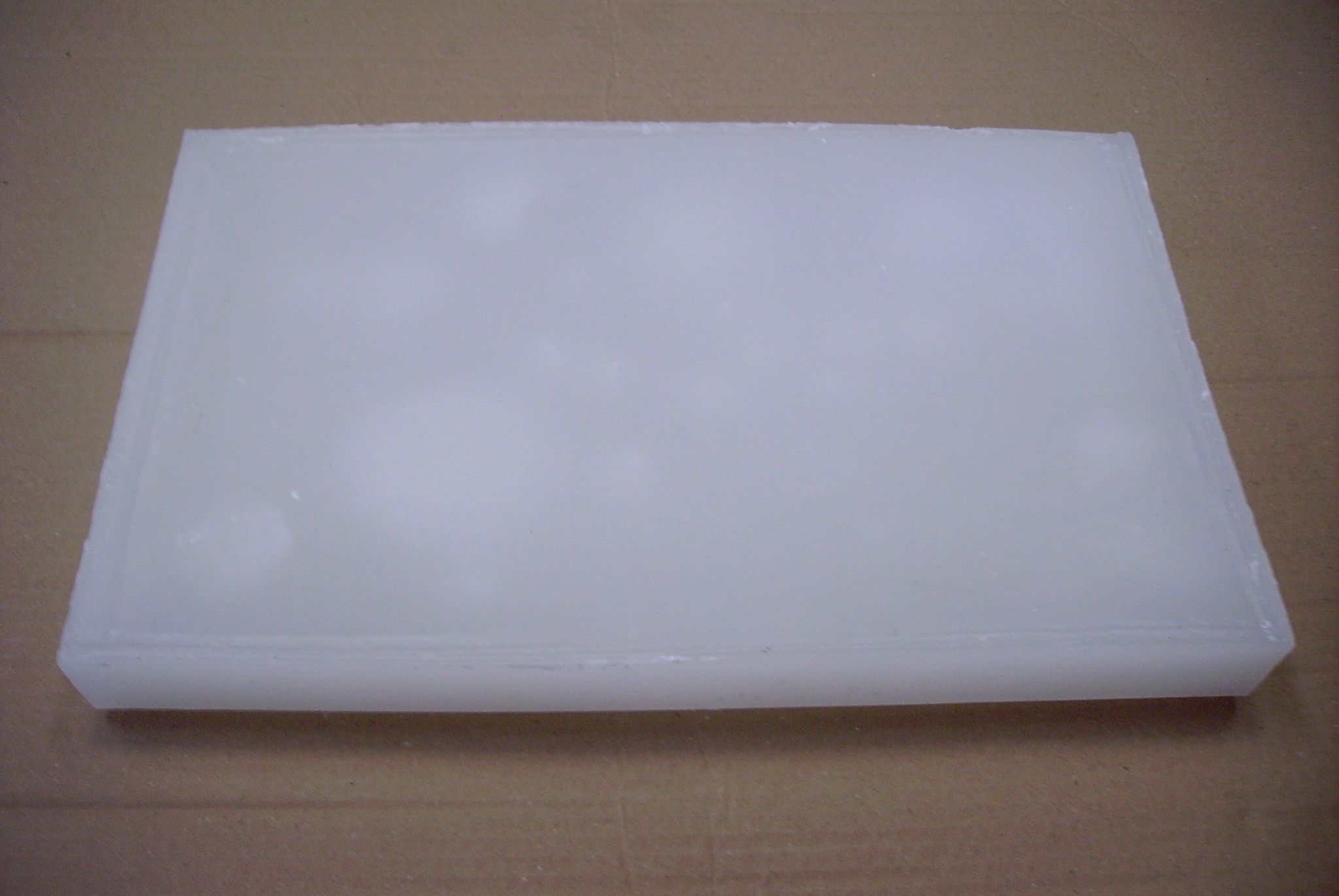
The paraffin seal was universal. A block of household wax was melted in a small pan, poured over the surface of the hot jelly to a depth of something under a quarter of an inch, and left to set into a white disc that was understood to shut the jar off from the air. Jars were then covered with a scrap of cloth, a metal lid or nothing at all, and put on a shelf.
The objection to it is mechanical. Wax contracts as it cools and it contracts away from glass, which means the seal that looks continuous on top is frequently broken at the edge where it meets the side of the jar. Air and mould spores pass through that gap, the surface of the jelly underneath is not sterile, and nothing about the arrangement prevents growth. A lifted wax disc with a bloom of mould on its underside was a common sight in 1962 and was treated as a nuisance rather than as evidence that the method did not do what it claimed.
American guidance now specifies a boiling water bath with a two-piece lid for jams and jellies, and paraffin is not recommended for any product. The reason the wax persisted for so long is that the failure rate was low enough to look acceptable and the failures were visible, which made people confident they could spot the bad jars.
Like our content? Follow us for more.
Mould was skimmed off and the rest was eaten
The standing household instruction was that a little mould on top of a preserve was nothing to worry about. You lifted the wax, scraped the growth off, took a layer of jelly with it for safety, and ate what was underneath. Thrifty kitchens did this routinely and nobody thought twice.
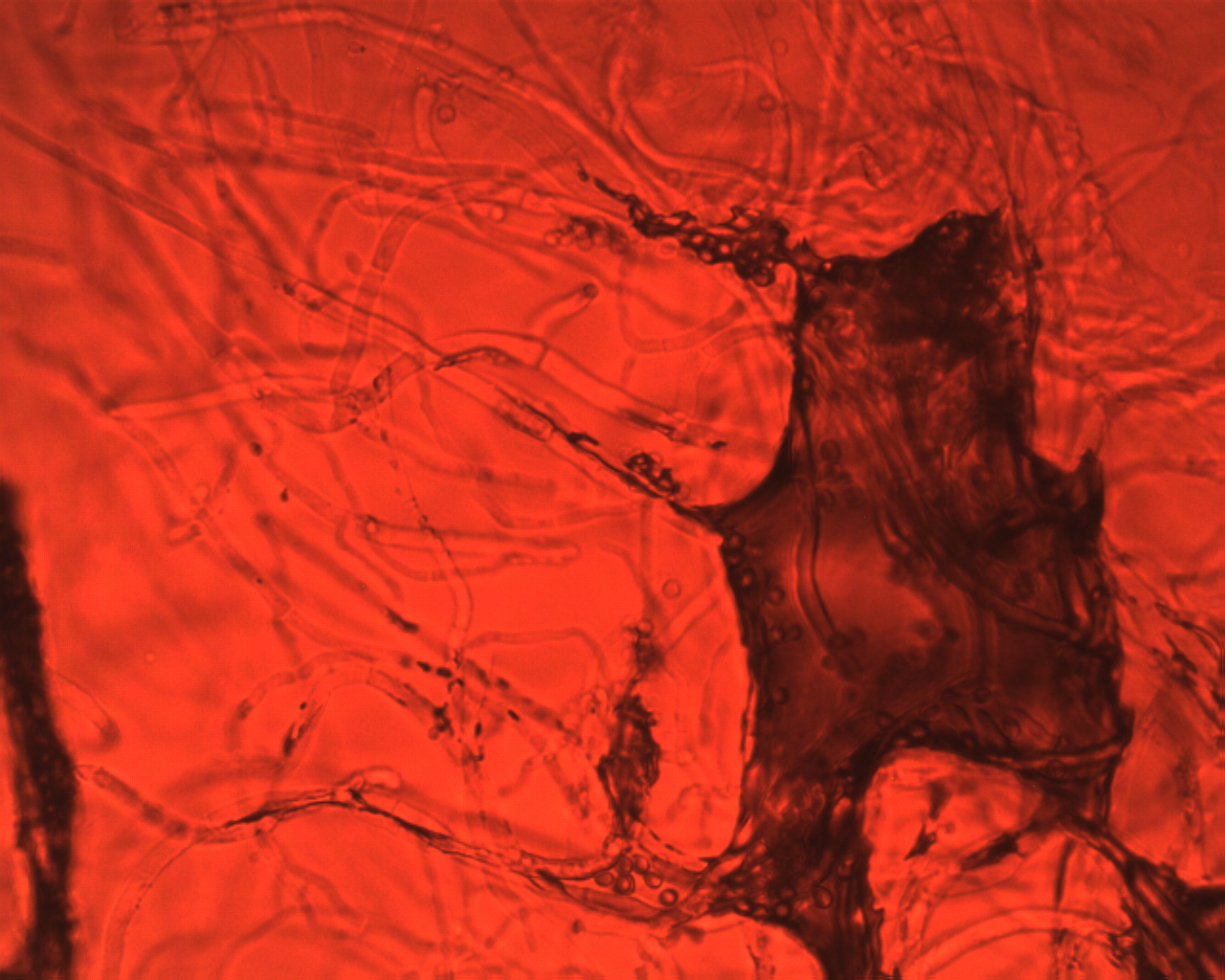
That is the practice that current guidance is most direct about. Mould growing on a high-sugar preserve is not confined to what is visible. The organism puts threads down into the food below the surface, some moulds produce compounds that are not destroyed by scraping or by heating, and there is no way to judge from the top of a jar how far down the colony has reached. The guidance is to discard the whole jar.
The 1962 reasoning was not stupid, it was just working from the wrong model. Mould was understood as something that landed on a surface, like dust, and that could therefore be removed from the surface. The modern understanding is that the visible bloom is the part of an organism that is already distributed through the top layer of the food.
Open kettle, oven canning and turning the jars upside down
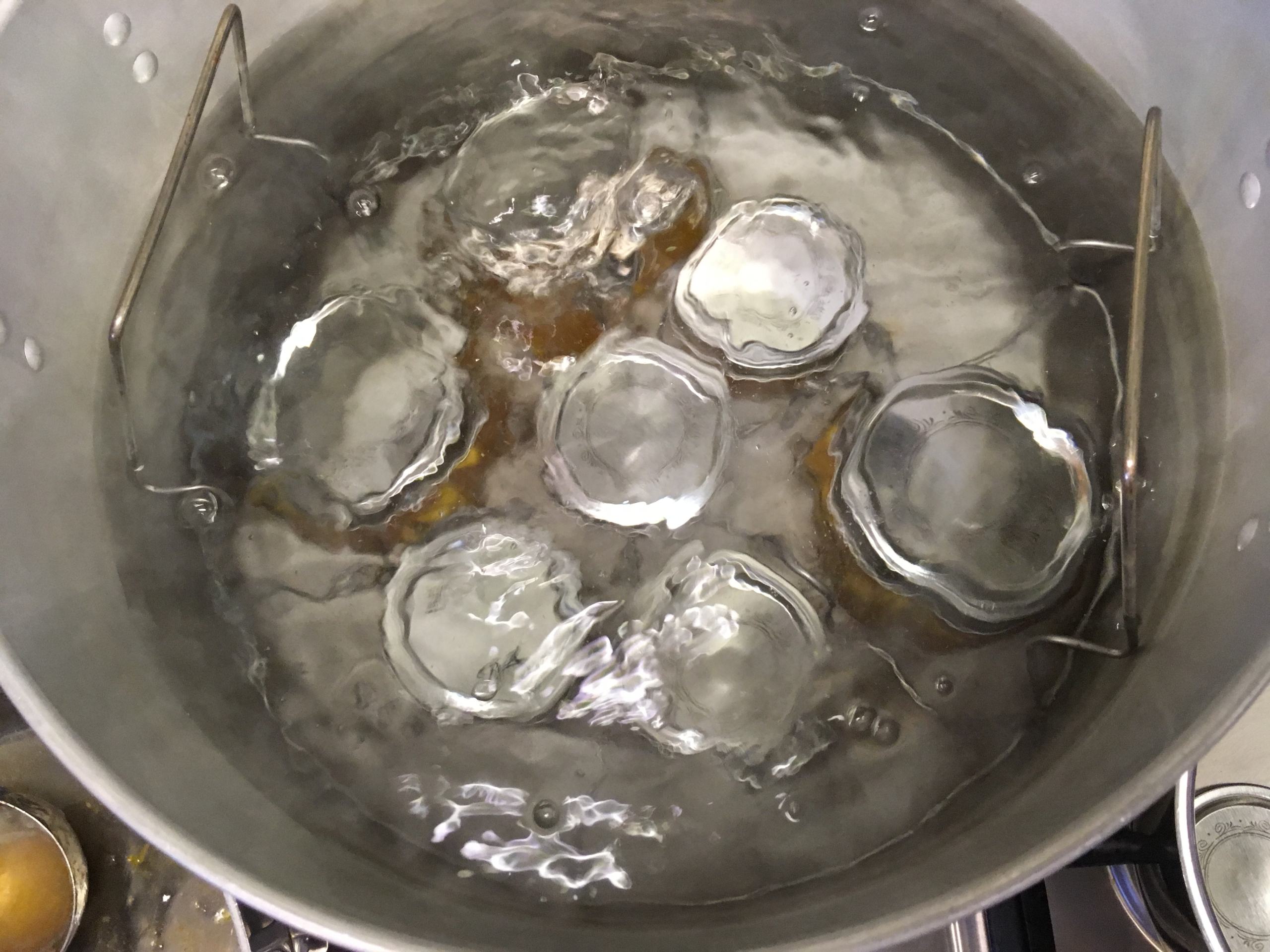
Three shortcuts circulated widely. Open-kettle canning meant ladling hot preserve into a jar, screwing the lid down and letting the cooling contents pull a vacuum, with no processing in boiling water at all. Oven canning meant putting filled jars into a domestic oven instead. And inverting the jars for a few minutes was believed to sterilise the lid and the headspace.
None of the three is now recommended. Open-kettle filling produces a seal of unpredictable quality and leaves whatever was already in the jar or on the fruit in place. An oven heats by air, which transfers heat into a glass jar slowly and unevenly, so the centre of the contents may never reach a useful temperature while the glass itself is stressed enough to fail. Inverting a jar does nothing to the contents and is not a substitute for processing them.
What replaced all three is dull and effective: a measured time in actively boiling water, with the time adjusted for altitude, which is the part almost nobody in 1962 accounted for. Water boils cooler as elevation rises, and a processing time worked out at sea level does not deliver the same heat in a mountain kitchen.
The jars and lids that are no longer made
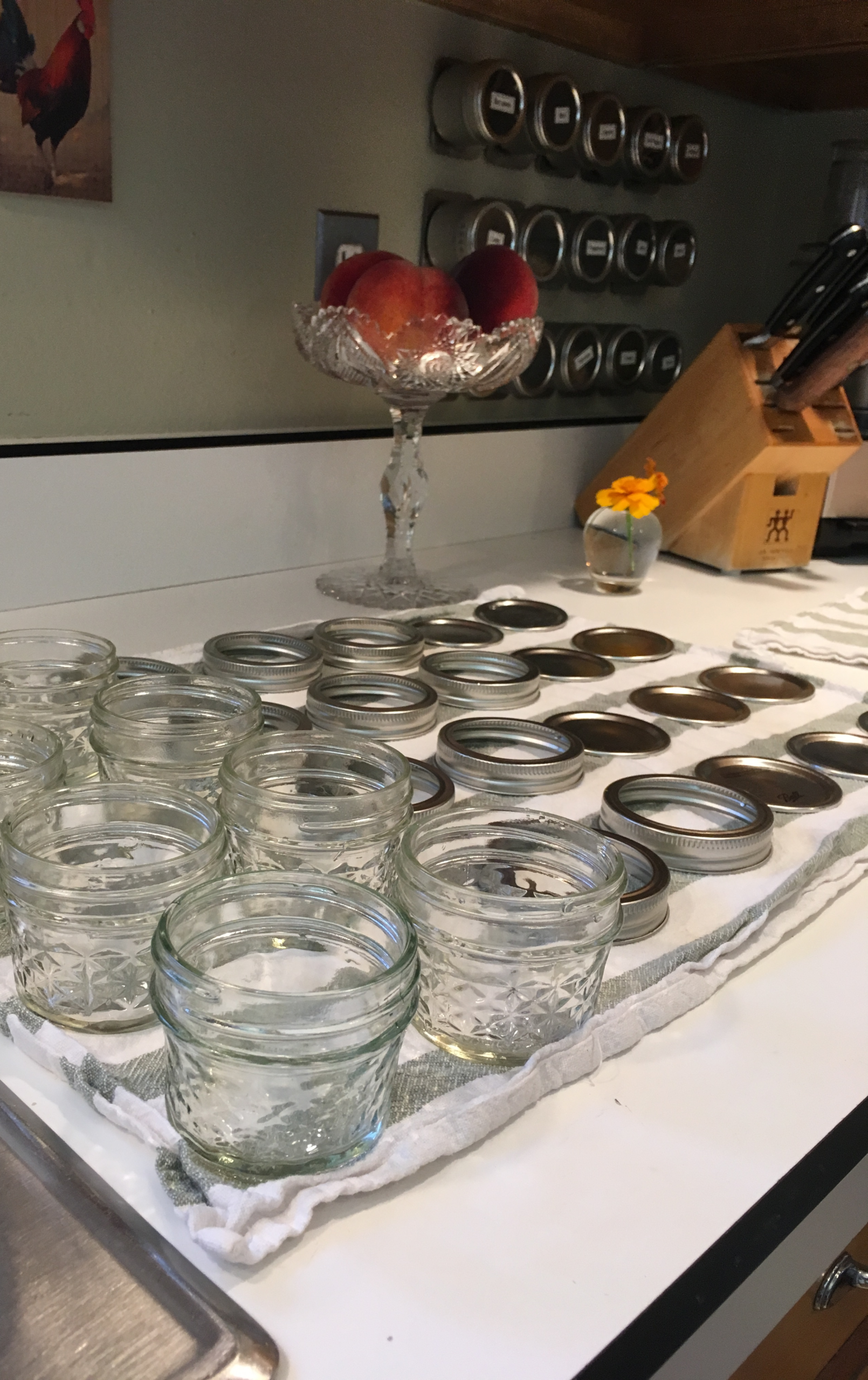
A 1962 shelf held a mixture of closures. There were zinc caps with a milk-glass liner, screwed down over a rubber ring. There were glass lids held by a wire bail with a separate rubber gasket. There were jars that had started life as commercial mayonnaise or coffee containers and had been kept because they were free.
All of these have fallen out of use for the same reason, which is that you cannot tell whether they have sealed. A zinc cap gives no visible signal, a perished rubber ring looks much like a sound one, and a commercial jar is made of thinner glass that was never designed for repeated thermal cycling and has a lid that cannot be re-tensioned. The two-piece lid that replaced them is popular not because it is better engineered but because the flat disc visibly dips when a vacuum has formed, which turns an invisible property into something a person can check with a fingertip.
The manufacturers’ current position is that the flat part of a two-piece lid is single-use, because the sealing compound is deformed by the first use, while the screw band can be reused indefinitely. That distinction was not available in 1962 and it is the one thing a modern preserver has to be told rather than being able to see.
Aspirin, copper pans and other kitchen chemistry
A handful of additives circulated as insurance. Aspirin was recommended in some printed sources as a preservative for home-canned tomatoes on the strength of its acidity, and salicylates turn up in other household preserving advice of the period. Neither has any role in modern practice: aspirin does not reliably lower pH to a safe level, it does not prevent the organisms that matter, and adding a drug to food is not an approach anybody now defends.
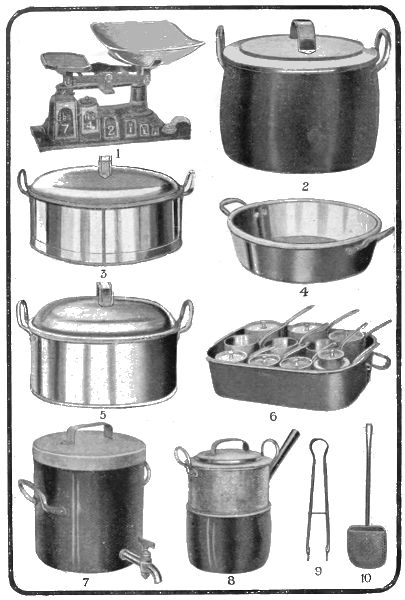
The unlined copper or brass preserving pan is a more interesting case. It was prized because copper conducts heat evenly and because the metal was believed to improve the set and the colour, and a confectioner’s pan was a serious piece of equipment. Acidic fruit does dissolve a measurable amount of copper from an unlined surface, and modern guidance is cautious about prolonged contact for that reason, which is why the heavy stainless or enamelled pan has taken over.
The practice that has disappeared without much comment is the use of a mercury-in-glass thermometer for setting point and for candy work, clipped to the side of a pan of boiling sugar. A broken one in a pan of preserve ended the batch and contaminated the kitchen, and that is why the ones sold now contain a coloured spirit or are electronic.
What the method got right, and what to do with the recipe card
It is worth being clear that 1962 home preserving was not generally dangerous. Jam and jelly are high-acid, high-sugar products and that combination does most of the protective work on its own, which is exactly why a method with a poor seal and a casual attitude to mould produced edible results most of the time. The serious hazard in home canning sits with low-acid foods — plain vegetables, soups, anything without added acid — which require a pressure canner because the organism of concern survives the temperature of boiling water. A 1962 household that put beans up in a water bath was taking a real risk, and that is the part of the old practice that matters most.
This is an account of how the guidance changed rather than a method to follow. Anybody actually preserving should work from current published instructions from a state extension service or a reputable modern manual, because the processing times, the headspace and the altitude adjustments are specific and are the part you cannot reason out from first principles.
If there is a family recipe card in a tin somewhere that says to pour wax over the top, it is a historical document rather than a set of instructions. The jam itself, the fruit chosen at the right moment and cooked down in a wide pan until it sheets off a spoon, is the part worth keeping, and that part has not changed at all.
Like our content? Follow us for more.