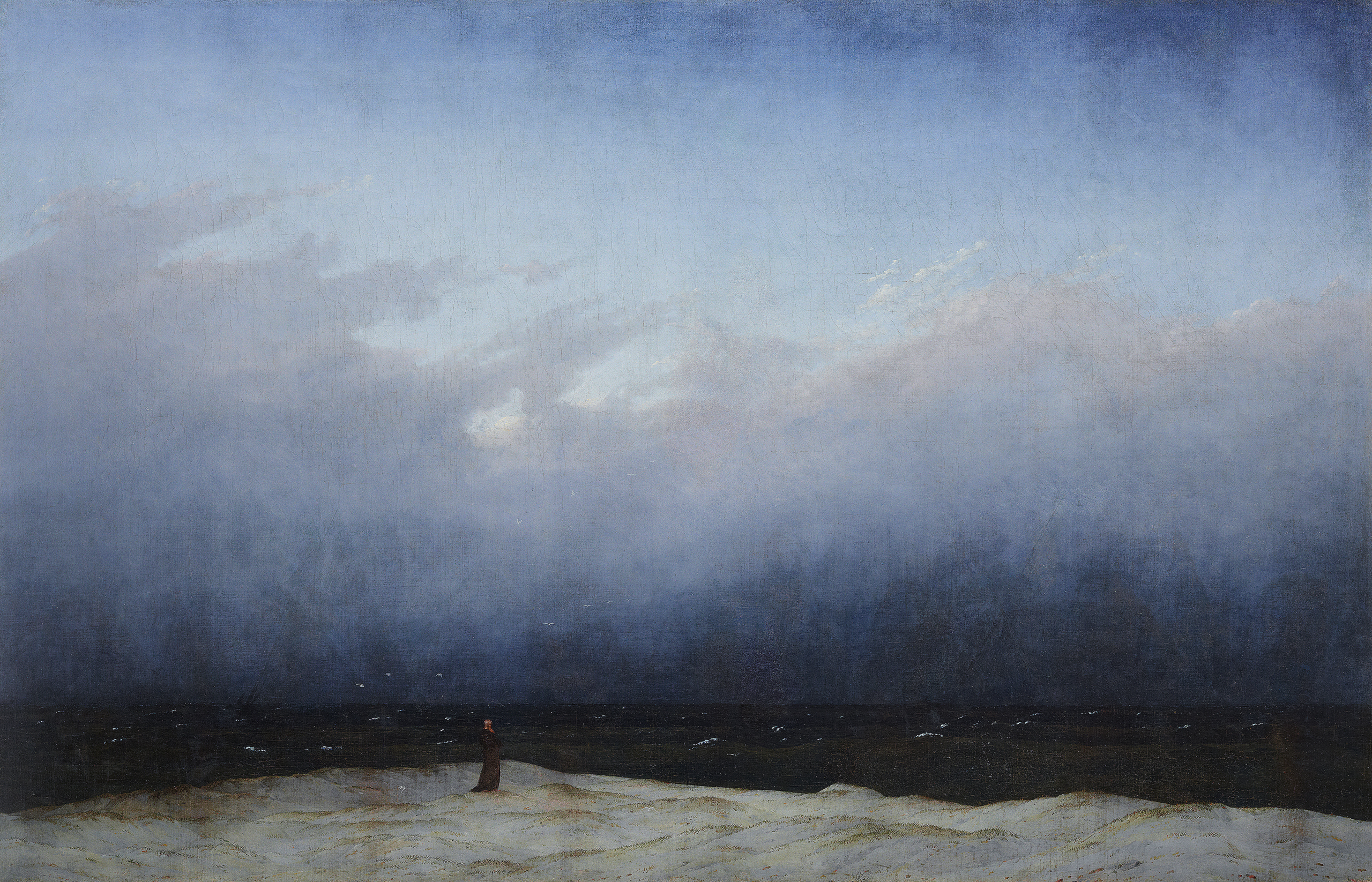
Imagine waking up on a June morning to find snow blanketing the ground, then watching killing frosts destroy your crops through what should have been the warmest weeks of the year, while a strange, persistent haze dims the sun and gives the daylight an unsettling, reddish cast. This was the reality across much of the Northern Hemisphere in 1816, a year so bizarrely, catastrophically cold that it earned a grim nickname that has stuck for more than two centuries: “the year without a summer.”
It was one of the strangest and most consequential years in modern history, a time when the normal rhythm of the seasons broke down and summer simply failed to appear across large parts of North America and Europe. The result was widespread crop failure, food shortages, and hardship, as farmers watched their harvests die in the cold and communities struggled to feed themselves. But the story of 1816 is not only one of suffering; it’s also a fascinating tale that connects a distant volcanic catastrophe to a summer of gloom by a Swiss lake, where the miserable weather helped inspire some of the most enduring works of horror literature ever written. Here is the remarkable story of the year the summer never came.
When the Seasons Broke Down
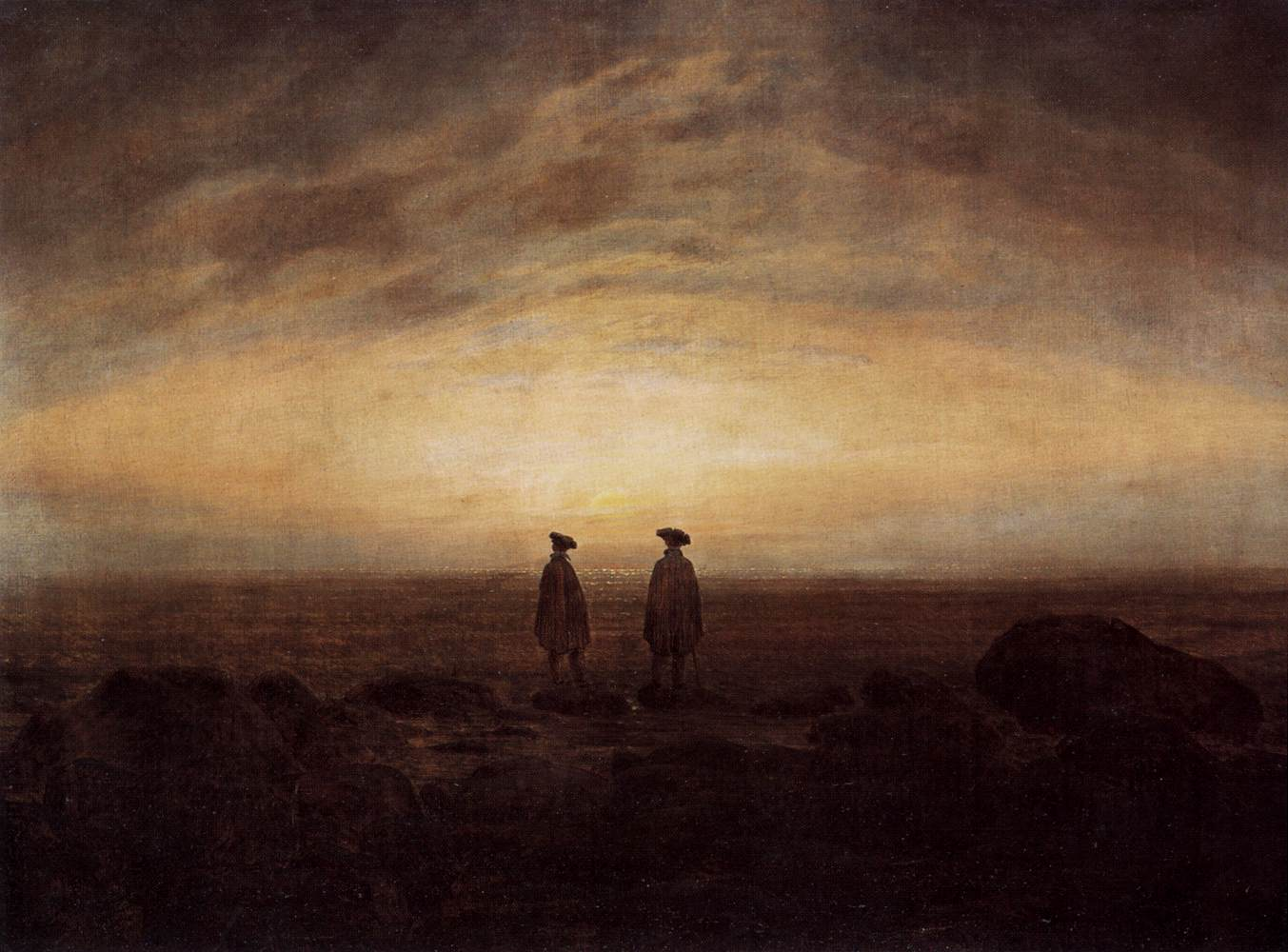
The weather of 1816 was truly extraordinary, an assault on the normal expectations of the calendar. Across the northeastern United States, Canada, and much of Western and Northern Europe, the summer months brought bitter, unseasonable cold instead of warmth. The most shocking manifestations came in the very heart of what should have been summer.
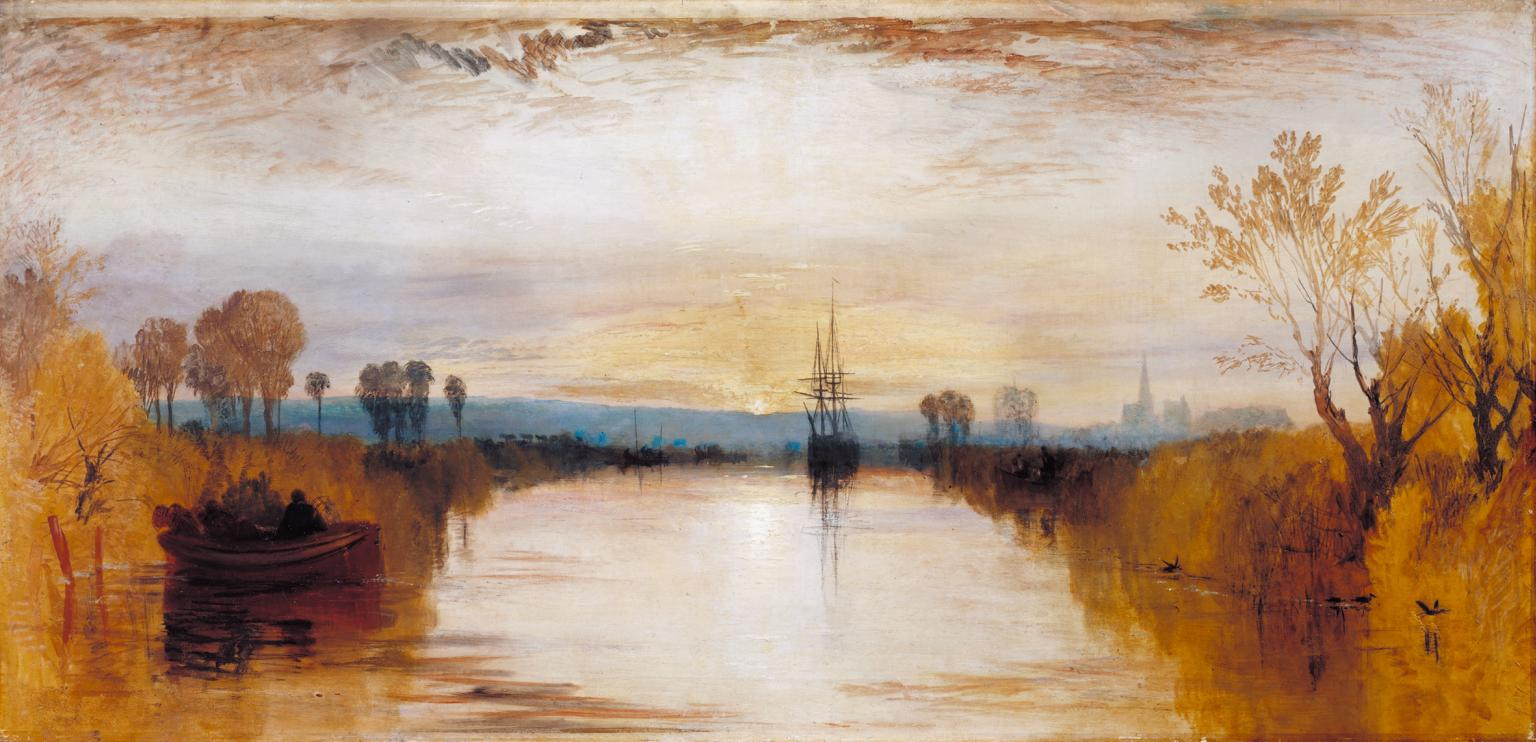
In June of that year, snow fell across parts of New England and even further south than anyone would expect, and areas of Canada received significant snowfall. Throughout June, July, and August, killing frosts struck again and again, descending on crops during the growing season and destroying them. Temperatures swung wildly and plunged to freezing at times of year when such cold was unheard of. Adding to the eeriness, a persistent dry haze or fog hung in the atmosphere, dimming the sunlight so much that the sun’s disk could sometimes be looked at directly and its spots observed with the naked eye, and giving the light a strange, reddened quality. To the people living through it, the failure of summer was baffling and frightening. They had no way of knowing that the cause of their suffering was not local at all, but had originated on the far side of the world, in a cataclysm most of them had never heard of.
Like our content? Follow us for more.
The Volcano Half a World Away
The root cause of the year without a summer was one of the most violent natural events in human history: the eruption of Mount Tambora, a volcano on an island in what is now Indonesia, in April of 1815, the year before. This eruption was colossal, considered the largest volcanic eruption in recorded history, and it unleashed devastation on an almost unimaginable scale, killing tens of thousands of people in its immediate vicinity through the blast, ash falls, and the famine and disturbance that followed.
But Tambora’s most far-reaching effect came from what it hurled into the sky. The eruption blasted an enormous quantity of ash, dust, and especially sulfurous gases high into the atmosphere, reaching the stratosphere, the upper layer where such material can spread across the entire globe and linger for a long time. There, the sulfurous gases formed a vast veil of tiny aerosol particles that spread around the planet and reflected a portion of the sun’s incoming light back into space. This great atmospheric veil acted like a global sunshade, reducing the amount of solar energy reaching the Earth’s surface and causing average temperatures around the world to drop. The effect was not enormous in absolute terms — a change of perhaps a fraction of a degree in the global average — but it was enough to disrupt weather patterns and produce dramatic regional cooling, and its impact was concentrated in the Northern Hemisphere in the summer of 1816. A mountain had exploded in the tropics, and a world away and more than a year later, farmers in New England and Europe were watching snow fall on their June fields.
Famine and Hardship
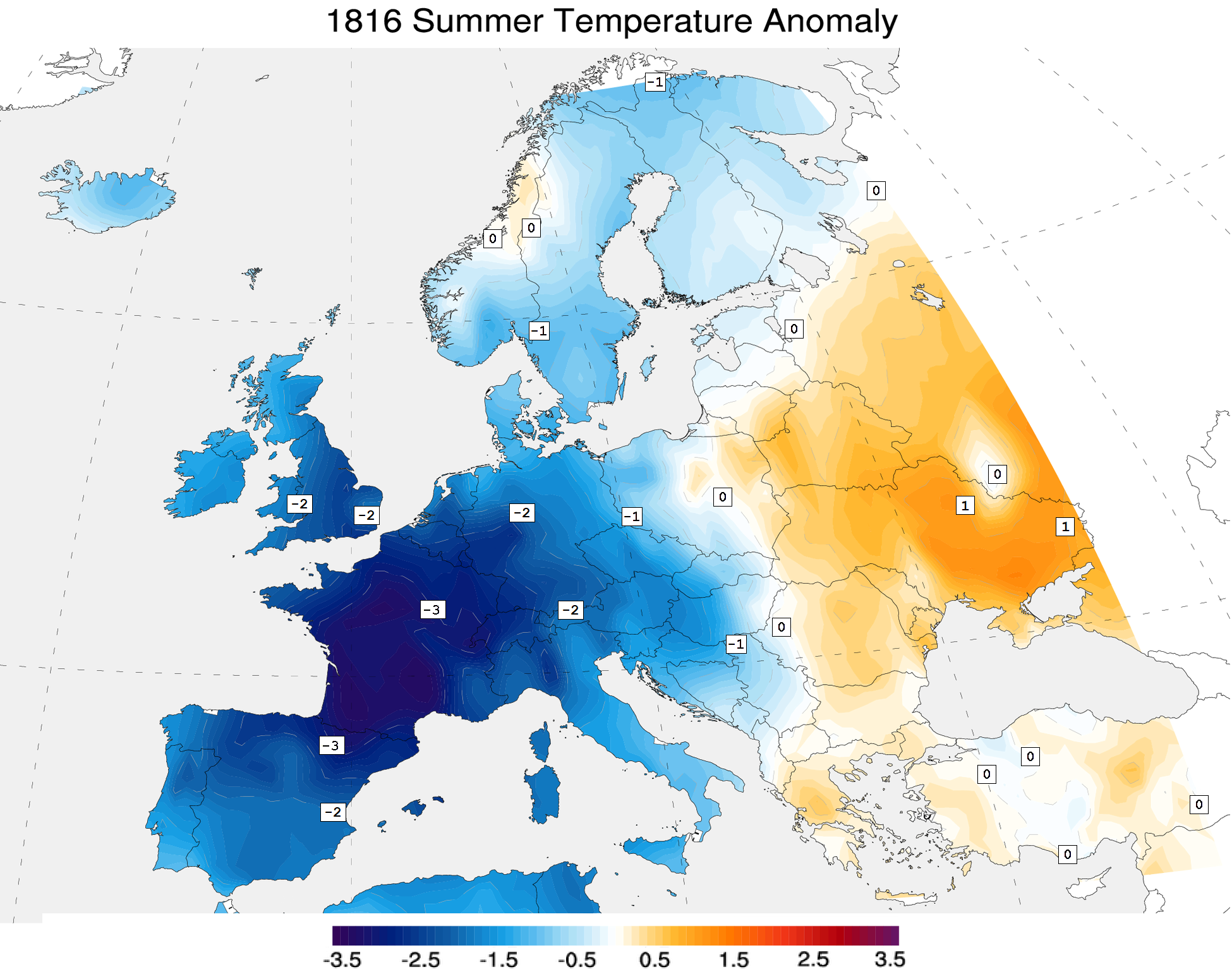
The consequences of the failed summer were severe and widespread. With crops failing across the affected regions, food became scarce and expensive, and 1816 became known by grim nicknames reflecting the hardship it caused, including “the poverty year.” In the northeastern United States, farmers who depended on their harvests faced disaster as frost after frost destroyed their corn and other crops.
In Europe, still recovering from years of war and upheaval, the crop failures and food shortages hit especially hard, contributing to hunger, rising food prices, and social unrest in various places. The cold and the failed harvests rippled outward into other problems as well, with the disruption and hardship contributing to disease and dislocation in the years that followed. The suffering was real and, in places, deadly, as communities struggled to cope with a natural disaster whose cause they did not understand. It stands as a sobering reminder of how deeply human societies depend on stable, predictable weather for their food, and how a single distant catastrophe can reach across the world to threaten the survival of people who never felt the earthquake or heard the eruption. The year without a summer was, for many, a year of real desperation.
A Nation on the Move
One lasting consequence of the disastrous year in America was its effect on migration and settlement. For farmers in the northeastern United States, particularly in New England, the catastrophic failure of the 1816 harvest was a powerful push to seek better prospects elsewhere. Many families, their faith in the cold, rocky, and now frost-stricken farmland of the Northeast shaken, decided to pull up stakes and head west in search of more reliable and fertile ground.
This contributed to a notable wave of westward migration, as people left the struggling farms of New England for the promise of the lands opening up to the west. In this way, the eruption of a volcano in Indonesia had a hand in reshaping the map of American settlement, nudging the young nation’s population toward its western expansion. It’s a striking example of the unexpected and far-reaching ripple effects of a natural disaster: a summer that never came in New England helped drive families toward new lives hundreds of miles away, altering the course of countless individual stories and, in aggregate, contributing to the broader patterns of the nation’s growth. The consequences of 1816 were written not only in failed crops but in the movements of people across a continent.
The Monster Born by the Lake
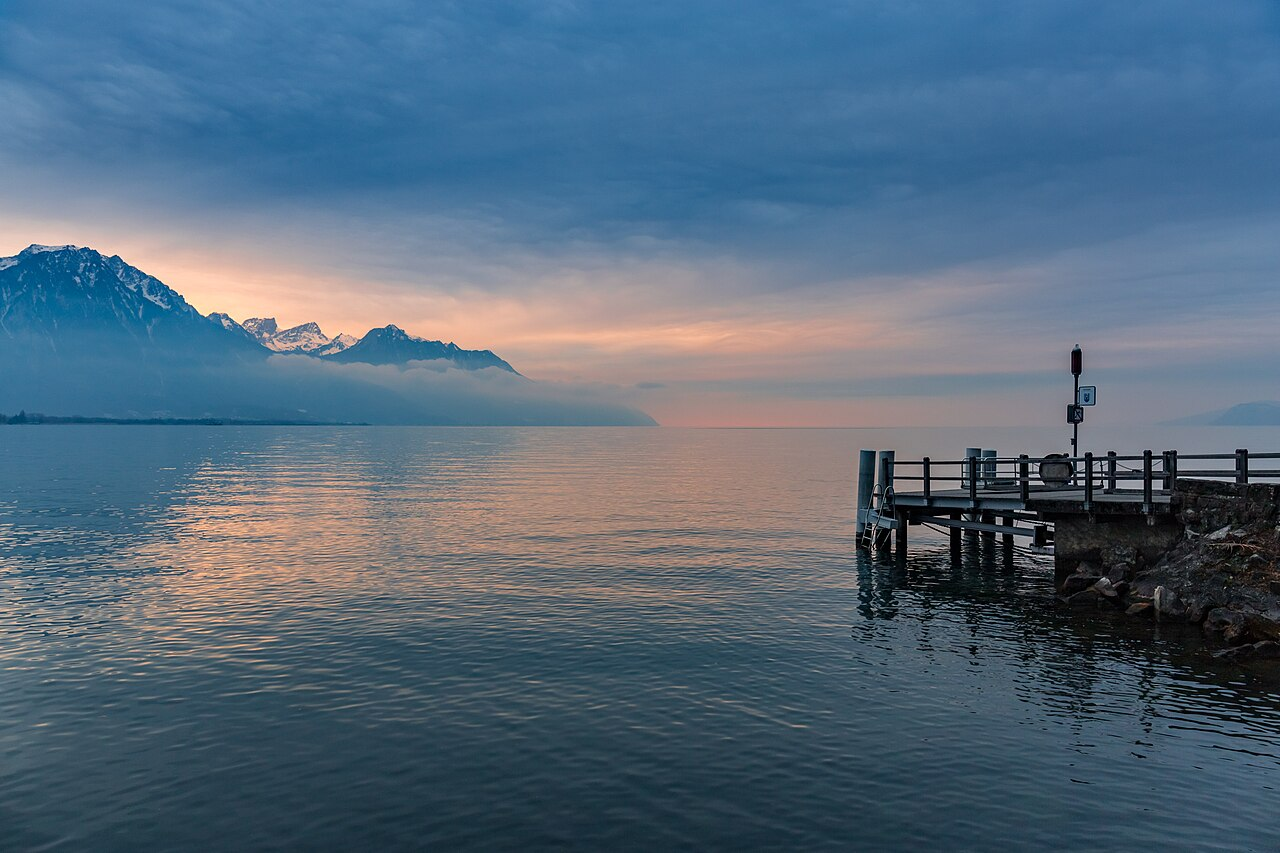
Amid all the hardship, the gloomy summer of 1816 produced one of the most remarkable cultural legacies in literary history. That summer, a group of writers was vacationing near Lake Geneva in Switzerland, including the young Mary Shelley, the poet Percy Shelley, the famous Lord Byron, and Byron’s physician John Polidori. But the terrible weather — cold, wet, and relentlessly stormy, thanks to the very same volcanic disruption afflicting the world — kept them trapped indoors far more than they’d hoped.
To pass the dreary, rain-soaked hours by the fire, the group entertained themselves by reading ghost stories, and then Byron proposed a challenge: that each of them try to write a frightening tale of their own. Out of that gloomy indoor gathering came literary gold. Mary Shelley, then still a teenager, began work on the story that would become “Frankenstein,” one of the most influential and enduring works of horror and science fiction ever written, the tale of a scientist who creates a living being with tragic consequences. From the same gathering came an early and influential vampire tale, penned by Polidori, that helped shape the vampire genre and paved the way for later works like “Dracula.” It is one of history’s most delicious ironies: a catastrophic volcanic winter, a source of so much real suffering, also produced, almost as a byproduct, some of the most beloved monsters in all of literature, dreamed up by bored, brilliant writers stuck inside during the summer that wasn’t.
The Year the World Remembers
The year without a summer has never been forgotten, and its story has only grown more resonant with time as our understanding of it has deepened. What people in 1816 experienced as an inexplicable and terrifying failure of nature, we now understand as the global consequence of a single immense volcanic eruption, a vivid demonstration of how interconnected the Earth’s systems are and how an event in one corner of the planet can transform conditions everywhere.
The story endures because it operates on so many levels at once. It’s a tale of natural catastrophe and human suffering, of a distant volcano reaching across the world to kill crops and drive families from their homes. It’s a piece of scientific history, illustrating the profound effect that volcanic eruptions can have on global climate. And it’s a story of unexpected creativity, of great art born from grim circumstances by a Swiss lake. Two centuries later, the year without a summer stands as an unforgettable reminder of the power of nature, the fragility of the systems we depend on, and the strange and wonderful ways that human resilience and imagination can find light even in the coldest and darkest of years. Summer failed to come in 1816 — and out of that failure came both a lesson about our planet and a monster that has haunted our imaginations ever since.
Like our content? Follow us for more.