

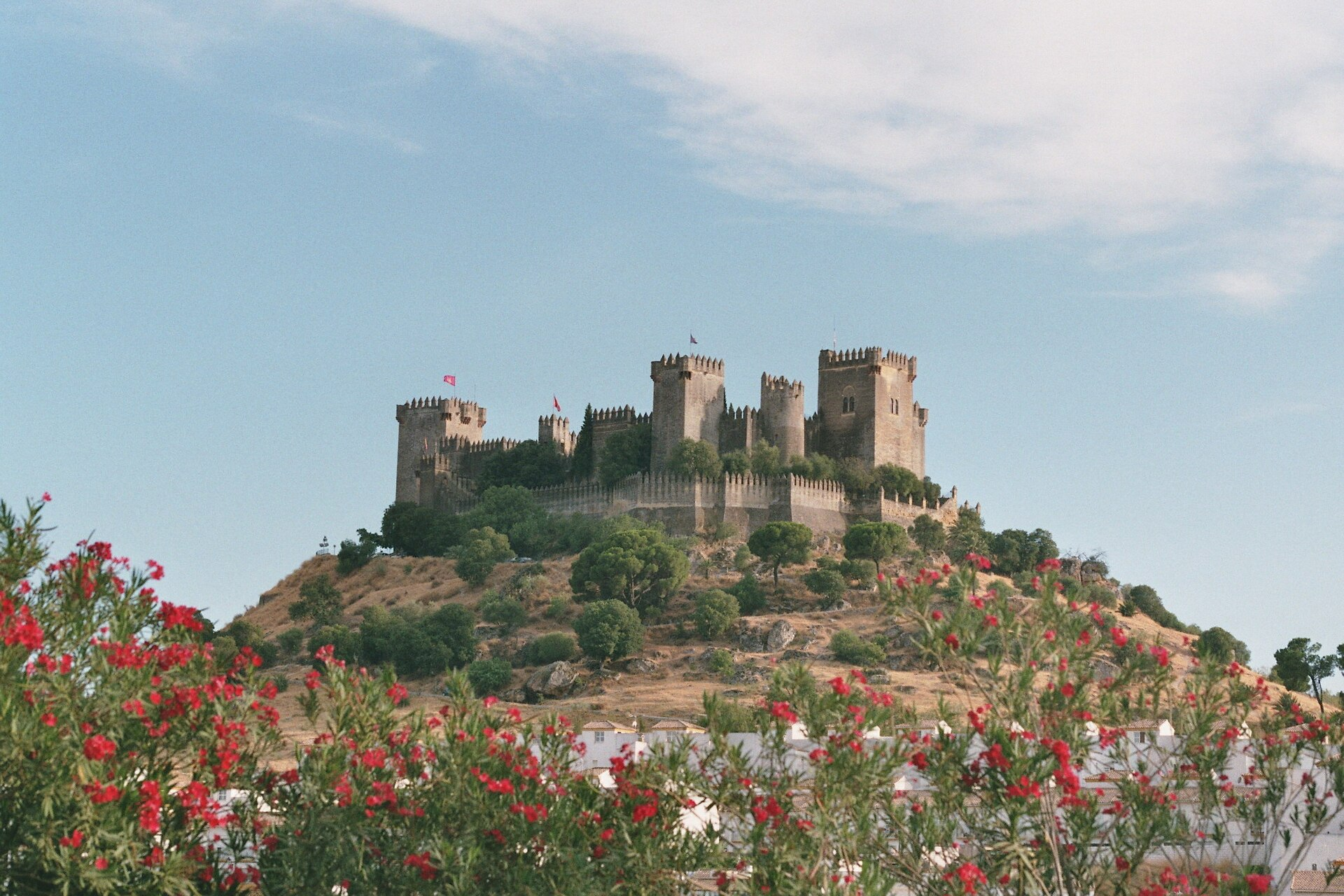
Spain’s countryside is studded with castles. They crown hilltops, guard old river crossings, and rise above medieval towns, each a reminder of an era when the peninsula was a patchwork of rival kingdoms and contested frontiers. Many fell into ruin, but a remarkable number survive, beautifully preserved or evocatively weathered, and they range from austere military strongholds to ornate royal palaces. Choosing the most beautiful is no easy task in a country with so many, but a handful stand out for their drama, their history, and their sheer visual splendor. Here are some of Spain’s most stunning castles.
The Alcázar of Segovia
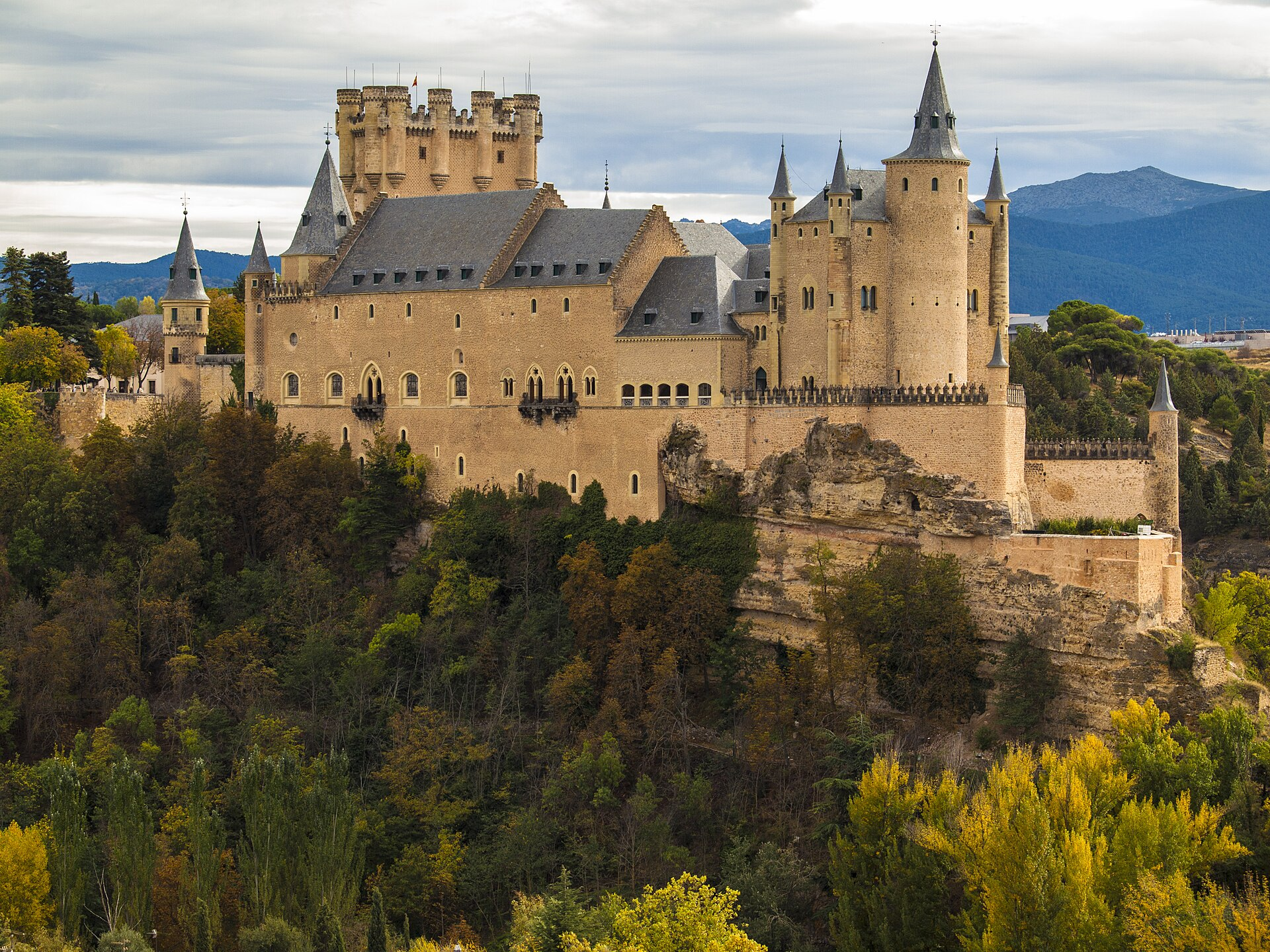
Perhaps the most photographed castle in Spain, the Alcázar of Segovia rises on a rocky crag at the meeting of two rivers, its turrets and spires giving it the unmistakable silhouette of a fairy-tale fortress. Its distinctive shape, often compared to the bow of a ship, makes it one of the most recognizable buildings in the country.
The Alcázar has served as a royal palace, a fortress, a prison, and a military academy over its long history, and its richly decorated interiors are as impressive as its exterior. Its storybook appearance has made it one of Spain’s most beloved landmarks, and a popular stop on day trips from Madrid. Few castles anywhere look quite so much like the ones in children’s tales.
Like our content? Follow us for more.
The Alcázar of Toledo
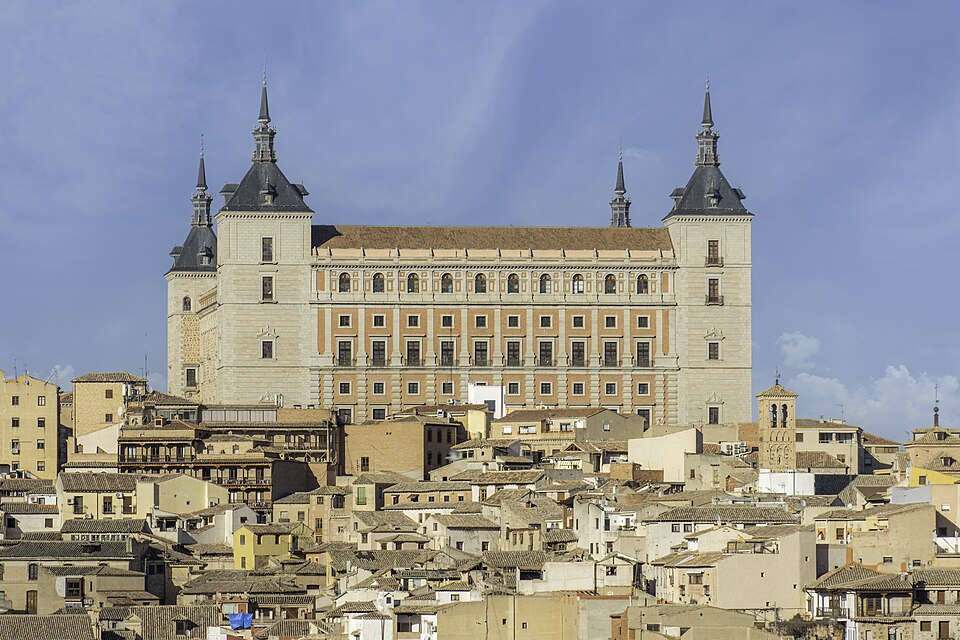
Dominating the skyline of the historic city of Toledo, the Alcázar is a massive stone fortress that has stood guard over the city for centuries. Its commanding position on the highest point of Toledo gives it sweeping views and an imposing presence visible from far across the surrounding plain.
Rebuilt and restored many times across its turbulent history, the Alcázar today houses a major military museum. Its blocky, four-towered profile is a defining feature of Toledo, itself a UNESCO World Heritage city famed for its blend of Christian, Muslim, and Jewish heritage. The fortress anchors one of Spain’s most historically layered cities.
Castle of Coca
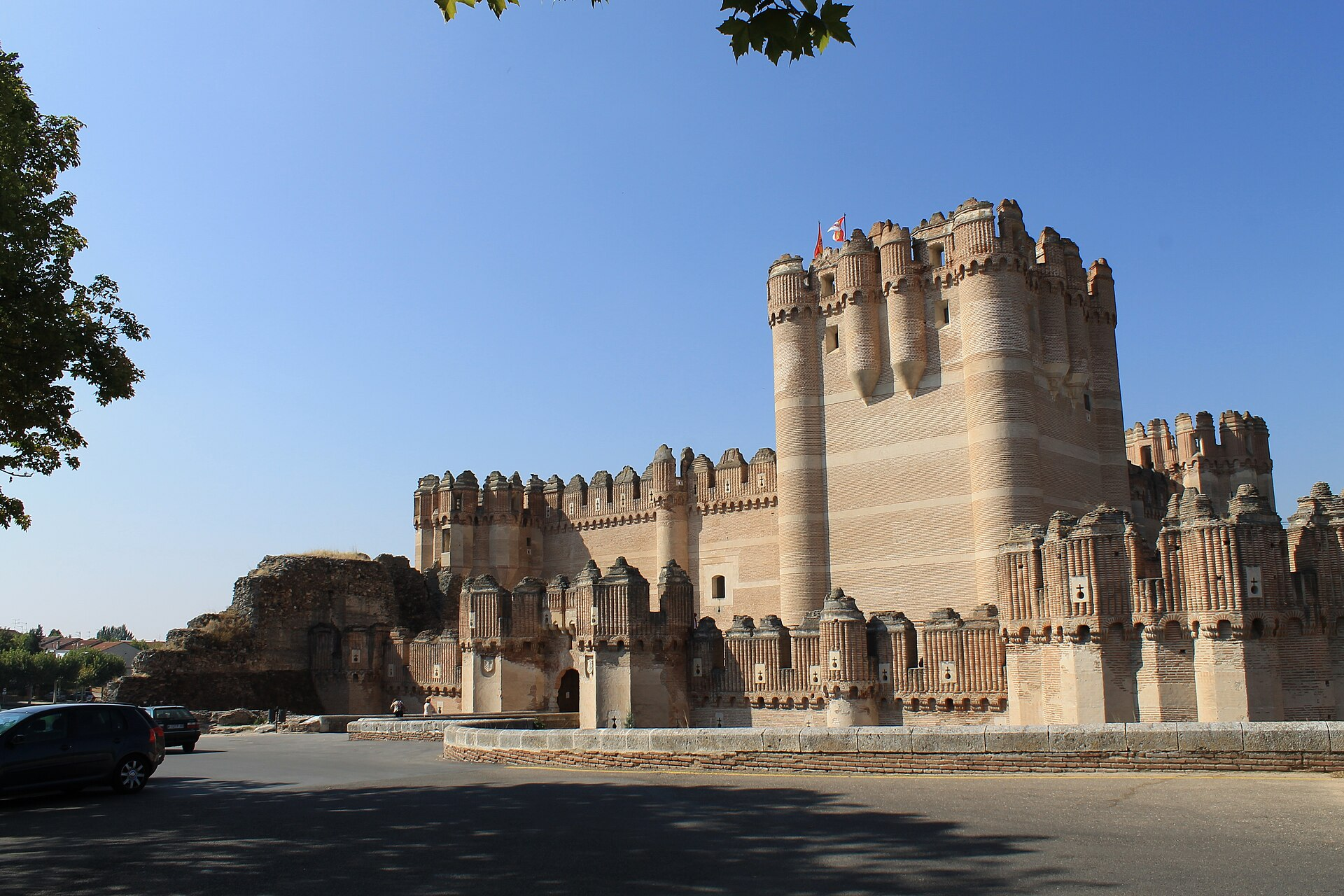
The Castle of Coca, in the province of Segovia, is one of the finest examples of Spanish-Mudéjar architecture, a style blending Christian and Moorish influences. Built largely of brick rather than stone, it is renowned for its elaborate, almost decorative appearance, more a work of art than a grim military structure.
Its intricate brickwork, polygonal towers, and surrounding moat give it a distinctive, ornamental beauty that sets it apart from Spain’s sterner fortresses. Despite its delicate looks, it was a formidable stronghold in its day. The castle stands as a striking monument to the cultural fusion that shaped so much of Spanish architecture and history.
Bellver Castle, Mallorca
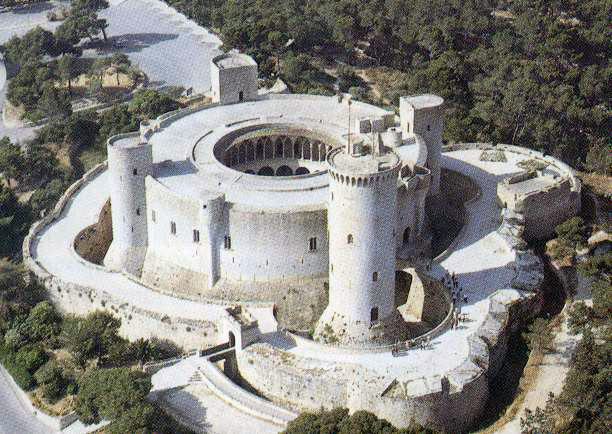
On the island of Mallorca, overlooking the bay of Palma, sits the unusual Bellver Castle, one of the few major castles in Europe built with a circular design. Constructed in the 14th century as a royal residence and later used as a prison, it commands magnificent views over the city and the Mediterranean.
Its circular layout, with a central courtyard ringed by two levels of arcades, makes it architecturally remarkable. The setting, high on a wooded hill above the sea, only adds to its appeal. Today it is a popular destination for visitors to Mallorca, offering both a fascinating piece of medieval design and some of the best views on the island.
Loarre Castle, Aragón
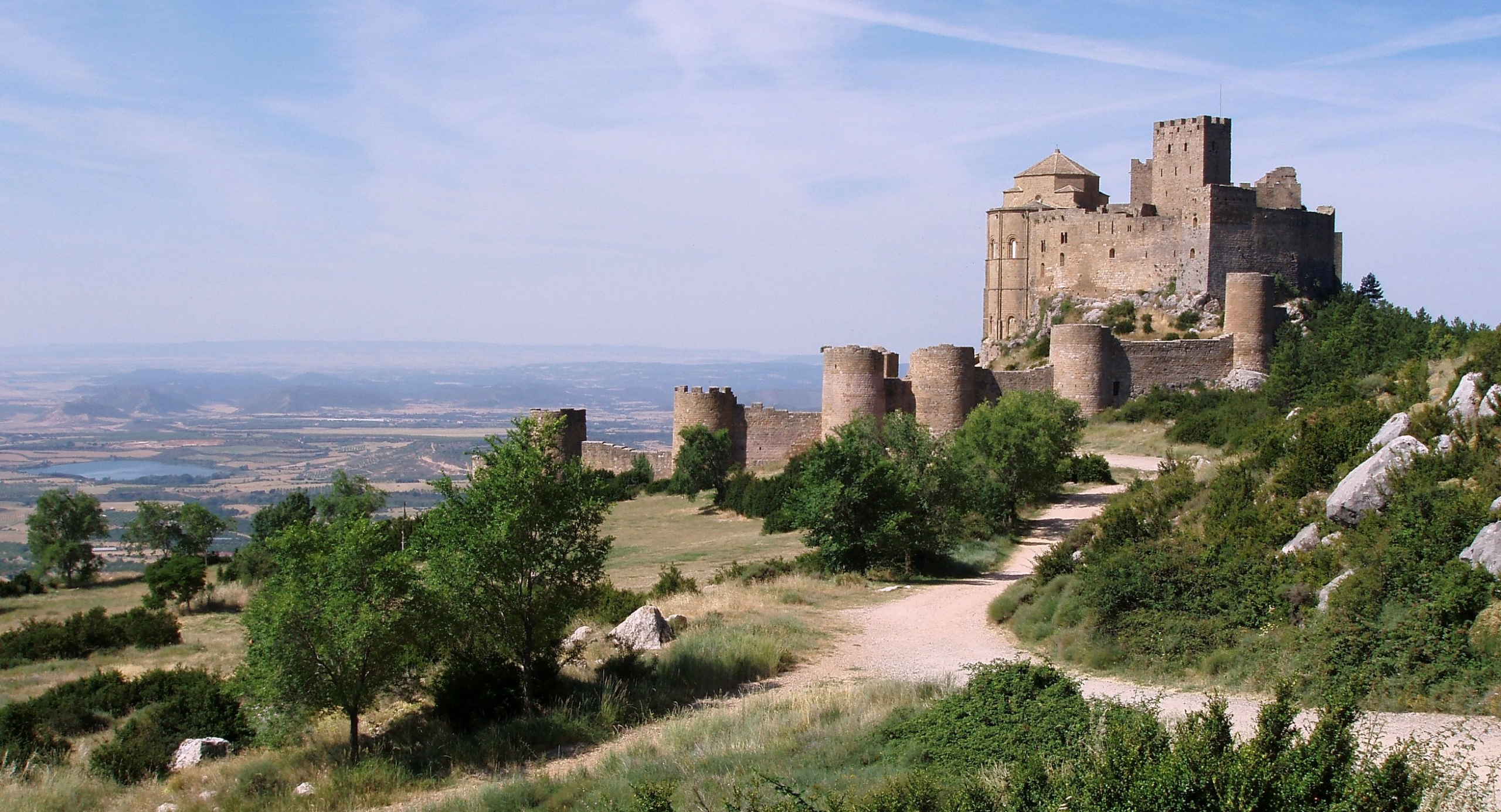
One of the oldest and best-preserved Romanesque castles in Spain, Loarre Castle sits dramatically on a rocky outcrop in the region of Aragón, with the plains stretching out below and mountains rising behind. Dating largely from the 11th century, it is a powerful example of early medieval military architecture.
Its remarkable state of preservation, complete with towers, a chapel, and winding passages, has made it a favorite filming location and a vivid window into the medieval world. Set against a backdrop of rugged scenery, Loarre feels almost untouched by time, a genuine fortress rather than a refined palace, and all the more atmospheric for it.
Manzanares el Real
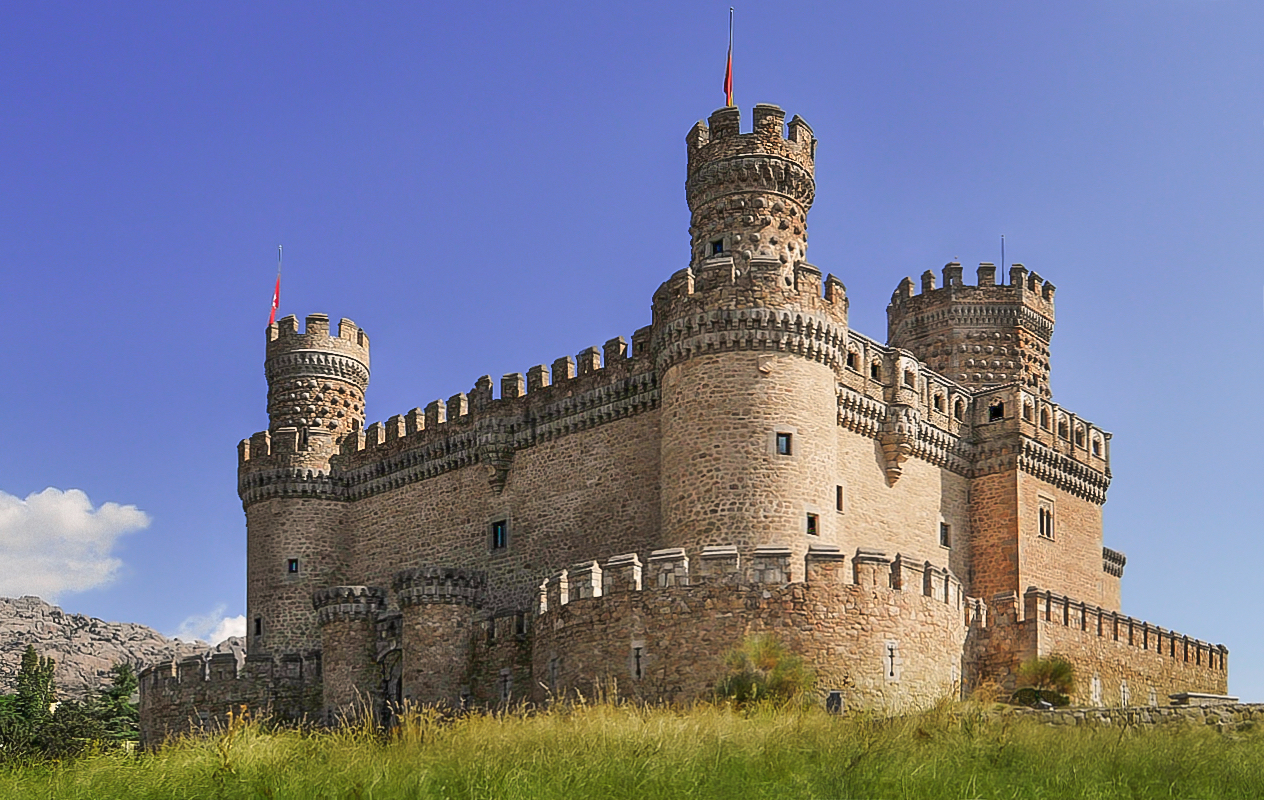
Just outside Madrid, the Castle of Manzanares el Real, sometimes called the Castle of the Mendoza, is one of the best-preserved castles in the region. Built in the 15th century as a palace-fortress for a powerful noble family, it blends military strength with elegant, palatial touches.
Its round corner towers, decorative gallery, and setting against the backdrop of the Sierra de Guadarrama mountains and a nearby reservoir make it especially photogenic. Close enough to Madrid for an easy excursion, it offers a well-preserved glimpse of how Spain’s nobility lived, in homes built to impress as much as to defend.
Castle of La Mota, Medina del Campo
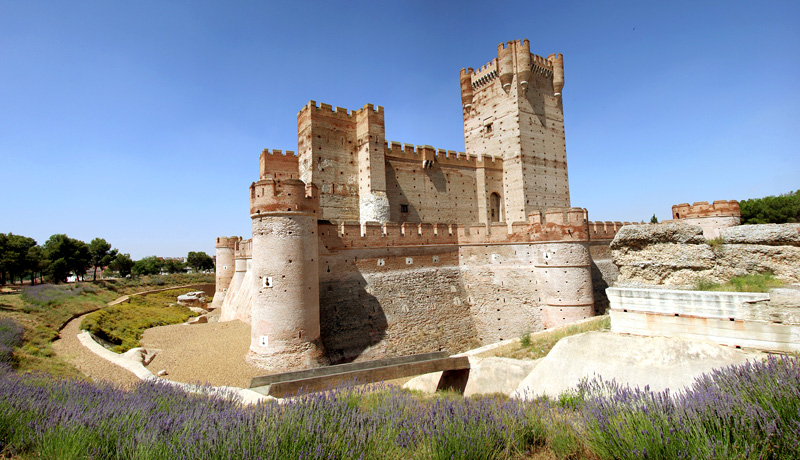
Rising from a low hill above the town of Medina del Campo in the region of Castile and León, the Castle of La Mota is a striking red-brick fortress that once played an important role in Spanish royal history. Its tall central keep and robust walls give it a commanding, no-nonsense military presence visible across the surrounding plain.
Built largely in the 15th century, the castle is notable for its early adaptations to the age of gunpowder and artillery, with thick walls designed to withstand cannon fire. It has served as a fortress, a royal residence, and even a prison over the centuries. Today, beautifully preserved, it stands as one of the most impressive brick castles in the country and a vivid reminder of the era when control of the Castilian heartland was fiercely contested.
Why Spain Has So Many Castles
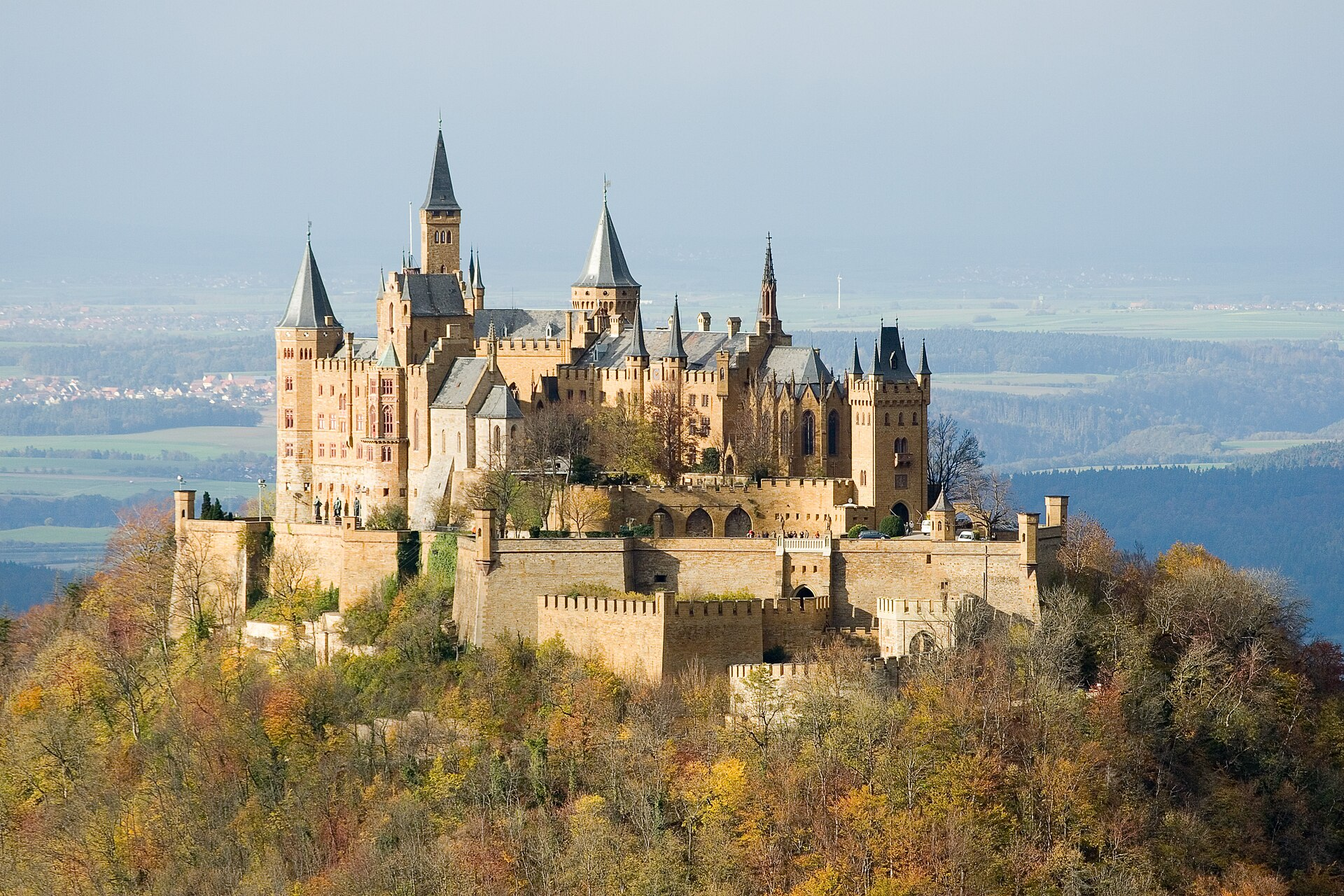
The sheer number of castles in Spain is a direct legacy of its history. For centuries, the Iberian Peninsula was a frontier zone, contested between Christian and Muslim kingdoms and divided among rival realms. Castles were essential tools of control, marking territory, guarding routes, and providing strongholds in an age of near-constant conflict. The concentration of fortresses in the region of Castile was so great that it gave the area, and eventually much of the country, its name.
For today’s travelers, this turbulent past has left an extraordinary inheritance. Spain’s castles range from crumbling ruins atop lonely hills to immaculately restored palaces open to visitors, and they offer some of the most rewarding and atmospheric sightseeing in the country. Many lie within easy reach of major cities, making them ideal day trips, while others reward the effort of seeking out more remote corners of the landscape. Whichever you choose, each castle is a doorway into the long, layered, and often dramatic story of Spain. Many also reward visitors with more than history: sweeping views from their ramparts, atmospheric interiors, and a real sense of stepping into another age. Some host museums, festivals, or reenactments that bring their stories to life, while others simply stand as they have for centuries, weathered and proud above the towns they once protected. For travelers willing to look beyond the beaches and the big cities, Spain’s castles open up a different, deeper experience of the country, one written in stone and brick across a thousand years of history.
Like our content? Follow us for more.
