

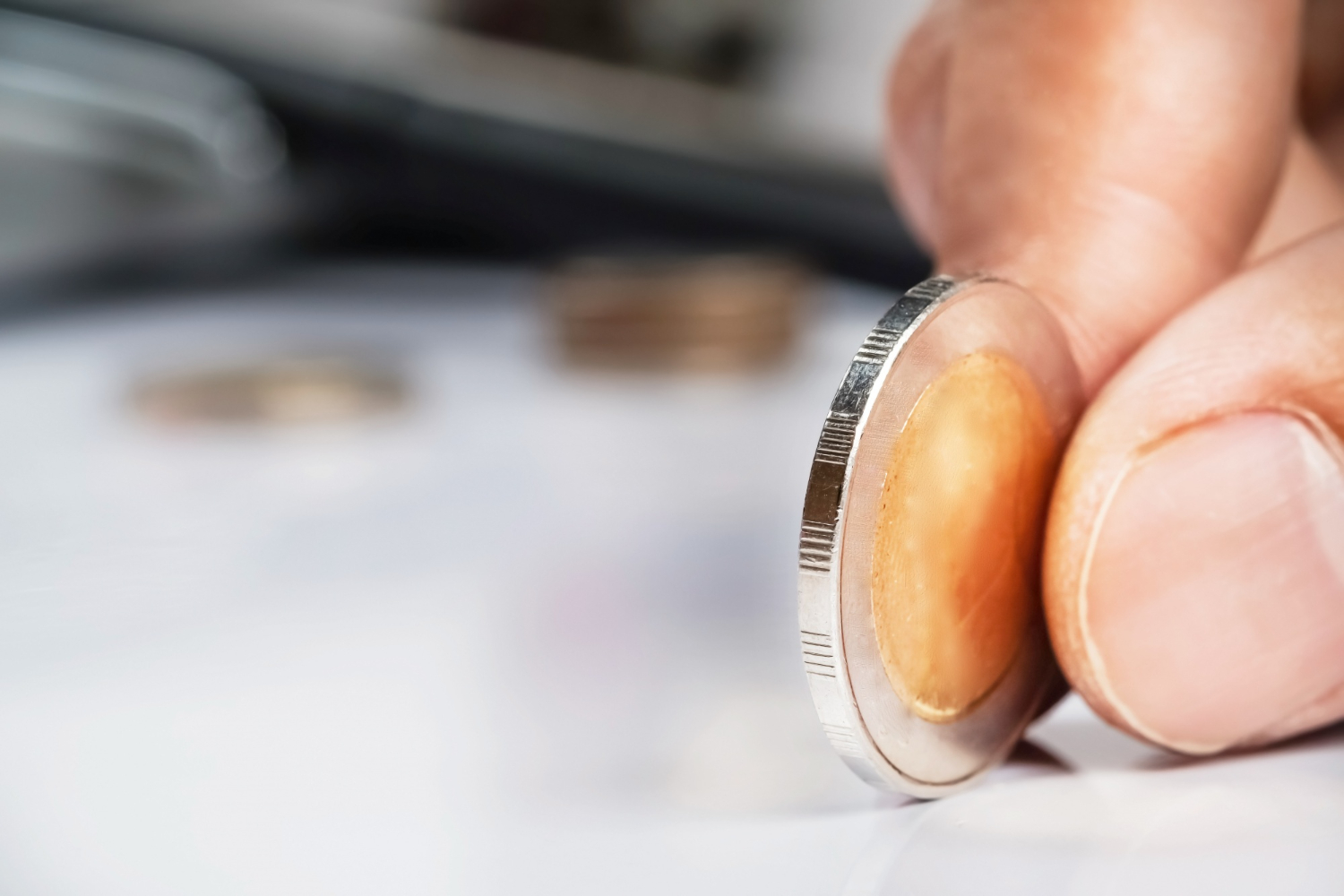
There is a security feature in almost everyone’s pocket that has been doing its job for over three hundred years, and almost nobody knows what it is for.
Look at the coins you carry. Some have smooth edges. Others have a series of fine vertical ridges running around the rim, and the pattern is not random — it tracks value, and it always has.
The ridges are called reeding, or milling, and they were introduced to solve a problem that had troubled monetary systems for a very long time: how do you tell whether somebody has stolen part of a coin.
The answer turned out to involve one of the most famous scientists in history taking what everyone assumed would be a comfortable retirement job. Here is the story.
The Crime the Ridges Prevent
To understand the solution you need the problem, and the problem depends on a fact about old money that is easy to forget.
Coins used to be worth their metal. A silver coin was not a token representing value elsewhere; it was a specific weight of silver, and its face value corresponded to that weight. That is what made it acceptable to a stranger.
Which creates an obvious temptation. If you shave a thin sliver off the edge of a silver coin, you now have a small quantity of silver and a coin that still looks like a coin. Spend it at full face value and you have made the difference.
The practice was called clipping, and it was done with shears or a file. Individually the theft is trivial. Repeated across thousands of coins, the shavings accumulate into a quantity of silver worth melting down and selling.
Two things made it hard to detect. First, coins of the period were not uniform. Many were made by striking a small ingot with a stamp, producing irregular shapes with rough edges and flanges of metal projecting beyond the design — so a clipped coin did not necessarily look wrong. Second, without another coin to compare against, an individual merchant had no reliable way to judge whether the one in front of them was short.
The consequence was systemic. As clipped coins circulated, the actual metal content of the currency fell while the face value stayed the same, which is debasement arriving from the bottom up rather than from the mint.
Like our content? Follow us for more.
Newton at the Mint
In 1696 Isaac Newton took the post of Warden of the Royal Mint. He was in his fifties, and the role was widely regarded as a sinecure — a comfortable appointment for a distinguished man.
He did not treat it that way.
England’s silver coinage was in a severe state. Reported estimates suggest a substantial proportion of the coins in circulation were clipped or counterfeit, with figures around a fifth commonly cited.
Newton’s response operated on two fronts. The first was manufacturing, through what became known as the Great Recoinage: millions of pounds of silver were called in, melted down and struck again to a consistent standard. That meant managing a large workforce at the Tower of London and opening additional mints in several provincial cities to handle the volume.
The second was enforcement, and it is the part that surprises people. Newton personally investigated counterfeiting networks, gathered evidence and pursued prosecutions, applying to criminal investigation the same obsessive method he had applied to optics and mathematics.
He was promoted to Master of the Mint in 1699 and held the position for the rest of his life.
Why the Ridges Work
The technical solution is elegant, and its elegance is that it requires no expertise from the person checking.
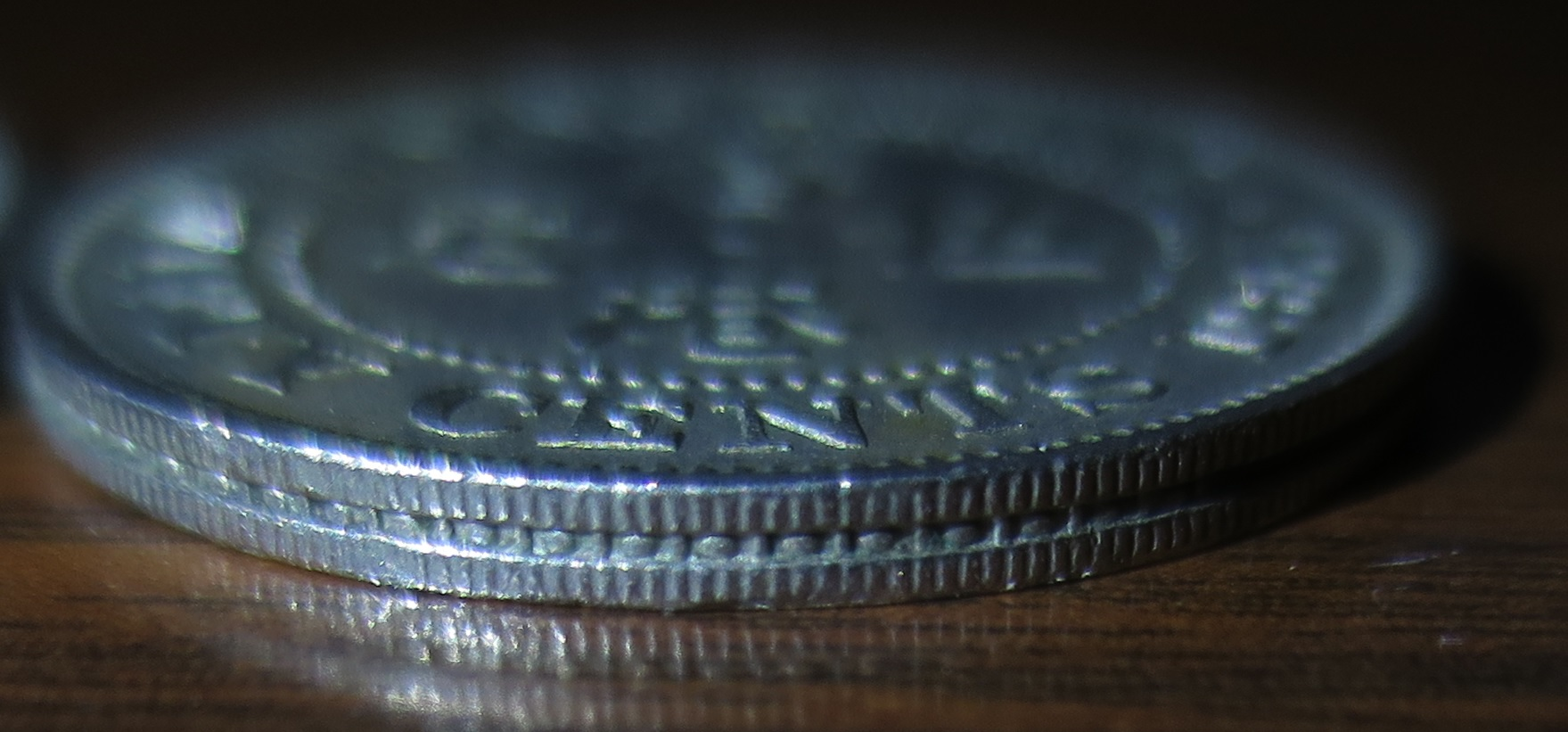
If the edge of a coin carries a regular pattern — fine vertical grooves, or in some cases lettering — then that pattern is continuous around the entire circumference. Removing any metal from the edge necessarily destroys part of it.
So a merchant does not need scales, a reference coin or any judgement about weight. They need only look at the edge. An unbroken pattern means the coin is whole; an interruption, a flat section or an absence means it is not.
This is a tamper-evident seal, arrived at centuries before the term existed, and it works on exactly the same principle as the ring on a bottle cap or the seal on a packet.
The technology required to produce it is the reason it appeared when it did. Applying a consistent pattern to the edge of a coin requires machinery capable of striking to a uniform diameter, which hand-hammered production could not deliver. Milled edges and mechanised minting arrived together, and the phrase “milled edge” preserves that connection.
Newton’s precise role is worth stating carefully. Edge decoration was not invented from nothing in 1696 — reeding is associated with earlier continental coinage, and the Spanish eight-real piece is frequently cited as an early example. What Newton did was implement it at national scale as a systematic anti-clipping measure, alongside a complete recoinage, and make it stick.
Why Only Some Coins Have Them

The pattern in your pocket is not arbitrary, and once you know the logic it becomes readable.
Reeding was applied to coins made of valuable metal, because those were the coins worth clipping. Low-denomination coins of copper or bronze contained too little value in metal to be worth shaving, so they were left smooth.
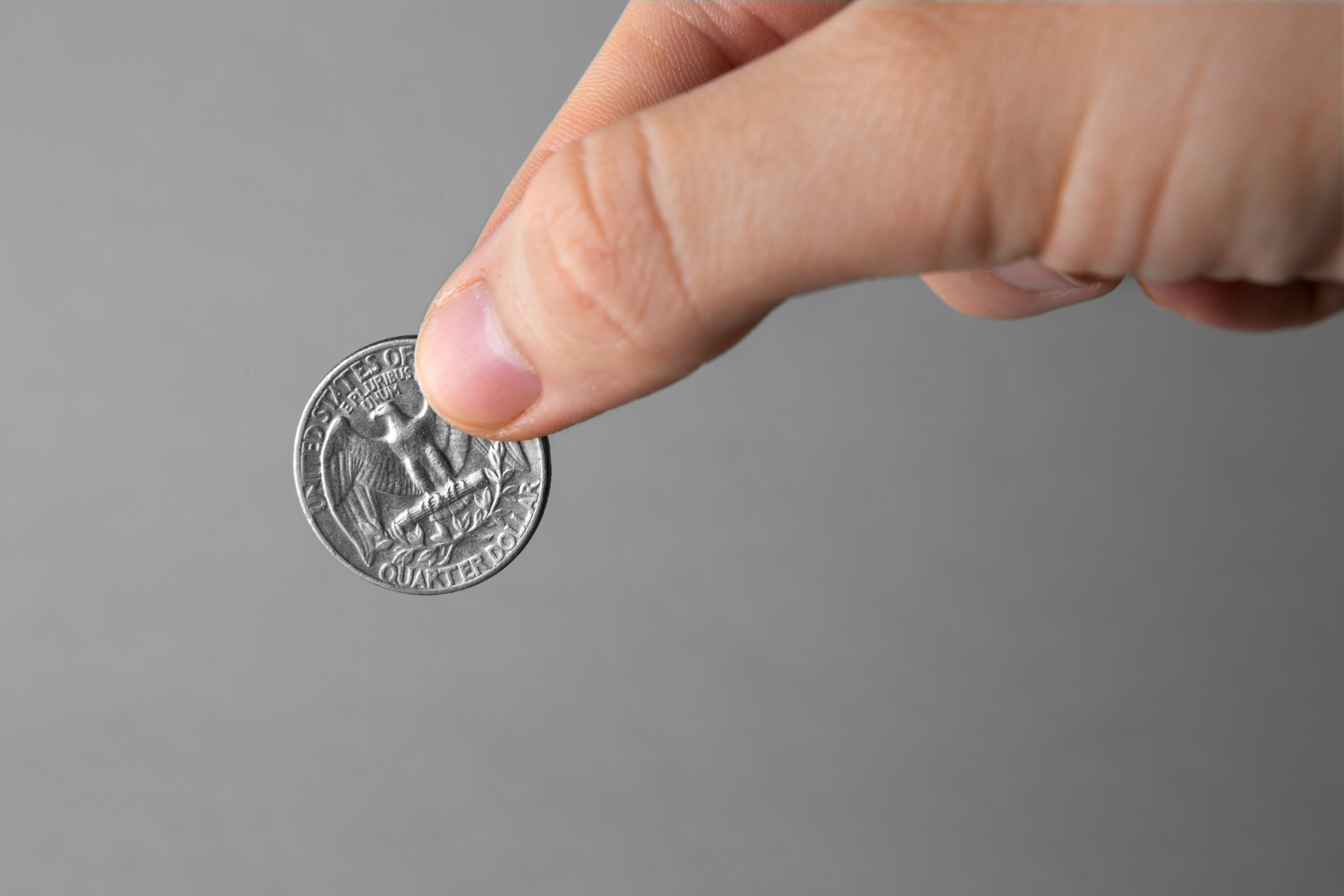
That distinction has outlived its own reason. Circulating coins are now made of base metals and nobody clips anything, but the convention persists: in the United States, dimes, quarters and half dollars carry reeding while cents and nickels do not, and comparable patterns appear in other currencies.
The reason for keeping it is partly tradition and partly that it still does useful work. A reeded edge remains harder to reproduce convincingly than a smooth one, so it retains some anti-counterfeiting value even without any silver involved.
There is a further benefit that was not the original intention but matters a great deal. Edge texture allows coins to be distinguished by touch, which is significant for anyone identifying currency without looking at it — and modern coinage design frequently treats tactile differentiation as a deliberate objective rather than a side effect.
What Else Is Written on an Edge

Reeding is the most common edge treatment and it is not the only one, and the alternatives are worth knowing because they solve the same problem differently.
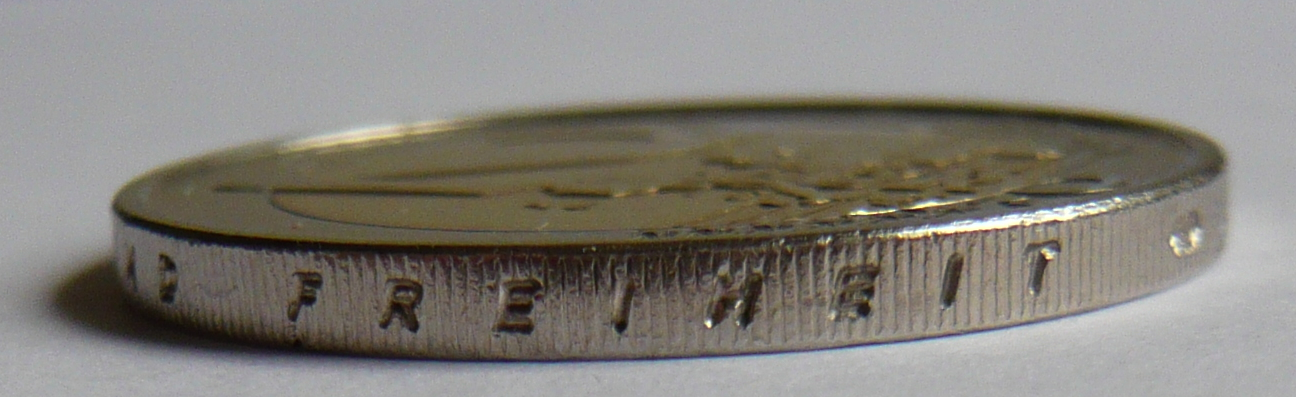
Some coins carry lettering around the edge rather than grooves — a phrase, a motto or a mint mark, applied in raised or incised characters. It is called edge inscription, and it serves exactly the same tamper-evident function while being harder still to reproduce.
Others use a pattern of alternating smooth and reeded sections, which is a deliberate design choice rather than a manufacturing accident, and which allows two denominations of similar size to be told apart in a pocket.
Some carry decorative repeating motifs rather than plain grooves, and some higher-value coins combine two treatments on the same edge.
Modern coins have added further complications for the same underlying reason. Bi-metallic coins, made of two different alloys bonded together, are difficult to counterfeit precisely because the joint has to be made properly, and several currencies use them for their highest circulating denomination.
Electronic detection has changed the requirements again. Vending machines and payment systems test coins by weight, dimensions and electromagnetic properties rather than by eye, which means the modern security features are as much about what an instrument can measure as about what a shopkeeper can see.
The edge, though, remains the part a person checks — and it is still doing the job it was given in 1696.
What the Edge Records
There is something worth appreciating in how ordinary this object is.
The ridges are on a coin that has been in a pocket, a car, a jar and a washing machine. They are worn, unremarked and universally ignored. And they are the surviving trace of a period when money was metal, when stealing a fraction of a coin was a viable trade, and when the state had to find a way to let an ordinary shopkeeper detect fraud in a second without any equipment.
The solution was not a law, a punishment or an inspection regime. It was a pattern that breaks when interfered with — the same idea as a wax seal, deployed at the scale of a national currency.
And the man who organised it had already explained the motion of the planets, which makes the Royal Mint appointment one of the more unexpected second careers in the history of science.
Next time a coin comes out of your pocket, the edge is worth a look. Smooth means the metal was never worth stealing. Ridged means somebody once decided it was.
Like our content? Follow us for more.
