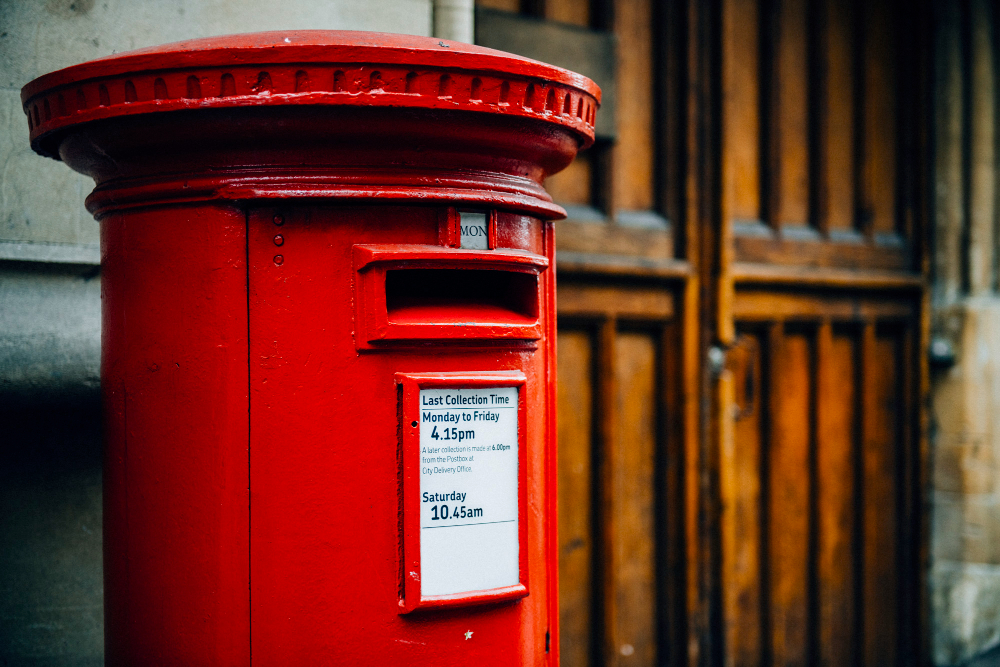
There is a class of object that has to work with nobody supervising it, in public, permanently, and postboxes are among the clearest examples.
Before they existed, a letter had to be taken to an office during its opening hours and handed to somebody. That is a substantial constraint, and it meant posting a letter was an errand rather than an incidental act.
A box on the street removes the constraint entirely. It accepts letters at any hour without staff, from anybody, and it does so in a place where it can be reached on an ordinary walk.
Achieving that required solving several problems at once, and the solutions are visible in the shape of every box.
Keeping the Weather Out
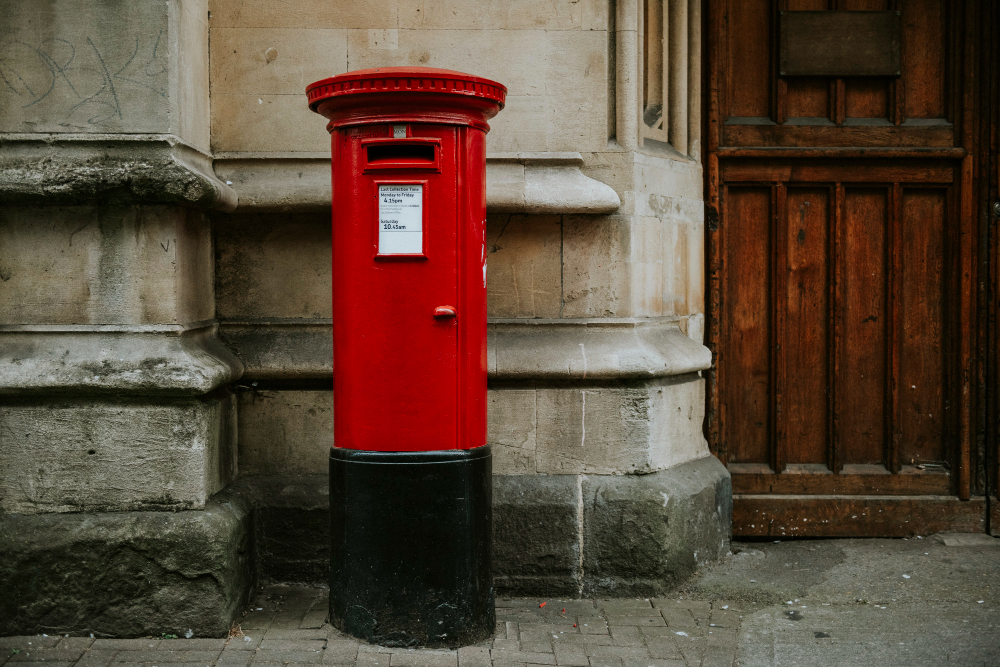
The first requirement is that paper inside must stay dry.
An opening that faces upward collects rain directly, so the aperture is set into a vertical or near-vertical face.
Above it sits a projecting lip or hood, which throws water outward past the opening rather than allowing it to run down the face and in.
The internal arrangement behind the slot is angled so that anything blown or splashed through it runs away rather than onto the contents.
Drainage holes at the base let out whatever gets in anyway, since no sealed box stays sealed and trapped water is worse than water that leaves.
And the contents generally sit on a raised platform or in a separate bag, keeping them clear of the floor where water would collect.
Each of those is a small detail, and together they are the difference between a box that protects letters and one that destroys them.
Like our content? Follow us for more.
Keeping People Out
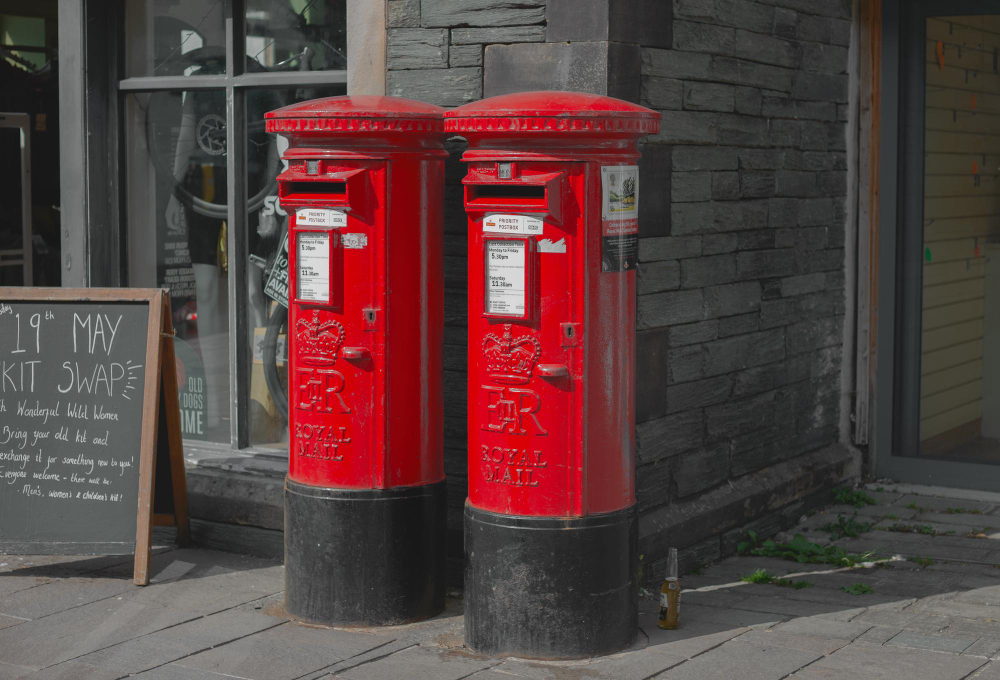
The security problem is harder, because the box must be open and closed simultaneously.
The aperture has to be large enough for the largest item expected and small enough that a hand cannot reach in and retrieve what is inside.
Behind it, a baffle, a flap or an angled chute prevents anything being fished out with a hook or a wire, since the interior is not directly accessible from the opening.
The body is heavy and fixed firmly into the ground, because a light box can simply be taken away and opened elsewhere.
There is one door, one lock and a small number of keys, and the door is designed so that forcing it damages the box rather than opening it steadily.
The whole thing is generally a single casting or a heavy welded assembly, with no panels that can be removed and no fixings accessible from outside.
There is a capacity point worth adding. A box has a finite interior, and one in a busy location can fill between collections, at which point nothing more can be posted and the slot has to be closed off.
Collection frequency is therefore set by the busiest boxes rather than by the average.
The Fire Problem

A specific vulnerability produced a specific response.
A box that accepts anything posted through a slot will, occasionally, have something burning posted into it, whether by accident or deliberately.
Paper packed in an enclosed space is a serious fire risk, and losses of a box’s contents from that cause are a real historical problem.
Responses included fire-resistant construction, arrangements that restrict airflow so a fire starves itself, and internal liners.
Modern boxes in many places incorporate measures against this, and the details are not something to publish, for obvious reasons.
That is an example of a design requirement that exists entirely because of deliberate misuse, and which the object cannot advertise.
There is a placement point worth adding. Boxes are sited where people already pass – outside shops, at junctions, by transport stops – because a box requiring a special journey is used far less than one encountered incidentally.
Why They Are Coloured and Shaped as They Are
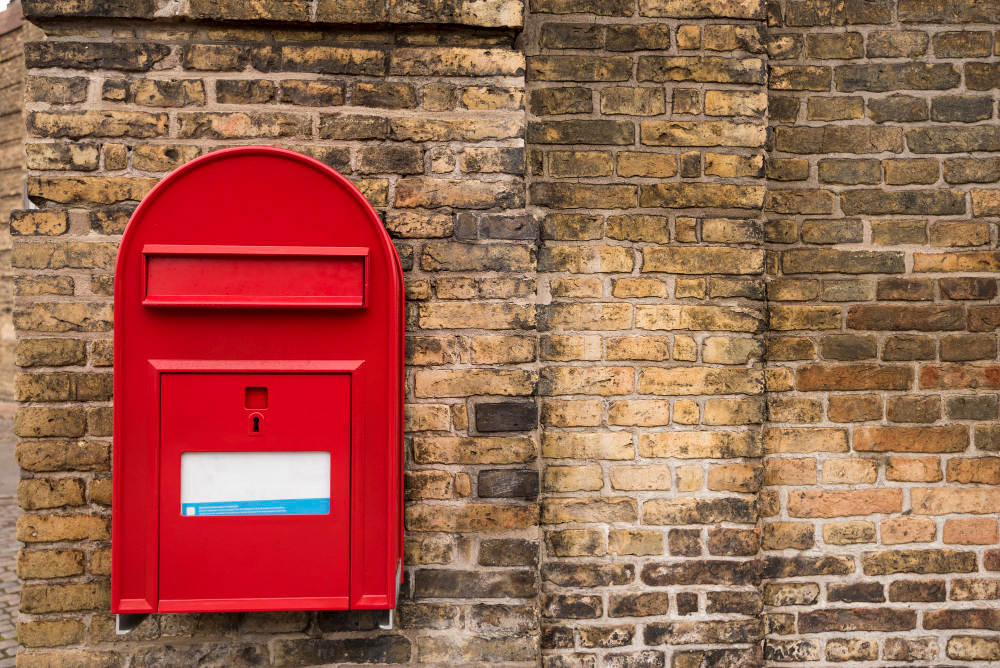
The appearance does work as well.
A postbox has to be found by somebody who does not know the street, which means it must be conspicuous and instantly recognisable.
A strong, consistent colour used for nothing else on the street achieves that, and different postal systems adopted different colours, each used nationally so that recognition is automatic.
A distinctive silhouette does the same job at a distance and from behind, which is why boxes tend to have a strong simple form.
Markings on the box carry the practical information: the times at which it is emptied, and frequently an identifier for the box itself so that it can be referred to in the collection round.
And the lettering or insignia frequently records the authority that installed it, which means old boxes can be dated by their markings — a detail enthusiasts use to build a chronology of a street.
Why the Shape Was Standardised

Uniformity across a network has advantages that a single box does not reveal.
A standard design can be manufactured in quantity at a lower cost, which matters when thousands are required.
It can be maintained with a single set of spare parts, and a damaged door or a worn lock can be replaced without a bespoke fitting.
One key pattern serves an entire district, which simplifies the collection round enormously, though it also concentrates the consequences if a key is lost.
Standard dimensions mean the internal bags, liners and fittings are interchangeable between boxes.
And uniformity is what makes recognition automatic, since a public that has learned one shape recognises every other instance of it without thinking.
Against that, standardisation means a design fault is repeated everywhere, and changing anything requires replacing an entire population of boxes — which is why postal authorities have generally kept a design in production for a very long time once it has proved itself.
The Collection Round

The box is one end of a system, and the rest of it explains several features.
A collector arrives at fixed times, unlocks the single door, removes the contents, and closes it again — a process that must be fast because the round covers many boxes.
That is why the contents frequently sit in a bag that is lifted out whole and replaced with an empty one, rather than being gathered by hand.
The posted times displayed on the box exist so that a sender can judge whether an item will be collected that day, which matters when timing is important.
And the number and placement of boxes is a coverage decision, balancing how far people should have to walk against the cost of emptying each one — which is why boxes cluster where people are and thin out where they are not.
That balance is why boxes are removed as well as installed, and why a box that stands unused on a quiet corner is frequently the last survivor of a denser network.
There is a variety point worth adding. Besides the free-standing pillar, boxes are set into walls, mounted on posts and built into the fronts of buildings, each form suiting a different location and constraint.
The wall-set type is frequently the oldest surviving kind in any district, because a box built into masonry is difficult to remove.
What Happens to Them Now
The position of the street postbox has changed substantially and it has not disappeared.
Letter volumes have fallen a long way as communication moved to other forms, which reduces the traffic through each box.
At the same time, parcels have grown enormously, and a slot designed for letters cannot accept them, which has produced separate lockers and collection points rather than changes to the boxes themselves.
Many old boxes remain in service because they were built to last indefinitely and there is no reason to replace something that works.
Others have been retained as historic features even where the service around them changed, and in some places they have been repurposed for other uses entirely while keeping their original form.
Which is a fair outcome for the object. It solved a set of awkward problems with a heavy casting, a lip over a slot and one lock — and the solution turned out to be good enough that a great many of them are still standing in the street where they were put, doing the same job, a very long time later.
And that is the quiet test any piece of street furniture has to pass. It must work unsupervised, in public, in all weather, for decades, used by everybody and maintained by almost nobody – which is a harder specification than most designed objects ever face.
And that is the quiet test any piece of street furniture has to pass. It must work unsupervised, in public, in all weather, for decades, used by everybody and maintained by almost nobody – which is a harder specification than most designed objects ever face.
Like our content? Follow us for more.