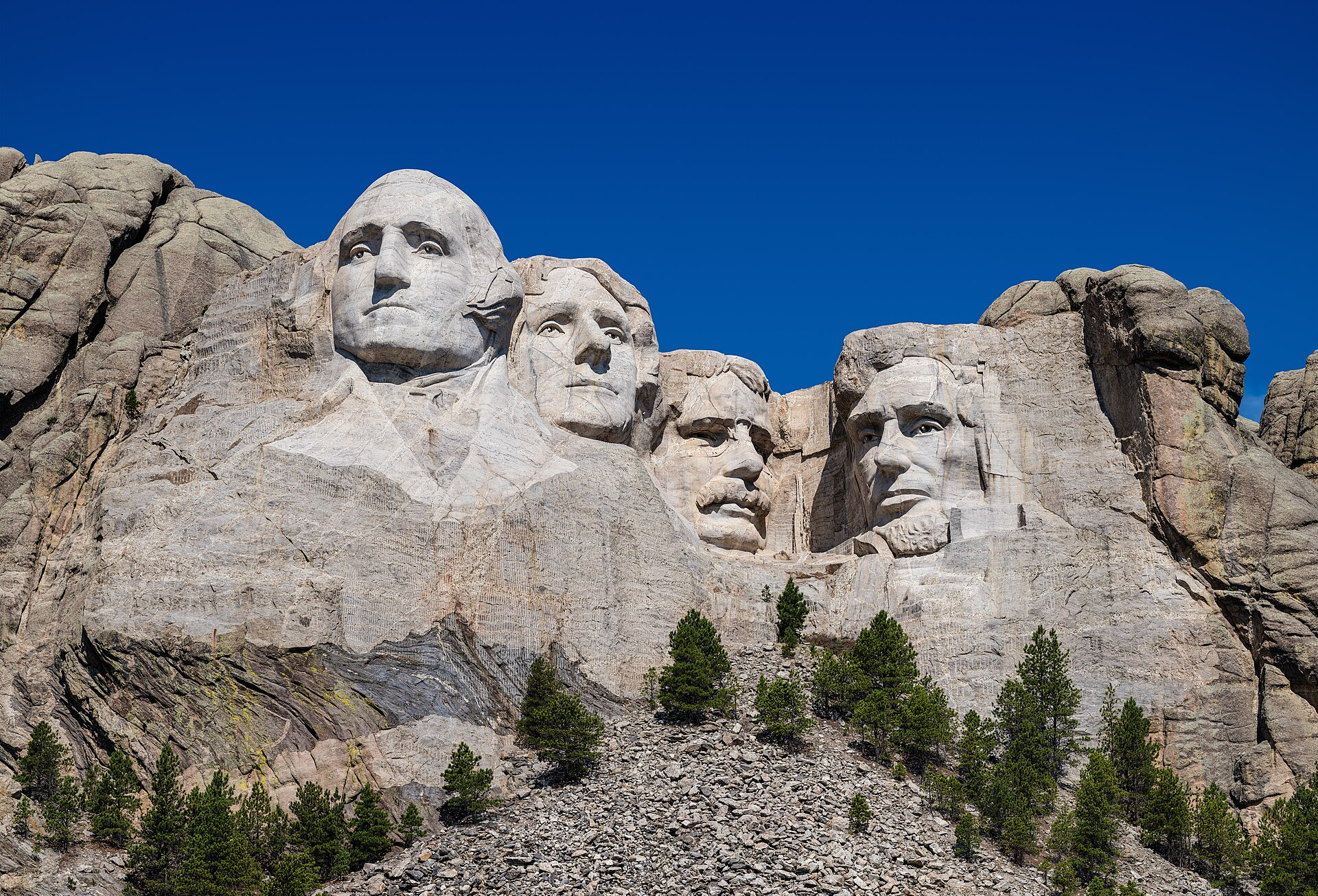
Mount Rushmore is among the most photographed monuments in the United States: four presidential faces, each roughly 60 feet tall, carved into granite in the Black Hills of South Dakota. Visitors arrive, look at the faces, read the plaques, and leave.
What almost none of them see is around the back. Behind Abraham Lincoln’s head, cut into the mountain, is a chamber called the Hall of Records. It is real, documented by the National Park Service, closed to the public, and it has been there since the late 1930s.
It is not a conspiracy theory or an internet invention. It is an unfinished construction project, abandoned mid-excavation, that was steadily completed sixty years later in a scaled-down form nobody outside the family and the Park Service paid much attention to.
And the reason it exists says something rather striking about what the monument’s sculptor thought he was making. Here is the story of the room behind the president.
Why Borglum Wanted It
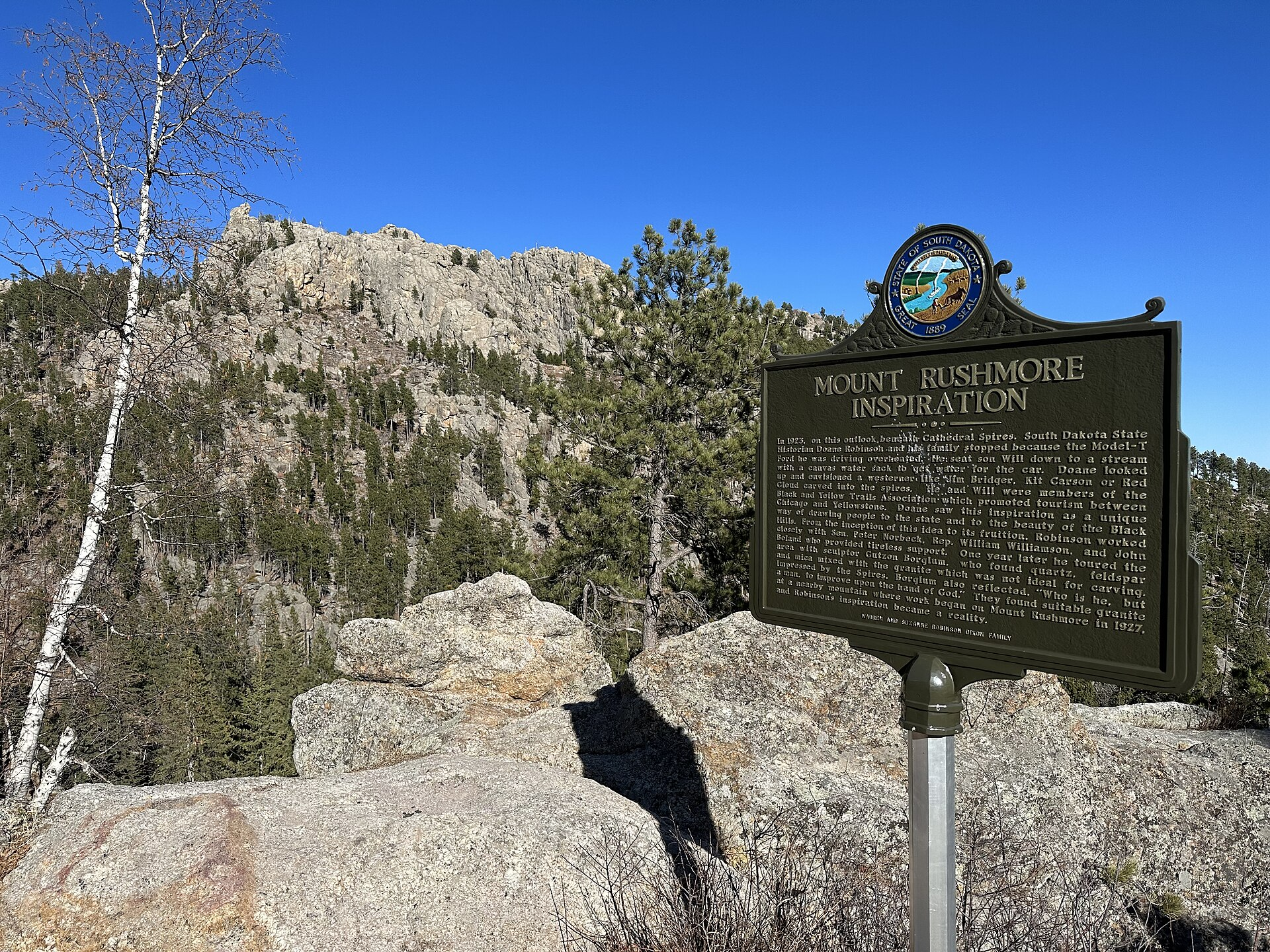
The sculptor was Gutzon Borglum, and he conceived the Hall of Records before he began carving in 1927 — before a single face existed.
His reasoning was that future generations might find Mount Rushmore as much a mystery as Stonehenge is to us. Four enormous faces carved into a mountain, with no explanation attached, would eventually become unreadable: who were these men, why were they chosen, what did the people who made this believe?
His answer was to build the explanation into the mountain alongside the sculpture. The Hall of Records was to hold bronze and glass cabinets containing the Constitution, the Declaration of Independence, and busts of famous Americans, along with a record of why the monument was carved.
The ambition was considerable. Plans included a grand entrance, a 38-foot bronze eagle, and an inscription carved into the rock. This was not a storage cupboard; it was intended as a companion piece to the faces, an archive designed to outlast the memorial itself.
Like our content? Follow us for more.
Blasted, Then Abandoned
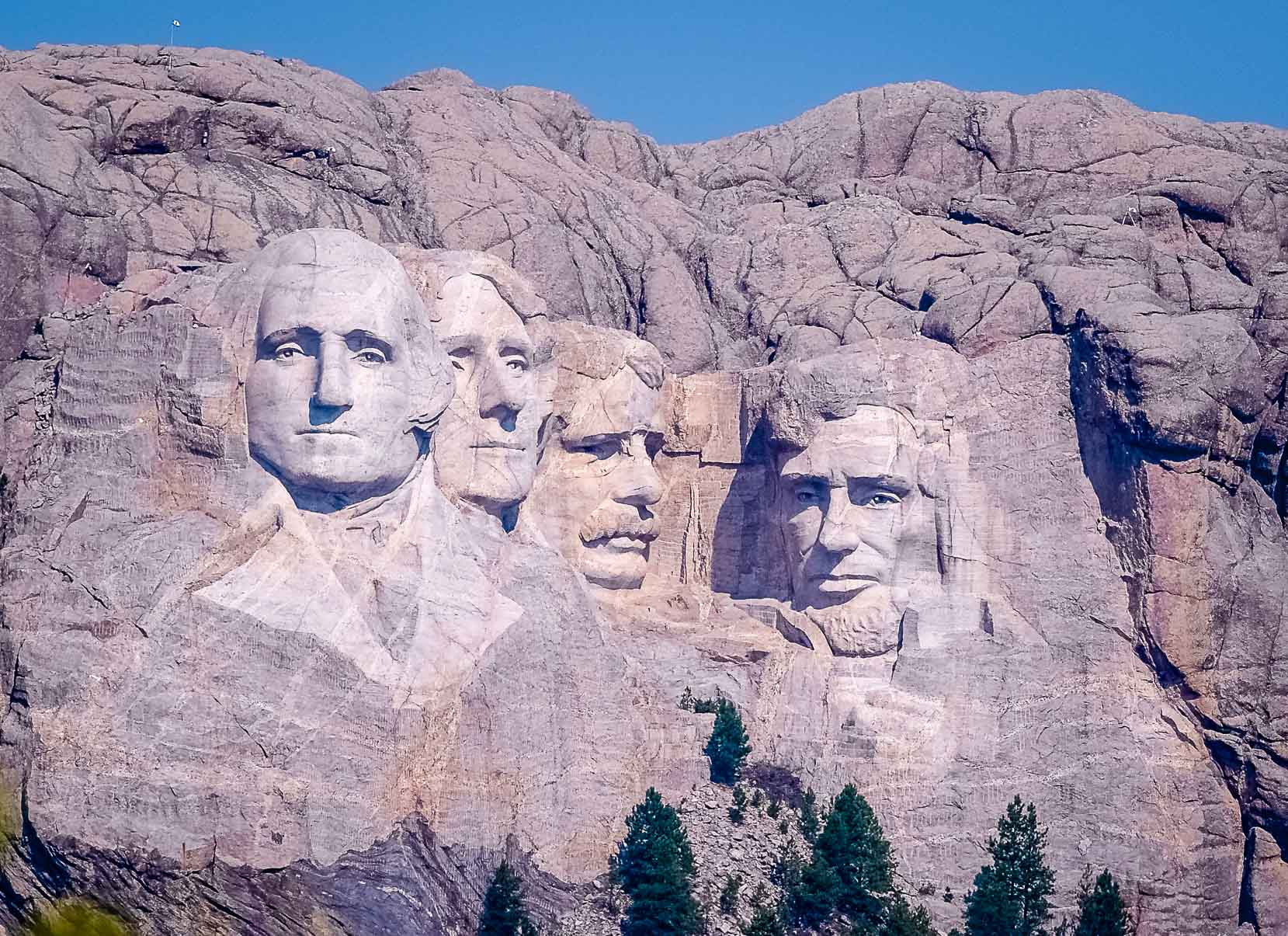
Construction began in 1938. The team blasted a tunnel into the granite behind Lincoln’s head and began carving away at the walls.
Then it stopped. In 1939 Congress restricted the remaining funding to work on the faces only, which ended the Hall of Records as an active project. The looming war in Europe, the hardness of the granite, and the money all worked against it.
Borglum died unexpectedly in March 1941, aged 73. His son Lincoln Borglum, who had been his father’s right hand for years, led the effort to finish the presidential carvings, and the monument was declared complete with all work shut down at the end of October that year.
The tunnel remained as it had been left: roughly 70 feet deep, with an entrance about 11 feet wide and 18 feet tall, and an interior that simply stops at an anticlimactic point.
It is worth noting that the faces themselves were also scaled back. Borglum’s original design carried the presidents down to their waists; time and funding delivered heads.
What the Chamber Actually Looks Like
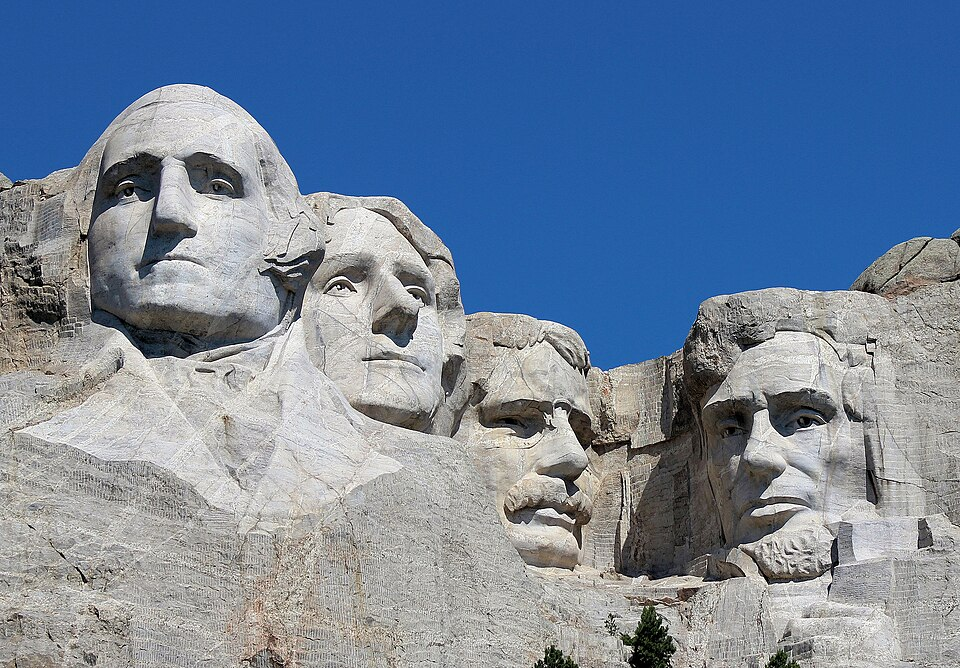
Photographs released by the Park Service show something quite unlike the vault most people would imagine.
The interior is rough and unfinished. The walls are jagged, and the drill holes from dynamite blasts are still clearly visible. Red numbers, possibly painted by Borglum himself, remain on the rock — a guide used during construction to indicate which sections were to be removed.
It is less a hall than an abandoned construction site frozen in place for over eight decades. The smooth carved exterior around the entrance survives as a hint of the finished architecture that was intended, and then nothing behind it.
The entrance is visible in west-facing aerial photographs of the monument, which is the only way most people will ever see it.
The 1998 Completion
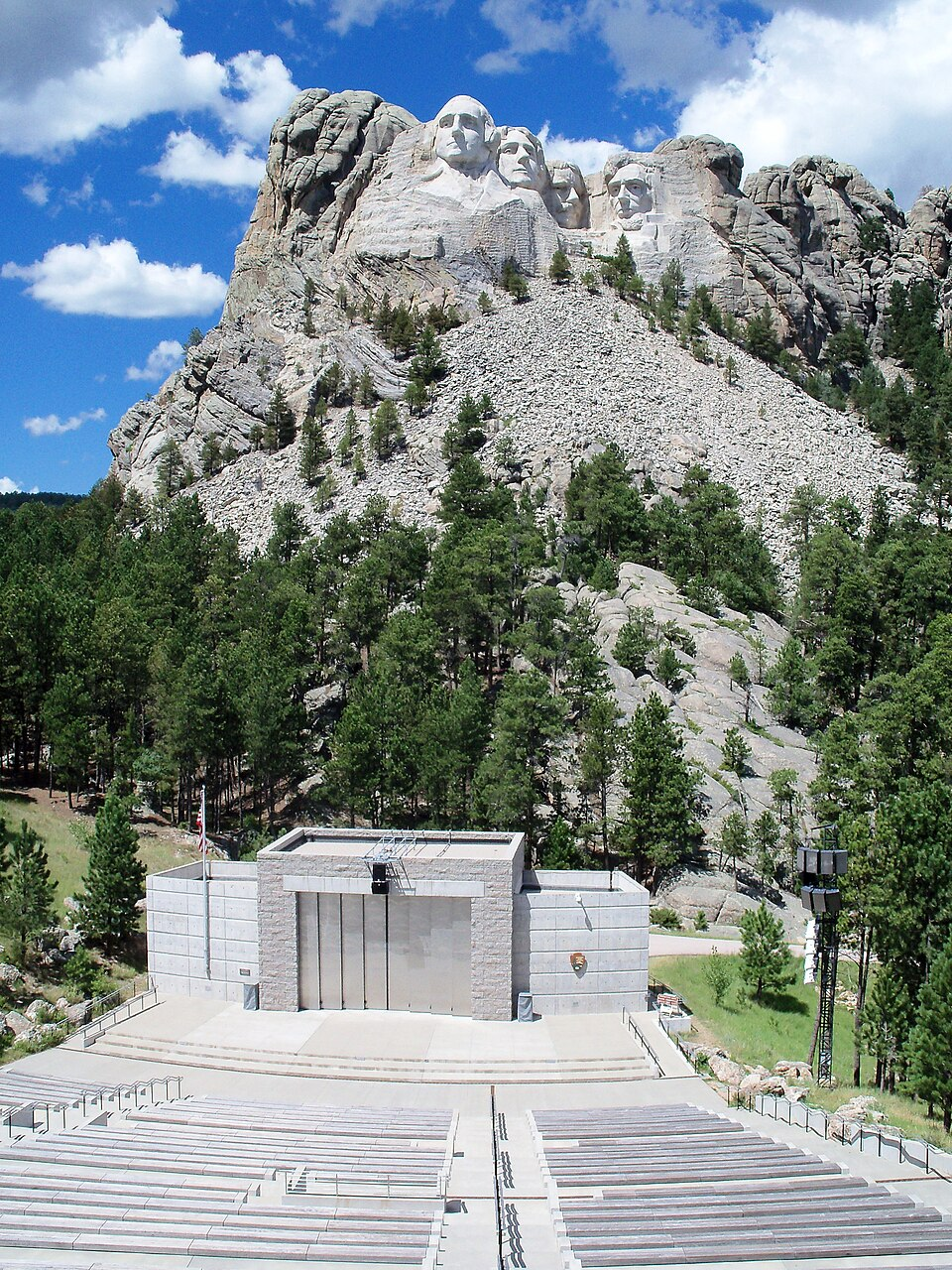
On 9 August 1998, four generations of the Borglum family gathered inside the incomplete chamber alongside Park Service officials to finish the project, sixty years late and in radically reduced form.
What was installed is a repository of records set into the floor of the hall entry. Sixteen porcelain enamel panels were placed inside a teakwood box, which was sealed inside a titanium vault, lowered into the granite floor, and covered by a black granite capstone weighing 1,200 pounds.
Porcelain enamel was chosen specifically for durability. These are not the original documents; they are inscriptions designed to survive.
The panels carry the text of the Declaration of Independence, the Constitution and the Bill of Rights, a biography of Borglum, biographies of the four presidents and the reasons each was chosen, and an account of the memorial’s construction and of United States history.
The capstone is carved with a passage from Borglum’s own plans, expressing the wish to place the words and faces of leaders as close to heaven as possible, so that posterity might see what manner of men they were, and that the records would endure until wind and rain alone wore them away.
Borglum’s daughter Mary Ellis attended and declared it the completion of her father’s vision, even in its diminished form.
Carving a Mountain in the First Place
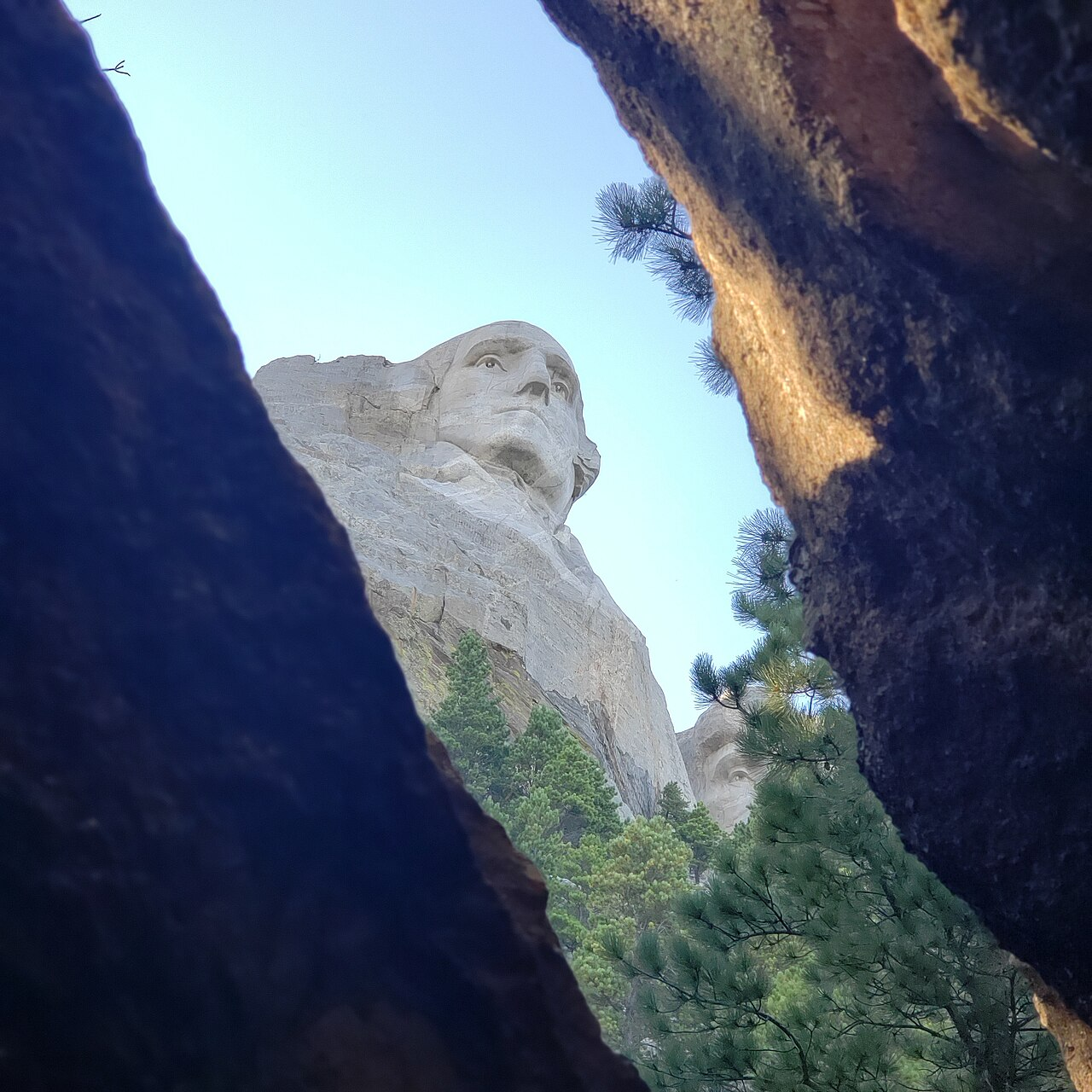
The Hall of Records makes more sense against the scale of the main project, which was itself improbable.
Work began in 1927 and ran, with interruptions for weather and funding, until 1941. Roughly 400 workers were involved over that period, most of them local miners with no sculptural training, operating in conditions that were physically demanding and exposed.
The great majority of the rock was removed with dynamite. Charges were placed and calibrated to blast away granite to within a few inches of the intended surface, after which workers finished the faces by drilling closely spaced holes to weaken the remaining stone, then smoothing it by hand.
Much of that was done suspended from the cliff face in bosun chairs on steel cables, winched from above. Lincoln Borglum, the sculptor’s son, was photographed working this way and eventually supervised the final stages.
Borglum’s method for translating design to mountain involved building detailed scale models and transferring measurements using a pointing system, scaling every dimension up by a fixed factor from model to rock.
Set against that, blasting a 70-foot tunnel into the back of the mountain seems almost modest — which is presumably why he expected to finish it.
A Deliberate Message to the Far Future
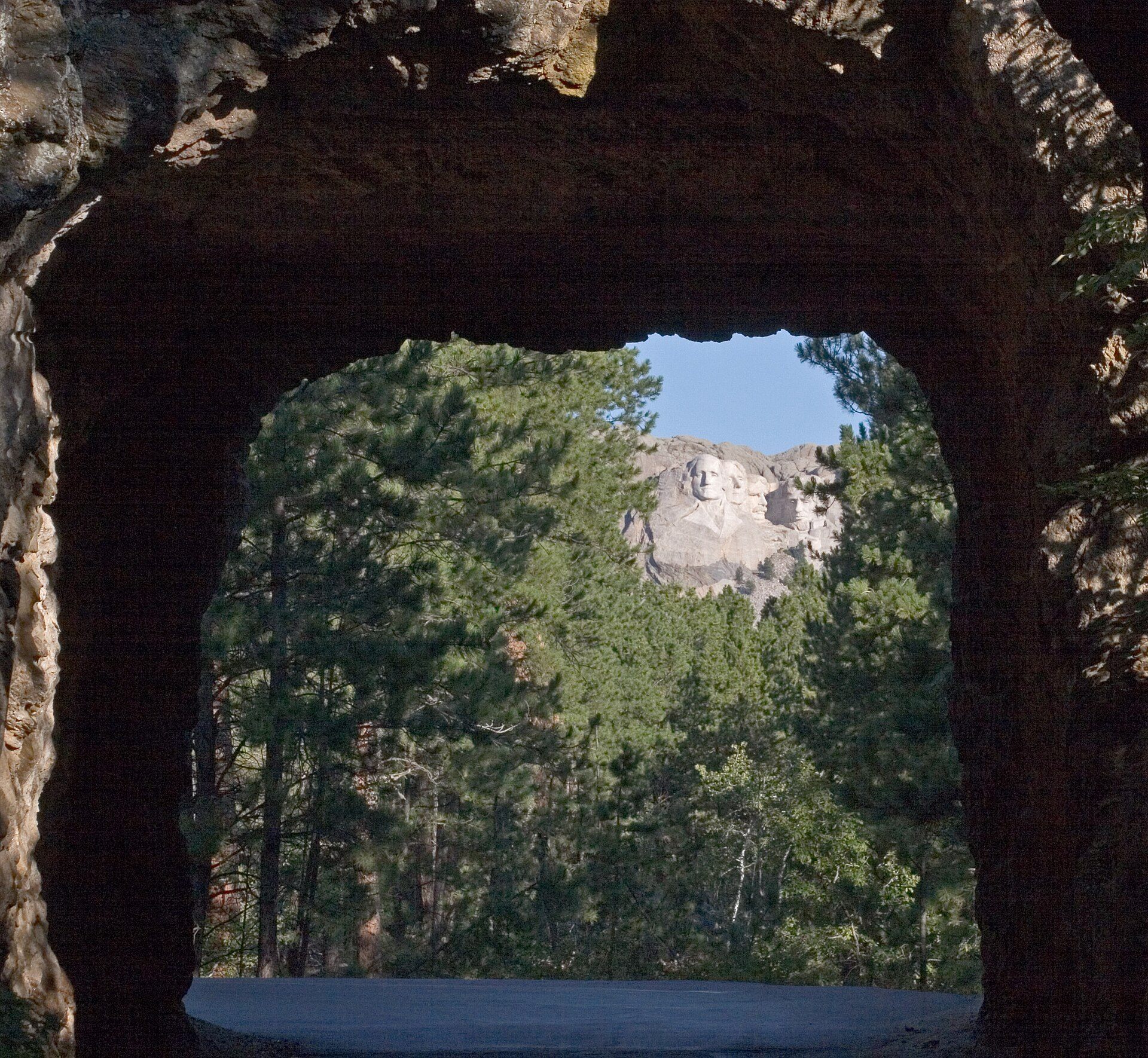
What makes this more than an architectural footnote is the intended audience.
The vault is not for visitors. It is off limits to the public and always was going to be. The National Park Service describes it as left as a record for people thousands of years from now who may wonder how and why Mount Rushmore was carved.
That places it in a small category of objects built explicitly for a readership that does not yet exist and may never come — alongside deep-time nuclear waste markers, seed vaults, and messages attached to spacecraft. The design decisions follow from that: durable materials, redundant sealing, a granite capstone, and content weighted toward explanation rather than treasure.
Borglum’s original instinct was sound in a way that is easy to underestimate. Monuments do become illegible. We stand in front of prehistoric structures and argue about their purpose precisely because nobody wrote it down in a form that survived. He tried to solve that problem in advance, and the 1998 version, whatever it lost in grandeur, does the essential job.
The Fuller Story of the Site
Any honest account of Mount Rushmore has to note that the monument sits in the Black Hills, which hold deep religious and cultural significance for the Lakota and other Plains nations, and which were the subject of the 1868 Treaty of Fort Laramie. Ownership of the Black Hills has been legally contested for well over a century, and the Supreme Court addressed the matter in 1980.
That history is a documented part of the site and is stated here as fact rather than argued either way. Visitors encounter a monument that is simultaneously a major work of American sculpture and a structure on contested ground, and the interpretive material at the memorial today reflects more of that complexity than it once did.
It is also relevant to the Hall of Records itself. Borglum’s panels present a particular account of the nation, written in the 1930s and finalised in the 1990s, sealed in titanium for readers thousands of years out. Any time capsule is a snapshot of what its authors considered worth preserving, which is a different thing from a complete record.
That does not diminish the strangeness of the object. Somewhere behind Lincoln’s granite forehead, in a rough tunnel full of dynamite scars and faded red numbers, there is a sealed titanium box under a slab of stone, waiting for someone in the distant future to find four enormous faces on a mountain and wonder what on earth happened here.
Like our content? Follow us for more.