Walk down a supermarket aisle and you can buy walnuts, pecans, hazelnuts, pistachios and almonds in their shells. You cannot buy cashews that way, anywhere, ever.
Most people have never noticed the absence, and fewer still have seen a photograph of a cashew growing. When they do, the usual reaction is disbelief, because it looks nothing like a nut on a tree.
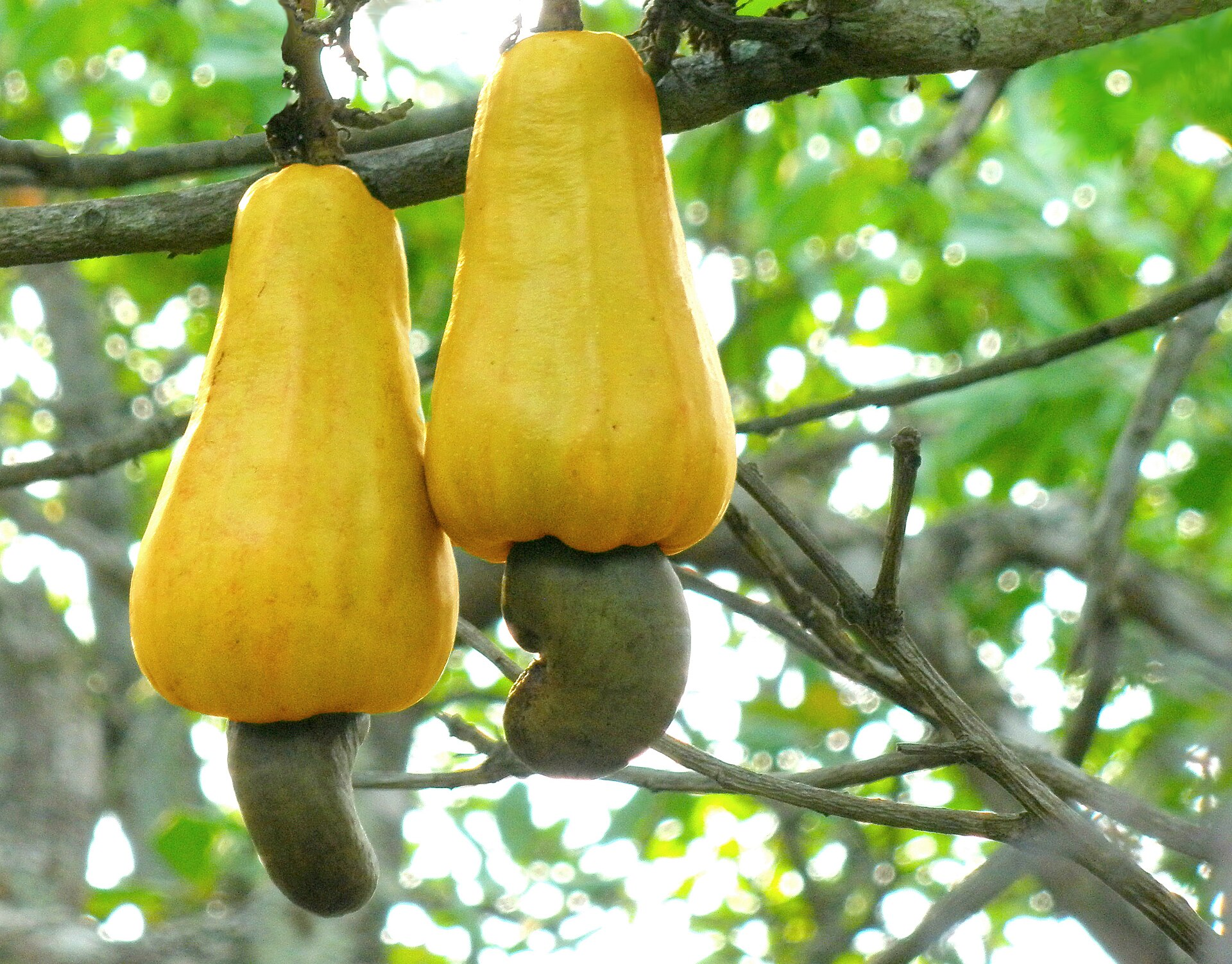
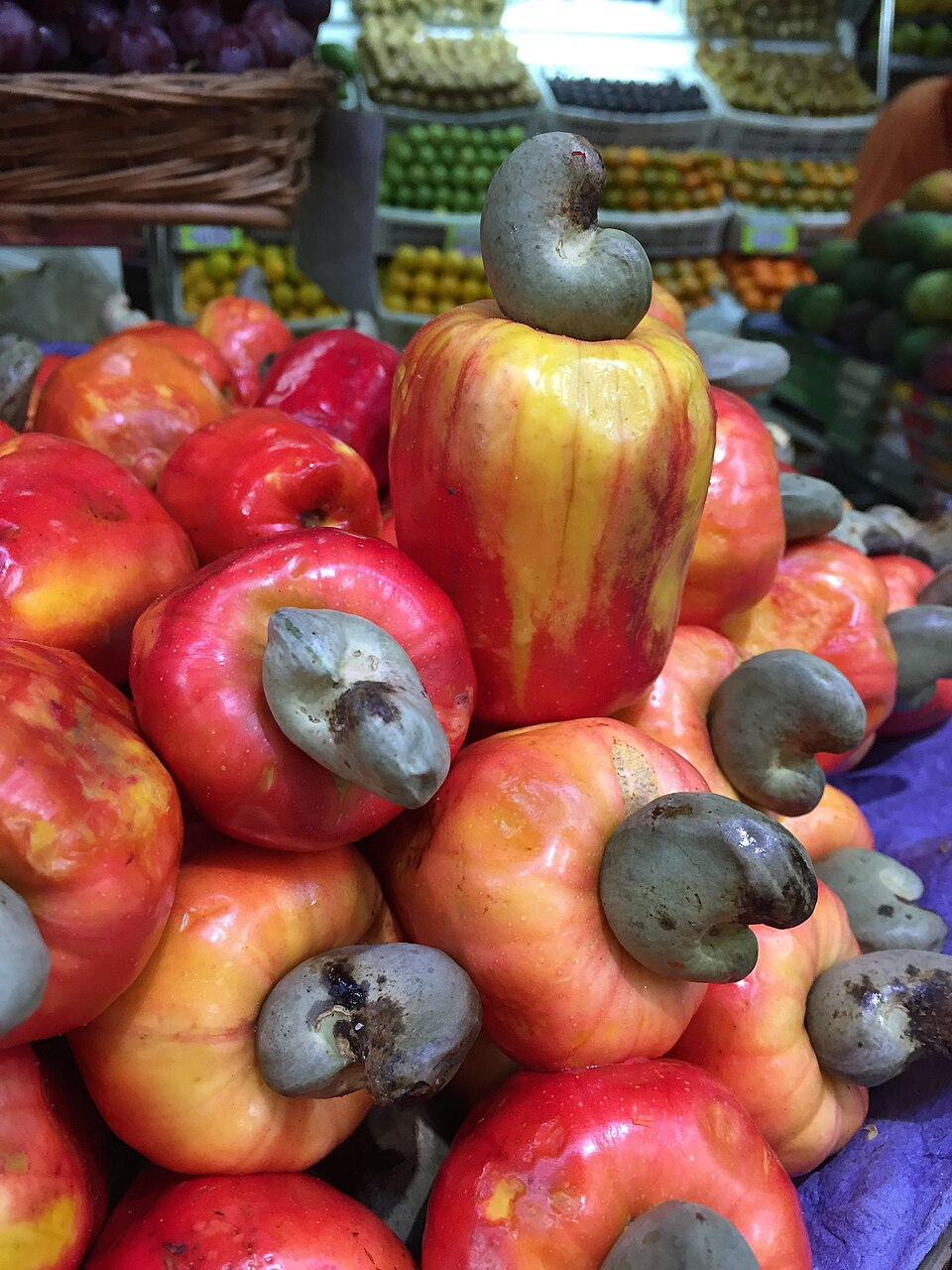
A cashew tree produces a fleshy, pear-shaped fruit called a cashew apple, in red or yellow. Hanging from the bottom of each one, on the outside, is a single kidney-shaped shell. Inside that shell is the cashew.
One nut per fruit, growing on the outside, on the end of something that looks like an apple. And the shell around it contains a liquid that requires industrial processing and protective equipment to remove safely. Here is the botany behind the most labour-intensive nut in the supermarket.
The Fruit and the Seed
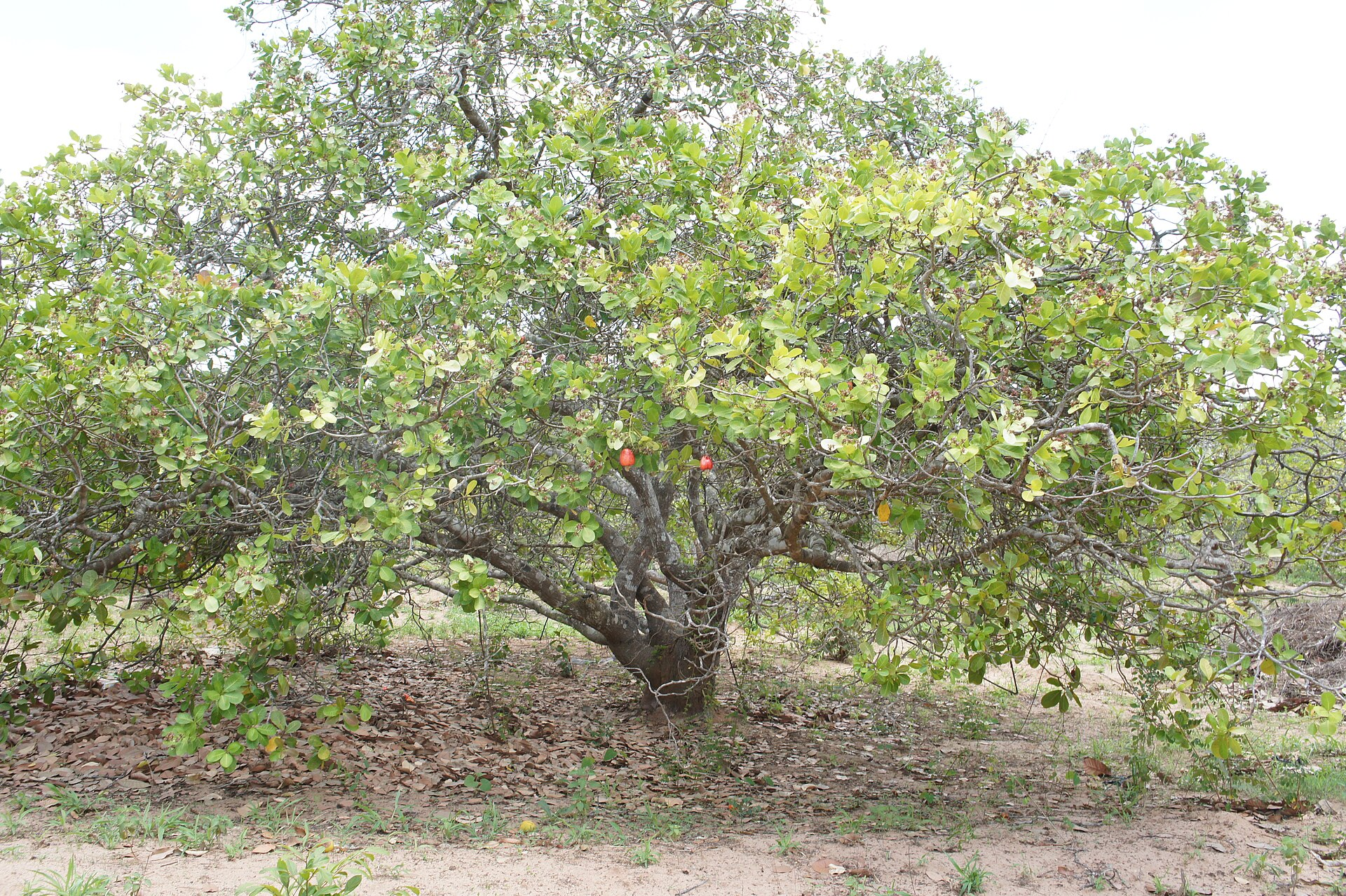
The cashew tree, Anacardium occidentale, is native to Brazil and the Amazon region and was introduced to India by Portuguese traders in the sixteenth century. Today major production occurs in Vietnam, India, and countries across West and East Africa.
Botanically, the arrangement is unusual. The cashew apple is not the fruit in the strict sense; it is a swollen stem structure, an accessory fruit. The actual fruit is the kidney-shaped shell hanging beneath it, classified as a drupe, with the cashew as the seed inside.
Which means a cashew is not botanically a nut at all, though it is treated as one in cooking and, importantly, in allergy terms.
The cashew apple itself is edible, juicy, sweet and tangy. It is widely consumed in Brazil, India and parts of Africa, pressed for juice, made into jams, or fermented into alcoholic drinks. But it is extremely perishable and bruises easily, which makes it almost impossible to ship. So most cashew apples are discarded at the point of harvest, and the nut is the only part with an export market — an enormous quantity of edible fruit going to waste as a by-product of a seed.
Like our content? Follow us for more.
What Is in the Shell
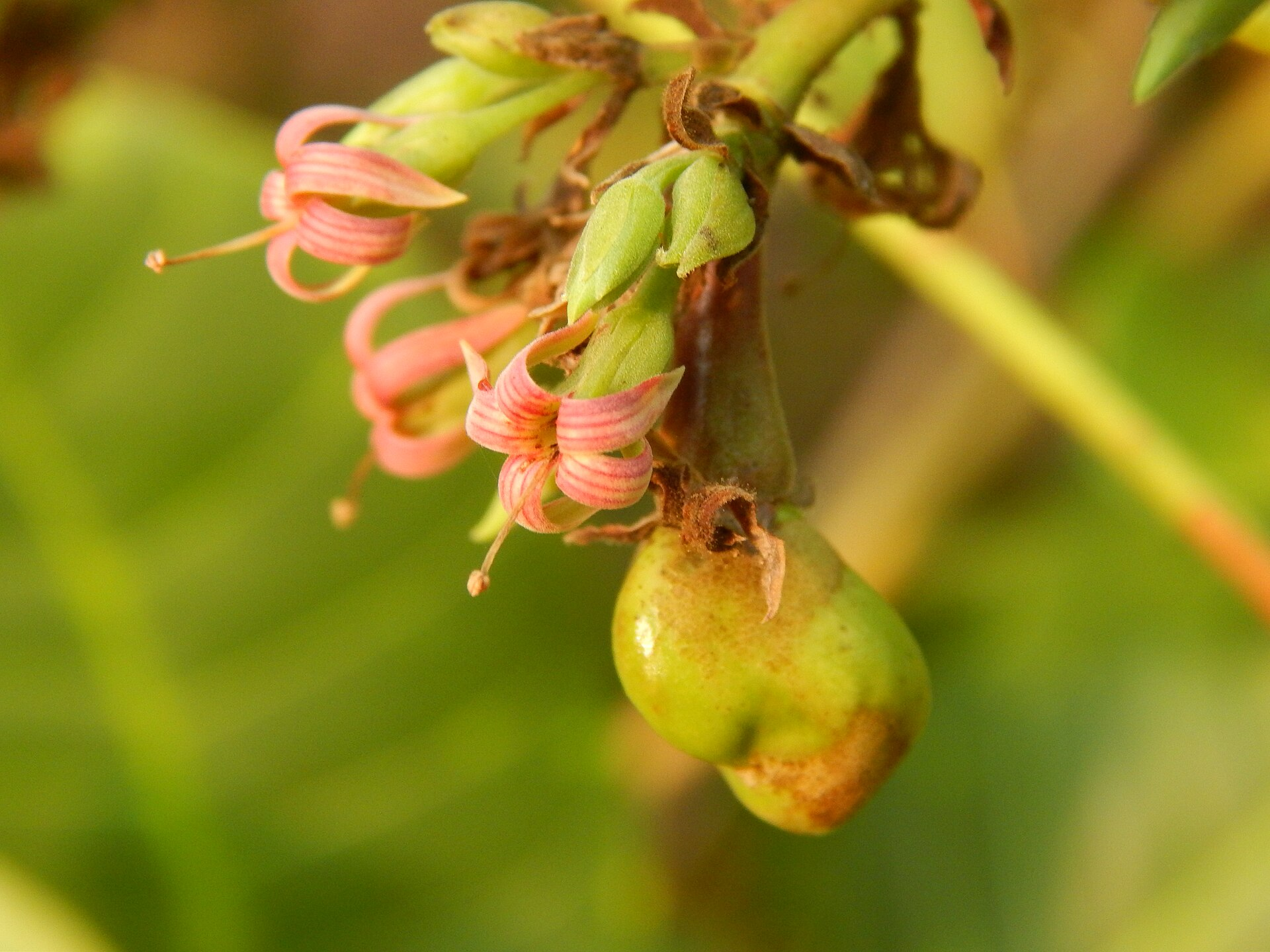
The shell is the reason for everything that follows.
It has two hard layers, and between them sits a substance called cashew nutshell liquid, made up of phenolic compounds including anacardic acid, cardol and cardanol.
These are chemically related to urushiol, the compound in poison ivy and poison sumac that causes severe skin reactions. That relationship is not coincidental: cashews belong to the Anacardiaceae family, which also includes poison ivy, poison oak, sumac, mango and pistachio.
The liquid is caustic. Contact with skin can cause burns and blistering, and it has been known to cause lasting damage to harvesters’ skin. The fumes released during roasting are also an irritant.
This is why cashews are never sold in the shell. It is not a marketing convention or a processing efficiency; it is a hazard that has to be handled with equipment and protection that no domestic kitchen has.
Nothing here is a warning about eating cashews, incidentally. The kernel itself is safe and always has been. The issue is entirely the shell and its liquid, which processing removes.
How They Are Actually Made Safe
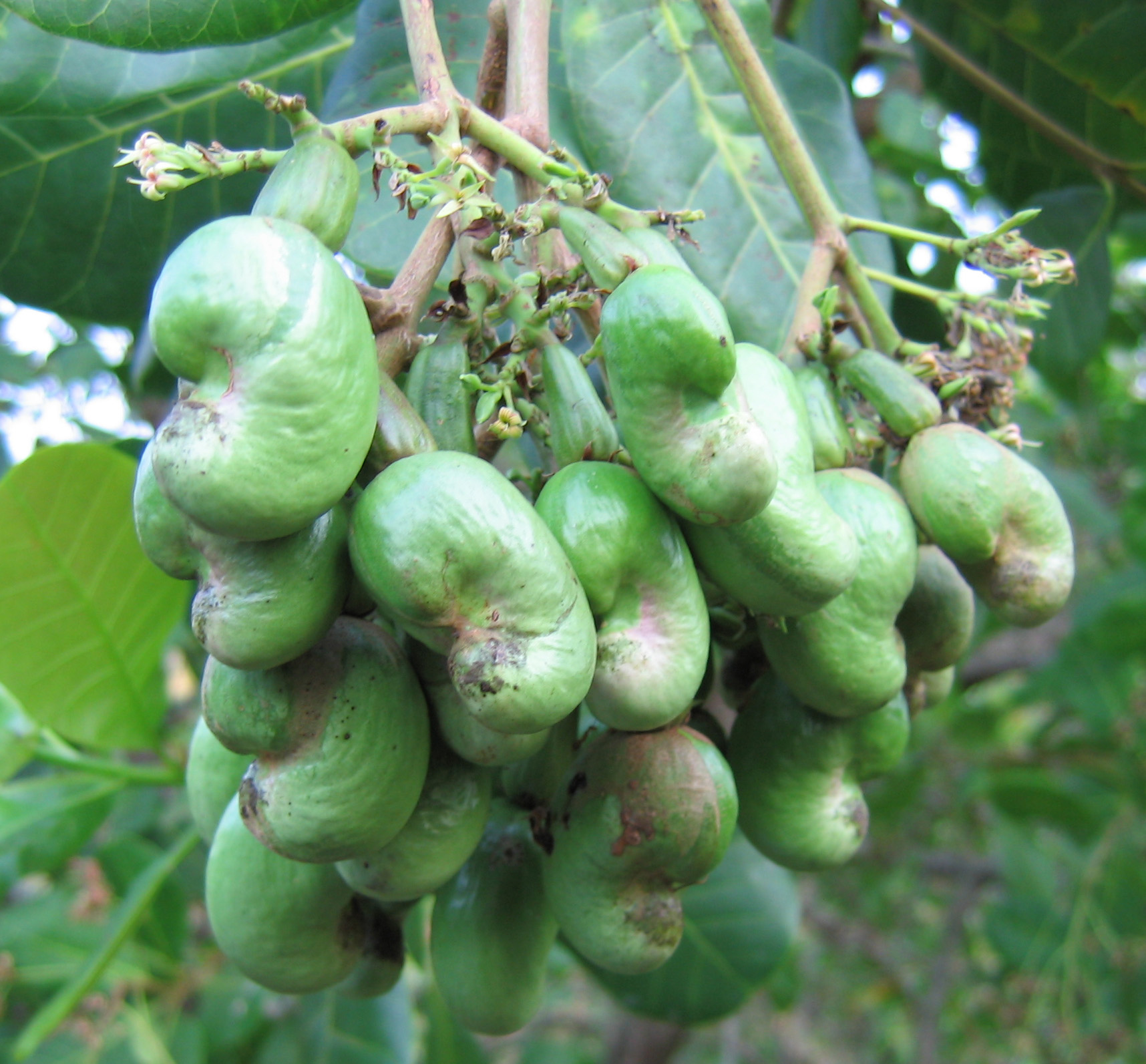
The processing is more involved than almost any other nut, and it explains part of the price.
Harvest begins when the cashew apples start to fall. The apples are collected and the shells detached, then typically sun-dried.
The shells are then heat-treated — roasted or steam-treated at high temperature, with industrial ovens reaching around 210 degrees Celsius — which neutralises the caustic compounds and softens the shell.
Machines then crack the shells to extract the kernel. The kernels are dried, and often heated or steamed again to ensure no shell liquid remains. A thin brown skin is peeled off, and the nuts are sorted and graded.
Modern operations run closed-loop systems to capture the shell liquid, which has real industrial value — it is used in products including brake linings and resins. Workers handling the process wear substantial protective equipment.
This is worth knowing about, because the labour conditions in cashew processing have drawn documented criticism, particularly around exposure risks for workers in some producing regions. The industrial version of this process is designed to protect people; not all of it is industrial.
The Thing About “Raw” Cashews
Here is the detail that surprises people who buy them.
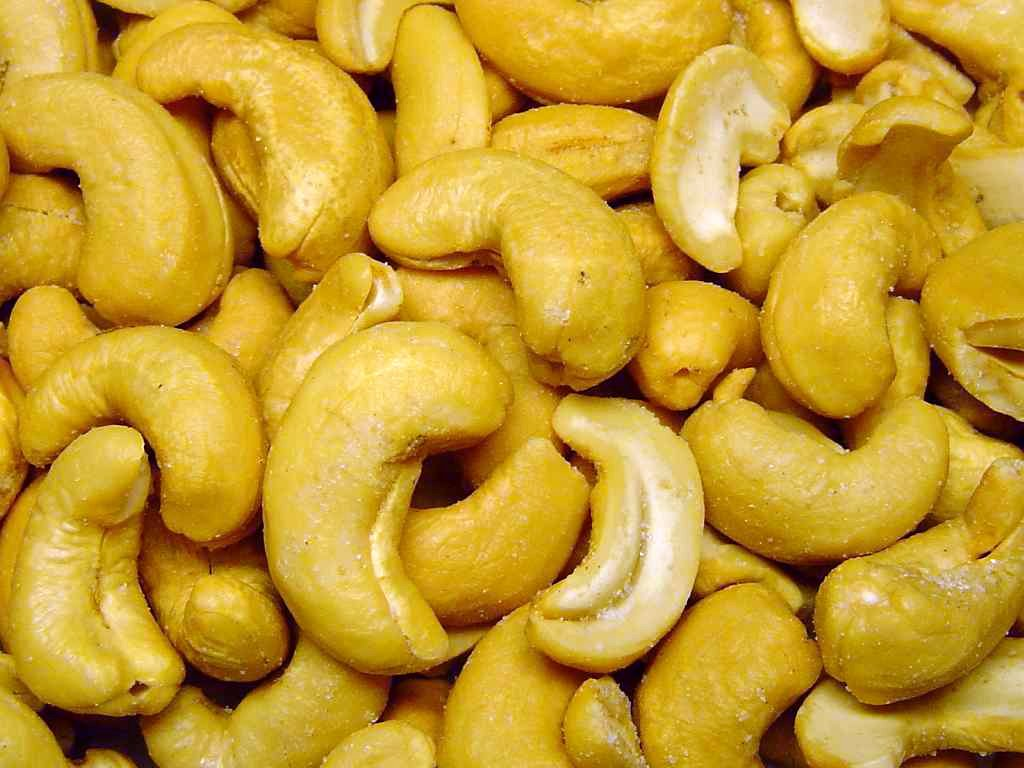
Cashews labelled raw in shops are not raw in the sense the word implies. They have already been steamed or roasted once, before shelling, to neutralise the shell liquid.
“Raw” in this context means only that they were not given an additional flavour roast afterwards. Truly raw, in-shell cashews are handled exclusively in processing facilities, because removing the shell without treatment is the dangerous part.
So a bag of raw cashews contains nuts that have been through high heat. There is no such thing as a commercially available untreated cashew, and this is a case where a food label means something quite different from its everyday sense.
It also means home-processing is not a realistic proposition. Sources describing attempts to shell cashews without industrial equipment report blistering that lasted weeks, and domestic ovens do not reliably reach the temperatures used commercially.
The Fruit Nobody Gets to Try
The cashew apple deserves more attention than it receives, because it is the larger and arguably better half of the plant that almost never leaves its region of origin.
It is a soft, juicy, pear-shaped false fruit, sweet and astringent at once, with a distinctive aroma. In Brazil it is pressed into juice sold widely as caju; in Goa it is fermented and distilled into a spirit; across West Africa and India it is eaten fresh, made into jams, or turned into vinegar and syrups.
The reason you cannot buy one is purely physical. The skin is extremely thin, the flesh bruises on contact, and the fruit begins deteriorating within about a day of picking. It does not survive packing, refrigeration or transport in any commercially viable way.
So the world’s cashew industry harvests an enormous quantity of edible fruit annually and discards most of it, because only the seed can travel. Various efforts have been made to commercialise the apple in processed form, with limited success outside producing countries.
It is a good illustration of how supply chains shape what we think of as food. Nothing about the cashew apple makes it unappealing; it simply cannot get to you.
The Family Resemblance
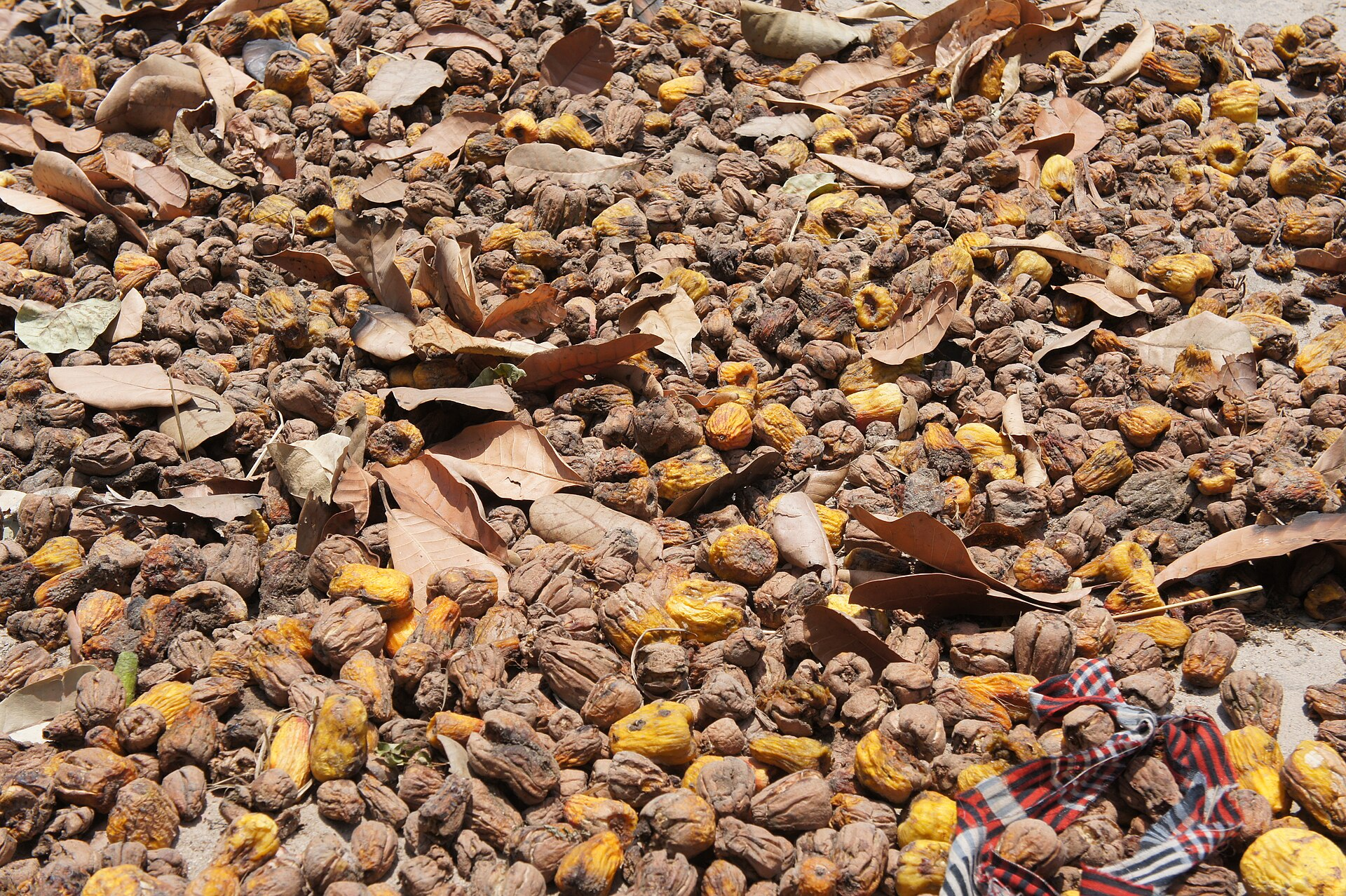
Once you know cashews belong to the Anacardiaceae, several other familiar foods start looking different, and a practical point emerges from it.
The family includes mango, pistachio, and the sumacs — alongside poison ivy and poison oak. What unites them is the production of urushiol-type compounds in some part of the plant.
Mango is the clearest everyday example. Urushiol-related compounds occur in the skin, the sap and the leaves, which is why some people react to handling mangoes while eating the peeled flesh without difficulty. The flesh itself is not the issue; the peel and sap are.
Pistachio shells are far less problematic than cashew shells, which is why pistachios are routinely sold in the shell and cashews never are. The same chemistry, in very different concentrations, produces completely different commercial outcomes.
This is also why cashew, pistachio and mango sensitivities sometimes travel together, and why cashew is treated as a tree nut for allergy purposes despite being botanically a drupe seed. Anyone with a relevant allergy should of course follow their own medical guidance rather than a botanical classification.
Why This Nut Costs What It Does
Put the whole chain together and the price makes sense.
The tree produces one nut per fruit, and the fruit — the larger, heavier, more nutritionally substantial part — is usually thrown away because it cannot travel.
The nut is encased in a shell containing a caustic liquid, which requires heat treatment, mechanical shelling, further heat treatment, drying, peeling and grading, with protective equipment throughout.
Much of the shelling has historically been done by hand because the kernel is fragile and machines break more of them, which introduces significant labour cost and the exposure issues noted above.
Compared with an almond, which grows in a manageable hull and can be mechanically processed at scale, the cashew is an agricultural nightmare that happens to taste extremely good.
There is a broader point in it too. Cashews are one of those foods that is completely familiar as a product and completely unfamiliar as a plant. Almost everyone knows the taste, the shape, the texture; almost nobody could identify the tree, describe the fruit, or explain why one particular nut is never sold the way every other nut is sold.
The answer, it turns out, is hanging on the bottom of a tropical apple, inside a shell related to poison ivy, and it has been through more processing before reaching the jar than nearly anything else in the snack aisle.
Like our content? Follow us for more.