The first time I stood in a Roman bar at 8:00 AM, I made the mistake of waiting for a host to seat me. I stood there, awkwardly clutching my bag, while locals swirled around me like a school of fish, downed their shots of espresso in three seconds, and vanished back into the street. In Italy, coffee isn’t a “sit-down and scroll” event; it is a rapid-fire social ritual governed by a set of unwritten laws that can spot a tourist from a mile away.
If you want to experience the true soul of Italian coffee culture—and avoid the “tourist tax”—you have to forget everything you know about your local mermaid-themed coffee chain. Here is how to navigate the Italian bar like a seasoned local.
The Great “Banco” vs. “Tavolo” Divide
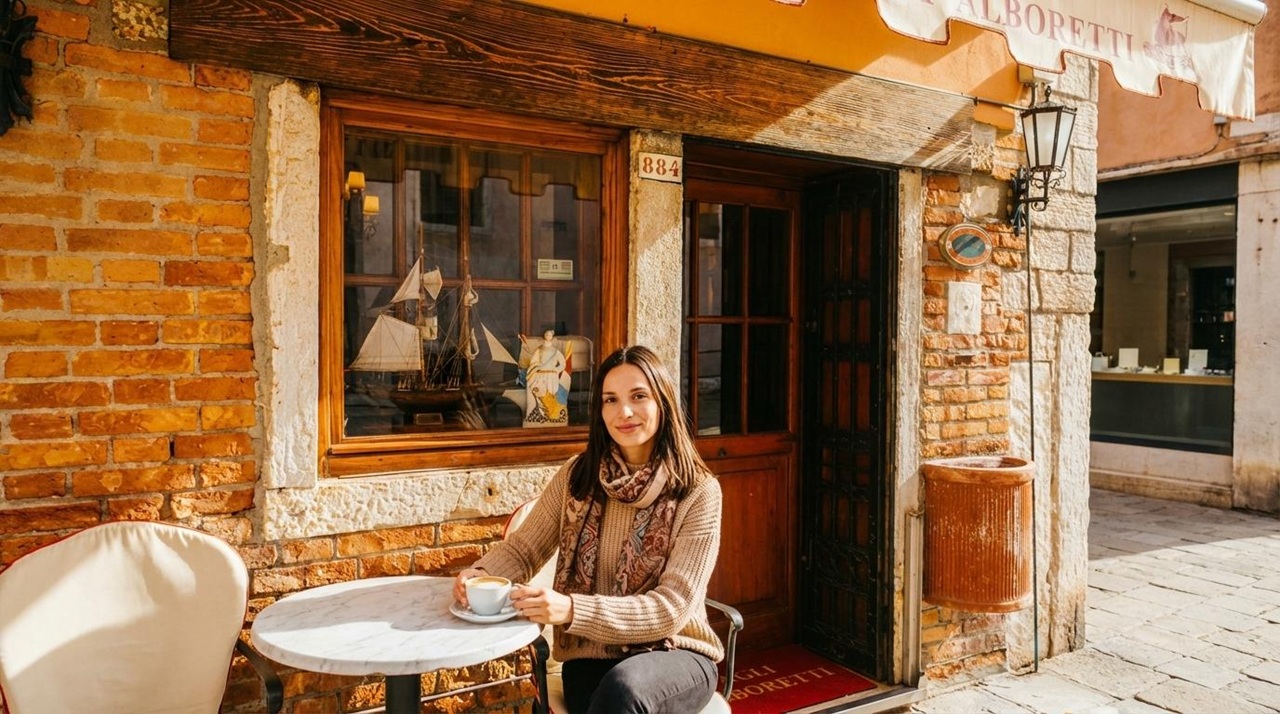
The most expensive mistake you can make is sitting down before checking the price. In Italy, there are two distinct price tiers: al banco (at the bar) and al tavolo (at a table). If you stand at the bar, an espresso might cost you €1.20. The moment your backside touches a chair, that same espresso can jump to €5.00 or more because you are now paying for “service.” For the authentic experience, head straight to the counter. In many busy city bars, especially in Rome or Florence, you’ll need to go to the cassa (cashier) first, pay for what you want, and then take your paper receipt to the barista at the counter.
The Morning Cappuccino Deadline
If there is one rule that defines Italian coffee etiquette, it is the “11:00 AM Cutoff.” To an Italian, a cappuccino is a breakfast drink—the heavy milk is considered a meal in itself. Ordering a cappuccino after lunch or dinner is seen as a digestive disaster; it’s the equivalent of ordering a bowl of cereal at a steakhouse. If you need a caffeine fix in the afternoon, stick to a caffè (espresso) or a caffè macchiato (espresso with a tiny drop of milk). If you absolutely must have your milky coffee at 4:00 PM, be prepared for a polite but slightly confused look from the barista.
The “Caffè” Identity Crisis
In the U.S. or U.K., “coffee” usually implies a large, watery drip-brew. In Italy, un caffè is, by definition, an espresso. Don’t bother asking for a “large coffee”—it doesn’t exist in the traditional sense. If you want something closer to what you drink back home, order a caffè americano, which is espresso diluted with hot water. However, if you want to look like you know what you’re doing, try a caffè lungo (a “long” espresso with slightly more water pulled through the machine) or a ristretto (a shorter, more concentrated shot).
The Ritual of the Water Glass
When you order an espresso at a high-end bar, the barista will often place a small glass of sparkling or still water in front of you before the coffee arrives. Many tourists save the water to wash down the bitter aftertaste of the coffee. This is a dead giveaway. The “unwritten rule” is to drink the water before your coffee. The purpose is to cleanse your palate so you can fully appreciate the complex notes and the crema of the espresso. Drink the water, down the coffee in two or three sips, and leave the empty cup on the bar as your signal that you’re finished.
No Such Thing as a “To-Go” Cup
The concept of “grab and go” hasn’t fully permeated traditional Italian culture. You will rarely see an Italian walking down the street with a paper cup in hand. Coffee is a moment of pause, even if that pause only lasts ninety seconds. The “bar” is a social hub where you stand, exchange a quick “Buongiorno” with the barista, and consume your drink at the counter. If you ask for a “to-go” cup, you might be given a tiny plastic thimble with a lid, but you’ll be missing the point of the ritual. Stand at the bar, enjoy the clinking of porcelain and the hiss of the steam wand, and take your sixty seconds of “Dolce Vita” before moving on with your day.