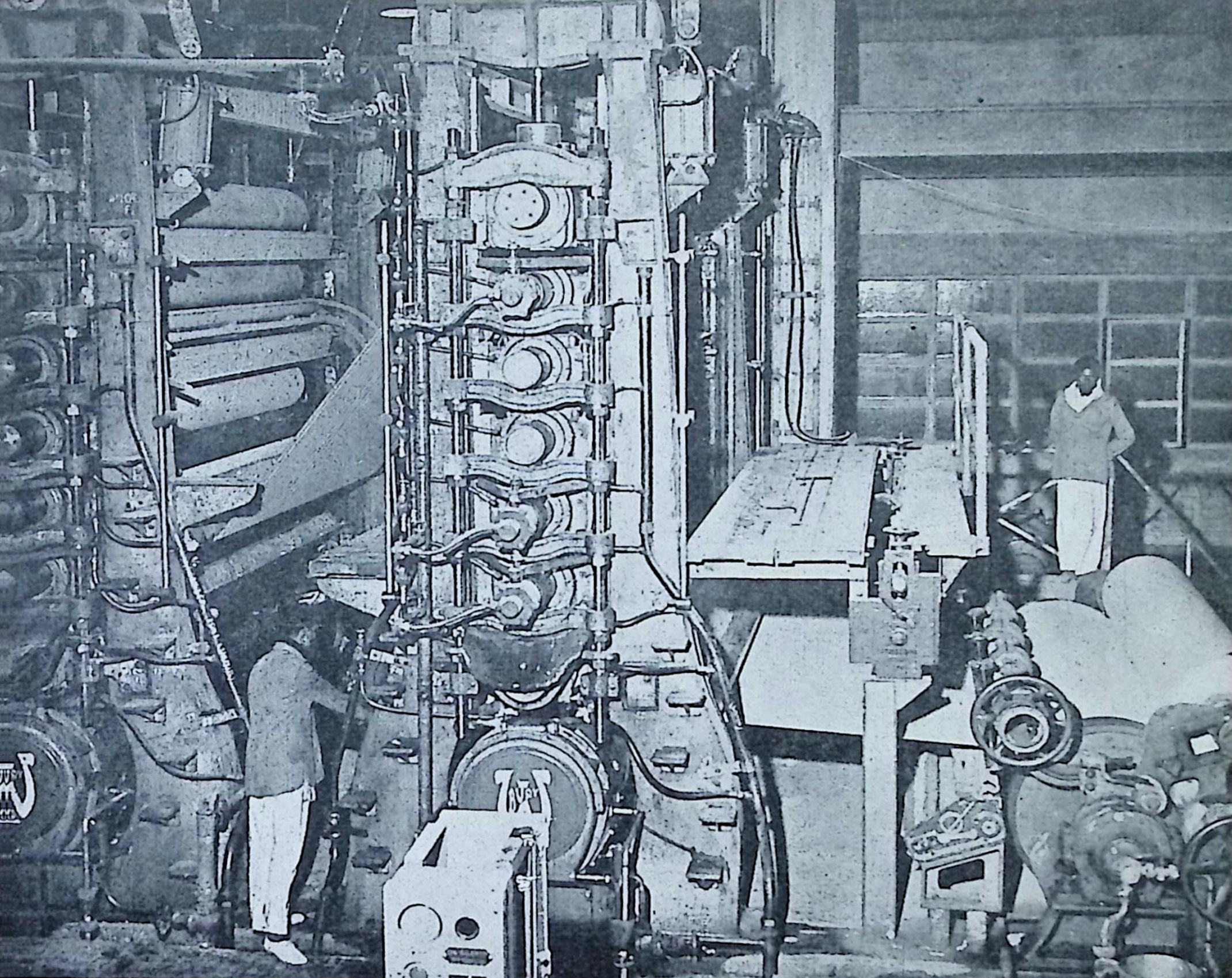
In 1960 a carbon paper works coated very thin tissue with a molten blend of waxes, oils and pigment, chilled it solid on drums and wound it into reels before cutting it into sheets.
The grades were described by how many legible copies they would produce. The same works often wove and inked typewriter ribbons alongside, on an entirely different chemistry. Worn ribbons were re-inked rather than replaced. And everybody who touched any of it had blue fingers.
Here are twelve things that were normal in a carbon paper works in 1960, and what became of each one.
1. Carbon Paper Was Tissue Coated With Wax, Pigment and Oil
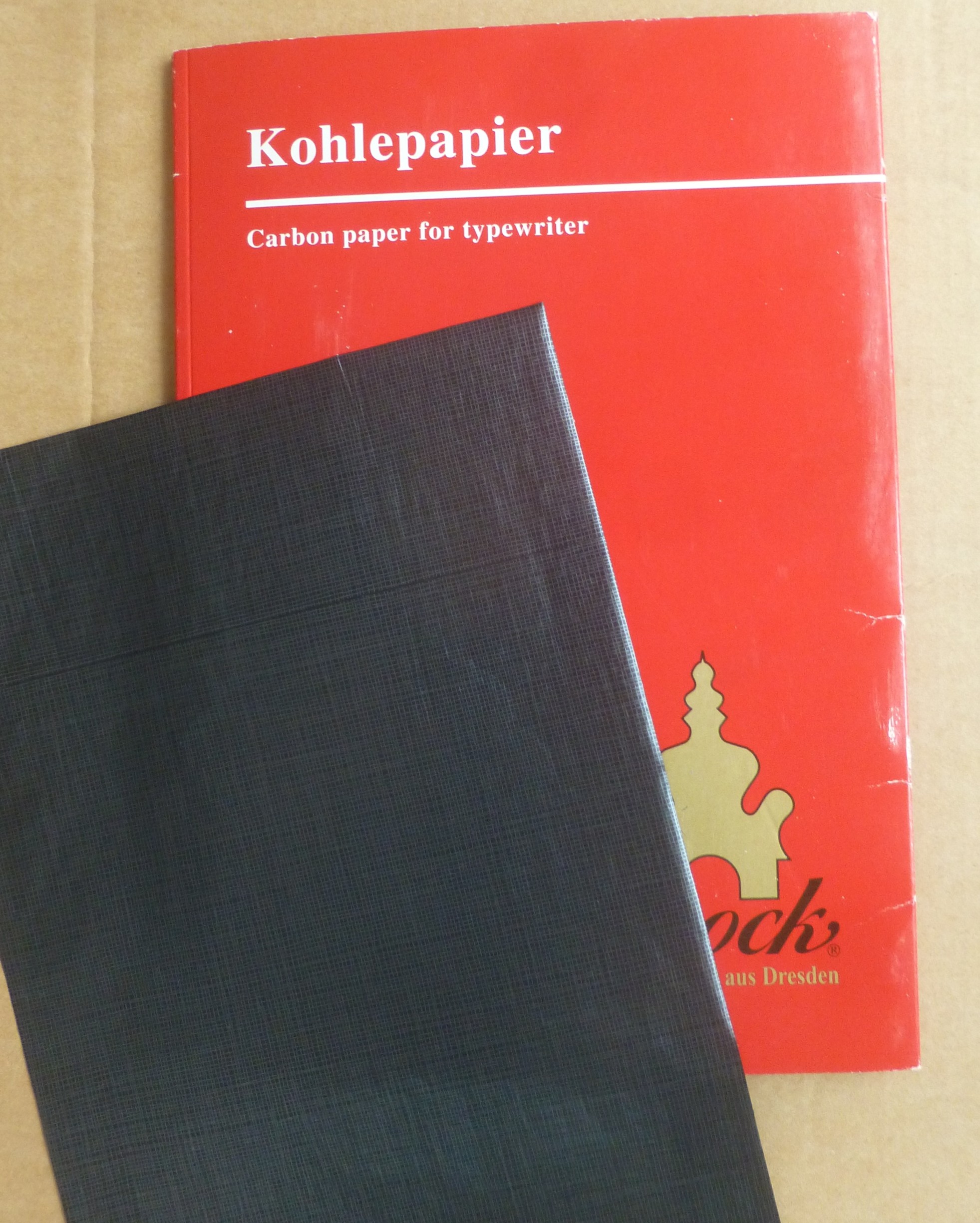
The coating was not ink in any ordinary sense. It was a blend of waxes, oils and finely dispersed pigment, applied as a molten film to one side of a very thin tissue paper, which transferred under the pressure of a typebar or a pen.
Gone from general use. The formulation is why carbon paper behaved as it did: a wax-based coating releases under localised pressure and sets again as it cools, which is what makes a sharp letter rather than a spreading blot, and also what makes it smear with heat or a dragging hand.
Like our content? Follow us for more.
2. The Coating Was Applied Molten and Chilled Almost Immediately
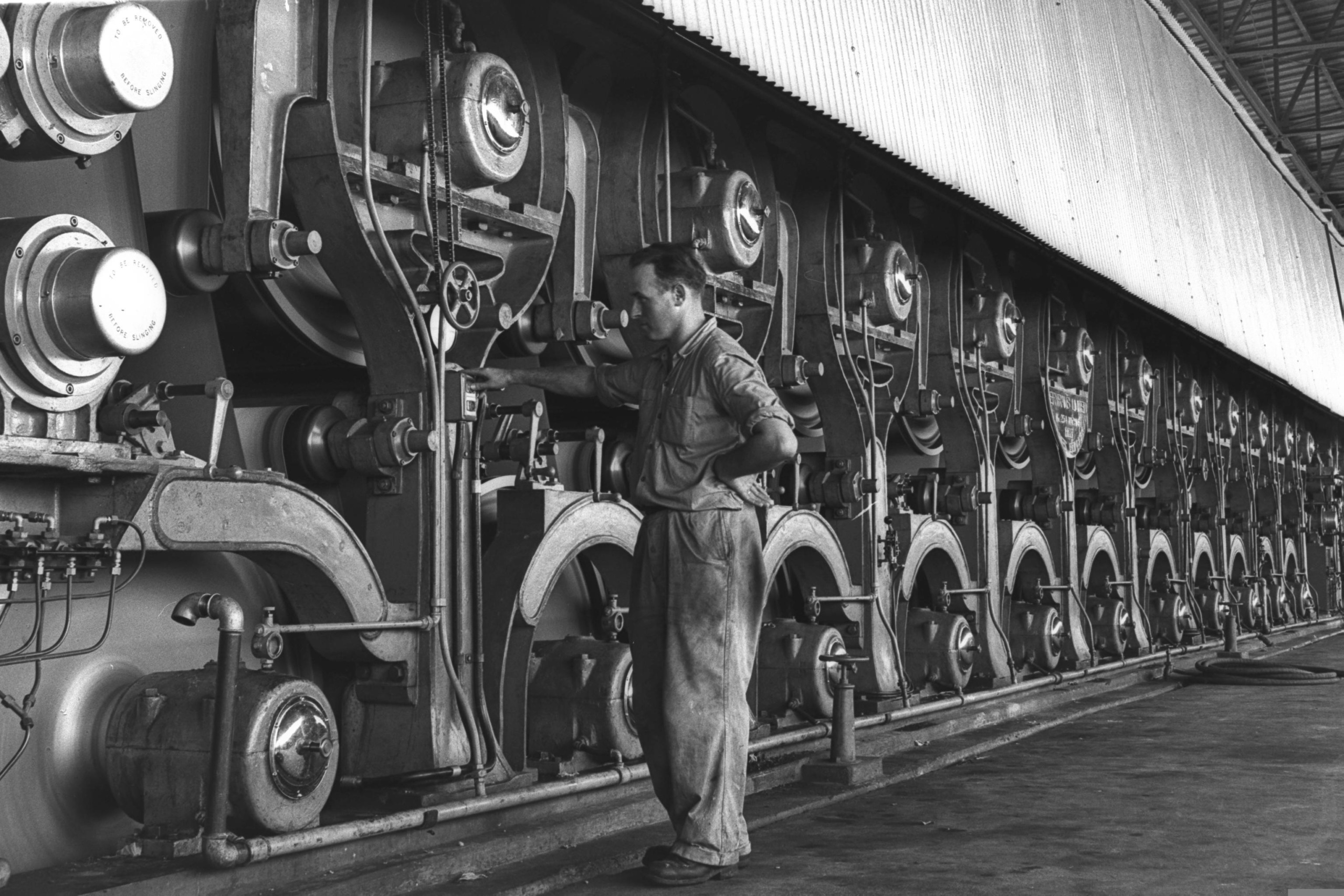
Tissue ran off a reel through a bath or over a roller carrying the heated coating, then over chilled drums that solidified the film before the web could be handled.
The same principle survives in thermal transfer ribbons. The coating weight was the critical control: too thin and the copies were faint, too thick and the sheet offset onto whatever it touched and made a mess of a drawer full of stationery.
3. The Thinner the Tissue, the Better the Copy and the Easier It Tore
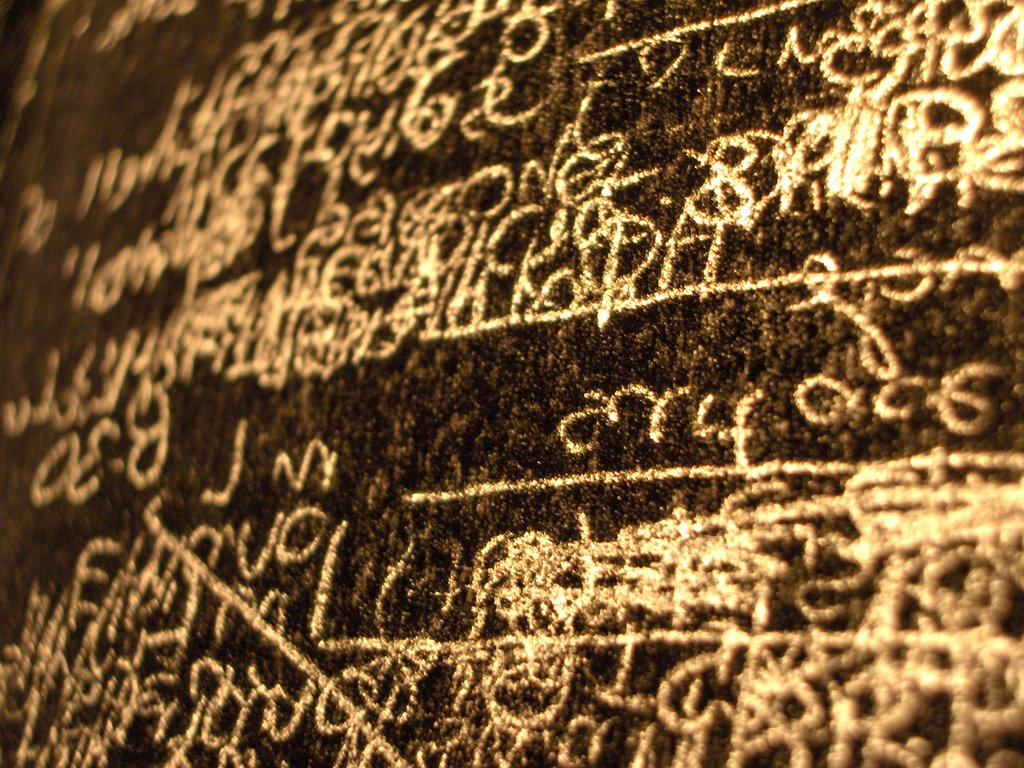
Carbon paper was made in several weights, and the thinnest gave the sharpest and most numerous copies because less material sat between the typebar and the sheet below – and it also crumpled, creased and tore in handling.
No equivalent trade-off exists. The choice was a genuine one made daily in every office: heavy carbon for rough work and durability, feather-weight for the jobs that needed six or eight legible copies at once.
4. The Specification Was Literally How Many Copies It Would Make
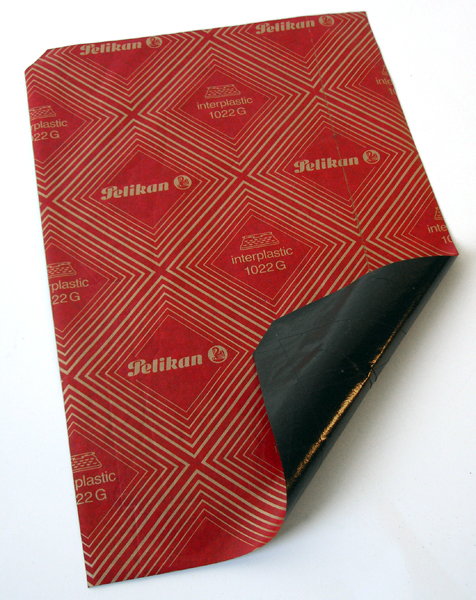
Grades were sold and described by the number of legible copies obtainable, and a typist assembling a set knew exactly how many sheets she could interleave before the bottom copy became unreadable.
Replaced by printing however many copies are wanted. The number was a hard physical limit set by how much force a typebar could transmit through a stack, which is why a document needing a dozen copies had to be typed twice – and why the carbon copy count shaped how organisations designed their paperwork.
5. One-Time Carbon and Reusable Carbon Were Different Products
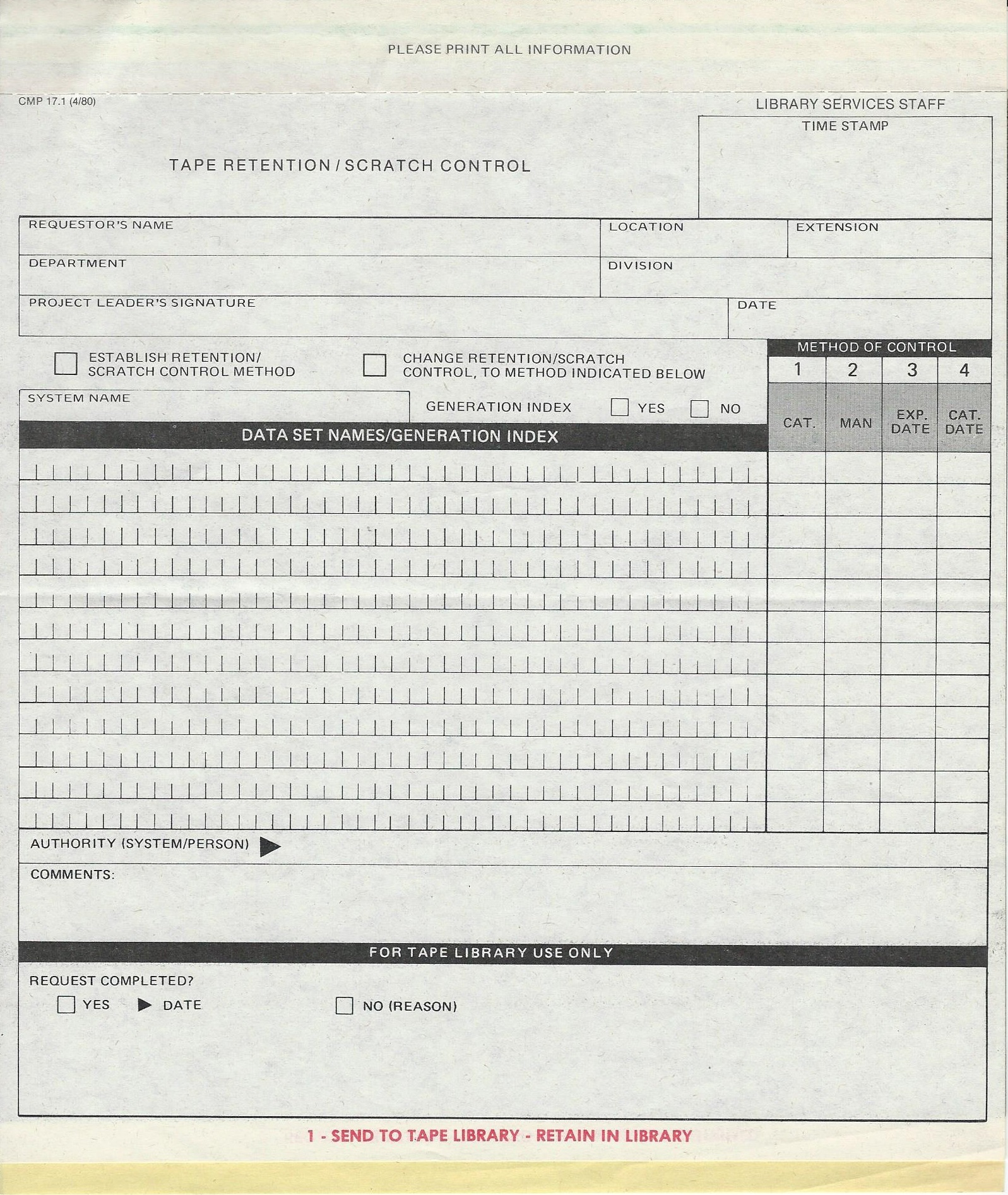
Office carbon for typing was made to be used many times until the coating was exhausted. Carbon for multi-part business forms was one-time – lighter coating, single use, often bound into the set – because the form was filled in once and the carbon discarded.
Both displaced, the forms market by self-copying paper and then by printing on demand. The distinction mattered commercially: office carbon was sold by the box to businesses, and forms carbon was sold in enormous volume to the printers who made the sets.
6. Everybody Who Used It Had Blue Fingers
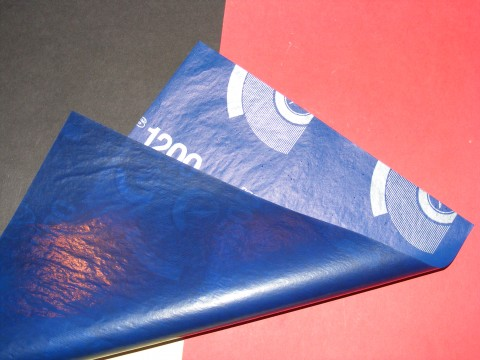
Handling carbon paper transferred the coating to hands, cuffs, documents, desks and anything else it touched, and the transfer was immediate and difficult to remove.
No longer an occupational feature of anything. The stains were the universally shared experience of office work in the period and a recognised hazard to the work itself – a smudged master is a retyped master, which is why the sheets were handled by their edges and inserted with care.
7. Putting a Set Together Was a Skill and Getting It Wrong Was Obvious
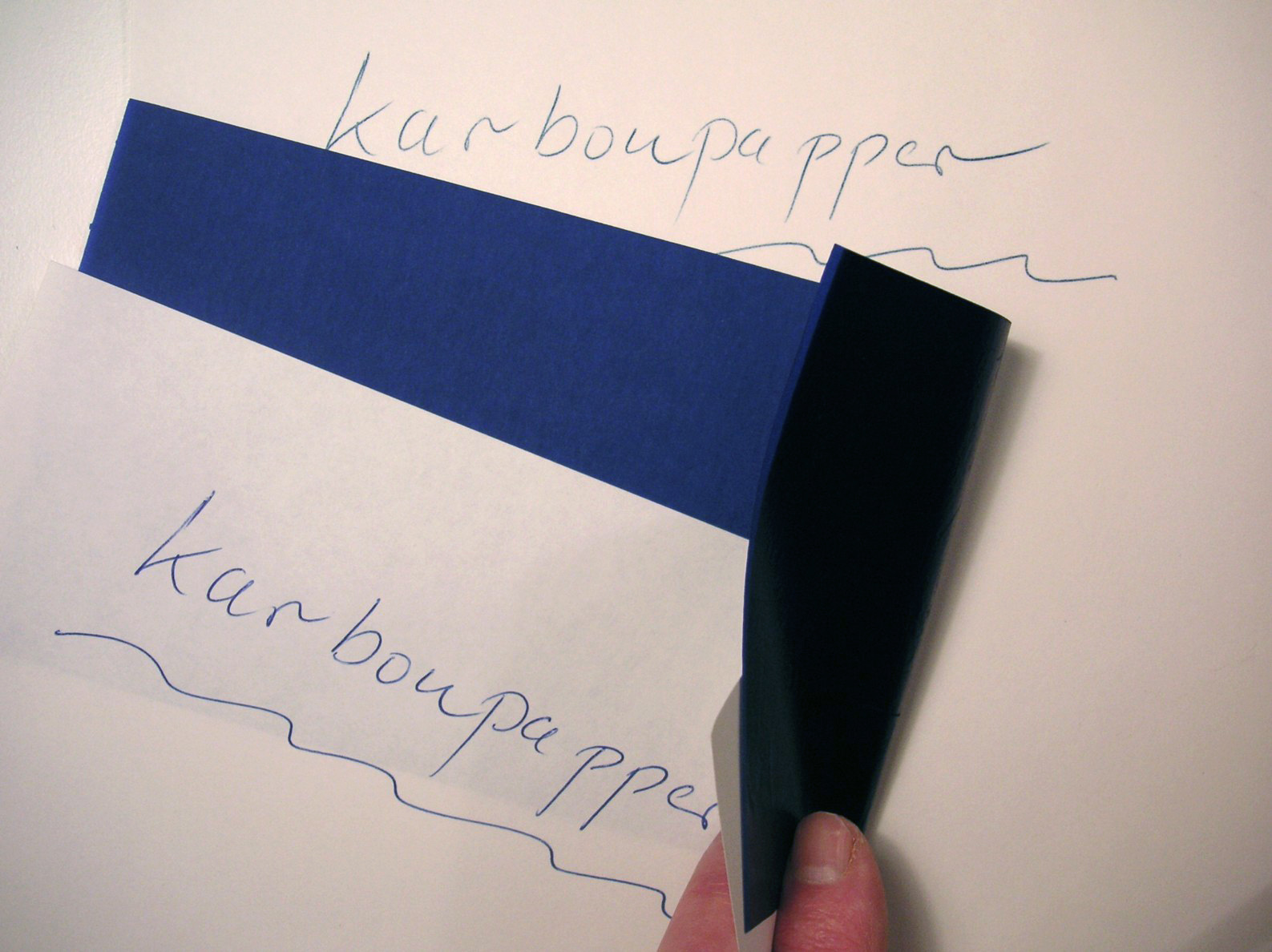
A typist assembled the pack by hand – sheet, carbon, sheet, carbon – checking the coated side faced the right way on every single one, aligning the edges and feeding the whole stack into the machine without it slipping.
No equivalent task. Inserting one carbon the wrong way round produces a mirror image on the back of the sheet above and nothing where the copy should be, which is the error everybody made once, and the reason the coated side was identifiable by feel as well as by shine.
8. Typewriter Ribbon Was Woven on the Premises and Inked Separately
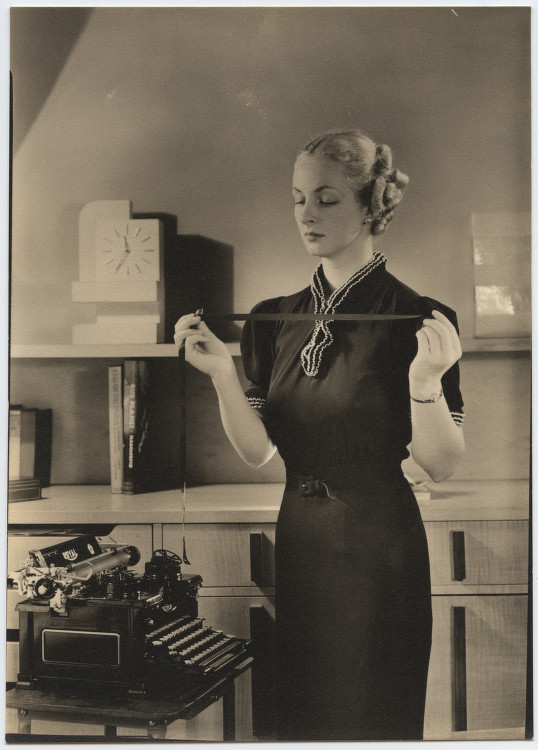
The same works frequently made ribbons: narrow fabric woven from cotton, silk or later nylon, cut to width, inked, wound onto spools and boxed.
Ribbon manufacture persisted into the printer era and is now a small specialist trade. Ribbon ink was an entirely different formulation from carbon coating – an oil-based ink held in the fabric’s weave and released by impact, rather than a wax film transferred by pressure – so a works making both was running two unrelated chemistries.
9. Ribbons Were Re-Inked Rather Than Thrown Away
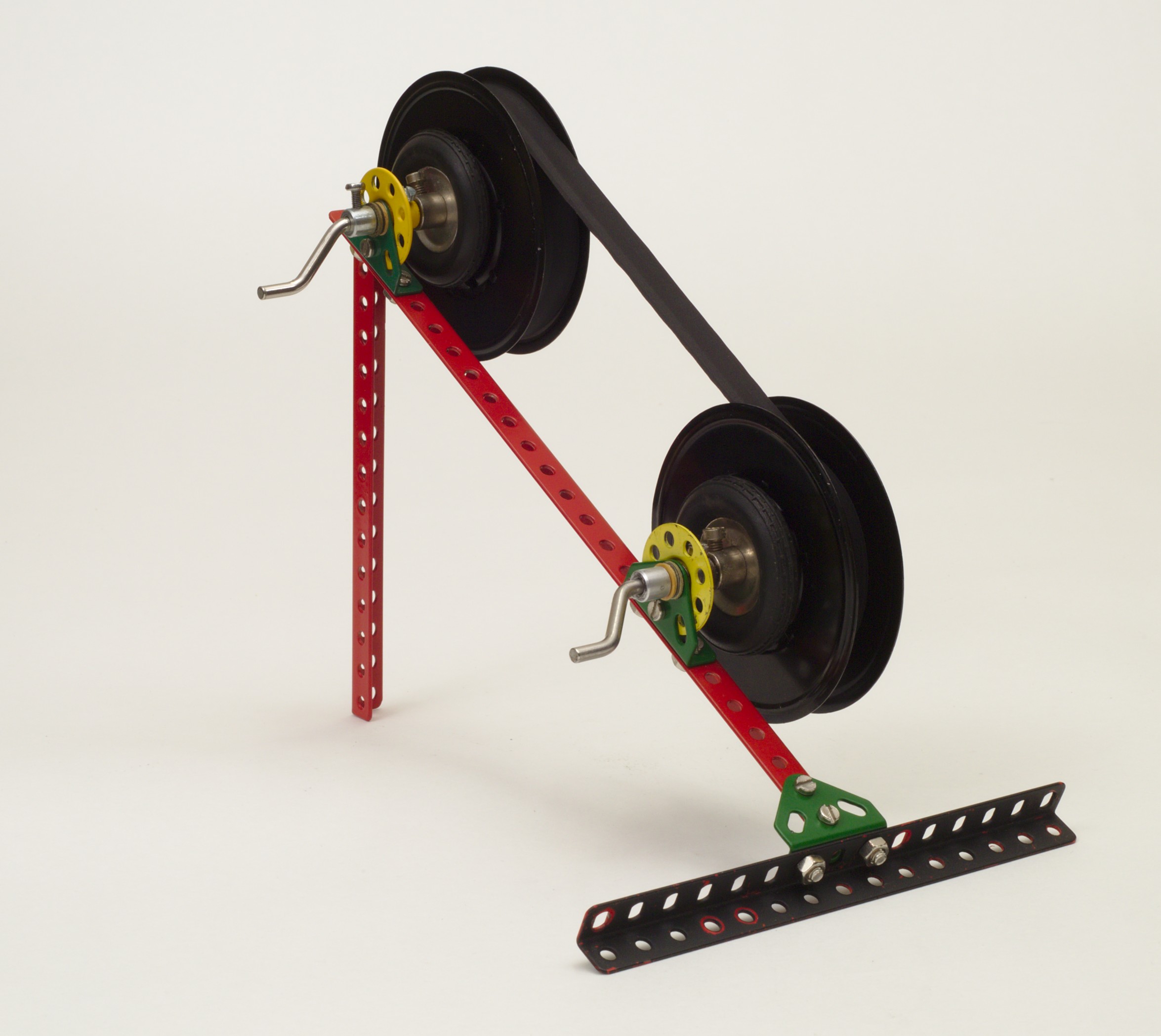
A worn ribbon was not necessarily finished. Re-inking services and machines existed, and a ribbon could be recharged several times before the fabric itself wore out.
Gone with the ribbon. It is a clear marker of where the costs sat: the fabric was the expensive part and the ink was cheap, so the economically sensible thing was to keep the fabric and replace the ink, which is the exact opposite of how consumables are now sold.
10. Two-Colour Ribbons Were Standard and the Red Half Had a Job
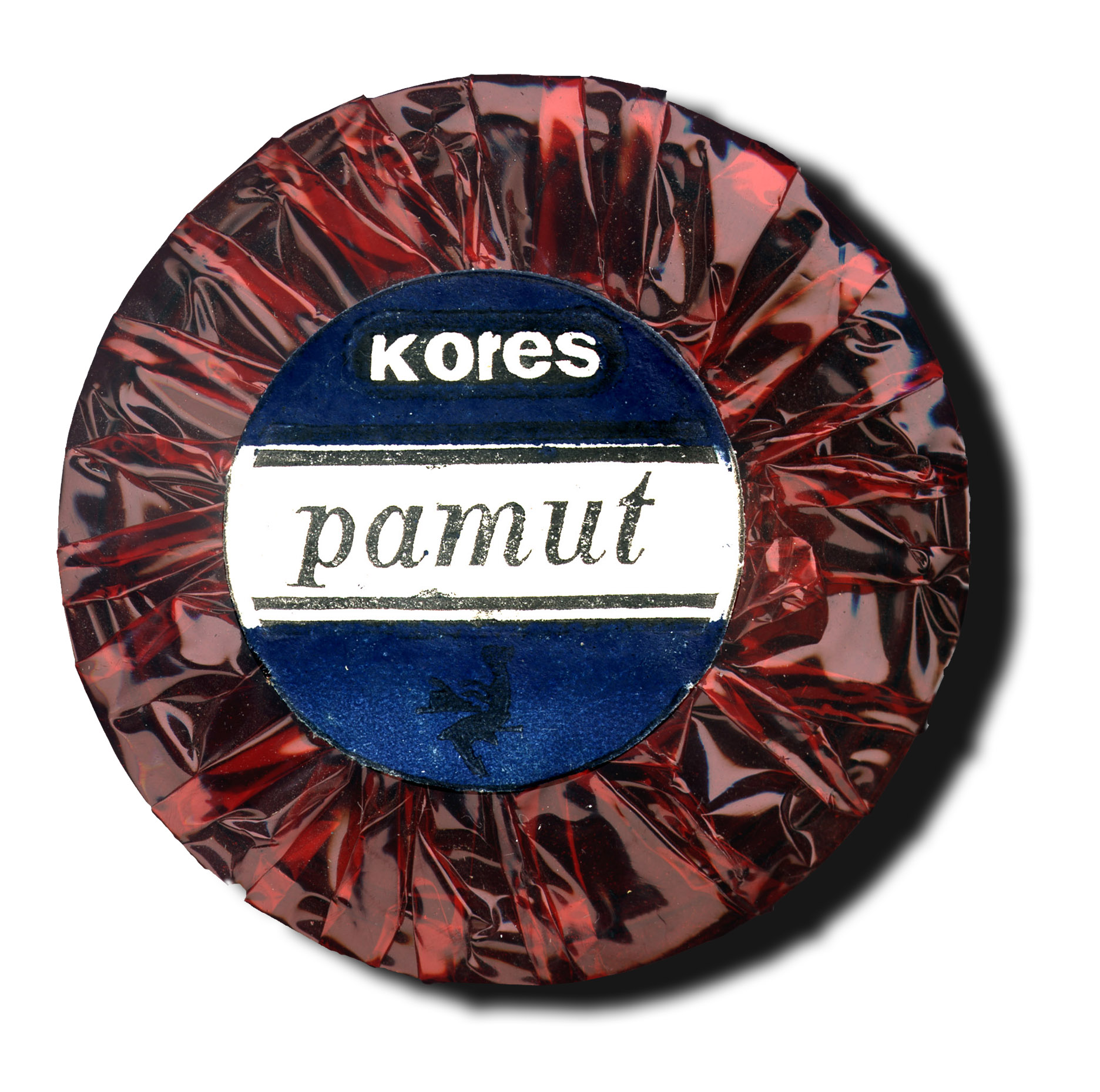
Ribbons were commonly inked black on the upper half and red on the lower, with a lever on the machine shifting which half struck the paper, and the red was used for negative figures, corrections and emphasis.
Colour is a setting. The convention that negative numbers appear in red comes directly from this arrangement, and the phrase about being in the red is a description of what a ledger physically looked like when it was typed on a two-colour ribbon.
11. Then Self-Copying Paper Took the Forms Market
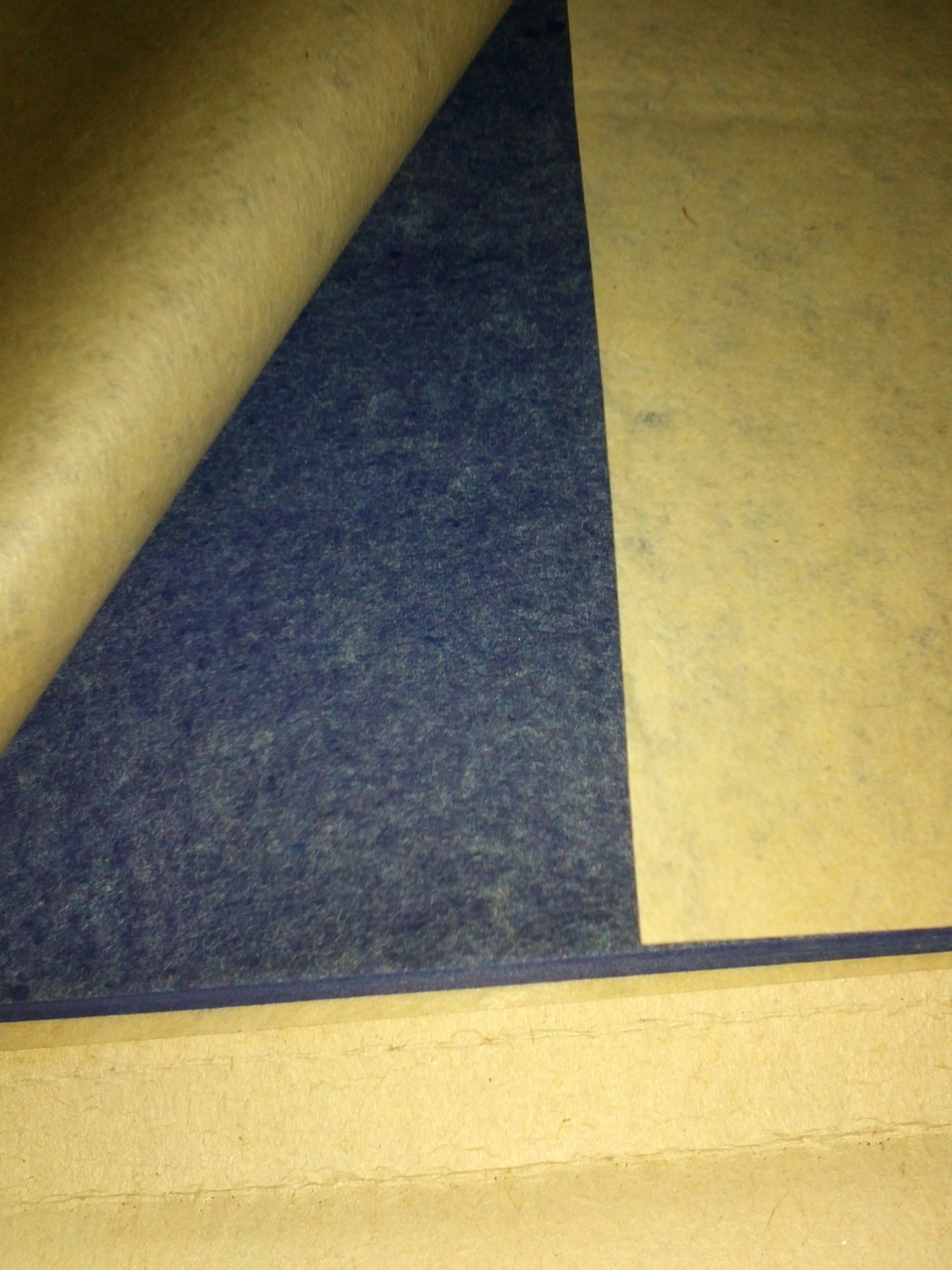
Paper coated with microscopic capsules that burst under pressure and react with a coating on the sheet below made the interleaved carbon sheet unnecessary for business forms, with no loose carbon to insert or dispose of.
Still in use for multi-part forms, alongside printing. The forms market was the larger half of the trade by volume, and losing it was the structural blow – the office typing market was more visible but very much smaller.
12. The Copy Is Still at the Top of Every Message You Send
The abbreviation for a carbon copy was written at the foot of a letter to show who else had received one, produced by the physical sheets in the typewriter.
The field is on every email ever sent. It is the most widely used survival of any obsolete technology discussed in this series: billions of people a day use an abbreviation describing a sheet of wax-coated tissue that almost none of them have handled, to perform an action with no physical copy and no carbon anywhere in it.
The Copy Limit Shaped How Organisations Were Built
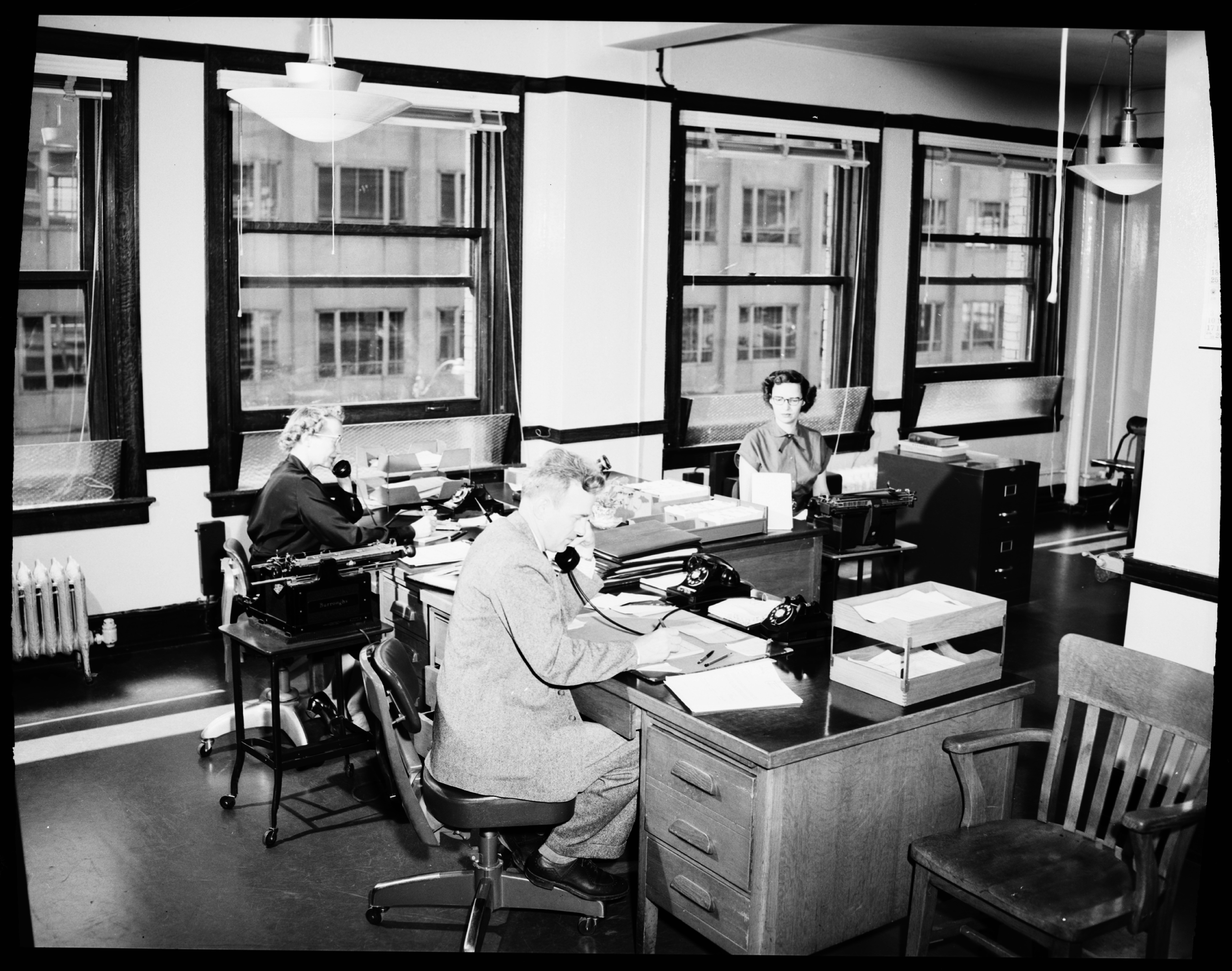
The detail worth taking away from this trade is not the wax or the tissue. It is the number.
A grade of carbon paper was specified by how many legible copies it would make, and that number was a hard physical constraint. A typebar strikes with a fixed force, and that force has to travel down through every sheet in the stack. Six copies was ordinary. Eight was good. Beyond that the bottom sheet was a grey suggestion of a document.
So every organisation in 1960 was working with a strict limit on how many people could receive the same piece of paper from one act of typing. And organisations are shaped by the paper that moves through them.
The consequences were everywhere. Distribution lists were short because they had to be. The order in which names appeared mattered, because the people at the bottom got the worst copy. Anything needing wide circulation had to be typed twice or sent for duplicating, which took longer and cost more, so it happened only when it was worth it. Filing systems were designed around who held which physical copy, because there was no other register of who knew what.
Then copying became effectively free, and all of those constraints dissolved at once. The cost of sending a document to one more person fell to nothing, and the number of people on any given distribution went up accordingly – with consequences for how much paper, and later how much email, everybody receives.
The carbon copy count was a brake on communication, and nobody thought of it that way because nobody imagined it being removed.
The abbreviation for it is still the field at the top of every message you send – which is the brake’s label, still attached, long after the brake came off.
If anybody in your family typed for a living, they inserted those sheets one at a time, coated side the right way, several times a day.
And they would have known exactly how many copies their carbon was good for.
Like our content? Follow us for more.