A pan is a heat-delivery system and a moisture-management system at the same time, and every difference between one and another is a difference in one of those two jobs. Here are sixteen.
1. Some Metals Move Heat Far Faster Than Others
Conductivity varies enormously between metals, which determines how quickly a pan responds to a change in the heat and how evenly it distributes it across the base.
A poor conductor produces hot spots directly above the flame. Thermal conductivity is the property that decides responsiveness.
Like our content? Follow us for more.
2. Which Is Why Some Pans Have a Sandwich Base
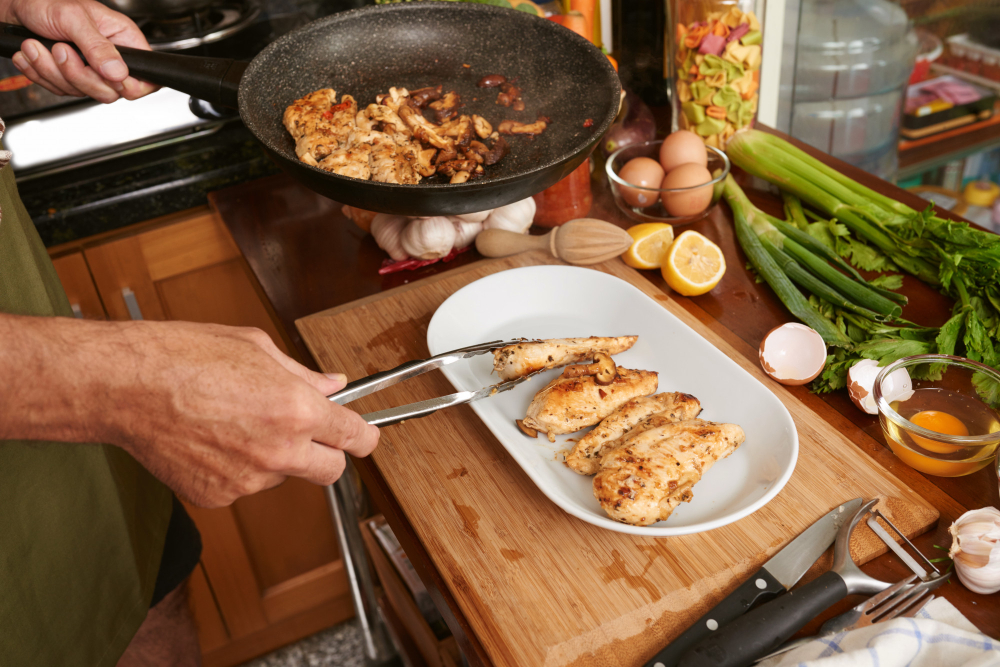
Materials chosen for durability or for their surface are frequently poor conductors, so a layer of a better conductor is bonded into the base to spread the heat before it reaches the food.
The outside and the inside are doing different jobs. Composite construction is the compromise between conducting and lasting.
3. Mass Evens Out What Conductivity Cannot
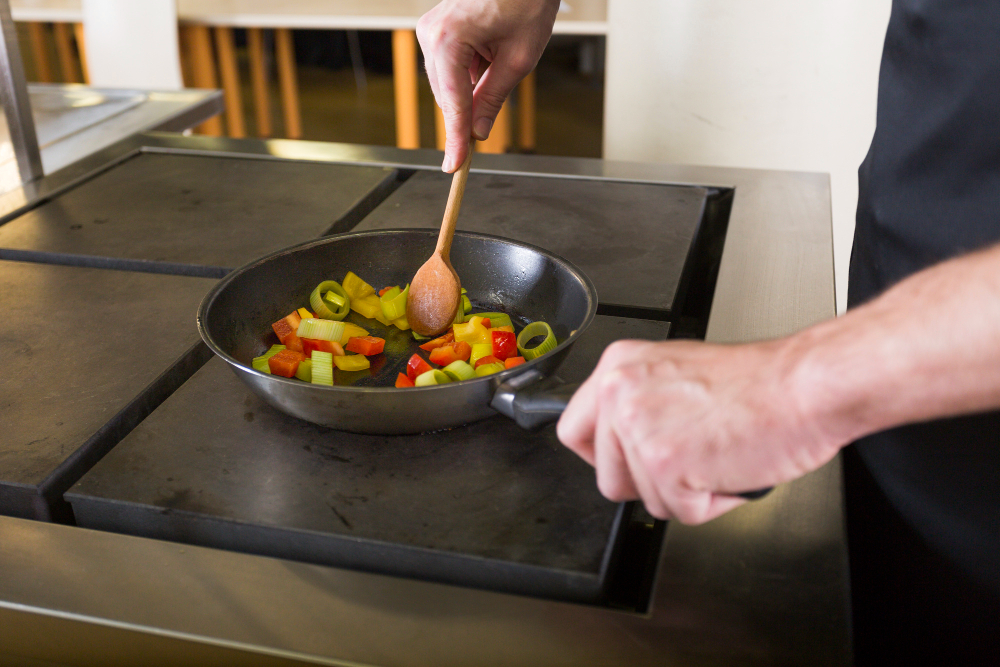
A heavy pan holds a great deal of heat, so adding cold food barely changes its temperature and the cooking continues steadily rather than stalling.
Thin pans lose their heat instantly. Thermal mass is why weight is a functional property rather than a nuisance.
4. And Prevents the Base Scorching
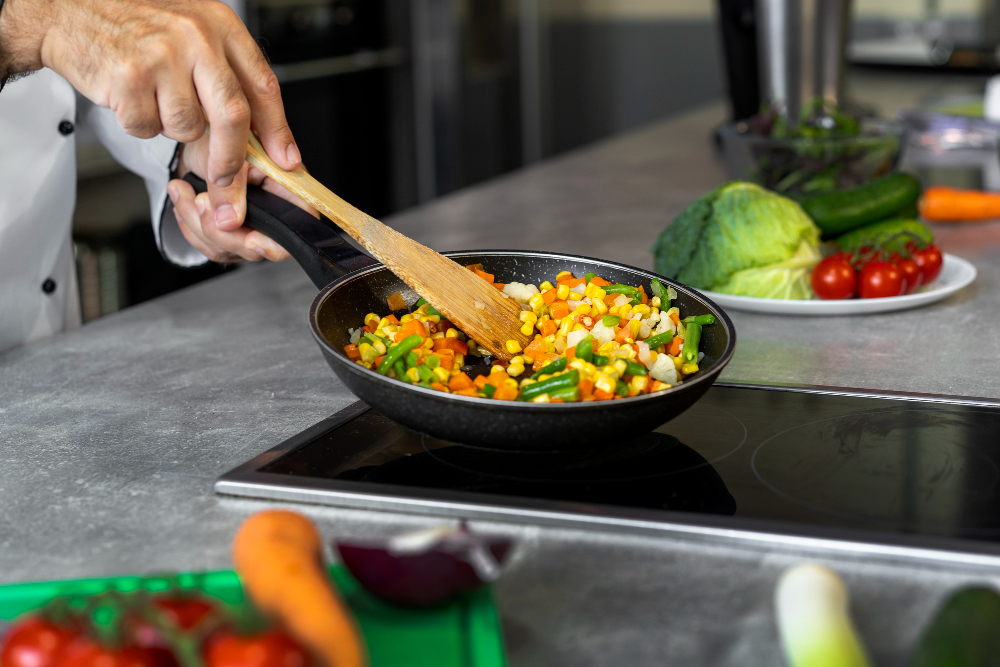
A thick base separates the food from the direct heat and spreads it, which is why anything liable to catch is cooked in something heavy.
A thin base concentrates the heat exactly where the solids settle. Base thickness is the specification that determines whether something burns.
5. But Takes Longer to Change Its Mind
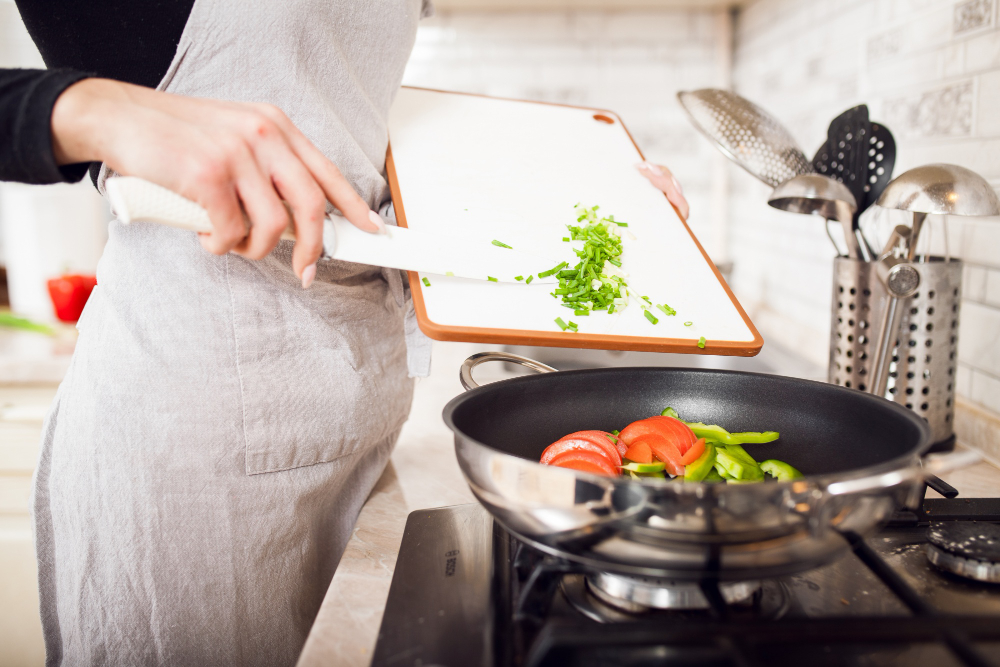
The same mass that keeps a pan steady also makes it slow to respond, so a heavy pan continues cooking after the heat is turned down and must be anticipated.
Removing it from the heat is the only quick adjustment. Thermal inertia is the cost of stability.
6. Unglazed Clay Holds Water in the Wall
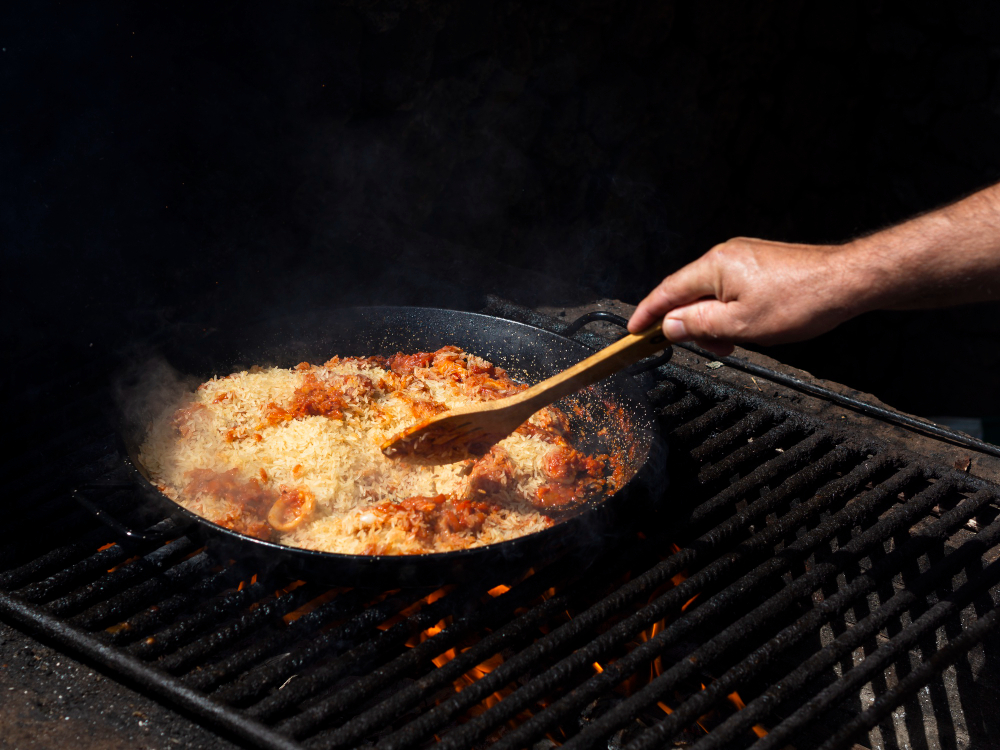
Porous earthenware absorbs moisture, which is released slowly during cooking, contributing steam and keeping the contents moist in a way no metal does.
The vessel is participating rather than containing. Porous walls are the property that makes clay cooking distinct.
7. The Lid Changes the Mechanism Entirely
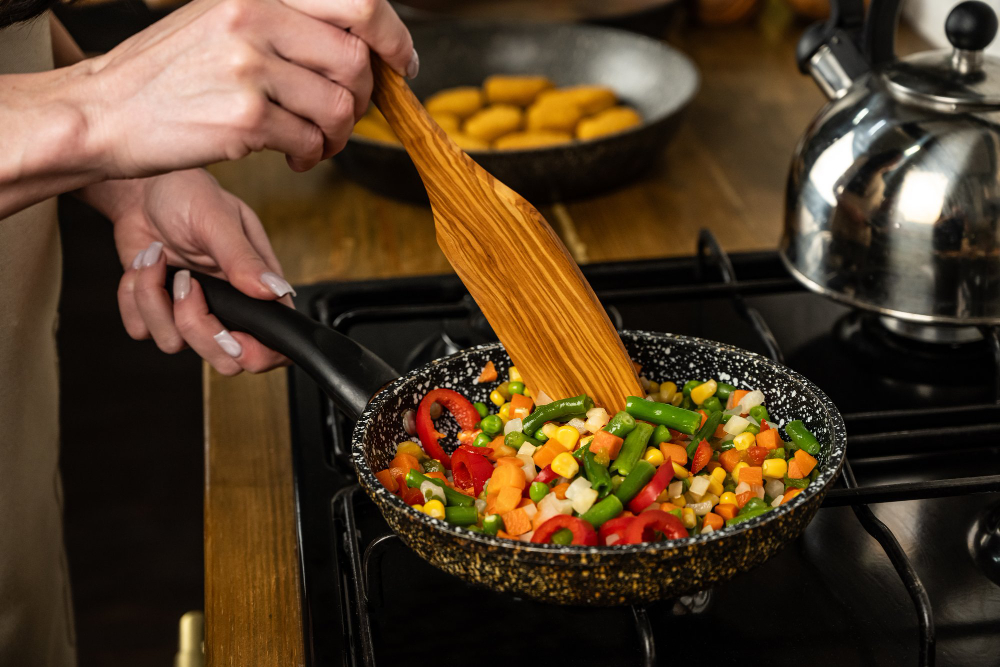
Without a lid, moisture leaves and the dish concentrates. With one, steam condenses on the underside and returns, so the dish keeps its liquid and cooks in a saturated environment.
It is a different process rather than a faster one. Lid presence is the single largest variable after the heat.
8. And a Poorly Fitting One Splits the Difference
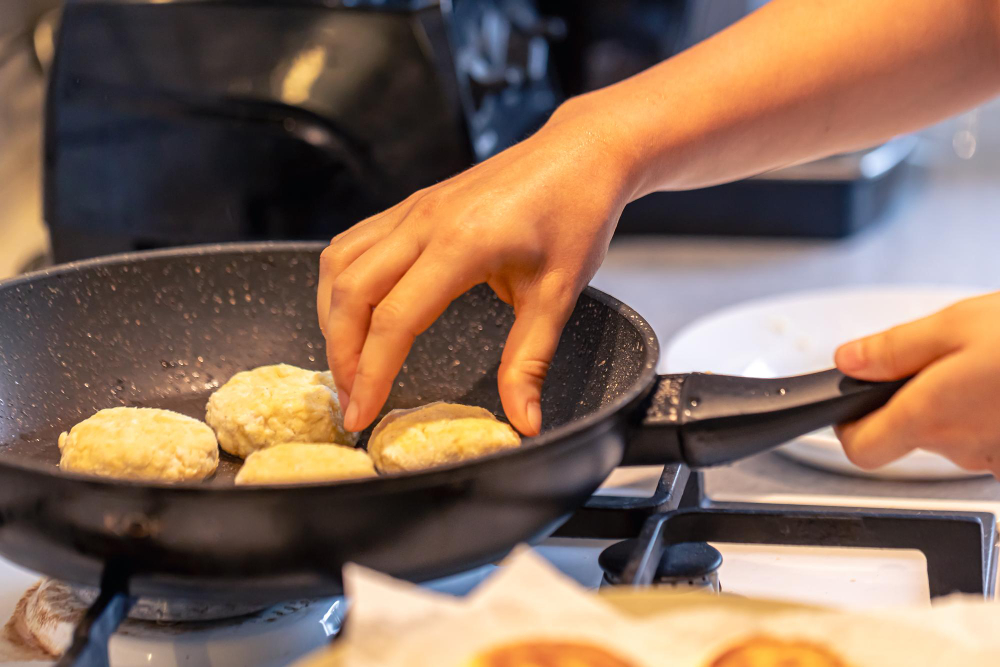
A loose lid allows some escape and some return, which is neither one process nor the other and is why some traditions specify sealing the join.
The gap determines the balance. Lid fit is a variable most people never consider.
9. Wide and Shallow Means Evaporation
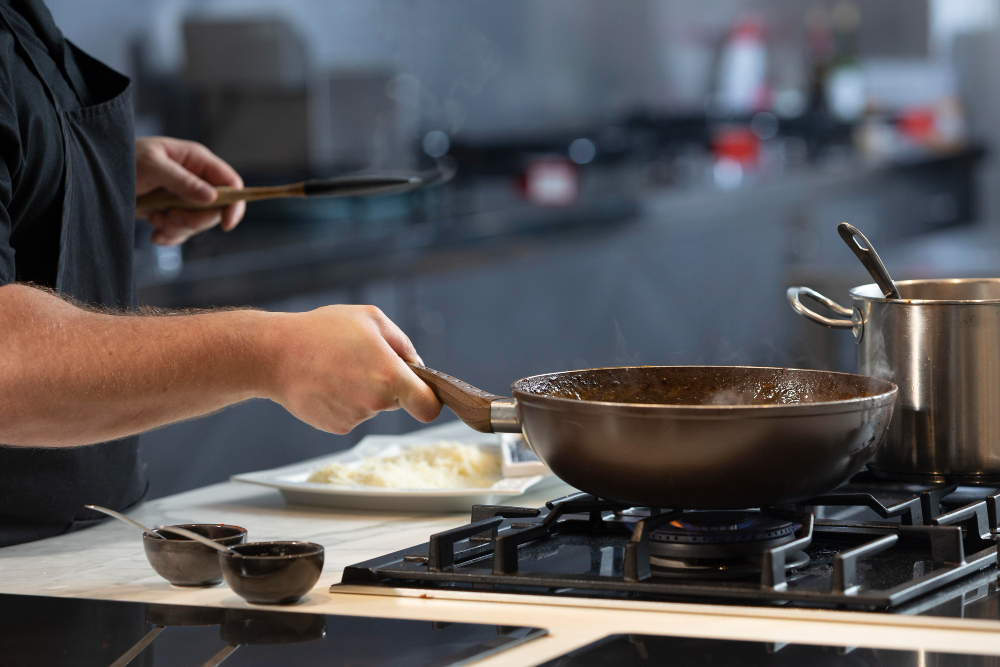
A large surface area relative to volume allows moisture to leave rapidly, which concentrates a sauce and allows browning because the surface can get hot and dry.
Nothing browns in a wet pan. Surface-to-volume ratio is why the shape determines whether you get colour.
10. Tall and Narrow Means Retention
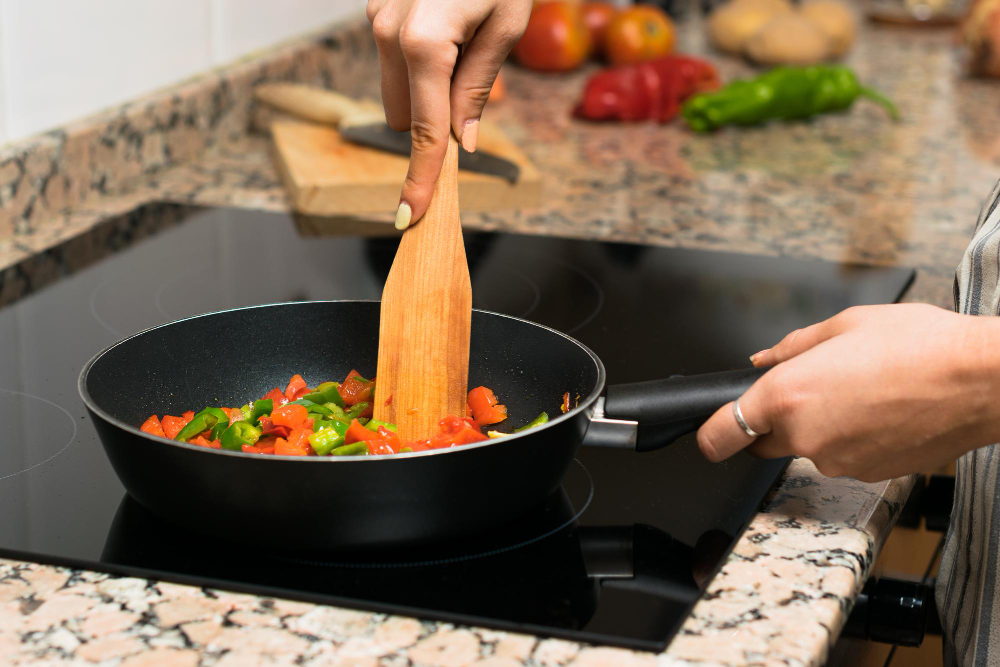
A small surface relative to volume traps moisture, so liquid stays, temperature stays at boiling and the contents cook in a wet environment.
It is the correct shape for anything that should stay liquid. Vessel proportion is the choice between reducing and retaining.
11. The Amount in the Pan Matters as Much as the Pan
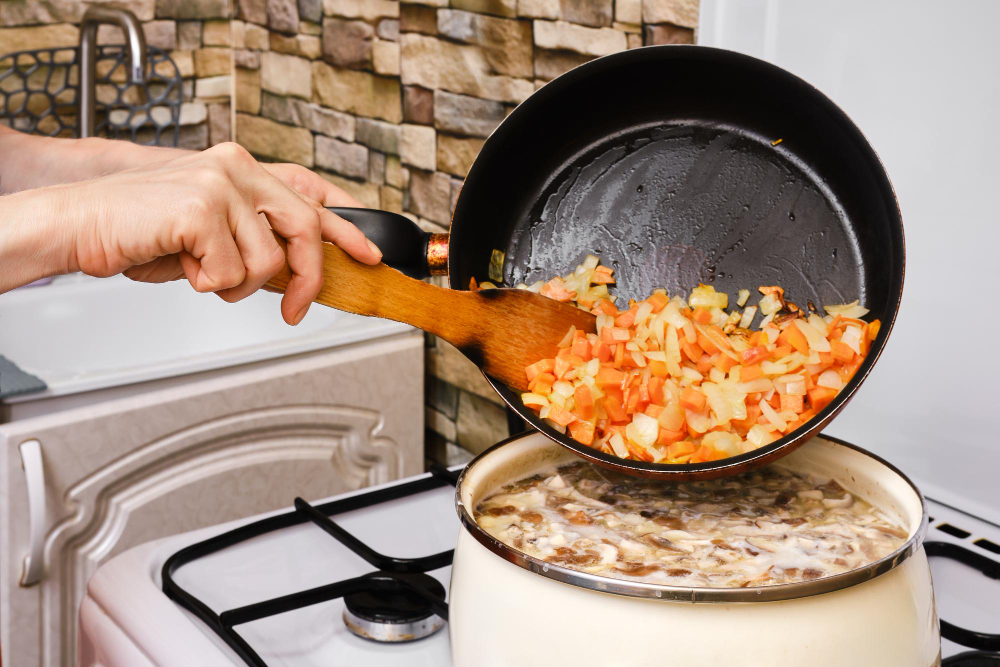
Too much food in a vessel drops the temperature and releases moisture faster than it can escape, converting an intended browning into an unintended steaming.
The same pan produces both results depending on load. Fill level is the variable that turns one technique into another.
12. Curved Sides Are for Moving Food
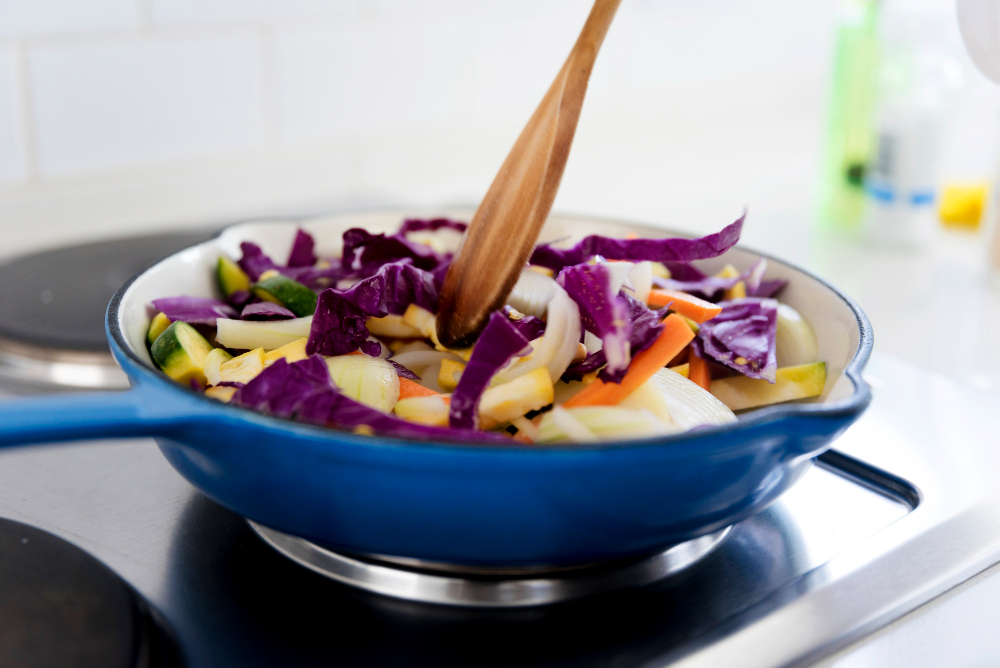
Sloping sides allow food to be turned, tossed and slid, while vertical sides retain liquid and allow stacking – which is why the two shapes exist for different jobs.
Neither is better in general. Wall angle is the design decision about whether food moves.
13. A Seasoned Surface Is Polymerised Oil
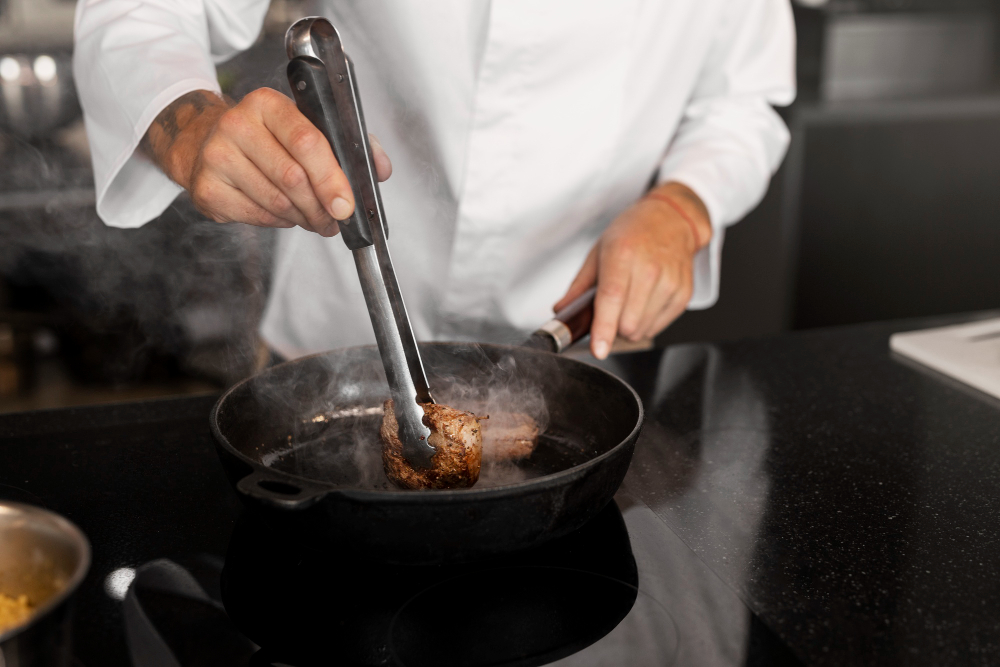
Repeated heating of thin layers of fat on iron transforms them into a hard, bonded, non-metallic layer that food releases from – which is a built surface rather than a coating applied.
It develops with use and is damaged by abrasion. Polymerised seasoning is a surface the cook creates.
14. Manufactured Nonstick Surfaces Have Limits
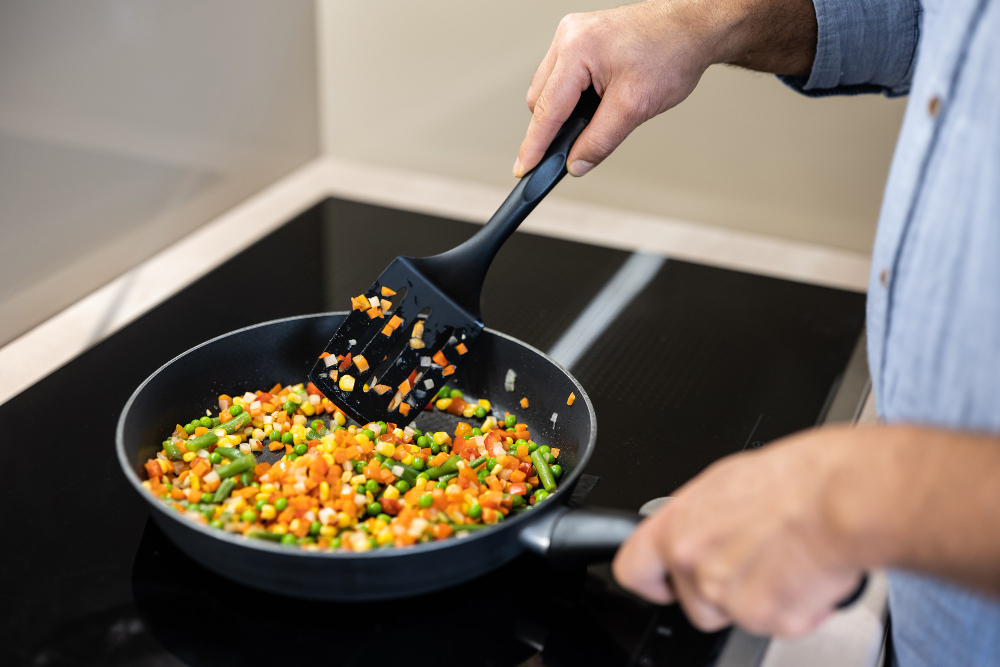
Applied release coatings work by presenting a surface food adheres to poorly, and they tolerate less heat and less abrasion than the metal beneath them.
Their properties are a trade against durability. Coating limits are why nonstick pans are used differently.
15. Sticking Is Frequently a Heat Problem
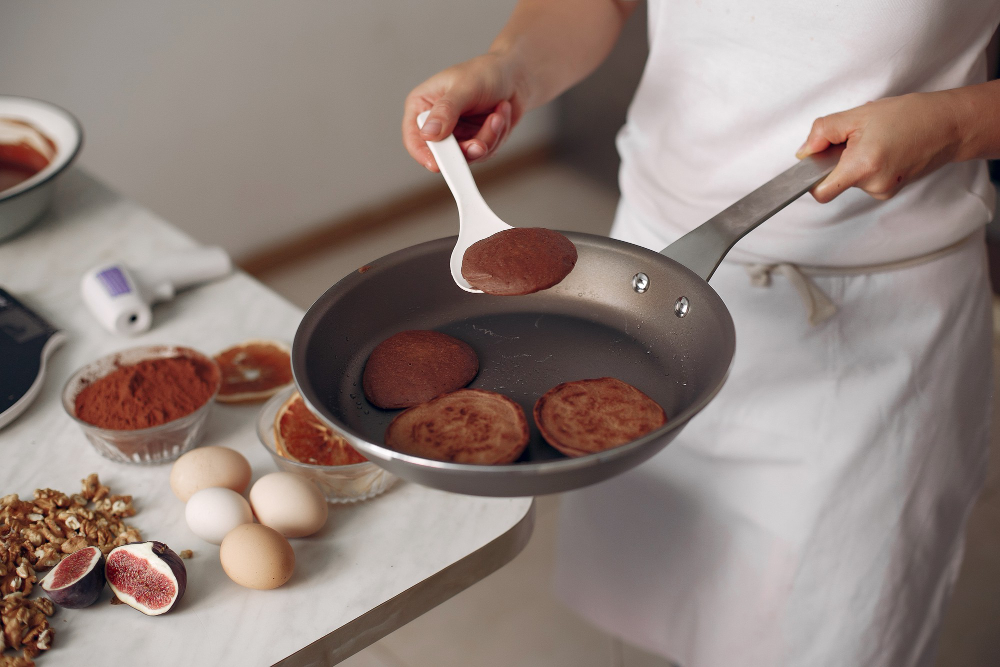
Food adheres when proteins bond to a surface that is not hot enough to form a release layer quickly, which means insufficient preheating causes more sticking than the pan does.
A properly heated surface releases food that a cold one grips. Preheating is the correction people attribute to the equipment.
16. The Pan Was Chosen Before the Recipe
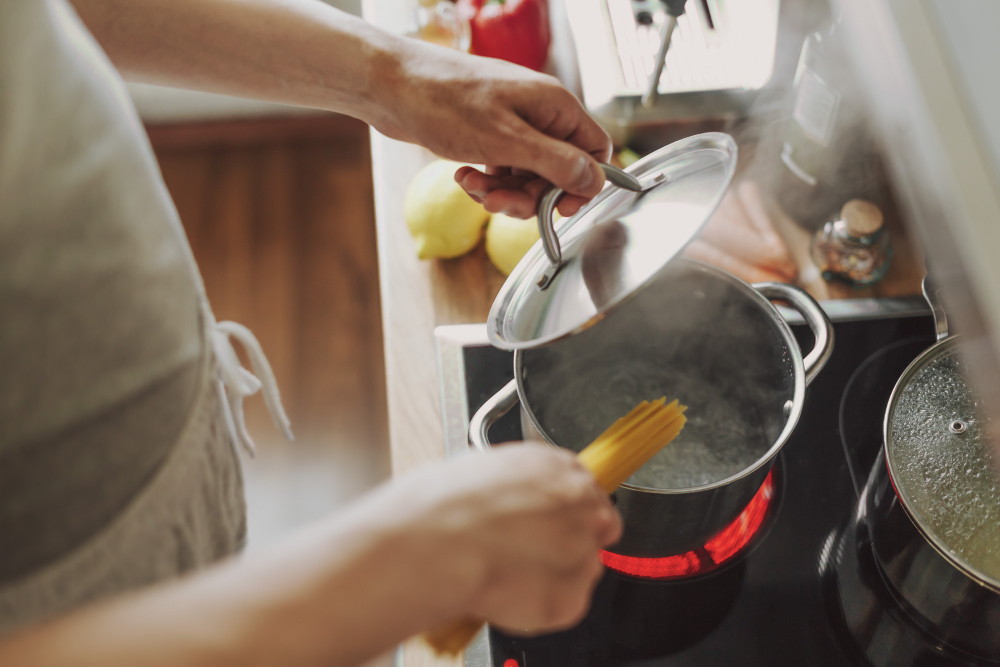
Traditional dishes developed in whatever vessels were available locally, which means the shape, the material and the depth are part of the recipe rather than incidental to it.
Substituting a different vessel changes the dish. Historic pairing is why some things only work in the pan they were designed around.
Heat Delivery and Moisture Management
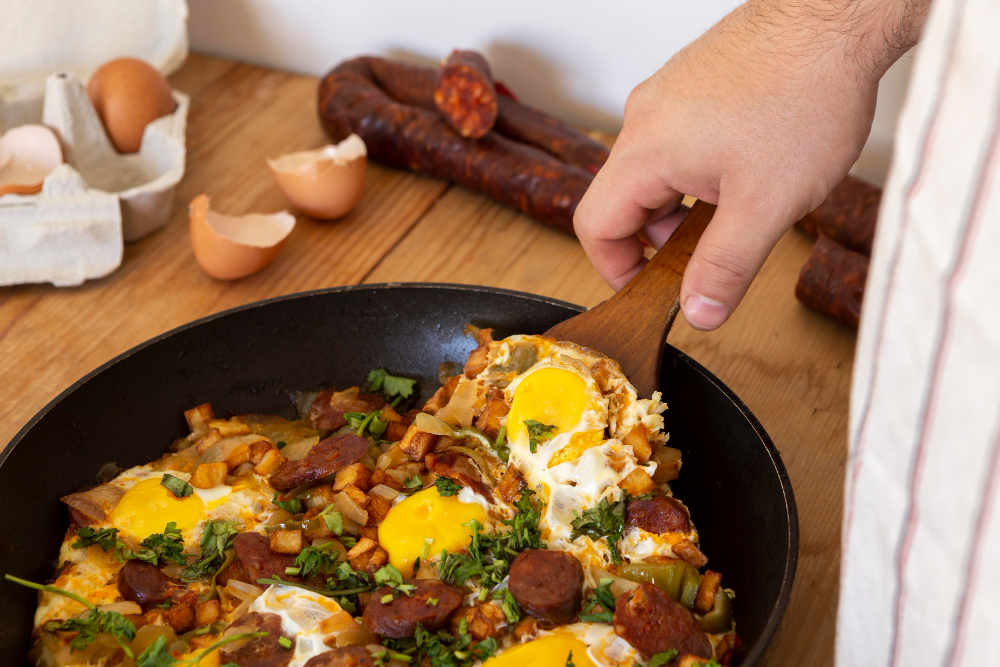
Conductivity, mass and thickness decide how heat arrives; shape, lid and fill level decide what happens to the moisture – and between them they account for most differences between two cooks following one recipe.
The item that fixes the most problems is the fifteenth. Food sticking is usually attributed to the pan and is usually a matter of the surface not being hot enough when the food arrived – which means the commonest complaint about cookware is generally a complaint about timing.
Like our content? Follow us for more.