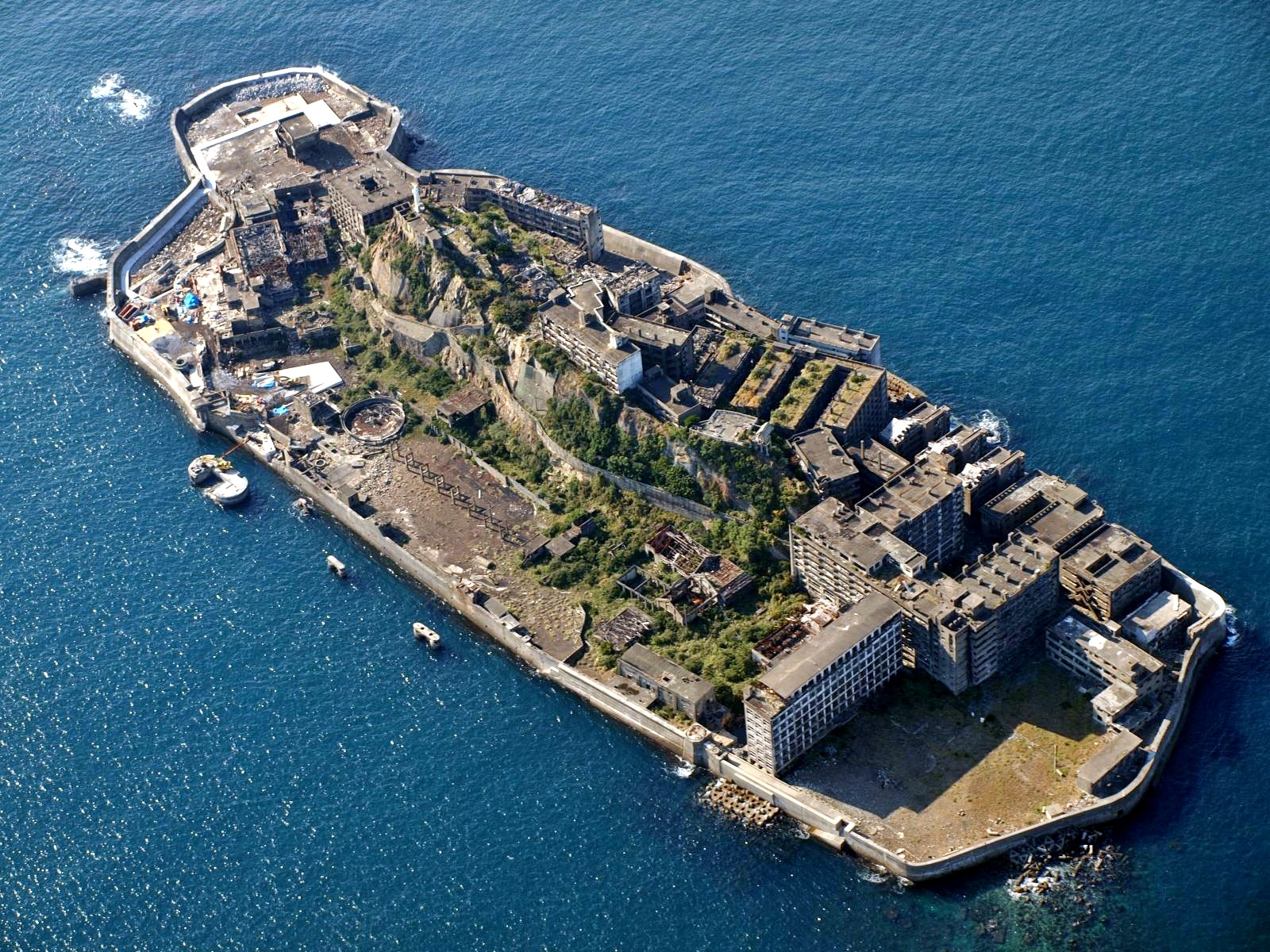
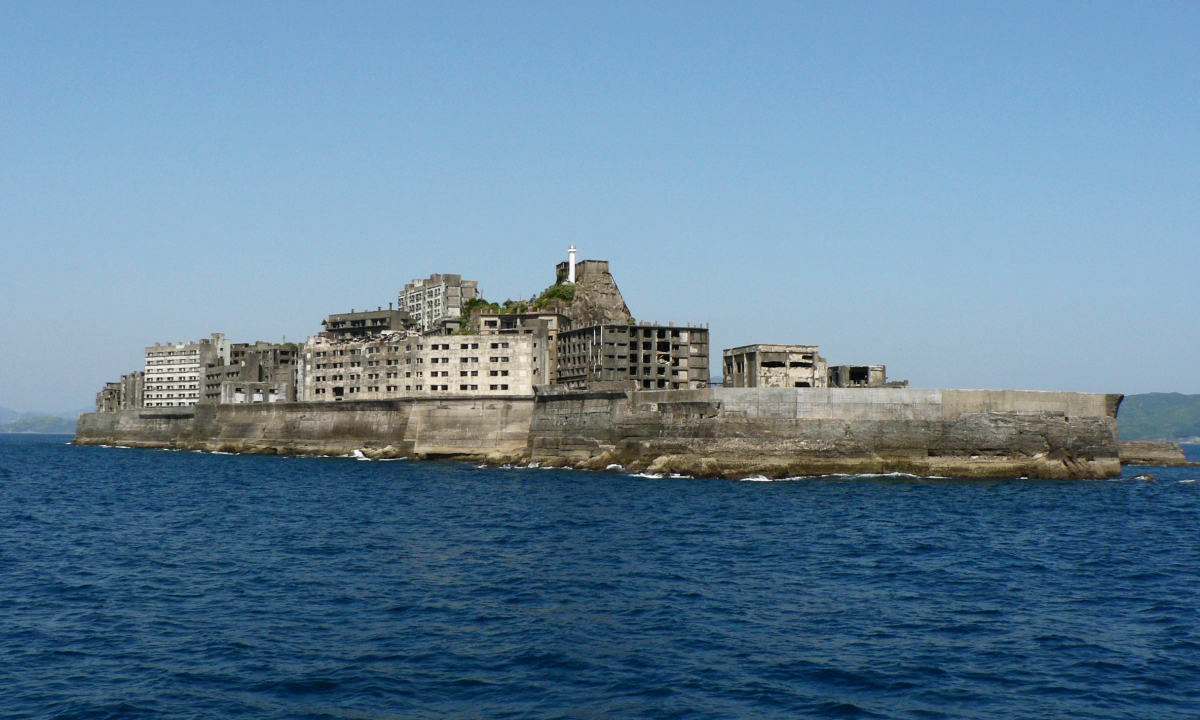
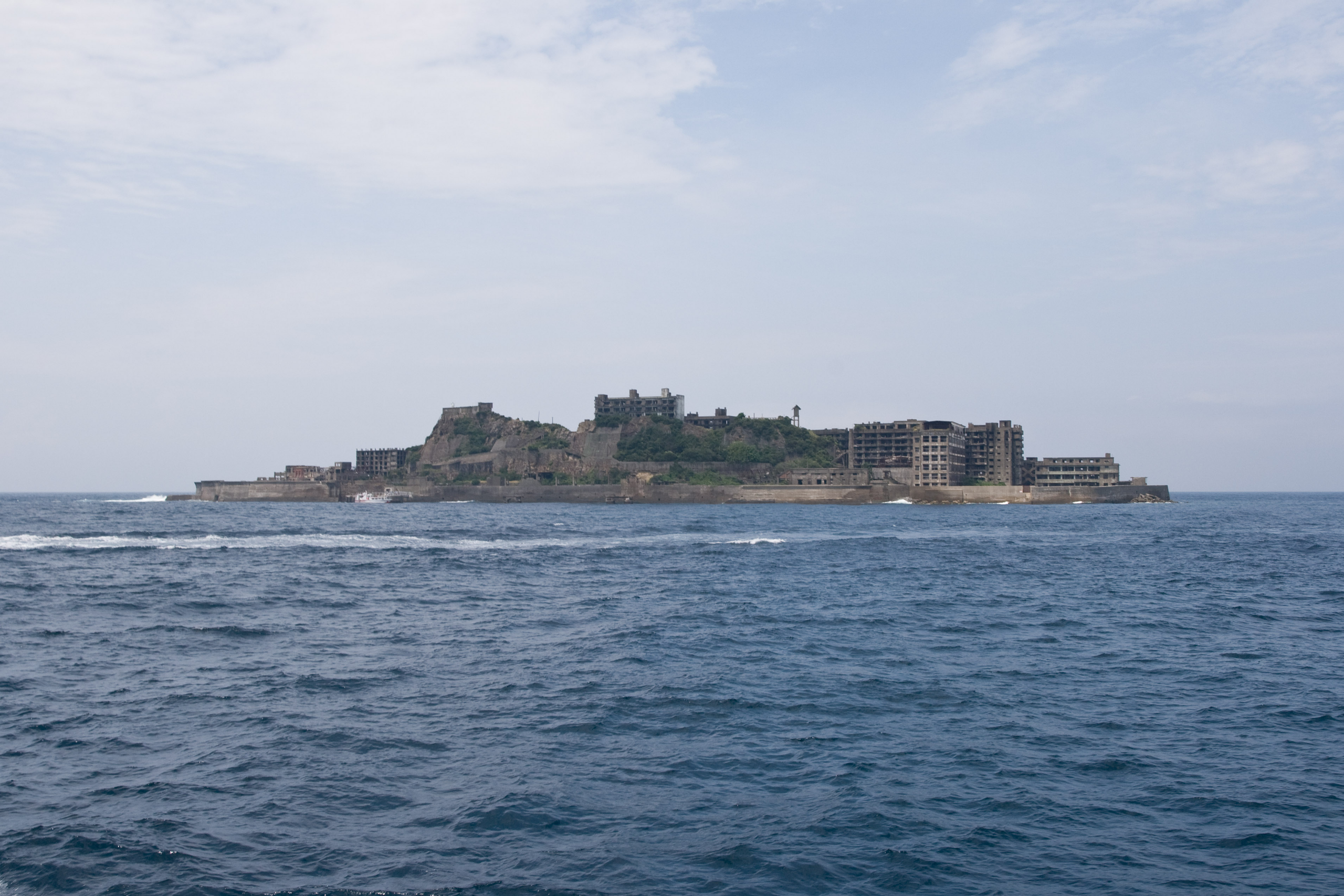
About nine miles off the coast of Nagasaki, Japan, a strange silhouette rises from the sea, a dense cluster of gray concrete buildings ringed by a high seawall, looking for all the world like a warship at anchor. This is Hashima, better known by its nickname Gunkanjima, or “Battleship Island.” Once one of the most densely populated places on the planet and a powerhouse of Japan’s industrialization, it was abandoned almost overnight in 1974 and left to crumble. Its haunting ruins, and its complicated history, make it one of the most fascinating abandoned places in the world.
A City Built on Undersea Coal
Hashima’s story is one of coal. Deposits were discovered around the island in the early 1800s, and serious mining began in the late 19th century. In 1890, the industrial giant Mitsubishi acquired the island and developed it into a major undersea coal-mining operation, tunneling deep beneath the seabed to fuel Japan’s rapid industrial rise. To house the growing workforce and protect it from typhoons, the company expanded the tiny island with land reclamation and built upward.
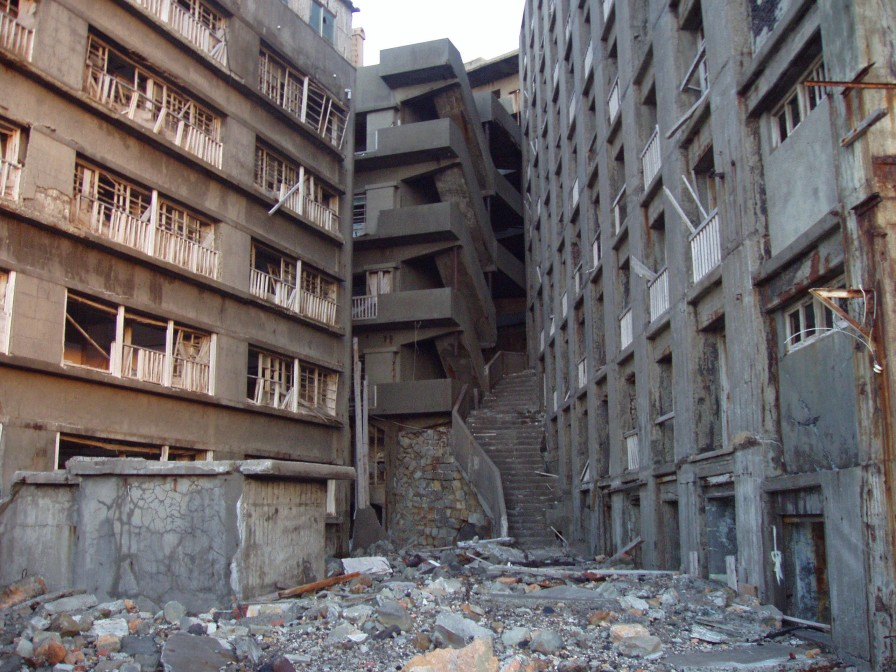
The result was extraordinary. In 1916, Hashima became home to what is regarded as one of Japan’s first large reinforced-concrete high-rise apartment buildings, and over the following decades it filled with more towers, packed tightly together on the cramped island. By 1959, the island’s peak, an astonishing 5,259 people lived on just 16 acres, making Hashima one of the most densely populated places ever recorded, with a population density many times that of a major city.
Like our content? Follow us for more.
A Self-Contained World at Sea
Despite its cramped quarters, Hashima functioned as a complete, self-contained community. The island had apartment blocks, a school, a hospital, shops, and even entertainment venues including a cinema and a pachinko parlor. Families lived their entire lives there, with children attending school and residents going about daily routines, all within the seawall and surrounded by the ocean.
Life on the island was defined by its extreme density and its isolation. With space at a premium, buildings rose vertically and walkways and stairwells threaded between them. The island’s distinctive profile, its wall of stacked concrete buildings, earned it the “Battleship Island” nickname, said to resemble a Japanese battleship when seen from the water. For decades, this improbable concrete city thrived on the coal beneath the waves.
A Painful Chapter in Its History
Hashima’s history is not solely one of industrial achievement, and any honest account must acknowledge its darker side. During the period before and during World War II, the island was a site of forced labor, where Korean and Chinese laborers were made to work under brutal and dangerous conditions in the mines. Accounts describe harsh treatment, and some laborers died. This wartime history has made Hashima a subject of painful memory and of dispute between Japan and South Korea.
The issue came to the fore when Hashima was approved as a UNESCO World Heritage Site in 2015, as part of a group of sites representing Japan’s Meiji-era industrialization. The designation was controversial, and it proceeded only after negotiations in which Japan agreed to acknowledge the history of forced labor on the island. The question of how fully that history has been represented has remained a point of contention, with ongoing calls for it to be more completely acknowledged. A responsible look at Hashima recognizes both its engineering significance and the suffering bound up in its past.
Abandoned Almost Overnight
Hashima’s downfall came swiftly. As Japan’s energy needs shifted from coal to petroleum through the 1960s, coal mines across the country began closing, and Hashima was no exception. Mitsubishi formally closed the mine in January 1974, and within months the island was evacuated, its residents departing and leaving behind a fully built city with no one to live in it.
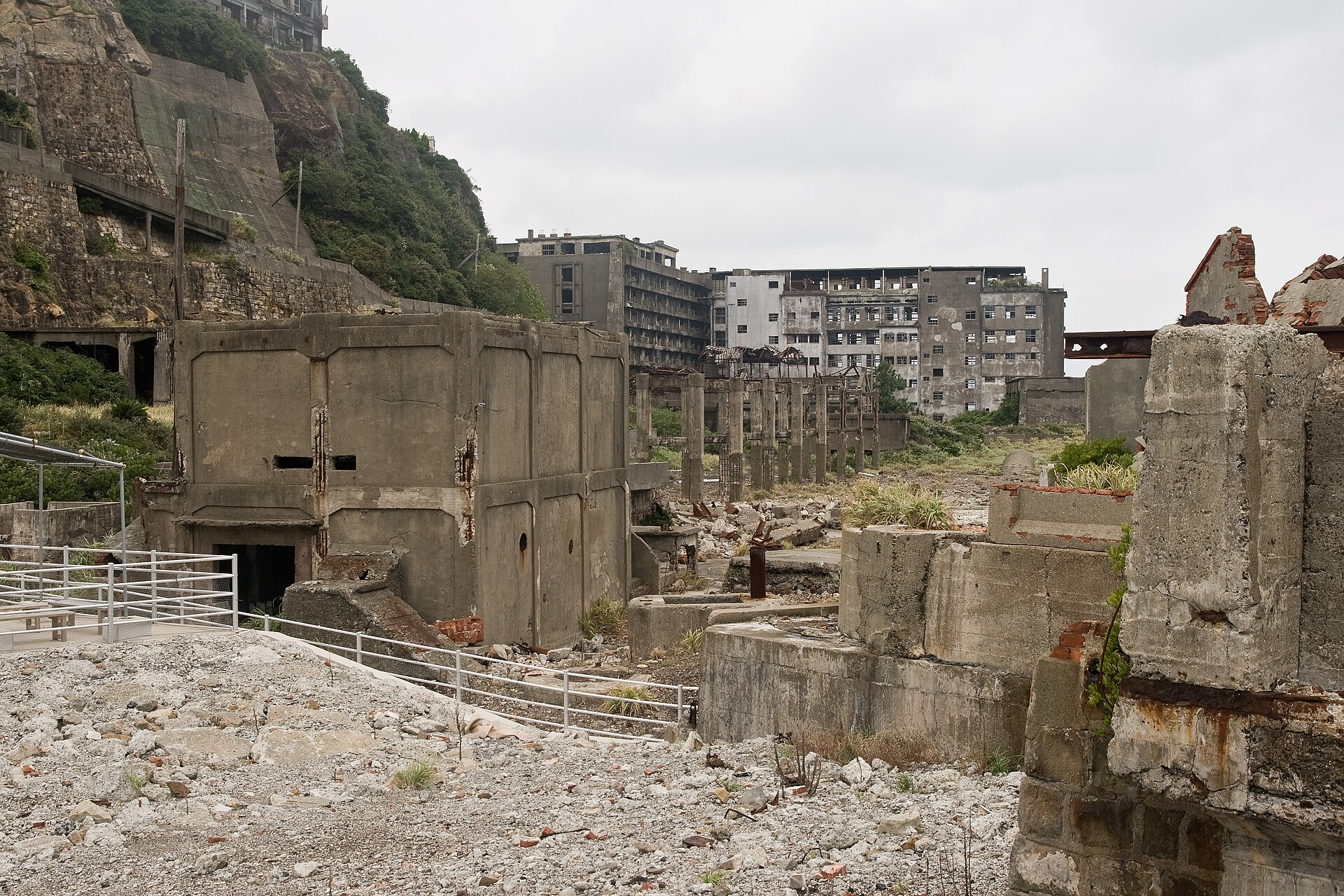
For roughly three decades afterward, Hashima sat empty and off-limits, slowly surrendering to the elements. Battered by sea air and typhoons, its concrete buildings cracked, crumbled, and were reclaimed by weeds and weather. The abandoned school, the empty apartments, and the silent mine structures became a striking, eerie time capsule of a vanished community, frozen at the moment everyone walked away.
Visiting the Ruins Today
After 35 years of closure, Hashima reopened to visitors in 2009, and today it can be reached on guided boat tours that depart from Nagasaki. Because the decaying structures are fragile and potentially hazardous, visitors are not free to roam; instead, tours keep to a designated, marked path with several observation points, focused on viewing the ruins from a safe distance. Landings depend heavily on weather and sea conditions, and tours are sometimes limited to circling the island when the water is rough.
For many, the most dramatic view comes from the water, where the island’s battleship-like profile is most striking. Hashima has captured imaginations far beyond Japan, appearing in films and documentaries and helping to spark global interest in the haunting beauty of abandoned places. Yet the most meaningful way to experience it is with an understanding of its full story, a marvel of early-20th-century engineering and density, a once-thriving community, and a site of wartime suffering. Battleship Island endures as a powerful, sobering monument to a chapter of history that is well worth remembering in all its complexity.
Like our content? Follow us for more.