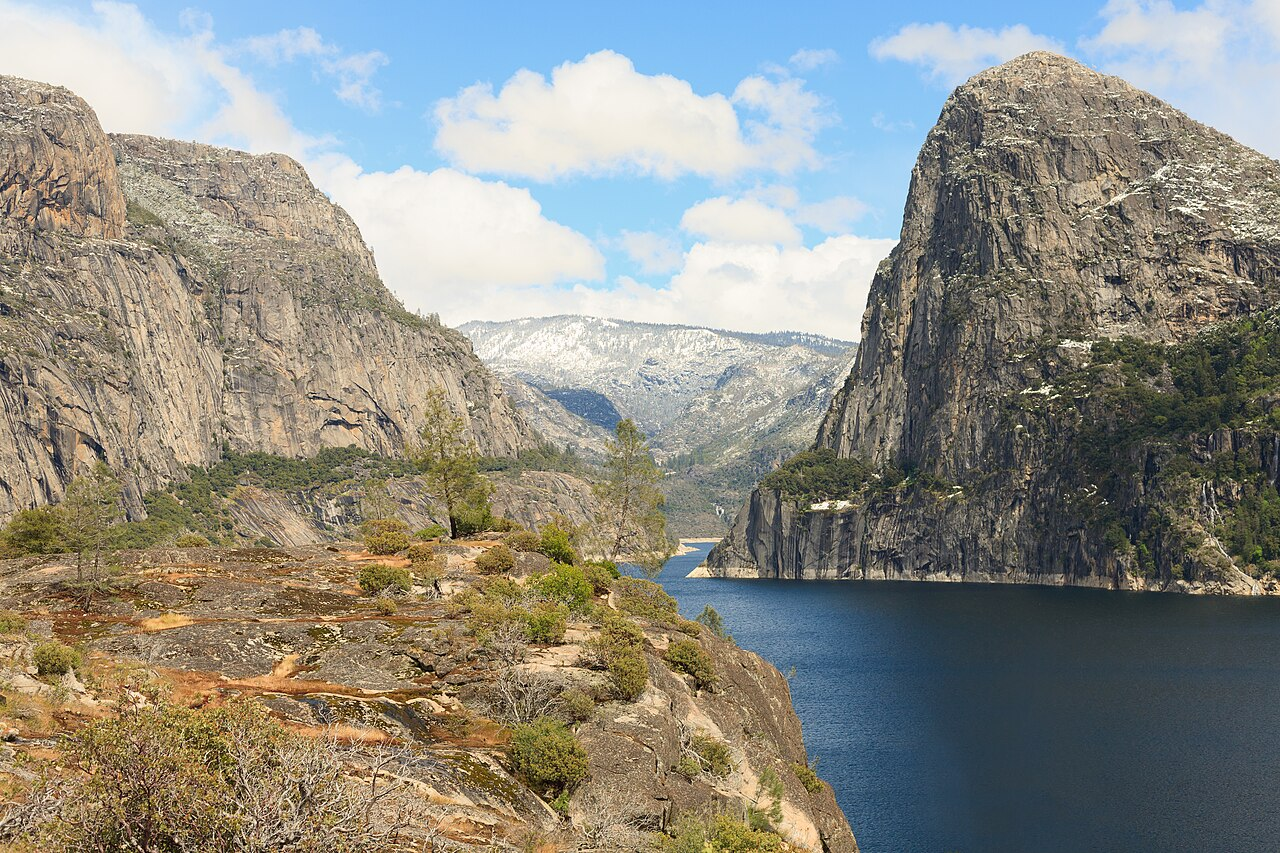
Four million people a year funnel into Yosemite Valley to stand under El Capitan and Bridalveil Fall, inching through traffic for views that justify every minute of it. Twenty miles north, inside the same national park, is another glacier-carved granite valley — with its own towering cliffs, its own plunging waterfalls, its own version of nearly everything that makes Yosemite famous. It gets a tiny fraction of the visitors. Most park guests never learn it exists.
The reason is simple and startling: the valley is full of water. Hetch Hetchy — the name comes from a Miwok word for a local grass with edible seeds — lies beneath a reservoir that has covered its floor since the 1920s, held back by a dam that supplies drinking water to San Francisco, 167 miles away. It is the only major reservoir ever built inside an American national park, the loss that helped create the modern conservation movement, and — depending on who you ask — either a public-works triumph, a national tragedy, or the most interesting detour in the Sierra Nevada. It’s a strong case for all three.
“A Wonderfully Exact Counterpart”
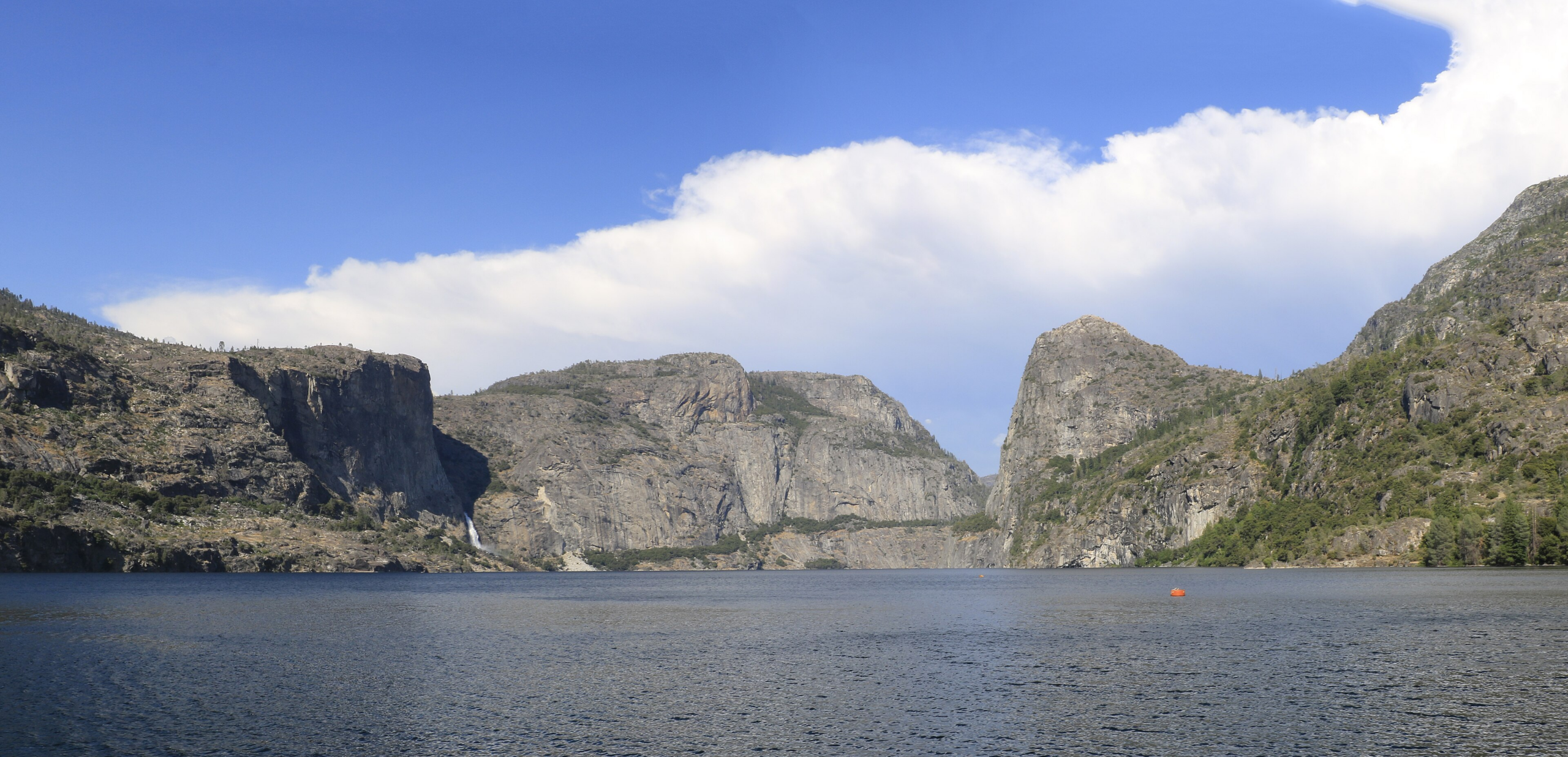
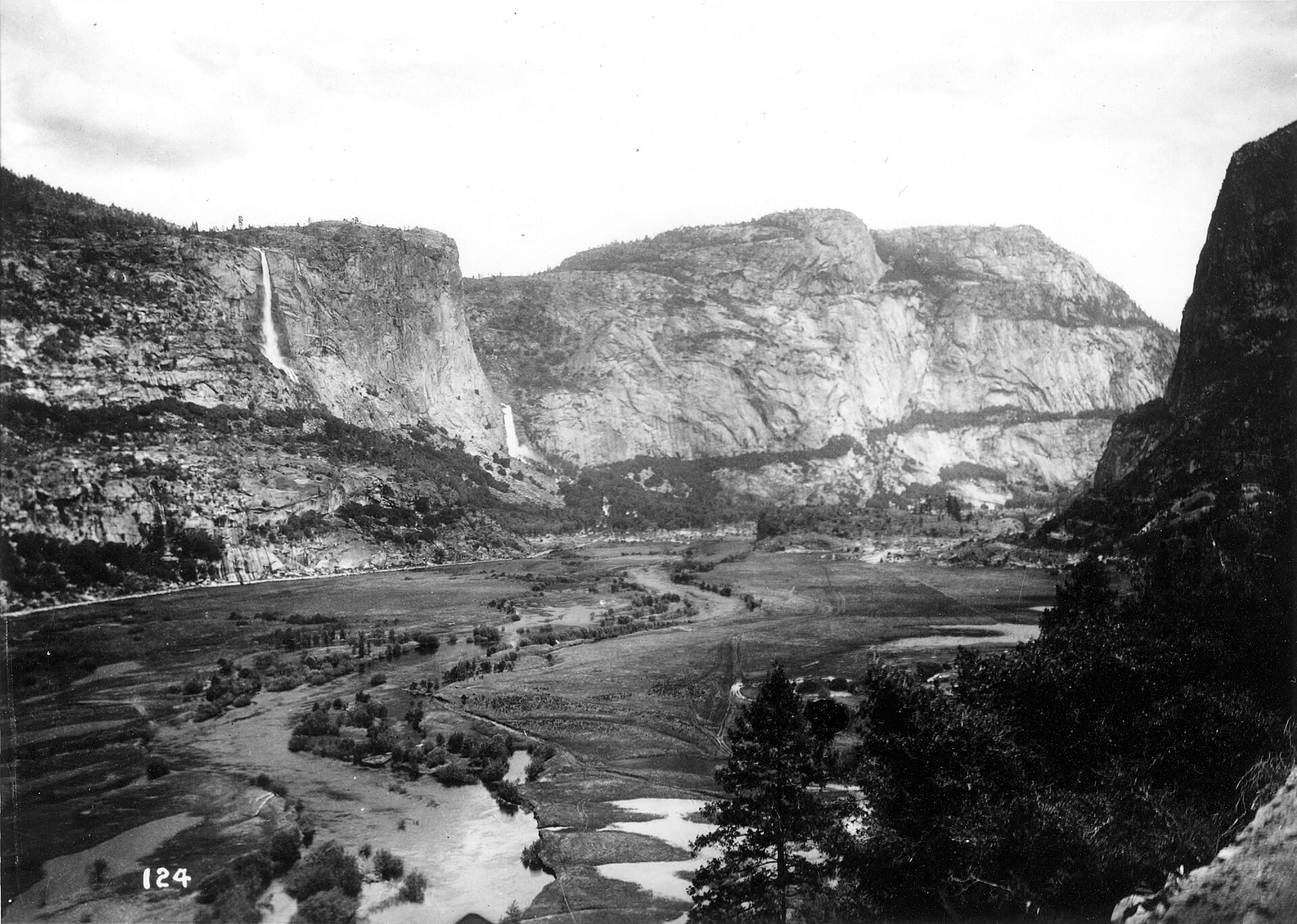
The nineteenth-century visitors who reached Hetch Hetchy came back sounding slightly stunned. Here was a second Yosemite: a level, meadowed valley floor threaded by the Tuolumne River; a granite monolith, Kolana Rock, standing in for Sentinel Rock; and waterfalls — Wapama and the free-leaping Tueeulala — pouring over cliffs in spring volumes that rival anything in the park. John Muir, who did more than anyone to make the Sierra a national cause, called Hetch Hetchy “a wonderfully exact counterpart” of Yosemite Valley and considered it one of the mountains’ rarest and most precious temples.
When Yosemite National Park was established in 1890, Hetch Hetchy was inside the boundary — protected, it seemed, forever. “Seemed” is the operative word. San Francisco, a booming city on a dry peninsula, had been eyeing the Tuolumne River for decades; the valley’s granite walls and narrow outlet made it, from an engineer’s chair, a nearly perfect natural water tank. The city applied for the rights, was refused, applied again — and then, in April 1906, San Francisco burned. The earthquake and fire, fought with a broken water system, transformed the politics overnight. A city that had just lost itself to flames asking for a secure water supply was a hard thing for Washington to refuse.
Like our content? Follow us for more.
The First Great Environmental Battle
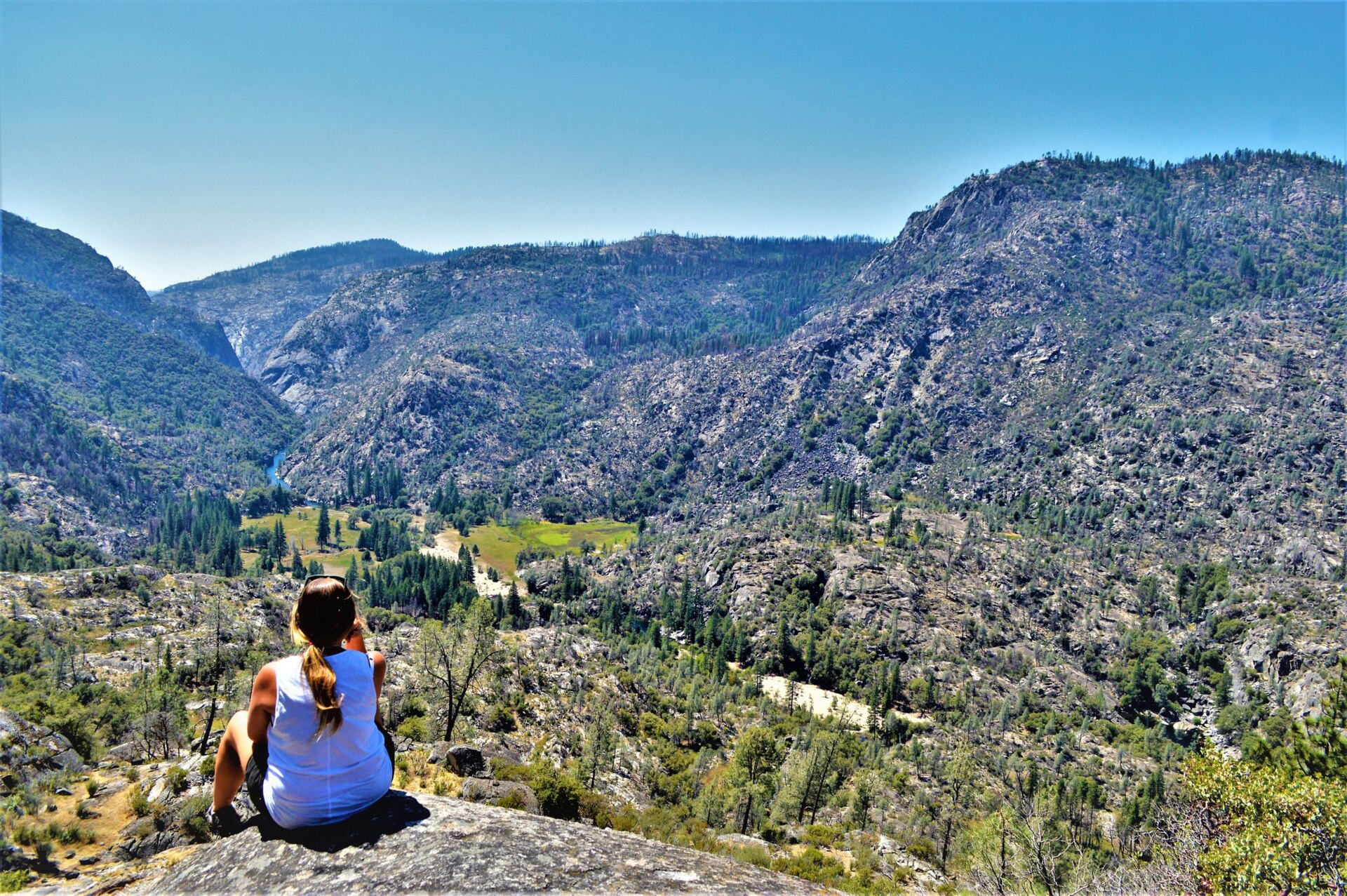
What followed, from 1908 to 1913, was the first full-scale national fight over what public wilderness is actually for — and it drew the battle lines American conservation politics still uses. On one side stood Muir and the young Sierra Club, arguing that a national park was a promise, and that flooding one of its two crown valleys broke it for all time. On the other stood San Francisco and the era’s utilitarian conservationists, led by figures like Gifford Pinchot, arguing that the greatest good meant water for hundreds of thousands of people, and that a reservoir ringed by granite would still be beautiful.
The fight filled newspapers, hearings, and pulpits for five years — letter-writing campaigns, pamphlet wars, editorial duels — the full template of every environmental battle since. In 1913, Congress passed the Raker Act granting San Francisco the valley, and President Wilson signed it. Muir, then in his seventies, wrote that “these temple destroyers” had won, and died the following year; the Sierra Club’s own histories treat the defeat as the wound that forged the organization. There was one lasting consolation: the backlash over Hetch Hetchy fed directly into the creation of the National Park Service in 1916, founded partly to ensure no park could be signed away so easily again.
O’Shaughnessy Dam rose across the valley’s outlet, and in 1923 the gates closed. The Tuolumne backed up over the meadows Muir had called sacred, and the second Yosemite disappeared under as much as 300 feet of water.
What the Dam Actually Does
A century on, the Hetch Hetchy system is one of the most consequential pieces of infrastructure in California, which is precisely why the argument never ends. The reservoir stores Sierra snowmelt so pure — granite watershed, protected park land — that San Francisco holds a rare federal exemption from filtering it. The water travels those 167 miles to the Bay Area almost entirely by gravity, generating clean hydropower along the way, and serves roughly 2.7 million people across San Francisco and dozens of neighboring communities. Ask the city’s water managers and they’ll tell you, accurately, that Hetch Hetchy is among the best drinking-water systems on Earth.
Ask the other side and they’ll tell you, also accurately, that none of that requires drowning a national park valley — that the system’s other reservoirs downstream could store the water with modifications, that the dam was a product of 1913’s options rather than today’s, and that America is the only country that would flood a Yosemite and then keep it flooded out of habit. The group Restore Hetch Hetchy has pressed that case for decades — studies, lawsuits, a San Francisco ballot measure in 2012 that voters rejected decisively — and state and federal analyses have periodically examined draining scenarios, with cost estimates that range from ambitious to staggering depending on who’s counting. The valley floor, ecologists note, would recover: sediment studies suggest meadows and forest would return over decades, and the granite, of course, never left.
For now, the water stays. The argument, a hundred years old and counting, stays too — which makes Hetch Hetchy something rare among American places: a finished project that the country never quite finished deciding about.
Visiting the Valley That Almost Everyone Misses
Here’s the travel secret buried in all this history: Hetch Hetchy is open, gorgeous, and nearly empty. The access road leaves Highway 120 outside the park’s Big Oak Flat entrance and winds to the dam itself, where the gates are open daytime hours year-round — and because the reservoir sits at a lower, warmer elevation than Yosemite Valley, it’s hikeable in seasons when the high country is snowed shut. On a July weekend, when Yosemite Valley’s lots fill by mid-morning, the Hetch Hetchy trailhead parking often has room by lunch.
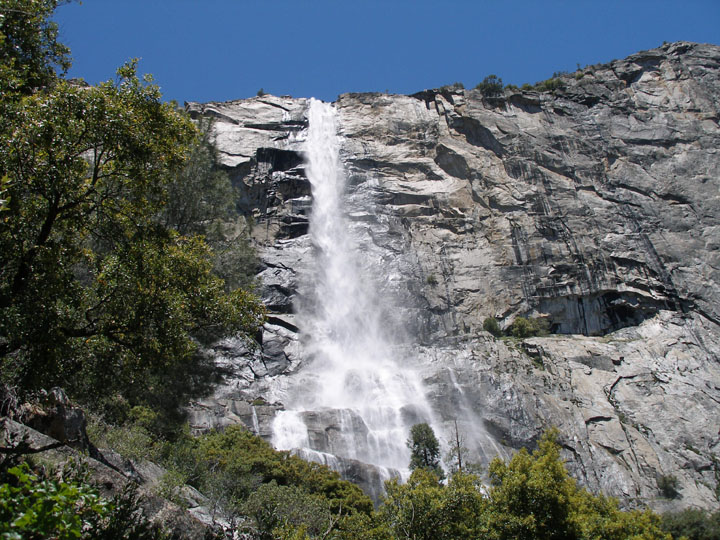
The signature outing is unforgettable and moderate: walk across the top of O’Shaughnessy Dam — reading the plaques, feeling the spray from the outlet works — through a tunnel blasted in the granite, and along the reservoir’s north shore to the falls. Tueeulala Fall drifts down first; Wapama Falls, about 2.5 miles in, thunders over its cliff in spring with enough force that the footbridges beneath it close in the highest flows. Strong hikers continue to Rancheria Falls at around 6.5 miles. The whole way, Kolana Rock rises across the water like a flooded Sentinel, and the view up-valley makes Muir’s argument better than his prose did: you are looking at Yosemite with the floor turned to lake.
Two practical notes: the lower elevation makes spring and fall the sweet spots (summer runs hot and the falls thin by August), and services are essentially nil — no gas, no restaurants, one backpackers’ camp — so arrive with a full tank and a full pack. That emptiness is the amenity. You’ll share with a handful of hikers what four million people are queuing for twenty miles south.
The Question Under the Water
Every visitor leaves Hetch Hetchy asking the same thing on the drive out, and it’s the question the country has been asking since 1908: was it worth it — and if the answer has changed, what then? Reasonable people land on both sides, exactly as they did in Muir’s day. What’s not in dispute is what the place does to you now: the water is blue, the cliffs are staggering, the crowds are elsewhere, and underneath it all lies a valley the maps still label as if it might come back someday.
It’s the most consequential quiet place in California. Go see what the argument is about.
Backpackers get an even better version of the secret. Trails continue past Rancheria into the Yosemite backcountry — wilderness permits are issued at the Hetch Hetchy entrance station — and the reservoir’s north-rim country in spring, when every drainage runs white and the crowds are literally zero, is some of the finest overlooked hiking in the Sierra. Day hikers should note the flip side of that low elevation: rattlesnakes are common along the shoreline trail in warm months and poison oak edges the lower stretches, both easily managed with long pants and ordinary attention. Carry more water than the mileage suggests. The granite radiates heat by afternoon, and the reservoir, maddeningly, is the one thing here you can’t touch — swimming is prohibited in San Francisco’s drinking water, which may be the only rule at Hetch Hetchy that nobody argues about.
Like our content? Follow us for more.