Words that come from people’s names are called eponyms, and English is full of them. Most of the time we use them without any sense that there was once an actual person attached. Here are fourteen you have almost certainly said this month.
1. Sandwich
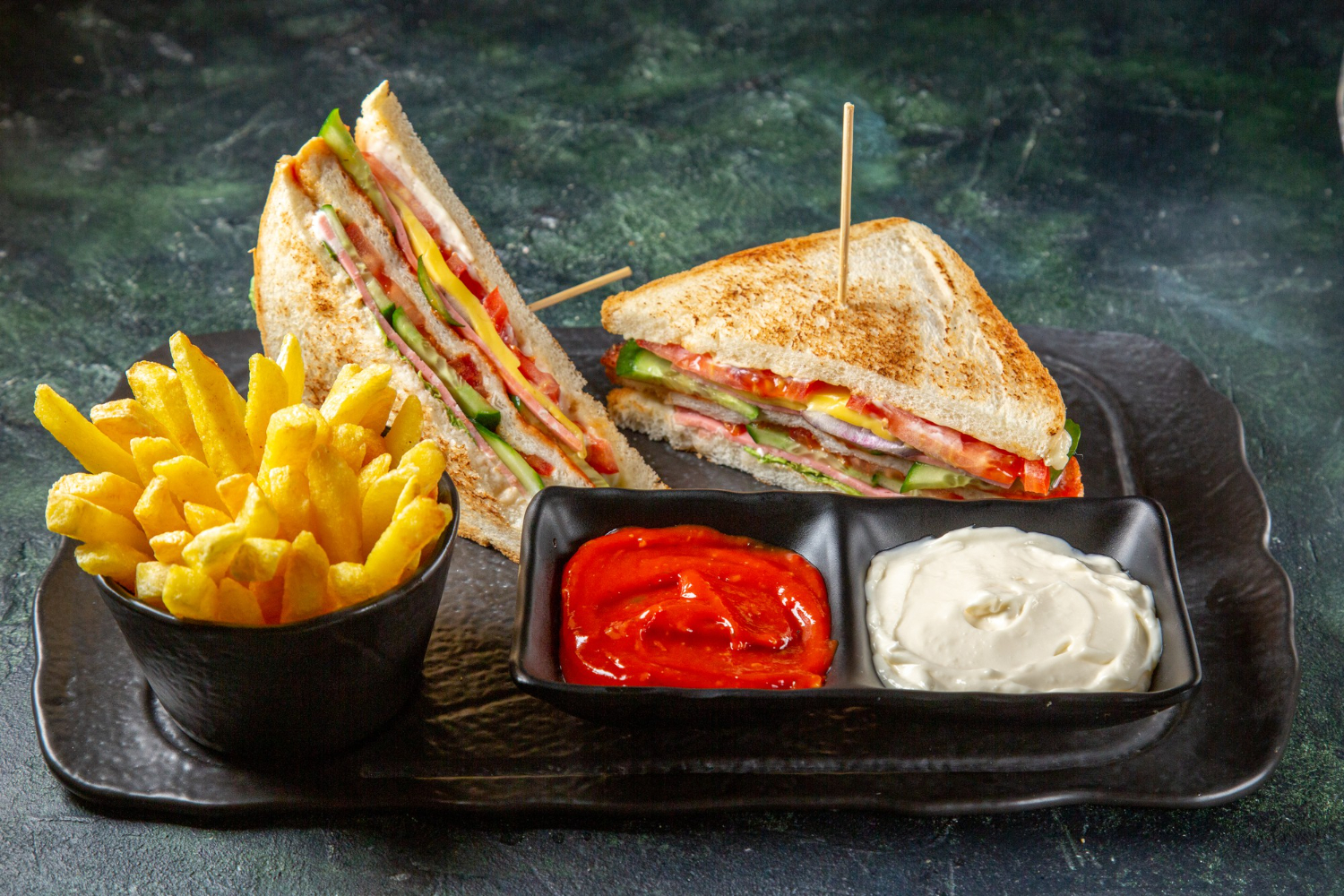
The name comes from an eighteenth-century English aristocrat, the fourth Earl of Sandwich, who held the title taken from a town in Kent. The food took his name, not the other way round.
The popular story holds that he asked for meat between bread so he could keep working, or gambling, without stopping for a proper meal. Whether the motive was cards or paperwork is disputed. Sandwich is an everyday word that was once a nobleman’s title.
Like our content? Follow us for more.
2. Boycott

This one began as a campaign against a specific man. Charles Boycott was a land agent in nineteenth-century Ireland who was ostracized by the local community during a dispute over rents.
Workers refused to serve him, deliver to him, or deal with him at all, and newspapers began using his name for the tactic itself. It spread into other languages remarkably fast. Boycott is an everyday word created by making an example of one particular person.
3. Cardigan

The button-front sweater takes its name from a nineteenth-century British army officer, the seventh Earl of Cardigan. His officers wore a knitted waistcoat during a European war.
The style became fashionable at home afterward and kept his title permanently. He is otherwise remembered for leading a famously ill-advised cavalry charge. Cardigan is an everyday word for a garment that came home from a war with a name attached.
4. Silhouette

The word for a solid dark outline comes from an eighteenth-century French finance minister named Étienne de Silhouette. It was not a compliment.
His tenure was associated with severe economies, and his name became attached to things done cheaply, including these outline portraits, which were far cheaper than painted ones. The mockery outlived the man. Silhouette is an everyday word that started life as a joke about somebody’s budget.
5. Braille

The reading system for blind and partially sighted people carries the name of Louis Braille, who developed it in nineteenth-century France. He was blind himself from early childhood.
He devised the raised-dot system as a teenager, adapting a military code for silent night communication into something far more practical for reading and writing. Braille is an everyday word that belongs to a teenager who solved a problem nobody else had solved.
6. Diesel

The engine and the fuel are named for Rudolf Diesel, the engineer who developed the compression-ignition engine in the late nineteenth century. He patented the design and demonstrated it publicly.
His engine was substantially more efficient than the steam technology of the era, and versions of it went on to power ships, trucks, and trains worldwide. Diesel is an everyday word for a technology still carrying its inventor’s surname on every pump.
7. Saxophone

The instrument is named for Adolphe Sax, a Belgian instrument maker who invented it in the nineteenth century. He designed several instruments, but this one stuck.
He was aiming for something that combined the projection of a brass instrument with the flexibility of a woodwind, and the result eventually became central to jazz. Saxophone is an everyday word built directly from its maker’s family name.
8. Leotard

The one-piece garment worn by dancers and gymnasts is named after Jules Léotard, a nineteenth-century French acrobat. He performed in a version of it.
He is also credited with pioneering the flying trapeze act, making him responsible for two separate fixtures of circus history. The garment took his name after his lifetime. Leotard is an everyday word left behind by a performer who needed clothing he could move in.
9. Mesmerize

To mesmerize someone is to hold them completely transfixed, and the word comes from Franz Mesmer, an eighteenth-century German physician. His theories did not survive scrutiny.
He promoted the idea of an invisible natural force he believed could be channeled between people, and his dramatic public demonstrations left his name attached to the effect. The theory failed; the word thrived. Mesmerize is an everyday word that outlasted the discredited idea behind it.
10. Nicotine

The compound in tobacco is named for Jean Nicot, a sixteenth-century French diplomat who introduced tobacco to the French court. The plant genus carries his name too.
He was not a scientist and had no notion of the chemistry; he simply promoted the plant enthusiastically enough that his name became permanently welded to it. Nicotine is an everyday word attached to a man who was essentially an early promoter.
11. Shrapnel

The word for scattered fragments comes from Henry Shrapnel, a British artillery officer who developed a particular type of shell in the late eighteenth century. The military adopted his design and his name.
Over time the word broadened well beyond its original technical meaning, and it is now used for fragments from any source, including entirely civilian ones. Shrapnel is an everyday word that began as one officer’s technical innovation.
12. Ferris Wheel

The fairground ride takes its name from George Washington Gale Ferris Jr., an American engineer who designed the original for a world’s fair in Chicago in 1893. It was meant to rival a famous tower.
His enormous wheel was intended to give the fair a centerpiece as impressive as the Eiffel Tower had been for Paris a few years earlier, and it worked. Ferris wheel is an everyday word for an attraction named after the engineer who gambled on building it.
14. Guy

The most casual word on this list traces back to Guy Fawkes, the seventeenth-century Englishman involved in a failed plot against Parliament. Effigies burned on bonfires were called guys.
From there the word came to mean an oddly dressed person, then any man, then in the plural a group of people of any gender. Few eponyms have drifted so far. Guy is an everyday word so common that almost nobody connects it to a name at all.
15. Pasteurized

The process of heating liquids to make them safer to drink is named for Louis Pasteur, the nineteenth-century French scientist who developed it. His work reshaped several fields at once.
The technique changed how milk and other perishables could be stored and transported, and his broader research on microorganisms is foundational to modern science. Pasteurized is an everyday word printed on cartons in nearly every refrigerator.
The People Hiding in Plain Sight
Once you notice eponyms, they turn up everywhere. Some honor people who earned the recognition, some memorialize a passing joke, and a few immortalize individuals who would probably have preferred to be forgotten.
It is a strange kind of afterlife. Nobody thinks of an Irish land agent when they organize a boycott, or a French finance minister when they describe a silhouette. The names outlasted the people entirely, and became so ordinary that we stopped hearing them as names at all.
Like our content? Follow us for more.