Decipherment requires a bilingual text — the same content in a script you can read and one you cannot — and the number of such texts is very small, which is why so few ancient scripts have been recovered.
The most famous example is a stone slab that could be carried away and studied at leisure. There is a second one, substantially larger, substantially older in its subject matter, and far more difficult to reach, and it did substantially more work.
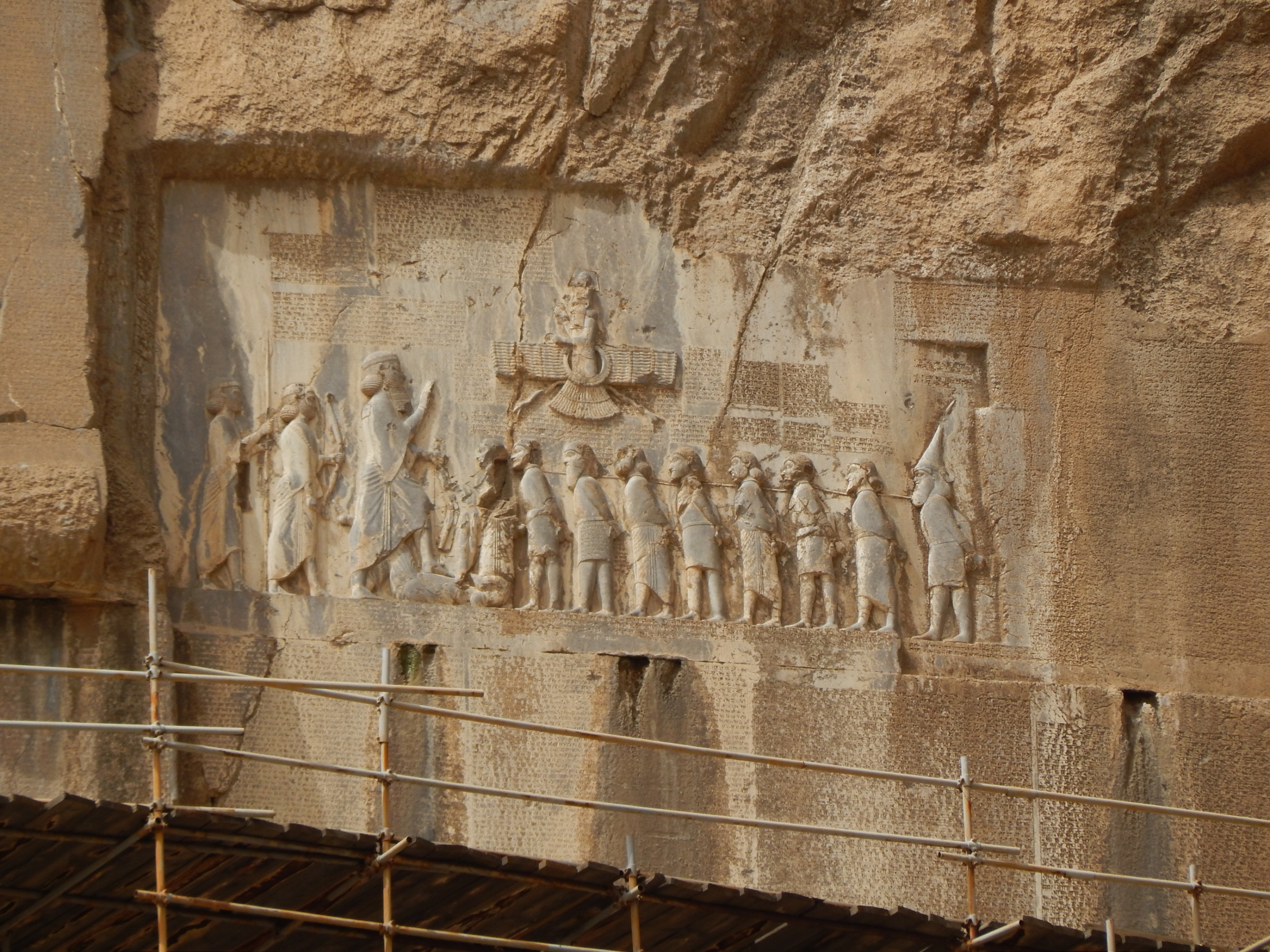
It is cut into a cliff face in western Iran, positioned high above an ancient road, and it carries the same text in three different languages using a related writing system.
The story of how it was copied is nearly as interesting as what it unlocked, because getting the text required somebody to hang off a cliff for years.
What It Says and Why
The content is a political document rather than a literary one, and understanding that shapes how it should be read.
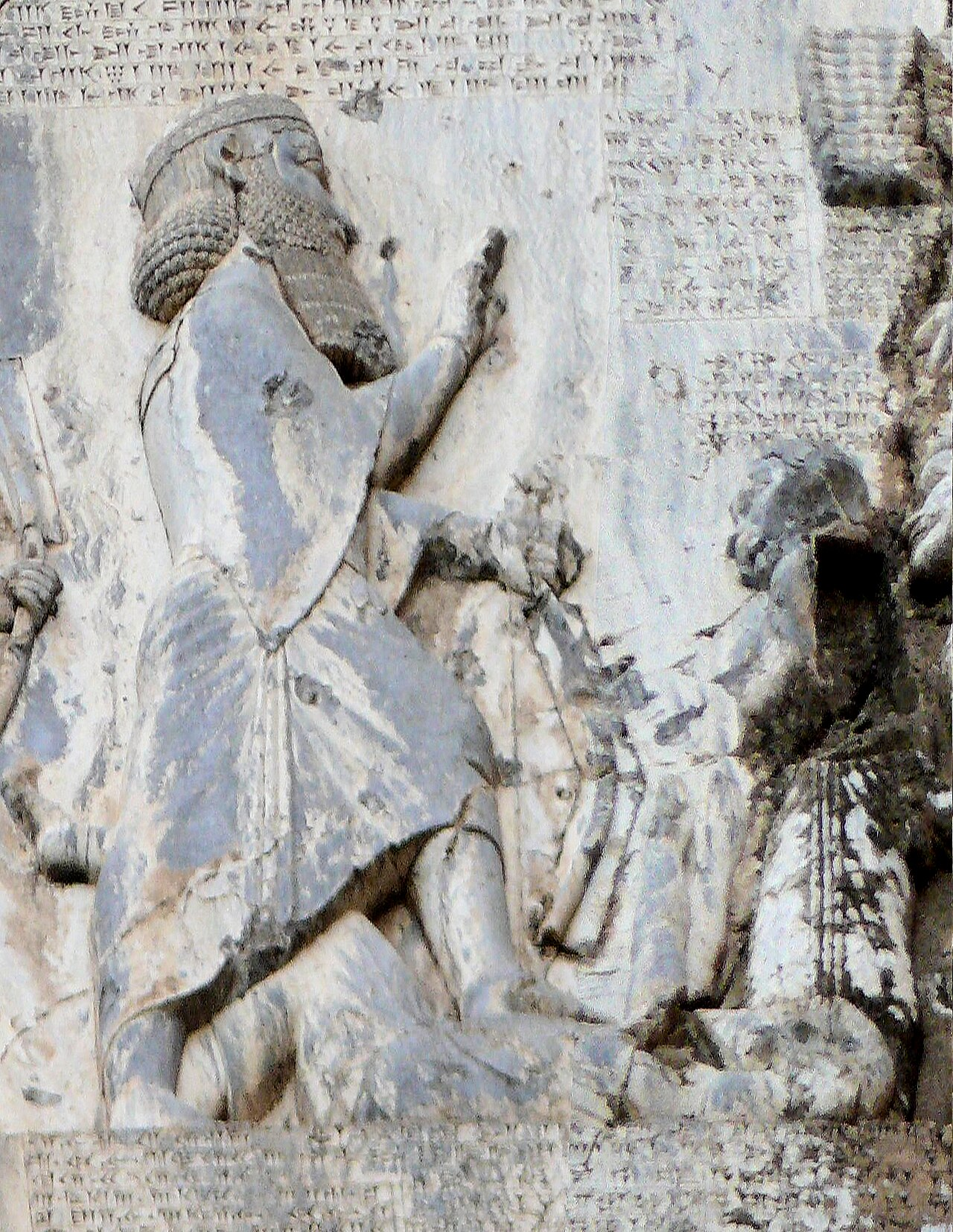
It is an account by a ruler of how he came to power — the death of a previous king, a period of disputed succession, a series of rebellions across the empire, and their suppression. It names the rebels, describes the campaigns and asserts the legitimacy of the outcome.
Accompanying relief sculpture shows the king with defeated figures before him.
That is a monument produced by the winner, asserting a version of events, and it should be read as such rather than as a neutral record. Where independent evidence exists, some elements are corroborated and others are disputed by historians, and the account has been argued about extensively.
Its evidential value is not diminished by that. A partisan document tells you what its author wanted asserted, which is real historical information, and the inscription is also the principal source for a great deal of administrative and geographic detail about the empire.
Like our content? Follow us for more.
Written to Be Seen and Not Read
The positioning is the detail that makes the whole thing strange.
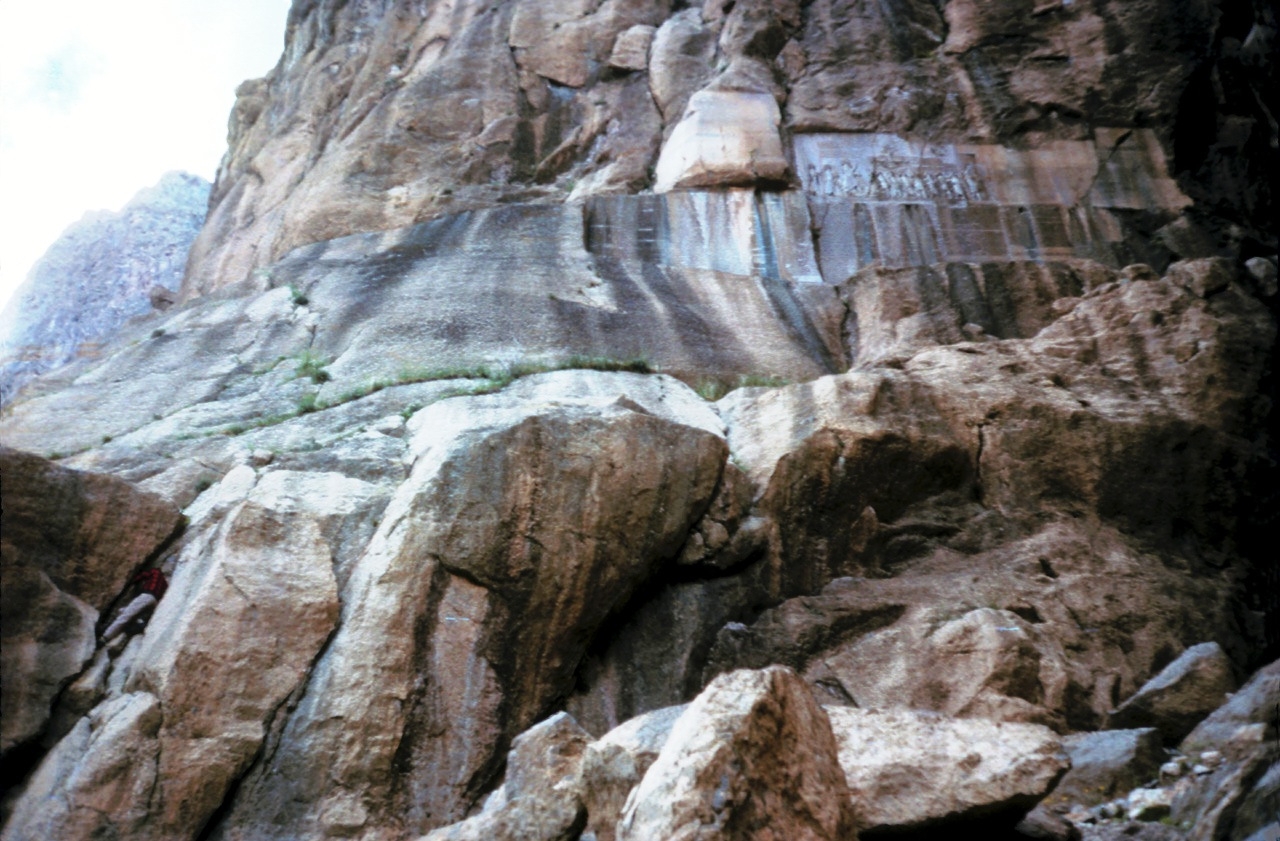
The inscription is cut high on the cliff — high enough that the text cannot be read from below without equipment. There is no viewing platform, no approach and no provision for a reader.
Worse, after completion the approach ledge was deliberately removed, making the surface inaccessible. That was protective rather than decorative: an unreachable inscription cannot be defaced or altered.
So a lengthy text in three languages was produced at enormous expense in a location where nobody could read it, and then the access was destroyed.
The explanation generally offered is that the audience was not readers. A vast inscription on a cliff above a major road is a statement of capability and permanence, addressed to everybody passing beneath, and its legibility is beside the point. What it communicates is that whoever commanded this could do this.
Copies of the text were reportedly distributed across the empire in local languages, which is how the content was actually intended to circulate. The cliff was the monument and the copies were the publication.
Why It Mattered for Decipherment
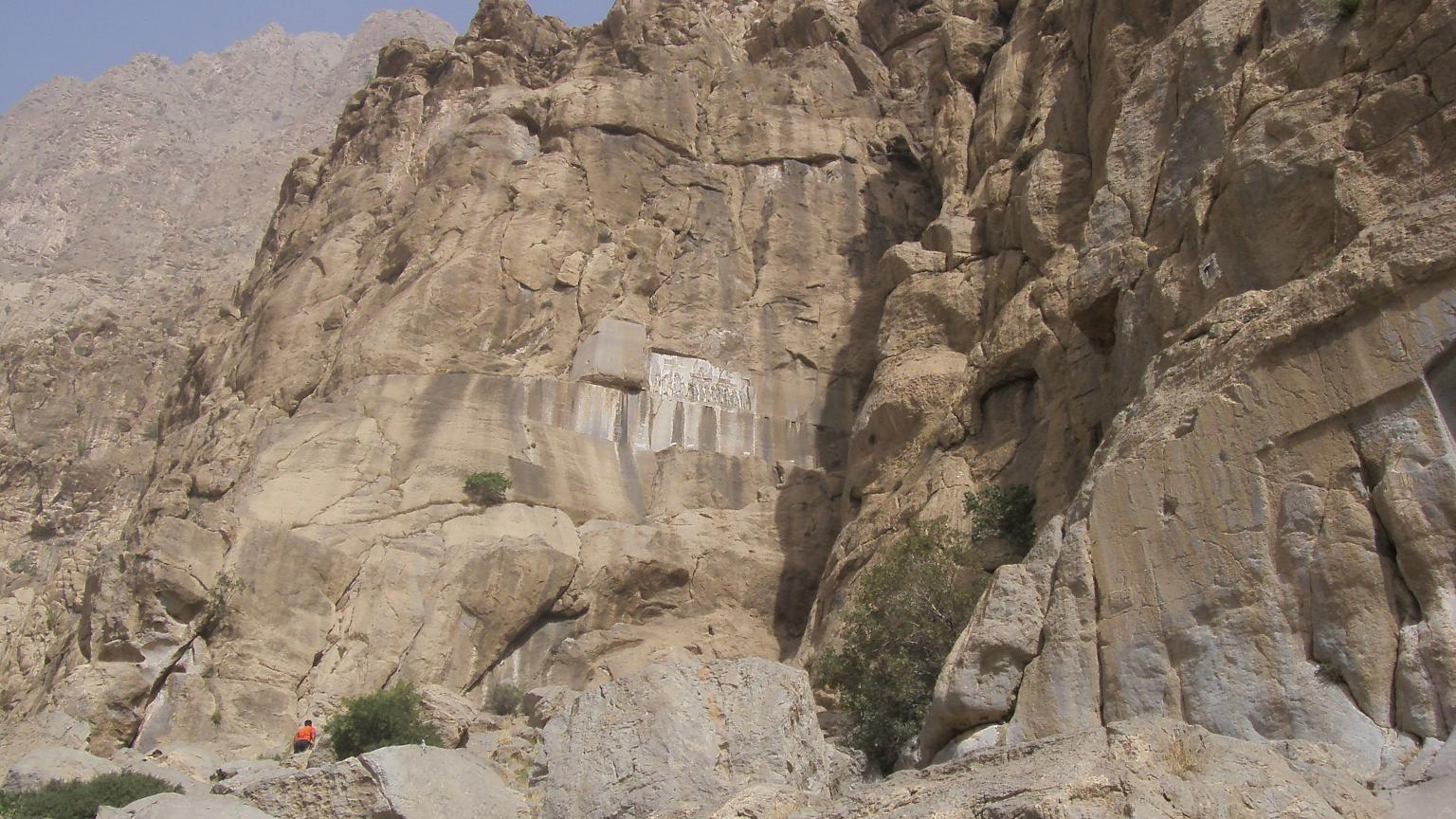
The scholarly value comes from a specific combination of properties.
It is trilingual: the same content in three languages, all written in a related wedge-shaped script.
One of the three was substantially simpler than the others, with a limited number of signs, and was the first to be worked out — partly because royal names could be guessed at from known historical figures, providing a foothold of sound values.
Once that language could be read, the other two became attackable, because the content was known and the correspondence could be worked through.
The third of the three was the most consequential. It was the language of Mesopotamian civilisation, used across an enormous span of time and preserved on very large numbers of clay tablets that nobody could read.
Deciphering it opened an entire literature and administrative record — thousands of years of documents from multiple civilisations, previously entirely inaccessible.
That is a substantially larger prize than any single inscription, and it came from a cliff face nobody could reach.
Why Three Languages
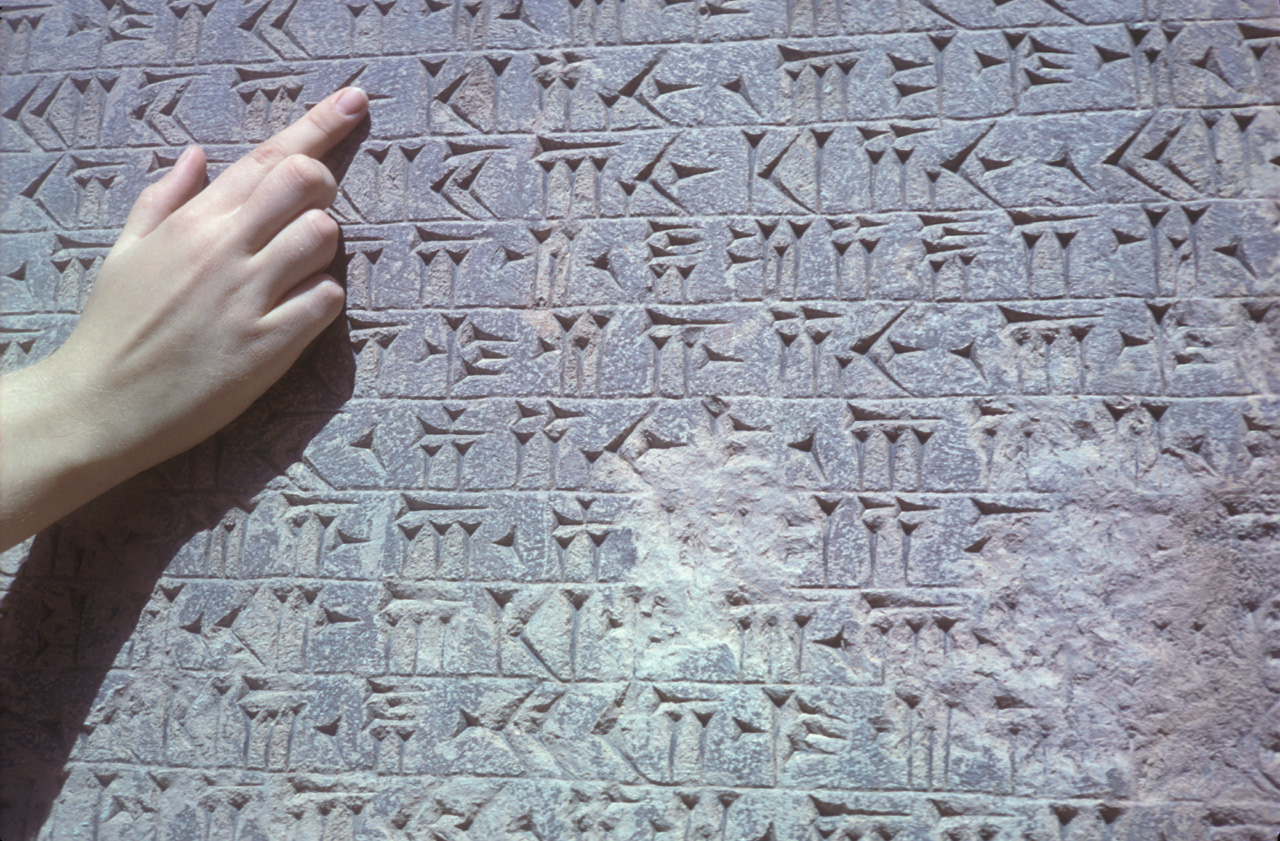
The trilingual form was administrative rather than scholarly, and understanding why explains a great deal about how the empire worked.
The territory concerned was enormous and contained many peoples speaking many languages, and it had been assembled recently from previously separate states with their own long-established bureaucratic traditions.
Governing that required working in the languages already in use. Two of the three on the cliff were established administrative languages of regions the empire had absorbed, each with a substantial existing scribal class and centuries of documentary practice behind it.
The third was the language of the ruling group, and it is notable that its written form appears to have been developed comparatively recently – possibly for this sort of purpose specifically, since it had no long documentary tradition of its own.
That combination is what made the inscription useful two thousand years later. A single-language monument would have been useless; the empire produced a parallel text because it had to communicate with populations it had recently acquired.
There is a further consequence. An imperial administration operating in several languages generates translation, and translation generates the parallel documents that decipherment requires. The scholarly value of the whole region rests substantially on the fact that its empires were multilingual and had to keep records.
Getting the Text Down
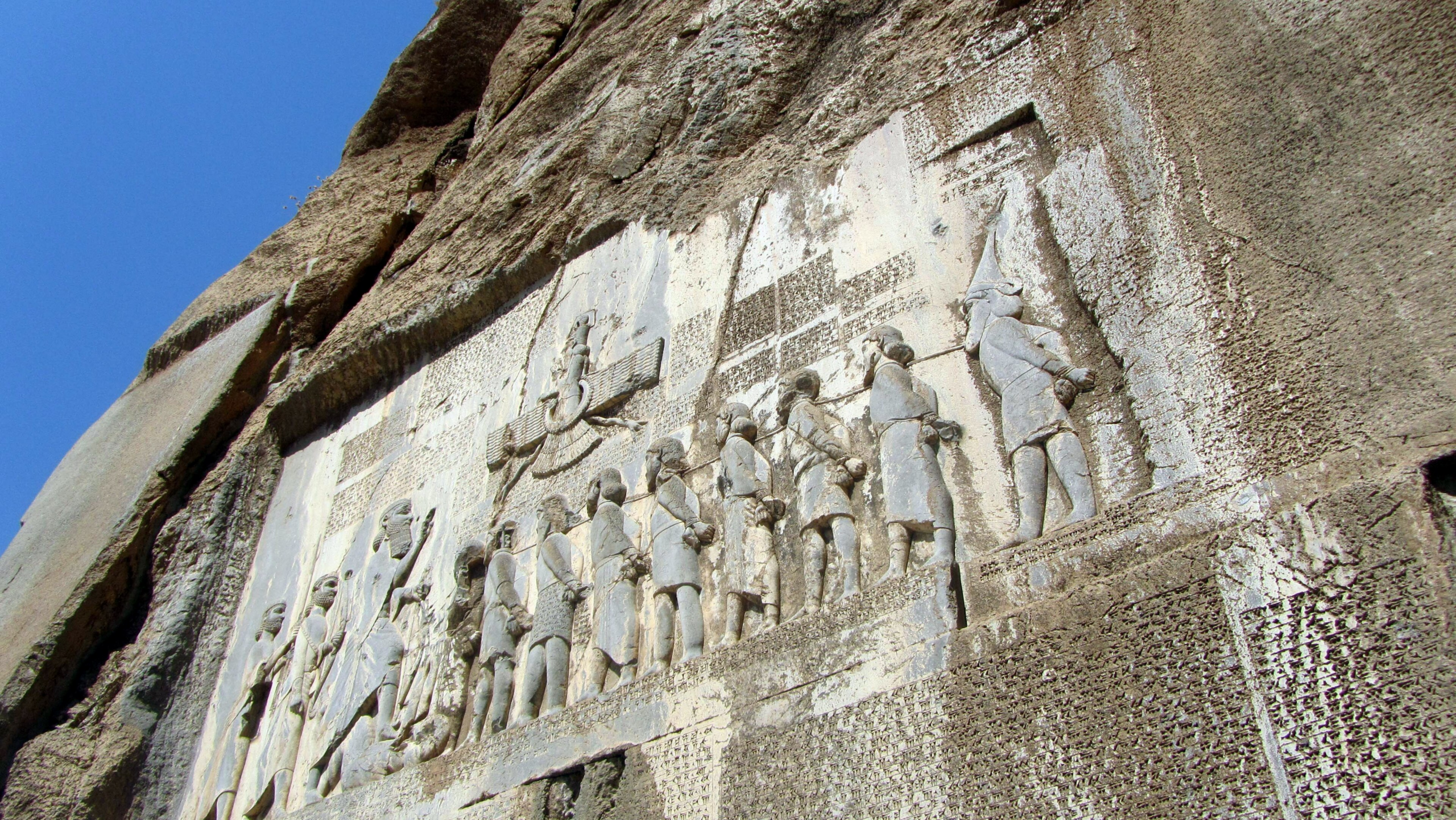
The copying is the part that sounds invented.
The inscription had to be transcribed with sufficient accuracy that individual wedge marks were correctly recorded, since a decipherment depends on exact sign forms. Photography did not exist in a usable form when the work began.
That meant somebody standing on a narrow ledge, working from a ladder, taking impressions and making drawings of a surface a hundred metres above the ground, over multiple seasons.
The sections in the least accessible languages required more still. Reaching one portion involved bridging a gap using a ladder as a horizontal beam and working across it — a manoeuvre described in the accounts in terms that make modern readers uncomfortable.
Papier-mâché impressions were taken by pressing wet paper into the carved surface, which produced a physical cast that could be studied at ground level.
Some of the highest sections were accessed with the help of a local boy who climbed where the adults could not, which is the sort of detail that appears in a footnote and deserves rather more.
There is one further difficulty worth mentioning. The three versions are not word-for-word translations of one another; they differ in length, in emphasis and in some details, which is normal for parallel official texts and is an additional obstacle for anybody working from one to another.
That meant decipherment could not proceed by simple substitution and required judgement about which passages truly corresponded – a slower and more uncertain process than a true parallel would have allowed.
What Happened Afterwards
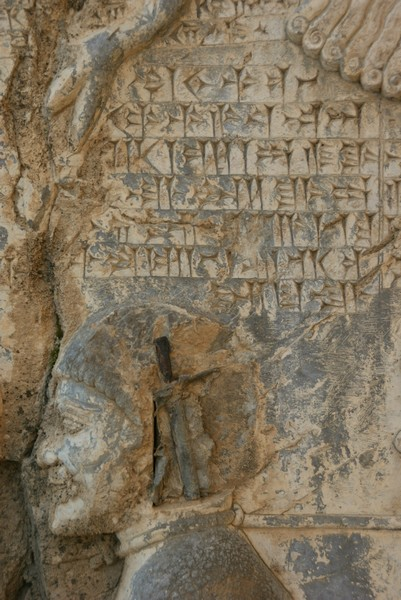
The consequences extended well beyond one language.
Reading the third script gave access to the tablet archives of an entire region — legal documents, letters, accounts, literature, astronomical records and administrative material spanning millennia.
That is the material that supplies most of what is known about early Mesopotamian societies, and essentially none of it was readable before.
There is a direct connection to another subject worth noting: the great library recovered from a burned palace, whose thirty thousand tablets are only meaningful because the script they carry can be read. That decipherment and this cliff are the same story.
So a political self-justification carved above a road, deliberately made unreadable, turned out to be the key to the written record of several civilisations.
The Accident in It
What makes the case worth understanding is how little of it was intended.
The inscription was produced to assert a claim to power. Its trilingual form served an imperial administrative purpose. Its height served display and protection. Its inaccessibility was deliberate.
Every one of those decisions, made for reasons entirely unconnected with preservation or scholarship, combined to produce an unusually well-protected, unusually long, unusually parallel text that survived in readable condition when almost nothing else did.
Had it been at eye level, it would have been defaced, quarried, reused or worn away long ago. Had it been in one language it would have been useless for decipherment. Had it been shorter it would have provided insufficient material.
A ruler making a statement about himself accidentally left the most useful document in the history of Near Eastern scholarship, in a place chosen specifically so that nobody could get at it.
Which is a reasonable argument for a particular kind of luck in the historical record. What survives is rarely what anybody set out to preserve; it is whatever happened to be made of the right material, in the right place, for reasons that had nothing to do with lasting.
Like our content? Follow us for more.