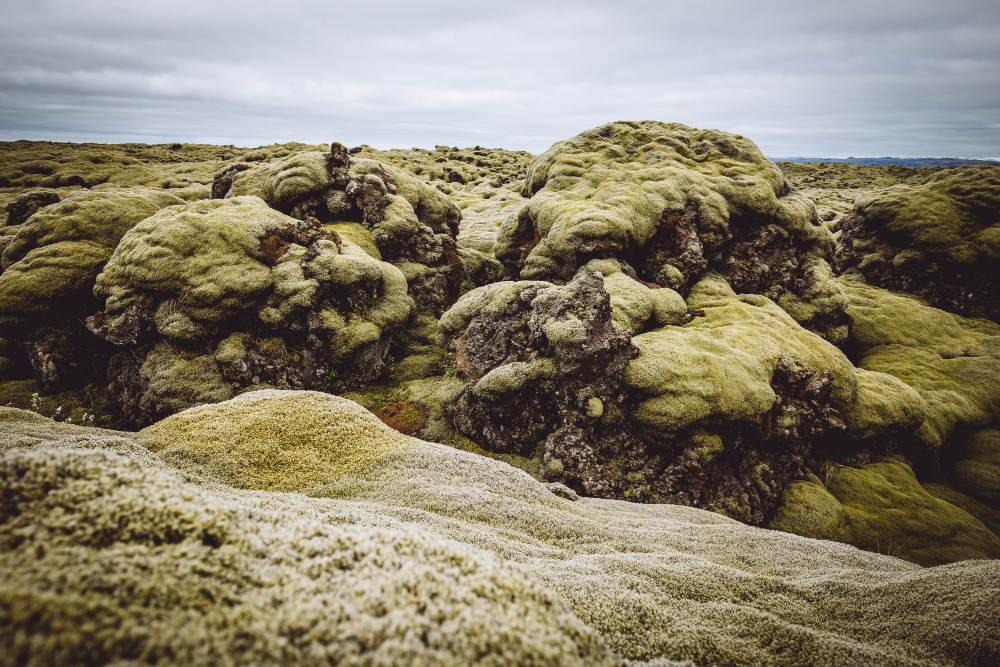
There is a category of living thing that is truly difficult to classify, and lichens are the standard example.
The difficulty is not that they are obscure. They are everywhere — on walls, roofs, gravestones, trees, rocks and bare ground in almost every environment including extremely harsh ones.
The difficulty is what they are. A lichen is not a plant, not a fungus in the ordinary sense and not a single organism at all: it is a stable association between at least two entirely unrelated things, producing a structure that neither partner makes independently.
That arrangement is what allows them to live where almost nothing else does, and it explains their growth rate, their sensitivity, their usefulness as indicators and why they are so hard to study.
What the Partnership Does
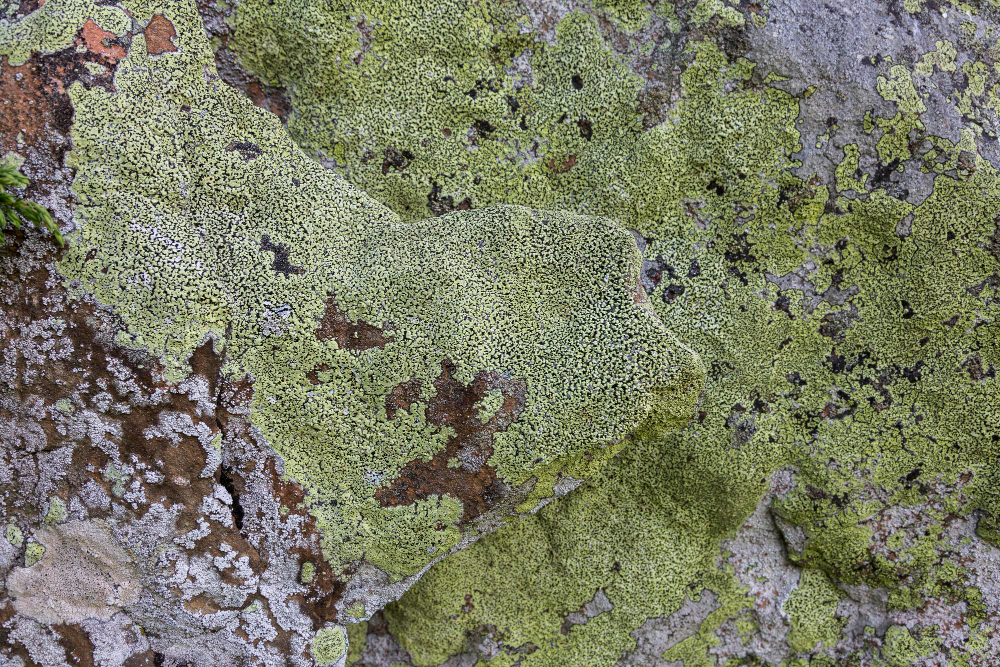
The division of labour is the essential fact.
The fungal partner makes up most of the mass and provides the structure — a body that holds a defined shape, adheres to a surface, retains water and physically encloses the other partner.
The photosynthetic partner, either an alga or a cyanobacterium, occupies a layer within that structure and produces sugars from light and carbon dioxide.
The fungus obtains those sugars. The partner obtains shelter, water retention and access to minerals the fungus extracts from the surface beneath.
Neither could occupy those positions alone. The fungus has no way to make food and the photosynthetic partner has no way to survive exposure on bare rock, and together they occupy surfaces that neither could.
The nature of the relationship is debated — whether it is straightforwardly mutual, or whether the fungus is better described as a controlled cultivator — and the position has shifted over time as more has been learned.
Like our content? Follow us for more.
Why It Is More Than Two Things
A significant complication has emerged and is worth stating.
The traditional account describes two partners. Work over recent decades indicates that additional organisms are consistently present — further fungi, bacteria and others — in arrangements that appear to be structural rather than incidental.
That suggests a lichen is better understood as a small community with a consistent composition than as a two-way partnership, which is a substantial revision to a textbook description.
The picture is still developing, and the specifics vary between types, which is why accounts of what a lichen is have become more cautious rather than less.
What is not in doubt is that the composite produces a structure, with a recognisable form, that reproduces and persists, and that behaves as a unit whatever the correct description of its membership.
There is a form point worth adding. The visible shapes fall into broad groups – crusts bonded to the surface, leafy forms lifting at the edges, and branching forms standing clear of it – and those differ in how much surface they expose and how firmly they are attached.
The crusted forms are the most tenacious and the slowest of all.
Why They Grow So Slowly
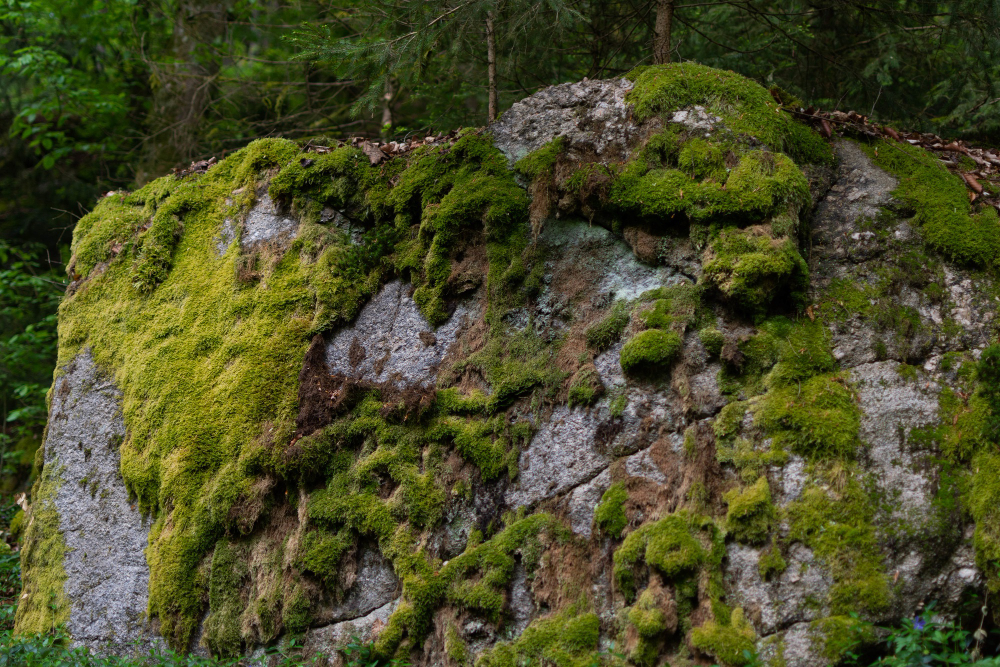
The growth rate is the property most people find surprising.
Many species extend by a fraction of a millimetre per year, and some by substantially less, which means a patch of any size represents a long period of undisturbed growth.
The reason is that the whole system depends on ambient moisture. A lichen has no roots and no way to obtain water except from rain, dew and humidity, and it can only photosynthesise while damp.
That means productive time is limited to whatever proportion of the year the surface is wet and lit simultaneously, which in most places is a small fraction.
When dry, the lichen does not die but suspends activity entirely, and it can remain in that state for extended periods and resume when wetted, which is why they survive in places with very intermittent water.
So the slowness is not a limitation of the organism but a consequence of only working when conditions allow, and the trade is that it can occupy surfaces where nothing with a continuous requirement could persist.
There is a reproduction point worth adding. Lichens propagate in two ways: by producing fungal spores that must then find a suitable partner, which frequently fails, and by releasing fragments containing both partners already together, which arrive ready to grow.
The second route is far more reliable and is why colonisation spreads outward from existing patches rather than appearing randomly.
Reading a Surface
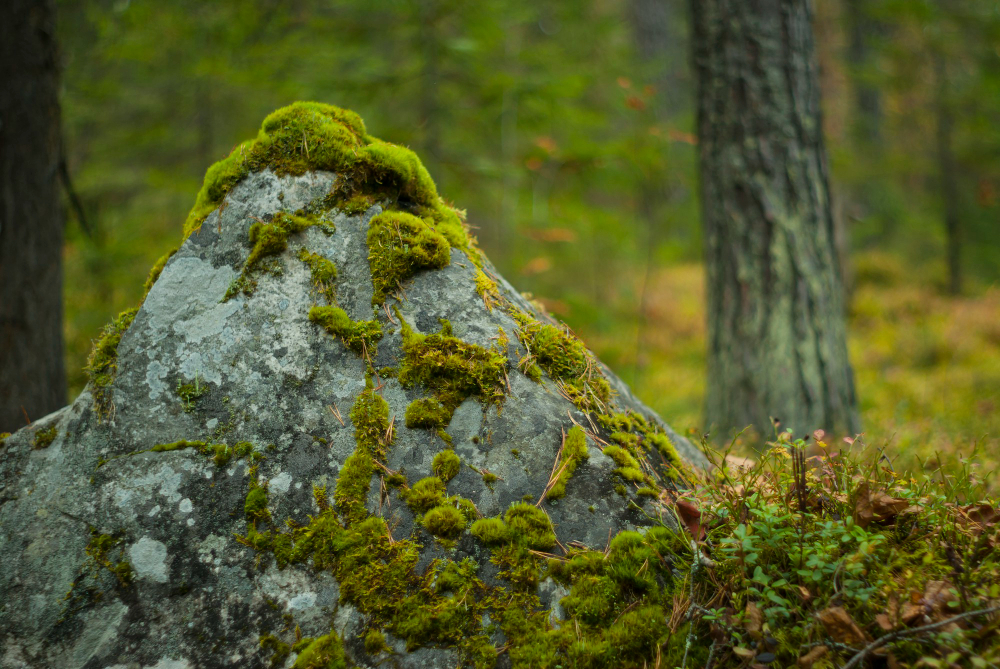
The slow predictable growth has produced a real application.
Because some species expand at a rate that can be established locally, the diameter of a patch can indicate roughly how long a surface has been exposed.
That has been used to estimate when rock surfaces became available — after a landslide, a glacial retreat or the construction of a wall — with substantial caveats about local conditions, species identification and the calibration involved.
It is approximate rather than precise, is sensitive to the assumptions used, and is most reliable where a local calibration exists from surfaces of known age.
The same slowness means that removing lichen from a surface removes something that will take decades or centuries to return, which matters for stonework where the growth is part of the character.
And it means that a heavily colonised surface has been undisturbed for a long time, which is information about the surface rather than about the lichen.
Why They Indicate Air Quality
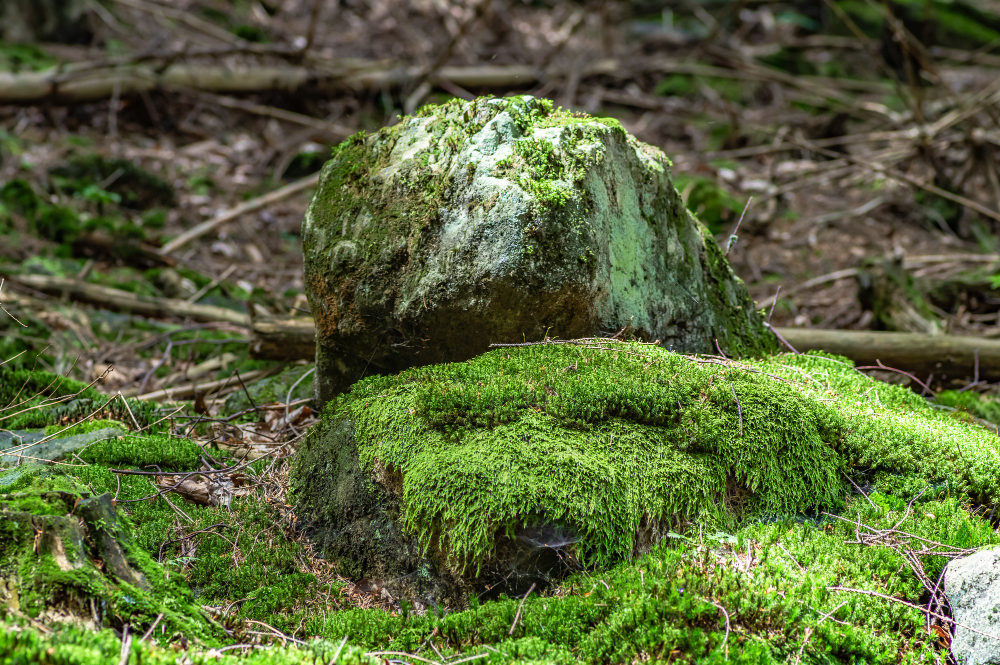
The sensitivity is the other widely used property and the mechanism explains it.
A lichen absorbs water and whatever is dissolved in it directly across its surface, over its whole area, with no roots to select and no mechanism to exclude anything.
It also accumulates rather than excreting, so anything absorbed stays, and concentrations build over the years the organism has been growing.
That makes them extremely sensitive to airborne substances, and different types differ in tolerance — so the composition of the lichen community on a surface reflects conditions over an extended period rather than at any moment.
Surveying which species are present therefore indicates the average conditions a location has experienced, which is information no instantaneous measurement provides.
That application is well established, and it is the reason lichens appear in environmental monitoring alongside instruments rather than being displaced by them.
Why They Are Hard to Study
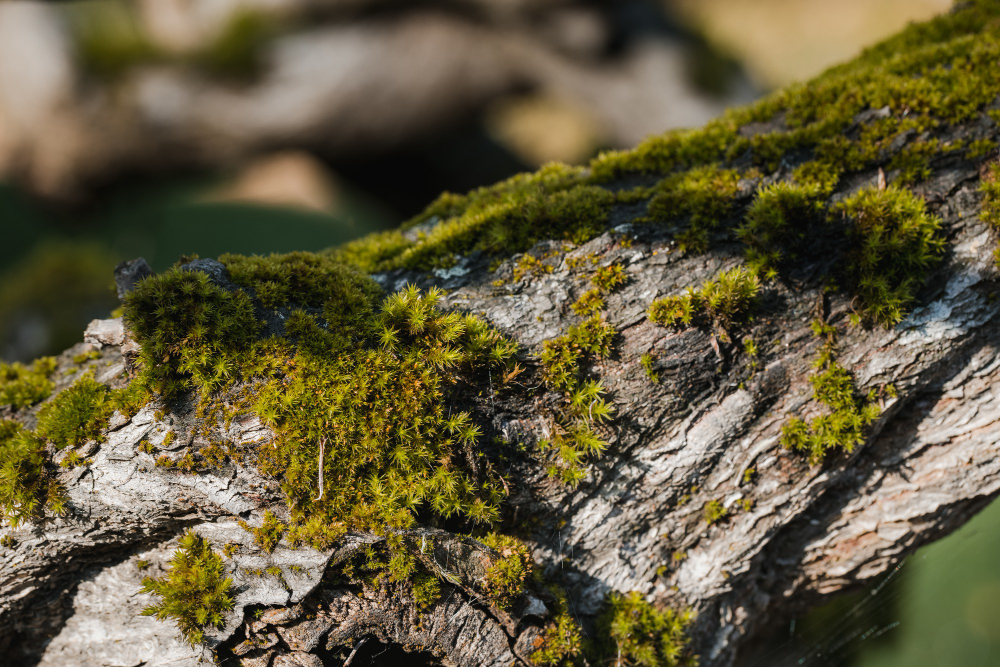
A practical difficulty explains why the subject has moved more slowly than comparable fields.
The composite cannot generally be grown from its parts in a laboratory. Separating the partners and reuniting them rarely reconstitutes the organism, which means the standard approach of culturing something and studying it under controlled conditions is largely unavailable.
Growth is also too slow for experiments on ordinary timescales. An organism extending a fraction of a millimetre a year does not produce results within the span of a research project.
Identification is difficult, because the visible form varies with the surface, the conditions and the age, and species that look identical can differ and species that look different can be the same.
That has been substantially changed by genetic methods, which is why the multi-partner picture emerged recently rather than earlier — the additional organisms were not visible by the methods previously available.
And the composite nature makes the basic question of what counts as an individual truly ambiguous, which affects how anything is counted, named or compared.
So a group of organisms that is abundant, conspicuous and present almost everywhere remains less well understood than many rarer things, entirely because of how it is put together and how slowly it does anything.
What They Are Doing to the Surface
The relationship with the substrate is more active than it appears.
Lichens extract minerals from the material they grow on, by physical penetration of the surface and by producing acids that dissolve it.
That means a colonised surface is being slowly altered, which is a real consideration for stonework and monuments — the growth is both protecting the surface from weather and attacking it chemically.
Which of those dominates depends on the species, the stone and the environment, and the conservation position is correspondingly nuanced rather than a general rule.
The same process is why lichens are among the first things to colonise bare rock, and why their action over long periods contributes to the breakdown of rock into the beginnings of soil.
So a patch on a wall is doing at a small scale exactly what the group does at a geological one — which is an odd thing to be able to say about something growing a fraction of a millimetre a year on a gatepost.
And it is worth pausing on the timescale. A patch the width of a hand may have been there since before the building it is on, which means the slowest thing on any wall is frequently the oldest thing on it.
Like our content? Follow us for more.