

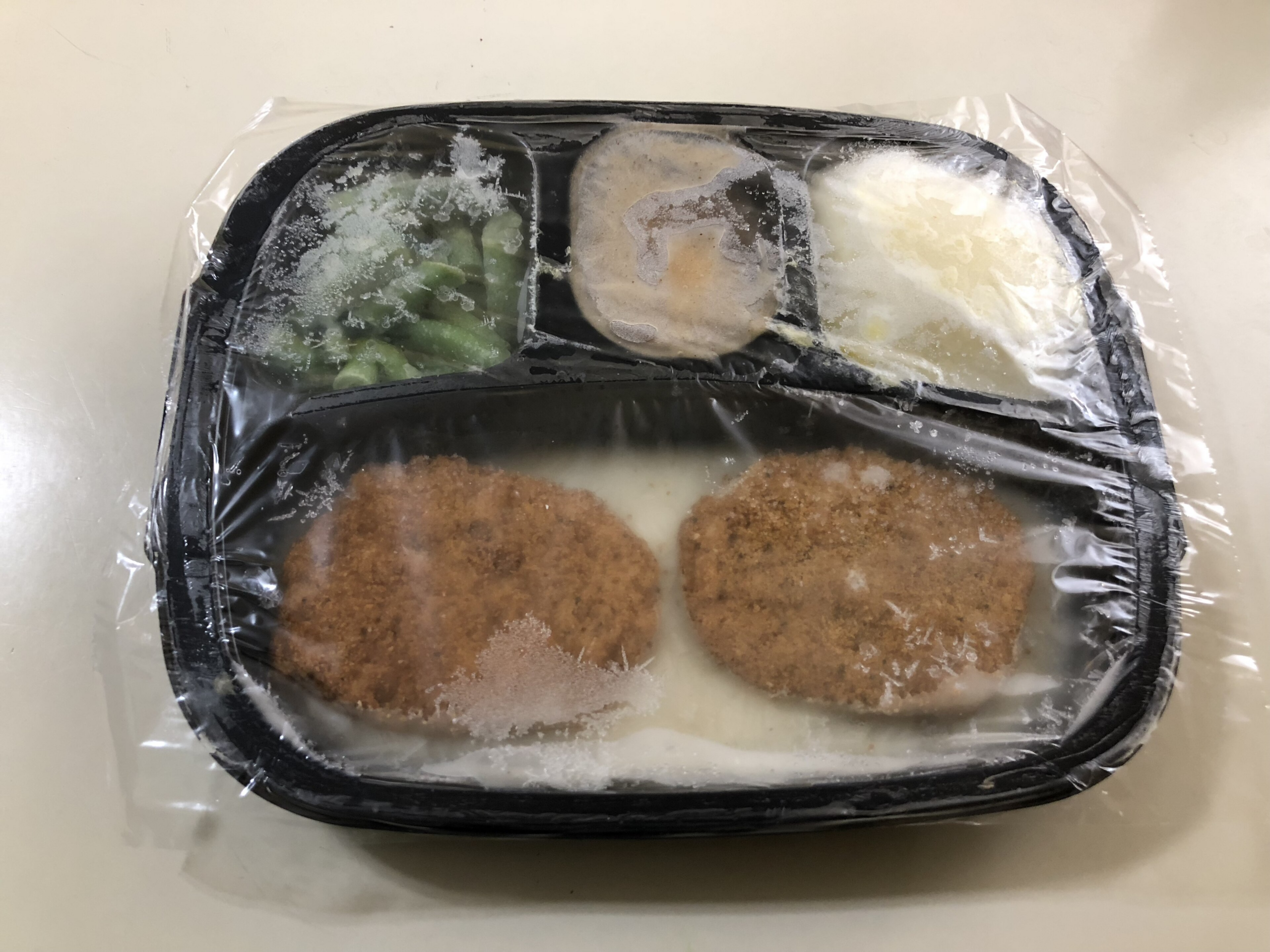
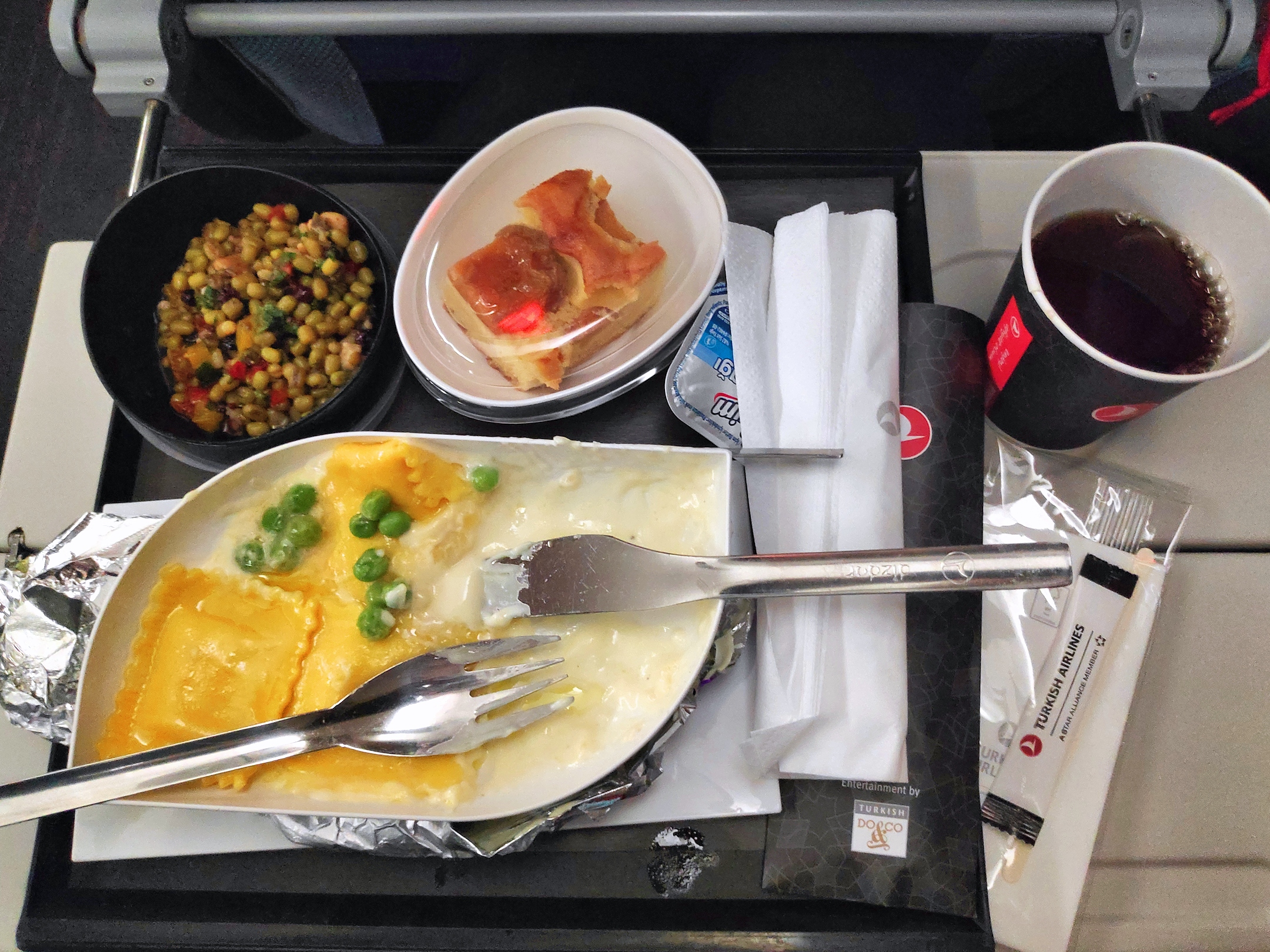
The object is so familiar that the oddness of it never registers. A rectangular foil tray, divided into compartments of unequal size, each holding one element of a meal, the whole thing frozen solid and then heated in an oven for the better part of half an hour.
Why compartments? Nothing else in a kitchen works that way. A plate does not have walls. The answer turns out to have nothing to do with convenience, nothing to do with television, and everything to do with the problem of feeding people in a vehicle.
The Problem the Tray Was Built For
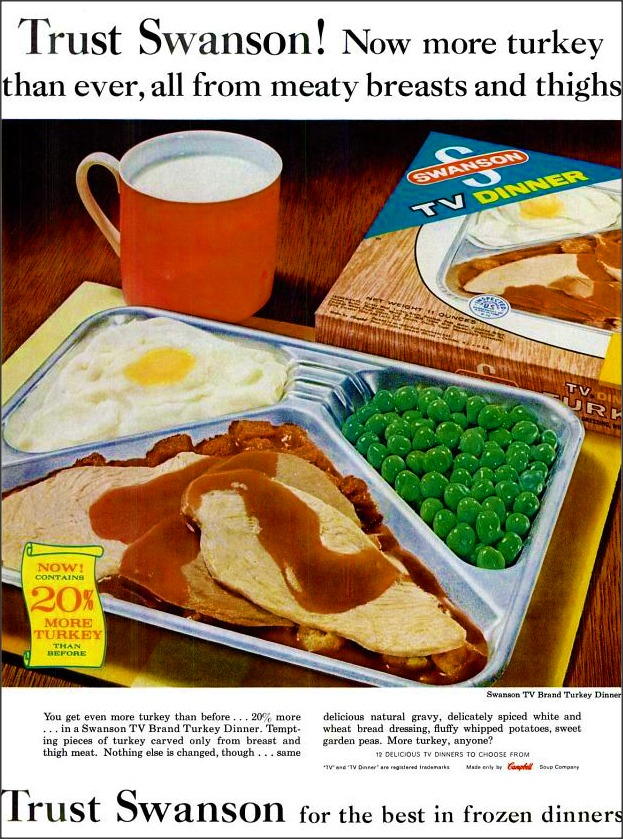
The compartmented tray did not originate in a grocery freezer. It originated in commercial aviation, and the problem it solved was specific.
An airline serving a hot meal in flight has constraints a restaurant does not. The food has to be prepared on the ground, held, reheated in a small galley oven, carried down a narrow aisle, and handed to somebody with a tray table rather than a dining table, in a vehicle that moves. Each of those steps punishes a plate.
A divided metal tray solves all of them at once. The compartments stop components migrating into each other during handling and turbulence, which matters enormously for food that has been reheated and is therefore soft. They let you put things with different heating requirements in the same vessel and give each one a different depth and surface area, so the dense item and the thin item arrive at roughly the same temperature. They stack. They are the serving vessel and the cooking vessel and the carrying vessel, which eliminates plating entirely. And foil conducts heat quickly and can be crimped and sealed.
So the tray was an aviation catering solution, worked out because the alternative was unservable food. Its arrival in the frozen food aisle was a transfer of technology from one constrained reheating environment to another.
Like our content? Follow us for more.
What the Frozen Food Industry Was Actually Trying to Fix
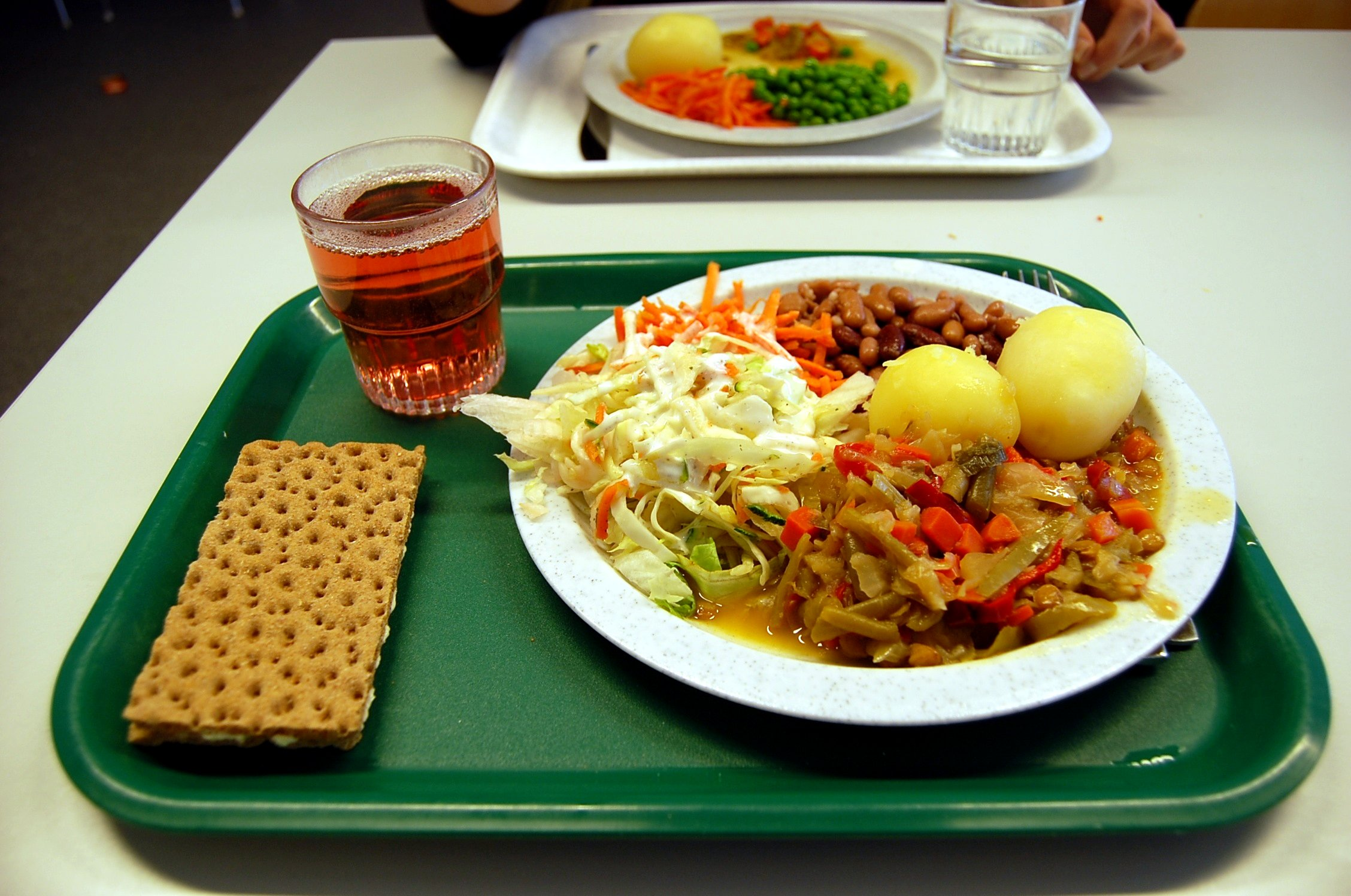
The second half of the story is about a business problem rather than a culinary one, and it is the reason a complete meal was tried at all.
Frozen food in mid-century America had a difficult commercial profile. The technology worked, the cold chain was improving, and consumers were cautiously interested, but the products were components: a bag of peas, a block of spinach, a chicken. A component competes directly with the fresh version on price and on suspicion, and it still requires the cook to make a meal around it.
There was also a supply problem that pushed in exactly the same direction. A processor dealing in a seasonal or variable commodity ends up holding stock that is perfectly good and awkward to sell – the wrong cut, the wrong size, a surplus from a good year. Turning that into a composed product with vegetables and a starch around it converts an inventory problem into a higher-margin item, and it does so while making the portion rather than the ingredient the thing being bought.
The complete frozen meal therefore solved several things simultaneously: it used up what the processor had, it sold at a meal price rather than a commodity price, it did not compete directly against fresh produce, and it asked nothing of the buyer except an oven and twenty-five minutes.
The Television Was a Name, Not a Reason
Here is the part that is almost universally misremembered.
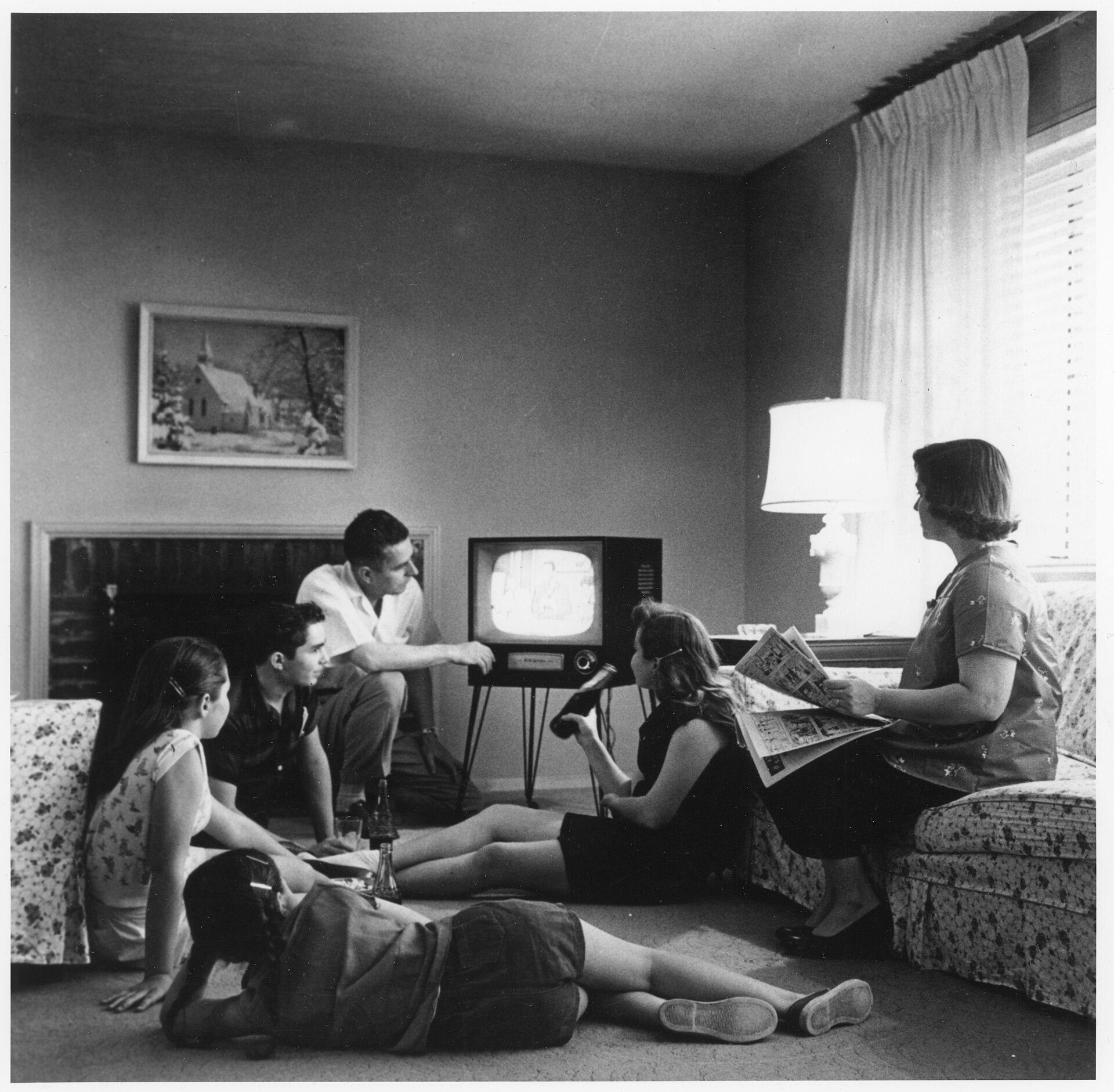
The product was not designed for people eating in front of a television. It was designed as a convenient hot meal, and the compartmented tray came from aviation. The television association was applied as branding, at a moment when the television set was the single most aspirational object in an American living room, and the point of the name was to borrow that modernity – not to describe a use case.
The tray even looked the part. The earliest packaging styling leaned deliberately into the resemblance between a divided rectangular tray and a television screen with its controls, and the imagery reinforced the association on purpose.
And the association then became true, which is what makes the story worth telling. The name suggested the behavior, the behavior spread, and within a decade eating a composed meal from a tray on your lap in front of a screen was a recognized American domestic activity with its own furniture – the folding tray table on a stand – manufactured and sold specifically for it.
That is an unusually clean example of marketing creating a practice rather than describing one. The product did not meet an existing habit. It named a habit into existence.
Why It Became Respectable, Then Did Not
The cultural position of the frozen dinner has moved twice, and both moves are worth noting because neither was about the food.
For its first stretch it was aspirational. Convenience food in mid-century America signified science, modernity and a household that was up to date. Serving one was not an admission of anything; the magazines of the period presented assembled and packaged meals as the forward-looking option, and the implied contrast was with the laborious cooking of the previous generation rather than with a fresh alternative.
The inversion came later, and it came through two separate channels. One was nutritional: as attention turned to sodium, fat and processing, composed frozen meals became the standard example of the thing to avoid. The other was social: as more households had every adult in paid work, convenience stopped being a modern choice and became a necessity, and things that are necessities lose their glamour immediately.
So the same object went from signifying a household ahead of its time to signifying a household short of time, without any change in what was in the tray.
The Engineering Problem That Never Got Solved
There is a technical reason the original product tasted the way it did, and it is the reason the format eventually had to change.
A conventional oven heats from the outside in by radiation and convection. For a frozen composed meal this is close to a worst case. The components have different masses, different water contents and different thermal conductivities, and they all have to go from frozen to hot in the same cavity for the same duration. The dense protein in a deep well and the thin layer of vegetables in a shallow one cannot both be correct at the end of the cycle. Whatever you set the time to, something is overdone and something is barely warm.
The compartments mitigate this by letting the designer tune depth and surface area per component, which is clever and only partially effective. What they cannot fix is that the heat is arriving from outside, slowly, through foil, into a frozen block.
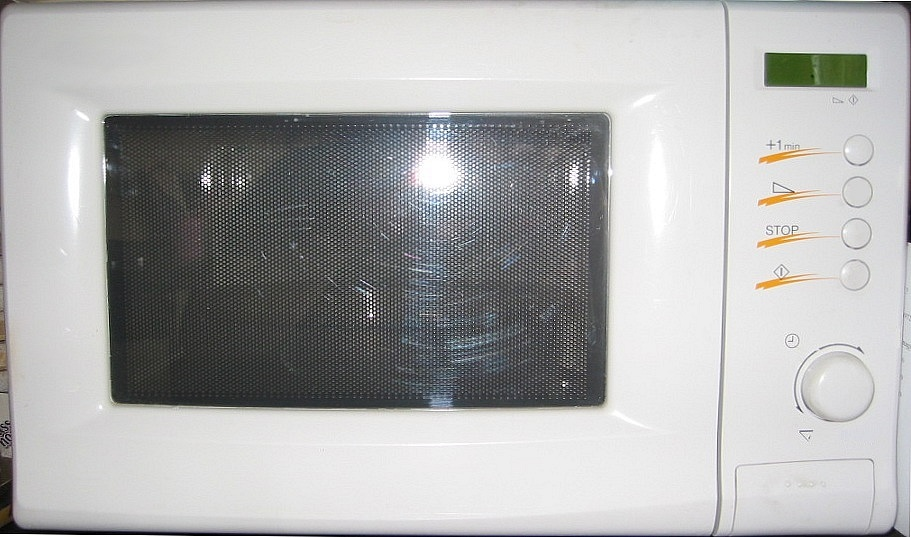
What fixed it was the microwave, which heats throughout the mass rather than from the surface – and which cannot be used with a metal tray. That single incompatibility is why the foil tray disappeared and was replaced by molded plastic and paperboard, and why the compartment layout changed shape at the same time. The tray did not go out of fashion. It became electrically unusable in the appliance everybody now owned.
What Survived
The interesting legacy is not the product, which is still on sale in a different material, but the format.
The divided tray turned out to be an unusually good solution to the general problem of delivering a composed hot meal where plating is impossible. It persists, essentially unchanged in concept, across an enormous range of contexts that have nothing to do with either airlines or televisions: institutional catering, school meals, hospital service, field rations and prepared meal delivery all use some version of it.
And the reason is the same reason it worked in a galley. When you cannot plate, cannot control the reheating precisely, and cannot trust the handling, walls between the components are worth more than any other single design feature.
The television lent it a name for seventy years. The airline gave it the only part that mattered.
The Honest Summary
The frozen composed meal was a solution to a processor’s inventory and margin problem, delivered in a tray borrowed from aviation catering, where compartments had already been worked out as the answer to reheating and serving food in a moving vehicle.
The television appeared in the name because the television was the most modern object in the house and the tray happened to look a little like one. Nobody designed it for eating in front of a screen. People then did that, in enormous numbers, partly because the name told them to – and a furniture category was invented to support a behavior that a brand had suggested.
The foil tray is gone, and it was not killed by taste or by nutrition. It was killed by the microwave, which heats a frozen meal properly and cannot do it through metal.
Like our content? Follow us for more.
