


There is a specific and very common experience in American shopping: a person takes three garments of the same stated size into a fitting room and finds that they are three different sizes. Not slightly different – different enough that one of them cannot be worn at all.
The usual explanations are that manufacturers are careless, or that sizing has drifted over the decades, or that it is a deliberate commercial trick. There is something in the second and third of those.
But the real answer is more straightforward than any of them, and most Americans have never heard it: there is no standard. Not a weak one, not a poorly enforced one. The United States has no clothing size standard. It had something close to one for about twenty-five years, it was voluntary, and it was formally withdrawn in 1983.
Before Any of This, Clothes Were Made to Fit the Person

For most of history the question did not arise, because garments were not sold finished.
Clothing was made by the household, or by a dressmaker or tailor who measured the individual and cut for them. There was no number involved, because there was nothing to label. The measurements were of a person, they were written down for that person, and the garment that resulted fitted them and nobody else.
Ready-made clothing changed that, and it arrived for men considerably earlier than for women. Military uniform contracting was the driver: an army ordering tens of thousands of coats needs a small number of sizes that will fit most recruits acceptably, and the measuring exercises conducted to work that out were the first large-scale anthropometric surveys. Men’s tailoring also inherited a habit from bespoke work that turned out to be enormously useful – it labelled garments with actual measurements.
That is why a man’s trousers are still sold as a waist and an inseam in inches, and a shirt as a neck and a sleeve. Those are not sizes. They are dimensions, and however imperfectly they are applied, they describe something real.
Like our content? Follow us for more.
Women’s Ready-Made Clothing Had No Such Inheritance

Women’s clothing went straight from dressmaking to mass production without passing through a tradition of selling by measurement, and the industry that resulted had an immediate problem: it did not know what shapes to make.
Manufacturers worked from their own assumptions, from patterns scaled up and down from a single base, and from whatever happened to sell. Sizes were sometimes based on age – a system inherited from children’s clothing, and a strange one to apply to adults. Returns were enormous, because mail order was a major channel and nothing fitted predictably.
By the nineteen-thirties this was a recognised and expensive industrial problem, and the response was to go and measure people.
The Survey
In the late nineteen-thirties a large measuring project was carried out in the United States, funded as public work and conducted by statisticians and home economists, which measured many thousands of women and recorded dozens of dimensions for each.
It was a serious and ambitious piece of work for its time, and the intention behind it was good: to find out what shapes actually existed in the population so that garments could be made to match them.
It also had limitations that are now well understood and were partly understood then. The volunteers were paid a small sum to participate, which shaped who came forward. The sample was not representative of the whole American population – it substantially under-represented or excluded large groups of women, which the researchers themselves noted as a deficiency in the data. And one analytical decision at the end did more damage than any of it: the results were reduced to a system built around a single dimension, on the assumption that other measurements could be predicted from it in fixed proportions.
That assumption is the root of everything that followed. Human bodies do not vary in fixed proportions, and the survey’s own data showed as much. Reducing a multi-dimensional measurement to one number plus a set of ratios produced a system that would fit the people who happened to match the ratios and would fit nobody else properly.
How It Became Numbers on a Label
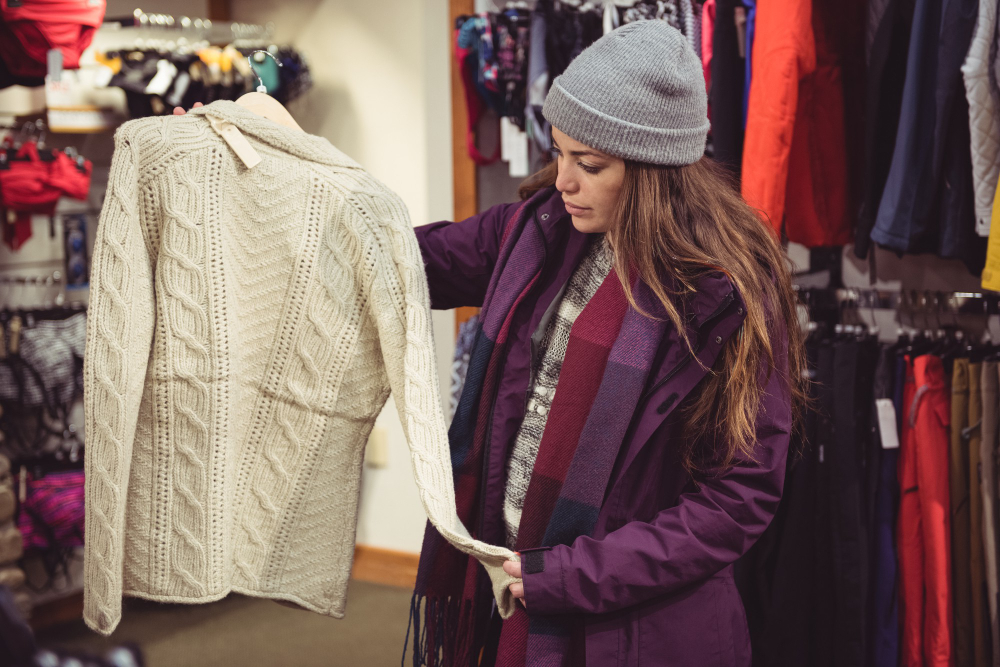
The survey data was turned into a commercial standard and published in the nineteen-fifties, with a set of numbered sizes and a defined set of measurements for each, plus letters and symbols to indicate height and proportion.
Three things are important about it.
It was voluntary. Nobody was required to use it, and compliance was a matter of a manufacturer choosing to.
It was based on the survey’s flawed single-dimension assumption, so it described a population that did not fully exist.
And the numbers it used were arbitrary labels. The size numbers in that system do not correspond to any measurement in inches or centimetres. They are just a sequence, which means they carry no information that can be checked – unlike a man’s thirty-two-inch waist, a woman’s size 12 cannot be right or wrong about anything, because it does not claim to measure anything.
Then It Was Withdrawn
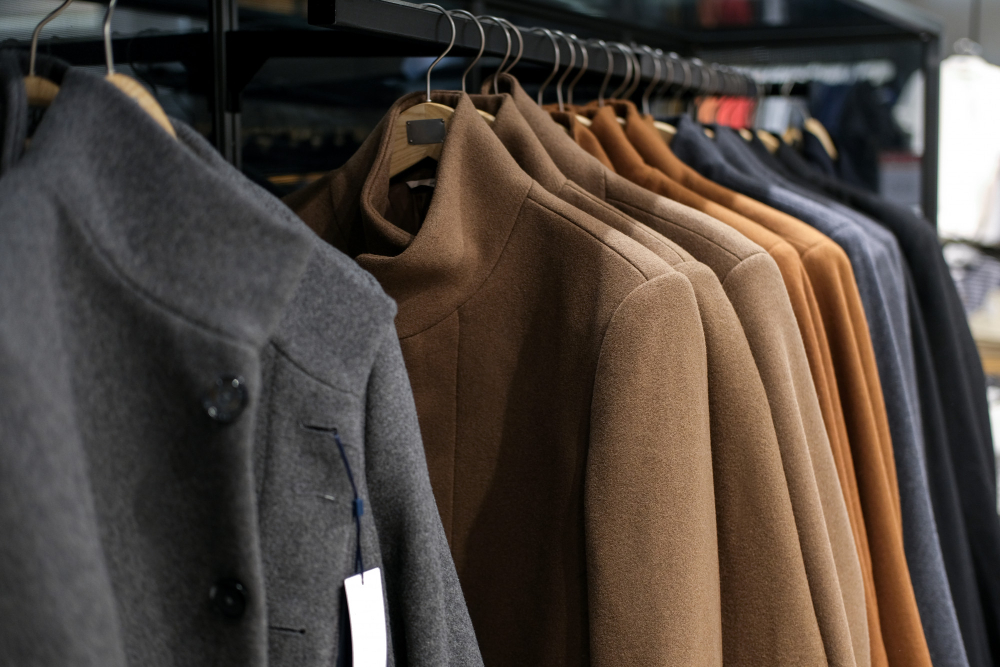
The standard was revised, and in the nineteen-seventies it was downgraded from a standard to a guideline. In 1983 it was formally withdrawn altogether.
The reasons were practical rather than dramatic. Compliance had always been patchy and was falling. The population being measured had changed since the nineteen-thirties. The data was old, the single-dimension assumption was discredited, and nobody wanted to fund a new national measuring exercise. And manufacturers had discovered that the numbers were a marketing surface rather than a technical one.
Nothing was put in its place. Voluntary industry sizing tables exist and some companies use them, but there has been no American clothing size standard since – which means that the number on a garment is, in the strict sense, whatever the manufacturer decided to print.
Which Is Where the Drift Comes From
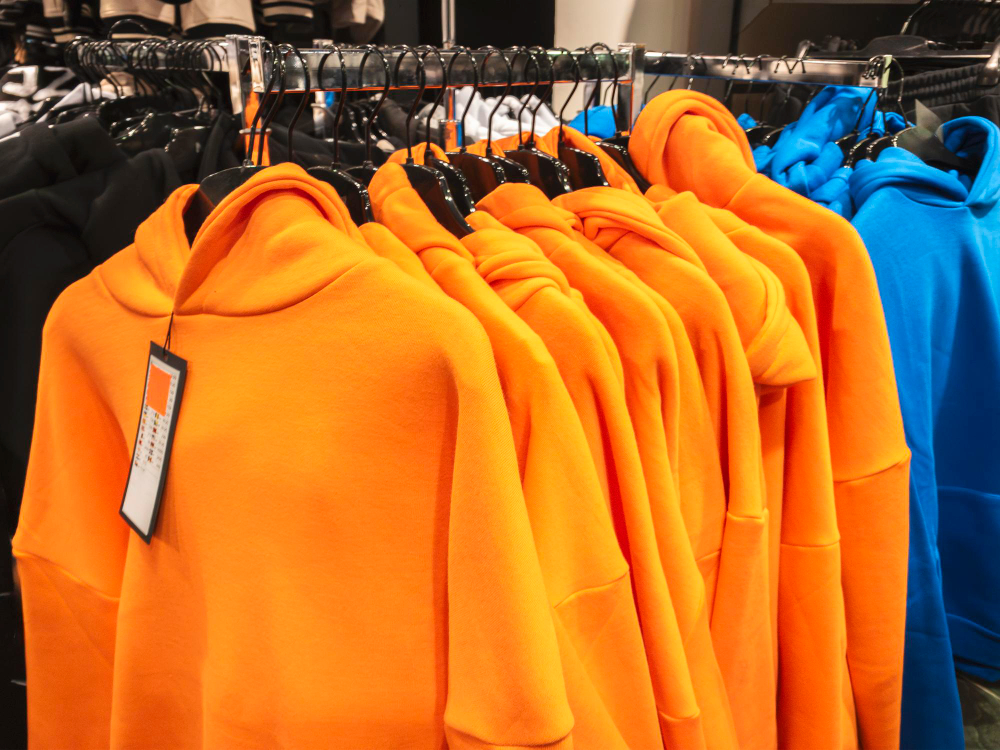
Once the number means nothing in particular and nobody is checking, it becomes available for other purposes, and the main one is well documented: the numbers have moved steadily downward.
A garment labelled with a given size today is, in measured terms, substantially larger than a garment carrying the same number decades ago. The direction is consistent across the industry and across decades, and the mechanism is simple commercial logic – a shopper who finds a smaller number on a garment that fits is more likely to buy it, and no regulation prevents a manufacturer from supplying that experience.
Two consequences follow. The first is that size numbers are not comparable across time at all, which matters to anybody using an old pattern or buying vintage. The second is that they are not comparable across manufacturers at any one time either, since each is drifting independently from a baseline that was withdrawn forty years ago.
And because the drift has no floor, the bottom of the range has had to be extended downward repeatedly with zeroes and fractions – a sequence that exists purely because the numbering ran out of room at the end it was moving towards.
What Other Countries Do, and Why It Is Not Simply Better

Many other clothing markets label garments with a measurement or with a number tied to one – a centimetre dimension, or a numbering scheme defined against stated body measurements. European sizing, for instance, is conventionally related to a measurement in centimetres, which means the number at least points at something.
This is a real advantage and it is worth stating plainly: a number that references a dimension can be verified, compared between makers, and used to buy by post without guessing.
But it is not a complete solution and it is fairer not to pretend otherwise. Those systems still reduce a three-dimensional body to one or two numbers, so they still fit best the people who match the assumed proportions. Drift affects them too where competitive pressure exists. And the same garment size can differ between countries using nominally similar schemes.
The honest comparison is not between a broken American system and a working foreign one. It is between a system whose numbers refer to nothing and a system whose numbers refer to something imperfectly. The second is better. Neither solves the underlying problem, which is that bodies are not describable by one number.
The Honest Summary
American clothing sizes behave inconsistently because there is nothing making them consistent.
The system descended from a measuring project of the late nineteen-thirties which was ambitious for its era but drew on an unrepresentative sample and, fatally, reduced its findings to one dimension plus fixed proportions that human bodies do not follow. That became a voluntary commercial standard in the nineteen-fifties, with arbitrary numbers that referred to no measurement. It was downgraded in the seventies and withdrawn in 1983, and nothing replaced it.
Men’s sizing works better for an unrelated historical reason: it inherited the tailoring habit of labelling garments with actual inches, so the numbers describe something checkable even when applied loosely.
Everything people notice about American sizing – the inconsistency between brands, the downward drift over time, the extra zeroes at the bottom of the range – follows from a label that was never required to mean anything and has not been defined by anybody for over forty years.
Like our content? Follow us for more.
