Nobody likes a parking meter. It is probably the least loved piece of street furniture ever invented, it is universally understood as a device for extracting money from motorists, and the idea that it was invented for any other purpose sounds like a public relations exercise.
It was, though. The meter was a solution to a problem that had nothing to do with revenue, and the problem is one that anybody who has tried to park in a small town centre will recognise immediately.
The problem was not that there were too many cars. It was that the same cars were there all day.
The Actual Problem
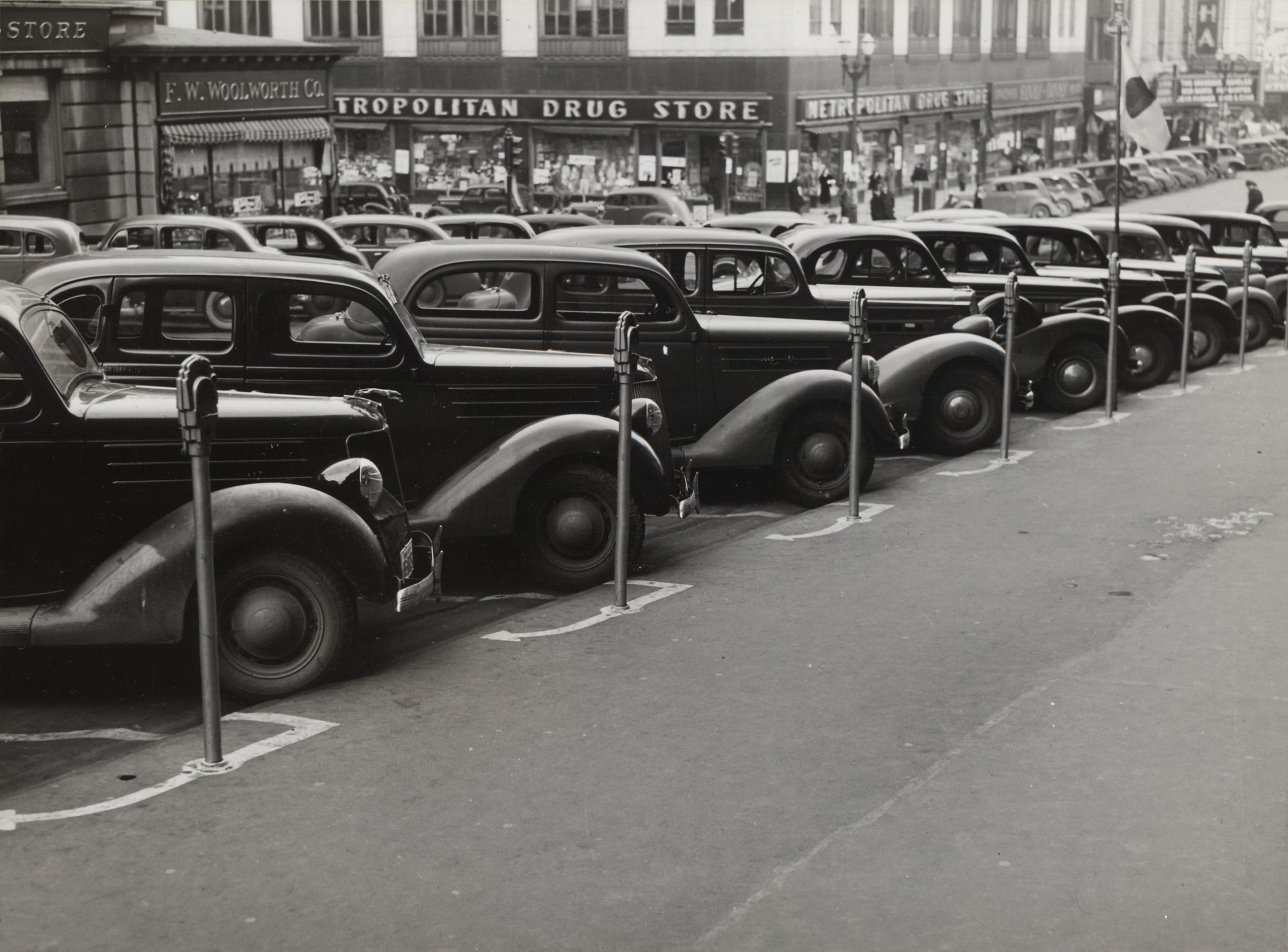
Picture an American downtown in the early nineteen-thirties. Kerbside parking is free and unlimited. There is no time restriction, no charge and no enforcement worth speaking of.
Now consider who gets there first. The people who work on that street – the shop owners, their assistants, the clerks in the offices above, the staff of the bank and the cafe – arrive at eight in the morning and park directly outside their own premises. They are there all day. Their cars do not move until the evening.
By the time a customer drives into town at eleven, every space has been occupied for three hours by somebody who is already inside one of the buildings, and will be for another six.
The result was that the most commercially valuable parking in a town – directly outside the shops – was permanently unavailable to the only people whose parking generated any trade. Shops on the main street were being strangled by their own staff.
This was understood at the time and it was a serious commercial grievance. Chambers of commerce discussed it. The question was what could be done.
Like our content? Follow us for more.
Why Nothing Else Worked
Before the meter, two approaches were tried and both failed for the same reason.
The first was a time limit with no charge. Signs would restrict parking to an hour, and enforcement meant an officer walking the street chalking tyres, returning later and checking whether the chalk mark had moved. It was labour-intensive, easily defeated by moving the car a few feet or wiping the chalk, and it required a municipality to pay somebody to walk around all day in order to enforce a rule that produced no income to pay them with.
The second was simply asking. Merchants’ associations appealed to their members and their staff to park further away and leave the frontage for customers. This works for about a fortnight. Everybody agrees it is a good idea, everybody agrees somebody should do it, and the spaces outside the shops fill up again with the cars of people who would rather walk ten feet than two hundred.
The structural problem is that a free space with no limit goes to whoever arrives earliest and stays longest, and the person who arrives earliest and stays longest is always going to be the person who works there.
The Invention
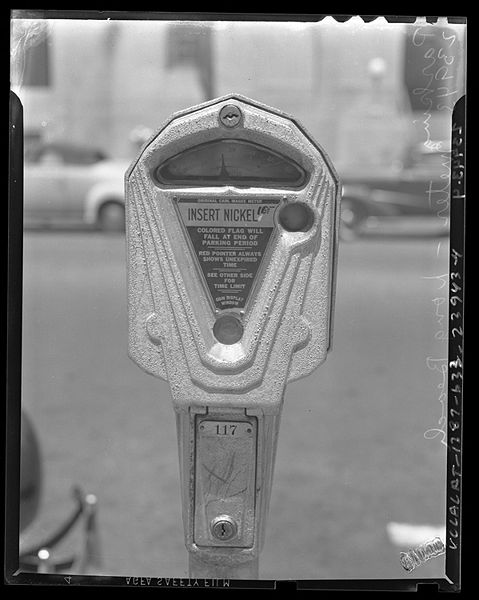
The man usually credited is a newspaper publisher in Oklahoma City who chaired a local traffic committee charged with the parking problem, and who arrived at the idea of charging for time at the kerb. The engineering was worked out with help from a local university, and the first meters were installed in that city in 1935.
The mechanism was simple and mechanical: a coin, a clockwork timer, a flag or dial showing time remaining and an indication when it expired. Everything about it was designed to be read from the pavement by a passing officer, which is the part that actually mattered.
Because the meter’s real innovation was not the charging. It was that it made enforcement cheap. One officer walking a street could see, instantly and from a distance, exactly which vehicles were in violation, with no chalk, no notebook and no need to have been there earlier. The time limit finally became enforceable, and the charge paid for the enforcement.
The price was deliberately small. It was not meant to be a significant cost to a shopper stopping for twenty minutes. It was meant to be an unacceptable cost to somebody who wanted to leave a car in one place for nine hours.
The Merchants Hated It
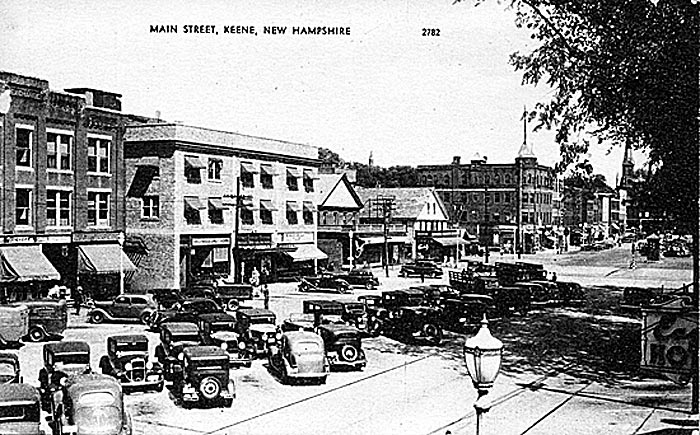
The reaction from the business community was immediate and hostile, which is the part of the story that gets forgotten.
The objection was straightforward and sincere: shopkeepers believed that charging people to park outside a shop would stop them shopping there. A customer faced with a meter would drive on to somewhere that did not have one. Meters were denounced as a tax on trade, legal challenges were brought in several American jurisdictions, and in a number of towns meters were physically attacked, uprooted or sabotaged.
And they were wrong, in a way that became obvious quite quickly. Turnover at the kerb went up enormously. A space that had previously served one person per day now served eight or ten. The merchants had been thinking about the cost per customer and had not noticed that the number of customers able to reach them had been the binding constraint all along.
Within about five years meters had spread to thousands of American towns, substantially because the merchants who fought them in one town watched what happened to trade in the next one.
Then the Purpose Drifted
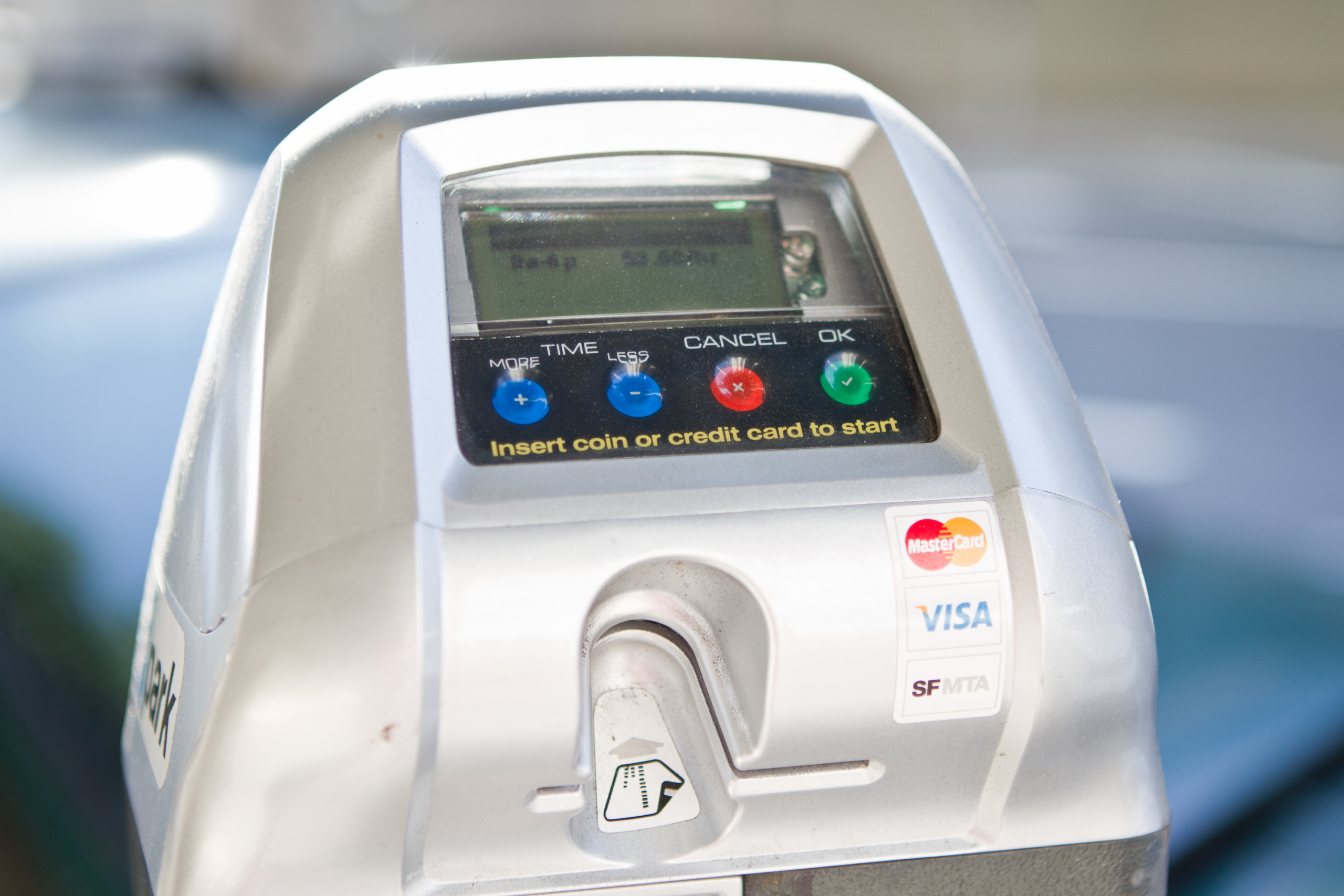
Here is the honest part, and it is why the modern suspicion of meters is not unreasonable.
A device that regulates turnover also happens to generate a continuous stream of small coins, and municipalities noticed. Meter revenue became a budget line, and once something is a budget line there is pressure to protect and grow it – which pulls in exactly the opposite direction from the original purpose.
A meter installed to create turnover wants to be cheap enough that people pay it and move on. A meter installed to produce revenue wants to be expensive, and ideally wants a certain number of people to overstay and be fined. Those are different machines pointing at different outcomes, and a great deal of modern argument about parking enforcement is really an argument about which of the two a given town is operating.
The current wave of thinking in American parking management has tried to return to the original logic explicitly, by setting prices with the aim of keeping a small number of spaces free on every block at all times – treating the price as a dial for availability rather than as a source of income. Whether a municipality facing a budget gap can hold that line is a different question.
What Happened Everywhere Else
Meters spread internationally but arrived later and in a different form, and the differences are instructive.
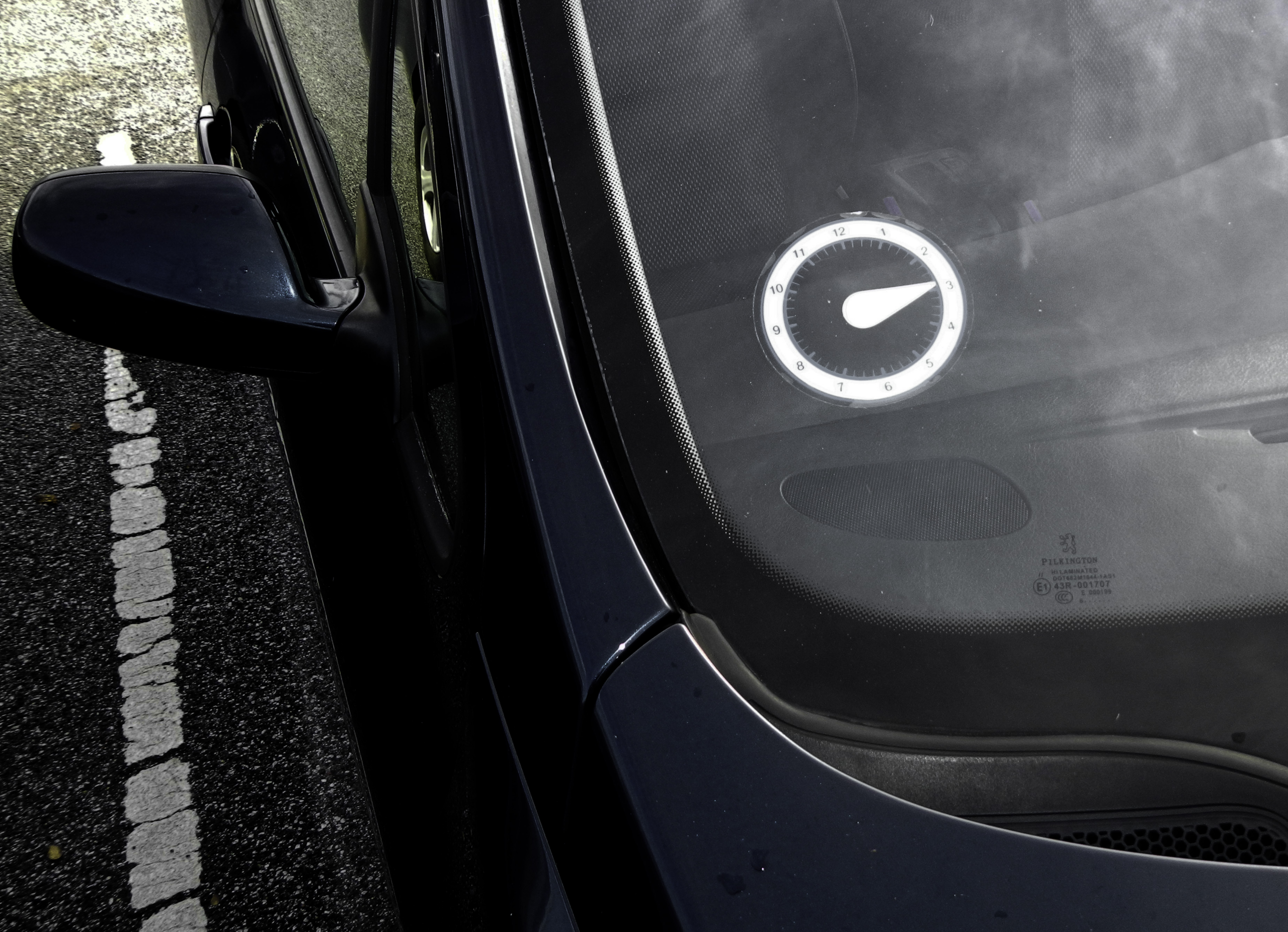
Many European towns had less need of the original fix, because fewer people drove to work in a town centre, the centres were older and tighter with far less kerbside space to fight over, and public transport and walking carried more of the load. Where the problem did arise, the solutions reached for first were often different – resident permit schemes, disc zones where a cardboard clock is displayed in the windscreen and no money changes hands, and time limits enforced by wardens.
The disc zone is worth noticing because it is the pure version of what the meter was actually for. It creates turnover, it is enforceable at a glance, and it raises no revenue at all – which means it cannot drift into a revenue instrument, because there is nothing to drift into.
That a free system achieving the same objective exists, and has worked in a great many places for decades, is the strongest evidence that the meter’s original purpose and its current function are genuinely two different things.
The Honest Summary
The parking meter was invented in Oklahoma City in 1935 to solve the problem that free unlimited kerbside parking is taken every morning by the people who work on that street and never released, which left the most valuable spaces in a town permanently unavailable to customers.
Time limits without charges had failed because enforcing them by chalking tyres was expensive and easy to defeat. Asking people nicely had failed because it always does.
The meter’s real innovation was not charging but visibility: it let one officer see every violation on a street at a glance, which made the time limit enforceable for the first time, and the charge paid for the enforcement.
Merchants fought it hard, sued over it and in places attacked the machines, and then discovered that kerbside turnover had multiplied and their trade with it.
And then municipalities noticed the revenue, which has been pulling against the original purpose ever since. The European disc zone, which does the same job and collects nothing, is the clearest demonstration that the two functions were never the same thing.
Like our content? Follow us for more.