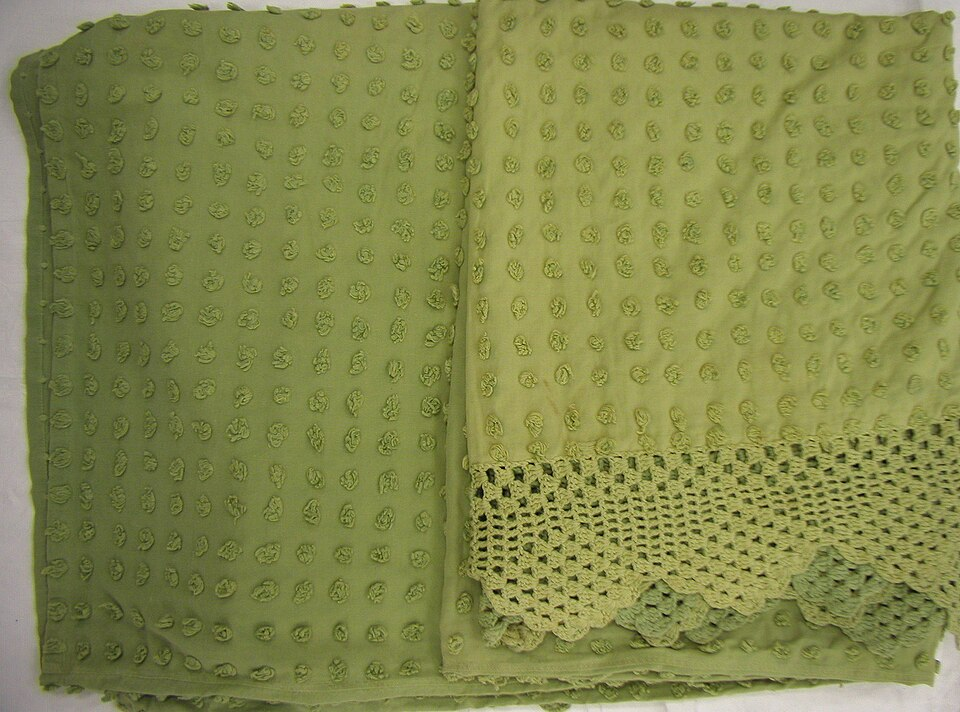
If you are American and over a certain age, you have slept under one. A heavy cotton bedspread with raised fuzzy tufting standing up off the surface in a pattern – a peacock with its tail spread, a floral medallion, a wedding ring design, concentric rings, or a plain popcorn field all over.
They were everywhere. They were cheap. They were on beds in farmhouses and city apartments and motel rooms across the entire country, and they got washed until the tufts went flat and the cotton went thin.
Most people file them under forgettable mid-century household goods.
In fact they are the origin of one of the largest manufacturing concentrations in the United States. The hand-tufted bedspread trade of a few counties in north Georgia turned into the American carpet industry, which is to say the industry that supplies most of the floor covering in the country and a very large share of the world’s.
It started with women tufting by hand on their own porches, paid by the piece.
How the Craft Worked
Tufting is a specific technique and it is worth understanding, because the entire industrial story follows from how simple it is.
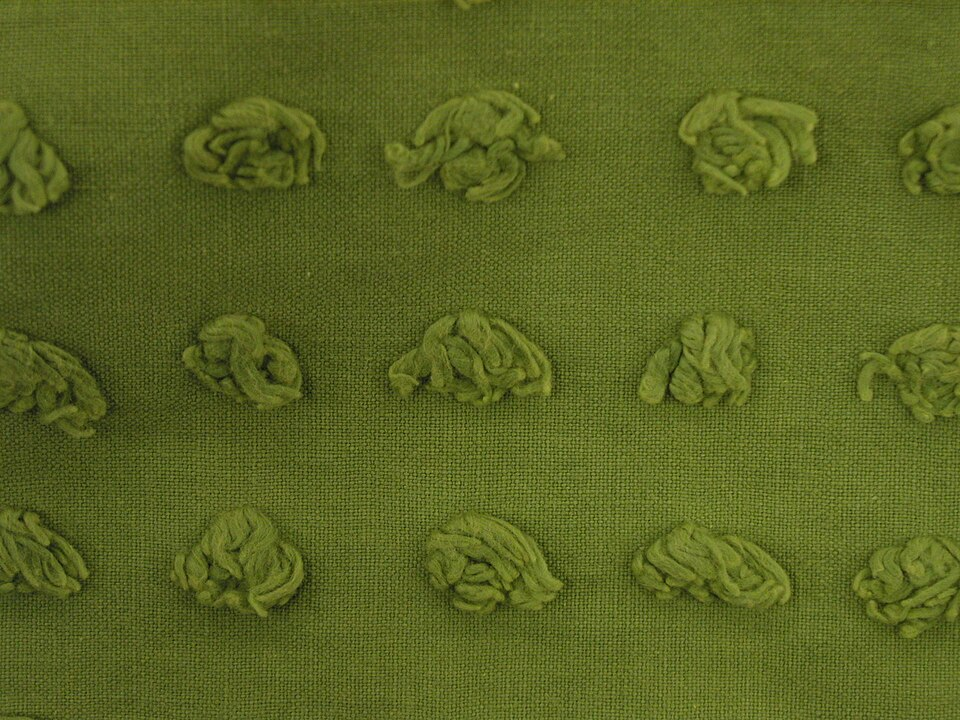
You start with a woven cotton sheet. You stamp or trace a pattern onto it. Then you take a large needle with heavy cotton yarn and push it through the cloth and back out again, leaving a loop standing up on the face. Do that along the pattern lines, thousands of times, and you have a raised design standing proud of the background.
Then – and this is the step that makes it chenille – the fabric is washed in hot water. The cotton yarn shrinks and blooms, the loops fluff out and lock themselves into the backing, and the result is a soft, durable, fuzzy pile that does not pull out. The word chenille is the French word for caterpillar, which is what a length of the tufted yarn looks like.
That is the whole process. A needle, yarn, cloth, a pattern and hot water. No loom, no frame, no machinery, no training beyond being shown once.
Which means it could be done by anybody, anywhere, with no capital at all – and that is precisely why it spread the way it did.
Like our content? Follow us for more.
The Work Was Put Out to Households
The trade organised itself on a system that was old in textiles and new in that region.
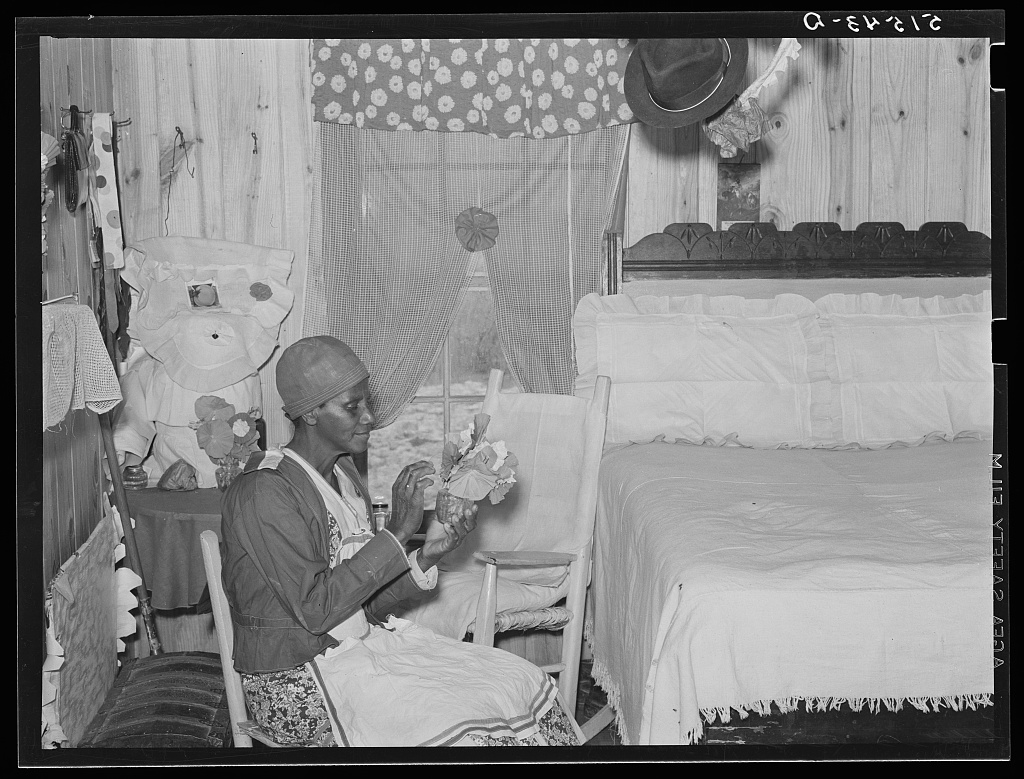
Someone with a little money – a spread house, as they came to be called – would buy the cotton sheeting and the yarn, stamp the patterns onto the sheets, and distribute the bundles to households across the surrounding country. A woman would collect a bundle, take it home, tuft the pattern over days or weeks, and bring it back to be washed, dried, trimmed and sold. She was paid by the piece, a small amount per spread.
This was overwhelmingly women’s work, and it was done in and around the house, alongside everything else a farm household required – which was the entire point of the arrangement from the household’s side. It was cash income that did not require leaving, did not require childcare, did not require a schedule and did not require any equipment. In a region and a period where cash was scarce and farm income was collapsing, that mattered enormously.
It also paid very little. The rates were low, the work was slow, and a spread represented a lot of hours. Households took it because it was the available option, and the arrangement had all the characteristics of piecework everywhere: the risk and the time sat with the worker, the margin sat with the person who owned the materials.
Both of those things are true at once and the honest version of this history holds them together.
The Roadside Stands Were the Marketing
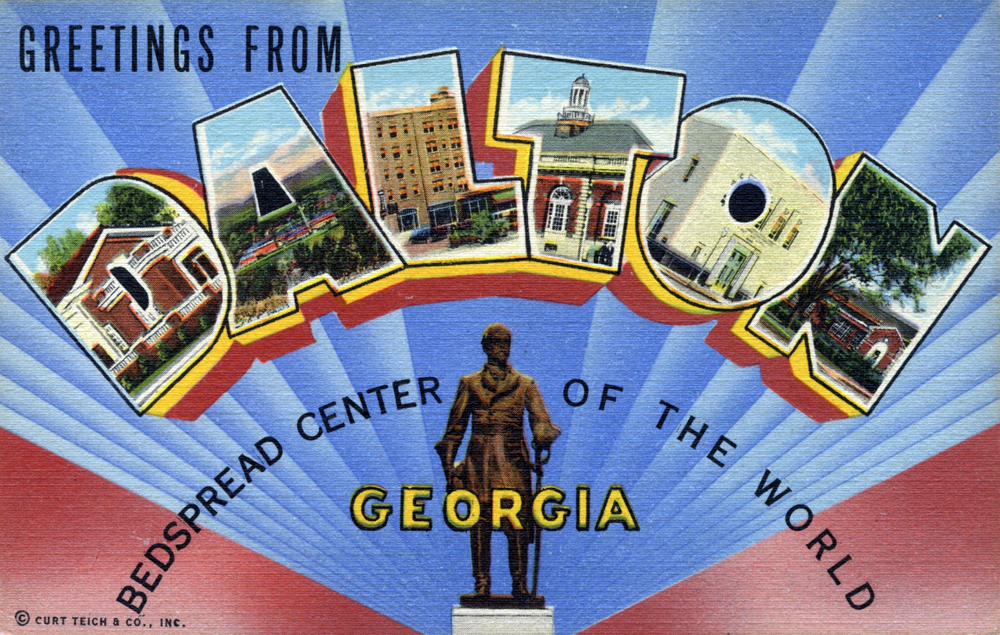
What turned a local craft into a national product was a road.
Highways running north to south through that part of the country carried enormous numbers of American motorists heading between the Midwest, the Northeast and Florida. And along those highways, spread houses and families hung finished bedspreads on clotheslines where passing cars could see them – acres of white cotton with coloured peacocks, flapping in the wind, for mile after mile.
Travellers stopped and bought them. They bought them as souvenirs, as gifts, as genuinely useful household goods at a price that was hard to argue with. The peacock pattern became so associated with those roadside displays that the highway acquired a nickname referring to them, and the association stuck for decades.
That is an unusual and effective distribution model. No shops, no catalogues, no advertising, no wholesalers – just the product itself, displayed at scale, to a captive audience of people already in motion with money in their pockets. It built national awareness of a regional handicraft without anybody spending anything on marketing.
It also created demand far beyond what hand tufting could meet, which is the pressure that produced everything next.
Somebody Mechanised the Needle
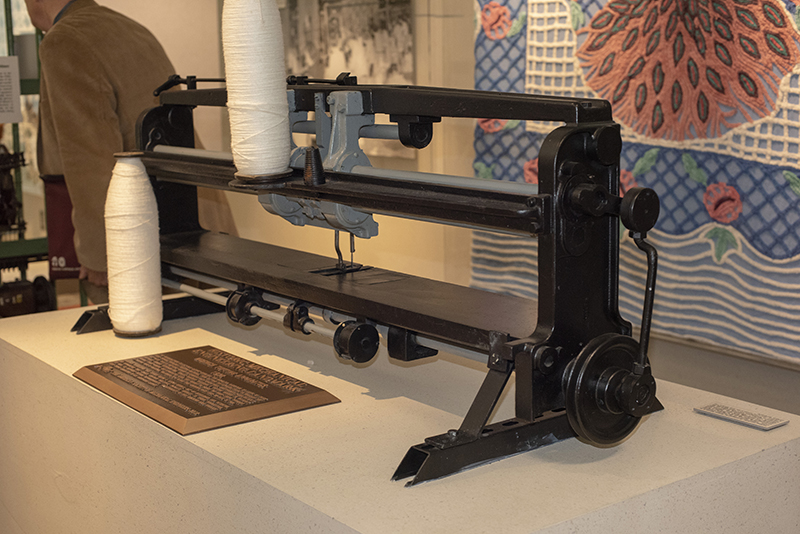
The transition from craft to industry happened in the obvious way and with startling consequences.
If a single needle pushing yarn through cloth makes a tuft, a row of needles makes a row of tufts, and a machine moving cloth under a bar of needles makes a tufted fabric continuously. The first attempts adapted existing sewing machinery. Then came purpose-built machines with multiple needles, then wide machines, then machines wide enough to tuft a broad roll of fabric in one pass.
At which point somebody looked at a wide roll of tufted cotton and realised it did not have to be a bedspread.
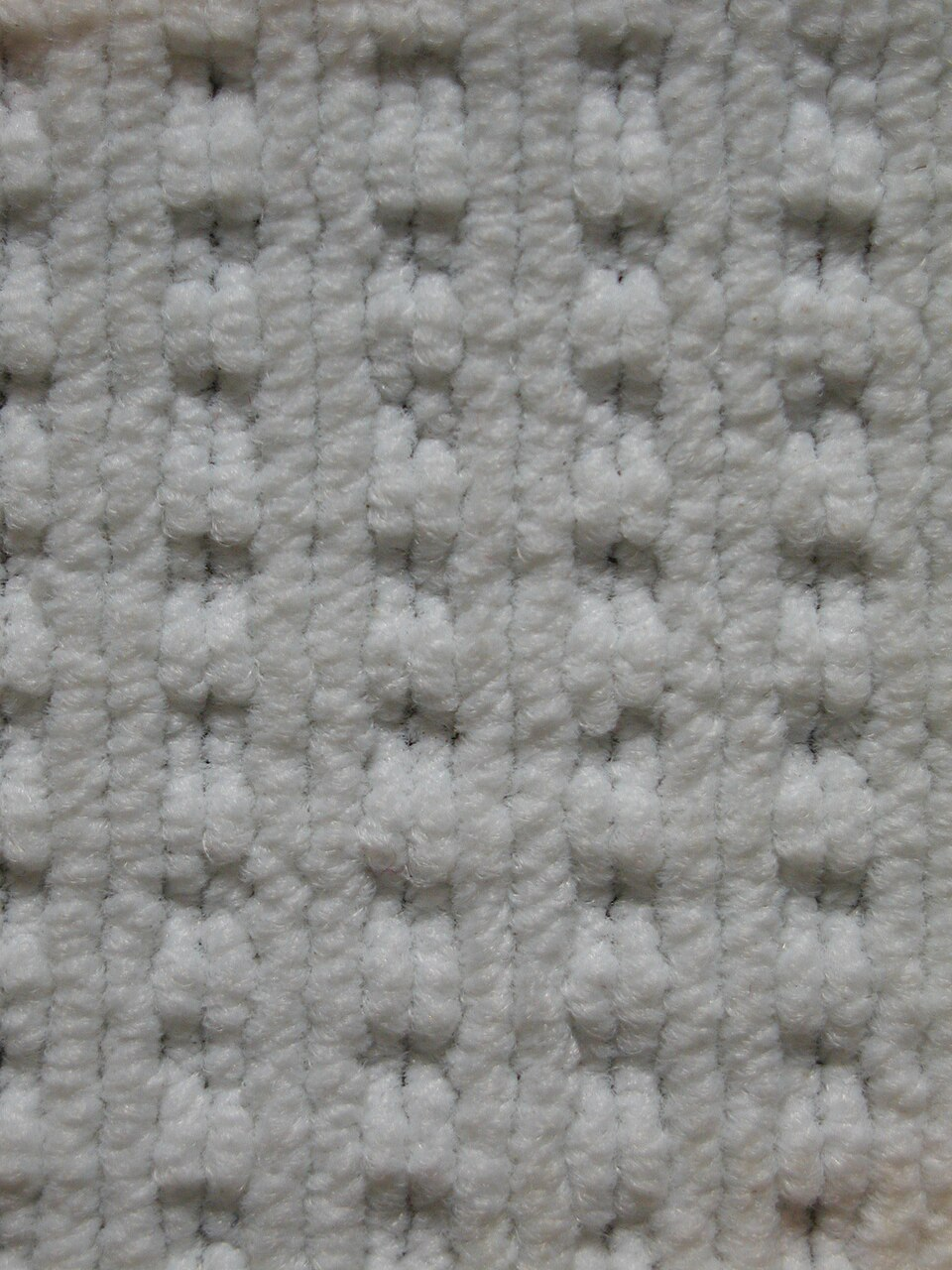
Tufted carpet is the same process with a stronger backing, synthetic yarn and a cut pile. And tufting is dramatically faster and cheaper than weaving a carpet, which is how floor covering had been made for centuries. A woven carpet was a significant purchase; a tufted carpet could be made so cheaply that an ordinary household could cover an entire floor.
That is the hinge of the whole story. The wall-to-wall carpet that spread through American homes across the middle of the twentieth century – and which changed how houses were built, cleaned, furnished and sold – exists because a bedspread technique was put on a machine.
The Industry Stayed Where It Started
What makes this genuinely remarkable is that the industry did not move.
The machines were developed in the same counties where the hand tufting had been done, by people who were already in the spread business, using the skills and the supplier relationships that already existed there. The yarn suppliers were there. The dyeing and finishing operations were there. The machinery builders set up there because that is where the customers were. The labour force was there and already understood the product.
So a few counties in north Georgia became, and remain, the dominant centre of carpet manufacturing in the United States and one of the largest concentrations of floor covering production anywhere in the world. The companies are enormous. The mills are enormous. And the reason they are in that specific place rather than anywhere else is that women there were tufting bedspreads by hand for a few cents apiece half a century earlier.
Industrial geography is usually explained by coal, water, ports or railways. This one is explained by a handicraft, a highway and a clothesline.
The Bedspread Itself Went Out of Fashion
The hand-tufted spread as a commercial product had a fairly short life after mechanisation, for reasons that were inevitable.
Machine-tufted spreads were cheaper and more uniform, which killed the piecework economy immediately – and for the households doing the tufting that was a real loss of income, not a liberation, however badly the work had paid. The spread houses either became manufacturers or closed.
Then the product itself fell out of favour. Tastes moved away from heavy white cotton with raised pile, toward lighter and later synthetic bedding. Chenille spreads became associated with grandmothers’ houses, then with cheap motels, then with nothing much at all.
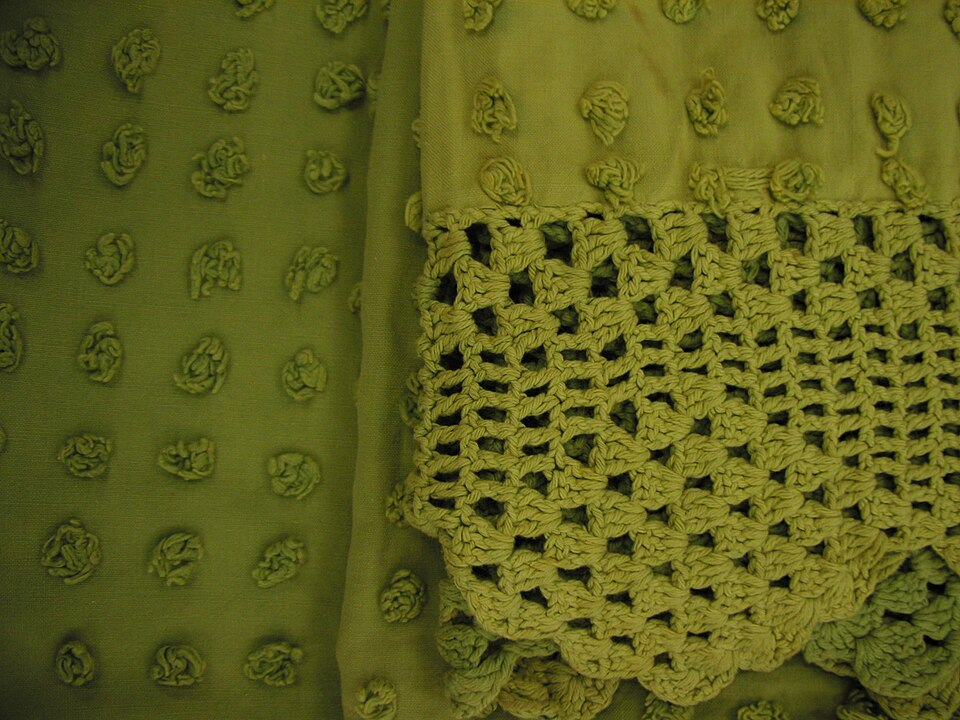
They have since come back as collectibles, and the hand-tufted ones in particular – identifiable by irregularity in the tufting, since a human needle does not space perfectly – are sought after and increasingly expensive. Which means the objects that were made for a few cents an hour by women in farmhouses now sell for considerably more than the machine-made ones that replaced them.
What the Object Actually Is
So the next time one of these turns up at a sale, consider what you are looking at.
It is a piece of household textile made by a technique simple enough to require no equipment, which is why it could be put out to households with no capital and no training. It was made predominantly by women, in their own homes, for piece rates that were low even by the standards of the time, as cash income in a region that badly needed it. It was sold to passing motorists off clotheslines beside a highway, which built a national market for free.
And the pressure that market created led somebody to put the needle on a machine, which produced a fabric that turned out to be a floor covering, which made carpet cheap enough for ordinary houses, which built a manufacturing industry worth an enormous amount of money in the same counties where the hand work had been done.
The peacock on the bedspread is the ancestor of the carpet under your feet. Nobody involved in the first part had any idea, and almost nobody now connects the two.
Like our content? Follow us for more.