The larder was an engineering solution to a problem most households no longer have. Food had to be kept without continuous refrigeration, or with very little of it, and the practices that resulted were specific, effective and in several cases deeply strange to a modern reader.
The strangest and most useful was the egg bucket. Hens lay far more in spring and summer than in winter, the surplus was worth preserving, and the method was to put the eggs in a solution of sodium silicate in water and leave them there. It worked. The reason nobody recommends it now is not that the chemistry failed.
How the waterglass actually worked
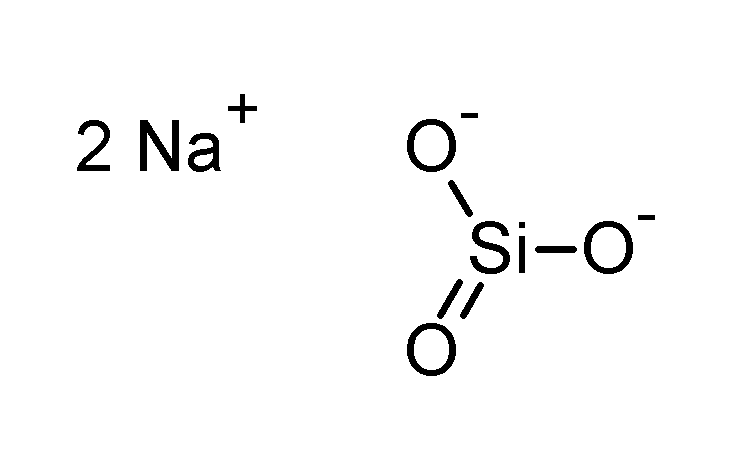
An eggshell is porous, which is how a developing chick breathes and also how an egg deteriorates: moisture leaves, air enters, the contents shrink away from the shell and organisms can get in. Sodium silicate solution coats the shell and fills the pores, which stops the gas exchange and slows everything down.
The practice was to use clean, unwashed, very fresh eggs, submerge them in the solution in a crock or a bucket in a cool place, and take them out as needed, rinsing before use. Six months was a normal expectation and longer was reported. Limewater — a solution of slaked lime — was used the same way and so, in some households, was simply greasing each egg thoroughly.
The cooking performance changed: a preserved egg does not whip well because the white thins, so they went into baking and into scrambling rather than into meringue. Every household that did it knew that and worked around it. The eggs were also dated in some houses by a pencil mark on the shell, so that the oldest came out first, which is the one piece of stock rotation most modern kitchens have abandoned entirely.
Like our content? Follow us for more.
Why nobody recommends it now
The chemistry is sound and the objection is biological. A preservation method that excludes air does nothing about anything already present inside the egg at the point of laying, and the method’s whole premise is unwashed eggs of known provenance from a known flock, stored at a known temperature for a known period.
Almost none of that applies to a modern supermarket egg, and the authorities that would have to recommend the practice — food safety agencies rather than food historians — have no way to issue guidance that depends on the reader having their own hens, not washing the eggs, selecting only the clean ones, and judging a bucket of silicate solution after four months. The modern answer is the refrigerator, which is in every kitchen, and freezing beaten eggs, which works well.
The practice survives among people who keep hens and is worth distinguishing from the official position: it is not that waterglass was found to be dangerous, it is that no agency can sensibly recommend a method with that many conditions attached.
The reason American eggs have to be refrigerated and European ones do not
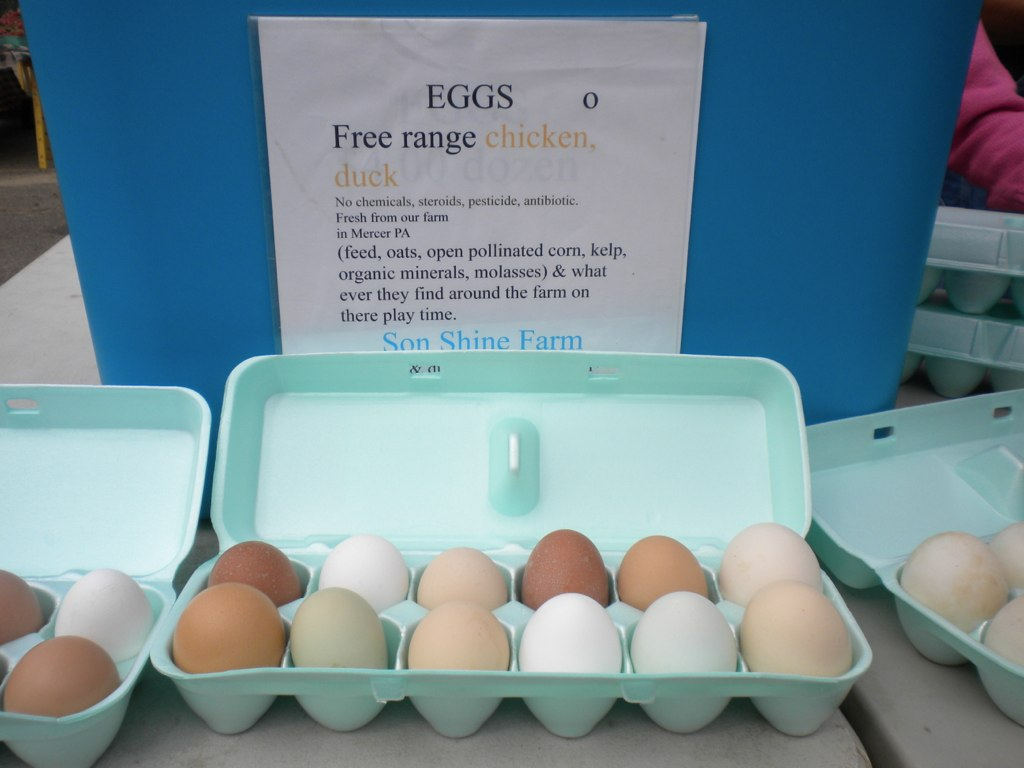
This is the part of the subject that genuinely surprises people, and it explains the whole difference between an American and a European shop.
An egg is laid with a protective outer layer on the shell. American commercial practice is to wash and sanitise eggs before sale, which removes dirt and surface organisms and also removes that layer, leaving the pores exposed; the egg is therefore refrigerated from the packing plant onward and must stay refrigerated. European practice in general is not to wash table eggs, so the layer stays on, and the eggs are sold and kept at room temperature — with the specific instruction not to refrigerate and then return them to warmth, because condensation on a cooled shell works against the egg.
Neither system is wrong and they are not interchangeable. An American egg left out of the refrigerator and a European egg put into one are both being handled against their own system, which is the single most useful fact in this article for anybody who cooks in both places or reads recipes from both.
The larder itself was a designed space
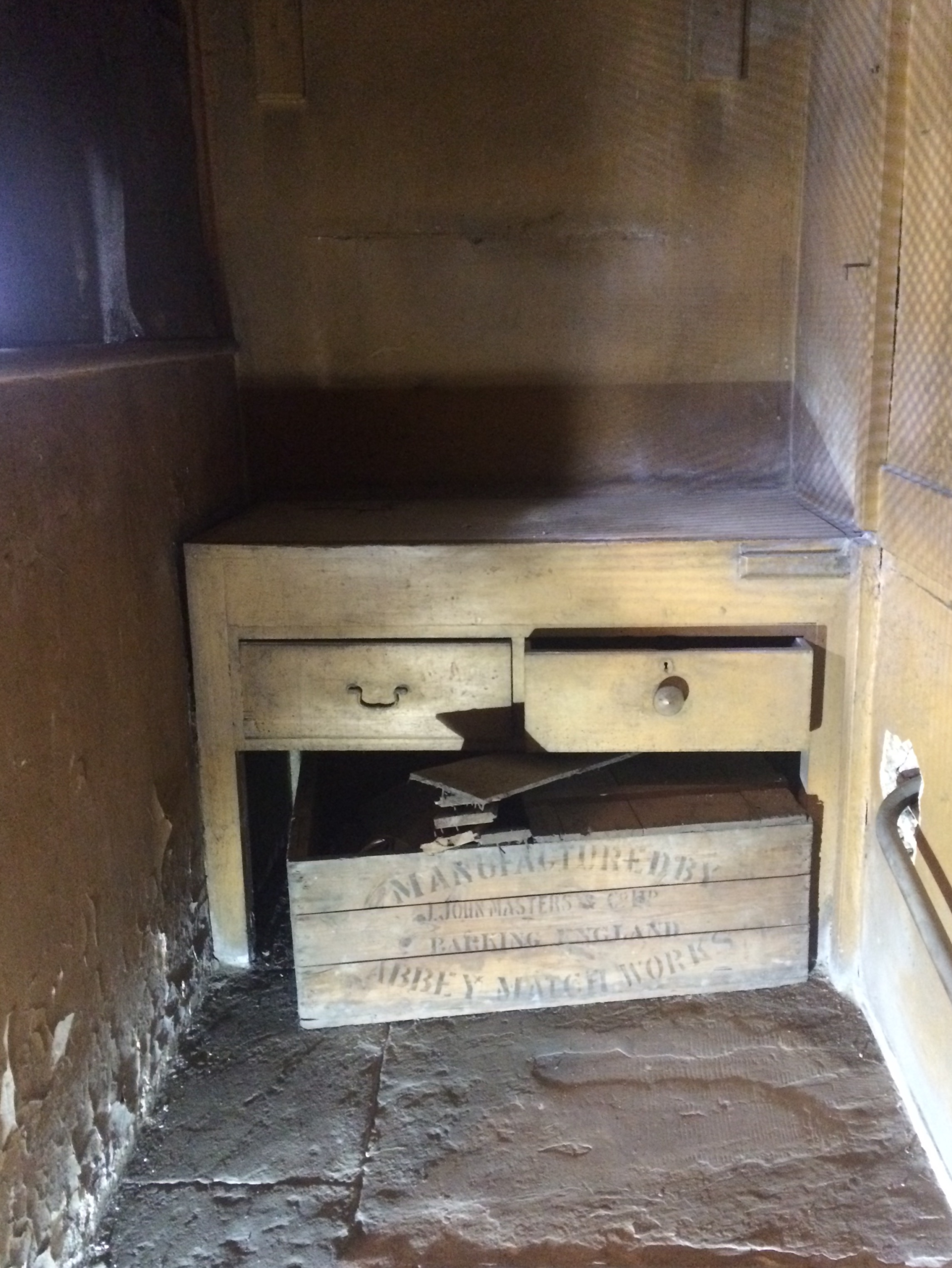
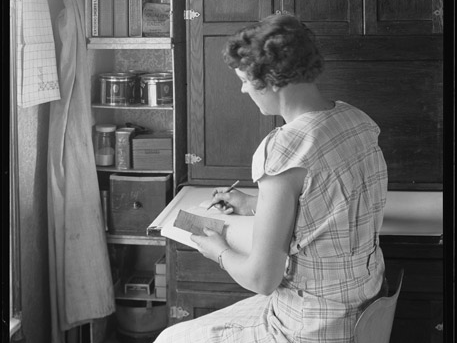
A proper larder was on the north or east side of the house, had a stone or slate shelf, a small vented window with a mesh screen, a tiled or stone floor, and no heating. The slate mattered: a thick cold slab has thermal mass, it stays cooler than the air and it draws heat out of whatever is put on it.
The arrangement produced a space several degrees cooler than the kitchen, with moving air and no light, which is the correct environment for dairy, fat, vegetables and baked goods. It was not refrigeration and it was not trying to be; it was a stable cool store, and the things kept in it were the things that suit one.
The modern equivalent has mostly been lost rather than improved. A fridge is colder than a larder and worse for a great many things kept in it — bread, potatoes, onions, tomatoes, unripe fruit, hard cheese, chocolate — which is why the cool cupboard is quietly coming back into kitchen design. A ventilated cupboard on an outside wall is cheap to build and solves a list of problems that a larger refrigerator does not.
Milk, butter and the things that stood in water
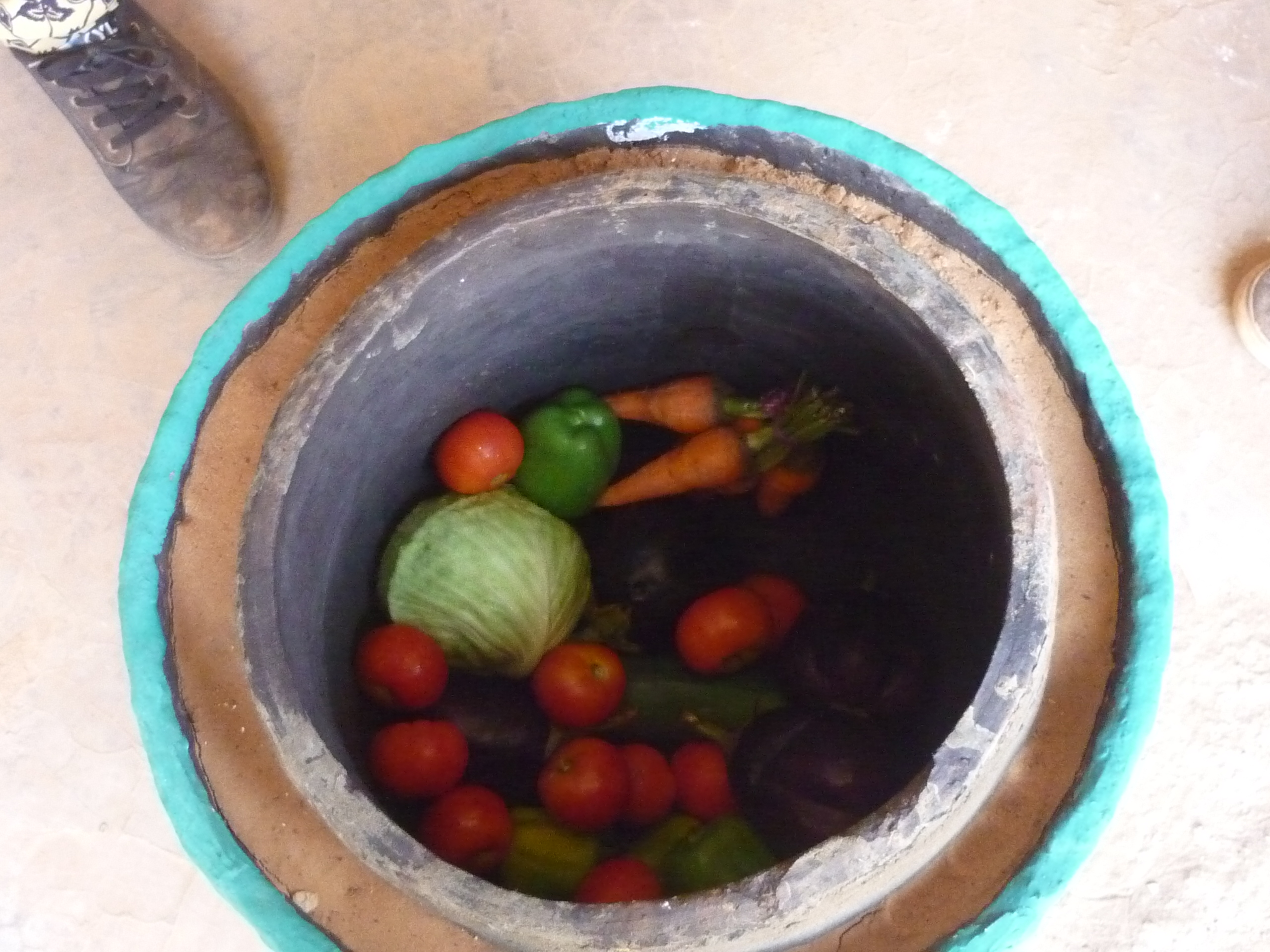
Before and alongside domestic refrigeration, the standard method for keeping dairy cool was evaporation. A butter cooler was a porous unglazed pot that was soaked in water; a milk jug stood in a basin of water with a damp muslin over it, with the corners in the water so capillary action kept the cloth wet.
It works on the same principle as the canvas water bag on a car bumper, and it is genuinely effective in dry air and useless in humid air, which is why the method was more successful in some regions than others. The muslin also kept flies off, which in a period of unscreened windows and open refuse was at least as important as the cooling.
These objects are still made and sold, mostly as curiosities, and they still work. They are a reasonable answer to a power cut and a poor one to a hot humid August.
The things that were kept wrong, and the one rule that changed

Several larder habits have been specifically reversed. Potatoes were stored next to onions, which makes both deteriorate faster, and apples were stored with vegetables, which the ethylene from the apples hastens. Eggs were kept pointed end up in some households and down in others with great confidence on both sides, and the current advice is pointed end down, to keep the air cell away from the yolk.
The larger change is the one about what belongs cold. A 1960 household kept almost nothing in a refrigerator because there was almost nothing in the refrigerator to keep; a modern household refrigerates by default, including a long list of things that are worse for it. Current guidance has gradually unpicked that, and the list of things recommended to stay out of a refrigerator has grown.
The single genuinely important modern rule has nothing to do with any of this. Cooked and perishable food goes cold within a stated period and is not left to cool slowly at room temperature, which is the one thing the 1960 larder could not do properly and the one thing the refrigerator does best.
What the larder got right
It was the correct environment for most of what it held, it cost nothing to run, it worked through a power cut, and it imposed a rhythm on a household: things were bought or made in quantity, laid down, and used in an order. Nothing in it was anonymous, and a cook knew what was in her larder in a way that nobody knows what is in the back of a fridge.
The egg bucket in particular is worth understanding rather than dismissing. It was a genuinely clever piece of domestic chemistry that solved a real seasonal problem at almost no cost, it is still practised by people who keep hens, and the only reason it has no official standing is that it depends on conditions a food safety agency cannot assume.
This is an account of how the practices changed and is not food safety advice. Anybody preserving eggs or anything else should be working from current guidance from a state extension service or a reputable modern source, because the conditions attached to these methods are the entire difference between them working and not.
The thing the larder leaves behind is a question rather than a technique. A 1960 household organised its food around what would keep and where, and that organisation did real work: it reduced waste, it imposed rotation, and it meant somebody always knew what was in the house. The modern kitchen has better equipment and almost none of that structure, which is why a surprising proportion of what gets thrown away was bought by somebody who had forgotten they already had it.
Like our content? Follow us for more.