There is an assumption that pre-modern financial systems were crude, and it is worth testing against an example.
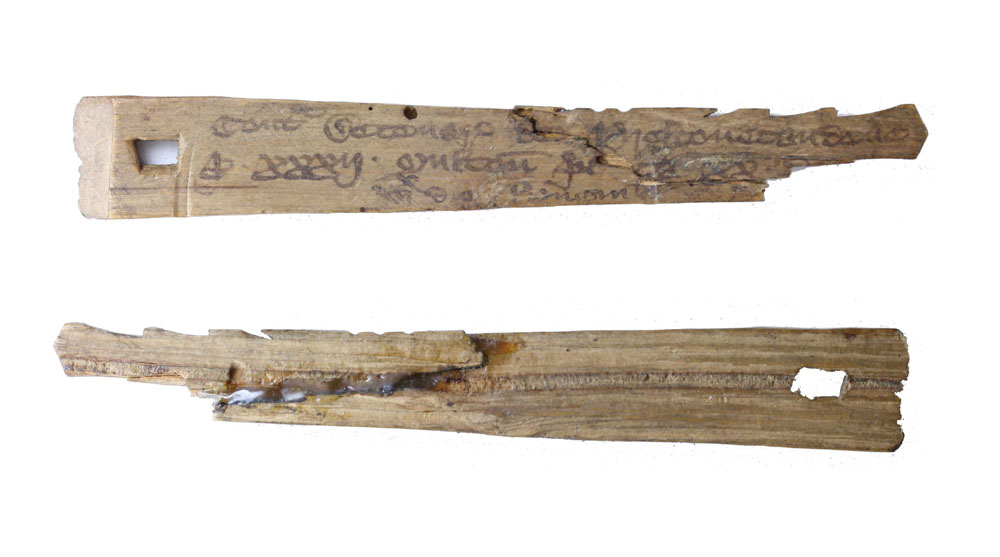
The English Exchequer — the department handling royal revenue — kept its accounts using pieces of wood. Notches were cut across a stick to record an amount, the stick was inscribed, and then it was split down its length so that two parts existed.
That sounds primitive. It is in fact an extremely elegant solution to a problem that modern systems solve with substantially more machinery, and it survived for six centuries because it worked.
Here is how the system operated, what made it secure, and how its ending managed to destroy a substantial public building.
How the Stick Worked
The mechanics are the whole point, so they are worth setting out precisely.
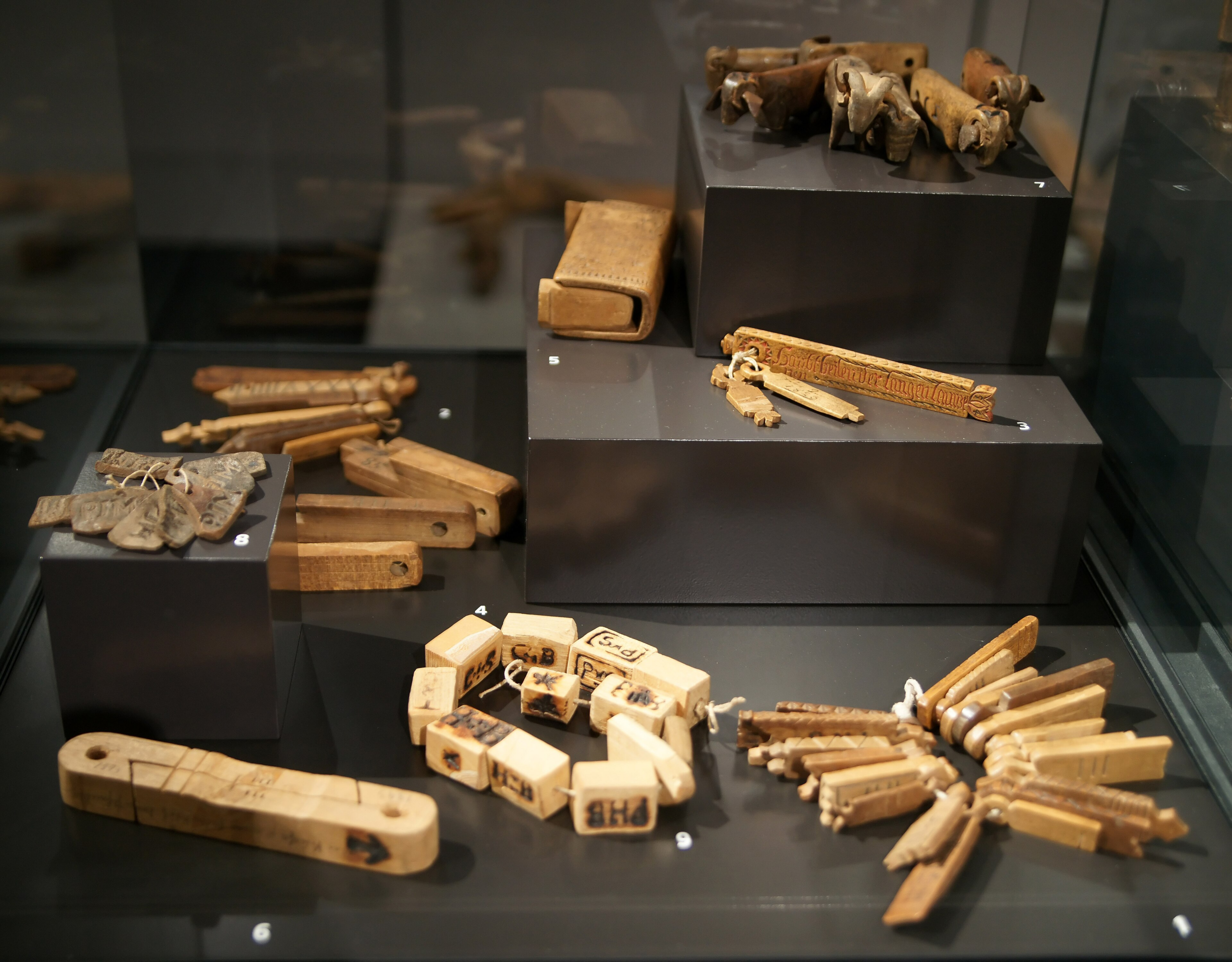
A hazel stick was cut, and notches were made across it representing the sum involved. The notches were standardised by width — a large cut for a large denomination, progressively smaller cuts for smaller amounts — so the value could be read by eye and by touch without any writing being required.
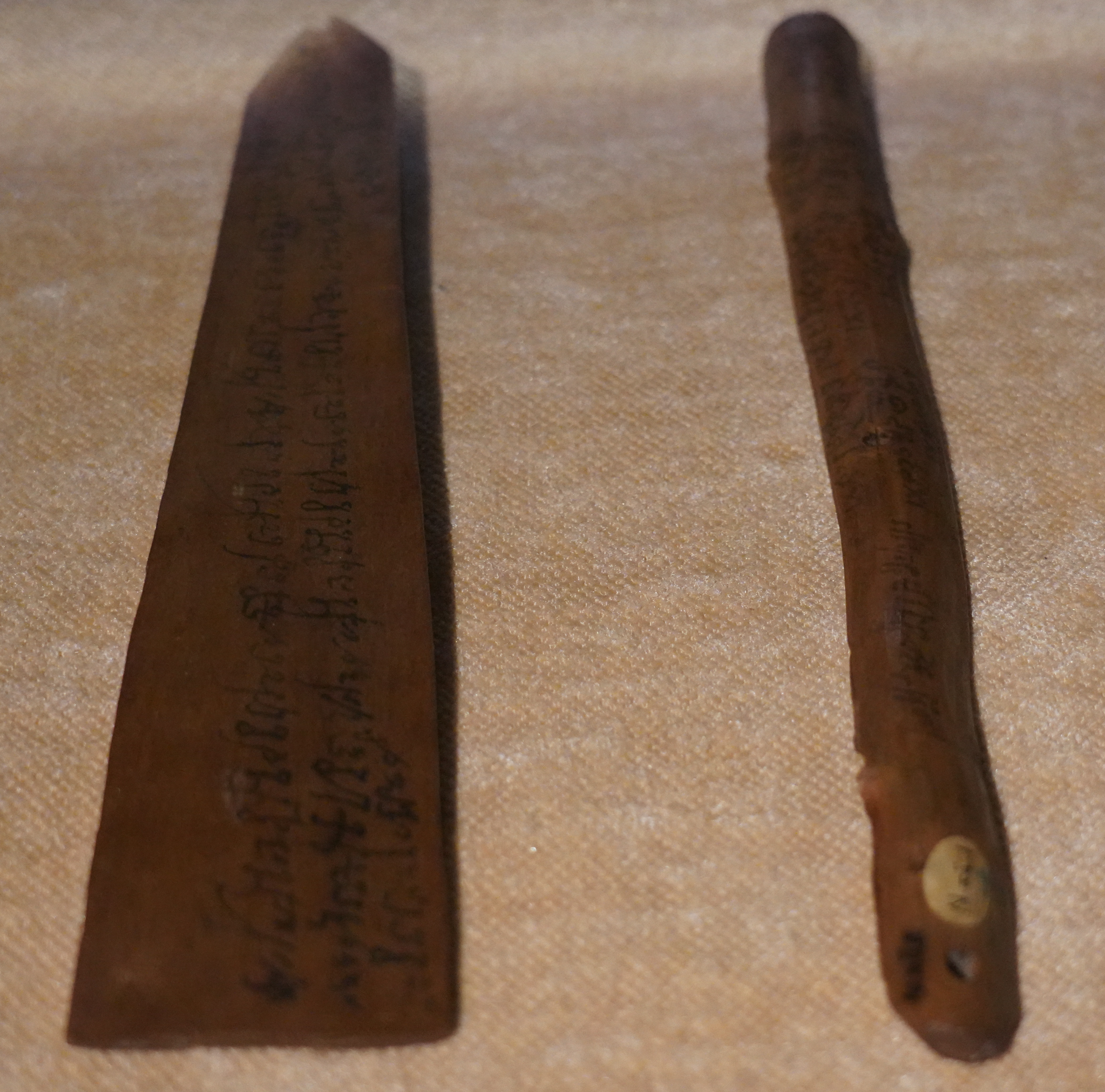
Details were also inscribed along the stick: the parties, the date, the reason for the transaction.
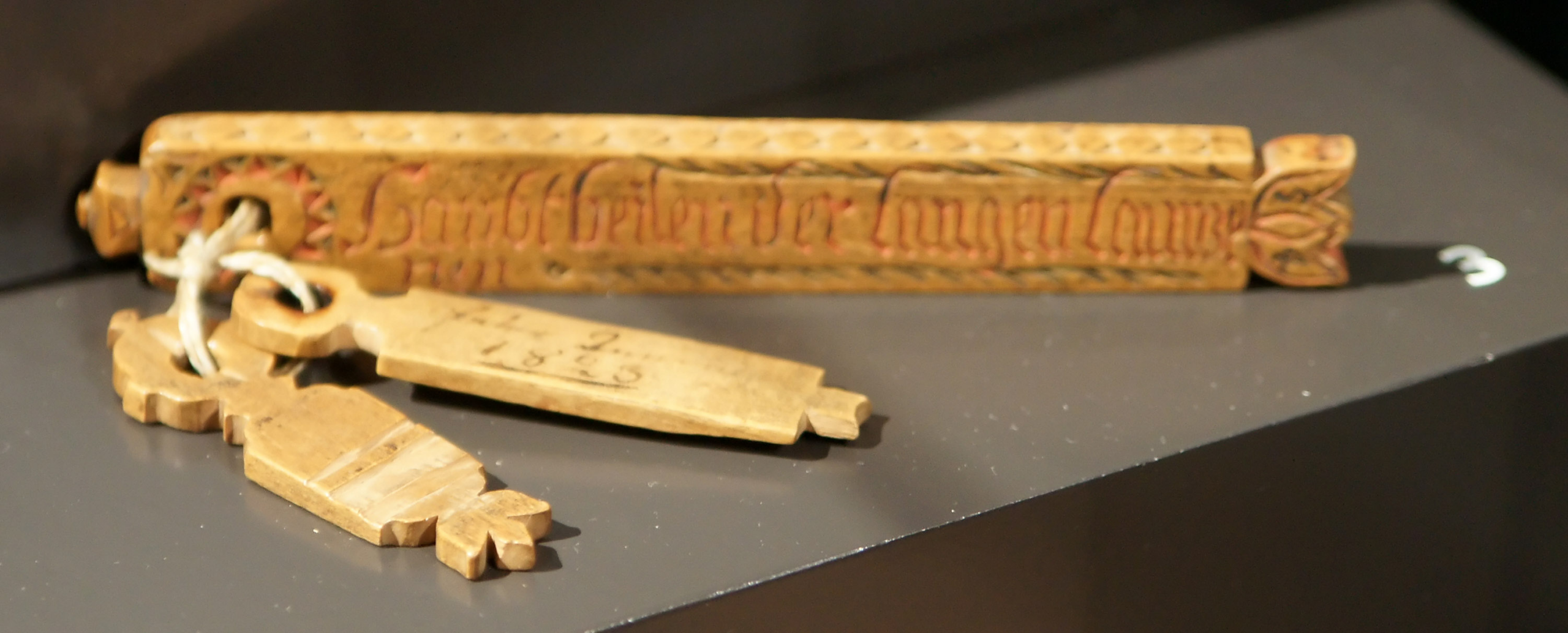
Then came the essential step. The stick was split lengthwise, through the notches, producing two pieces. The longer part, called the stock, went to the party who had paid or lent. The shorter, the foil, was retained by the Exchequer.
That single operation produces the security. Wood does not split evenly. The grain follows its own path, so the two faces of a split stick have a matching irregular surface that is effectively unique.
Like our content? Follow us for more.
Why It Was Hard to Forge
The verification method is the elegant part.
To check a claim, the two halves were brought together and fitted. If they matched — along the grain, across the notches, in length and in the inscription — the document was real.
Forging that requires producing a piece of wood whose split surface matches another specific piece of wood, which is not practically achievable. You cannot make a matching half without the original, and altering the notches on one half creates a mismatch with the other.
Adding notches after the split is equally detectable, since a new cut appears on one half and not the other.
The system also required no literacy from the holder. A person could verify a substantial financial instrument by physically fitting two objects together, which mattered in a period when most people could not read.
And it needed no central register to be consulted. The document verified itself against its counterpart, which is a considerable advantage when communication is slow.
What It Was Used For
The application went well beyond simple receipts, and this is the part that surprises people.
The Exchequer used tallies to record sums owed to the Crown and sums the Crown owed. A stock — the holder’s half — represented a claim on the Treasury.
Those claims became transferable. A person holding a stock representing a future payment could sell it to somebody else at a discount, who would then present it for payment when due.
That makes the tally stick a negotiable financial instrument. It circulated, it had a market value, and it functioned in ways that anticipate later financial paper — implemented in hazel wood, verified by grain matching, and operated by a medieval treasury.
The system also handled tax collection, with local officials receiving tallies as proof of sums delivered, which protected them against later claims that payment had not been made.
Reading a Stick
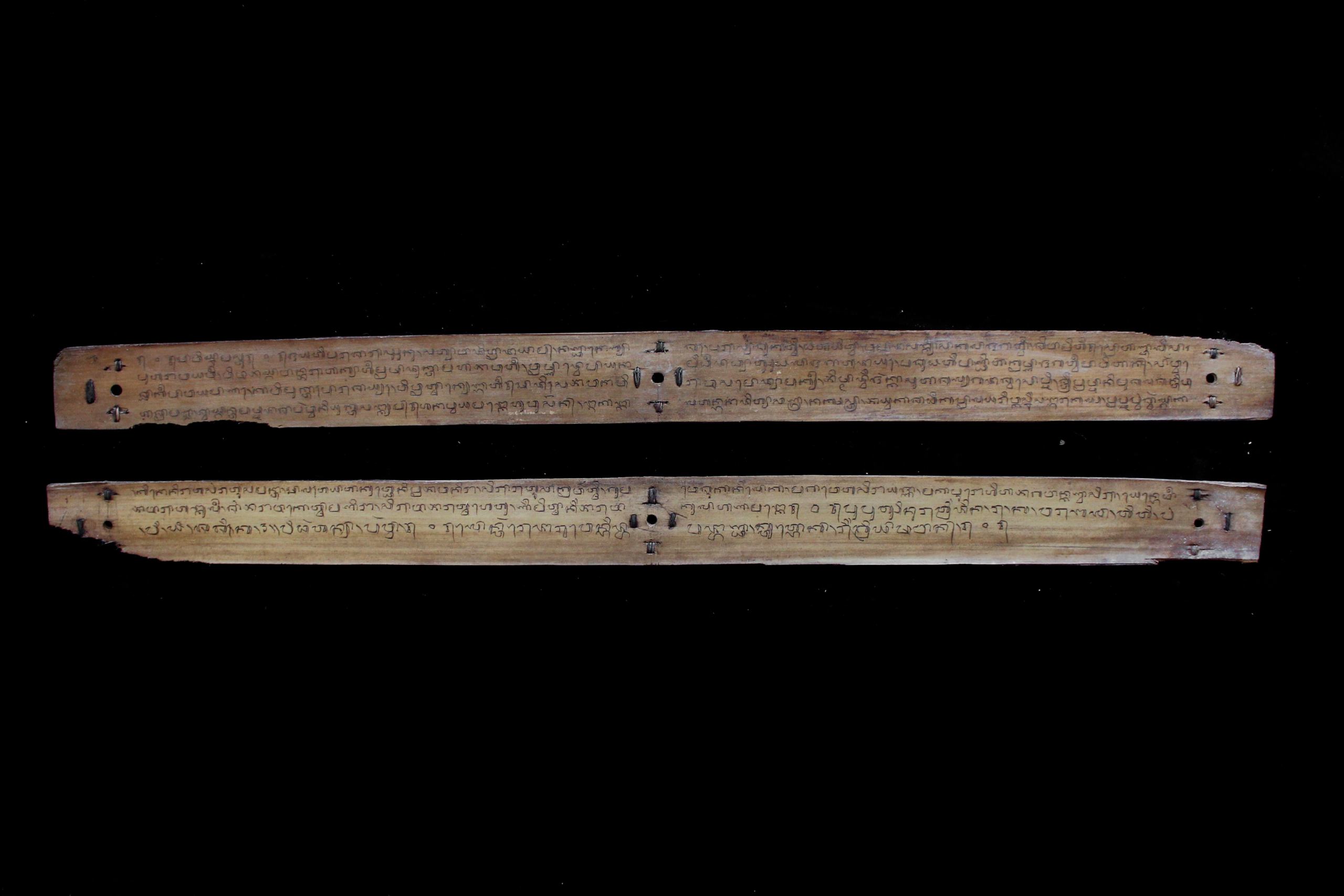
The notation deserves a section of its own, because it is a real numeral system that almost nobody has heard of.
Amounts were represented by cuts of differing width, with each width corresponding to a denomination. A very broad cut represented the largest unit, and progressively narrower cuts represented progressively smaller ones, down to marks so fine they were closer to scratches.
The position and grouping of cuts mattered as well as their size, and the whole thing was legible at a glance to anybody trained in it.
That is a place-value-free numeral system implemented physically, and it has a specific advantage over writing a figure down: a written number can be altered by adding a digit, while a notch cut into wood cannot be removed and any addition is visible on only one half of a split stick.
There is a second advantage that matters more than it appears. The notches are readable by touch, which means a stick can be verified in poor light, and can be checked by somebody who cannot see it clearly.
The vocabulary survives in English. The term for the retained half and the term for the transferable half both entered the general language, and the word for the whole practice is still used for keeping count of anything.
Which means a medieval accounting technology left its terminology embedded in ordinary speech long after the objects themselves were burned.
Why It Lasted So Long
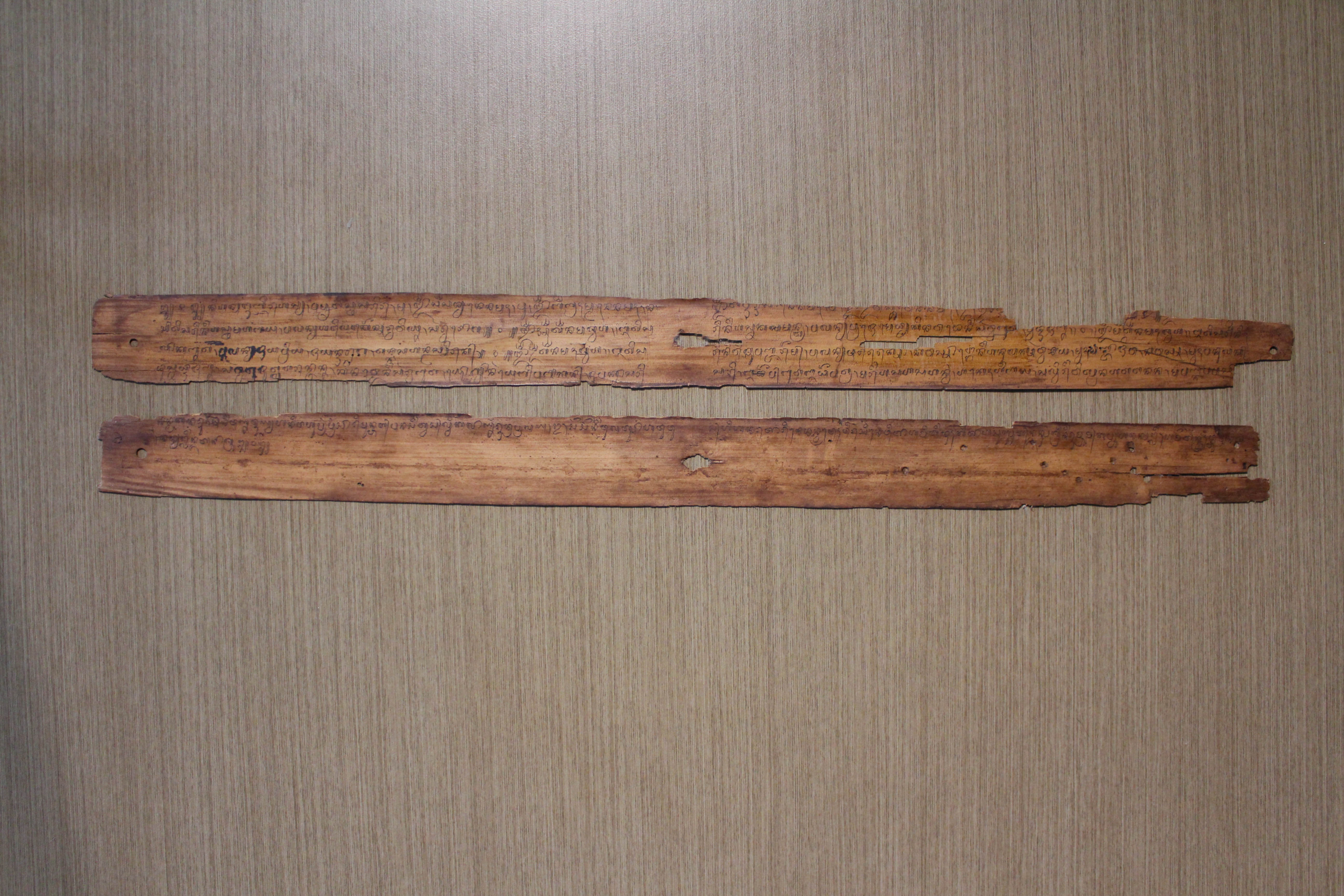
Six centuries is an extraordinary run for any administrative technology, and the reasons are instructive.
It was cheap. Hazel is abundant and a stick costs essentially nothing.
It was durable. Wood kept in dry conditions lasts for centuries, and the record does not fade, smudge or require copying.
It was secure in a way that did not depend on anybody’s honesty, on a seal that could be stolen, or on a signature that could be imitated.
It was verifiable by anyone, immediately, without expertise.
And it was self-contained. Each transaction carried its own proof, distributed between the two parties, with no reliance on a central archive that might burn — which is an irony worth holding onto for a moment.
The system was eventually abolished in favour of paper accounting, which was faster, more flexible and better suited to a larger and more complex financial administration. The wooden tallies ceased to be used in 1826.
There is a further reason the system persisted that is easy to miss. Both parties held physical evidence, which meant neither could unilaterally alter the record, and a dispute could be settled by producing two objects rather than by weighing one person word against another.
That distribution of proof is the feature paper ledgers lost. A ledger held by one party is a record that party controls, and verifying it requires trusting whoever keeps it.
The Fire
What happened next is the part everybody remembers, and it is a case study in disposal going wrong.
By 1834 an enormous accumulation of obsolete tally sticks was sitting in storage at Westminster. Somebody had to dispose of them.
The obvious option was to give them away as firewood, and that was considered. The decision taken instead was to burn them in the furnaces that heated the House of Lords.
Two labourers were set to feeding sticks into the furnaces. They did so for an extended period, apparently with the doors open and without much attention to the volume of fuel involved.
The heat became excessive. The flues overheated, the panelling in the chamber above ignited, and the fire spread rapidly through the building.
Most of the Palace of Westminster was destroyed. The rebuilding that followed produced the structure that stands today, which is why the building is Victorian rather than medieval.
A record-keeping system that had operated securely for six hundred years was ended by administrative decision, and its disposal destroyed the seat of the institution it had served.
What the Case Demonstrates
There are two useful ideas here, and neither is about the fire.
The first concerns what makes a record trustworthy. The tally system achieved forgery resistance through physical uniqueness — a property of the object itself rather than of any authority vouching for it. That is the same principle behind a great deal of modern verification, arrived at with a stick and a knife.
The second concerns how easily a functioning system is judged by its appearance. Notched wood looks primitive against printed ledgers, and the tally was in several respects better: cheaper, more durable, verifiable by the illiterate, and requiring no central archive.
It was replaced because the administration outgrew it rather than because it failed, which is a different thing entirely and a more common reason for technologies to disappear than being wrong.
And the sticks themselves are now rare, because six centuries of records were fed into a furnace over a couple of days by two people who had been told to get rid of them.
The survivors are the ones that had already left the building – tallies that stayed with the families, institutions or local officials who received them, scattered widely enough that no single decision could reach them. Which is the distributed principle protecting the record one last time, after the system itself had been abolished.
Like our content? Follow us for more.