There is a small group of building materials that go round in a circle, and lime is the clearest.
The cycle is truly closed. A rock is heated to drive off a gas. What remains is combined with water to make a workable material. That material is applied and then takes the gas back out of the air, hardening as it does, and ends up chemically almost identical to the rock it came from.
Nothing is consumed permanently except the fuel used for the burning, and the material can be recovered and reused from demolished work.
That is unusual and it is not the reason lime matters. The reason is what the slowness and the chemistry mean for a building, which turns out to explain a great deal about why old walls and new repairs frequently disagree with each other.
The Cycle
The stages are worth setting out because each one has a name and a practical consequence.
Limestone heated to a high temperature releases carbon dioxide, leaving a material that is chemically aggressive and reacts violently with water.
Adding water produces a great deal of heat and yields a soft paste, which can be stored indefinitely under water and improves with keeping — a property almost no other building material has.
That paste, mixed with sand and applied, begins reabsorbing carbon dioxide from the air, converting back toward the original compound and hardening as it does.
The hardening is slow. It proceeds from the surface inward, takes months to become substantially solid, and continues at a declining rate for decades — which means a wall plastered a century ago may still be completing the reaction at its core.
That slowness is the property everything else depends on, and it is what the material was chosen for rather than a limitation to be tolerated.
Like our content? Follow us for more.
Why Slow Is Useful
The behaviour of a building explains the requirement.
Buildings move. Foundations settle, timber shrinks and swells with humidity, temperatures change dimensions, and the whole structure adjusts continuously by small amounts.
A rigid finish applied to something that moves will crack, and once it cracks, water enters at the crack and the damage concentrates there.
Lime plaster is comparatively soft and slightly flexible, and it accommodates small movement by developing a very fine distributed network of cracks rather than a few large ones.
It also heals. Because the reaction is incomplete and the material is slightly soluble, water moving through a fine crack dissolves material and redeposits it, closing the crack over time — a real self-repair mechanism that operates on a scale of hairline damage.
That means a lime-finished wall responds to ordinary movement by distributing it invisibly, and responds to minor cracking by closing it, neither of which a rigid material can do.
The Breathing Question
The second property is the one that causes the most trouble in practice.
Lime plaster and lime mortar are permeable to water vapour. Moisture entering a wall — from the ground, from the weather, from inside the building — can pass through the surface and evaporate away.
That matters enormously in structures built without any damp-proof barrier, which is most buildings above a certain age. Such walls are not designed to be dry; they are designed to take up moisture and release it again, staying in a rough balance.
Applying an impermeable finish to such a wall interrupts that. Moisture continues to enter and can no longer leave through the surface, so it accumulates, travels further to find an exit, and appears somewhere else — frequently higher up, further along, or inside.
The damage that results is generally blamed on the wall rather than on the finish, and the standard response of applying more impermeable material makes it worse.
That sequence is well documented and is a common cause of problems in older buildings, and it follows entirely from a mismatch between how the wall was designed to work and what was applied to it.
How It Is Actually Put On
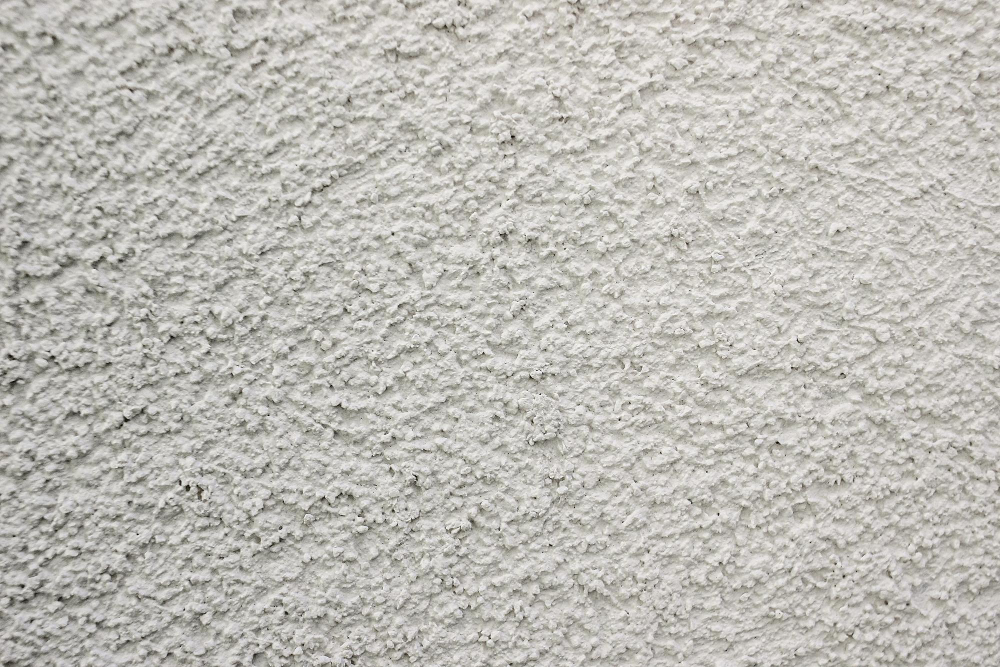
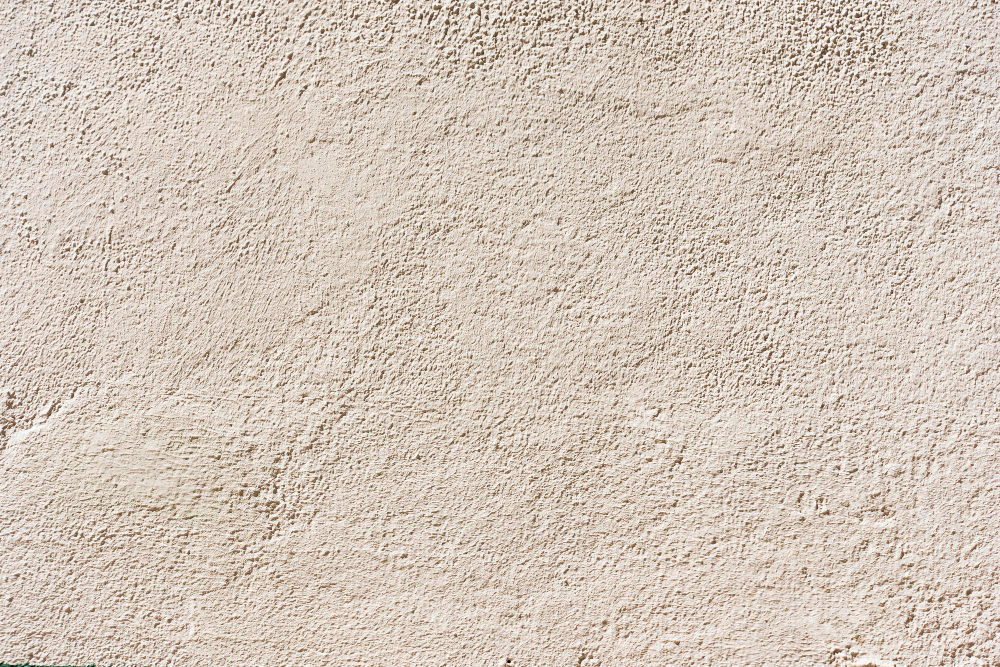
The application explains the finished appearance, which is not merely decorative.
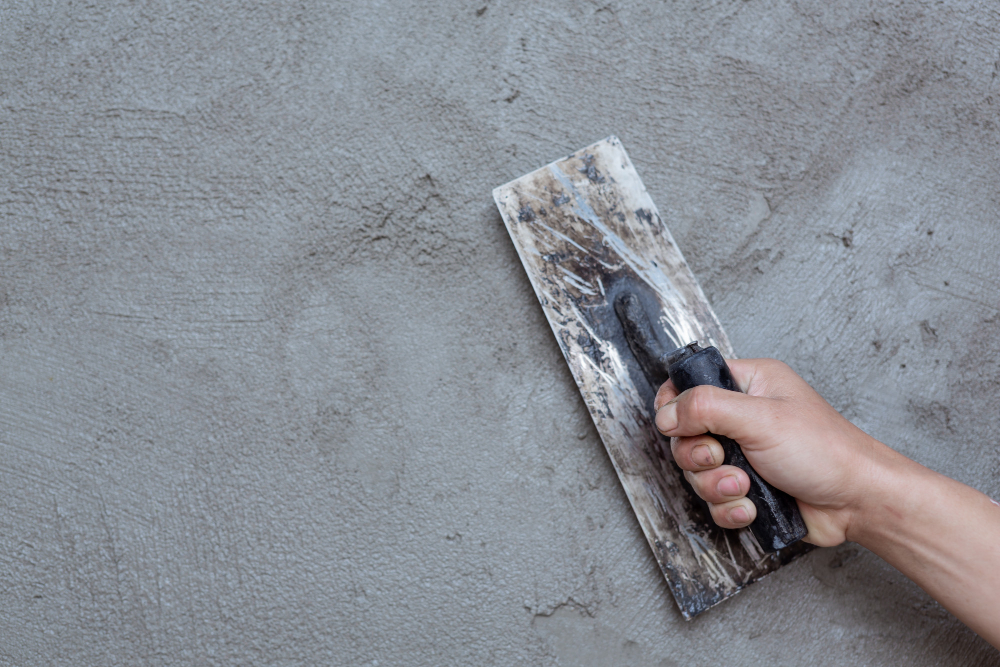
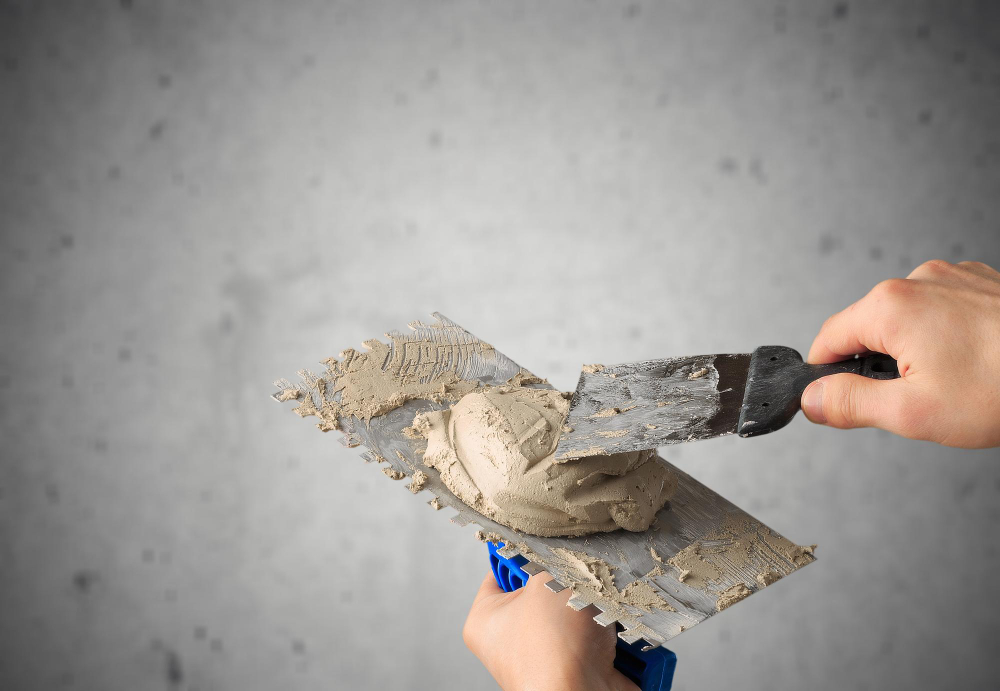
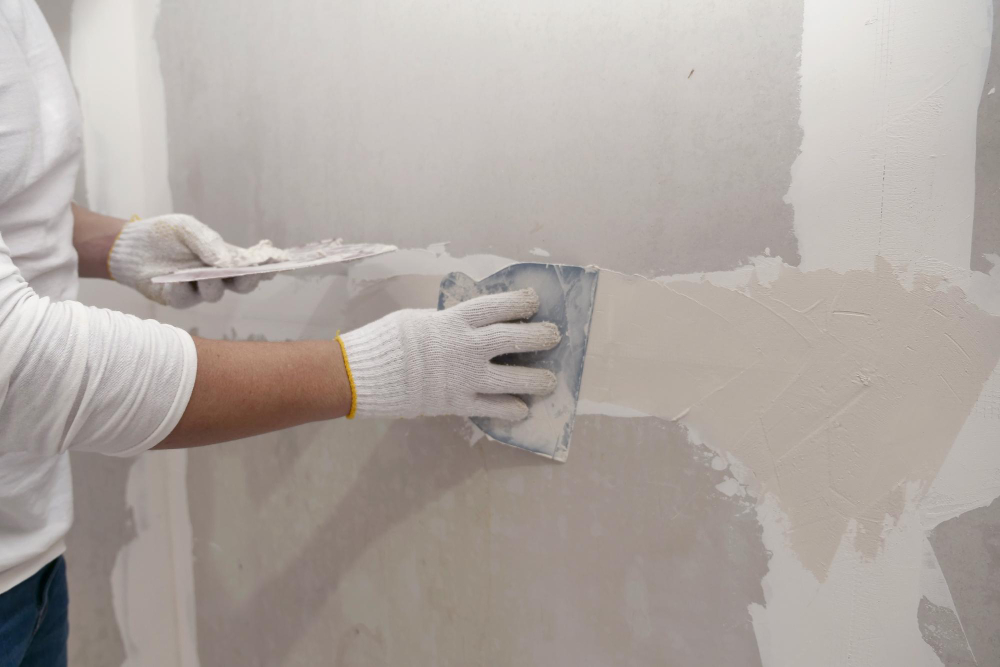
Work is built up in layers rather than applied in one thickness, because a thick single application shrinks unevenly and cracks as it dries.
The first coat is coarse, contains more aggregate, and is keyed to the surface beneath — traditionally by scratching it, so the next coat has something to grip.
Subsequent coats are progressively finer, thinner and weaker than the one beneath, which is the governing rule: each layer must be no stronger than what it is applied to, so that movement is accommodated outward rather than concentrating at a hard layer.
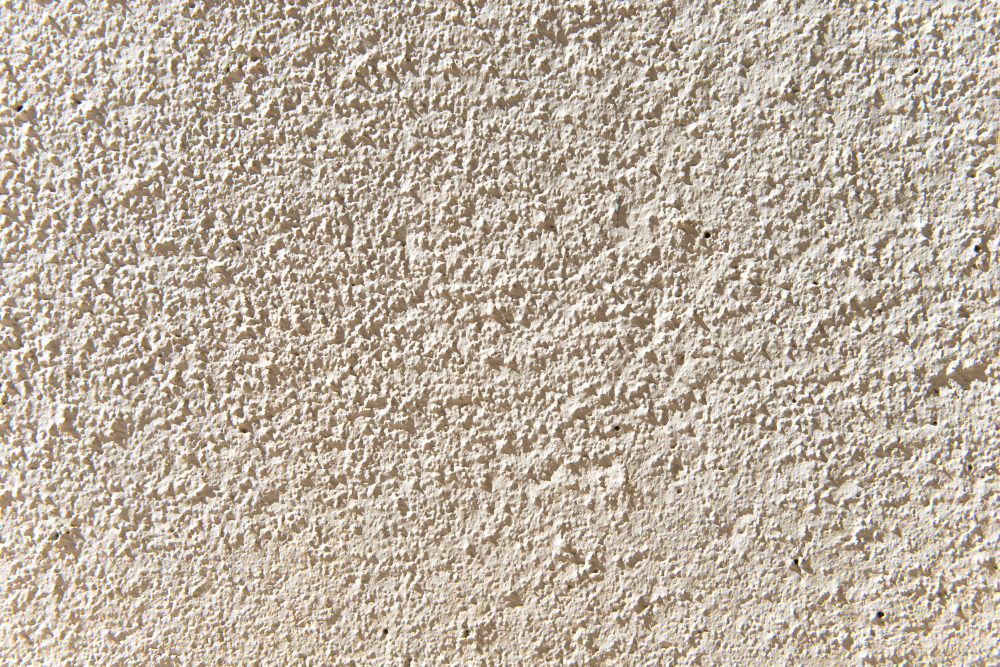
The final coat may be extremely fine and is worked as it sets, which produces the slightly uneven, softly reflective surface characteristic of the material.
Timing matters throughout. Each coat must be applied when the previous one has set enough to support it and not so much that it will not bond, and that judgement is made by touch.
There is a working-time point worth adding. Lime remains workable far longer than cement-based material, which allows a surface to be reworked, adjusted and finished over an extended period.
That is a practical advantage for skilled work and a disadvantage for a schedule, which is part of why the faster material won on sites where time was the constraint.
Why It Was Replaced and Why It Came Back
The commercial history is straightforward and the reversal is interesting.
Cement-based materials set in hours rather than months, reach far greater strength, are consistent between batches and require less skill to apply acceptably.
For new construction with modern detailing — impermeable barriers, movement joints, materials designed to work together — those properties are entirely appropriate, and the older material offers no advantage.
So lime was largely displaced, which was a rational commercial outcome for the buildings being built.
The problem arose when the new material was applied to old buildings, where the assumptions do not hold: no barrier, walls that need to breathe, structures that move, and surfaces that cannot tolerate a stronger layer.
The consequences accumulated over decades, became well understood, and produced a revival of the older material for that specific purpose — not as a preference but as a technical requirement.
Which is a useful case. The newer material is better for what it was developed for, the older one is better for what it was developed for, and the damage came entirely from applying one where the other belonged.
The Other Ingredients
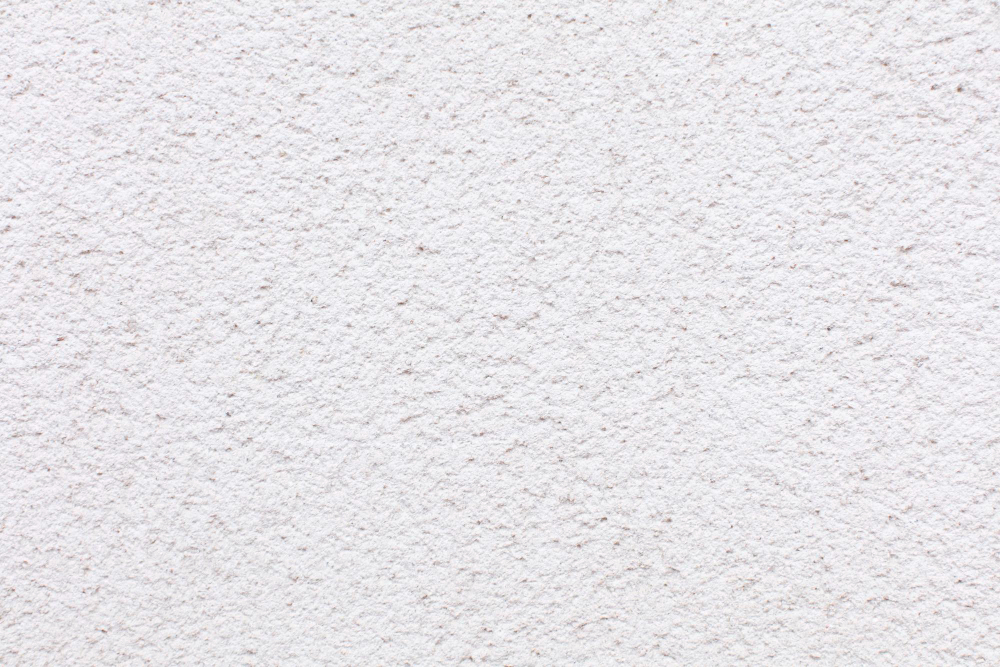
The mixture is not simply lime and sand, and the additions are informative.
Aggregate makes up the bulk of the material and its character matters. Sharp angular particles interlock and produce a stronger result than rounded ones; the size distribution affects how much binder is required; and the colour of the aggregate is what gives regional work its characteristic appearance.
Fibre is added to the coarser coats — traditionally animal hair — which reinforces the material against cracking during the shrinkage that occurs as water leaves, and holds it together across the inevitable fine cracks.
That is the same principle as any fibre reinforcement, worked out long before anything modern, and it is why old plaster removed from a wall frequently has hair visible throughout it.
Some traditions add materials that react with lime to produce a harder, faster-setting result — certain volcanic materials, fired clay, brick dust — which produces a binder that sets even under water and does not depend on absorbing carbon dioxide.
That variant behaves differently and was used where the slow route would not work, which means not all historic lime work is the same material and a repair matched to one may be wrong for the other.
And the water matters, since the material is worked wet and the rate at which it loses water to the background determines how long it can be worked and whether it cracks — which is why surfaces are wetted before application.
What It Is Worth Knowing For
The practical residue is a small number of observations.
A building’s materials were chosen to work as a system, and replacing one element with something that behaves differently affects everything else.
Strength is not a universal good. A repair stronger than what surrounds it concentrates stress and moves the failure rather than preventing it, which is why the weakest-outward rule exists.
Permeability is a design decision rather than a defect, and a wall that takes up and releases moisture is functioning rather than failing.
And a material that takes a century to finish its chemistry is behaving as intended, which is an unusual specification and one that no modern equivalent attempts to meet.
Which is a reasonable thing to consider standing in front of an old wall. The surface is not finished, it has been reacting slowly since it was applied, and it is still — very gradually — becoming stone again.
Which is an unusual relationship to have with a building material. Most things are finished when they are applied, and this one has been steadily completing itself for as long as the wall has been standing.
Like our content? Follow us for more.