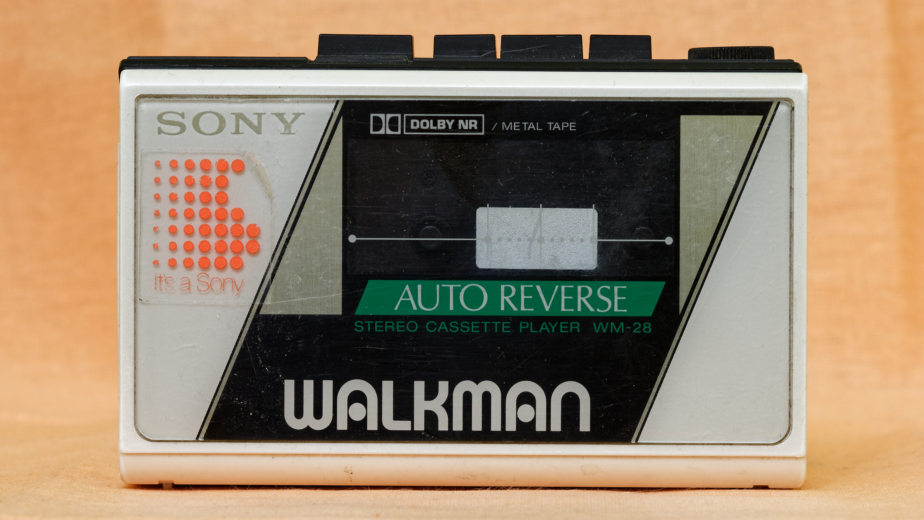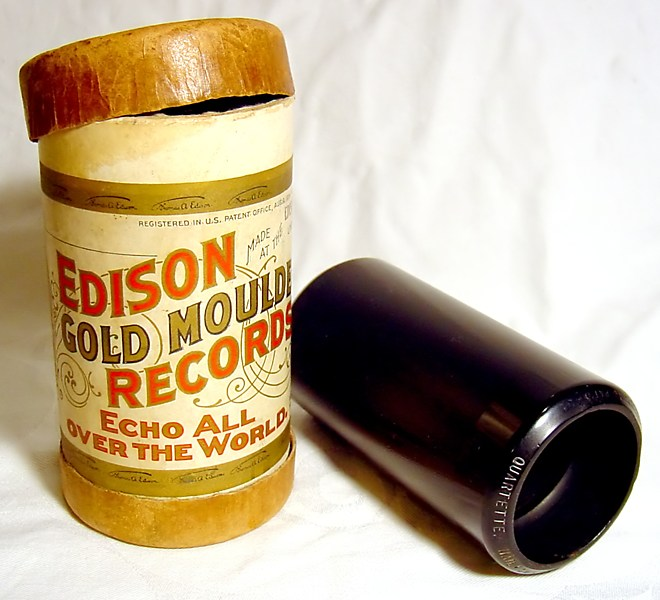
There is a particular kind of near-miss in the history of technology, where somebody builds the thing and does not realise what they have built.
Sound recording has an unusually clean example. A device existed that captured sound accurately enough to be reproduced, years before anybody reproduced anything, and the reason it was not used that way is that the inventor was not trying to.
The purpose was to make sound visible — to produce a written trace of a wave so that it could be measured and studied, in the way that a pen recorder produces a line on a chart.
That the line contained the sound, and that running the process backwards would give it back, was simply not the question anybody was asking.
The Machine That Only Wrote
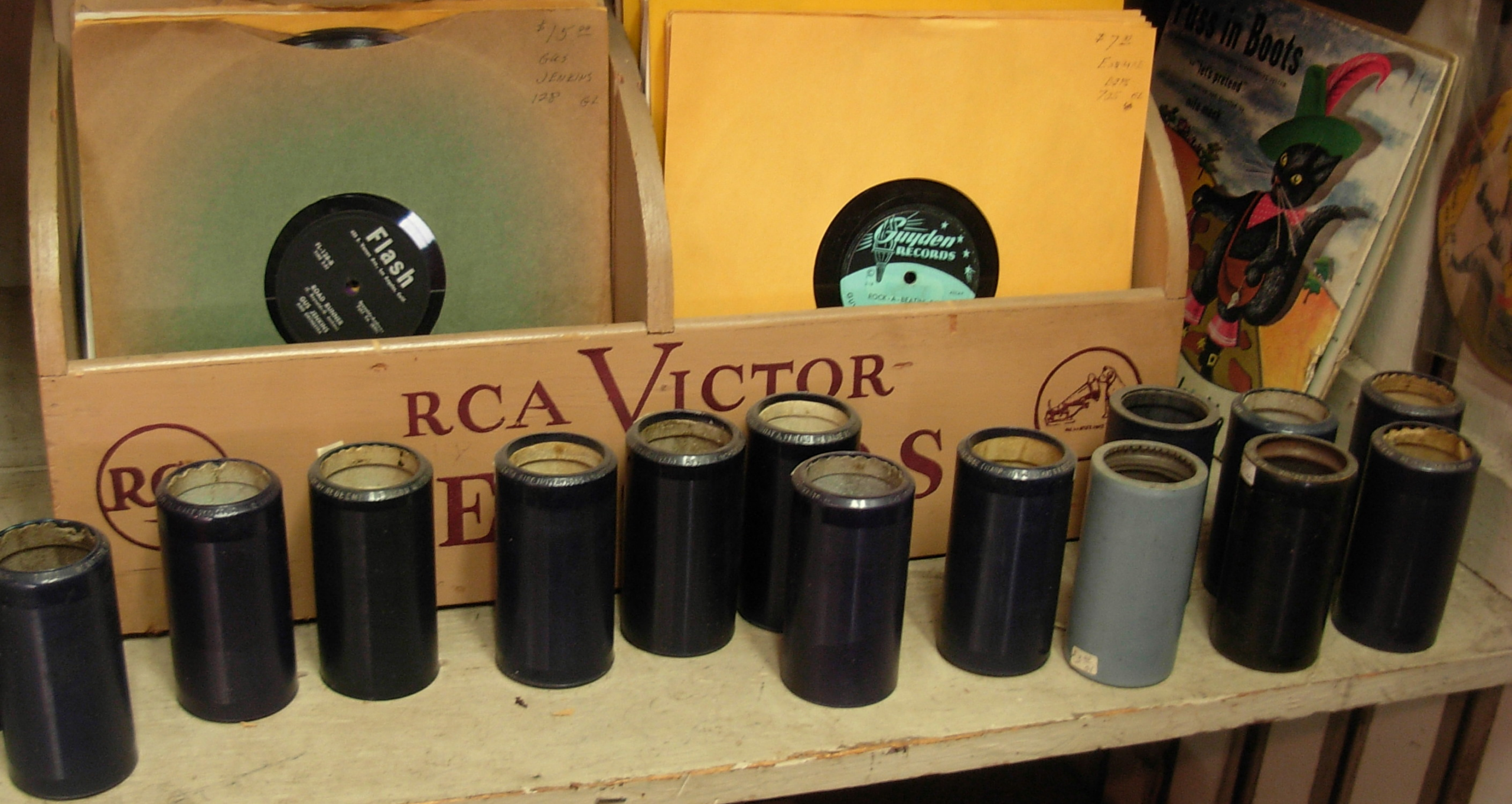
The apparatus is straightforward and its logic is entirely consistent with its purpose.
Sound entering a horn causes a membrane at the narrow end to vibrate, exactly as an eardrum does.
A bristle attached to that membrane moves with it, and rests against a surface coated with soot.
Moving that surface past the bristle at a steady rate produces a wavy line scratched through the soot — a plot of the membrane’s movement over time, which is a plot of the sound.
That is a recording in every meaningful sense. The information is complete, the timing is preserved, and the amplitude is there.
What is missing is any way to convert the line back into movement, and the reason nothing was built to do that is that a visible trace was the entire objective.
Those traces survive, and modern techniques that scan an image and convert the line back into a waveform have recovered sound from them — which means the first recordings of a human voice were heard for the first time an extraordinarily long time after they were made.
Like our content? Follow us for more.
What the Later Machines Added
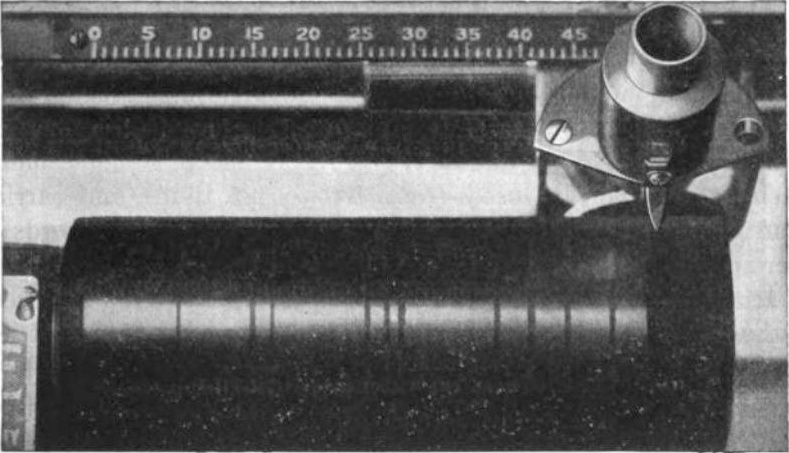
The step that produced a working system is small and decisive.
Replacing the soot-blackened surface with a material soft enough to be indented, and the bristle with a stylus that cuts into it, produces a physical groove rather than a scratch on a coating.
That groove is a mechanical record, and it can be followed. Running the stylus back along it forces the stylus to move exactly as it did while cutting, which moves the membrane, which produces sound.
The whole thing is therefore reversible, and the same device does both jobs with no modification — which is why the earliest playback machines look identical in both directions.
That reversibility is the entire invention. The recording mechanism was known; the realisation that the process runs backwards was not.
Why It Was So Quiet
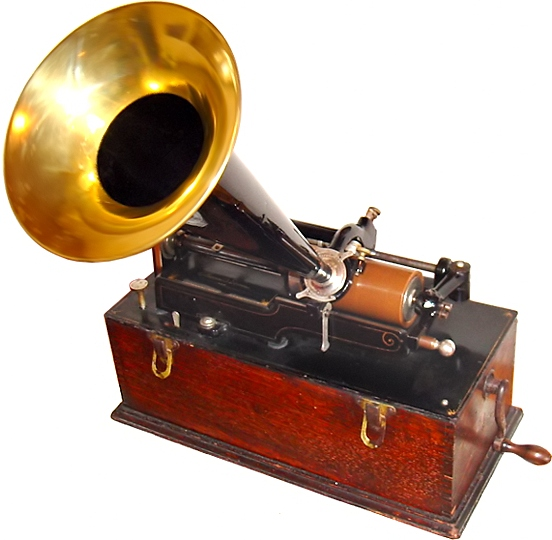
The limitation of the early approach explains everything that followed.
The sound driving the recording came entirely from the air arriving at the horn, and the sound produced on playback came entirely from the groove pushing the membrane.
No energy is added anywhere. The system is purely mechanical, which means the volume available is limited to what the groove itself can supply.
That had practical consequences. Performers had to be arranged extremely close to the horn, loud instruments and voices recorded better than quiet ones, and entire categories of sound were effectively unrecordable.
Playback was correspondingly quiet, which is why early machines have enormous horns — the horn is doing acoustic work, matching the small rapid movement of the membrane to the large slow movement of air required to make a room audible.
Everything changed when amplification became available, since the recording could then be made with a sensitive device producing an electrical signal, and playback could be as loud as desired regardless of what the groove contained.
There is a duration constraint worth noting. Early formats held only a few minutes, which meant anything longer had to be divided across several objects or performed in shortened form.
That limit shaped what was recorded and how it was arranged, and it persisted long enough to influence how music was written for the medium.
The Formats and What Drove Them
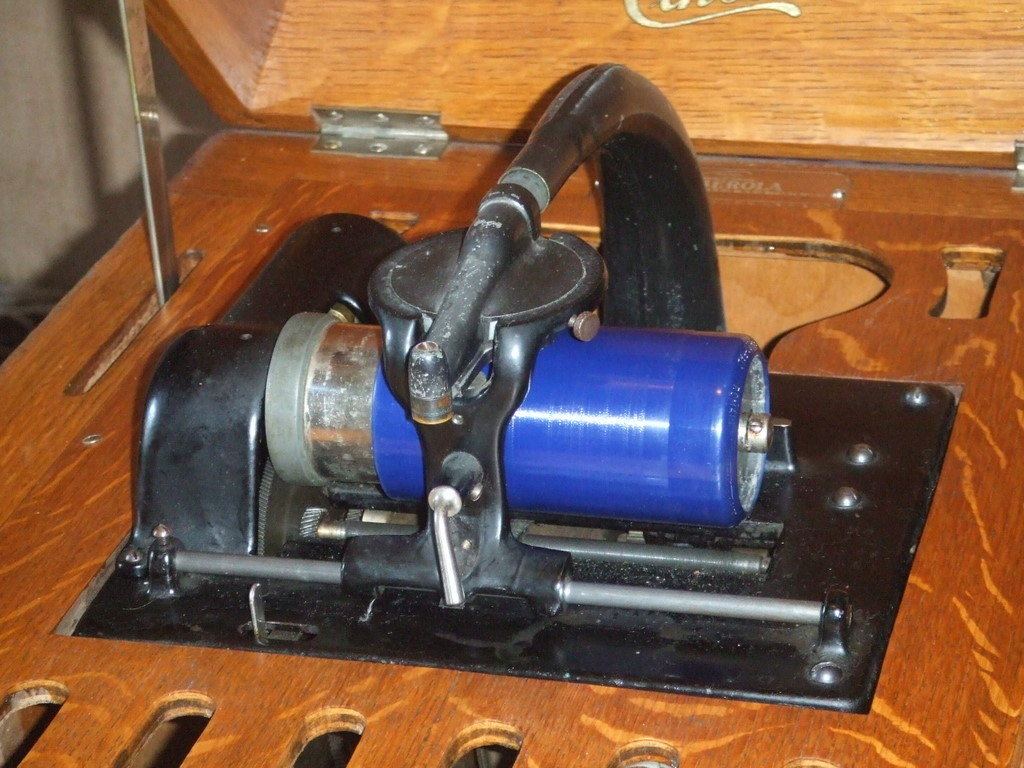
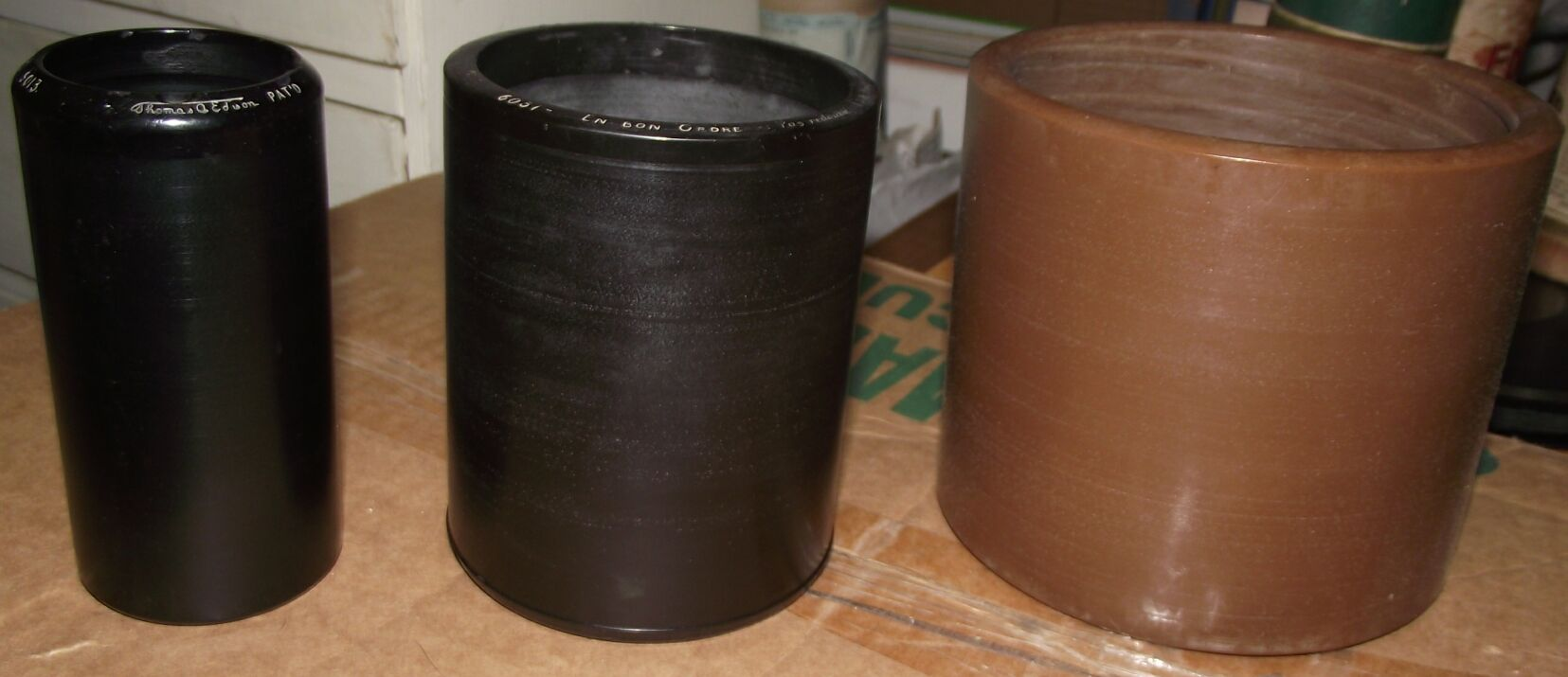
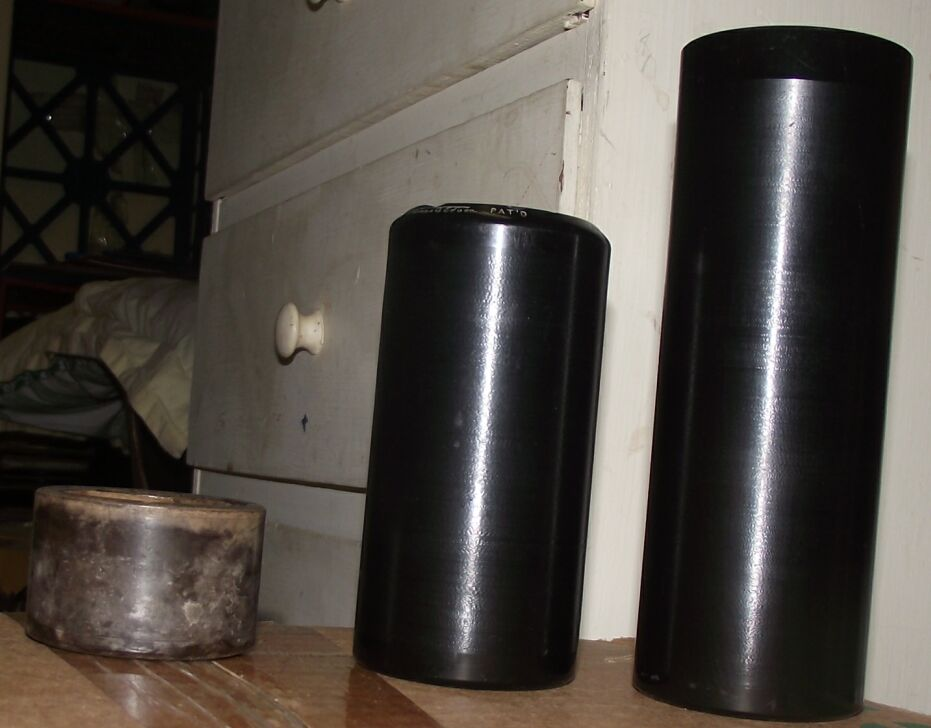
The sequence of physical formats was driven by manufacturing rather than by sound quality.
A cylinder has a constant surface speed along its length, which is good for consistency, and it is difficult to duplicate at scale.
A disc has varying surface speed from outside to inside, which is worse acoustically, and it can be pressed from a master in enormous numbers by stamping.
Duplication won, comprehensively and quickly, because a recording industry requires copies rather than originals.
That is a recurring pattern. The format that reproduces best frequently loses to the one that manufactures best, and the market for recordings was created by the ability to make thousands of them rather than by anything about how they sounded.
Later improvements addressed the disc’s disadvantages through better materials, finer grooves, longer playing times and eventually electrical recording, but the fundamental shape was settled by a manufacturing argument.
There is a reproduction point worth adding. A cut groove is a physical original, and every copy taken from it is one step further from the source, with each generation losing detail.
That constraint shaped how recordings were manufactured and is entirely absent from any medium where a copy is identical to what it came from.
Recording Onto Something Other Than a Surface
The alternative principle is worth including because it is entirely different.
Rather than cutting a physical shape, a signal can be stored as a pattern of magnetisation on a moving medium, which is read back by detecting that pattern.
That removes physical contact from the process. Nothing touches the medium during playback, which means it does not wear, and recordings can be erased and reused.
It also permits editing, since the medium can be cut and rejoined, which changed how recorded material was made — a performance no longer had to be a single continuous event.
That capability altered what a recording was. A cut disc is a document of something that happened; an editable medium permits an assembled result that never occurred as a single performance, which is a change in kind rather than in quality.
And that shift — from recording as documentation to recording as construction — is arguably the most consequential thing in the whole sequence, and it came from a change in storage medium rather than from any improvement in fidelity.
Why Anybody Wanted One
The intended uses are worth recovering, because none of them is what happened.
The purpose proposed for early playback machines was largely clerical. Dictation, so that letters could be transcribed later; preserving the voices of family members; recording instructions; and a speaking clock arrangement.
Entertainment was one item on a list rather than the objective, and the idea that people would buy recordings of performances to play repeatedly at home was not the founding assumption.
That market emerged rather than being planned, and it emerged because duplication made recordings cheap enough to be objects rather than events.
The dictation use persisted in parallel for a very long time, on entirely different equipment, in offices, which is an unusually clean case of two industries growing from one device in different directions.
And the preservation use — recording a voice so it survives the person — was proposed early, was regarded as one of the most striking possibilities, and is the one that turns out to have been most accurate about what the technology would mean to people.
That is a recurring pattern in technology forecasting. The commercial prediction is frequently wrong, the trivial-sounding application becomes an industry, and the emotional consequence nobody could price is the one that lasted.
What the Sequence Shows
The general point concerns what counts as an invention.
Every physical component of sound recording existed before anybody recorded anything for playback. The horn, the membrane, the stylus, the moving surface and the understanding that sound is a wave were all available and were assembled into a working device for a different purpose.
What was missing was a question. Nobody had asked whether the trace could be played, because the trace was wanted for looking at.
That is a common shape. The invention is frequently not a component or a technique but the recognition that an existing arrangement answers a question nobody had put to it — and the recognition is the part that is hard to attribute, hard to protect and easy to regard afterwards as obvious.
Which it invariably is, once somebody has run the thing backwards and heard a voice come out.
And that is the part worth carrying. The hardest step is frequently not building anything but noticing what the thing you already built could also do — which is why the history of technology is full of devices that existed for years before anybody asked them the right question.
Like our content? Follow us for more.