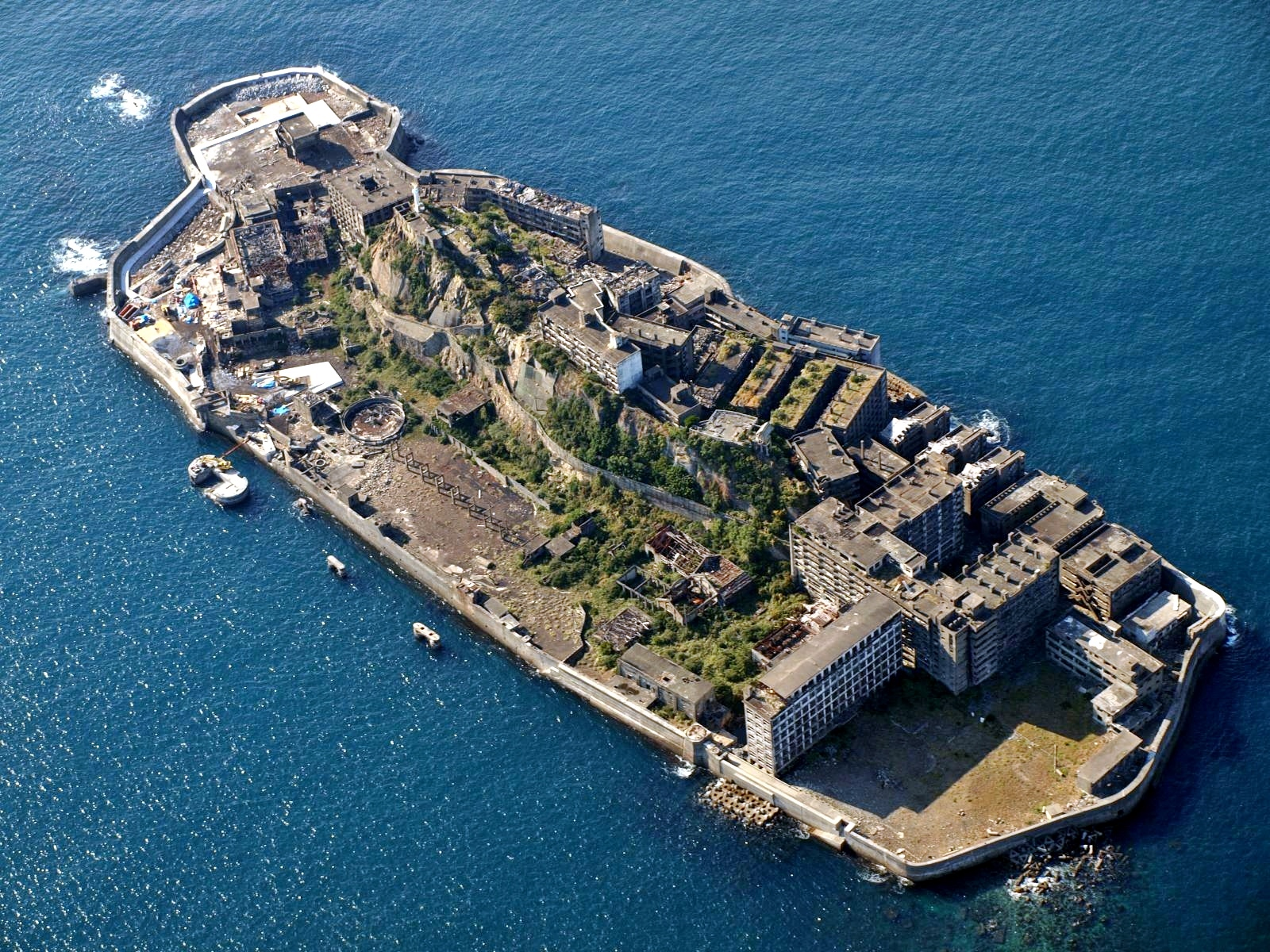
About nine miles off the coast of Nagasaki, in southern Japan, lies a small, fortress-like island ringed by a high seawall and crowded with the crumbling concrete shells of abandoned buildings. From a distance, its silhouette resembles a warship, which earned it the nickname Gunkanjima, or “Battleship Island.” Its official name is Hashima, and for nearly a century it was one of the busiest, most densely packed places on the planet. Today it is utterly empty, a haunting monument to industry, ambition, and a darker chapter of history, slowly being reclaimed by the sea and the elements.
A Coal Mine in the Sea
Coal was discovered on Hashima in the early 1800s, and the island’s modern story began in earnest in 1890, when the Mitsubishi company purchased it and developed undersea coal mines to fuel Japan’s rapid industrialization. Over the following decades, mine shafts were driven deep beneath the seabed, one reportedly stretching to a neighboring island, and the tiny island itself was expanded through repeated land reclamation and the construction of protective seawalls, which roughly tripled its original size.
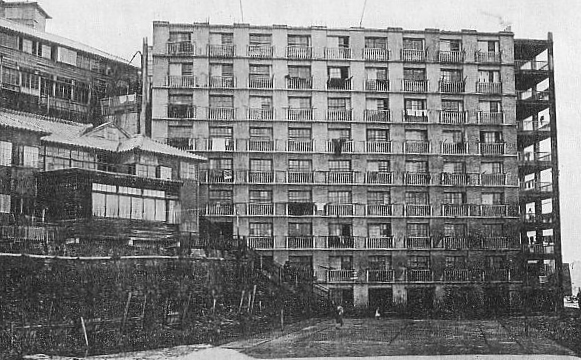
The island, just 16 acres in all, became a self-contained mining city. Between the 1890s and the 1970s, millions of tons of coal were extracted from the mines below, making Hashima a significant engine of Japan’s growth. To house the workers and their families, builders went up rather than out, erecting some of the country’s earliest large reinforced-concrete apartment blocks, including a seven-story building dating to 1916.
Like our content? Follow us for more.
The Most Crowded Place on Earth
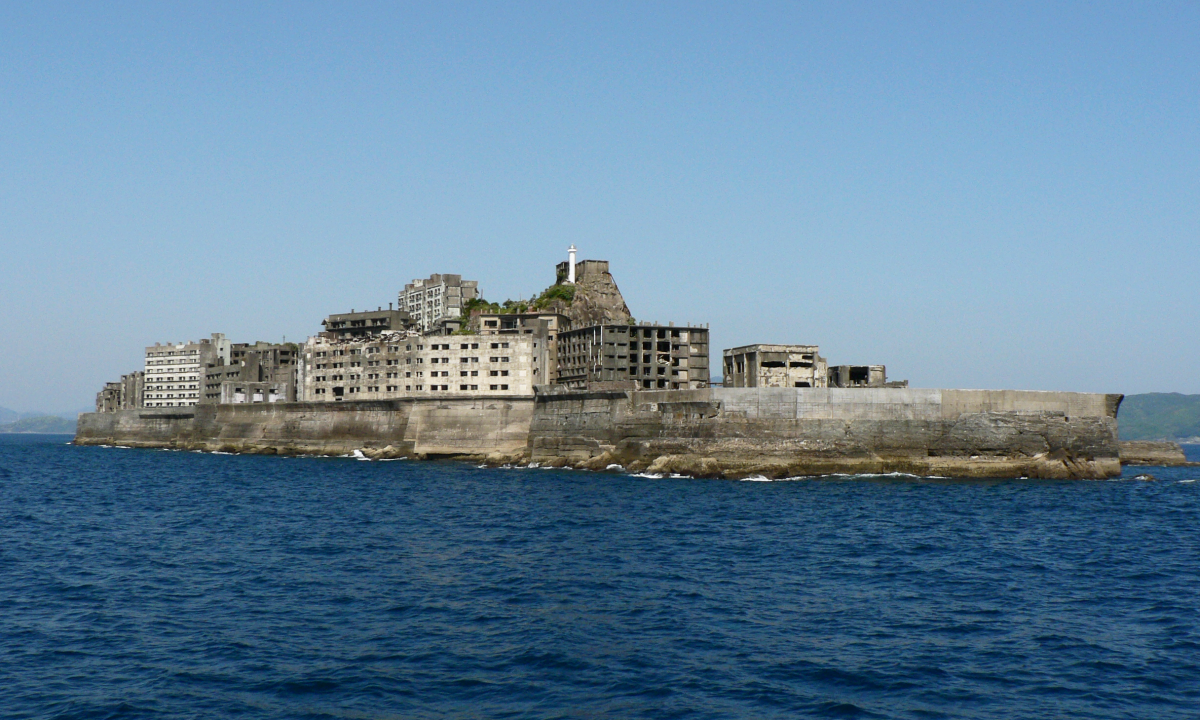
By the 1950s, Hashima had become astonishingly crowded. In 1959, its population peaked at 5,259 people living on those 16 acres, a population density so extreme it ranks among the highest ever recorded anywhere in the world. To support this packed community, the island was built up with everything its residents needed: apartment blocks, a school, a hospital, shops, public baths, a swimming pool, shrines, and places of recreation, all squeezed onto the rocky outcrop and connected by a maze of corridors, courtyards, and stairways.
Life on Hashima was a study in extremes. Residents had access to the amenities of a small city, yet they lived in towering concrete blocks on an island so small you could walk across it in minutes, surrounded on all sides by the sea and battered by typhoons. It was, in its heyday, a remarkable experiment in compact urban living, an entire town stacked vertically on a speck of land in the ocean.
A Difficult History
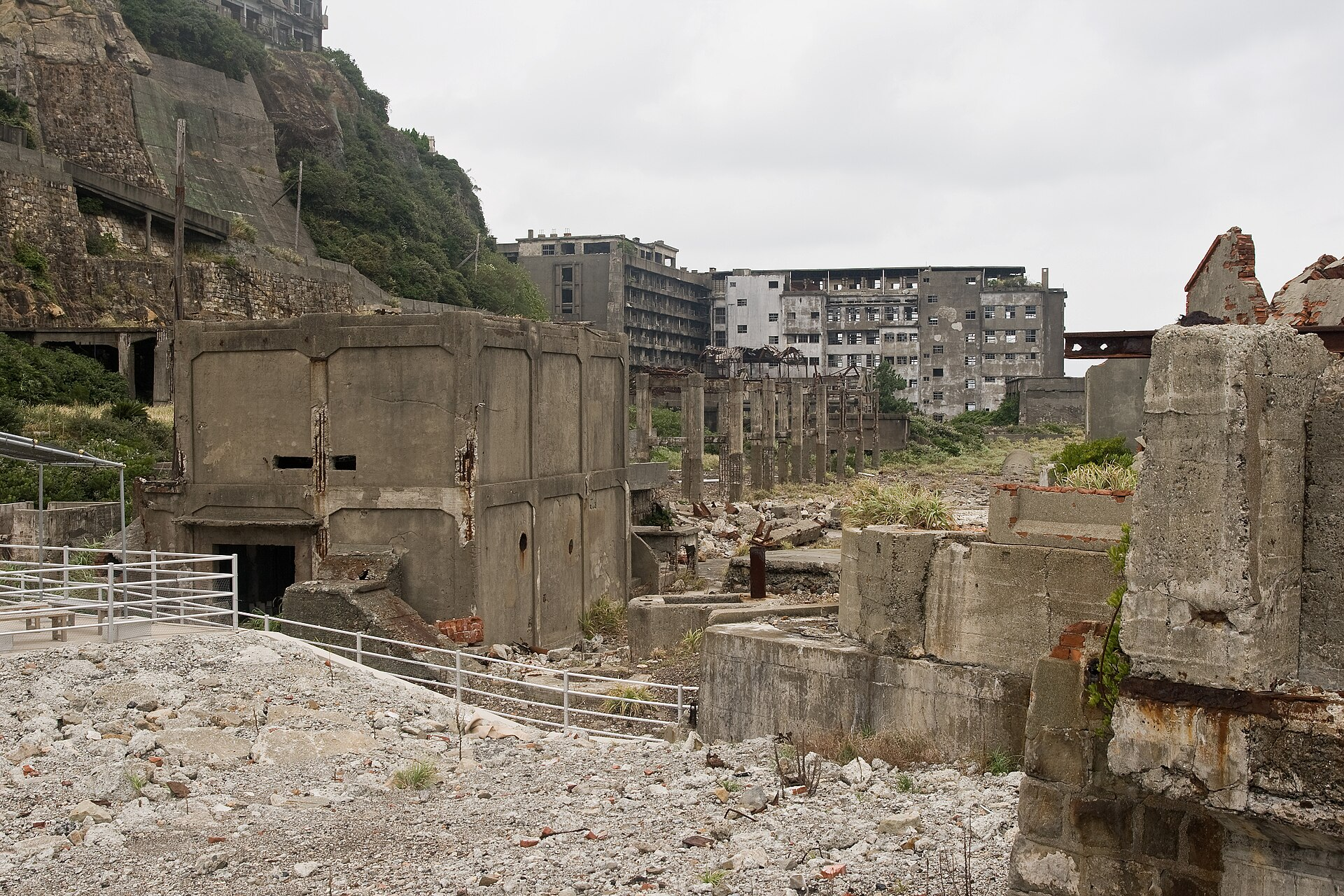
Hashima’s past also includes a somber chapter that must be acknowledged. During the years leading up to and through World War II, the island was a site of forced labor. Conscripted Korean civilians and Chinese prisoners of war were made to work in the mines under brutal and dangerous conditions. This history is an essential part of the island’s story, and it has made Hashima a focus of remembrance and, at times, of dispute, including disagreement between Japan and South Korea over how fully that forced-labor history should be acknowledged in connection with the island’s later recognition as a heritage site. Visitors and readers encountering Hashima’s striking ruins should understand that its beauty as a relic is inseparable from this difficult human history.
Abandoned Overnight
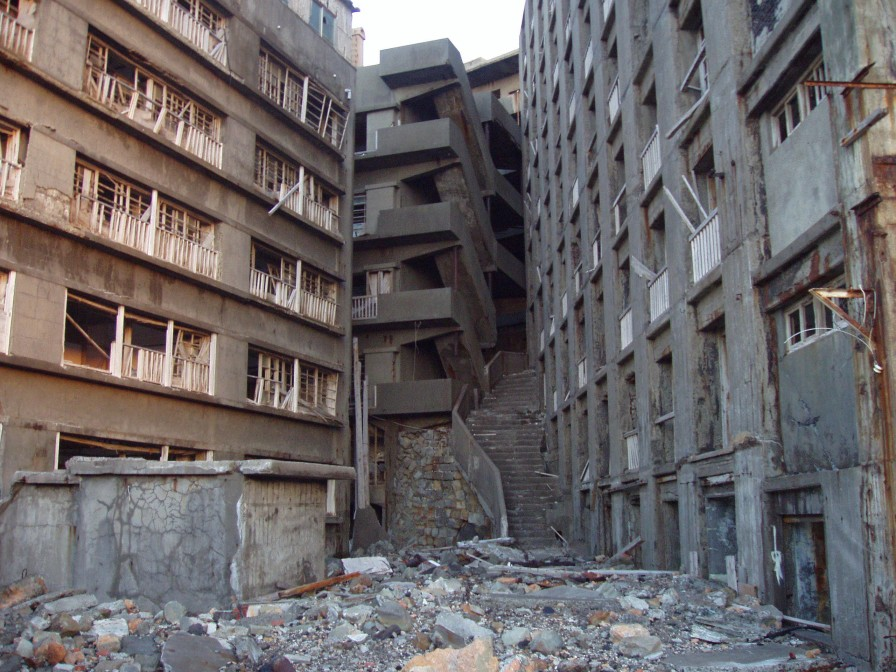
Hashima’s fate was sealed by the same energy transition that closed mines around the world. As Japan shifted from coal to petroleum through the 1960s and early 1970s, the island’s mines became uneconomical. Mitsubishi officially closed the mine in January 1974, and the residents departed almost immediately, with the island cleared of its population by that April. Almost overnight, the most crowded place on Earth became completely empty.
For the next several decades, Hashima was left entirely to the elements. With no maintenance, the concrete buildings began to crack and crumble, walls collapsed, and plants took root in the ruins, slowly turning the gray industrial cityscape green in places. The relentless sea air and typhoons accelerated the decay, creating the eerie, weather-beaten scene that survives today, an abandoned city frozen at the moment its people walked away.
A Ruin Reborn as a Landmark
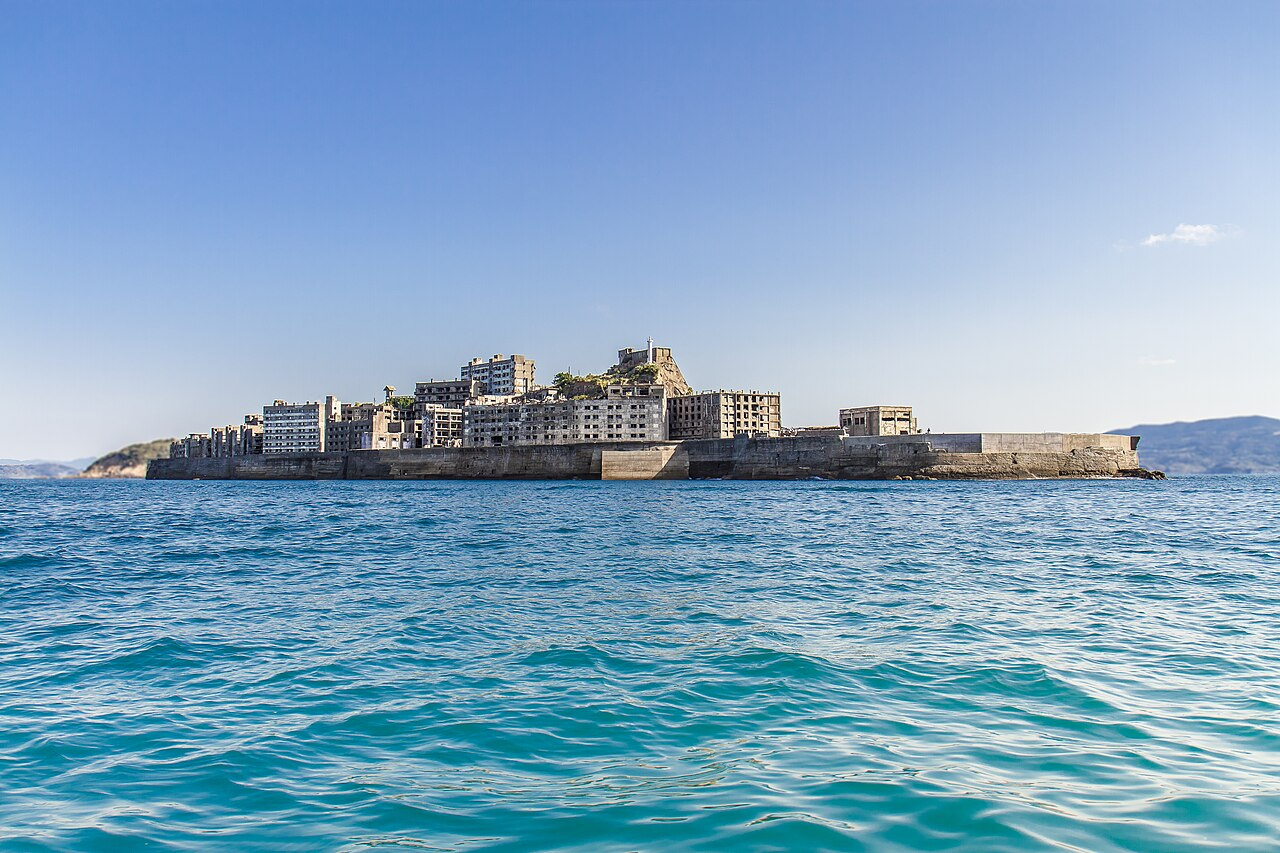
Interest in Hashima revived in the 2000s, particularly among enthusiasts of abandoned places and industrial ruins. Recognizing both its historical significance and its haunting appeal, authorities reopened the island to visitors in 2009, after 35 years of closure, allowing guided tours to land at a special pier and view the ruins from designated areas. The island was later recognized as part of a group of sites associated with Japan’s industrial revolution, a designation that, as noted, came with controversy over its full history.
Access to Hashima is tightly controlled for safety reasons, the crumbling buildings are genuinely dangerous, and tours keep visitors to secure walkways. The island has also captured the global imagination through documentaries, photography, and its appearances on the screen, becoming an internationally recognized symbol of the eerie beauty of abandoned places.
A Monument Frozen in Time
Hashima Island stands as one of the most extraordinary abandoned places in the world, a once-teeming mining city reduced to silent, crumbling concrete in the middle of the sea. Its story compresses the arc of an entire industrial age: discovery and ambition, astonishing density and ingenuity, a sobering history of forced labor, and finally abandonment and slow decay.
For travelers drawn to history and the haunting power of ruins, Hashima offers a profound experience, a chance to stand before the shell of a city that once held thousands and now holds no one. It is a place that rewards reflection as much as fascination, a vivid reminder of how quickly a thriving community can vanish, and of the complex human stories embedded in even the most striking of ruins. Battleship Island remains anchored off Nagasaki, empty and weather-worn, a monument frozen in time.
Like our content? Follow us for more.