Tucked into the coal country of eastern Pennsylvania, the borough of Centralia looks at first like an ordinary American ghost town: cracked and empty streets, scattered foundations where houses once stood, and a quiet that feels heavy. Linger a little longer, though, and you may notice something stranger, wisps of smoke, or on damp days steam, rising from cracks in the ground. That’s because the earth beneath Centralia has been on fire for more than six decades, a slow-burning underground blaze that emptied a once-busy town and turned it into one of America’s most haunting and unusual places.
A Coal Town’s Slow Decline
Centralia sits in Columbia County, in the heart of Pennsylvania’s anthracite coal region. Mines first opened in the area in the mid-1800s, and the town was incorporated as a borough soon after, growing into a community sustained by the coal beneath it. At its peak around the turn of the twentieth century, Centralia was home to more than 2,500 residents, with churches, shops, schools, and a busy main street, all built on an economy of mining the dense, hard coal that lay in seams below.
As the twentieth century wore on, demand for coal declined, and so did Centralia. By 1960, the population had fallen to fewer than 1,500 as mines closed and jobs disappeared. The town was already facing a slow economic decline, the same one that hollowed out many mining communities across the region. But what happened next would transform Centralia from a fading coal town into something far more extraordinary, and far more famous.
Like our content? Follow us for more.
The Fire That Started in 1962
The disaster most associated with Centralia began in May 1962. The most widely accepted account holds that the borough set fire to trash in a landfill that occupied an abandoned strip-mine pit, a common method of cleaning up the dump, this time ahead of the town’s Memorial Day observances. According to Pennsylvania’s environmental authorities, the strip pit had been left open since around 1935 and was roughly 75 feet wide and 50 feet deep.
The fire was meant to be controlled, and crews doused the visible flames. But the blaze found its way through an unsealed opening, an estimated fifteen-foot hole that had been left uncovered, into the labyrinth of abandoned coal mines beneath the town. There, it ignited the rich anthracite seam, and the underground fire took hold. It’s worth noting that the exact origin remains debated: some accounts point to hot ash dumped the day before, and a competing local theory traces the blaze to an older colliery fire from decades earlier. Whatever the precise spark, the result was the same, a fire in the coal beds below Centralia that no one could put out.
An Impossible Fire to Extinguish
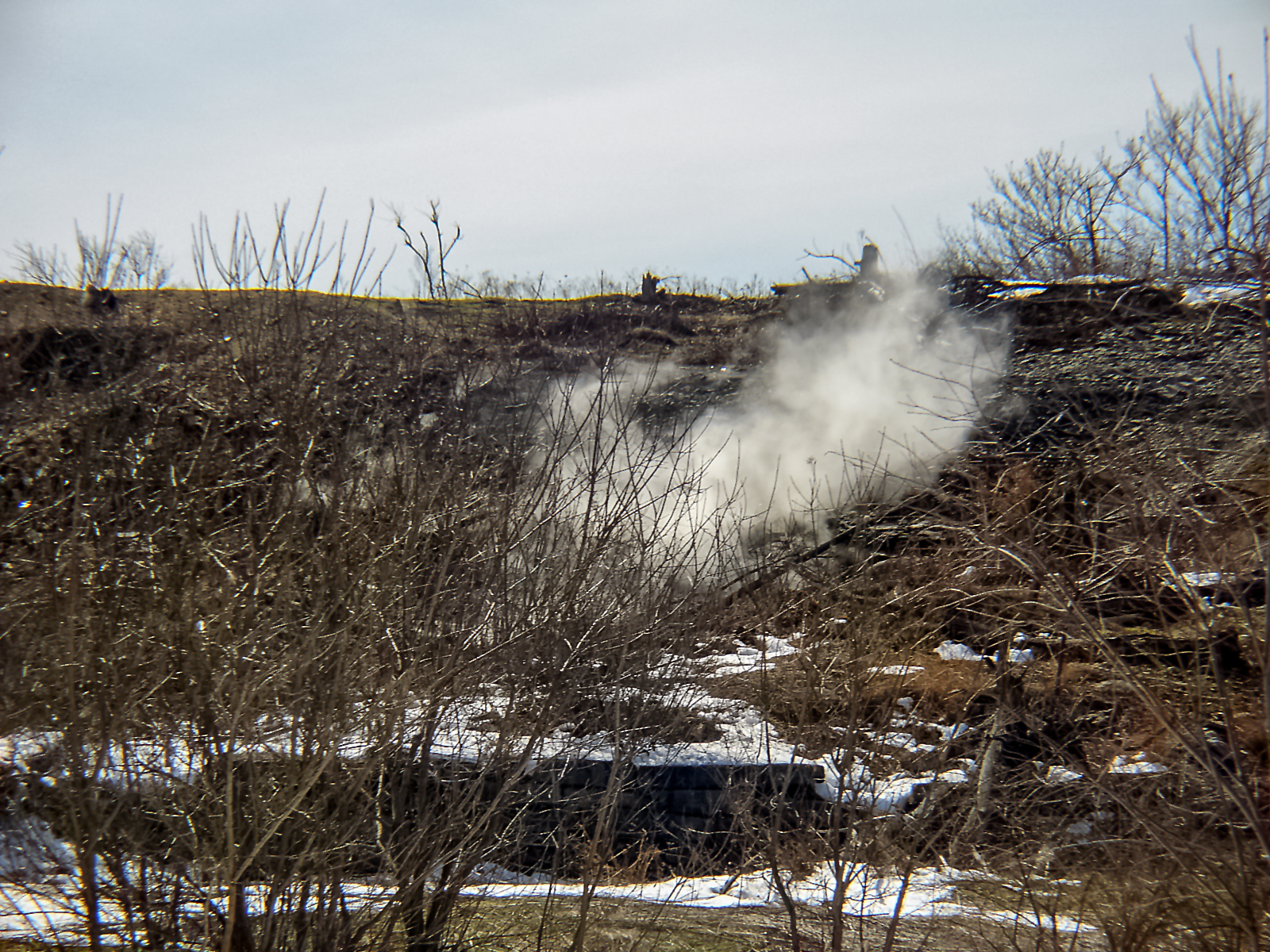
Efforts to fight the fire began almost immediately and continued for years, but the network of interconnected mine tunnels, still full of unmined coal, gave the blaze endless fuel and room to spread. By August 1962, dangerous carbon monoxide, a byproduct of the fire, was detected underground, and nearby mines were permanently closed for safety. Over the following decades, the consequences crept into daily life: smoke and steam venting from the ground, toxic gases, patches of scorched vegetation, and the ever-present danger of subsidence, the sudden collapse of ground undermined by the fire below.
The cost of fully extinguishing the fire was estimated to be enormous, far beyond what authorities were willing to spend, and geologists came to regard putting it out as, in the words of one expert, essentially an impossible dream. By one estimate from 2006, the fire could continue burning for another 250 years. It remains one of the most significant and stubborn mine fires in the country.
The Town Empties Out
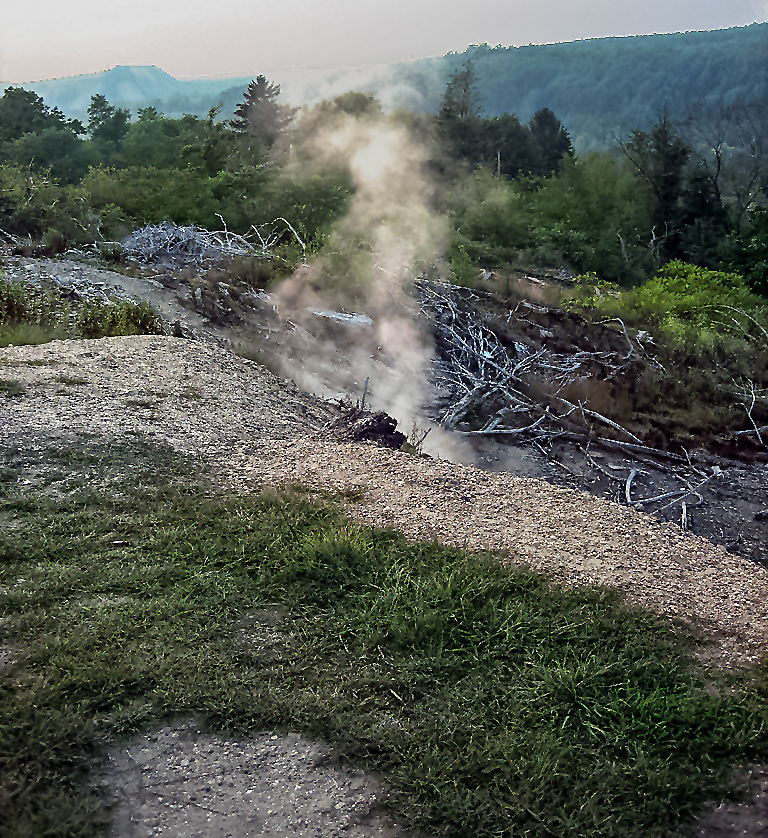
For a time, residents tried to carry on, even growing accustomed to warm ground in winter and the occasional venting smoke. But as the hazards mounted, especially the threat of toxic gas and ground collapse, the situation became untenable. In 1984, Congress allocated more than $42 million for a voluntary relocation program, and most residents accepted buyouts and moved away. In 1992, the state invoked eminent domain, condemning the buildings in the borough. Centralia’s ZIP code was discontinued in 2002.
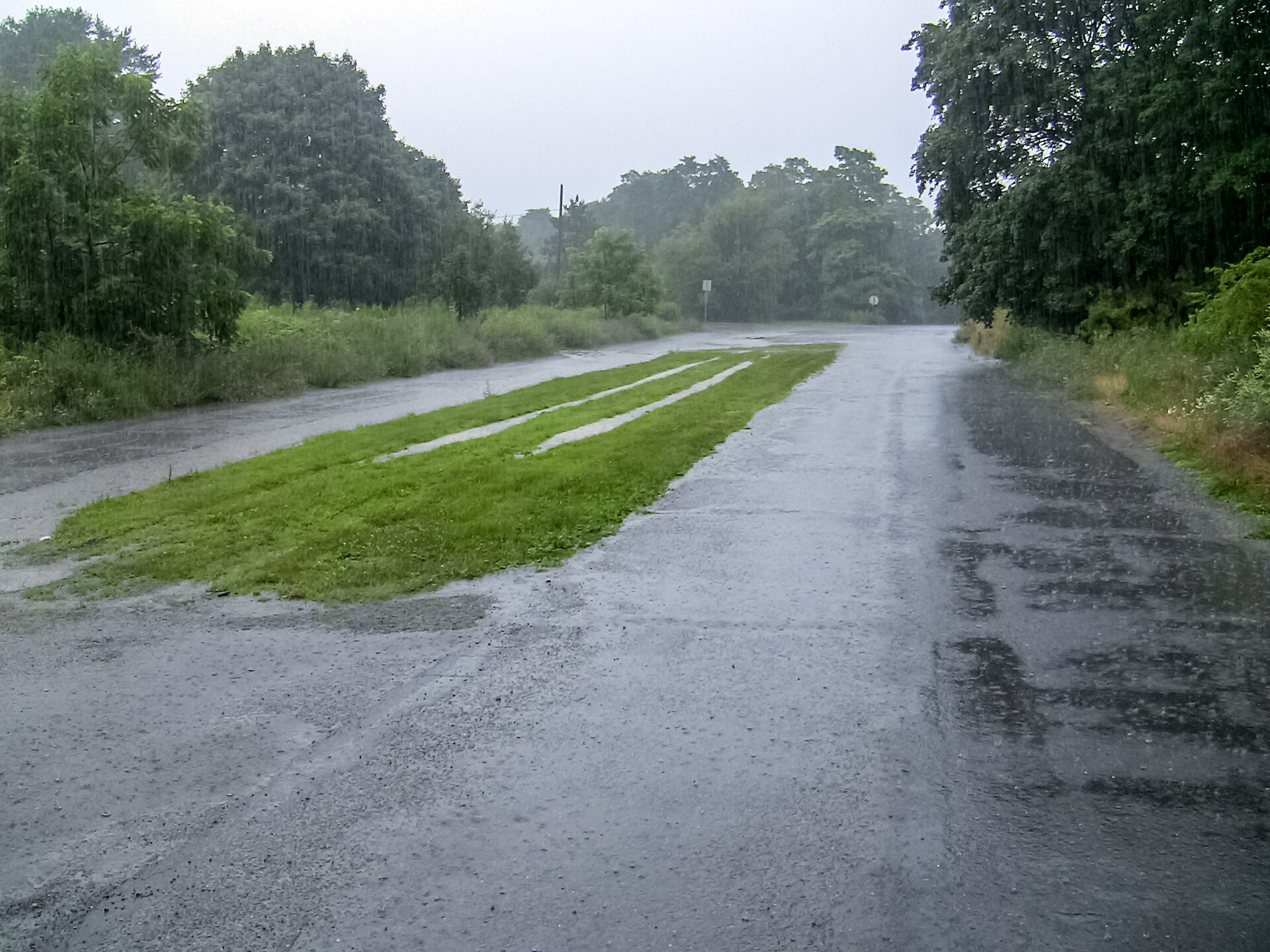
A handful of holdouts refused to leave their lifelong homes, and in 2013 an agreement allowed the few remaining residents to stay for the rest of their lives. By the 2020 census, Centralia’s population had dwindled to just five, making it the least-populated municipality in Pennsylvania, completely surrounded by a neighboring township. Most of the buildings were demolished, leaving empty lots, overgrown streets, and a grid of roads leading to houses that no longer exist. A nearby village was abandoned for the same reason.
A Place Frozen and Famous
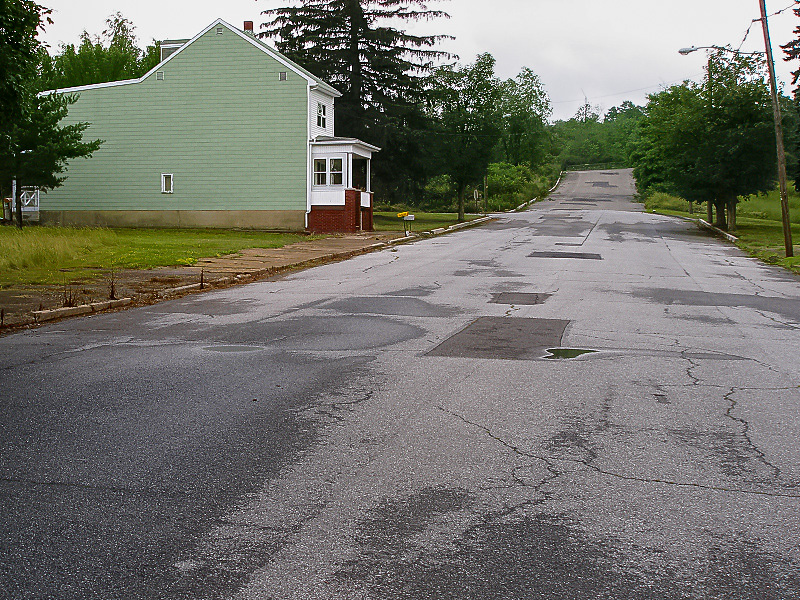
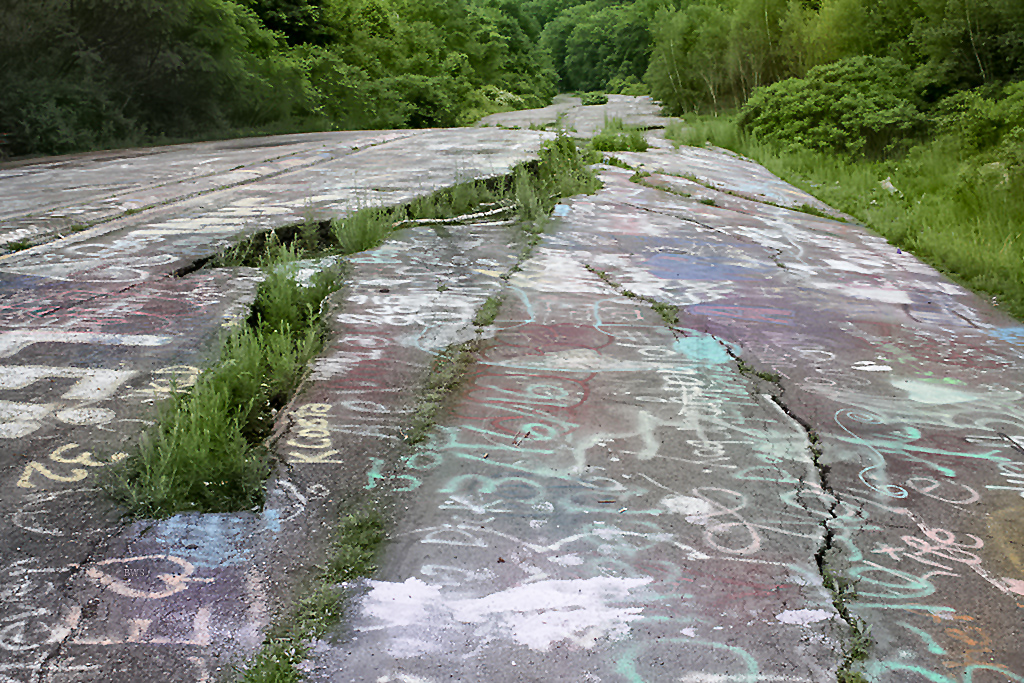
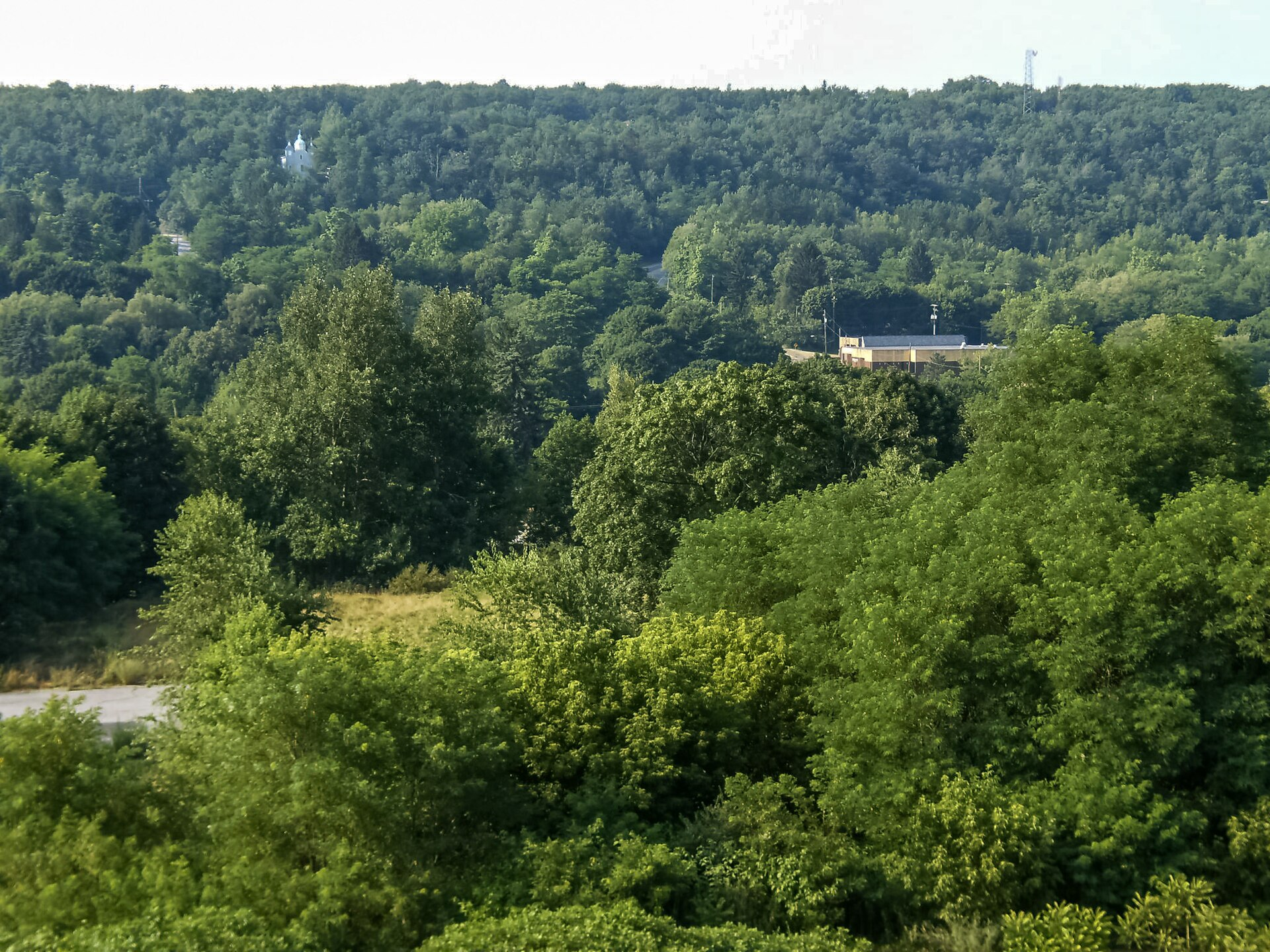
Today, Centralia is a near-ghost town that draws the curious from around the world. A few landmarks remain, including a hilltop church that still stands above the smoking ground. For years, an abandoned stretch of state highway, rerouted because of the fire, became known for the colorful graffiti that covered its surface, attracting visitors who came to see the strange, painted road through the smoke. The eerie, post-industrial landscape even helped inspire the setting of a well-known horror film, cementing Centralia’s place in popular imagination as a real-world vision of a town consumed from below.
Visitors who come to Centralia today find a sobering, fascinating place, a reminder of how a single underground fire reshaped an entire community. It’s important to approach it respectfully and safely: this is private and state-controlled land with genuine hazards, including unstable ground and venting gases, and a few residents still call it home. The smoke and steam, the cracked roads, and the empty foundations make for a haunting scene, but it is not a place to wander carelessly.
A Town That Won’t Be Forgotten
More than six decades after the fire began, Centralia endures as one of America’s most extraordinary places, a once-busy coal town reduced to a near-empty grid of streets, its underground fire still burning with no end in sight. It is a story of industry, decline, disaster, and the difficult choices that followed, the relocations, the buyouts, the holdouts who stayed.
For all its emptiness, Centralia is far from forgotten. Its name has become shorthand for the strange and the haunting, and curious travelers continue to seek it out, drawn by the almost unbelievable fact that the ground beneath a Pennsylvania town has been smoldering since 1962. Centralia stands as a powerful, eerie monument to the unintended consequences of the past, a place where the earth itself refuses to let the town’s story end.
Like our content? Follow us for more.