

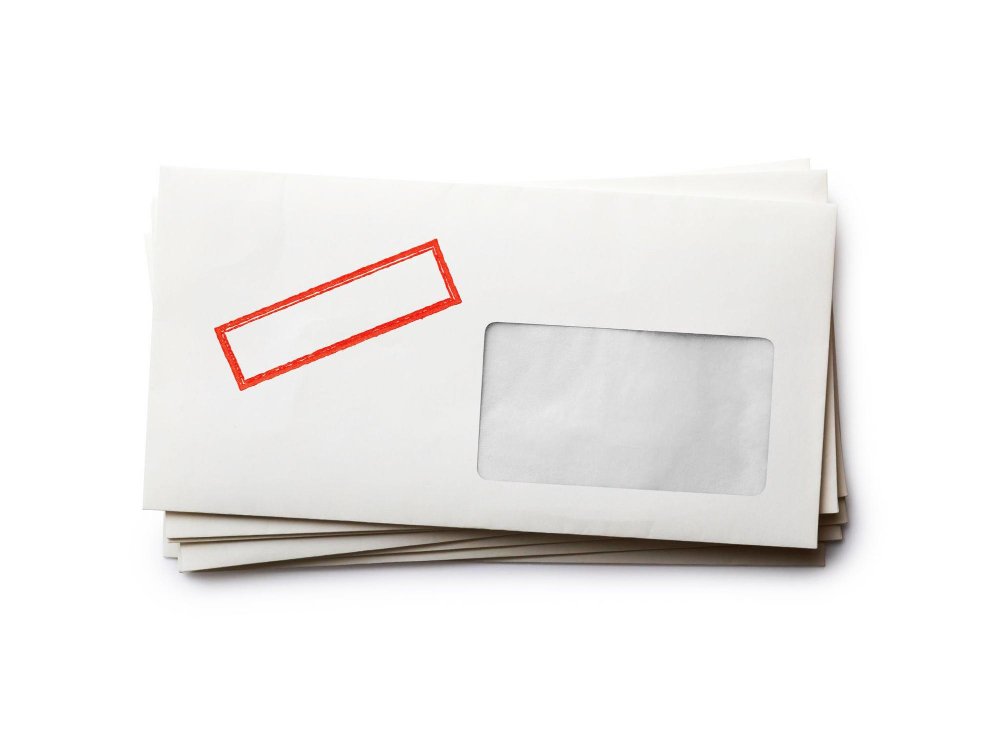
An envelope with a transparent panel showing the address printed on the letter inside is such an ordinary object that the question of why it exists does not usually arise.
It was a genuine invention, it was patented, and it solved a specific and expensive problem in large-scale correspondence: the address being written twice, by two different operations, with the opportunity for the two to disagree.
The Problem Was Writing the Address Twice
An organisation sending out a large volume of letters – a utility, a bank, an insurer – has to produce two things for each recipient. The letter, which contains the address at the top because that is how letters are written. And the envelope, which has to carry the address so it can be delivered.
Doing those as two separate operations creates an obvious failure. The letter for one person ends up in the envelope addressed to another. It is not a rare event at volume, it is close to inevitable, and the consequence is a confidential document delivered to the wrong person, a complaint, a replacement, and in a modern context a data breach.
Matching the two also costs labour. Somebody or something has to ensure that the right sheet goes into the right envelope, which means a checking operation that exists solely to prevent the mismatch.
The window removes the problem rather than managing it. The address is written once, on the letter, and the envelope has no address at all. It is physically impossible for them to disagree, because there is only one of them.
Like our content? Follow us for more.
That Is a Better Class of Solution Than It Looks
This is worth isolating because it is a design pattern that appears everywhere once you notice it.
There are two ways to deal with an error: catch it, or make it impossible. Catching requires a checking step, which costs something on every unit forever and which itself fails occasionally. Making it impossible costs a one-off design change and then nothing.
The window envelope is the second kind. It does not reduce the mismatch rate, it eliminates the category – there is no state of the system in which a letter can be in the wrong envelope and be delivered, because the envelope does not know where it is going except by looking at the letter.
The same thinking produces the connector that only fits one way round, the fuel nozzle that will not enter the wrong filler, the screw thread that cannot be assembled incorrectly. In each case somebody chose to remove a possibility rather than to warn against it.
It is a more expensive thing to think of and a cheaper thing to own, and the window envelope is one of the earliest everyday examples of it.
The test for whether you are looking at one is simple: ask what would have to go wrong for the error to happen. If the answer involves somebody being careless, it is a checking solution. If the answer is that it cannot happen at all, somebody designed the possibility out.
The Window Is Not Always a Window
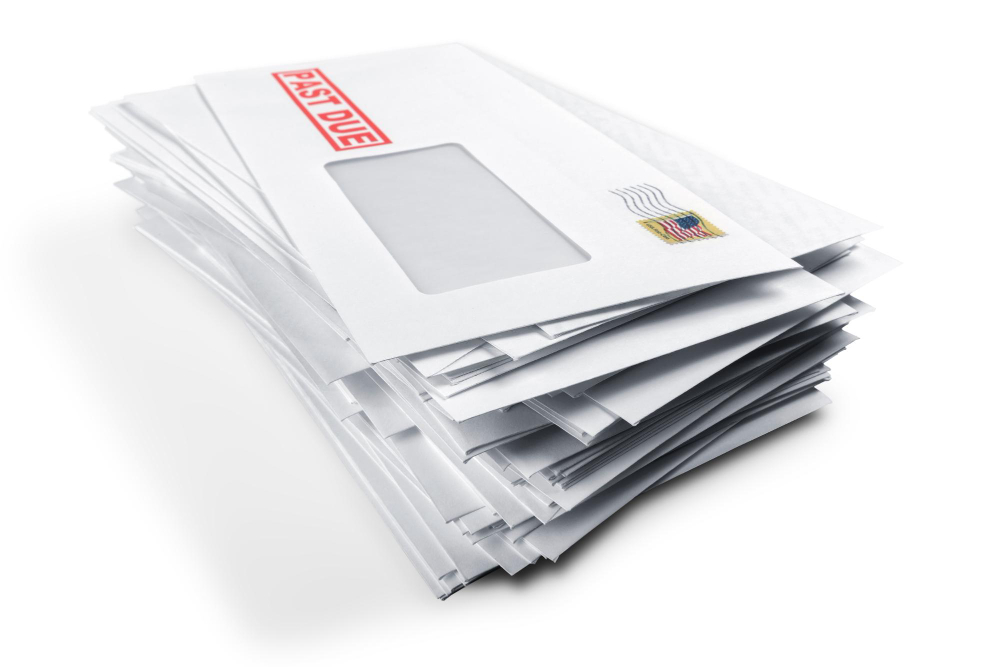
There are three ways to make the panel, and they have different consequences.
The commonest is a film patch glued behind an aperture cut in the paper. It is clear, cheap and reliable, and it is also a second material bonded to the first, which is the complication.
Some envelopes use no film at all. The aperture is simply a hole, with the paper flap folded so the contents stay in. These are cheaper and entirely paper, and they are slightly more vulnerable to weather and to the contents shifting. They are also noticeably more common on mail from organisations that have made public commitments about packaging, which is a reasonable way to spot who has actually looked at the question rather than merely written about it.
And some use a glassine or treated-paper patch, which is paper made translucent rather than a plastic film, and which behaves as paper throughout.
The reason this matters is recycling. A paper envelope with a plastic patch is a mixed material, and whether the patch is a problem depends on the mill – many modern processes tolerate a small proportion of film because it is removed in screening, and others do not. The all-paper and glassine versions avoid the question entirely, which is why they have been reappearing.
Somebody Had to Invent the Transparent Part
The idea of cutting a hole in an envelope is obvious. Making it work was not, and the reason the invention arrived when it did is the material.
A hole on its own is a hole. The contents can shift, slide, catch on sorting machinery, and get wet. For the window to be useful it needed to be covered with something transparent, thin enough not to interfere with folding, flexible enough to survive handling, cheap enough to be disposable, and capable of being glued to paper reliably.
That is a demanding specification for the period in which the window envelope appeared, and it sat at the edge of what was available. Early transparent films were brittle, discoloured, or reacted badly to adhesive and moisture, and the first windows were frequently made with treated or oiled paper that was translucent rather than clear.
Which is a pattern worth noticing. A great many inventions are not ideas – the idea is available to anybody – but the point at which some enabling material or process becomes good enough and cheap enough for the obvious idea to work.
The window envelope was waiting on film, and when film arrived it appeared almost immediately.
Why the Address Is Always in the Same Place
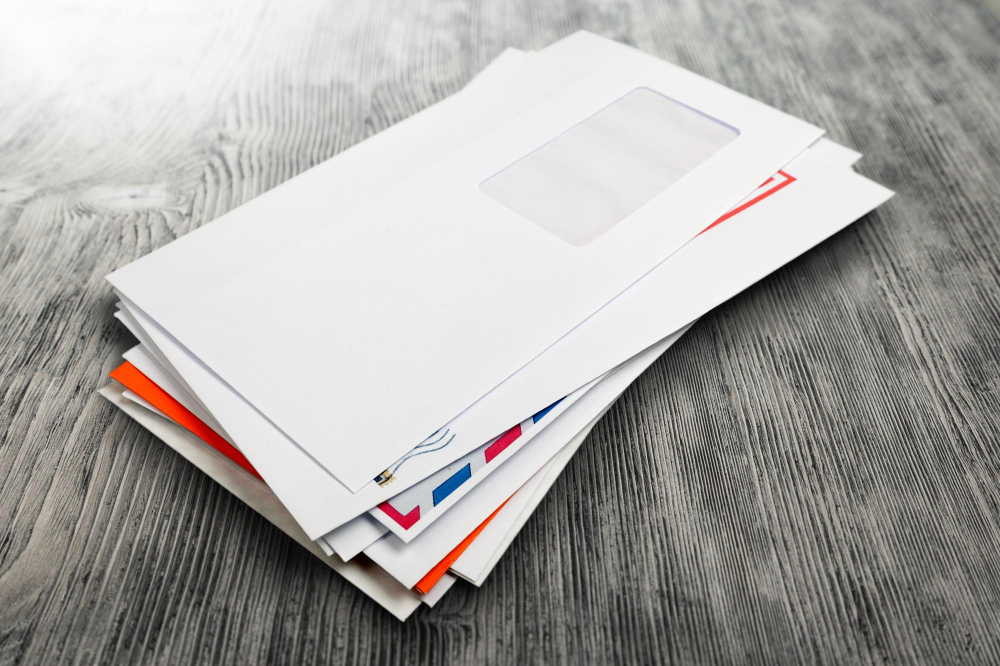
The position of the address block on a business letter is not a matter of taste, and anybody who has wondered why it sits where it does has their answer here.
The window is in a fixed position on the envelope, determined by the folding pattern of the sheet. A standard letter folded in a standard way places a specific band of the page behind the aperture, and the address has to be inside that band, with a margin for the sheet shifting inside the envelope.
So the layout of a business letter is dictated by an envelope. The sender’s details at the top, the recipient’s address below it and to one side, the reference line and date positioned around them – that arrangement exists because of where the hole is.
This is why letters produced by large organisations all look broadly alike, and why word processor templates place the address where they do. It is also why a letter from such an organisation frequently looks wrong when printed and posted in a plain envelope: the layout was designed for a window it is no longer sitting behind.
What It Was Really For Is Mostly Gone
The problem the window solved was a volume problem, and the volume has collapsed.
Statements, bills, policy documents and notices – the overwhelming bulk of windowed mail – have moved to email and to online accounts. The organisations that sent millions of letters a year now send a fraction of that, and the ones that still do are frequently sending to people who specifically asked for paper.
What remains is interesting. Physical post has become more significant per item rather than less, precisely because so little arrives. A letter now gets opened, which is why direct marketing has partially returned to it, and why organisations use paper deliberately for things they want noticed.
And the window has acquired a second meaning that nobody designed. A windowed envelope reads instantly as official, impersonal and probably a bill, which is a strong signal – strong enough that marketers both exploit it, to get an envelope opened, and avoid it, when they want something to look personal.
A device introduced to prevent clerical error is now primarily a visual code for what kind of letter you are holding, read in half a second by everybody who picks one up, and meaning something entirely unrelated to the reason it is there.
That second life is the common fate of successful design details. The thing is adopted for a functional reason, becomes universal, and in becoming universal acquires a meaning from the company it keeps. After enough decades the meaning is the stronger of the two, and the original function – still operating, still saving the error it was introduced to prevent – is invisible to everybody including the people specifying it.
Look at the next windowed envelope that arrives and check whether the panel is film or paper.
If it is paper, somebody has thought about what happens to it afterwards.
And if you ever wondered why the letter inside is folded so that the address lands exactly in the right place every single time with no apparent effort, that is a machine doing it – an inserter that folds, aligns, inserts and seals at several thousand an hour, built around the one dimension that cannot vary. Everything about the format of a business letter, from the fold to the margins to the position of the reference number, is downstream of a hole in a piece of paper.
Like our content? Follow us for more.
