

There is a particular category of scientific discovery that requires no advanced equipment, no expedition, and no funding: simply noticing that something in front of you does not belong. It is rarer than it sounds, because it depends on someone having enough knowledge to recognize an anomaly and enough confidence to act on it rather than assuming they must be mistaken.
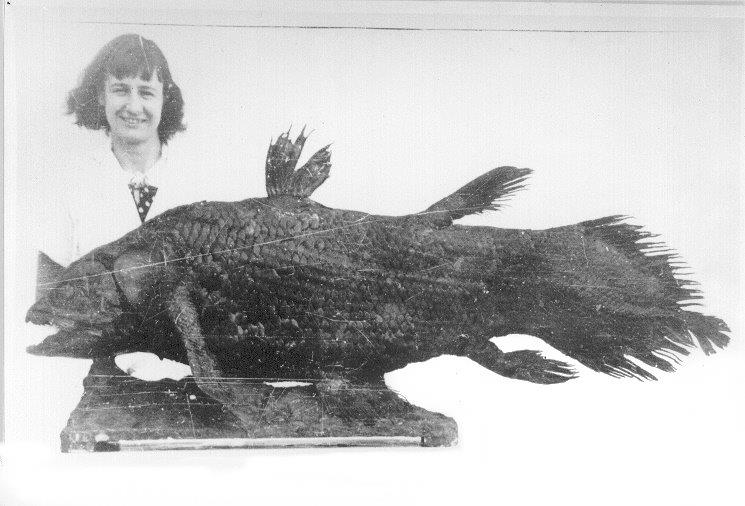
On 22 December 1938, a woman named Marjorie Courtenay-Latimer did exactly that. She was the curator of a small museum in East London, a port on South Africa’s east coast, and she had a standing arrangement with local trawler captains: when they brought in something unusual, she would come and look. That morning she took a taxi to the docks to sort through a pile of fish that had been set aside as unsellable. In it was something she had never seen and could not place. Heavy, about a metre and a half long, an unusual steel-blue, covered in thick armoured scales, with strange fleshy fins.
What she had found would make headlines around the world within months, because the fish belonged to a lineage that palaeontologists had traced through the fossil record and watched disappear tens of millions of years ago. Here is the story of the coelacanth, and of the twelve weeks that made a museum curator’s name known to every ichthyologist alive.
The Fish That Was Only a Fossil
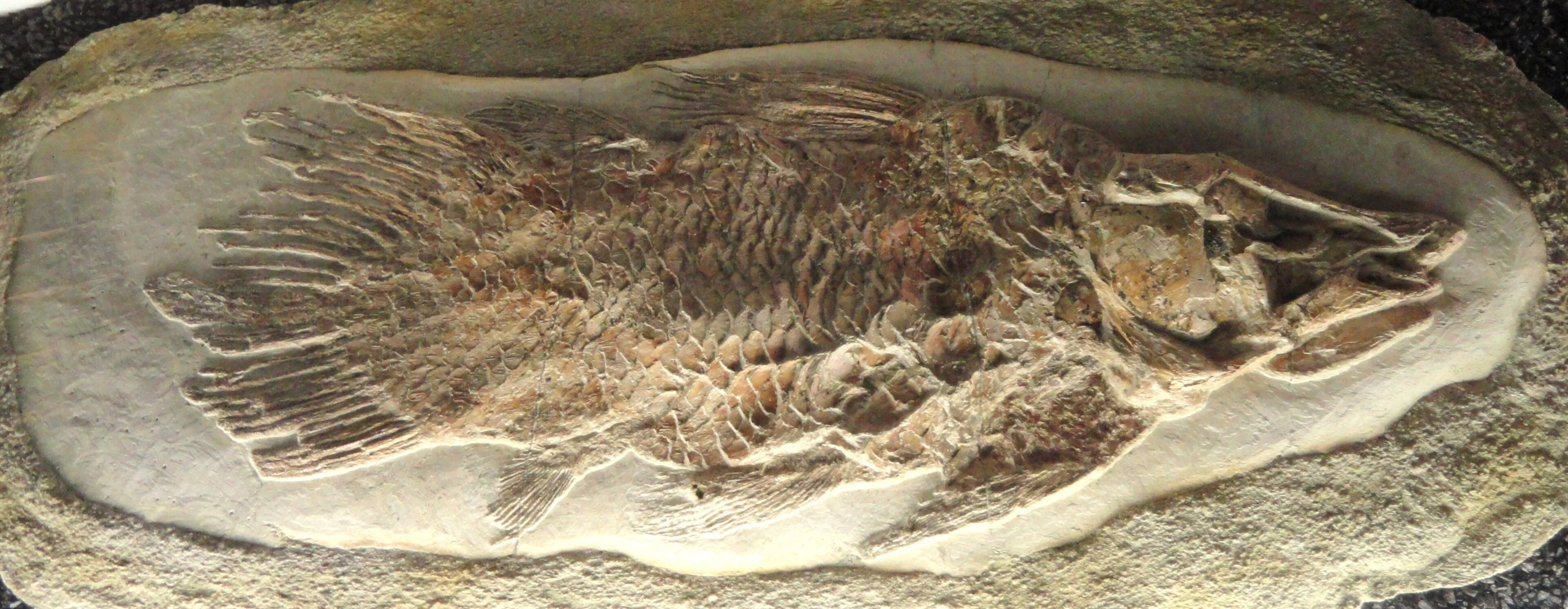
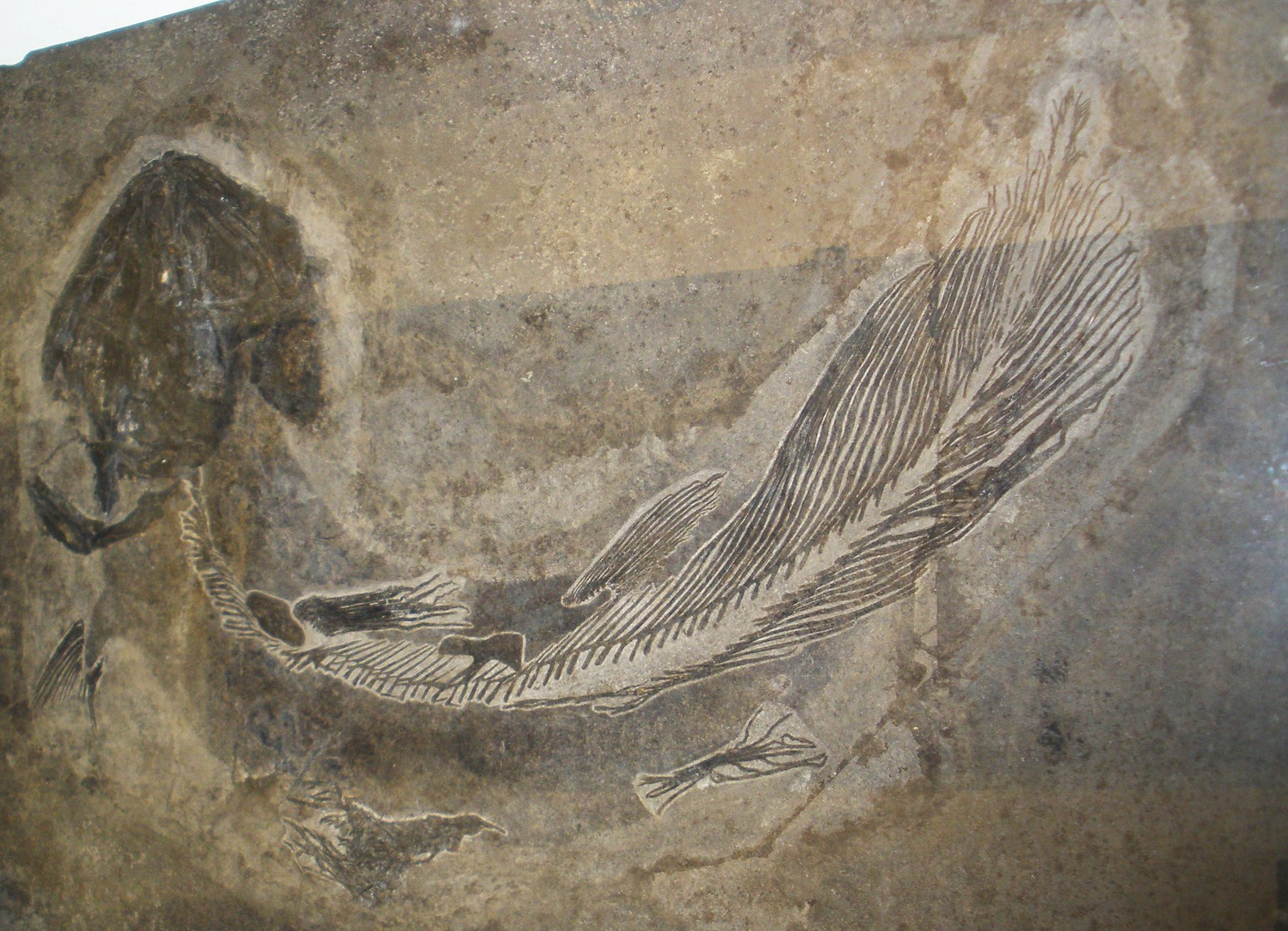
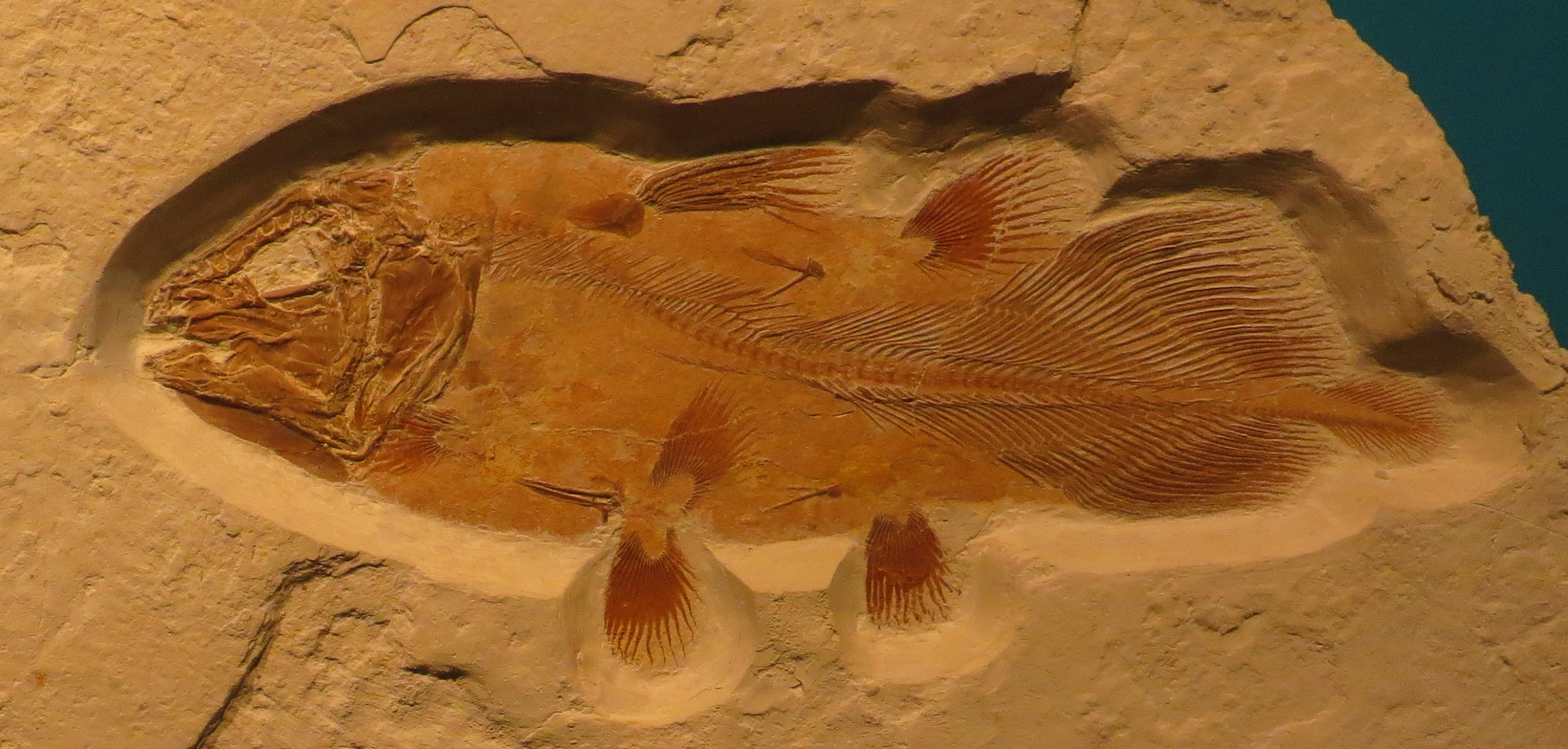
Coelacanths were, until 1938, a purely palaeontological subject. They were known from fossils, and the fossil record for them was extensive and old. The earliest coelacanth fossils date back to the Devonian period, roughly 420 million years ago, and at their peak the group was large and widespread, comprising around 90 recognized species distributed worldwide in both marine and fresh water.
And then, in the rock record, they stop. Coelacanth fossils disappear around the end of the Cretaceous, the same extinction event that ended the dinosaurs, commonly placed at about 65 million years ago, though some accounts put the last fossils closer to 70 million. Either way the conclusion was straightforward and, by the standards of the evidence, entirely reasonable: the group had died out with the dinosaurs and existed now only as stone.
The coelacanths mattered to science beyond their age, because of what they are. They are lobe-finned fish, with paired fins supported on fleshy, limb-like stalks rather than attached flat to the body. That structure is of enormous interest, since the transition from fins to legs is one of the pivotal events in the history of life, and lobe-finned fish sit near that transition. A living example was not something anyone expected to examine.
Like our content? Follow us for more.
Twelve Weeks in December
Courtenay-Latimer had taken over the East London Museum seven years earlier, at the age of 24, and had no formal scientific training. She was a self-taught naturalist with a good eye, which turned out to be the qualification that mattered.
The fish had come up in the nets of a trawler working near the mouth of the Chalumna River, west of East London, during a cold-water upwelling, the kind of condition that often brings unusual specimens to the surface. The captain, who knew her standing request, set it aside.
She could not identify it, but she recognized that its scales, head plates, and fin structure reminded her of ancient specimens. So she did the sensible thing and wrote to the person best placed to know: J.L.B. Smith, a chemistry lecturer and ichthyologist at Rhodes University. She included a sketch.
Then came the awkward part. Smith was away over the holidays, and her letter sat unread. The fish, meanwhile, was decomposing in a South African summer, and she had no facility capable of preserving something that size. The soft internal anatomy, the part that would have been of the greatest scientific value, could not be saved and was discarded. She had the skin and skeleton mounted by a taxidermist, which preserved the fish’s identity but lost its organs.
Smith read her letter on 3 January and reacted with something close to panic. His reply included a line that captures the moment precisely: from her drawing and description, he wrote, the fish resembled forms that had been extinct for many a long year. When he finally saw the mounted specimen a month later, even with the fleshy parts gone, he knew he was right.
He announced the discovery in a letter to the journal Nature on 18 March 1939, and named the fish Latimeria chalumnae, after Courtenay-Latimer and the river near which it was caught. The story went around the world.
Fourteen Years of Waiting
One specimen, however remarkable, is a thin foundation. Smith wanted a second, ideally with its organs intact, and he spent the following years searching for one with a persistence that verged on obsession. He distributed leaflets around the western Indian Ocean offering a substantial reward, the equivalent of a serious sum at the time, to anyone who could produce another.
For fourteen years, nothing. Then, in 1952, two fishermen in the Comoro Islands caught a coelacanth while fishing for other species, and this time Smith was able to get there and see it. It emerged that the fish was not unknown to local fishermen at all; they caught them occasionally and had their own name for them. What was a stunning discovery to European science was, to the people living above the coelacanth’s habitat, an ordinary if unremarkable catch.
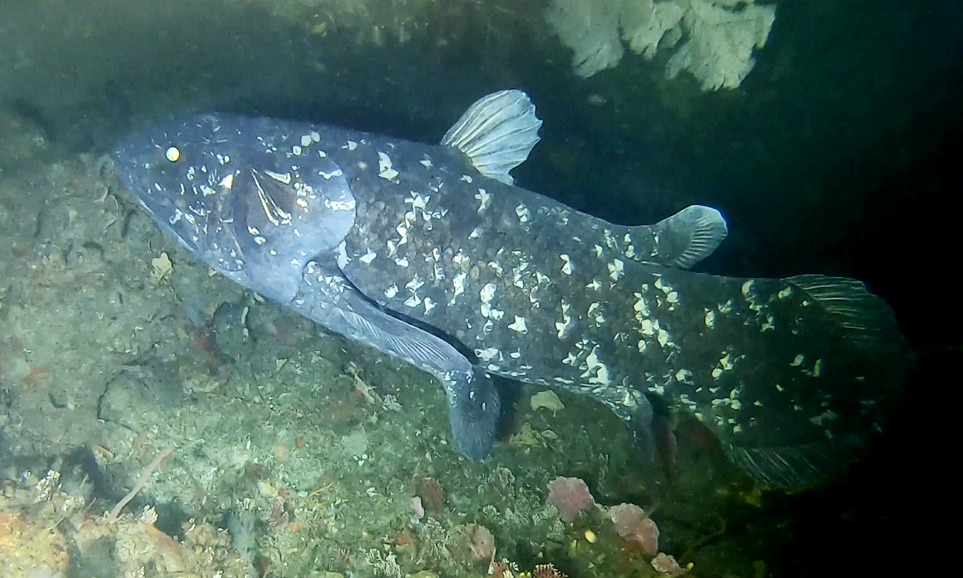
More specimens followed in subsequent years. Researchers established that coelacanths can reach around six feet in length and weigh over 200 pounds, with two dorsal fins, a distinctive three-lobed tail, and heavy armoured scales. In time, divers observed them alive in their deep habitat, and a second living species was identified in 1997 and 1998 off northern Sulawesi in Indonesia, nearly 6,000 miles east of the Comoros.
What “Living Fossil” Actually Means
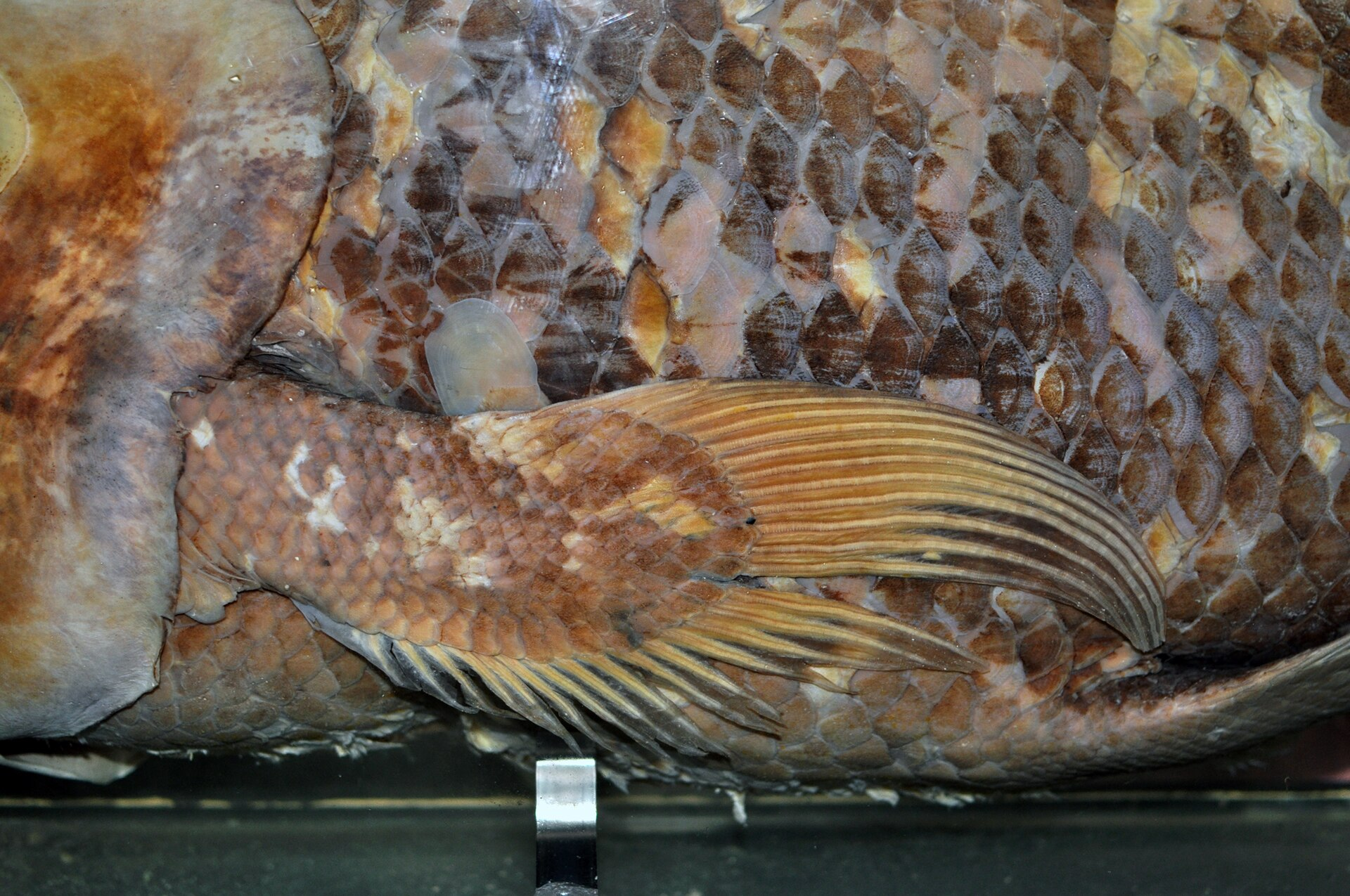
The coelacanth is routinely described as a living fossil, and the phrase is worth handling carefully because it invites a misunderstanding.
It does not mean that the fish swimming off the Comoros today is identical to one from the Cretaceous. The living genus, Latimeria, is distinct from the fossil forms, and the lineage has continued to evolve throughout the intervening time, as all lineages do. What is remarkable is the persistence of the overall body plan and the survival of a group thought entirely gone, not some magical suspension of evolution.
The discovery also fed directly into a live scientific argument about the origin of land animals. Because coelacanths have lobed fins, some early commentary speculated that they might have used them to move about out of water, effectively a fish on the verge of becoming an amphibian. Observation of living coelacanths ruled that out; they are deep-water fish that use those fins for manoeuvring in the water, not for walking. The lobe-finned lineage remains central to understanding how vertebrates eventually came ashore, but the coelacanth itself is not a fish that walks.
The Curator Who Looked Twice
Marjorie Courtenay-Latimer never made another discovery on that scale, and by her own account did not feel she needed to. She had a long and well-regarded career in museum curation and natural history, received an honorary doctorate from Rhodes University, appeared alongside Smith on a South African stamp, retired in the 1970s, and lived until 2004, dying at 97.
Her name is permanently attached to the animal, in the genus Latimeria and in a landing named for her in her home town. There is also a plaque in East London marking the capture. That is a substantial legacy for what amounted to a few weeks of work.
But the part worth dwelling on is not the honours. It is what she actually did, which was to look at a heap of discarded fish, notice that one of them was wrong, and refuse to let it go. Smith had the expertise to identify the specimen, and without him it would have gone nowhere. Without her, though, it would have been thrown back or left to rot on the dock, and the fish would have stayed extinct in the scientific literature for however many more decades it took for the next one to surface in front of the right person. Recognizing that something does not belong is the part of the work that no amount of expertise can do on your behalf.
What Else Is Out There
The coelacanth has become the standard reference point for a particular kind of hope in biology: the possibility that a species written off as gone is steadily persisting somewhere unexamined. Such rediscoveries do happen, and researchers who work on them borrow the coelacanth’s name as shorthand.
It is worth being sober about this. The coelacanth survived unnoticed because it lives in deep water off remote coastlines, in a habitat that mid-twentieth-century science had barely sampled. Most species declared extinct are declared so for good reason, and the ocean is far better surveyed now than it was in 1938. Rediscovery is the exception rather than a reasonable expectation.
Both living coelacanth species are now of significant conservation concern, which adds a note of irony to the whole story: a fish famous for having outlasted the dinosaurs, found by accident, now depends on deliberate protection.
Still, the episode leaves a truly useful lesson about the limits of confidence. For decades, the statement that coelacanths were extinct was not a guess. It was a reasonable inference from good evidence, held by qualified people, and it was wrong, and it was corrected by a curator with no formal training who went down to the docks two days before Christmas and paid attention.
Like our content? Follow us for more.


