

Collateral is usually something inert. A bank takes a claim on a house, a vehicle, or a piece of machinery, and its job is simply to make sure the asset still exists if the loan is not repaid. The asset sits there. Nobody has to look after it.
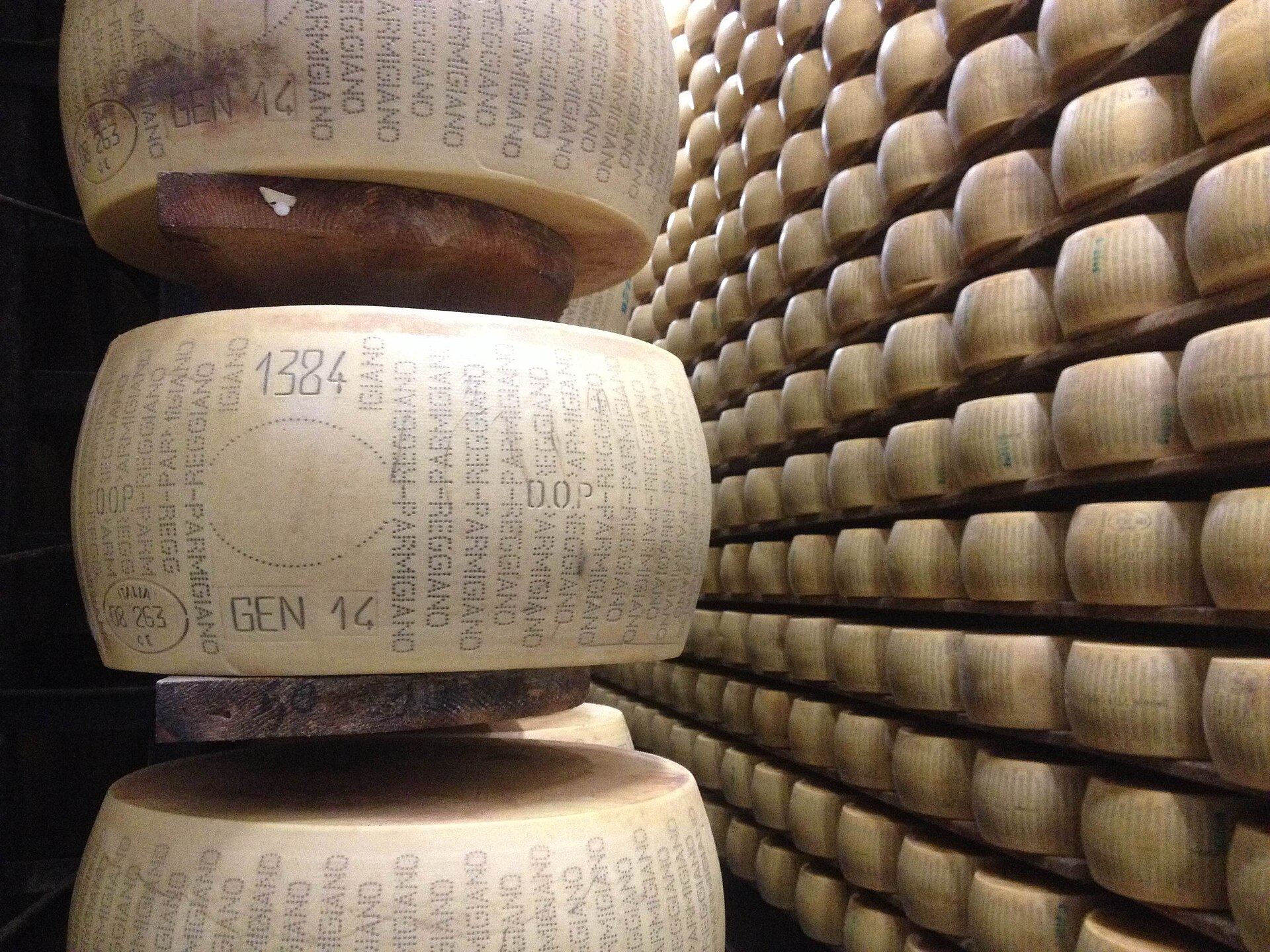
In the Emilia-Romagna region of northern Italy, one regional bank does something substantially stranger. It lends money to cheesemakers and takes wheels of Parmigiano Reggiano as security. Then it puts them in a vault, and for the next one to three years it stores them, cleans them, rotates them, and has experts inspect them, because a wheel of Parmigiano Reggiano is not a static asset. It is a product mid-process, and if it is not cared for correctly it will not be worth what the loan assumed.
The result is a bank vault that smells of aged milk rather than money, holding shelf after shelf of cheese instead of gold bars. Here is why it makes complete financial sense.
The Problem With Making Parmigiano Reggiano
To understand the banking, you have to understand the cash flow, and the cash flow problem is severe.
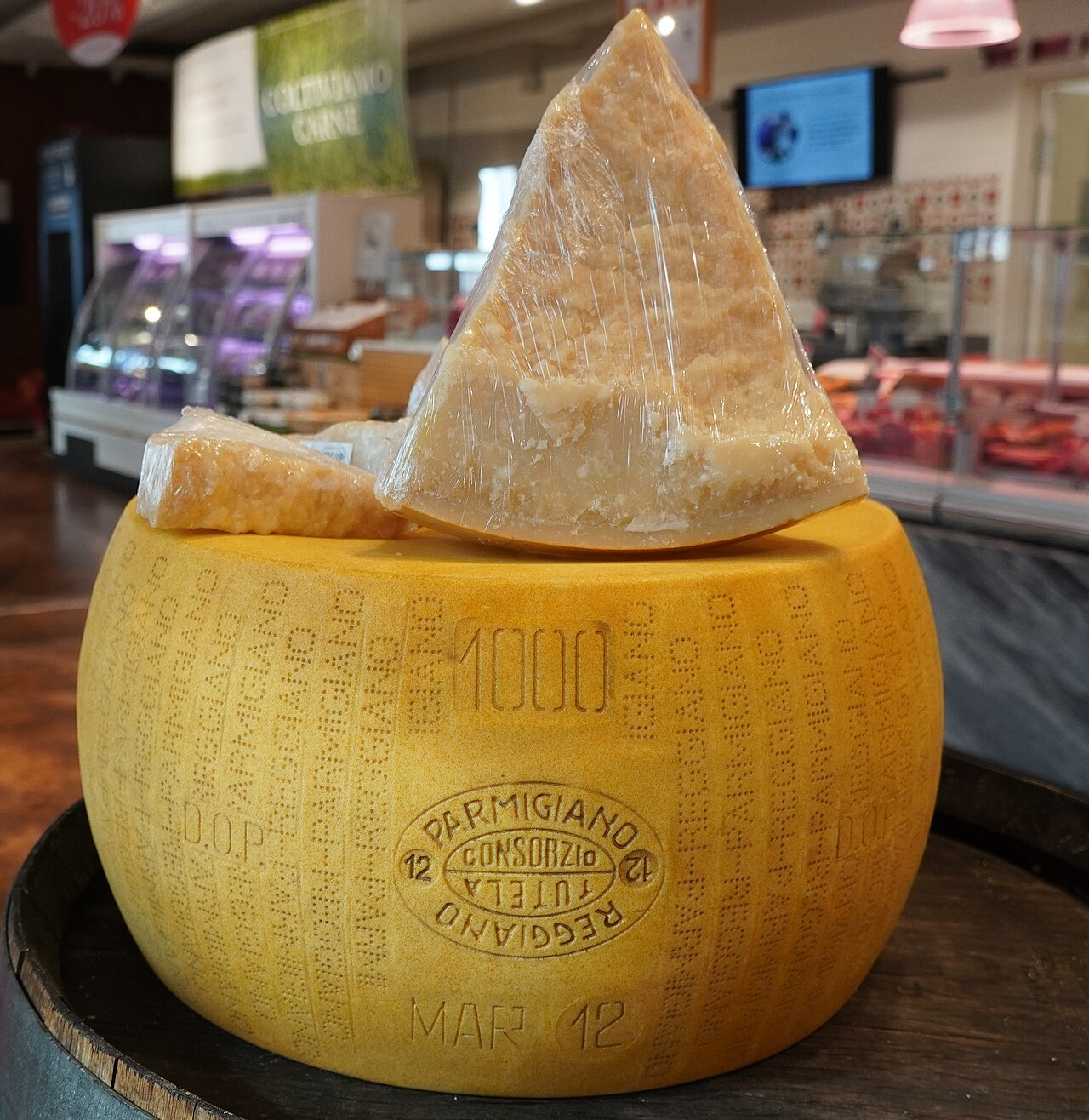
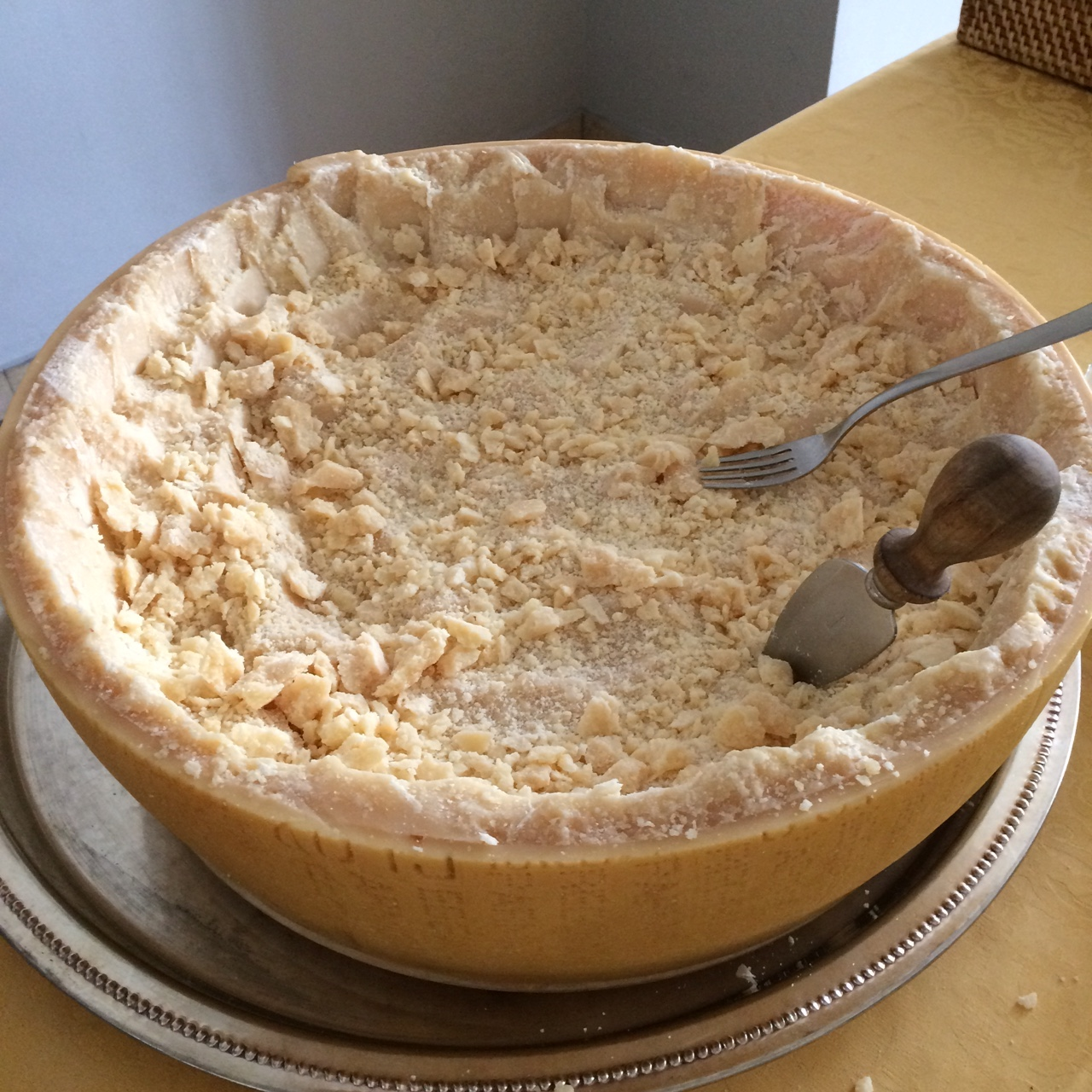
Parmigiano Reggiano is tightly regulated. It can only be produced in a small designated area, covering the provinces of Parma, Reggio Emilia, Modena, Bologna and Mantua, from three ingredients: milk, salt, and rennet. Production rules govern the cows’ diet, how fresh the milk must be, and how the cheese is made. Similar hard cheeses produced elsewhere are not the same product, whatever they are called.
It also takes an enormous amount of milk. Roughly 140 gallons goes into a single wheel, which finishes at somewhere between about 80 and 100 pounds.
Then comes the wait. By law the cheese must age at least twelve months before it can be sold, and much of it ages far longer: twenty-four months, thirty-six, sometimes forty. Throughout that period the wheels need climate-controlled storage and regular attention, being cleaned and turned on a recurring schedule.
Now consider the producer’s position. Dairy farmers supplying the milk must be paid every thirty days. Staff, feed, and energy costs accumulate daily. But the revenue from a wheel does not arrive for at least a year and often much longer. A producer making thousands of wheels annually is therefore sitting on an enormous and steadily growing asset that generates no cash whatsoever, while facing continuous bills.
That is a structural financing gap, not a sign of a badly run business. Without a solution, producers would face constant pressure to shorten aging to bring revenue forward, which would mean worse cheese.
Like our content? Follow us for more.
How the Cheese Loan Works
The arrangement is straightforward once the problem is clear. A producer delivers wheels of cheese to the bank, which holds them as collateral and advances a loan against their assessed value. Reported figures put the advance in the region of 60 to 80 percent of the wheels’ value, at low interest.
The producer gets cash immediately for a product that will not sell for years. The bank gets security in a commodity with a well-established market and a predictable maturation curve.
Then comes the part that makes this unusual. The bank’s warehousing subsidiary takes physical custody and provides the climate-controlled storage and the ongoing care the cheese requires for the duration of the loan. That means the producer avoids building and running an aging facility of their own, which is a substantial capital and operating cost.
So the bank is not merely holding security. It is absorbing an expensive stage of the producer’s operations, which is why this has been the subject of a Harvard Business School case study. The bank has effectively integrated itself into the supply chain, and in doing so has acquired deep expertise in a risky industry, which improves its own lending decisions.
Inside the Vault
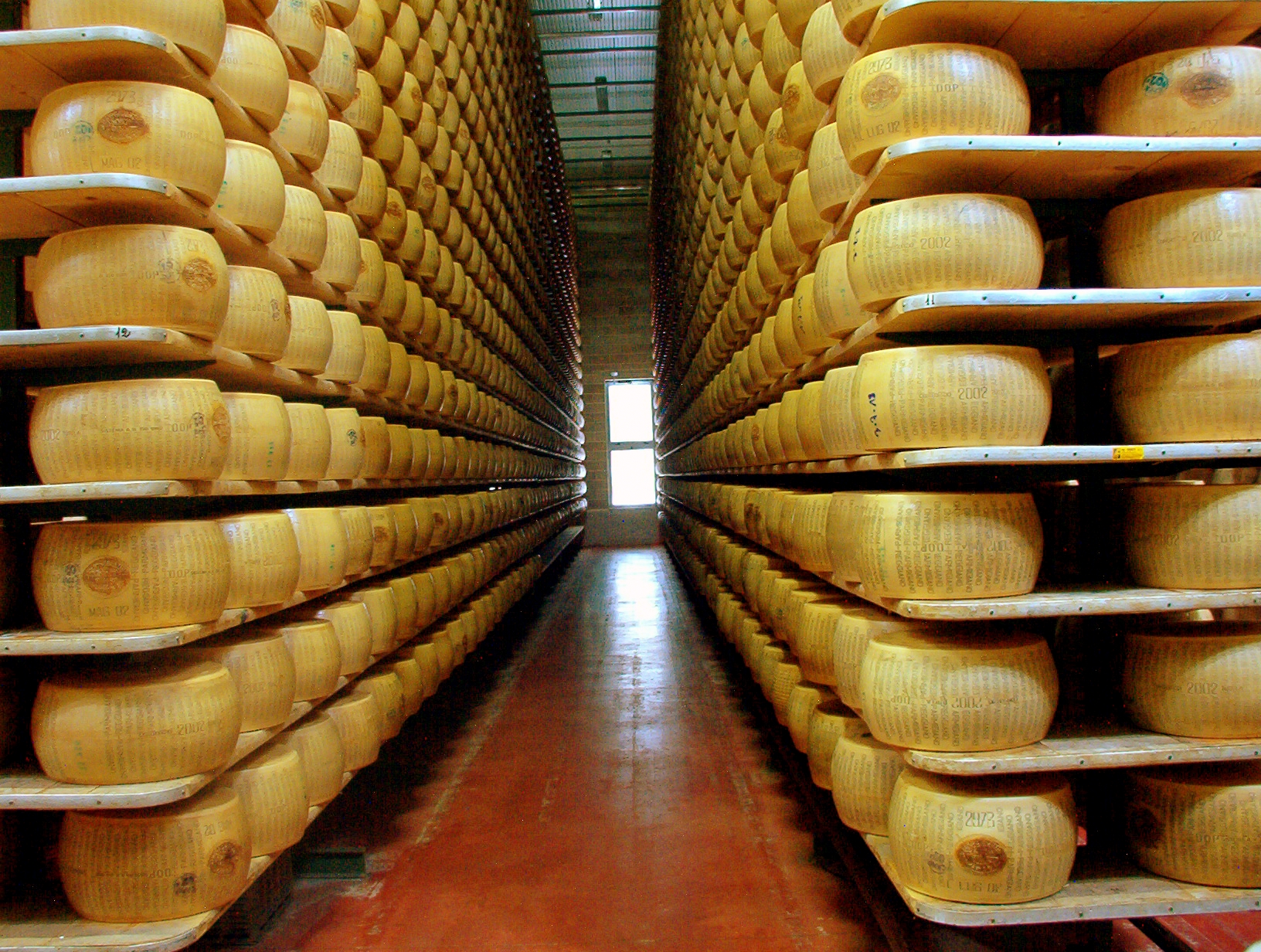
The scale is difficult to picture. Reported holdings vary across sources and over time, ranging from figures around 300,000 wheels up to 430,000, 440,000, and in more recent reporting around 500,000 wheels held at any one time, with the warehouse operation handling millions of wheels annually. Values reported run from roughly 130 million euros in older accounts to figures in the region of 190 to 325 million euros more recently.
The wheels are stacked on shelving reaching some ten meters high, in a secure, climate-controlled facility. Staff clean, rotate, and monitor them continuously. The environment has to hold steady, because temperature and humidity directly determine how the cheese develops.
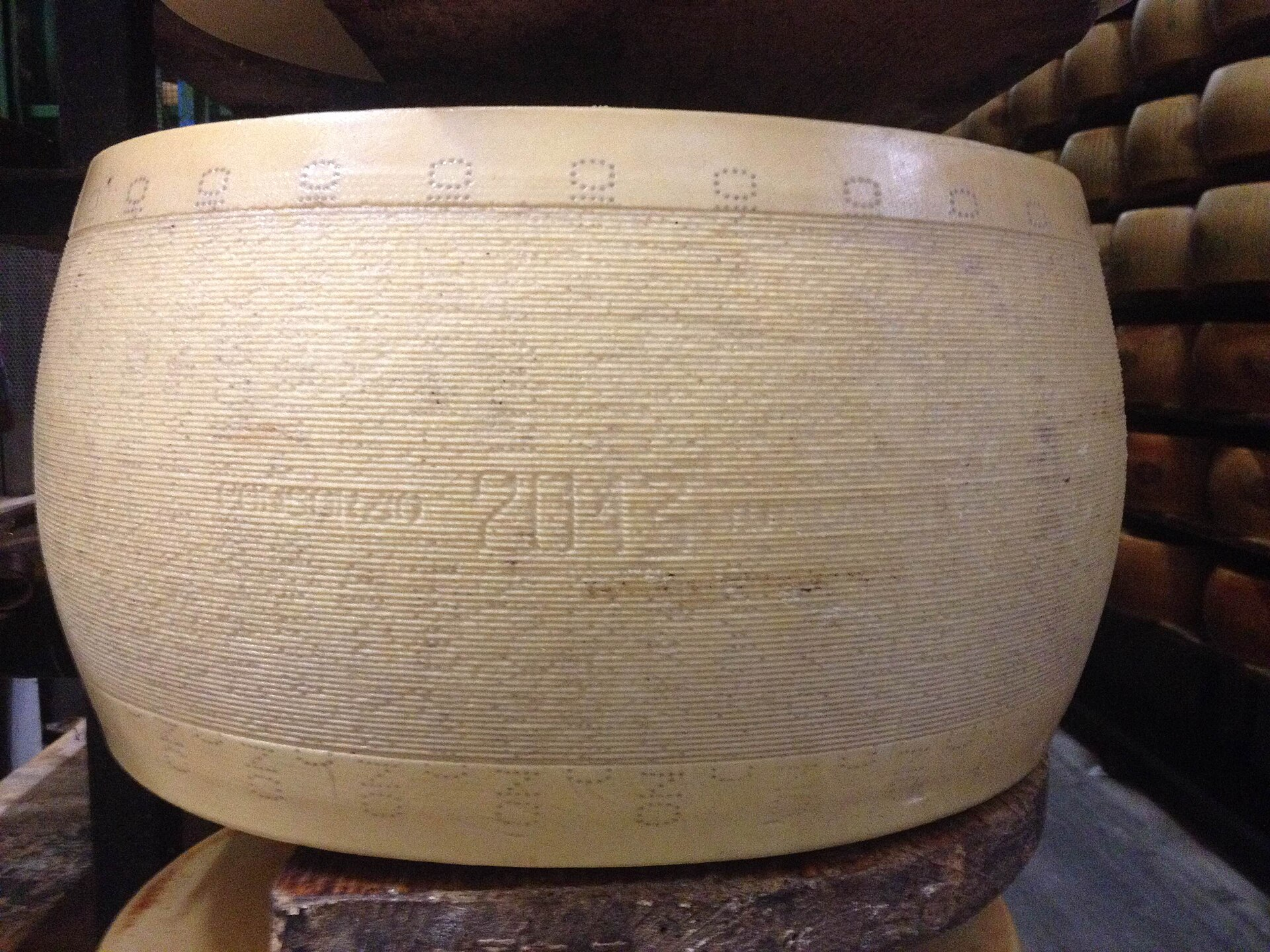
There is a quality-control ritual at the twelve-month mark that is truly remarkable. An inspector from the producers’ consortium arrives with a small hammer and taps each wheel, listening to the sound it returns. A clean, even ring indicates dense, uniform paste inside. A dull or uneven note reveals an air pocket or internal fissure. This is done by ear, wheel by wheel, and it detects flaws that would otherwise require cutting the cheese open. Millions of wheels are assessed this way every year.
Wheels that pass are branded with a fire iron, the name impressed into the rind along with the production date and the dairy’s number. Wheels that fail are stripped of their branding and sold as generic cheese, at a substantially lower price.
Why Cheese Makes Decent Collateral
Set aside the novelty and the economics are sound.
The product is standardized and certified, with protected designation of origin status and consortium inspection, so its quality is externally verified rather than taken on trust. It has a deep and stable market with well-understood pricing. It is durable on a multi-year horizon, unlike most food. It is physically bulky and heavy, at roughly 80 to 100 pounds a wheel, which makes it awkward to remove steadily. And crucially, it appreciates during the loan term: a wheel is worth more at thirty months than at twelve, so the collateral strengthens as the loan runs.
Compare that to lending against a crop that has not been harvested, or livestock, or almost any other agricultural asset, and cheese looks conservative rather than eccentric.
The risks are real but manageable. Cheese prices move, and a market downturn reduces collateral value. Storage failure would be catastrophic, which is why the facility is monitored so closely. And the bank is heavily concentrated in a single regional product, which is precisely the kind of exposure banks are usually advised against, mitigated here by expertise built over decades.
Not the Only Edible Collateral
Lending against a maturing food product sounds eccentric, but the underlying logic appears wherever a valuable good takes years to become sellable.
The clearest parallel is in wine and spirits. Producers of whisky, cognac and barrel-aged wine face the same structural problem: costs are incurred now, the product improves in storage, and revenue arrives years later. Financing arrangements built around maturing stock in bonded warehouses are long established in those industries, and the resemblance to the cheese arrangement is close.
Warehouse receipt financing, in which a borrower deposits a commodity with an approved storage operator and borrows against a certificate for it, is a recognized instrument used worldwide for grain, coffee, cocoa and metals. The Italian cheese vault is a specialized, unusually hands-on version of a mechanism that is not exotic at all.
What makes the Parmigiano Reggiano case distinctive is the degree of involvement. Grain in a silo needs to be kept dry. A wheel of Parmigiano Reggiano needs to be turned, cleaned, monitored and inspected on a schedule for up to three years, and it must be graded by an external authority before it can be sold at full value. The bank did not simply accept an unusual asset; it built the operational capability to look after it.
An Arrangement Worth Noticing
The reason this story travels is that it sounds absurd and turns out to be sensible, which is a satisfying combination.
But there is a real point inside it about what a bank can be. This one did not offer a generic loan product; it looked at the specific reason its local businesses were short of cash, and built something around that. The bank in question has described its approach in exactly those terms: it supports producers of a product that is typical and unique to its area.
The cheese also functions as a reminder that money is a claim on real things. A vault of Parmigiano Reggiano is, in the most literal sense, stored value: hundreds of thousands of hours of dairy farming and cheesemaking, sitting on shelves, slowly becoming more valuable while a bank employee turns each wheel and someone taps them with a hammer to check they are sound.
The next time you grate a little over a plate of pasta, it is worth knowing that somewhere in Emilia-Romagna there is a very good chance a wheel like it once served as security on a business loan, and was looked after by a bank.
Like our content? Follow us for more.
