There is a limit to how loud a sound can be, and it is lower than most people assume.
Sound travels as alternating regions of higher and lower air pressure. The compressions can keep growing, but the rarefactions cannot: there is only so much pressure to remove before you reach a vacuum. That ceiling sits at roughly 194 decibels at sea level. Beyond it, the disturbance stops behaving like a sound wave and starts behaving like a shock wave — a moving wall of pressure.
The eruption of Krakatoa in 1883 is generally described as around 310 decibels, far past that limit. Which is a way of saying that near the source it was not really a sound at all.
What makes this event scientifically interesting rather than merely enormous is what happened next. The pressure disturbance did not simply fade. It circled the Earth, repeatedly, and a network of instruments that happened to exist by 1883 recorded the whole thing. Here is what those records show.
What Was Heard, and Where
The island sat in the Sunda Strait between Java and Sumatra. The main explosion occurred in the morning of 27 August.
The reports of what people heard, at what distance, are the striking part.
At around 1,300 miles, in the Bay of Bengal, residents reported a series of blasts resembling artillery fire.
At roughly 3,000 miles, on the island of Rodrigues near Mauritius in the Indian Ocean, a British colonial officer recorded hearing, over the night of the 26th and 27th, what he described as the distant roar of heavy guns coming from the eastward. He had no idea what it was and logged it as a naval matter.
Sound travels at roughly 767 miles per hour, which means that report came in about four hours after the event, from a person who could not have known there was anything to connect it to.
Estimates of how much of the Earth’s surface lay within audible range vary between sources, with figures around 8 to 10 percent commonly cited. Closer in, the pressure was sufficient to rupture the eardrums of sailors around 40 miles away.
To put the distance in a familiar frame: it is comparable to someone in New York hearing an eruption in Washington State.
Like our content? Follow us for more.
The Instruments That Caught It
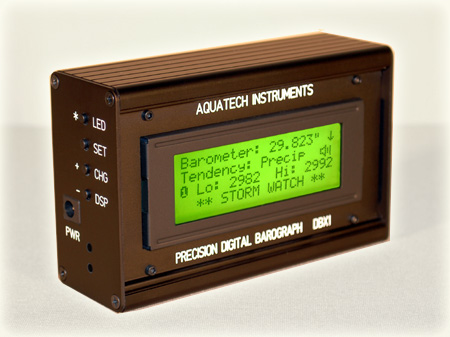
By 1883, weather stations in scores of cities around the world were recording atmospheric pressure continuously, using barographs that drew a line on a rotating drum.
None of them was built to detect volcanoes. They existed for weather forecasting. But a pressure wave is a pressure wave, and when the disturbance from Krakatoa swept past a station, the pen jumped.
Roughly six hours and forty-seven minutes after the explosion, a spike appeared on instruments in Calcutta. Then further stations, in sequence, as the wave moved outward — London, Paris, Washington, New York, Tokyo.
And then, crucially, it came back. On a flat surface a wave dissipates at the edges. On a sphere there is no edge, so the wave continued around the planet, converged on the point opposite Krakatoa, and headed back toward its origin.
Barographs recorded the successive passes. Some instruments logged four; some recorded seven, depending on sensitivity and location and on how the reflected and overlapping returns were counted. At least three full circumnavigations are well documented.
The wave remained measurable for approximately five days. As one account puts it, the atmosphere was ringing like a bell — imperceptible to people, but plainly visible to instruments.
The atmospheric effects outlasted the pressure wave by years, and they were noticed by people who had no idea what they were looking at.
Fine ash and sulphur compounds were injected high enough into the atmosphere to circulate globally rather than settle out. That material scattered sunlight in unusual ways, and for a period afterwards observers across the world recorded sunsets of extraordinary and unfamiliar colour.
Fire brigades in some places were called out to what people took to be distant blazes on the horizon. Newspapers ran letters from readers describing skies they had no vocabulary for.
There were measurable consequences too. The suspended material reflected some sunlight back to space, producing a small global temperature drop over the following years, along with disrupted weather patterns.
The optical effects also appear in art and in written accounts from the period, and researchers have since worked backwards from paintings and diaries to reconstruct atmospheric conditions.
It is an unusual case of a single event leaving traces in three separate archives — instrument readings, written observation and painted skies — which is part of why it remains so thoroughly documented.
The Report That Assembled It
What turns this from an anecdote into science is that somebody collected the evidence.
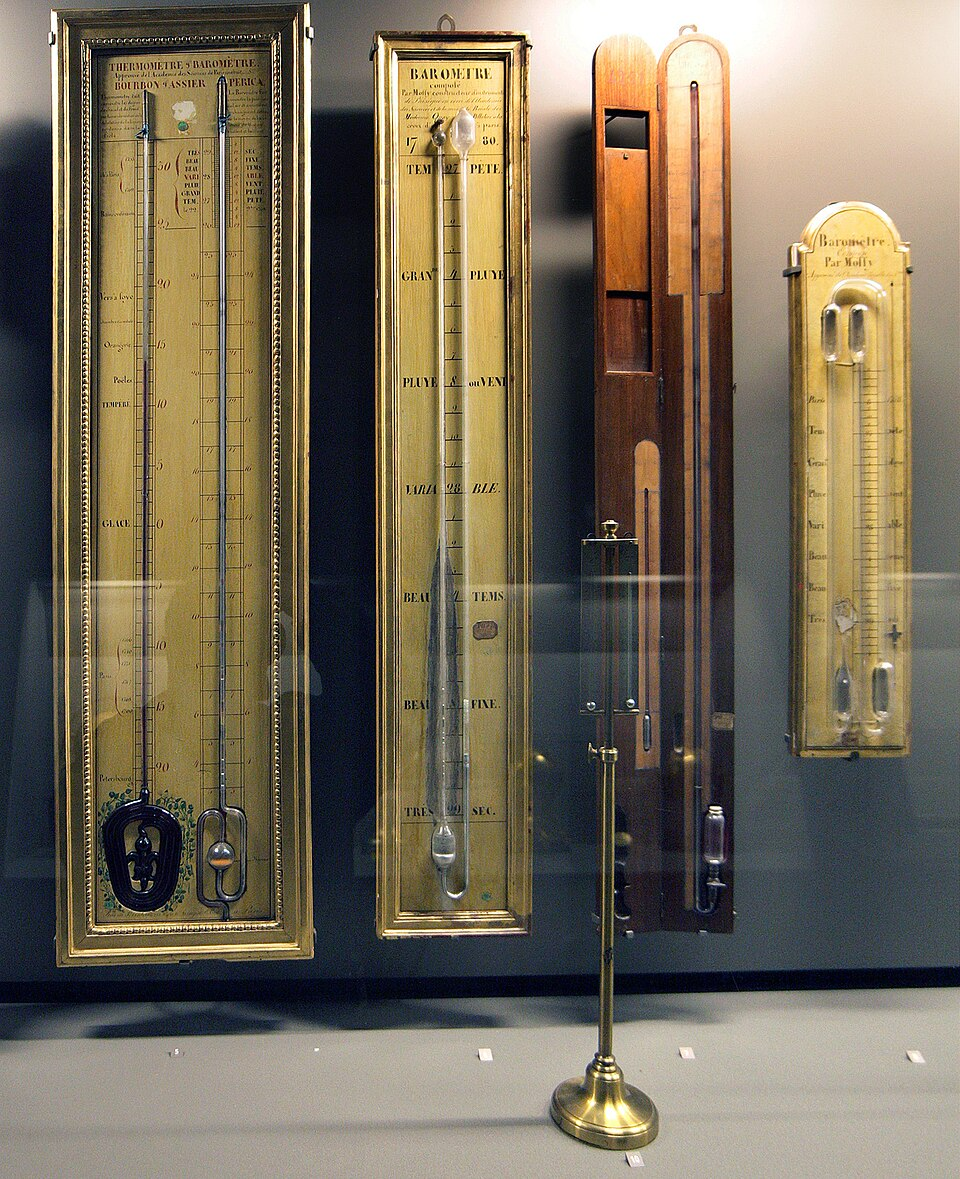
The Royal Society in London commissioned a comprehensive investigation, published in 1888, gathering barograph readings, eyewitness reports, ships’ logs and observations from around the world into a single account.
That report is the reason the event is so precisely documented. Individual stations recorded a pressure anomaly; the report established that they were all recording the same one, and reconstructed its passage across the globe.
It is worth appreciating what that required in the 1880s. No telegraphic network was collecting this automatically. Someone had to write to observatories, harbour masters and colonial officials, gather paper traces, align timings across time zones that had only recently been standardised, and work out that a note about heavy guns near Mauritius belonged in the same file as a barometer twitch in Berlin.
Then and Since
A note on naming: the island is more properly Krakatau, and the spelling with an O became fixed through a misprint in reporting after 1883.
The record has been challenged more recently, and the comparison is instructive. The eruption of Hunga Tonga-Hunga Haʻapai in January 2022 also produced an atmospheric pressure wave that circled the Earth multiple times and was detected by barometers globally. Analysis published in Science compared the two events by the amplitude of the atmospheric waves they generated and found them broadly similar in scale.
On audibility, Hunga Tonga actually did better: confirmed reports of audible booms extended to roughly 10,000 kilometres, in Alaska, against Krakatoa’s clearly documented 4,800 kilometres to Rodrigues.
On peak acoustic energy at the source, Krakatoa appears to remain ahead.
So the honest position is that Krakatoa’s status as the loudest sound in recorded history is a reasonable claim rather than an unassailable one, and that a modern event has now been measured with instruments the 1883 investigators would have found miraculous.
The Human Part
Any account of this event has to acknowledge that the eruption caused enormous loss of life in the surrounding coastal region, principally through the waves it generated rather than through the explosion itself. Whole communities on the shores of the Sunda Strait were destroyed.
That is stated plainly and without further detail, because writing about the acoustics as though the event were a curiosity would be dishonest. The measurements exist because something catastrophic happened to a great many people.
The eruption also had effects far beyond the region. Ash reached high into the atmosphere and circulated globally, producing measurable cooling and unusually vivid skies worldwide for a period afterwards, which appear in paintings and written accounts from that period.
What a Pressure Wave Actually Is

It helps to be clear about what was travelling around the planet, because it was not sound in the way the word is normally used.
Sound is a disturbance moving through a medium as alternating compression and rarefaction. Your ear detects those pressure fluctuations and interprets them. The louder the sound, the greater the difference between the peaks and the troughs.
That works until the troughs reach zero. You cannot have less than no air, which sets a hard ceiling on how large the fluctuation can be, and therefore on how loud a real sound wave can be at a given atmospheric pressure.
Above that point the disturbance stops alternating symmetrically and becomes a shock front — a steep, one-sided jump in pressure moving outward, followed by a longer recovery. That is what ruptured eardrums forty miles out, and it is why describing the event in decibels is a convenient shorthand rather than a strictly correct measurement.
Further out, as the wave spread across an ever-larger area, the pressure difference fell until it behaved like ordinary sound again — a distant boom at 3,000 miles — and then fell further until it was inaudible but still measurable.
That final stage, inaudible but measurable, is what the barographs recorded. The atmosphere was still moving; there was simply nobody who could hear it.
Why It Still Matters
The scientific legacy is larger than the record itself.
The event demonstrated, in a way nothing previously had, that the atmosphere behaves as a single connected system. A disturbance in the Sunda Strait was measurable in London within a day and was still detectable there five days later. In 1883 that was a wholly new idea, arriving at a moment when global weather observation was just becoming possible.
It also established the value of a network. No single barograph reading meant anything. The picture existed only because dozens of instruments in dozens of countries were recording continuously and somebody thought to compare them, which is essentially how atmospheric science has worked ever since.
And it produced one of the more remarkable images in the history of measurement: a set of pen traces on paper drums in cities across the world, all recording the same invisible ripple, passing and returning and passing again, days after the island that produced it had largely ceased to exist.
Like our content? Follow us for more.