There is a tendency to think of agricultural history as a matter of which crops were grown, and the tools receive far less attention than the plants.
That gets the causation backwards in at least one significant case. The question of what can be grown somewhere depends first on whether the ground can be worked at all, and the ground that is most worth working is frequently the hardest to work.
Heavy clay soils hold water and nutrients well, which makes them productive. They are also dense, sticky when wet, hard when dry, and essentially impossible to cultivate with a tool that only scratches the surface.
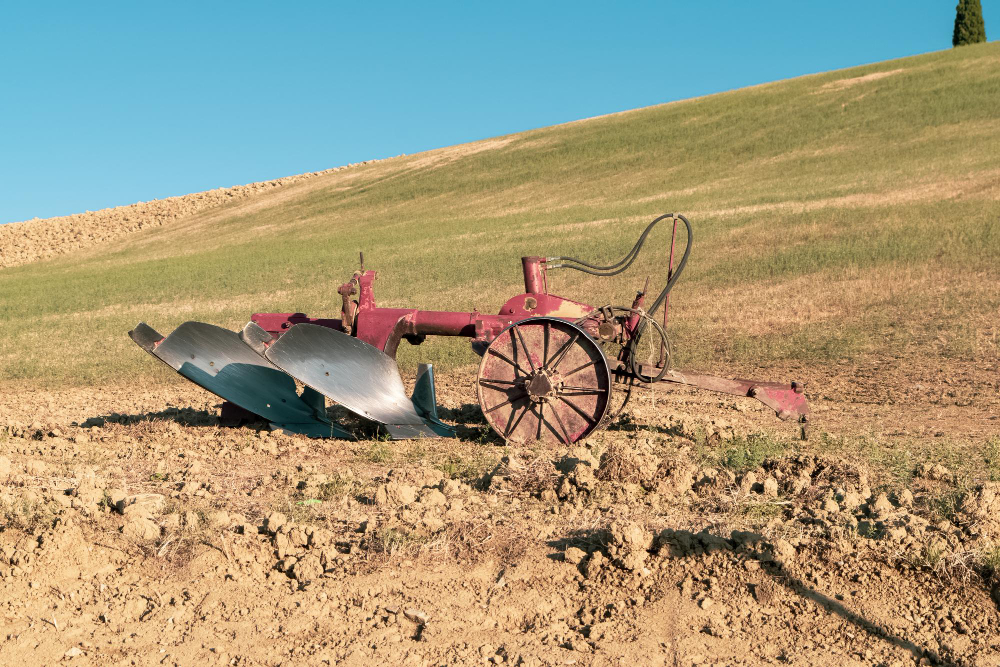
The device that solved that problem is a plough of a particular design, and the consequences of its adoption ran through settlement patterns, field shapes, social organisation and the balance between regions.
What the Earlier Tool Did
The original implement was a simple thing and it suited particular conditions well.
It consisted of a pointed piece of wood, sometimes tipped with metal, dragged through the soil to open a shallow furrow. It broke the surface, created a channel for seed, and disturbed weeds.
Critically, it did not turn the soil over. It parted it, and the soil fell back roughly where it had been.
On light, dry, thin soils that is exactly right. Turning such soil would expose it to wind and sun and accelerate the loss of what little moisture it holds, so a tool that opens a furrow without inverting anything is the correct approach.
Because it did not invert, fields were generally ploughed twice in perpendicular directions to break the ground adequately, which produced roughly square fields — a shape that follows directly from the tool.
Like our content? Follow us for more.
What the Heavy Plough Added
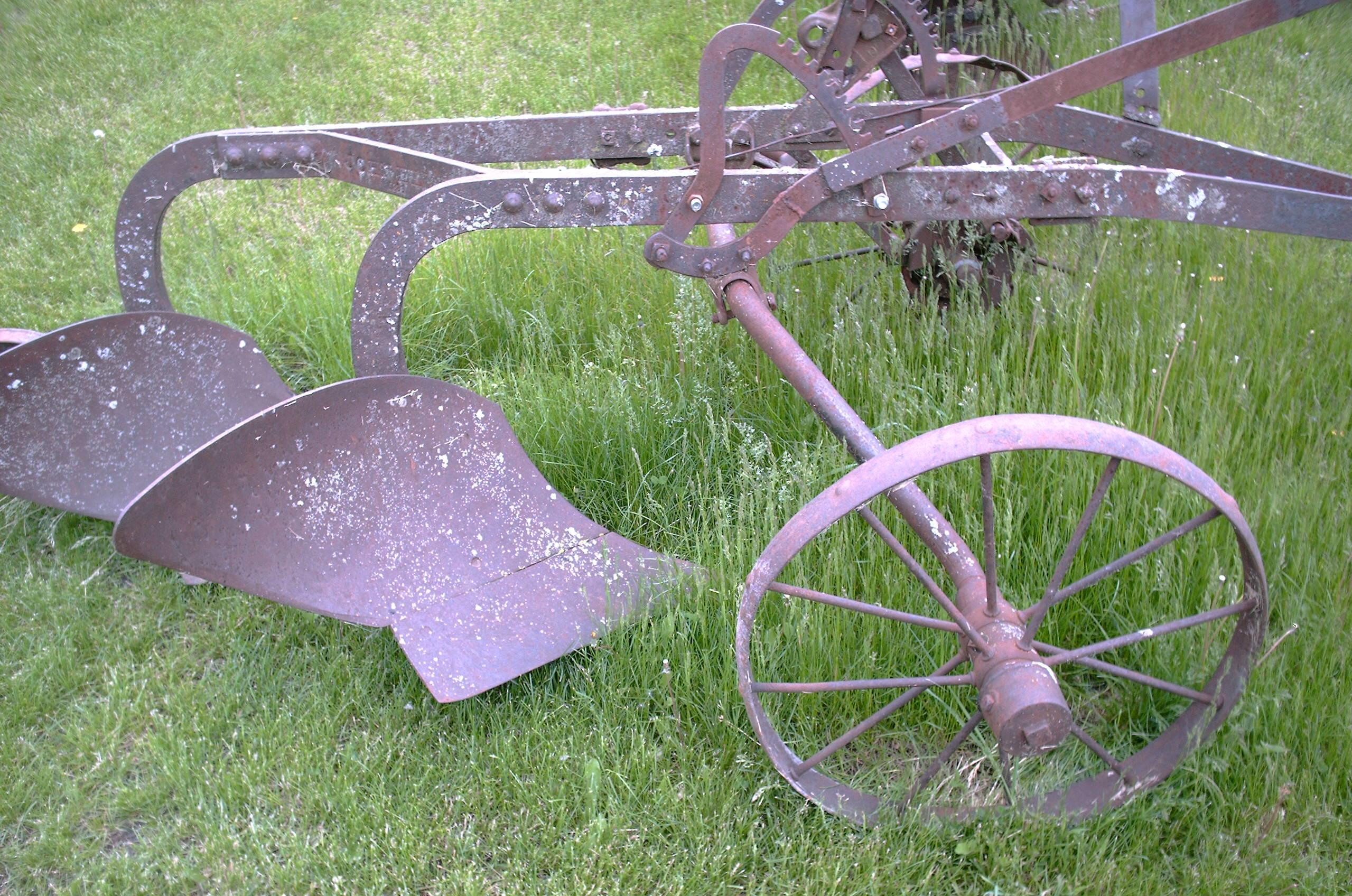
The later design has several components working together, and each does something specific.
A vertical blade cuts down through the soil ahead of everything else, slicing a clean edge rather than tearing.
A horizontal blade cuts the slice free underneath.
And a curved board behind lifts the freed slice, turns it and lays it over, inverted, beside the furrow.
That inversion is the whole point. It buries weeds and crop residue, brings nutrients from below to the surface, breaks up compacted ground thoroughly, and — crucially on wet ground — creates ridges and furrows that drain water off the growing surface.
A tool doing all of that requires far more force than one that merely scratches, which introduced its own set of consequences.
Why It Changed the Arrangement of Everything
The power requirement is where the social effects come from.
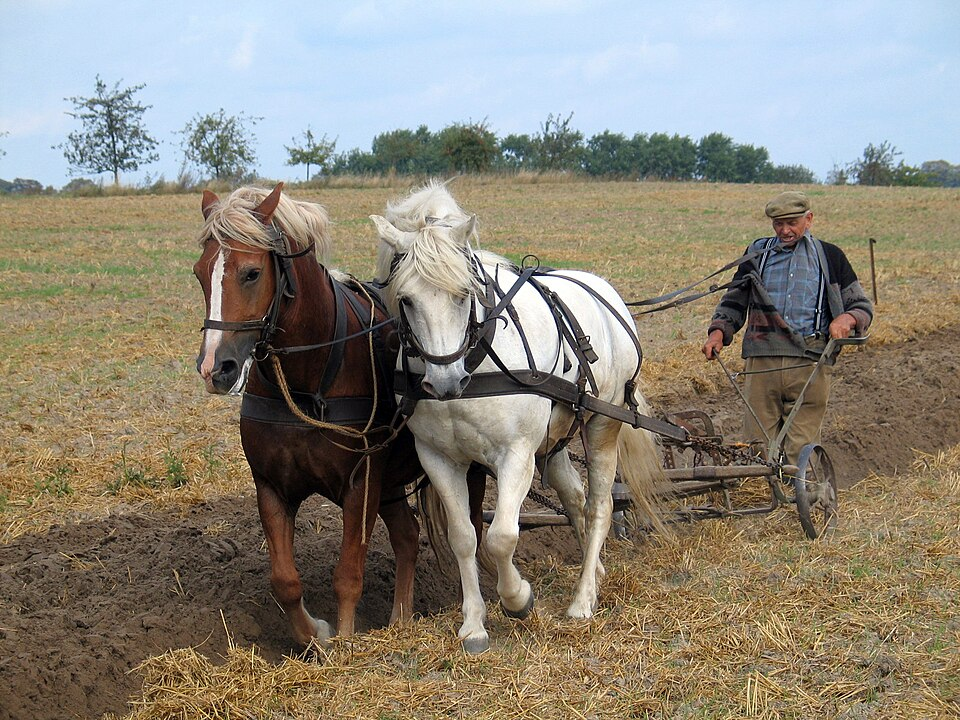
A heavy plough in heavy soil requires a substantial draught team, substantially more than a single household would typically own.
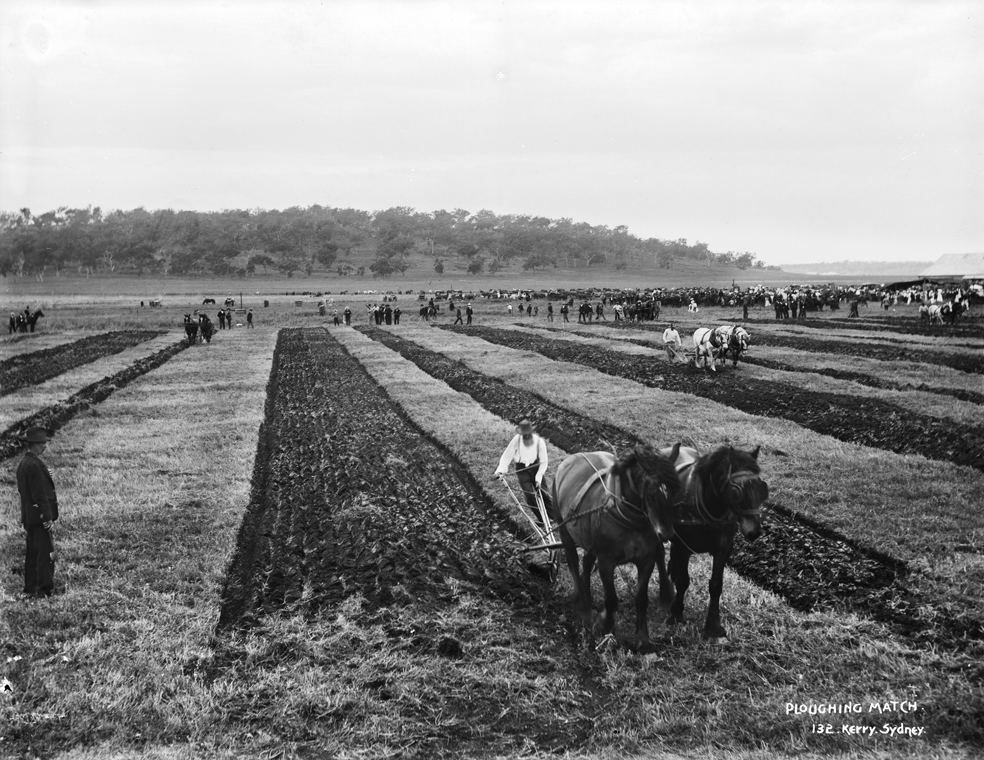
That created a practical requirement for households to combine their animals, which meant ploughing became a cooperative activity organised at the level of a community rather than a family.
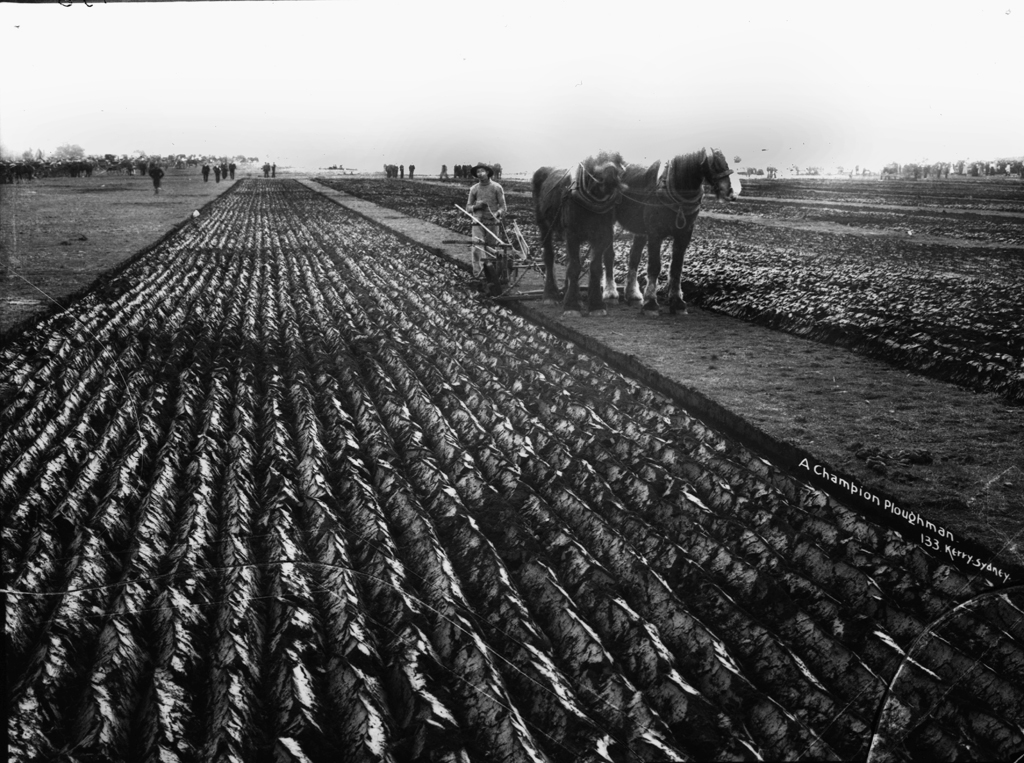
It also changed field shape. Turning a large team is slow and difficult, so ploughing is done in long runs with as few turns as possible — which produces long narrow strips rather than square fields.
Those strips are visible in the landscape in many regions as ridge and furrow patterns preserved under later pasture, and their dimensions reflect the practical limits of a team and a day’s work.
The combination of shared teams and strip fields is associated with particular systems of land organisation, in which holdings were distributed as scattered strips across common fields — an arrangement that makes sense given shared equipment and varied ground and looks inefficient without that context.
There is a labour consequence worth noting. Ploughing heavy ground is slow, and the area a team can turn in a day is limited – which means the amount of land a community could work was set by how many teams it had rather than by how much land was available.
That constraint shaped holding sizes and settlement density more directly than soil quality did.
What It Did to the Map
The regional consequences are the largest effect and the least obvious.
Regions with light soils had been agriculturally productive for a very long period, because those were the soils that could be worked with the available tools.
Regions with heavy clay soils were comparatively marginal — fertile ground that nobody could cultivate effectively.
Once the heavy plough was available, that inverted. The most productive agricultural ground became ground that had previously been difficult, and the regions containing it gained substantially in population, surplus and consequently in economic weight.
That shift is one factor among several in the long-term movement of economic activity within Europe, and it should be stated as a factor rather than as the cause — agricultural change interacts with climate, trade, political organisation and much else, and single-cause accounts of large historical shifts are generally wrong.
What can be said with reasonable confidence is that the availability of a tool changed which land was worth occupying, and that land use follows tool capability more closely than is usually acknowledged.
There is a further consequence of ridge and furrow worth mentioning. The ridges raise the crop above the wettest ground and the furrows carry water away, which means the field surface itself is a drainage system built by the act of ploughing.
That is why the pattern persists so visibly in places where the land was later put down to grass and never ploughed again.
The Three-Field Arrangement
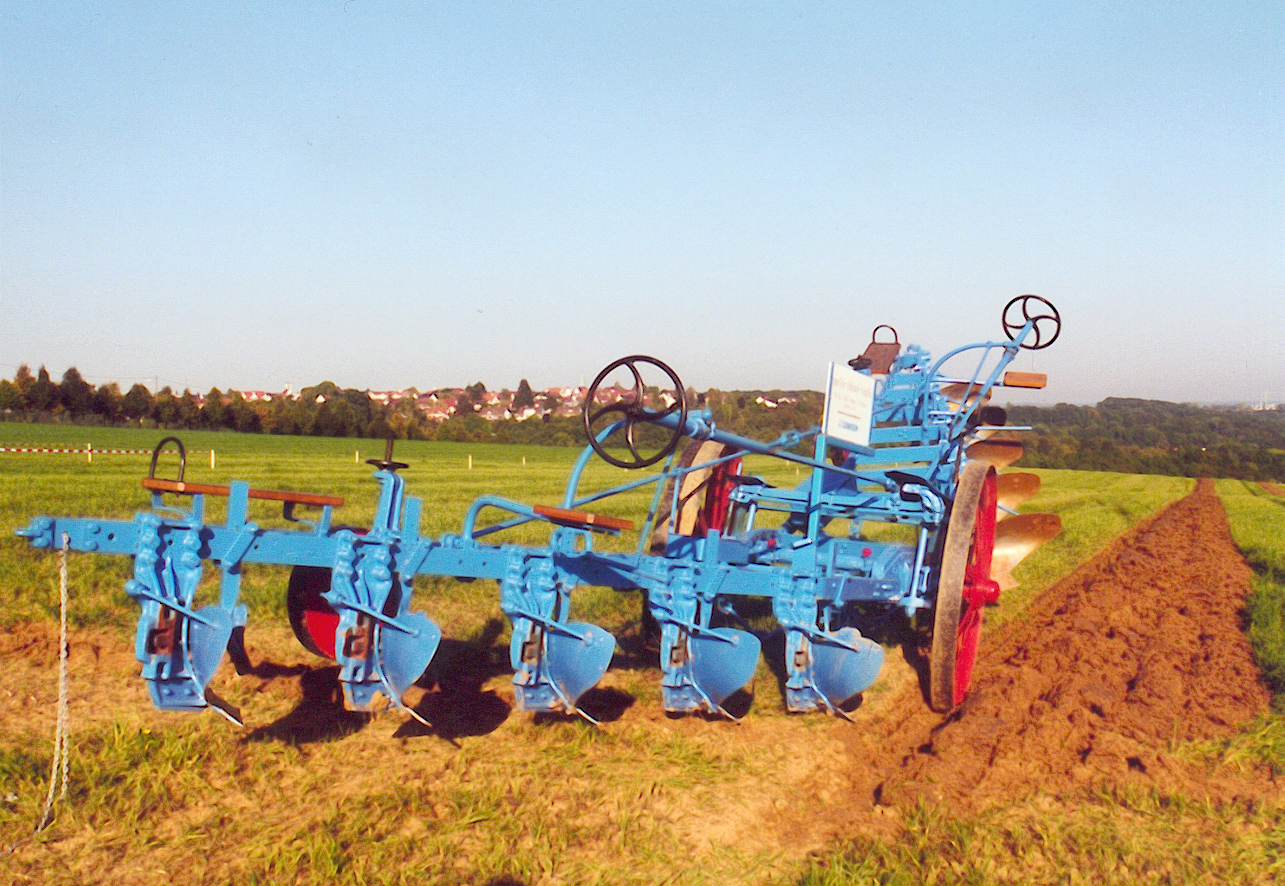
A related change belongs alongside it, because the two are frequently discussed together.
Dividing land into three parts, with one in autumn-sown crops, one in spring-sown crops and one left fallow, increases the proportion of land in production compared with a two-part division.
It also spreads labour across the year and reduces the risk of total failure, since the two sown portions face different conditions.
That system suits the heavy plough because it requires more ploughing overall, which is practical only where the equipment and the cooperative arrangements exist.
The two changes are consequently associated, and the combination produced a substantial increase in output per unit of land in the regions that adopted both.
What It Did to the Animals
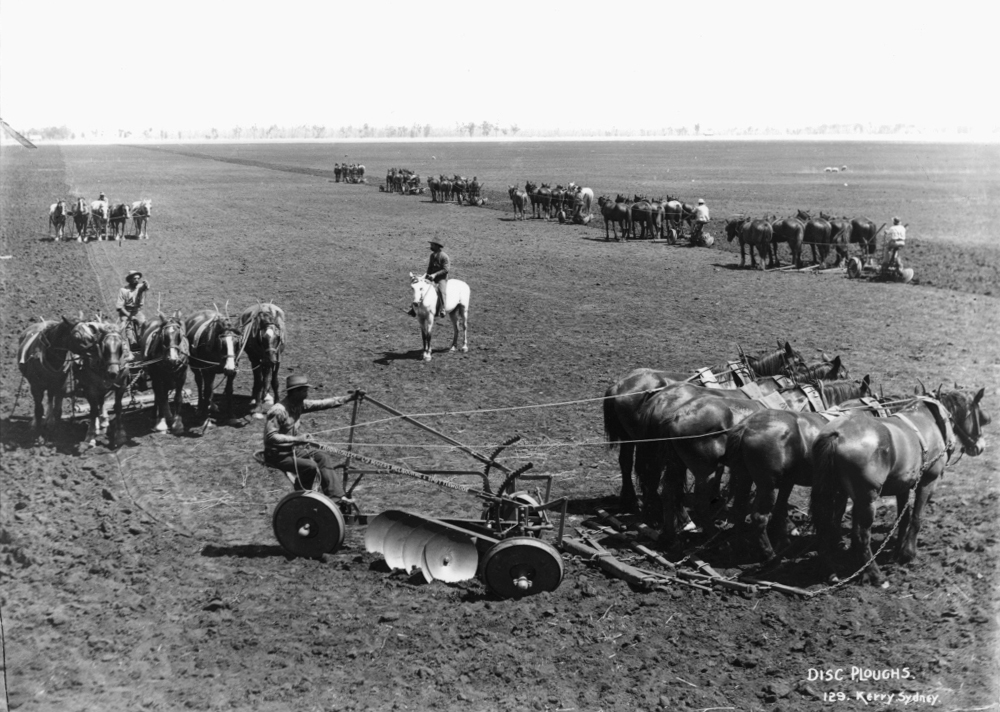
The draught requirement had consequences that ran in both directions, and the animal side is frequently left out.
Pulling a heavy plough through clay is demanding work, and the animals used for it had to be selected, bred and fed for that specific purpose — which means the tool shaped the livestock as much as the land.
The choice between different draught animals involved real trade-offs. Some are stronger and slower, tolerate poorer feed and are more durable; others are faster, require better feed and can be used for transport as well as ploughing.
That choice interacted with everything else. An animal requiring better feed needs land devoted to producing it, which only makes sense if the additional speed generates enough surplus to justify the diverted acreage.
Harness design mattered enormously and is easy to overlook. A harness bearing on the wrong part of an animal restricts its breathing and limits how much it can pull, and improvements in how the load was attached increased the effective power available without changing the animal at all.
That is a recurring pattern in pre-industrial technology. The dramatic-looking component is frequently not where the gain came from, and a change in how two existing things were connected can matter more than either of them.
What Is Overstated
Some caution belongs here because this subject attracts confident narratives.
The chronology is not as clean as summaries suggest. Adoption was gradual, uneven and regional, and both plough types remained in use simultaneously for long periods in different conditions.
The causal claims are frequently too strong. The plough is presented in some accounts as producing feudalism, urbanisation and the rise of northern Europe more or less directly, which compresses several centuries of interacting change into a single mechanism.
The design was not invented in one place at one time, and attributing it is difficult.
And light ploughs were not primitive. They were correct for their conditions, remained correct, and are still used where those conditions apply.
The defensible claim is narrower and still substantial: a tool that could invert heavy soil made a large category of fertile ground usable, and everything that followed from that was consequential.
Which is a reasonable way to think about technology generally. The interesting question is rarely what a device does, and usually what becomes possible that was not possible before — and in this case what became possible was farming the best ground there was.
Which is also why tools deserve more attention than they get in agricultural history. A crop can only be grown where the ground can be worked, so the story of what people ate begins with the story of what they could dig.
Like our content? Follow us for more.