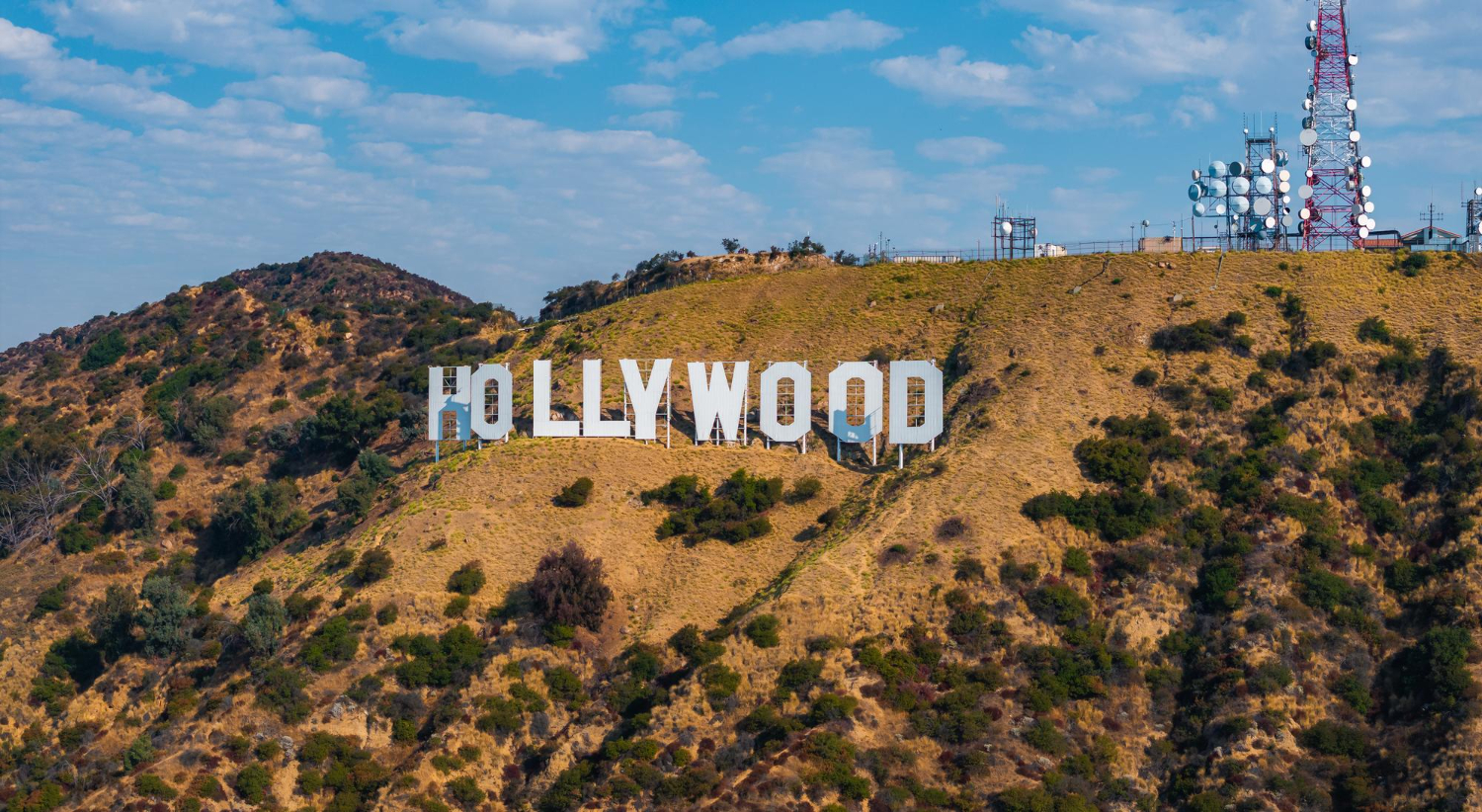
There is a reasonable assumption most people make about the Hollywood sign: that it was put up to mark Hollywood, by somebody who wanted to celebrate the film industry, as a landmark.
None of that is true. The sign predates its own meaning entirely. It was a billboard, erected by property developers, advertising lots for sale on a hillside, and it was meant to be temporary.
It is also not in Hollywood. It sits on Mount Lee in the Santa Monica Mountains, above Beachwood Canyon, overlooking the neighbourhood it now represents.
The gap between what it was built for and what it became is one of the odder accidents in the history of branding. Here is how a real estate advertisement turned into one of the most recognisable pieces of typography on the planet.
Selling a Hillside
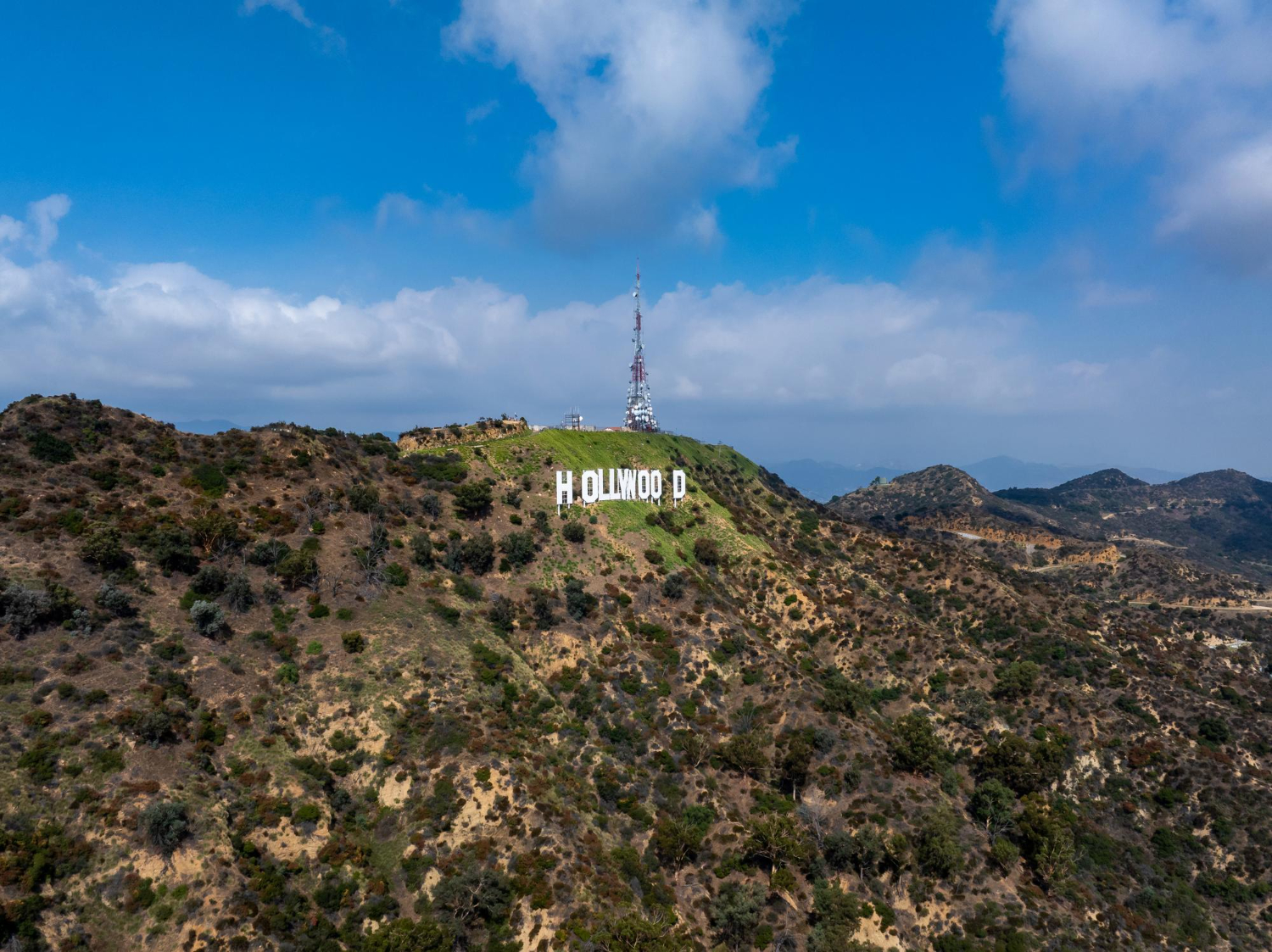
In 1923 a development syndicate announced a subdivision called Hollywoodland, promoting homesites on the steep slopes below Mount Lee in what is now Beachwood Canyon.
The syndicate was associated with Harry Chandler, publisher of the Los Angeles Times, along with the banker S. H. Woodruff and Tracy E. Shoults. They needed to advertise the lots to the drivers and streetcar riders down in the Los Angeles basin.
Their solution was a sign on the ridge above, and the contract went to the Crescent Sign Company, run by Thomas Fisk Goff. Crews hauled materials up the mountain, anchored the letters into the hillside with poles and scaffolding, and wired the whole thing for electricity.
The specification tells you it was never meant to last. The letters stood around 45 feet tall — sources vary, with some giving 50 — and the sign ran roughly 450 feet long. They were faced with sheet metal on temporary supports rather than built as permanent structures.
And they flashed. Some 4,000 bulbs lit the sign after dark, spelling out HOLLY, then WOOD, then LAND in sequence. The Los Angeles Evening Express described it as a gigantic electric sign, the largest in the world, competing with the stars for luminous beauty.
The cost was about $21,000 in 1923 dollars, the equivalent of several hundred thousand today. The intended lifespan was 18 months.
The point, as one account puts it plainly, was not civic identity. It was land sales.
Like our content? Follow us for more.
Nobody Took It Down
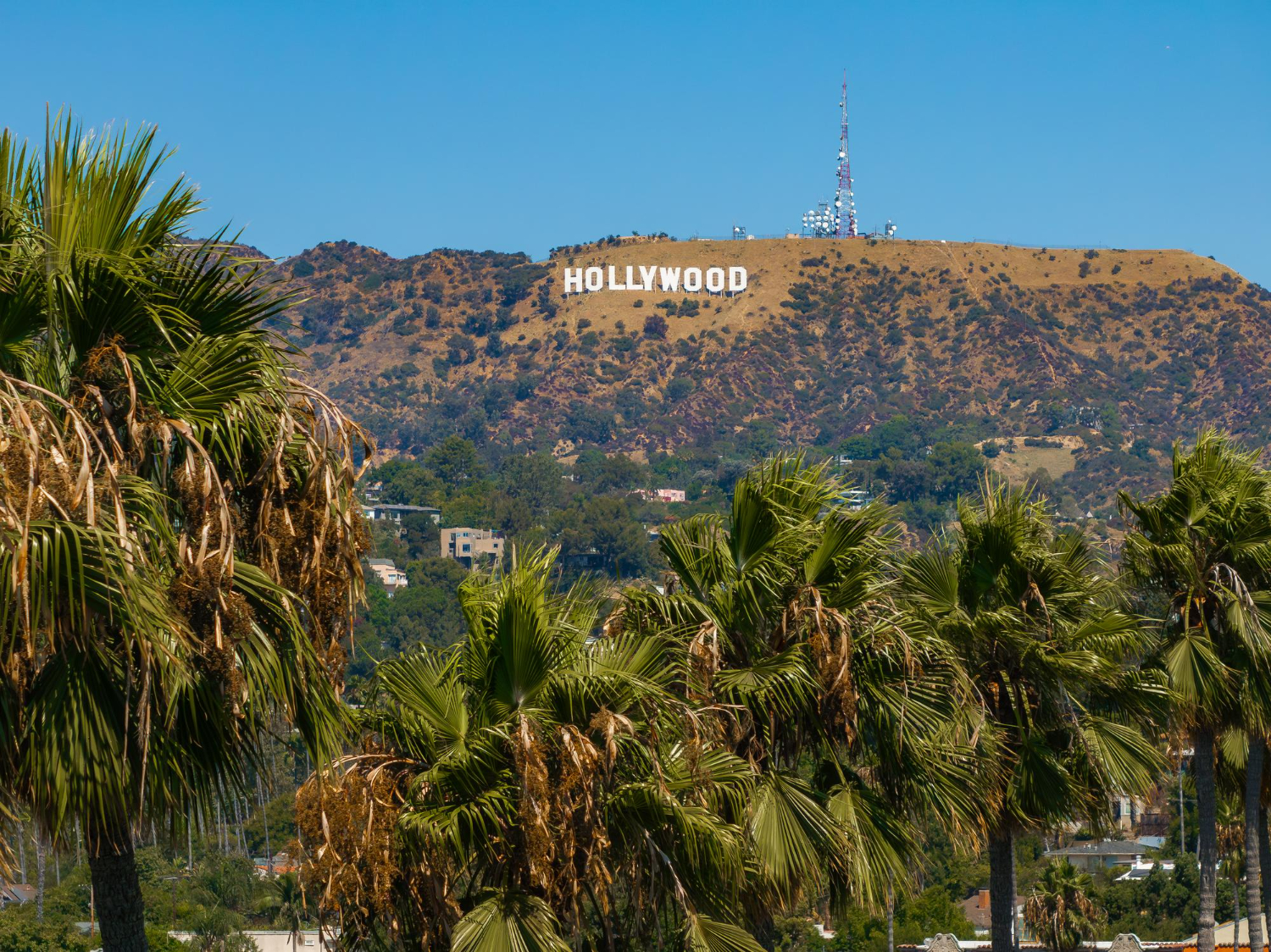
The 18 months passed and the sign stayed up, which is the entire hinge of the story.
The developers found it useful while lots were still selling. Meanwhile the public grew attached to it, and it began appearing in photographs and film as a marker of the place rather than the subdivision.
Maintenance eventually stopped, reportedly around 1939, and the sign began to deteriorate badly. It had been built from sheet metal and timber for a year and a half of service, and it was now weathering on an exposed ridge with nobody responsible for it.
Ownership passed to the city in the 1940s, the syndicate having largely completed the sale of its lots.
The Compromise That Removed LAND
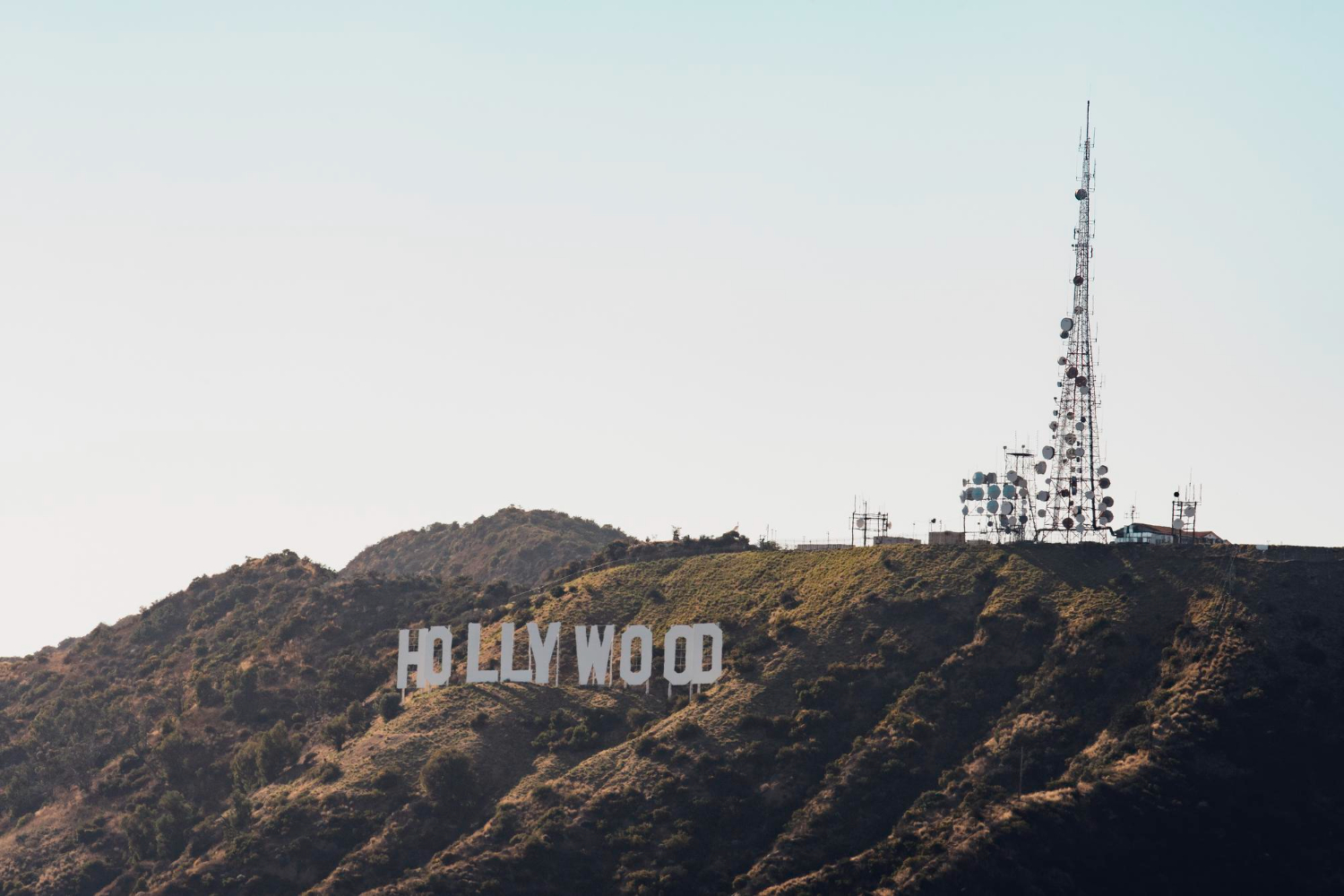
By the late 1940s the sign was in poor condition and local residents were complaining that it was an eyesore. The H had fallen.
In 1947 the Los Angeles Recreation and Parks Commission advocated tearing the whole structure down. The Hollywood Chamber of Commerce protested, and a compromise was negotiated.
The terms were specific: the Chamber would fund repair of the H and structural refurbishment of the remaining letters, and in exchange the final four letters — LAND — would be removed. The result would read HOLLYWOOD, reflecting the wider district rather than the specific property development.
The refurbishment was completed in September 1949. The nine-letter configuration everyone now recognises dates from that modification.
So the original 13-letter sign existed for roughly 26 years — a long way past 18 months, and a short time compared to the 75-plus years the shortened version has now stood.
There is a neat irony in the mechanics of it. The sign was saved from demolition by the removal of the very word that explained why it had been built.
Decline, Vandalism and Rebuilding
The 1949 refurbishment did not solve the underlying problem, and the following decades were rough.
By the 1970s the sign was in serious disrepair, with portions of the D and one of the Os having fallen away. One L had been damaged by fire.
In 1976 the sign was famously altered by students to read HOLLYWEED, using fabric to modify letters — a stunt tied to a change in state cannabis law and one that has been repeated since.
The structure that stands today is not the 1923 sign at all. In 1978 the deteriorated original was demolished and replaced entirely, funded by a public campaign in which donors sponsored individual letters. The replacement is steel, on proper foundations, built to last.
It has been maintained since. A major repainting project completed around 2012 stripped the weathered paint from the 45-foot letters and applied 105 gallons of primer and 255 gallons of high-reflective white paint, with a paint manufacturer covering most of the roughly $170,000 cost. Another refurbishment marked the sign’s centenary in 2023.
So the object visitors photograph is a 1978 steel reconstruction of a 1949 modification of a 1923 temporary advertisement.
What You Can Actually Do There
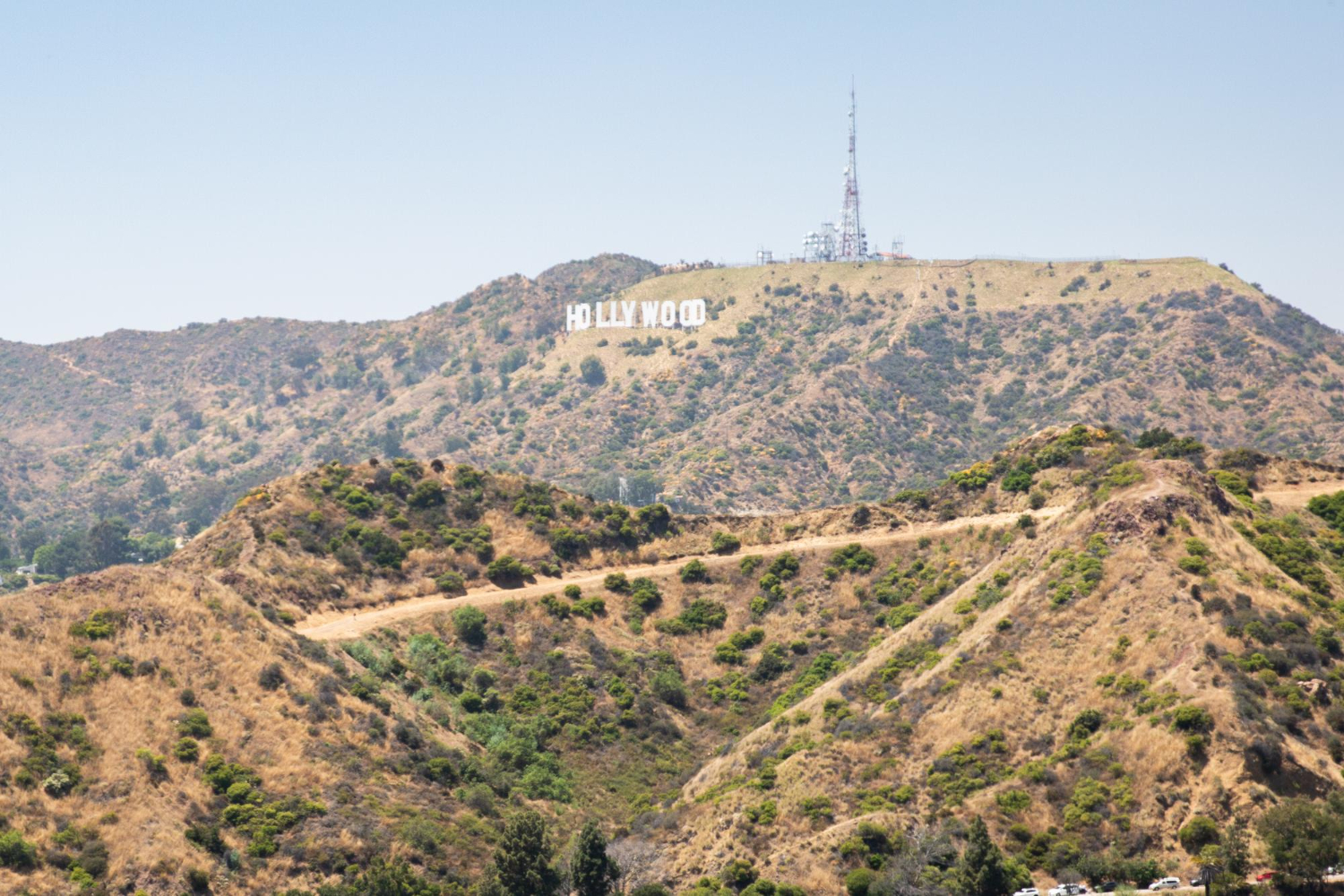
For anyone planning to see it, a few practical points are worth knowing, because the sign is easier to view than to reach.
It cannot be approached directly. The sign is fenced, monitored, and access to the letters themselves is prohibited — climbing or touching the fence will bring security, and the area is under surveillance.
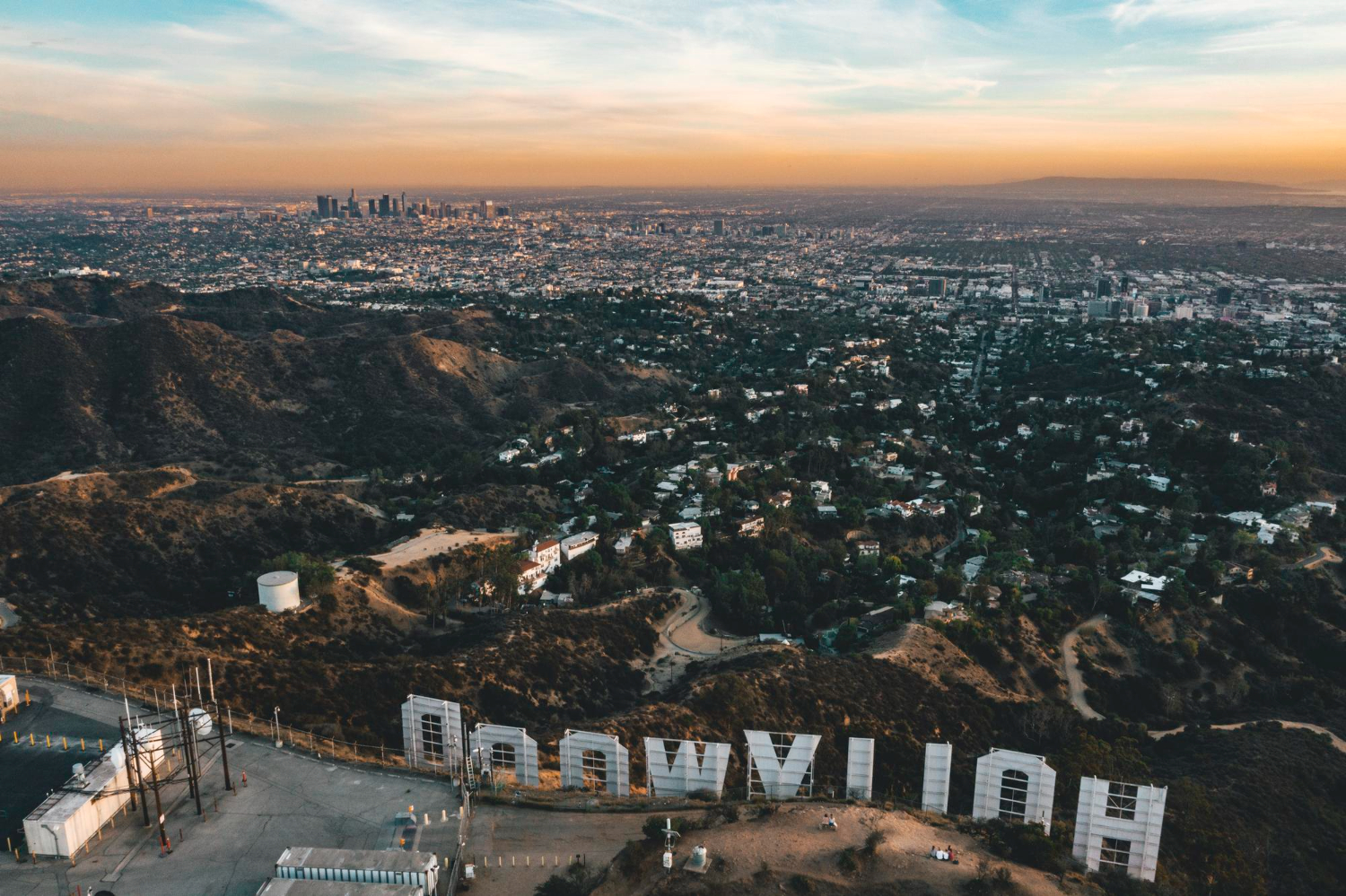
Hiking trails in Griffith Park lead to viewpoints, including routes that approach the ridge behind the sign, from which you look down at the backs of the letters. Atlas Obscura notes a walk of roughly 45 minutes one way to reach the rear view.
The neighbourhood below has struggled with visitor traffic on narrow residential streets, and parking restrictions apply in Beachwood Canyon. Check current access arrangements and posted restrictions before setting out, since routes and rules have changed repeatedly.
Most photographs are taken from viewpoints at a distance rather than close to, which is also how the sign was designed to be seen — as a message read from the basin below.
The Neighbourhood It Was Selling
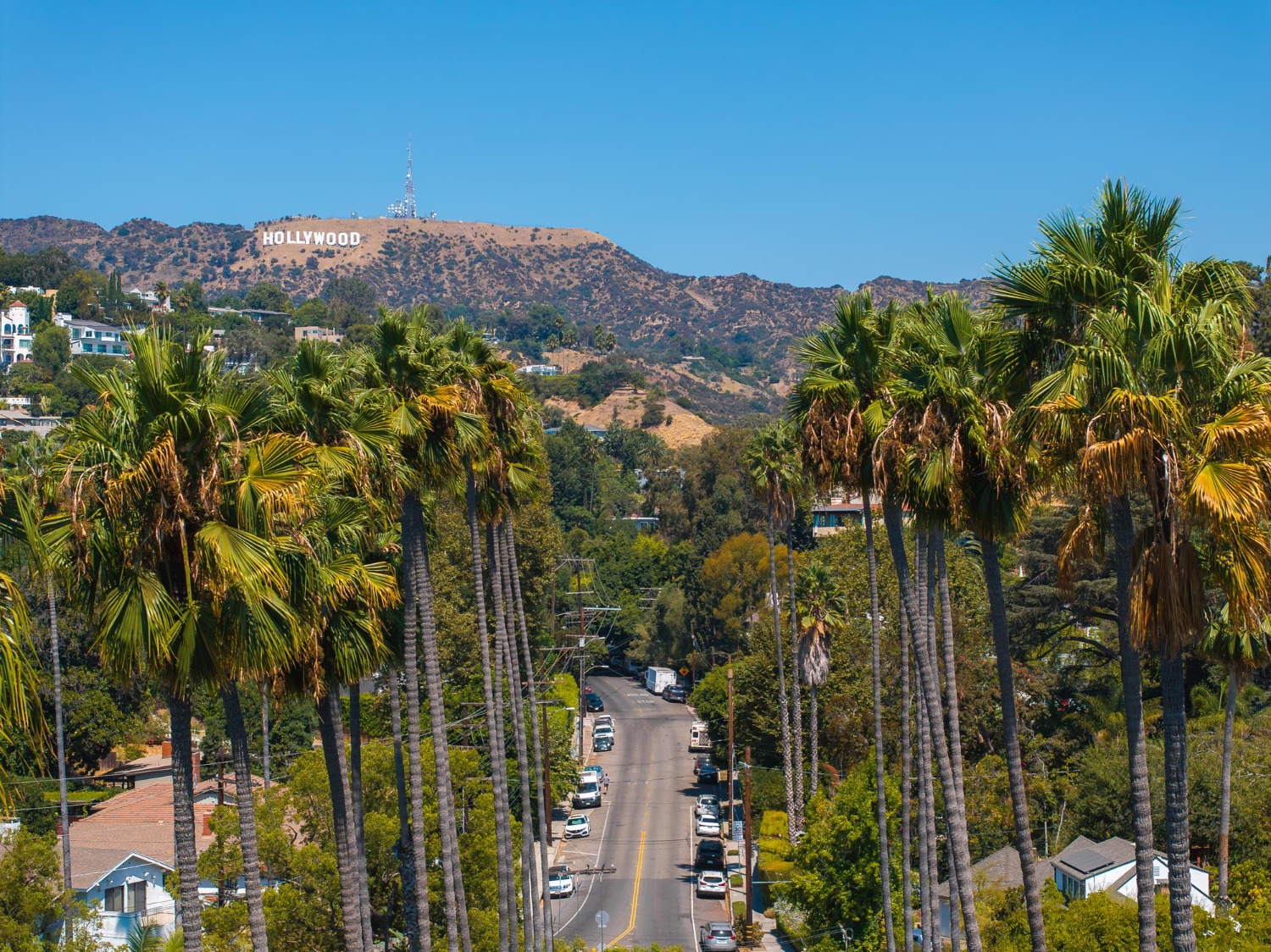
The subdivision the sign advertised is still there, and walking it explains a good deal about the sign’s placement.
Beachwood Canyon climbs steeply from the flat of Hollywood into the hills, and the Hollywoodland tract was laid out along winding roads following the contours rather than the grid pattern of the basin below.
The developers built stone gates, retaining walls and staircases in a deliberately picturesque style, aiming at buyers who wanted something that felt like a European hillside village rather than a Los Angeles suburb. Several of those structures survive, including the stone gateway at the canyon entrance.
Public stairways connect the winding streets, built when residents were expected to walk down to a streetcar rather than drive. They are still in use and are a well-known feature of the neighbourhood.
The sign was positioned on the ridge above all of this, angled to be read from the basin — which is to say from where the potential buyers were, looking up. Everything about its siting was a sales decision, and the view that millions now photograph is a by-product of where the advertisement needed to face.
The sign’s legal status caught up with its cultural status only slowly, which is part of why it deteriorated for so long.
For decades after the city took it on, no single body was clearly responsible for maintaining it, and the 1978 rebuild happened through a public fundraising campaign rather than a municipal budget line. Donors sponsored individual letters.
It was designated a Los Angeles Historic-Cultural Monument in 1973, which gave it formal protection but not an ongoing maintenance income. A dedicated trust was later established to look after it, funded largely through licensing and donations.
That licensing arrangement is worth noting, because it closes a loop. The sign is a trademarked image, and revenue from its commercial use helps pay for its upkeep. An object built as an advertisement is now maintained by being one.
There is also the practical matter of protecting it from people. Fencing, cameras and monitoring were added over time in response to repeated alterations and attempted climbs, which is why the letters are unapproachable today.
An Accident That Outlived Its Purpose
The Hollywood sign is a useful reminder that landmarks are not always planned.
Everything about its construction says disposable: sheet metal, scaffolding, flashing bulbs, an 18-month brief, a commercial message that named a housing tract. It was closer to a modern illuminated billboard than to a monument.
What made it permanent was a sequence of small non-decisions. Nobody removed it on schedule. Nobody maintained it either. When it was finally too decayed to ignore, the cheapest available compromise happened to convert it from an advertisement into a place name, and by then it was too famous to lose.
The developers got what they wanted — the lots sold, the syndicate moved on — and left behind an object that now means something none of them intended and that has outlasted their company, their subdivision’s name, and the original sign itself several times over.
Every photograph taken of it is, technically, still doing the job it was built for. It is just advertising a different thing.
Like our content? Follow us for more.